+84 9 75 46 33 10 (Whatsapp)
  info@horizon-vietnamtravel.com
  Français
  Español
  Português
  Deutsch

Complete Guide to Making Your Trip to Kon Tum Unforgettable
Table of contents
Perched at the far north of Vietnam’s Central Highlands, Kon Tum Province captivates with its tranquil atmosphere and beautifully preserved authenticity. Dotted with sinuous rivers, verdant mountains and traditional villages, it offers a natural setting perfect for exploration and relaxation. What truly sets Kon Tum apart is its extraordinary cultural wealth: a mosaic of ethnic groups with vibrant living traditions, unique architectural heritage blending iconic stilt houses, centuries-old wooden churches, and colonial-era vestiges, alongside the warmth of hospitality that leaves a lasting impression on travelers. Here, every encounter and every landscape tells a story, making Kon Tum a destination like no other in Vietnam.
Where is Kon Tum Located?
From Hanoi or Ho Chi Minh City, there are no direct flights to Kon Tum; instead, you’ll fly into nearby Pleiku Airport (Gia Lai Province), just 50 km away, then continue by car or bus—about 1 hour 15 minutes of travel. From Da Nang, the journey by bus or private car takes roughly 7–8 hours, winding through spectacular mountain scenery.
Best Time to Visit Kon Tum
Kon Tum has a mountain tropical climate with two distinct seasons:
- Dry season (November to April): Clear skies, pleasant temperatures (20–28 °C), low humidity. This is the ideal period for hiking, cycling along the Dak Bla River, or discovering ethnic villages. The landscapes are at their sharpest and roads are easiest to navigate.
- Rainy season (May to October): Frequent but brief showers, lush vegetation and fresher air. Photography enthusiasts will find verdant vistas and water-filled rice paddies particularly stunning.
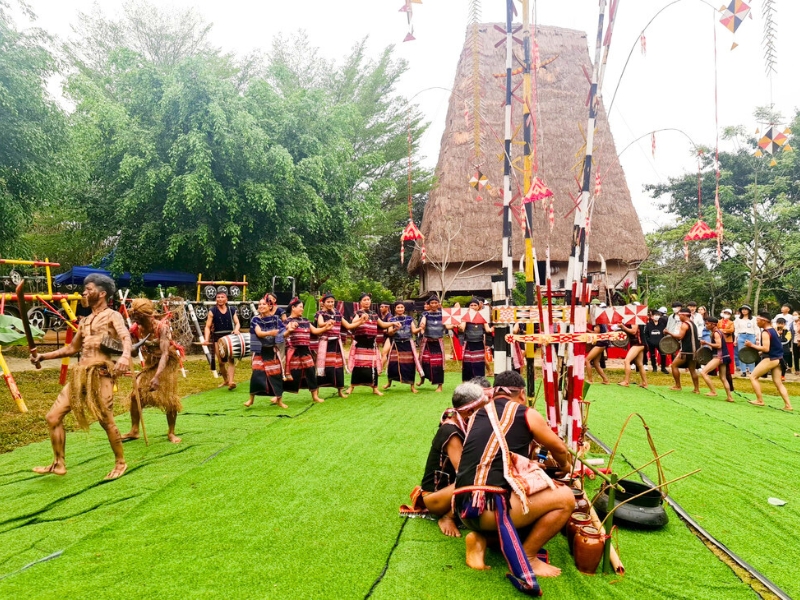
Bahnar Ceremony to Invoke Peace
For an unforgettable cultural experience, prioritize March–April or October–November, when Jrai and Bahnar villages come alive with vibrant festivals filled with dancing, gong music, and traditional ceremonies. Another captivating option is January and February, right after Tet, when the weather stays dry and villages, still adorned with flowers and festive decorations, offer a sweet, photogenic atmosphere.
Top Attractions Not to Miss in Kon Tum
Kon Tum enchants with the richness of its historical heritage, the diversity of its ethnic cultures, and the untouched beauty of its landscapes. From colonial architecture to traditional villages and pristine nature, here are the must-see sites for your stay.
Kon Tum Wooden Cathedral
Built between 1913 and 1918, Kon Tum’s wooden cathedral—also known as St. Joseph’s Cathedral—is a masterpiece that marries European Romanesque style with the iconic stilt-house architecture of the Bahnar people. Crafted entirely from cà chít wood, its walls are a blend of earth and straw, without reinforced concrete.
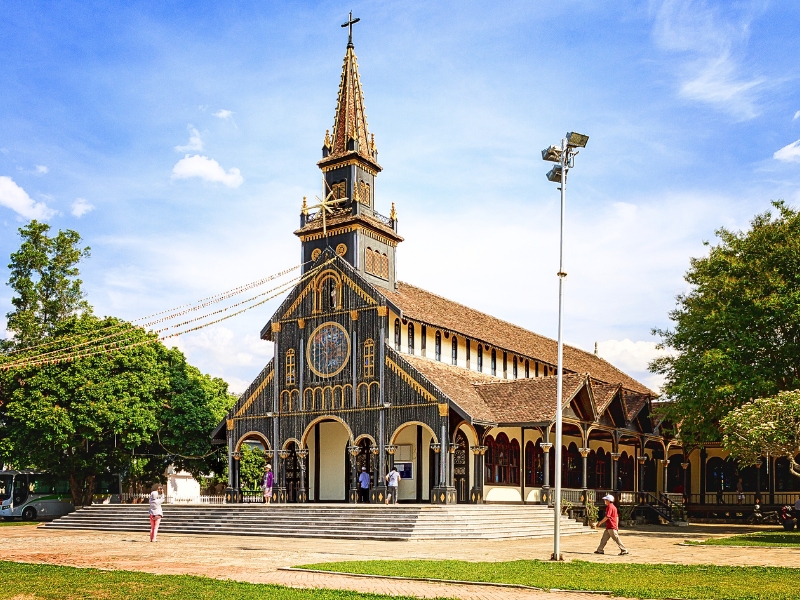
Kon Tum Wooden Cathedral
Inside, slender rows of wooden columns join through arches, forming elegant vaults that support upper windows. Light filters through stained glass depicting biblical scenes and episodes reflecting the culture and soul of Highland residents. This spiritual and artistic sanctuary perfectly embodies the dialogue between colonial heritage and local traditions.
Episcopal Palace of Kon Tum
Erected in 1935, the Episcopal Palace showcases subtle harmony between the traditional architecture of the Highlands and Western style. Except for the reinforced concrete pillars supporting the ground floor, the entire building is constructed from precious wood, chosen for durability and natural elegance.
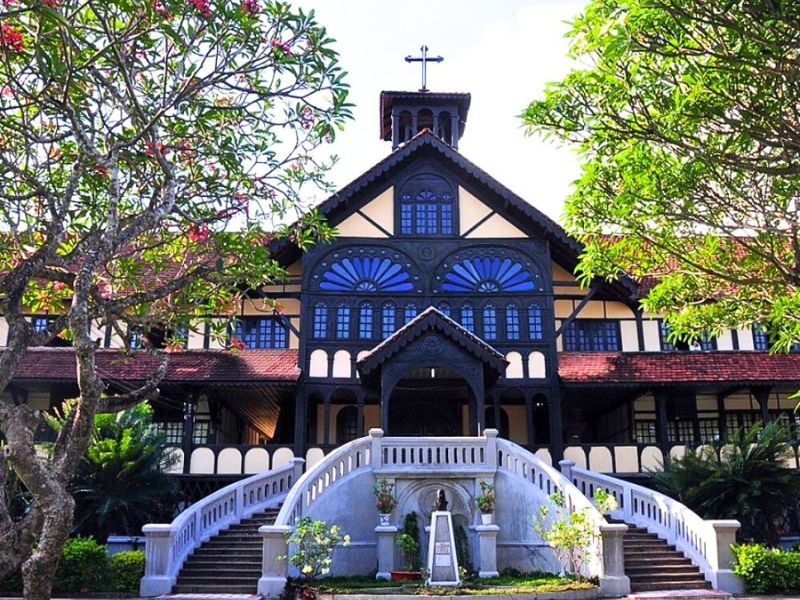
Episcopal Palace of Kon Tum
Within the complex, a traditional house has been converted into a small museum displaying everyday objects, agricultural tools, and cultural artifacts from the region’s diverse ethnic groups. The site welcomes visitors daily except Tuesdays, offering a wonderful opportunity to immerse yourself in the history and multicultural heritage of Kon Tum.
Mang Den – “Little Dalat”
About 60 km from Kon Tum, the small town of Mang Den sprawls across nearly 150 km² in the heart of the Kon Plong Plateau. Nicknamed “Dalat in miniature,” it captivates with its pristine forests, tranquil lakes, waterfalls, pine plantations, and cool, pure air year-round. The atmosphere is calm and rejuvenating, perfect for escaping the bustle of city life.
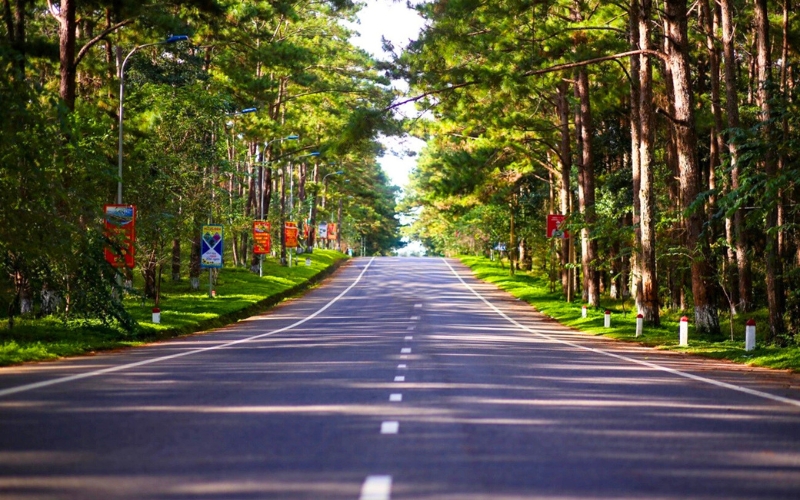
Mang Den – Little Dalat
The most appreciated period runs from October to December: the air becomes cooler and drier, and wild cherry blossoms (mai anh dao) bloom with delicate pink flowers. By February, mimosas and ban flowers color the landscapes, while March and April bring the violet-hued blossoms of jacarandas. Each season reveals a different face of this natural sanctuary.
Dak Bla River
Stretching 137 km, the Dak Bla River originates at the foot of Ngoc Linh Mountain before flowing through Kon Tum City and merging, in neighboring Gia Lai Province, with the Ia Grai River to form the legendary Se San River of the Highlands. More than just a water and irrigation resource for local agriculture, it represents an emblematic landscape feature and a cherished spot for relaxation.
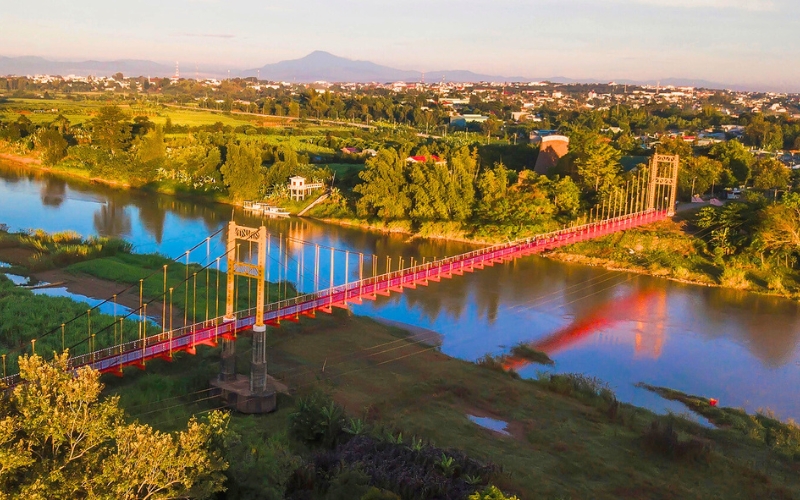
Two Banks of the Dak Bla River
Its banks, lined with blooming gardens and recreational spaces, invite leisurely strolls at any hour. Sunrise and sunset offer magnificent light shows dancing across the water. Visitors can also board a peaceful cruise, ideal for admiring the city and surrounding mountains from a fresh perspective.
Kon Klor Suspension Bridge
Located at the northern edge of the city, the Kon Klor suspension bridge, built entirely of steel, stands in elegant contrast to the lush highland landscape. It spans the tranquil Dak Bla River, connecting the city center to the traditional Ba Na and Jrai villages nearby.

Kon Klor Suspension Bridge
Stretching roughly a hundred meters, it commands panoramic views of sugar cane fields, vegetable gardens, and distant mountains. Crossing this bridge at sunrise or sunset, when golden light caresses the cables and skims the river, is a simple yet memorable experience.
Kon Klor Stilt House Community Hall
Located on Tran Hung Dao Street, the Kon Klor stilt house community hall (nha rong) is considered the largest throughout the Tay Nguyen region. Built according to traditional Ba Na village architecture, it uses local materials including wood, bamboo, rattan, and thatch.
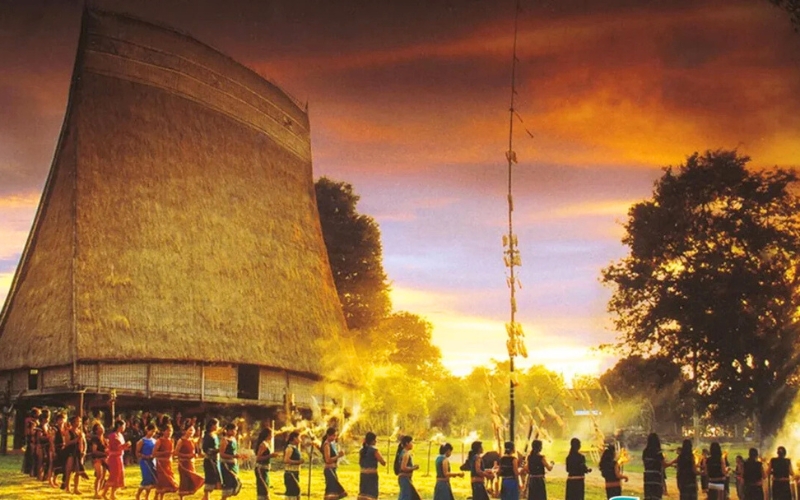
Kon Klor Stilt House Community Hall
Its soaring roof, adorned with finely crafted motifs and decorations, testifies to the artisanal mastery of local craftspeople. Standing at the village’s heart, it embodies the collective soul and pride of the inhabitants. Nearby you’ll find the Kon Klor suspension bridge and verdant sugar cane fields, forming a picturesque, harmonious tableau of Kon Tum’s landscape.
Chu Mom Ray National Park
Straddling the districts of Ngoc Hoi and Sa Thay, roughly 30 km from Kon Tum City, Chu Mom Ray National Park ranks among Vietnam’s most biodiverse protected areas. It shelters extraordinary fauna and flora ranging from dense tropical forests to clearings dotted with endemic plants.

Chu Mom Ray National Park
This territory is also home to several ethnic communities including the Ro Mam, K’Dong, Gia Rai, H’Lang peoples, and notably the Bo Rau, among Vietnam’s smallest ethnic groups.
A favorite destination for nature lovers, expedition groups, and researchers, the park offers abundant exploration opportunities: jungle trekking, wildlife observation, and cultural immersion in local villages. Access is straightforward, whether by private car or public bus from Kon Tum.
What to Eat in Kon Tum
Goi La (Wild Leaf Salad)
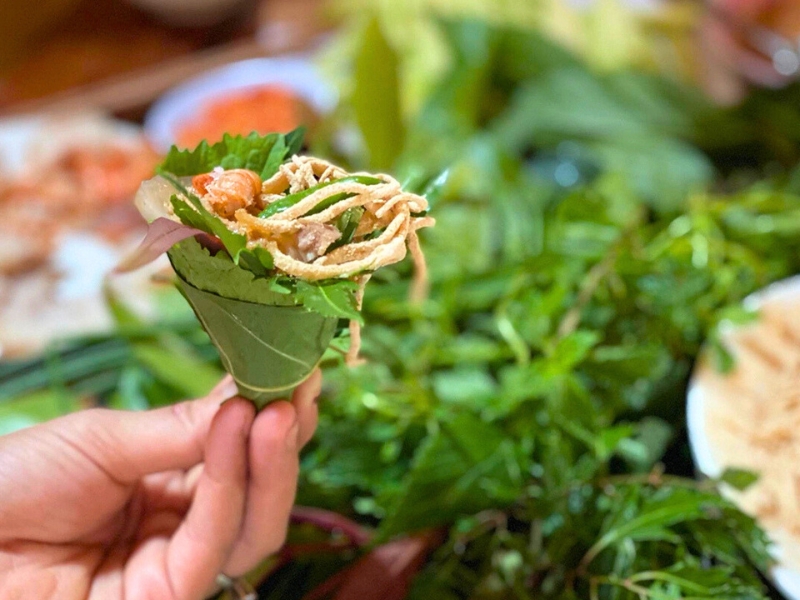
Goi La (Wild Leaf Salad)
A true culinary emblem of Kon Tum, goi la is a unique dish celebrating the botanical richness of the Highlands. In the dry season, it features thirty to forty varieties of leaves, while during the rainy season the count rises to over seventy, with some complete versions boasting nearly a hundred varieties. These aromatic leaves are savored alongside boiled pork, freshwater shrimp, and crispy pork skin. The sauce—the dish’s true signature—is made from fermented sticky rice, dried shrimp, and pork belly, delivering a creamy consistency with a flavor that’s simultaneously sweet, salty, and aromatic.
Ga Nuong – Com Lam
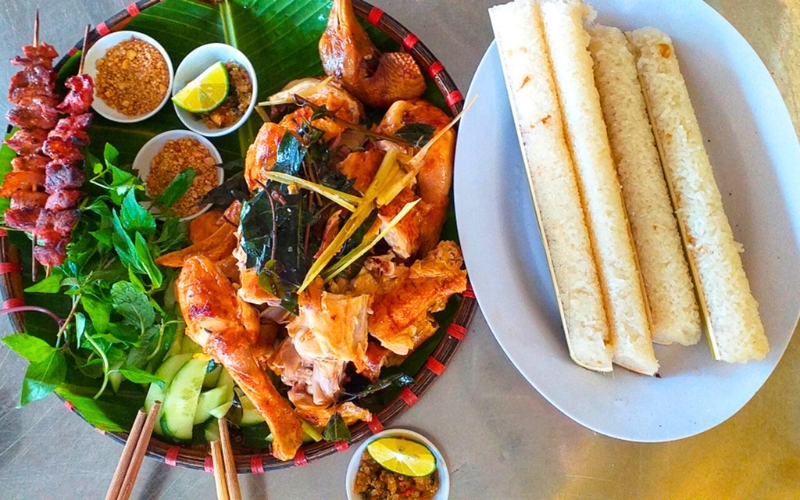
Ga Nuong – Com Lam, an unbeatable pairing to savor in Kon Tum
A traditional dish of local minorities, grilled chicken is often prepared from free-range birds with firm, fragrant meat. Before cooking, the chicken is stuffed with wild pepper leaves, lemongrass, garlic, and chili, then slowly roasted over hot coals until the skin turns golden and crispy. It’s best enjoyed hot, accompanied by com lam—sticky rice steamed inside bamboo—and peanut or sesame salt.
Bun Do (Red Highlands Noodles)
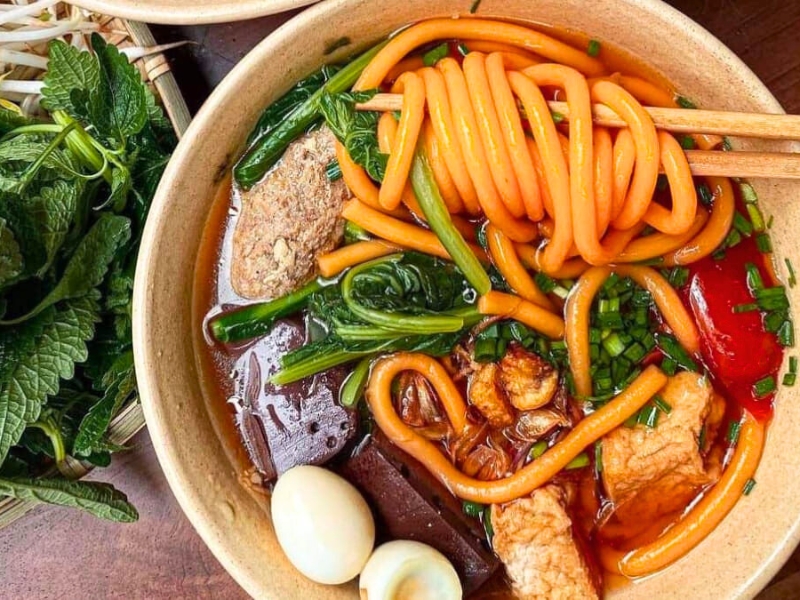
Bun Do (Red Highlands Noodles)
A specialty rarely found elsewhere in Vietnam, bun do owes its name to the brick-red color of its noodles. Initially white, they take on this rich hue after simmering in a fragrant broth infused with annatto, shrimp shells, and local spices. The dish is typically garnished with paddy field crab meat, pork meatballs, and quail eggs, for a delicate and comforting blend of flavors.
Lau Xuyen Tieu (Wild Pepper Hotpot)
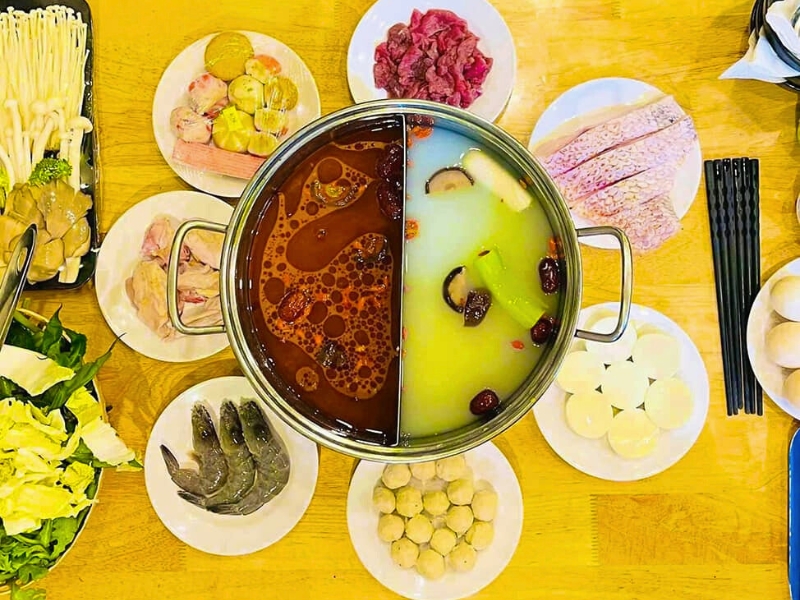
Lau Xuyen Tieu (Wild Pepper Hotpot)
Perfect for Mang Den’s cool climate, this traditional hotpot wins hearts with its intense aroma. The broth is prepared with vegetables, dried fruits like goji berries and red apples, and medicinal herbs, simmered for hours to achieve a naturally sweet and clear flavor. Served in a two-compartment pot—one side spicy with wild pepper, the other gentle—this dish pairs beautifully with lemongrass chicken and dried bamboo shoots.
Xoi Mang (Bamboo Sticky Rice)
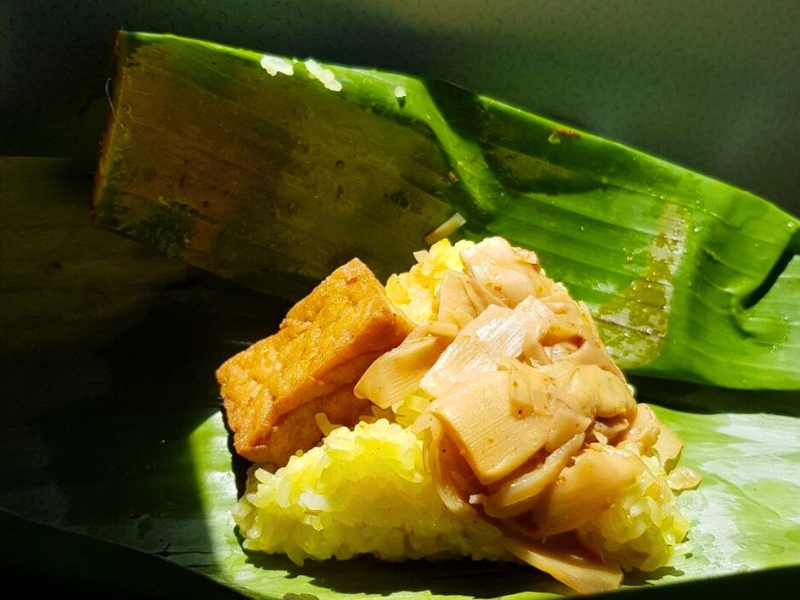
Xoi Mang (Bamboo Sticky Rice)
This colorful, fragrant dish begins with sticky rice infused with turmeric powder, which imparts a golden-yellow hue after cooking. It’s served with sautéed or boiled bamboo, sometimes accompanied by toasted sesame, salt, or braised meat. Simple yet rich in flavor, xoi mang embodies the generosity and rusticity of mountain cooking.
What to Bring Home from Kon Tum
Beyond its authentic landscapes and cultural wealth, Kon Tum abounds with local specialties that make perfect souvenirs or gifts for loved ones.
Mang Den Myrtle Wine
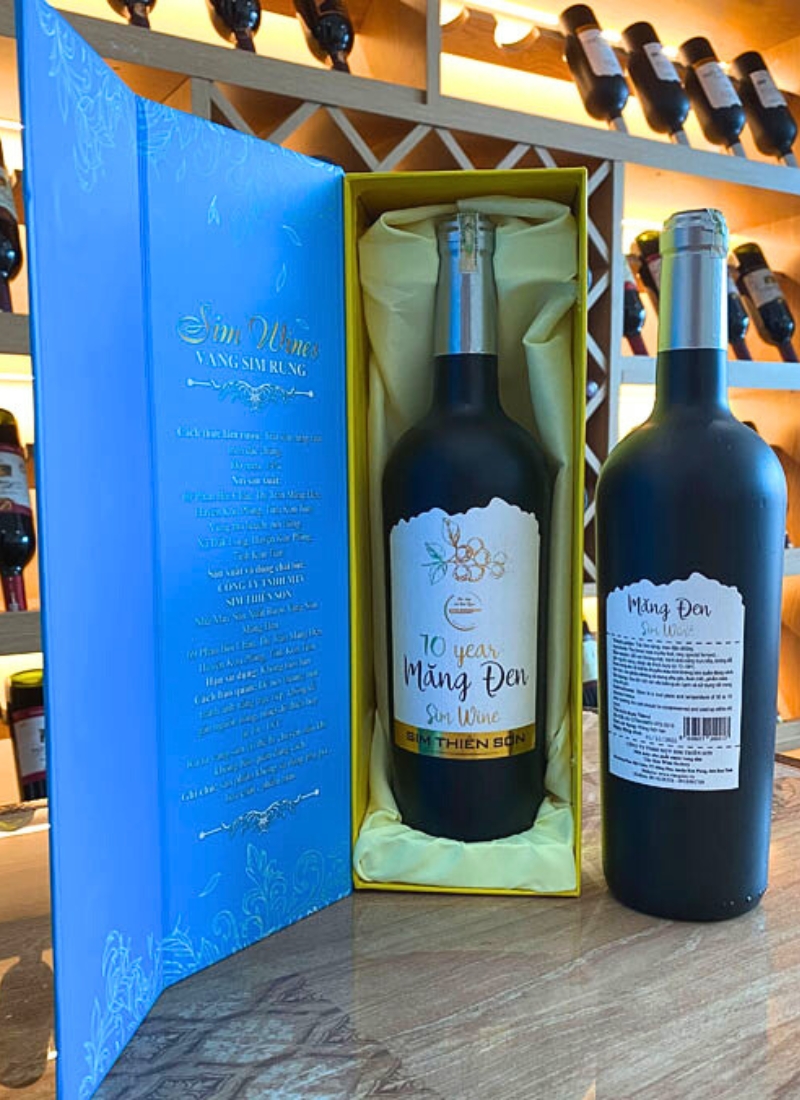
Mang Den Myrtle Wine
Crafted from wild myrtle berries harvested by local minorities, this wine is fermented with yeasts used in French winemaking. It reveals a flavor both wild and refined, excellent for accompanying meals. Beyond its unique taste, it’s renowned for its benefits: improved digestion, heart health, and antioxidant properties.
- Address: Mang Den Village, Dak Long Commune, Kon Plong District
- Approximate price: 300,000 – 375,000 VND (12 – 15 USD) / bottle (375 ml)
Dried Bamboo Shoots (Mang Le)
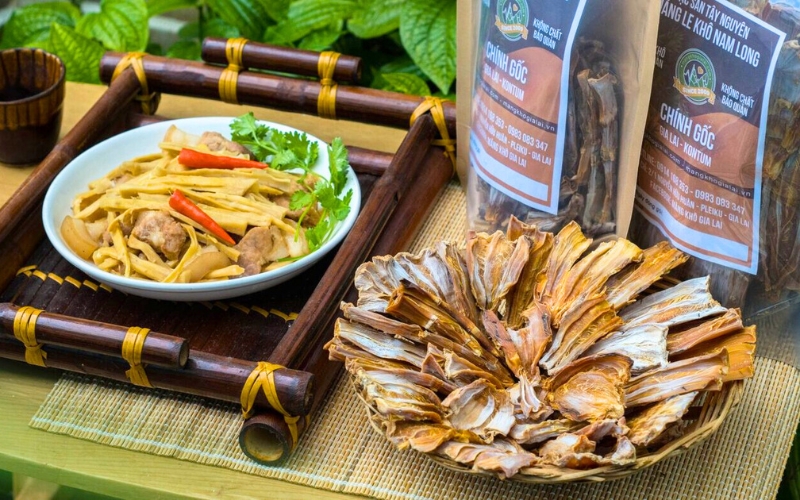
Dried Bamboo Shoots (Mang Le)
Harvested from Kon Tum’s forests, bamboo shoots are carefully cleaned and dried to preserve their natural flavor. This traditional ingredient is much appreciated in Vietnamese cuisine and makes a practical, delicious gift.
- Address: 34 Ly Thuong Kiet Street, Kon Tum City
- Approximate price: 250,000 – 350,000 VND (10 – 14 USD) / kg
Highlands Coffee
In Kon Tum, coffee is more than a beverage: it’s a true cultural symbol. Cultivated on the fertile basaltic highlands soil, it benefits from an ideal climate and know-how passed down through generations. The beans—100% pure and carefully selected—offer a cup with an enveloping fragrance, intense aroma, and subtle bitterness, with no additives or artificial flavors. Tasting Kon Tum coffee means savoring the very essence of the Highlands: an authentic and refined experience that will captivate both coffee lovers and connoisseurs alike.
- Address: 09 Chu Van An Street, Dak Ha District, Kon Tum
- Approximate price: 280,000 – 1,000,000 VND (11 – 40 USD) / kg
Pressed Dried Bananas
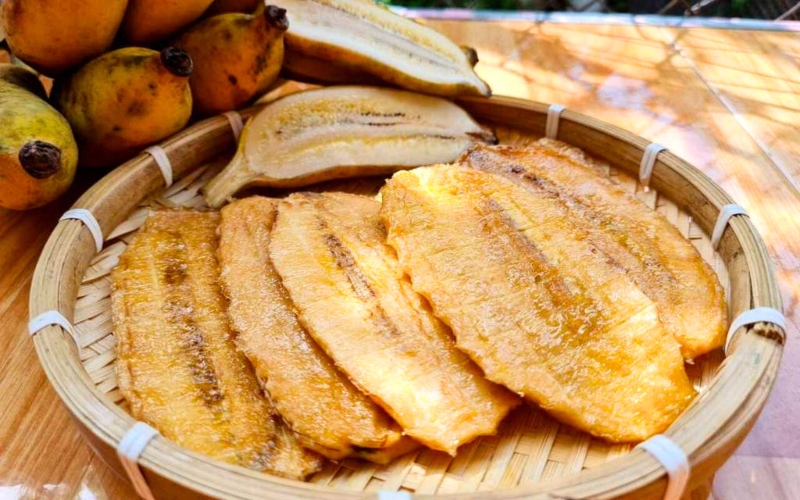
Pressed Dried Bananas
A popular and healthy snack, ripe bananas are carefully selected, dried, and pressed to maintain a soft texture and natural sweetness. Easy to carry, they make ideal sweet gifts.
- Address: Nguyen Trai Street, Borough 5, Doan Ket Commune, Kon Tum City
- Approximate price: 60,000 – 100,000 VND (2.5 – 4 USD) / kg
Ngoc Linh Ginseng
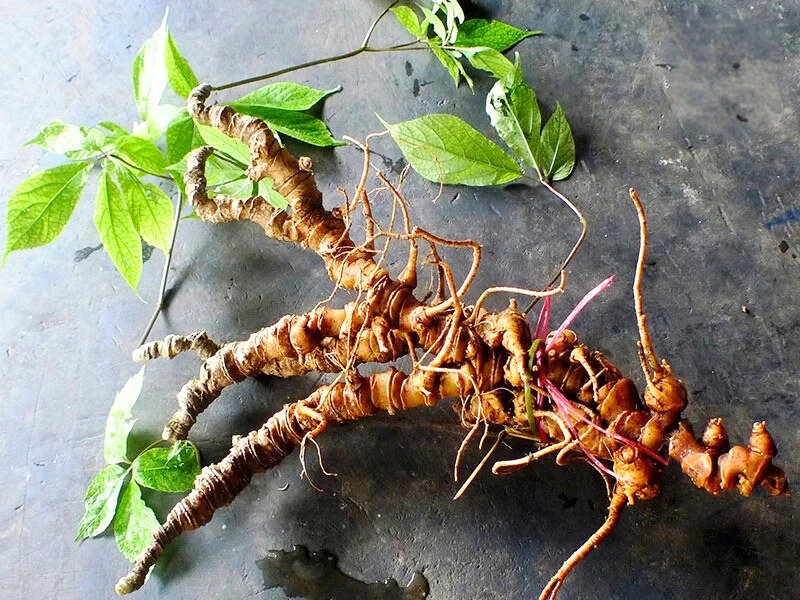
Ngoc Linh Ginseng
A treasure of Ngoc Linh’s mountains, this rare ginseng is recognized as among the world’s finest. It’s prized for its medicinal virtues: helping combat fatigue, improving memory, promoting nervous balance, and strengthening the immune system. A prestigious product, often chosen as a premium gift.
- Address: 135 Le Hong Phong Street, Kon Tum City
- Approximate price: 2,500,000 – 4,000,000 VND (100 – 160 USD) / kg
These Kon Tum specialties aren’t just delicious—they carry the soul of the Central Highlands within them. Don’t hesitate to bring some home to extend the flavors of your journey and share a piece of the mountains with your loved ones.
Kon Tum captivates through its authenticity, its still-pristine landscapes, and the warm welcome of its inhabitants. Between ethnic villages, centuries-old wooden churches, unique culinary specialties, and locally-made products to take home, every moment spent here is an invitation to discover and share. To make the most of your Kon Tum journey, take time to explore without hurrying, savor local flavors, and immerse yourself in the daily life of the Highlands. This quiet yet enchanting corner of Vietnam will reward you with unforgettable memories and a profoundly human experience.



Our recommended itineraries
 Nature and Active travel
Northern Vietnam Explorer in 9 days and 8 nights
About ten days
Hanoi - Ha Long Bay - Saigon - Mekong Delta - Siem Reap - Luang Prabang - Pak Ou Caves - Kuang Si Waterfall
 Classic
Vietnam Exclusive in 13 Days
About 2 weeks
Hanoi - Bai Tu Long - Hue - Da Nang - Hoi An - Saigon - Mekong Delta