+84 9 75 46 33 10 (Whatsapp)
  info@horizon-vietnamtravel.com
  Français
  Español
  Português
  Deutsch

Travel Guide to Pleiku, Heart of Vietnam’s Central Highlands
Table of contents
Nestled in the heart of Gia Lai province in Vietnam’s Central Highlands, Pleiku enchants visitors with its cool climate, volcanic landscapes, and tranquil atmosphere. Located at over 700 meters altitude, the city is surrounded by volcanic crater lakes, coffee plantations, and lush forests. Here the air is pure, streets are lined with pine trees, and life flows at the peaceful rhythm of the Jrai and Bahnar ethnic peoples. Unlike major tourist cities, Pleiku preserves rare authenticity: no crowds, but a deep immersion in nature and traditions. A strategic crossroads between Kon Tum, Buon Ma Thuot, and Quy Nhon, it is an ideal stop to discover the cultural richness and wild beauty of the Highlands.
Where is Pleiku Located?
Pleiku is the administrative and cultural center of Gia Lai province, situated in the heart of Vietnam’s Central Highlands. Positioned at an altitude between 700 and 800 meters, it enjoys pure air, pleasant temperatures year-round, and a pristine natural environment characterized by hills, volcanic lakes, and coffee plantations.
How to Get There?
By Air
Pleiku Airport (PXU) connects Vietnam’s major cities daily:
- Hanoi – Pleiku: approximately 1 hour 40 minutes flight
- Ho Chi Minh City – Pleiku: approximately 1 hour 20 minutes flight
- Da Nang – Pleiku: approximately 1 hour 15 minutes flight
Located just 5 km from the city center, it allows you to reach your accommodation quickly by taxi or private car.
By Bus
A network of sleeper buses connects Pleiku to numerous regional destinations:
- Quy Nhon: ~5 hours
- Nha Trang: ~9 hours
- Buon Ma Thuot: ~7 hours
- Kon Tum: ~1 hour 30 minutes
Buses are generally equipped with reclining berths, offering adequate comfort for overnight travel.
By Private Car
The ideal solution for travelers wishing to explore Pleiku while discovering other Highland stops. The journey can be enriched with stops at ethnic villages, visits to waterfalls, or scenic viewpoints offering splendid views. If you travel with Horizon Vietnam, you benefit from a tailored service: comfortable, well-maintained vehicle, professional driver with thorough local knowledge, and the ability to adapt the itinerary according to your wishes, transforming every journey into a true discovery experience.
Best Time to Visit Pleiku
Pleiku enjoys a tropical mountain climate, pleasant year-round thanks to its altitude of approximately 800 meters. Temperatures vary on average between 18°C and 25°C, with cooler nights, especially in winter.
- Dry Season (November to April): The ideal time to visit Pleiku. Weather is sunny, skies are clear, and roads are in good condition, perfect for hiking, cycling, or outings to waterfalls and lakes.
- Rainy Season (May to October): Landscapes are particularly lush and verdant, but rain can be frequent, especially in the afternoon. This season is interesting for travelers seeking less crowding and wishing to admire nature in its full vitality.
Note: March and April often coincide with coffee blossoms, offering fragrant and photogenic landscapes, while November sometimes marks local ethnic festivals not to be missed.
What to See and Do in Pleiku?
T’Nung Lake (Bien Ho) – “The Eyes of Pleiku”
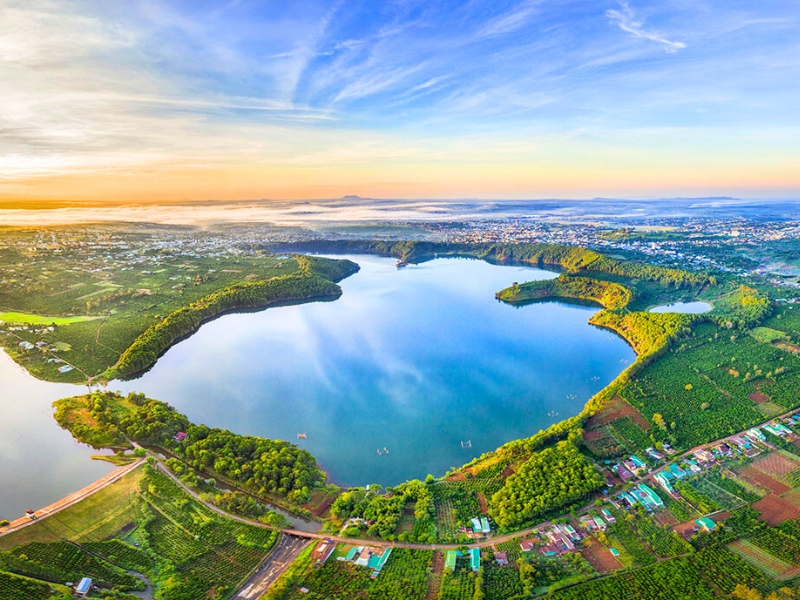
T’Nung Lake
Just 7 km northwest of Pleiku, T’Nung Lake, formed in an ancient volcanic crater, captivates with the depth of its blue water and the serenity of its surface. Its nearly circular shape earned it the poetic nickname “the eyes of Pleiku,” as if watching over the city and surrounding mountains. At dawn or sunset, the changing reflections of sky and surrounding pines create a natural painting of rare beauty. The winding road leading to the lake, flanked by fragrant pine trees, is perfect for a bicycle or scooter ride, offering complete immersion in the tranquil atmosphere of the Highlands.
Spectacular Waterfalls
Among Pleiku’s natural treasures, Phu Cuong Waterfall impresses with its height of approximately 45 meters and its unique setting in the heart of a basalt plateau. Water cascades with power, creating a silvery veil surrounded by lush vegetation. It is a place appreciated for its striking color contrasts, particularly suggestive during the rainy season, and for the refreshing sensation it offers in summer.
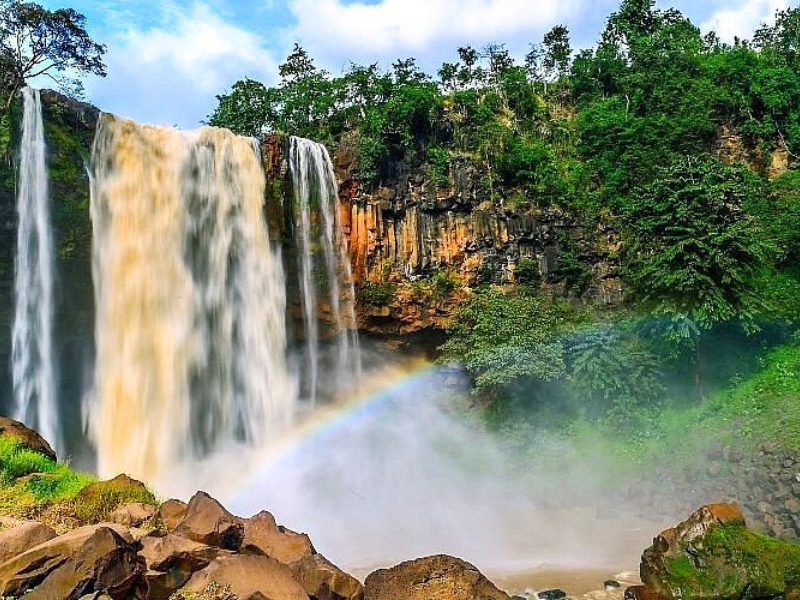
Nine-Storey Waterfall Pleiku
More reserved, the Nine-Storey Waterfall – or “nine-level waterfall” – captivates with its successive cascades that form natural pools. Each level reveals a small refuge ideal for relaxation, natural swimming, and photography. These two sites, accessible with a day excursion, offer a perfect balance of adventure, nature, and quiet moments by the water.
Plei Op Ethnic Village
Located in the heart of Pleiku, in the Hoa Lu quarter, the cultural and tourist village of Plei Ốp has existed since 1927 and today hosts over 100 families, for a total of approximately 500 inhabitants, mostly belonging to the Jrai ethnic group. This vibrant place is an open door to the traditions of this Highland people, known for their communal Krong houses, wooden sculptures, and handicrafts.
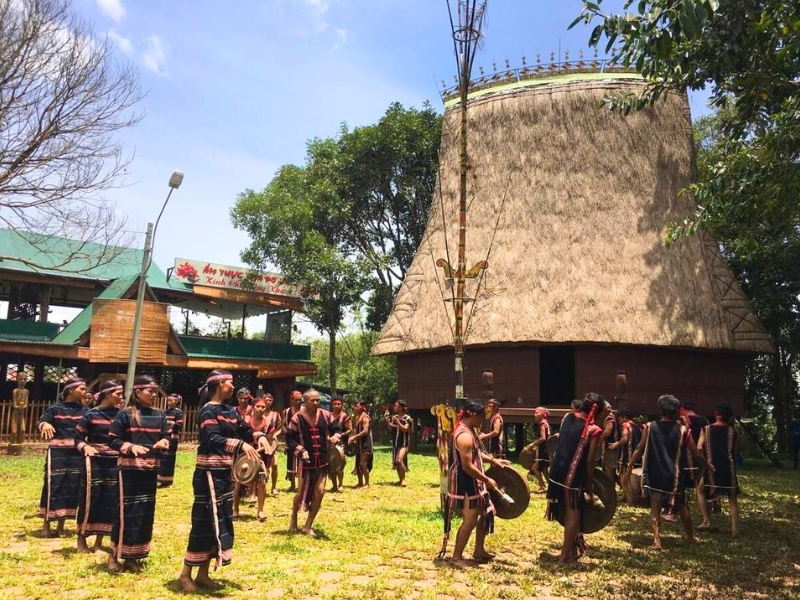
Plei Op Ethnic Village
Walking through the village, you can observe scenes of daily life, exchange words with inhabitants, and, if you wish, participate in some of their activities such as weaving or agricultural work. It is an essential stop for those wishing to discover the authentic soul of Pleiku and immerse themselves in the cultural richness of the Jrai people.
Minh Thanh Pagoda
Located at number 348 Nguyen Viet Xuan, in the Hoi Phu quarter, Minh Thanh Pagoda is often considered Pleiku’s most beautiful. From the entrance, it enchants with its tranquil atmosphere and carefully tended gardens, which recall the elegance of Japanese landscapes.
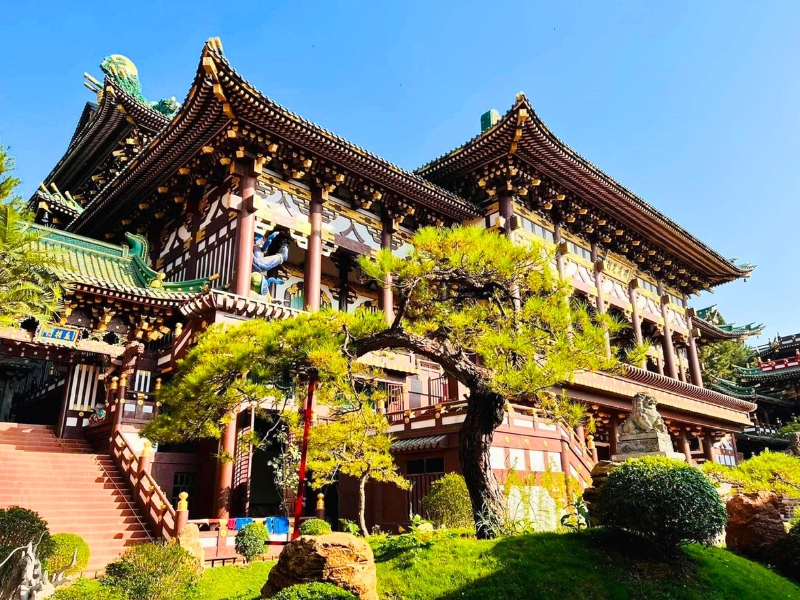
Inside the vast complex, numerous Buddha statues with ancient and solemn appearance invite contemplation. The vivid colors and refined architectural details, particularly in the rear of the building, harmoniously contrast with the serenity of the environment. Visible from afar, the pagoda stands proudly in the landscape, attracting both the faithful and curious travelers.
A place of worship but also a refuge of tranquility, Minh Thanh Pagoda is a must-visit stop for those wishing to combine cultural discovery and the pursuit of peace during a stay in Pleiku.
Pleiku Prison
Located on a hill in the Diên Hồng quarter, along Yết Kiêu street, Pleiku Prison is one of the city’s most significant historical vestiges. Built in 1925 during the colonial period, it initially served to detain common law prisoners, mostly from ethnic minorities of the Tây Nguyên.
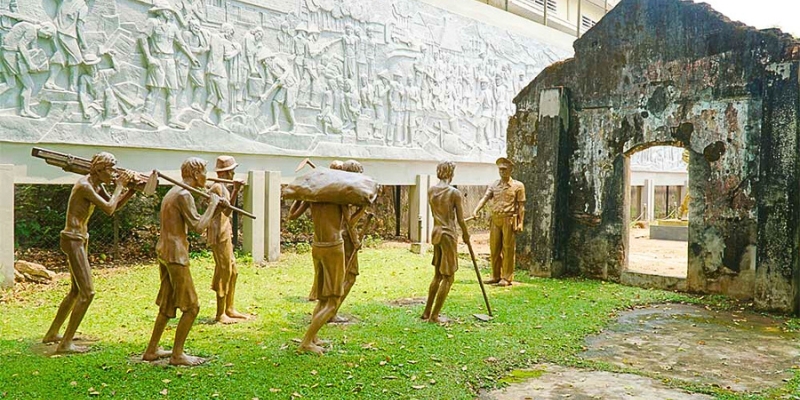
Pleiku Prison
In 1940, the site was transformed into a detention center for revolutionaries and patriotic fighters. Today, visiting this site gives you the impression of stepping back in time and reliving some of Vietnam’s most intense and painful historical moments.
The visit allows you to discover the cells, remains of walls, and moving testimonies that recall the harshness of prison life, but also the resilience and courage of those who were imprisoned there.
Tân Son Dam
Located in Nghia Hung commune, Chư Păh district, near Pleiku’s center, Tân Son Dam is often described as the city’s romantic and sweet “muse.” Its vast calm water surface reflects the nuances of the sky, while the green mountains and forests surrounding it compose a landscape of great natural beauty.
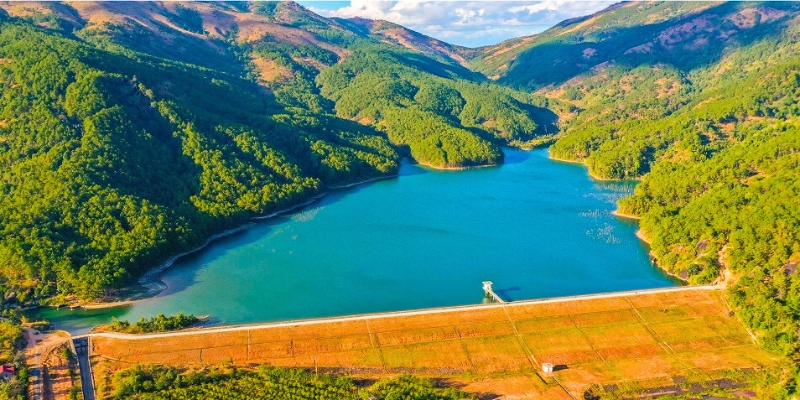
Tân Son Dam
The place invites relaxation: you come here to admire landscapes, listen to the gentle lapping of water, and breathe the pure air of the Highlands. Thanks to its proximity to the city, it is easy to include it in a day excursion, in combination with other nearby sites.
What to Eat in Pleiku?
Phở khô Gia Lai – the “Two-Bowl Phở”
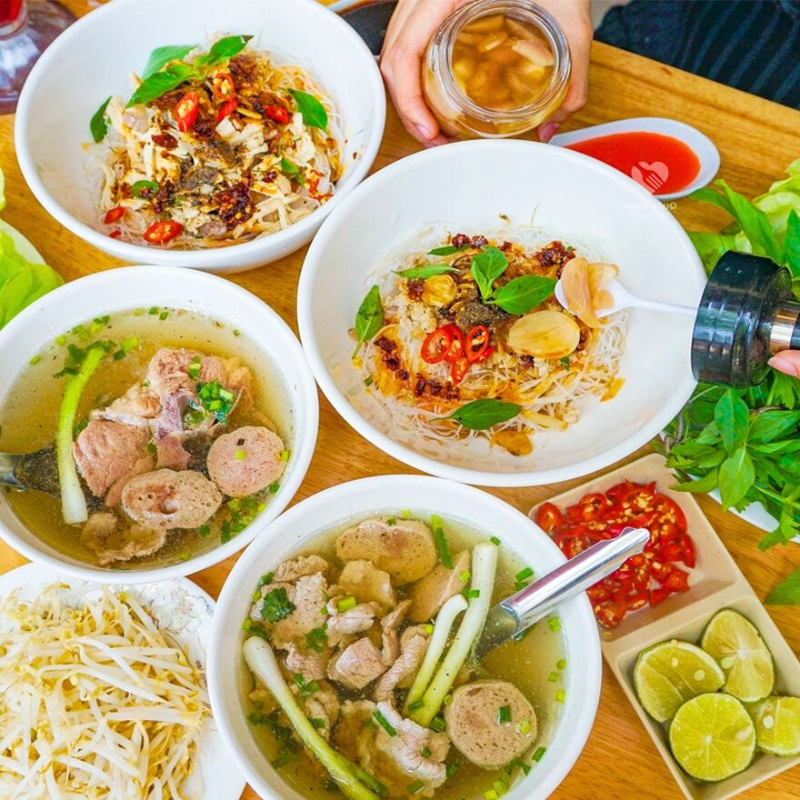
Phở khô Gia Lai – Two bowls, one delight of the Central Highlands
A true culinary emblem of Pleiku, phở khô (dry phở) distinguishes itself through its original presentation: one bowl of soft, fragrant rice noodles, garnished with sautéed beef slices, shredded chicken, scallions, and crispy fried onions; and, alongside, a second bowl containing clear, flavorful broth, long simmered with bones. The diner composes each bite according to personal taste, making the experience both playful and delicious. Recognized for its “Asian gastronomic value,” this dish unites refined flavors and local know-how.
Gà nướng (Grilled Chicken) – Cơm lam (Glutinous Rice Cooked in Bamboo)
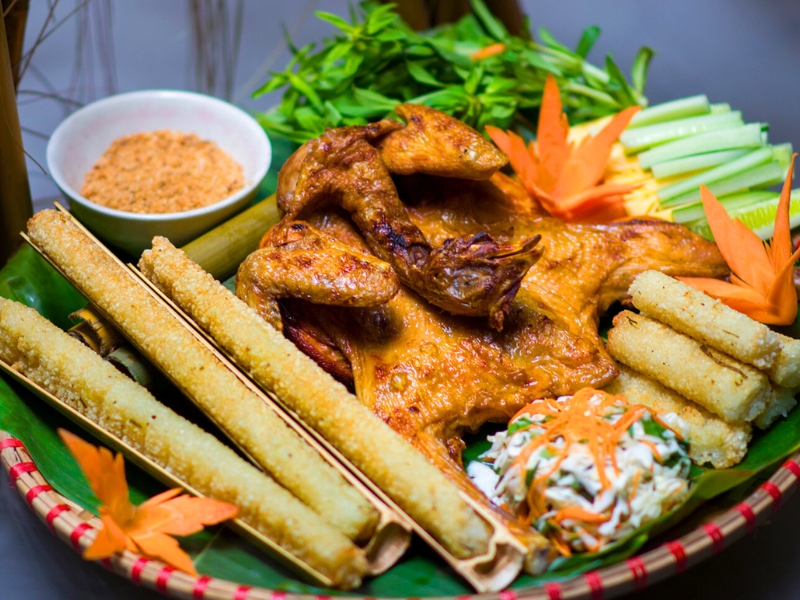
Gà nướng & Cơm lam – Smoky flavors and bamboo fragrance, an authentic taste of the mountains.
A symbol of Central Highlands flavors, this delicious pairing unites the smoky fragrance of gà nướng (grilled chicken) with the slightly sugary sweetness of cơm lam (glutinous rice cooked in bamboo). The chicken, marinated with local herbs, salt, pepper, and sometimes a drizzle of honey, is slowly roasted over coals, offering golden, crispy skin and succulent meat. The glutinous rice, steamed inside bamboo, retains all its softness and absorbs a delicate vegetable aroma. Served together, this flavorful duo embodies the hospitality and culinary authenticity of mountainous Vietnam.
Bò một nắng (Sun-Dried Beef) – Muối kiến vàng (Golden Ant Salt)
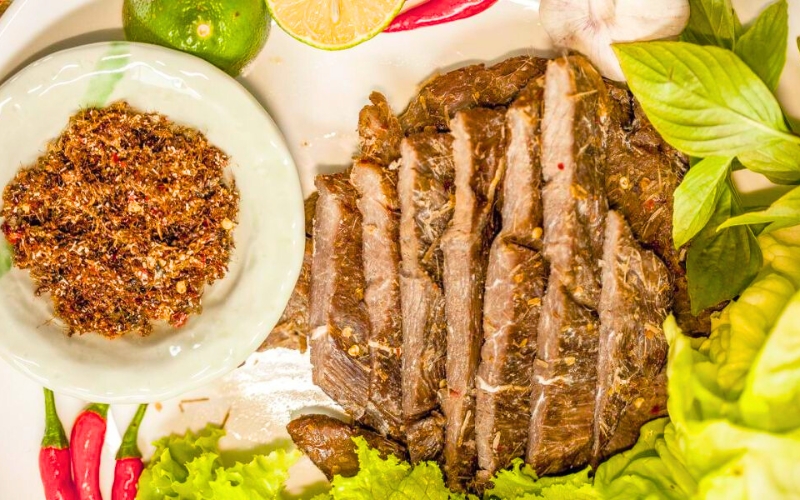
Bò một nắng & Muối kiến vàng – Unique alliance of sun and wild salt of the highlands.
An emblematic specialty of Gia Lai, bò một nắng is beef marinated with local spices, naturally sun-dried for a day, then grilled just before serving. The meat, at once tender and fragrant, develops irresistible smoky notes. It is accompanied by the celebrated muối kiến vàng, a salt flavored with golden ants, unique in its kind. This tangy and slightly spicy condiment enhances the richness of the meat, offering an authentic and surprising taste experience, typical of the Central Highlands.
Pleiku Coffee
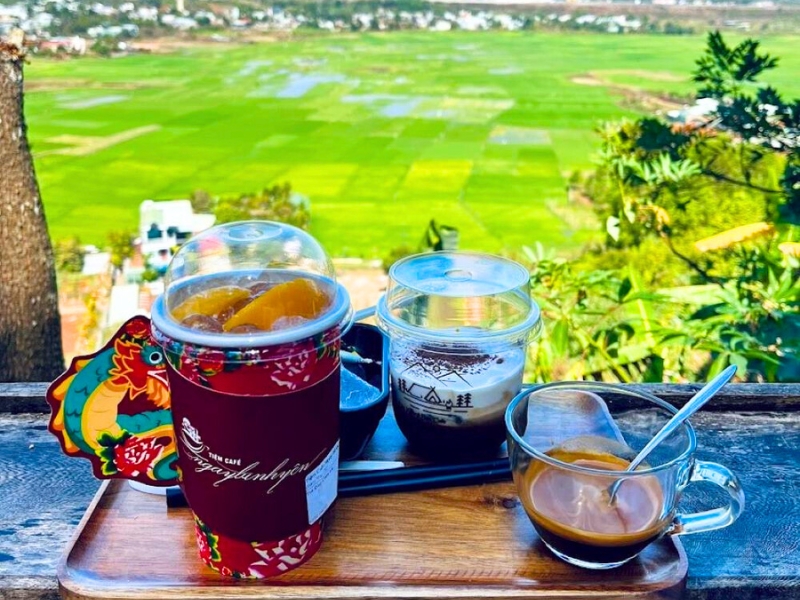
Pleiku Coffee – The intense and pure aroma of Vietnam’s Central Highlands
Situated on a fertile volcanic plateau, Pleiku is one of Vietnam’s symbolic coffee-growing locations. In its plantations, often family-run, Arabica and Robusta thrive thanks to an ideal climate. Enjoying a cà phê đen (black coffee) or a cà phê sữa đá (iced coffee with condensed milk) at a local shop means savoring all the richness of the territory: intense aromas, generous body, and a fine bitterness that lingers on the palate.
Practical Tips for Visiting Pleiku at Its Best
- Plan your itinerary: combine Pleiku with other Highland destinations like Kon Tum or Buon Ma Thuot for a more complete trip.
- Arrange a local guide: to access certain trails or understand village traditions, a local guide is a valuable resource.
- Be cautious on the road: mountain roads can be winding and sometimes slippery, especially during the rainy season (May to September).
- Visit outside peak tourist season: favor March-April or October-November for verdant landscapes and mild climate.
- Bring a good pair of shoes: essential for excursions around lakes, waterfalls, and extinct volcanoes.
- Protect yourself from the sun: hat, sunglasses, and sunscreen are essential even with cloudy skies.
- Bring a camera or binoculars: to capture the wildlife, flora, and spectacular landscapes of the region.
Pleiku, with its sparkling volcanic lakes, spectacular waterfalls, ethnic villages rich in tradition, and authentic gastronomy, embodies the living soul of the Central Highlands. Here time seems to slow down, leaving room for genuine encounters and breathtaking landscapes. Whether you are a nature lover, culture enthusiast, or seeker of local flavors, this city promises a deep immersion in a Vietnam that is at once wild and welcoming. Prepare your itinerary, open all your senses, and let Pleiku reveal its secrets to you… a journey you will not forget.


Our recommended itineraries
 Nature and Active travel
Northern Vietnam Explorer in 9 days and 8 nights
About ten days
Hanoi - Ha Long Bay - Saigon - Mekong Delta - Siem Reap - Luang Prabang - Pak Ou Caves - Kuang Si Waterfall
 Classic
Vietnam Exclusive in 13 Days
About 2 weeks
Hanoi - Bai Tu Long - Hue - Da Nang - Hoi An - Saigon - Mekong Delta