+84 9 75 46 33 10 (Whatsapp)
  info@horizon-vietnamtravel.com
  Français
  Español
  Português
  Deutsch

Travel Guide to Yen Bai, Jewel of Northwest Vietnam
Table of contents
Nestled in the heart of the mountains of Northwest Vietnam, Yen Bai province captivates with its spectacular landscapes and peaceful atmosphere. Known for the terraced rice fields of Mu Cang Chai, ranked among Asia’s most beautiful, its traditional Thai villages, and its glistening lakes like Thac Ba, this destination remains largely untouched by mass tourism. Between spectacular nature, encounters with ethnic minorities, and immersion in a living culture, Yen Bai offers an authentic journey, far from the beaten path. In this complete guide, discover when to travel, what to see, how to get there, and all the experiences not to be missed to fully live your adventure in Northwest Vietnam.
Where is Yen Bai located?
Located approximately 200 km northwest of Hanoi, Yen Bai province occupies a strategic position on the axis connecting Vietnam’s capital to Lao Cai and Sapa, or even Ha Giang. It sits at the crossroads of the spectacular landscapes of the mountainous Northwest and the gentle hills of the Northeast, offering a unique natural contrast.
Yen Bai is an ideal stop to break up a long journey to the north or to fully immerse yourself in local life: stay in traditional Thai villages, taste regional specialties, and discover verdant valleys that change color with the seasons.
Best time to visit Yen Bai
Yen Bai province can be visited year-round, but each season reveals a unique face and atmosphere. Depending on your desires — photography, relaxation, cultural discovery — some periods are particularly recommended.
- May – June: The water season
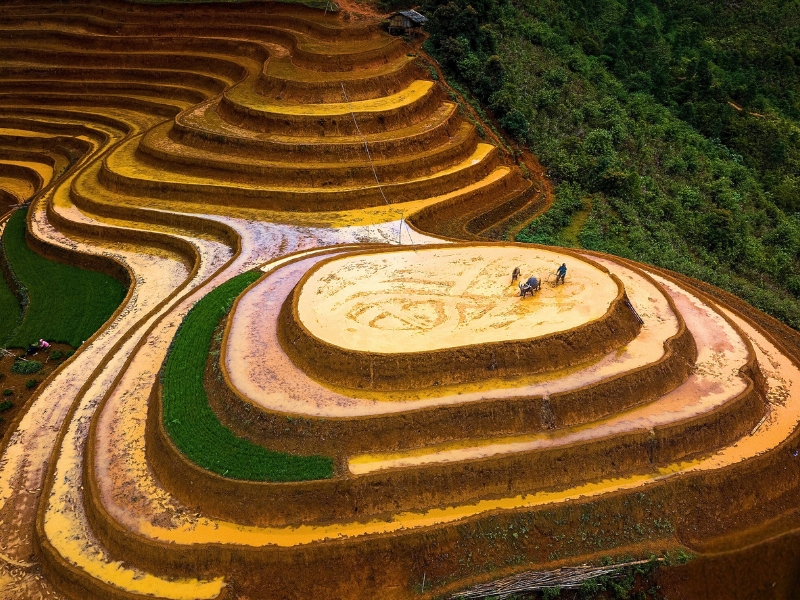
Mu Cang Chai in the water season
After the first rains, the terraced rice fields fill with water and transform into natural mirrors. The reflections of the sky, clouds, and mountains create poetic and ephemeral landscapes, perfect for photographers and lovers of unique panoramas. At Mu Cang Chai, this period is magical for observing farmers at work as they prepare fields for the new harvest.
- September – October: The golden season of ripe rice
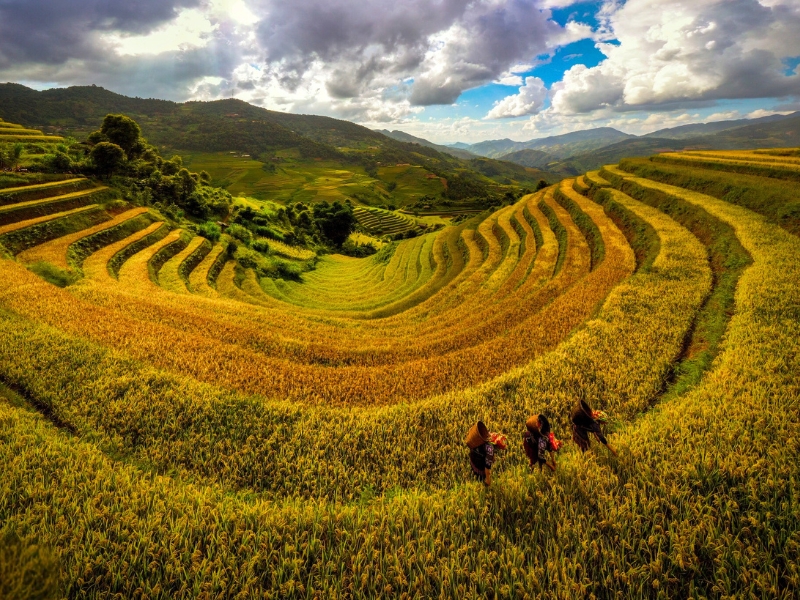
Mu Cang Chai in the golden season
This is the peak time to visit Yen Bai. The rice fields wear a splendid golden cloak, undulating to the rhythm of the wind. Valleys and hills take on warm and luminous tones, offering spectacular scenes at sunrise and sunset. This period attracts numerous photographers and travelers seeking the most beautiful images of Vietnamese Northwest.
- December – January: Peaceful winter and hot springs
Winter fog envelops the mountains, giving the region a sweet and mysterious atmosphere. It is the ideal season to enjoy natural hot springs, highly appreciated by both locals and visitors. Between landscapes shrouded in mist and moments of relaxation, it is a perfect time for a rejuvenating journey.
💡 Traveler’s tip: If your goal is to photograph the rice fields at their peak, prioritize late September or early October, when the fields are completely golden but before harvest.
How to get to Yen Bai?
Reaching Yen Bai from Hanoi is simple, with several options suited to all budgets and travel styles:
- By private car: Plan for approximately 3 – 3.5 hours of travel. It is the most comfortable and flexible option, allowing you to stop for photos, visit villages along the way, or taste local specialties. If you travel with Horizon Vietnam, private vehicle transfer is included in your customized travel offer, guaranteeing you comfort and peace of mind. For independent bookings, budget between 120 to 160 USD for a private taxi (up to 4 people) or around 25 USD per person via high-end shared transfer platforms.
- By overnight bus: An economical and practical solution, with an average fare of 8.5 to 11 USD (200,000 – 250,000 VND). The journey takes about 4 hours from Hanoi’s northern terminal. Buses are equipped with reclining berths for complete traveling comfort.
- By train: About 5 hours of travel, starting from 14 to 16 USD (335,000 – 387,000 VND) depending on the class and booking time. It is a means appreciated by travelers for enjoying landscapes along the way and experiencing authentic local flavor.
Where to stay in Yen Bai?
Yen Bai offers a variety of accommodations ranging from simple city hotels to stays with local families in authentic villages. Whether you seek comfort or cultural immersion, you will find an option suited to your travel style.
In the city of Yen Bai
Staying in the center of Yen Bai city offers convenient access to services, restaurants, and main transportation, making it an excellent base for exploring the province. You will find charming and affordable small hotels, often family-run, where hospitality is warm and personalized. Streets Tran Phu, Thanh Cong, Tran Hung Dao, and Ly Thuong Kiet concentrate several well-positioned accommodations, allowing travelers to move easily to various sites of interest. This accommodation choice is particularly suited to those wishing to combine comfort, convenience, and proximity to urban infrastructure while still being within reach of the region’s scenic landscapes and charming villages.
With locals in surrounding villages
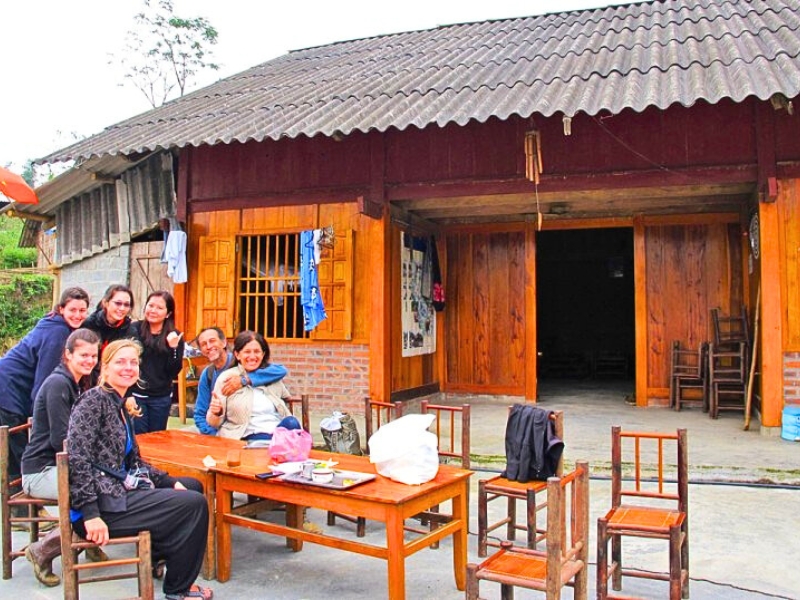
With a local family in La Pan Tân village
Choosing a homestay is an excellent way to experience authenticity. In villages like La Pan Tan or Nam Khat, just a few kilometers from the city, families welcome visitors into their stilt houses built with natural materials. You will share traditional meals, taste local rice alcohol, and discover the daily life of the inhabitants.
Nghia Lo and Thai villages
Nghia Lo is another must-visit destination for overnight stays. Here you will find comfortable hotels, but also numerous homestays in surrounding Thai villages such as Ban Xa Ren, Ban Deu, or Ban Chao Ha. These stays allow you to immerse yourself in Thai culture, witness traditional dance performances, or participate in meal preparation.
What to see and do in Yen Bai?
Yen Bai province is a concentration of spectacular landscapes, preserved traditions, and human encounters. Here are the places and experiences not to be missed to discover all the richness of this region in Northwest Vietnam.
Mu Cang Chai
The terraced rice fields of Mu Cang Chai were classified as a national heritage site in 2007 and later recognized as a special national relic in 2019. They extend over 500 hectares in the communes of La Pan Tẩn, Chế Cu Nha, and Dê Xu Phinh, shaped by generations of Hmong ethnic groups.
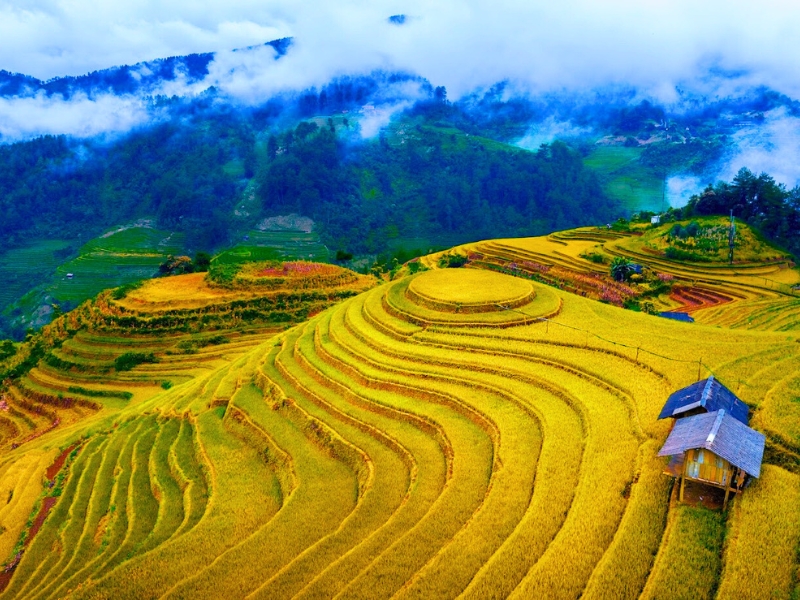
Mu Cang Chai – Splendor of terraced rice fields, golden jewel of Northwest Vietnam
Every autumn, during the harvest season, the region takes on a brilliant golden tone. It is also the time of the paragliding festival “Flying Over the Golden Season”, organized at Khau Pha pass, over 1,200 m high. This event attracts numerous photographers and travelers coming to admire the panoramas from above.
Among the sites not to be missed is the “Mâm Xôi” hill, about 8 km from Mu Cang Chai center. Accessible by local motorbike-taxi, it offers a spectacular circular view over the rice fields, particularly beautiful at sunrise and sunset, between late September and early October. Admission is generally around 20,000 – 30,000 VND.
Thac Ba Lake and Dao “white pants” villages
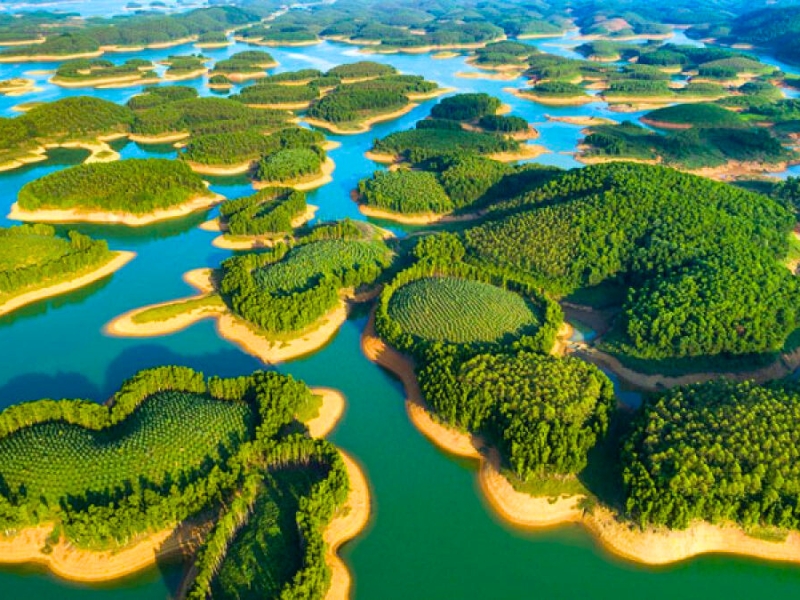
Thac Ba Lake – A thousand islets and a thousand reflections, the aquatic jewel of Yen Bai
An immense emerald lake dotted with islets, Thac Ba is discovered by sampan or motorboat to glide among palm trees, caves, and limestone crests. On its shores, the cultural village of Ngoi Tu (commune of Vu Linh) offers homestays and encounters with the Dao “white pants” people: intricate object-weaving, brocades, ritual dances, and communal meals under stilt houses. It is the perfect stop for a gentle and authentic immersion.
Nghia Lo and the Muong Lo valley
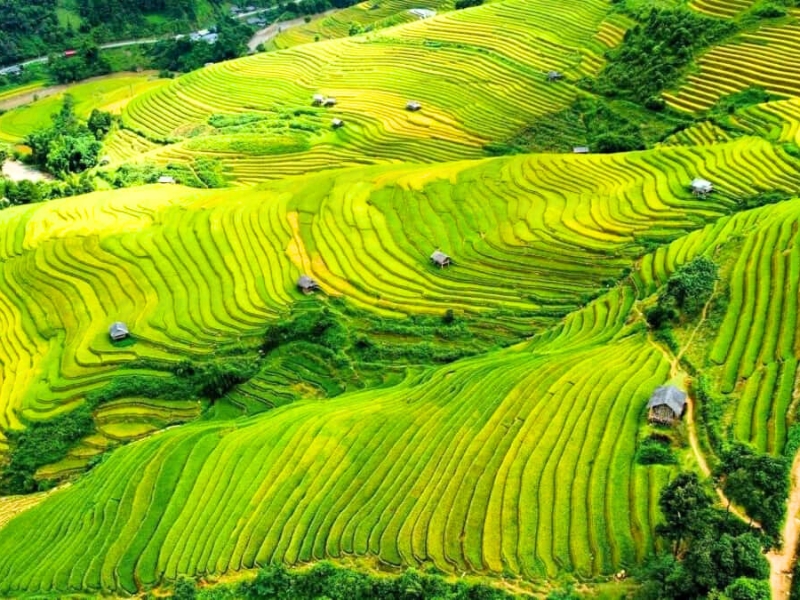
Nghia Lo, Yen Bai – In the heart of the Muong Lo valley, between golden rice fields and Black Thai living culture
Nghia Lo is the gateway to the vast Muong Lo valley, considered the great rice granary of the region and a heartland of Black Thai culture. In the evening, let yourself be transported by the Xoe Thai dance, inscribed in UNESCO’s intangible cultural heritage, during festivals and traditional performances. A homestay in Thai villages, called Ban in the local language, such as the villages of Xa Ren, Deu, or Chao Ha, allows you to share meals cooked over a wood fire, discover ancestral weaving techniques, and listen to stories handed down from generation to generation around the fire.
Suoi Giang
Perched on the slopes of Van Chan district, the commune of Suoi Giang is renowned for its shan tuyet teas, produced from trees over a hundred years old, some exceeding 300 years. These giant tea trees, covered with fine white down that gave them their name (shan tuyet means “mountain snow”), offer rare leaves transformed into green, white, or black teas with powerful and refined character.
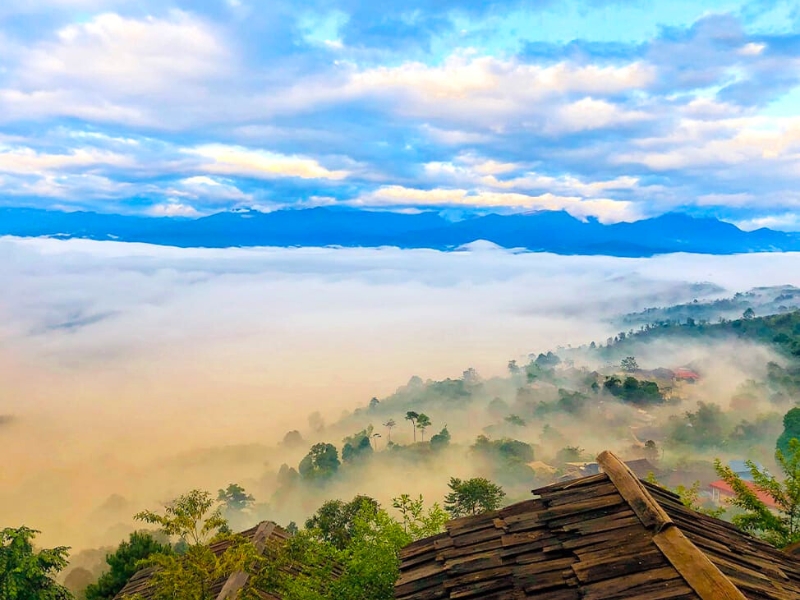
Suoi Giang, Yen Bai – Land of century-old shan tuyet tea, between mountains and clouds
A visit to Suoi Giang is an opportunity to participate in a tasting workshop with producing families, understand the ancestral knowledge of harvesting and processing, and let yourself be enveloped by the delicate scents of fresh leaves. Nestled between rice fields and mountains, the region offers a peaceful setting, ideal for a sensory and cultural break in the heart of Northwest Vietnam.
Ta Chi Nhu
The highest peak in the province, Ta Chi Nhu rises to 2,979 meters in Tram Tau district, offering experienced hikers and nature lovers alike a unique panorama over the mountains of Northwest. This peak is particularly appreciated by “cloud hunters”, travelers seeking spectacular seas of clouds that stretch as far as the eye can see at first light.
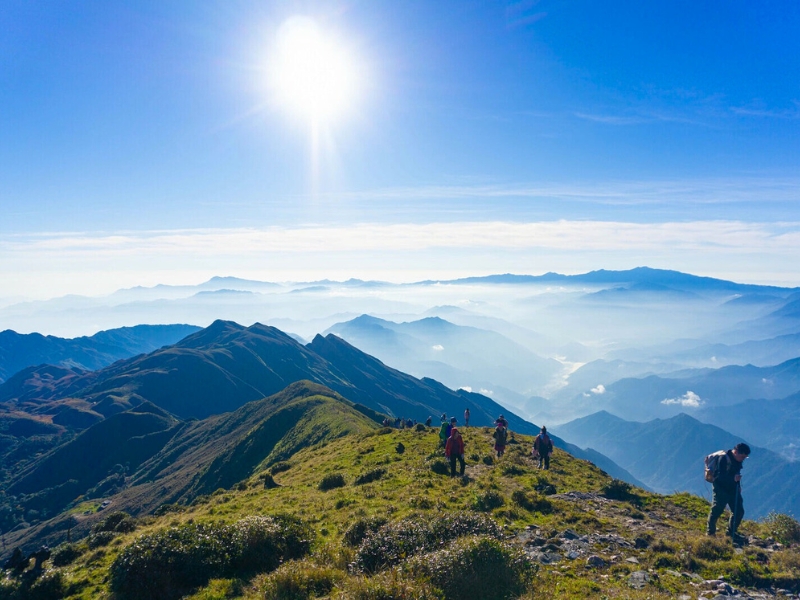
Hiking to Ta Chi Nhu, on the roof of Yen Bai, among seas of clouds and majestic peaks
From September to April, the mountain also reveals the delicate splendor of chi pau flowers, small violet petals that blanket the slopes and add a poetic touch to the landscape. The ascent, challenging, is ideally undertaken with a French-speaking guide to benefit from their knowledge and ensure safety. A night in a shelter or tent at base camp allows you to experience the full adventure and witness, from the summit, an unforgettable sunrise over an ocean of clouds.
Conclusion
At Yen Bai, the journey takes on another dimension. Here time seems to slow down and every landscape invites contemplation, every encounter invites sharing. From the terraced rice fields of Mu Cang Chai, which take turns adorning themselves with silvery reflections or brilliant gold, to the calm and mysterious waters of Thac Ba lake, the province unfolds a natural scenario of rare beauty. You will also discover the living soul of the Thai villages of Nghia Lo, where hospitality is read in every gesture, and the subtle fragrance of Shan Tuyet tea at Suoi Giang, cultivated by generations on steep slopes. Colorful markets, trekking trails through valleys and mountains, evenings around a traditional meal… so many simple moments that leave a lasting impression. Take the time to travel these lands, let yourself be surprised by a panorama, speak with a craftsperson, or taste a dish prepared with care. Yen Bai is not just a place to visit, it is a corner of Vietnam that you carry with you, in memory as in heart.



Our recommended itineraries
 Nature and Active travel
Northern Vietnam Explorer in 9 days and 8 nights
About ten days
Hanoi - Ha Long Bay - Saigon - Mekong Delta - Siem Reap - Luang Prabang - Pak Ou Caves - Kuang Si Waterfall
 Classic
Vietnam Exclusive in 13 Days
About 2 weeks
Hanoi - Bai Tu Long - Hue - Da Nang - Hoi An - Saigon - Mekong Delta