+84 9 75 46 33 10 (Whatsapp)
  info@horizon-vietnamtravel.com
  Français
  Español
  Português
  Deutsch

Bac Ha – Encounter with Vietnam’s Ethnic Groups
Table of contents
Nestled at 700 meters of altitude in the Upper Tonkin region, Bac Ha, nicknamed the “little Sapa“, is a true gem for nature lovers and trekking enthusiasts. Less developed from a tourism perspective, this region offers an authentic experience away from the beaten path. Bac Ha captivates with its vibrant Sunday market, where local ethnic groups gather, offering a unique immersion into the culture of the northern mountain communities of Vietnam. It is an ideal opportunity to discover the lives of local populations and admire the magnificent terraced rice fields surrounded by majestic mountains.
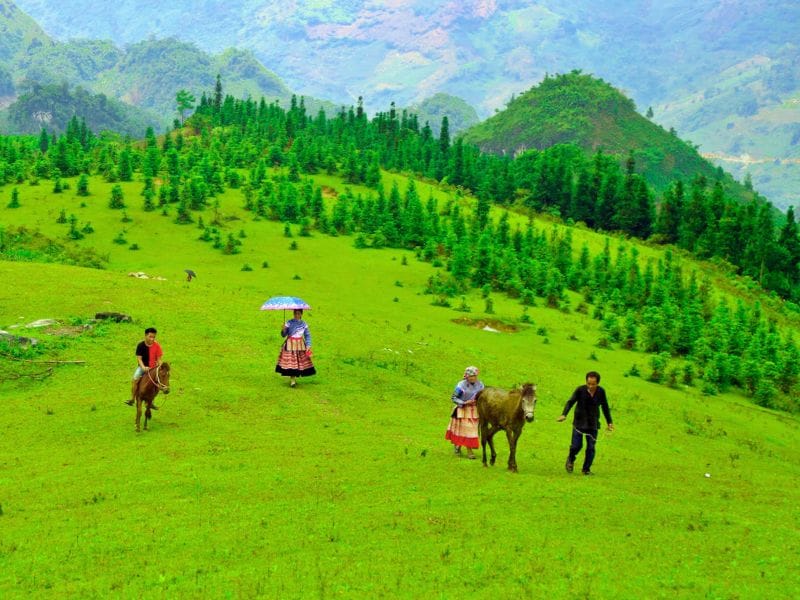
Moreover, the Bac Ha region offers a splendid view of the rice fields of Vietnam in the heart of the mountains. What joy to take some excursions, traveling from village to village discovering the people and their smiles!
As is often the case in many places, spending a night with a local family in Bac Ha will make your experience even more beautiful. Horizon Vietnam Travel presents to you the Bac Ha guide. Weather, accommodations, dining, sites to discover – we provide you with all our best advice and information.
Ethnic Groups of Bac Ha
Bac Ha is not only a paradise for hikers, but also an ideal place to meet inhabitants belonging to different ethnic minorities. For example, the Hmong live in villages perched among terraced fields, creating breathtaking landscapes. Their culture is deeply connected to agriculture, mainly rice cultivation and raising animals such as buffalo, horses, and pigs. The Hmong are also very skilled in handicrafts, particularly in the production of textiles, silver jewelry, and other artisanal objects.

Artisanal jewelry at the Bac Ha market
In addition to the Hmong, the Dao are present in Bac Ha and are renowned for their expertise in cotton cultivation, weaving, and silver jewelry making. Their traditional costumes, adorned with embroidery and silver flowers, add a colorful touch to the atmosphere of local markets.
They are the ones who toil and labor to create magnificent landscapes, shaping the terraced fields that the world wants to photograph! Their ancestors could hardly have imagined that their work would become a true tourist attraction years later. In fact, it was for practical reasons that they designed these stepped mountains. As Galileo demonstrated, water does not stay on a slope and it is necessary for rice cultivation! Even today, the majority of the ethnic groups live from agriculture.
The Flower Hmong
Bac Ha is considered the capital of the Hoa Hmong, one of Vietnam’s most dynamic ethnic groups. In addition to rice activities, the Hmong raise buffalo, cattle, pigs, poultry, and horses. The latter serve as pack animals, very effective in high mountain regions. For this reason, the horse is very close to Hmong families.
Hmong inhabitants excel in handicrafts, such as leather tanning, blacksmithing, making saddles for horses, furniture, wooden containers, and silver ornaments. Hmong markets constitute a place for the exchange of goods, meetings between friends or between boys and girls. It is a typical trait of the Hmong from the high border mountains of the North. At the market, they bring on horseback corn, vegetables, and bundles of firewood. The pot-au-feu “Thang co” is greatly appreciated by the Hmong, composed of meat of all kinds, bones, offal, liver, heart, and beef lungs cut into small pieces and cooked in a large pan.
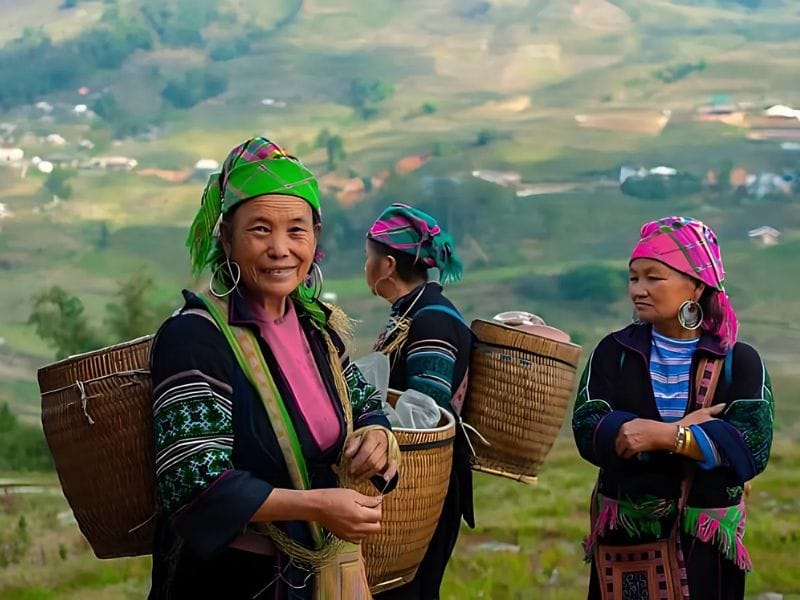
The Bac Ha region is a land of residence for numerous ethnic minorities of Vietnam.
The Dao
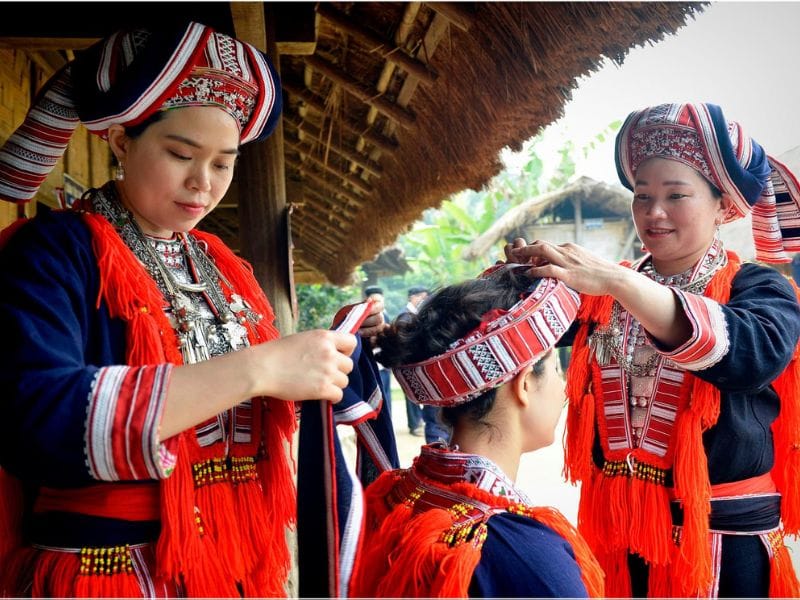
The Dao
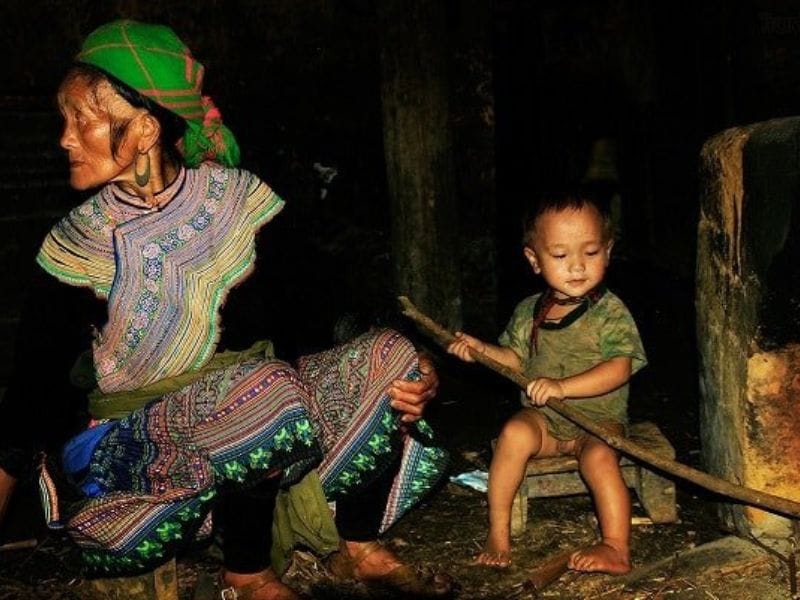
Different populations can be distinguished within the same ethnic group. The Dao with white pants, the Dao in tunic, and the red Dao. Like the Hmong, they raise buffalo, cattle, pigs, and chickens on the slopes of mountains. The Dao woman wears a chignon surrounded by a scarf. The collar of her jacket is embroidered with vivid colored patterns while eight-petaled silver flowers are pinned on her chest.
The Dao are very skilled in cotton cultivation, weaving, and handicrafts. The manufacture of silver objects, essentially necklaces, bracelets, neck or foot rings, earrings, chains, betel boxes… It is a craft passed down from father to son. The Dao practice ancestor worship and adopt primitive beliefs and agricultural rites. They also practice Buddhism and especially Taoism. An important event among the Dao is the “Cap Sac”, a traditional ceremony for young Dao reaching adulthood.
The Phu La
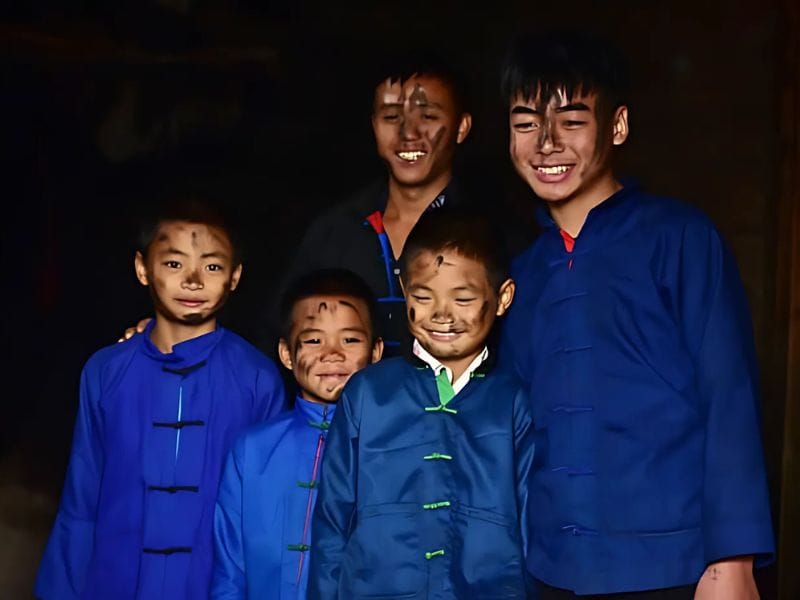
The Phu La
The Phu La are a small ethnic group of about 6,500 people. They live grouped in small villages. Depending on the location, they live in earth houses or on stilts. The grain store is built away from the house, safe from fire. The Phu La practice slash-and-burn agriculture and work in terraced rice fields. The Phu La also practice cotton cultivation and weaving to meet the family’s clothing needs. Taking advantage of the moments when she is at home, the woman detangles the cotton and spins it.
Where is Bac Ha Located?
Bac Ha is a rural district in Lao Cai province, located in the northeast region of Vietnam. With an area of 681 km², Bac Ha has a population of 67,472 inhabitants, composed of 18 ethnic groups. Among these, the H’Mong represent more than 47% of the district’s total population. The other ethnic groups include the Kinh, the Dao Tuyen (Man Den), the Tay, the Nung, the Phu La, the Hoa, and many others.
The Bac Ha district is located at an altitude between 1,000 and 1,500 meters above sea level. The climate is cool throughout the year and the Bac Ha plateau is a region that preserves unique cultural characteristics and offers magnificent high mountain landscapes.
The name Bac Ha derives from the Tay term “Pac Kha”, which means “hundred bundles of gianh” (a type of bamboo). During the French colonial period, the French transcribed the sound Pac Kha into Latin alphabet in the form Pakha. Subsequently, the Vietnamese read it as Bac Ha, which gradually became the official name of this region.
How to Get to Bac Ha?
Bac Ha is located approximately 65 km from the center of Lao Cai city; from Lao Cai it is possible to take a local bus or a private vehicle. From Hanoi, you must first reach Lao Cai. You can arrive at Lao Cai by train or bus.
By Train

By train
The journey by overnight train lasts approximately 8 or 9 hours. You depart from Hanoi around 10 p.m. and arrive at Lao Cai at 5 a.m. The train stops only at Lao Cai, the province to which Sapa and Bac Ha belong. Then it takes an additional hour to reach Bac Ha from Lao Cai station. The journey is, however, picturesque in a sleeper car from another era but with all the comforts! You enjoy jungle landscapes along the entire route.
By Bus
There are daily buses departing from Hanoi at 6:30 a.m. or 10 p.m. The one-way journey lasts between 6 and 7 hours.
Traveling by bus is both fast and arrives directly in Bac Ha without stopping at Lao Cai like the train. If you take a private car, you can even reach Bac Ha in 5 hours. You will find more information about bus schedules and reservations here: https://www.hanoisapatrain.com/sapa-bus.html
Bac Ha Map
Trekking in Bac Ha
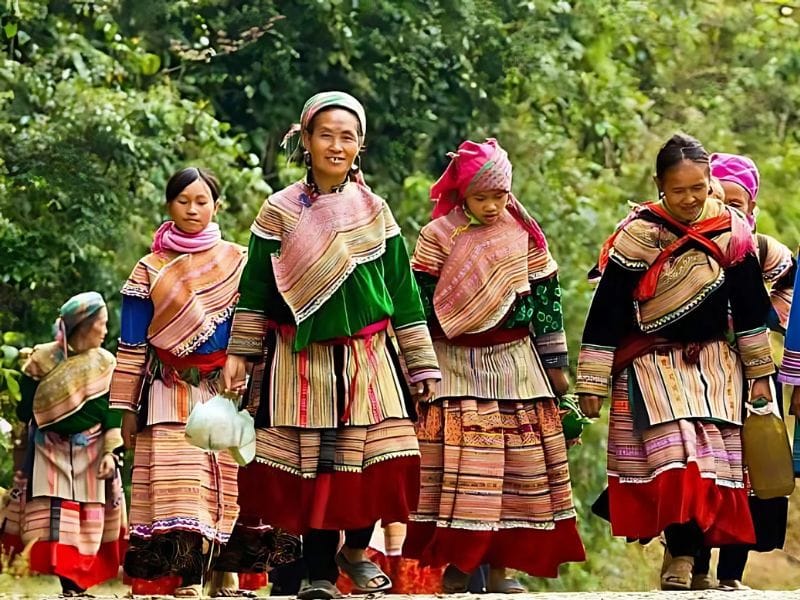
Colorful ethnic groups in Bac Ha
Being a mountainous region, Bac Ha and its surroundings abound with trekking routes that offer spectacular views and photography. You can walk from village to village to perceive the local atmosphere. We recommend you be accompanied by a guide.
The flower Hmong villages, the Lung Phing valley, discovering the black Dzao and Ha Nhi minorities as well as magnificent rice and corn fields are accessible on foot. Along the way, you can see numerous fruit plantations of schools. Children are also happy when you take photos with them – it is a memory for them as well.
Bac Ha Market

Hmong women at the Bac Ha market
What also deserves a detour to Bac Ha is the Sunday market. Every Sunday morning, inhabitants from throughout the region gather in Bac Ha, and it becomes a cacophony of colors, sounds, and dynamism. Members of the surrounding mountain tribes come to shop and sell, making this a fantastic opportunity to see a range of ethnic groups in a single setting.
Women and men from surrounding communities, all dressed in elaborate costumes, their best Sunday outfit, gather here to trade for more than a century. It is an opportunity to stock up on fresh products, purchase clothing and fabrics, but it is also a social bath with other village inhabitants. Many people travel long distances on foot or by motorbike to participate in it.
What to Eat in Bac Ha?
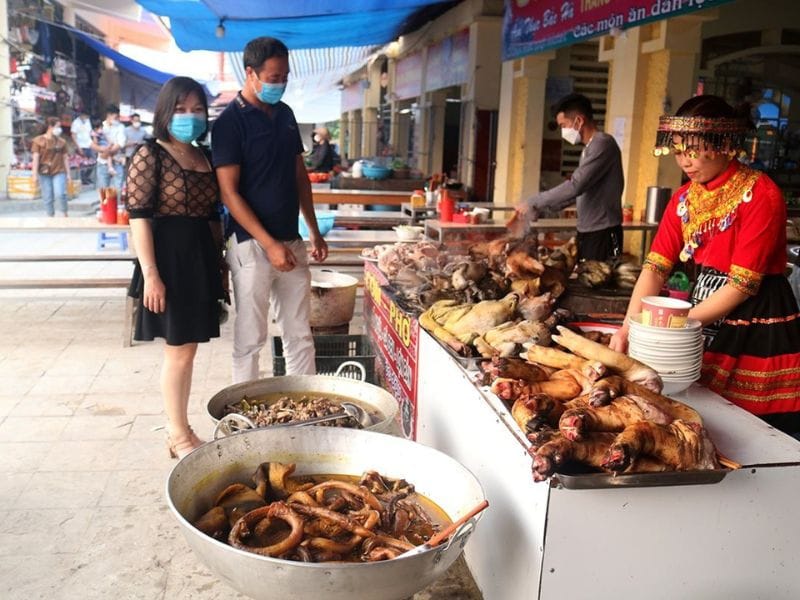
What to Eat in Bac Ha
One of the best places to eat authentic food is the market! Not only do the products here deserve to be purchased, but the food is also worth tasting. Speaking of food at the Bac Ha market, if you feel the soul of an adventurer you must try the “thang co”, a special food originating from Bac Ha. The “thang co” is composed of horse meat and offal, with some spices and herbs, cooked in a large wok. This dish is one of the specialties most appreciated by the local people!
Perhaps easier to handle, five-colored sticky rice, “men men” and “banh duc” made from corn are exceptional dishes that you can taste at small prices!
Where to Stay?
Bac Ha is a mountain village. Located 3 hours from Sapa, the choice of accommodations in Bac Ha is more limited. Most hotels are small but you can still find some choice. The Bac Ha district offers around 50 accommodations in the surrounding area, of which 23 are hotels.
The most interesting solution is to stay with local families in surrounding villages such as the Pho village, the villages of Na Lo (Ta Chai), Trung Do (Bao Nhai), Na Hoi Tay, and Na Hoi Nung.
Bac Ha Video
Itineraries That Include Bac Ha
So, if you wish to visit Bac Ha, you can consult our itineraries. We can offer you a repertoire of must-see sites and off-the-beaten-path locations. Subsequently, you will be free to customize them by making your modifications at your pleasure, based on your tastes, your availability, your means, but also on weather conditions…, in order to plan your personal itinerary in the north of Vietnam.
If you want to start building your trip, consult our guide to building Vietnam itineraries from north to south!
Vietnamese Encounter 13 Days
Hanoi – Nghia Lo – Mu Cang Chai – Sapa – Bac Ha – Hanoi – Ninh Binh – Ha Long Bay
Intended for travelers with limited time who wish to discover in depth the diverse facets of the north, here is a truly authentic itinerary far off the beaten path toward the extremities of North Vietnam.
With a Local in Vietnam in 14 Days
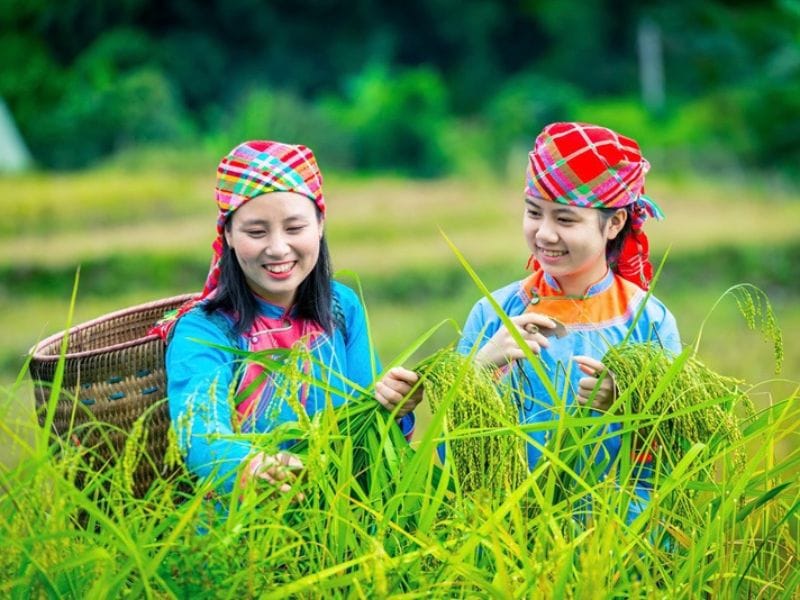
Hanoi – Lam Thuong – Hoang Su Phi – Bac Ha – Sapa – Mai Chau – Ninh Binh – Bai Tu Long Bay
As the name indicates, this beautiful itinerary will take you to stay with local families. Through splendid mountainous regions of the Northwest of Vietnam, which undoubtedly rank among the most beautiful mountainous regions of Asia. The change of scenery is total: winding and descending paths, wide valleys of tender green, small straw villages hidden in the shade of bamboo forests; small rivers flowing at the foot of exceptional mountains. Finally, a splendid 2-day and 1-night cruise in Ha Long Bay will close this unforgettable journey!
Splendor of the North 3 Weeks
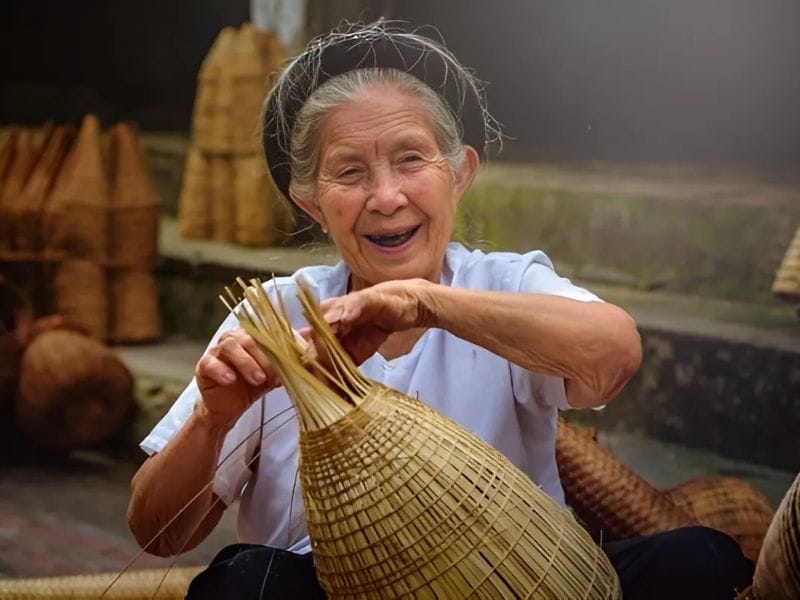
Hanoi – Nghia Lo – Mu Cang Chai – Sapa – Bac Ha – Ha Giang – Quan Ba – Dong Van – Meo Vac – Bao Lac – Cao Bang – Ba Be – Ninh Binh – Bai Tu Long
This completely new and comprehensive program “SPLENDOR OF THE NORTH” is designed to help you discover the North in depth and off the beaten path. You will pass through superb mountain landscapes, rocky peaks, splendid terraced rice fields. You will visit villages perched and surrounded by mountains and mists, paradisiacal sites covered in lush jungle. This journey brings you above all into a warm encounter with ethnic minorities. They still live at the pace of their ancestral traditions and in the most beautiful “tribal markets” of Asia. This is the true treasure: the smile of its inhabitants! A mosaic of ethnicities, a whirlwind of vibrant cultures and customs.
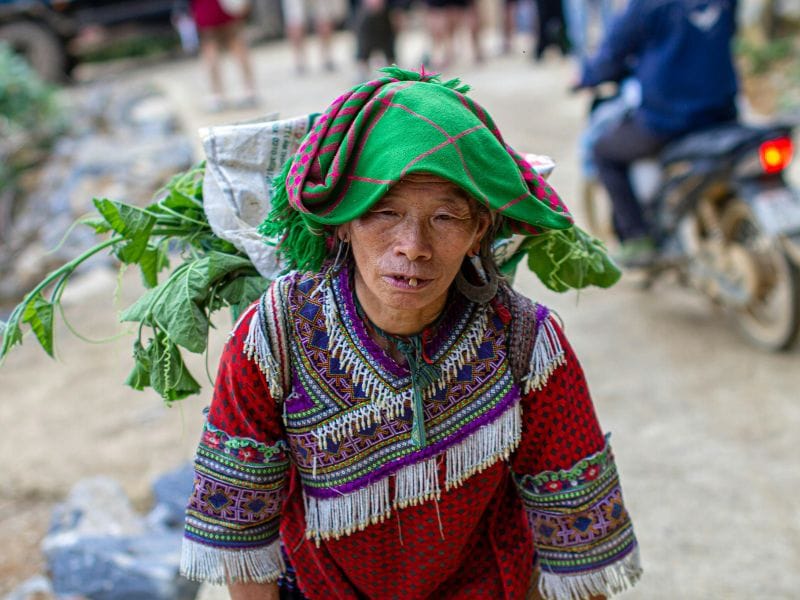
Hanoi – Sapa – Bac Ha – Pu Luong – Ninh Binh – Ha Long Bay
This beautiful 11-day itinerary in the Northwest of Vietnam, Upper Tonkin, takes you through the most beautiful landscapes of Upper Tonkin. The warm encounter with numerous colorful ethnic minorities, as welcoming as they are fascinating, is the main spirit of the journey.



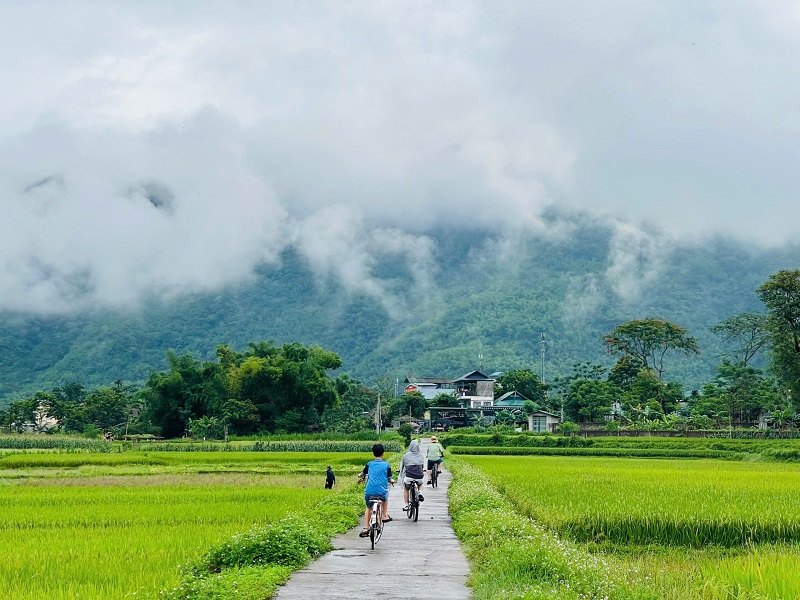
Our recommended itineraries
 Nature and Active travel
Northern Vietnam Explorer in 9 days and 8 nights
About ten days
Hanoi - Ha Long Bay - Saigon - Mekong Delta - Siem Reap - Luang Prabang - Pak Ou Caves - Kuang Si Waterfall
 Classic
Vietnam Exclusive in 13 Days
About 2 weeks
Hanoi - Bai Tu Long - Hue - Da Nang - Hoi An - Saigon - Mekong Delta