+84 9 75 46 33 10 (Whatsapp)
  info@horizon-vietnamtravel.com
  Français
  Español
  Português
  Deutsch

Vietnam Ethnography Museum: Discovering the 54 Ethnic Groups
Table of contents
Just a few kilometers from the hustle of old Hanoi, the Vietnam Ethnography Museum offers a singular escape: a journey through the human diversity of Vietnam. Here, the country’s 54 ethnic groups tell their stories through objects, sounds, traditional houses, and gestures of daily life. Conceived as a bridge between past and present, between tradition and modernity, the museum immerses us in the living cultures that shape Vietnamese identity. Each space is an invitation to understand, to feel, to marvel at the richness of a plural country, woven together by languages, beliefs, and artisanal knowledge. An essential visit for anyone who wishes to touch the deep soul of Vietnam.
1. General Information about the Vietnam Ethnography Museum
- Address: Nguyen Van Huyen Street, Cau Giay District, Hanoi
- Opening hours: from 8:30 AM to 5:30 PM, every day except Monday
- Phone: (+84) 24 3756 2193
- Email: information@vme.org.vn
- Official website: Click here to learn more
This emblematic Hanoi museum is one of the capital’s most frequented cultural venues. It offers visitors an immersive experience into the heart of Vietnam’s ethnic diversity through a vast collection of traditional objects, costumes, artisanal tools, house reconstructions, and interactive exhibitions.
Conceived in the 1990s and officially opened in 1997, the Vietnam Ethnography Museum has established itself as an essential point of reference in the preservation of ethnographic heritage. The quality of its exhibitions and the richness of its cultural content earned it the ranking of 4th place among the 25 best museums in Asia on TripAdvisor for three consecutive years (2012, 2013, 2014). A prestigious ranking that confirms its central role in Vietnam’s museum landscape.
Admission Fees at the Vietnam Ethnography Museum
A visit to the Museum is both accessible and affordable, with discounts available for various visitor categories. Here are the updated rates:
Admission ticket:
- Adult: 40,000 VND (~$1.65 USD)
- Reduced rate (-50%): 20,000 VND (~$0.80 USD) for elderly people and people with mild disabilities
Free admission for:
- Children under 6 years old
- People with severe disabilities
- ICOM card holders
- Museum members
- Journalists (with a valid press card)
- Sponsor representatives
2. History of the Vietnam Ethnography Museum
The history of the Vietnam Ethnography Museum dates back to the 1980s, a period still marked by post-war difficulties. It was in this context that the idea emerged of creating a space dedicated to the preservation and valorization of Vietnam’s ethnic cultures. Despite the economic challenges of the era, the project was pursued with conviction by researchers, anthropologists, and the country’s cultural institutions.
On October 24, 1995, the project became official with the Vietnamese Prime Minister’s decision to establish the museum. Two years later, on November 12, 1997, the museum opened its doors during an international event: the Francophone Summit in Hanoi, in the presence of President Jacques Chirac. This solemn moment marked not only the inauguration of the museum, but also the recognition of its strategic role in preserving the nation’s cultural heritage.
Since its opening, the museum has established itself as a leading cultural hub, simultaneously serving as a place of research, exhibition, and transmission. Beyond its permanent exhibitions, it hosts numerous cultural and educational events each year, reinforcing its place in Vietnam’s social and cultural life.
3. Architecture of the Vietnam Ethnography Museum
The architecture of the Vietnam Ethnography Museum reflects the desire to connect cultural tradition with contemporary vision, while creating an immersive and coherent experience for visitors. The site is divided into three major architectural spaces:
Trong Dong Building (Bronze Drum)

Entrance of the Trong Dong Building
Inaugurated in 1997, the Trong Dong Building (Bronze Drum) is the museum’s first exhibition space. It was designed by architect Ha Duc Lịnh, a member of the Tay ethnic group, who drew inspiration from the Dong Son bronze drum, an ancient and powerful symbol of Vietnamese civilization.
- Exhibition space: approximately 2,000 m², distributed over two levels
- Main function: to present the culture of Vietnam’s 54 ethnic groups through objects, images, films, models, and reconstructions
- Architectural conception: a sober, massive, and evocative building, at once modern and rooted in tradition

The atrium inside the Trong Dong Building
The design of this building favors a harmonious presentation of ethnographic collections, in an atmosphere that is both educational and immersive. Each space tells a story: that of a people, its habitat, its rituals, its artisanal knowledge. Visitors discover, in a structured way, the diversity of ways of life, languages, beliefs, and practices of Vietnamese communities.
Southeast Asia Building (Kite-Shaped Building)
Inaugurated in 2013, the Canh Dieu Building (kite wing) takes its name and inspiration from a traditional symbol of Southeast Asian peoples: the kite, a carrier of dreams, freedom, and community bonds.
-
Main theme: the cultures of Southeast Asia, Asia in general, and other regions of the world
-
Architecture: contemporary, airy, and symbolic, evoking lightness and elevation
-
Spaces included: permanent and temporary exhibitions, projection room, space for educational and interactive activities

Southeast Asia Building (Kite-Shaped Building)
Conceived as a cultural bridge between Vietnam and the rest of the world, this building reflects the museum’s ambition to embrace a global perspective. It allows the public to discover the richness and diversity of neighboring civilizations, while highlighting points of convergence and intercultural dialogue.
Architecture Garden
In the open air, the Architecture Garden of the Vietnam Ethnography Museum constitutes one of the most lively and fascinating spaces on the site. Spanning over 2 hectares, it faithfully recreates the traditional habitat of ten Vietnamese ethnic groups, in a green and relaxing setting.
Each house was built on a full scale, respecting original materials and authentic artisanal techniques, with the participation of craftspeople from the villages of the ethnic groups in question. These vernacular architectures allow for understanding the close relationships between people, nature, and culture in Vietnam’s various regions.

E-de ethnic house in the museum’s architecture garden
Among the emblematic constructions in the garden:
- The long house of the E-de
- The Rông house of the Bana, tall and majestic
- The stilt house of the Tày
- The funeral house of the Gia Rai
- And others such as those of the Dao, Ha Nhi, Cham, Hmong, Co Tu…
Surrounded by tropical trees, paved paths, and even an artificial stream, this garden offers an immersive sensory experience, where culture literally takes shape in space. It is an ideal location for family visits, educational workshops, or simply for a peaceful and inspiring discovery of rural cultures in Vietnam.
4. Exhibitions at the Vietnam Ethnography Museum
While the museum’s spectacular architecture initially captures attention, it is above all the richness of its exhibitions that leaves a lasting impression. The Vietnam Ethnography Museum offers visitors a true journey through time via an exceptional collection of traditional objects from Vietnam’s 54 ethnic groups and other Southeast Asian peoples.
Permanent exhibitions: living testimony of Vietnam’s 54 ethnic groups
Located mainly in the Trong Dong Building, the permanent exhibition spans two levels, for a total of nearly 2,000 m². It is organized into 12 thematic spaces, each dedicated to one or more Vietnamese ethnic groups.

Exhibition space in the Southeast Asia Building
You will discover:
- Traditional costumes magnificently woven and embroidered,
- Artisanal objects from daily life: baskets, agricultural tools, kitchen utensils,
- Ritual objects: masks, altars, musical instruments, amulets,
- Archive photographs and documentary videos, which illustrate spiritual and community life.
Particular attention is paid to museography: objects are accompanied by explanatory texts in Vietnamese, English, and French, and multilingual printed materials are made freely available to visitors.

Exhibition space in the Southeast Asia Building
The Canh Dieu Building completes this immersion with exhibitions dedicated to the cultures of Southeast Asia, such as Indonesia, Thailand, Laos, Cambodia, or Burma. Various rooms are devoted to themes such as:
- Beliefs and rites of passage in Asia,
- Indonesian shadow puppet theater,
- Glass paintings,
- Transnational migrations.
Outside, the Architecture Garden presents 10 life-size traditional houses, offering an immersion in rural ways of life: you can enter, observe the structures, discover original materials, and better understand the logic of habitation according to each region.

Traditional Rông House of the Bana
Temporary exhibitions: a vibrant cultural schedule
The museum regularly hosts temporary exhibitions, which allow for renewing the experience of visitors and highlighting themes of current interest or in-depth research.
These exhibitions explore:
- Specific regional themes (e.g., the life of the Hmong in Northern Vietnam, beliefs of the Cham),
- Artisanal or festive traditions,
- International collaborations, such as exhibitions of ethnographic photographs or exchanges with other museums in Asia and Europe.
This programming makes the museum an active player in cultural diplomacy, valorizing Vietnamese heritage while promoting intercultural dialogue.
Virtual exhibitions: culture at your fingertips
Since the pandemic, the museum has developed an innovative digital offering. Thanks to immersive technologies, visitors can now access a selection of exhibitions through virtual tours, from their computers or smartphones.
These interactive contents allow you to:
- Navigate exhibitions in 3D,
- Read multilingual explanatory texts,
- View videos and animations,
- Discover digitized objects from every angle.
A modern and inclusive way to let Vietnamese culture shine throughout the world, adapting to the new expectations of audiences.
5. Activities to Do at the Vietnam Ethnography Museum
Immerse yourself in the culture of the 54 ethnic groups
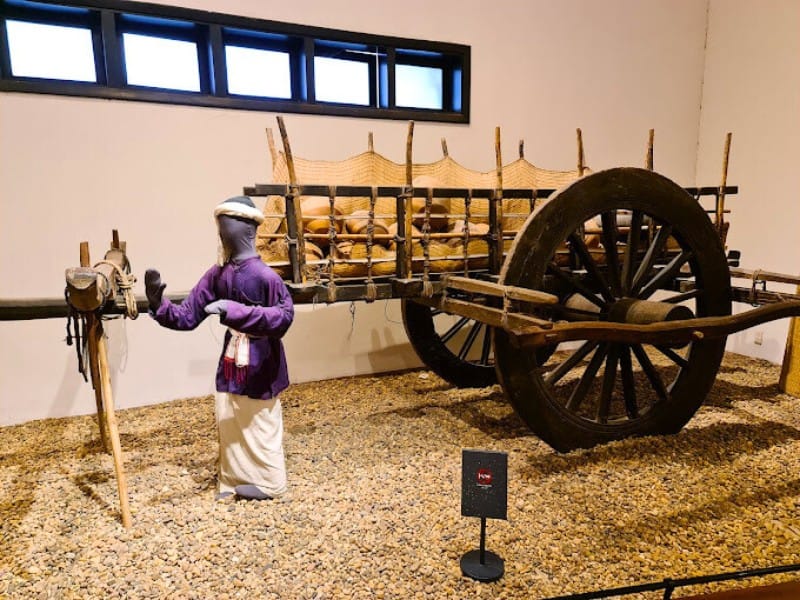
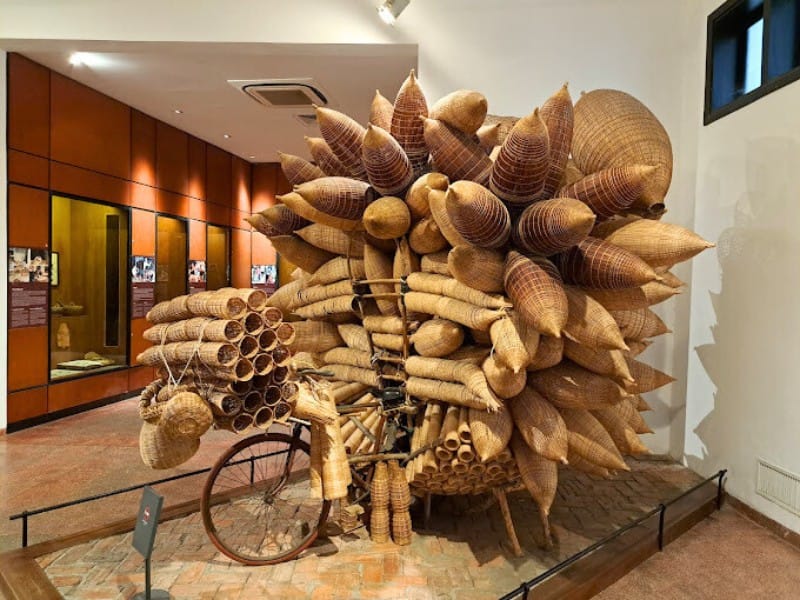


The museum offers a detailed exploration of the ways of life, traditions, and beliefs of various Vietnamese ethnic groups. Visitors can discover objects of daily life, traditional costumes, musical instruments, and works of art, each of which tells a unique story. Multimedia supports, such as documentary films and audio recordings, complete this cultural immersion.
Watch traditional folk art performances
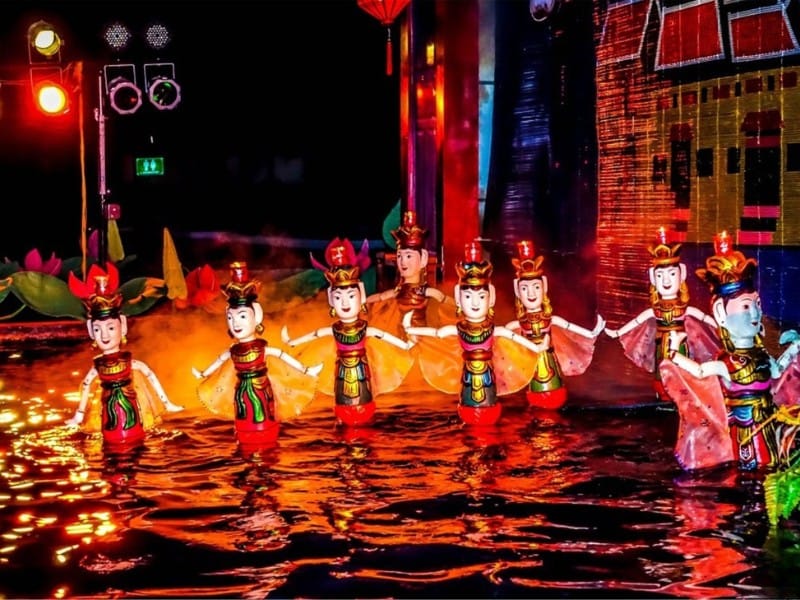
Water puppet show
The museum regularly organizes water puppet shows, a traditional form of Vietnamese art. These performances, often scheduled on weekends, offer a living glimpse into the stories and legends of the country.
Participate in traditional craft workshops
Demonstrations and workshops allow visitors to learn about traditional crafts such as ceramics, weaving, or basketry. These activities, often led by craftspeople from the communities represented, offer a practical understanding of traditional knowledge.
Participate in cultural events and festivals

Experience of Tet, the Vietnamese New Year, from the Kinh Bac region at the Vietnam Ethnography Museum
Throughout the year, the museum celebrates traditional Vietnamese holidays, such as Tet (lunar new year) and the Mid-Autumn Festival. These events include folk games, dance and music performances, as well as tastings of traditional dishes, offering visitors an immersive experience of local celebrations.
Refresh yourself at the museum’s cafe-restaurant

The Truc Lam cafe in the Vietnam Ethnography Museum space
After an enriching exploration, visitors can relax at the museum’s cafe-restaurant, which offers a selection of traditional Vietnamese dishes in a pleasant setting. It is the perfect opportunity to taste local cuisine while enjoying the cultural atmosphere around you.
Purchase artisanal souvenirs
The museum shop offers a range of artisanal souvenirs, including embroidered fabrics, carved wooden objects, and traditional jewelry. These items, made by local artisans, constitute authentic memories of Vietnam’s cultural richness.
The Vietnam Ethnography Museum stands out for its ability to offer a complete cultural experience, uniting education, interaction, and immersion in Vietnamese traditions. Whether through exhibitions, hands-on workshops, or festivities, every visitor can find an activity aligned with their interests, thus enriching their understanding of Vietnamese heritage.
What to Know Before Visiting the Vietnam Ethnography Museum
Before discovering this landmark of Vietnamese culture, take note of some simple rules to have a pleasant, respectful, and enriching visit.
- Respect opening hours: the museum is open from 8:30 AM to 5:30 PM, Tuesday through Sunday.
- Avoid coming on Monday: the museum is closed on this day.
- Dress appropriately: avoid clothing that is too short or inappropriate.
- Pay the photography fee if you wish to take photos (50,000–500,000 VND).
- Do not touch the displayed objects or elements of the traditional houses.
- Keep quiet or speak in a low voice in exhibition spaces.
- Do not eat or drink inside the buildings.
- Respect the directions of staff and marked areas.
- Prepare cash in VND for admission, souvenirs, or dining.
- Take advantage of workshops and performances, especially on weekends and holidays.
- Book in advance if you wish a guided tour in French or English.
- Encourage children to participate in the recreational activities offered.
For travelers in search of authentic experiences, the Vietnam Ethnography Museum in Hanoi is an essential stop. Far beyond landscapes or local cuisine, this museum allows you to immerse yourself in the cultural diversity of Vietnam’s 54 ethnic groups, through immersive exhibitions, life-size traditional houses, and cultural activities accessible to all. Whether you are a history enthusiast, curious about traditions, or simply wishing to better understand the soul of Vietnam, this place will offer you a visit full of meaning. The Vietnam Ethnography Museum is the ideal place to experience a profound cultural journey, off the beaten path. Do not hesitate to add it to your Hanoi itinerary: this is where the true encounter with plural Vietnam begins.



Our recommended itineraries
 Nature and Active travel
Northern Vietnam Explorer in 9 days and 8 nights
About ten days
Hanoi - Ha Long Bay - Saigon - Mekong Delta - Siem Reap - Luang Prabang - Pak Ou Caves - Kuang Si Waterfall
 Classic
Vietnam Exclusive in 13 Days
About 2 weeks
Hanoi - Bai Tu Long - Hue - Da Nang - Hoi An - Saigon - Mekong Delta