+84 9 75 46 33 10 (Whatsapp)
  info@horizon-vietnamtravel.com
  Français
  Español
  Português
  Deutsch

Ha Long Bay in Vietnam: UNESCO World Heritage Site to Discover
Table of contents
Located in northeastern Vietnam, near Hanoi, Ha Long Bay is a natural wonder inscribed on UNESCO’s World Heritage List. Famous for its karst formations emerging from the emerald waters of the Gulf of Tonkin, it offers breathtaking landscapes. Vietnam distinguishes two areas: the maritime Ha Long Bay and the terrestrial Ha Long Bay, each offering a unique experience. In this article, we invite you to explore the distinctive features of maritime Ha Long Bay, its unique attractions, and why a cruise in this region is often considered an unforgettable experience during a trip to Vietnam.
Where is Ha Long Bay Located?
Ha Long Bay is a natural wonder located on the northeastern coast of Vietnam, in Quang Ninh Province, near the city of Ha Long. It extends along the Gulf of Tonkin, approximately 150-170 km east of Hanoi.
Thanks to Highway 5B, the journey between Hanoi and Ha Long Bay typically takes between 2 and 3 hours, depending on your chosen mode of transportation. Options include tourist shuttles, luxury buses, private cars, or even seaplanes for a faster, more panoramic experience.
Ha Long Bay is famous for its spectacular karst formations, emerald waters, and numerous islands and islets, offering a breathtaking landscape that attracts visitors from around the world.
Best Time to Visit Ha Long Bay
Visiting Ha Long Bay means above all choosing the right time to fully enjoy its enchanting landscapes. Depending on the seasons, the experience can change completely. Here is a guide to help you choose the ideal period according to your wishes.
The months from October to December are often considered the best from a climate perspective: the sky is clear, the air is fresh but not cold, rainfall is rare, and visibility is excellent – an ideal setting for an unforgettable cruise. However, it is also high tourist season, so booking in advance is recommended.
From March to May, the climate is equally pleasant, marking the end of winter with mild or warm temperatures, plenty of sunshine, and little rain. It is an ideal period to enjoy nature in a more peaceful and bright environment, perfect for activities like kayaking, swimming, or hiking.
In contrast, the period from June to September is more unstable: it corresponds to summer in Vietnam, with high temperatures, strong humidity, and an increased risk of typhoons or tropical rains. Nevertheless, the landscapes remain splendid and prices are more affordable, making it an interesting option for those traveling on a limited budget, provided you remain flexible.
Finally, the winter months (January-February), although cooler and sometimes foggy, offer a peaceful and poetic atmosphere, perfect for those seeking a more contemplative and intimate experience of the bay.
Therefore, the spring (March-May) and autumn (October-December) seasons remain the most recommended for discovering Ha Long Bay in all its beauty.
History of Ha Long Bay
The name Ha Long means “descent of the dragon” in Vietnamese. According to legend, a Dragon Mother and her sons were sent by the gods to protect Vietnam from invaders. They spat out pearls that transformed into islands, thus creating a natural barrier against enemies. The place where the Dragon Mother descended was called Ha Long, and the surrounding areas also bear names linked to this legend, such as Bai Tu Long and Bach Long Vi.
Ha Long Bay formed approximately 300 million years ago. Limestone sediments accumulated at the bottom of the sea, then were carved by erosion and tectonic movements, creating the spectacular karst formations visible today.
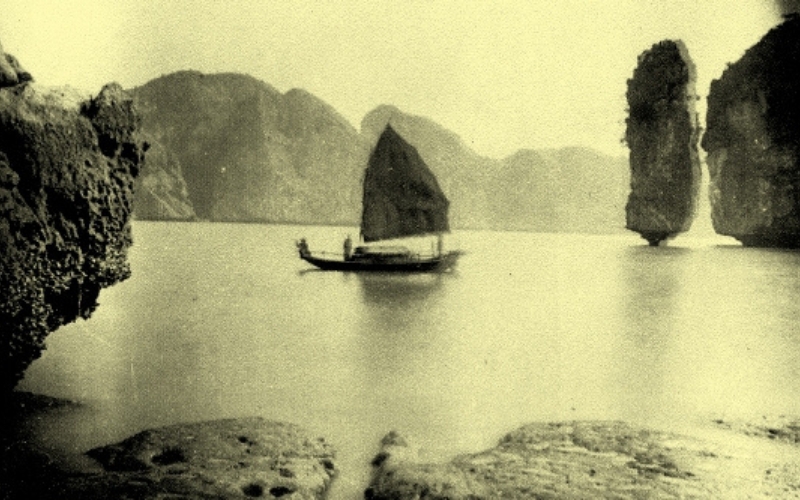
Ha Long Bay in the past
Archaeological research has revealed the presence of prehistoric cultures in the region, such as Soi Nhu (18,000–7,000 BC), Cai Beo (7,000–5,000 BC), and Ha Long (5,000–3,000 BC). These populations lived mainly from fishing, gathering, and hunting, and left stone tools and pottery fragments.
Ha Long Bay was the scene of several naval battles. In 1288, General Tran Hung Dao used the natural labyrinth of the bay to trap and destroy the invading Mongol fleet. Wooden stakes were planted in the riverbed of Bach Dang to damage enemy ships at low tide.
Ha Long Bay extends over approximately 1,553 km² and comprises almost 1,969 limestone islands and islets with spectacular shapes. In 1994 it was inscribed on the UNESCO World Heritage List for its exceptional aesthetic value, and in 2000 this recognition was extended to its extraordinary geological characteristics.
Flora and Fauna of Ha Long Bay
Famous for its spectacular karst formations and emerald waters, Ha Long Bay also hosts one of Vietnam’s richest and most delicate ecosystems. This extraordinary region offers surprising biodiversity, both terrestrial and marine, that deserves to be discovered and protected.
A Rare and Precious Tropical Flora
The numerous islands and islets of the bay are covered with humid tropical forests and mangroves, which play a crucial role in regulating coastal ecosystems.
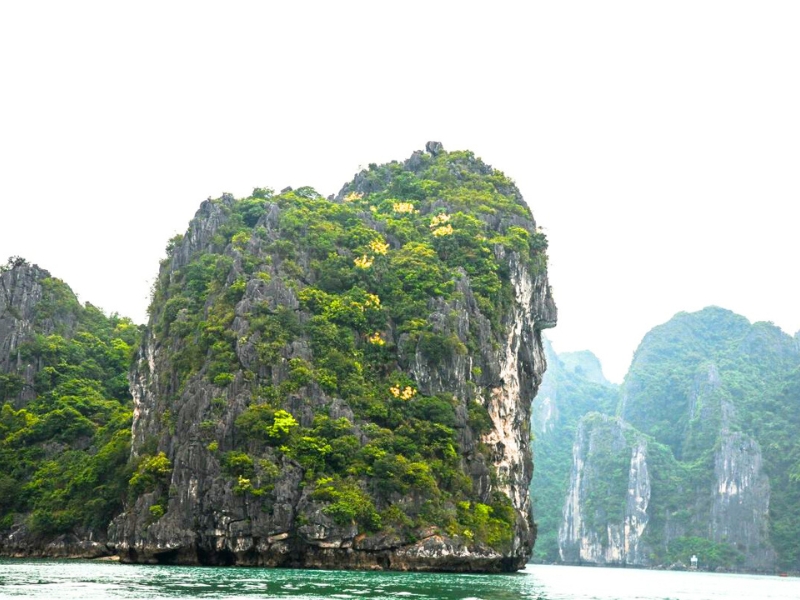
The golden hue of Ha Long palms on the rocky peaks at the heart of Ha Long Bay
Among the notable plant species are several endemic plants of Ha Long Bay, such as Livistona halongensis (palms), Impatiens halongensis, and Chirita halongensis. Mangroves, consisting particularly of Rhizophora mucronata and Bruguiera gymnorhiza, protect against erosion, purify waters, and serve as nurseries for local marine fauna.
A Diverse Fauna, Between Land and Sea
The fauna of Ha Long Bay is of impressive diversity. It includes hundreds of marine, terrestrial, and avian species, many of which are rare or threatened.

The golden-headed langur is one of the world’s most threatened primates
Among the most emblematic:
- The golden-headed langur (Trachypithecus poliocephalus), an endangered primate, observable on some rocky islands,
- More than 230 species of corals,
- 450 species of mollusks,
- Almost 200 species of fish living in the clear waters of the bay.
Despite its natural wealth, Ha Long Bay faces numerous environmental pressures: deforestation, coastal urbanization, pollution from tourism and industry. Furthermore, extreme weather events, such as Typhoon Yagi in September 2024, caused severe damage to flora and introduced large quantities of waste into the ecosystem.
Preserving the extraordinary biodiversity of Ha Long Bay requires joint efforts by authorities, scientists, tourism operators, and visitors. Each has a role to play in maintaining the fragile balance of this unique ecosystem and ensuring its survival for future generations.
Unmissable Activities in Ha Long Bay
Taking a Cruise in the Bay
Taking a cruise in Ha Long Bay means treating yourself to a moment suspended between sky and sea, in the heart of one of Vietnam’s most iconic landscapes. Aboard a traditional vessel, transformed into a true floating home, you glide gently between karst islets and rock formations that rise majestically above the water. Modern comfort combines with authenticity: elegant cabins, refined Vietnamese cuisine, and on some junks, even outdoor pools.

Cruise in Ha Long Bay
The pace is slow, marked by activities that awaken the senses: a tai-chi session at dawn on the deck, a kayaking trip in a secluded bay, a swim in crystal-clear waters… In the evening, light falls on the tranquil bay and you can try squid fishing or simply enjoy the calm during a dinner on board. Away from the hustle and bustle, this cruise is an invitation to slow down, contemplate, and savor the timeless beauty of Ha Long.


>> Check out our article on a cruise in the Bai Tu Long Bay to learn more!
Enjoying the Beaches
Ha Long Bay, known worldwide for its spectacular karst landscapes, is also a leading beach destination in Vietnam. With its numerous white sand beaches, turquoise waters, and pristine natural landscapes, Ha Long offers an ideal setting for vacations that combine relaxation and discovery. Among the most popular beaches, Tuan Chau is an excellent option for travelers seeking comfort and accessibility. Located about 7 kilometers from Tuan Chau port, this artificial beach captivates with its long stretch of fine sand, modern infrastructure, and lively atmosphere. You can sunbathe, swim, or simply stroll along the shore, all in a peaceful and safe setting.
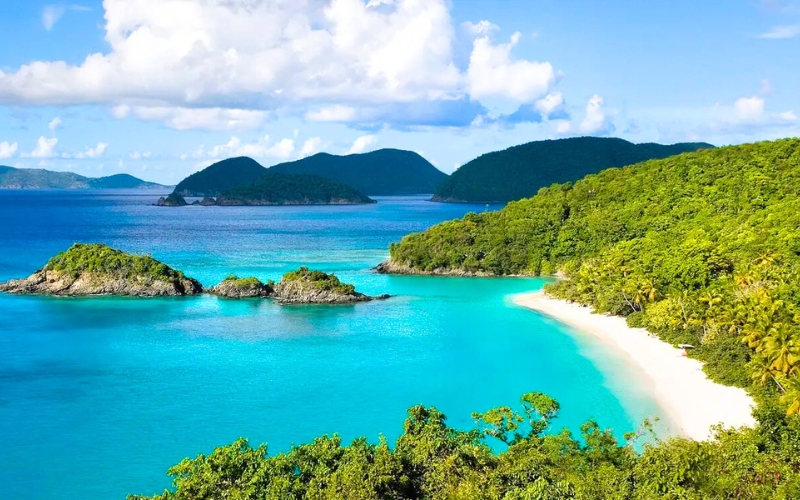
Quan Lan Beach
For those preferring natural and wild beaches, Quan Lan Beach is a true hidden gem. Located on an island still little developed, it offers crystal-clear sea, silky sand, a calm atmosphere, and pristine landscapes perfect for complete relaxation. It is an ideal destination to disconnect from the world, far from the hustle and bustle, and enjoy the authentic beauty of Vietnamese nature. Whether you are looking for a lively beach resort or a corner of paradise still preserved, Ha Long Bay’s beaches will satisfy every desire for sun and sea.
Discovering Fishing Villages
If you wish to experience a timeless moment, far from urban hustle, a visit to Ha Long Bay’s floating fishing villages is a must. These unique villages, built directly on the water, are composed of colorful wooden houses connected to each other by floating beams, designed to withstand storms.
Among the most well-known are the villages of Cua Van, Vung Vieng, and Ba Hang, where fishing families have lived for generations. Life here follows the rhythm of the sea: waking early, going out by boat, selling fresh fish to markets or tourist boats, and dedicating each day to maintaining nets and homes.

Vung Vieng Fishing Village
Exploring these villages aboard a local boat or small kayak, you will discover a simple yet resilient life, marked by solidarity and respect for nature. Some inhabitants will invite you to visit their home, to witness traditional fishing demonstrations, or even to participate in some daily gestures.
It is a deeply human experience, both exotic and serene, that will allow you to understand another dimension of Ha Long Bay: no longer merely a majestic landscape, but a living place, rooted in traditions. A splendid lesson in simplicity and harmony with the environment.
Exploring Emblematic Islands
With almost 2,000 rocky islands and islets, Ha Long Bay offers one of the world’s most fascinating marine landscapes. These limestone formations with surprising shapes are the very essence of the bay’s charm. Over the centuries, inhabitants have given them evocative names inspired by their silhouettes: Man’s Head, Fighting Cocks, Wading Ox, Sleeping Buffalo… These islands, sometimes mysterious and sometimes poetic, fuel local legends and capture visitors’ imaginations.
Among all, Cat Ba Island is undoubtedly the most emblematic. Located at the southern border of the bay, it is the largest and most visited island in the region. Cat Ba fascinates for its natural diversity: it hosts a protected national park with dense forests populated by macaques, white-headed langurs, and rare birds, but also fine sand beaches, secret caves, and traditional fishing villages.

Kayaking in Lan Ha Bay
From the heights of the island, you can admire a breathtaking panoramic view over Lan Ha Bay, considered the “little sister” of Ha Long Bay. Less crowded, Lan Ha has about 400 islets covered with lush vegetation, surrounded by calm waters ideal for kayaking, swimming, or diving.
Visiting Natural Caves
Nature has given Ha Long Bay real underground treasures. Exploring its natural caves is an unmissable experience for every curious traveler wanting to discover the wonders hidden behind limestone cliffs.
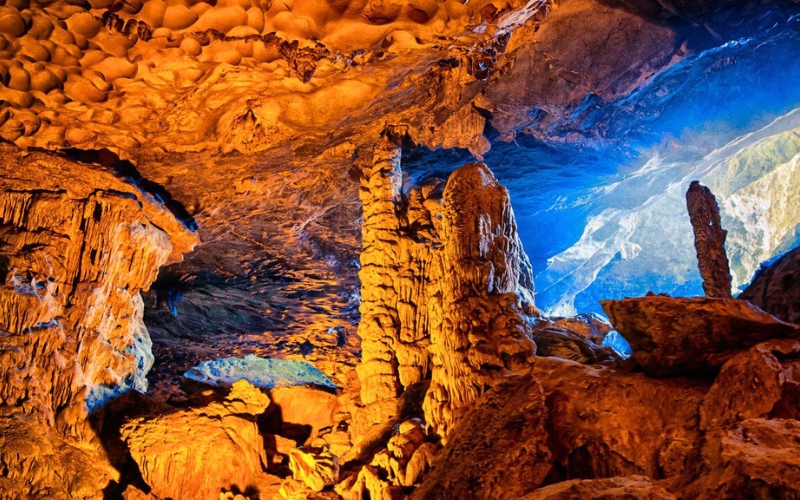
The Surprise Cave (Hang Sung Sot)
Among the most famous we find:
- The Surprise Cave (Hang Sung Sot), the largest and most spectacular in the bay,
- The Virgin Cave (Hang Trinh Nu), wrapped in a touching legend,
- The Man’s Head Cave (Hang Dau Nguoi), so named for its mysterious shape.
Each offers a fascinating universe of stalactites and stalagmites with surprising shapes, sometimes resembling curtains, dragons, petrified flowers, or fantastical scenes. The interplay of light inside reveals sparkling stones, iridescent reflections, and unexpected mineral colors, creating an almost fairytale atmosphere. Entering these millennia-old caverns, you will feel as though you are losing yourself in an underground kingdom, silent, majestic, and full of mystery. Every corner reveals a new surprise carved by time, wind, and water.
Ha Long Bay and Its Neighbors
With its thousands of karst islands emerging from an emerald sea, the Ha Long region offers one of the world’s most spectacular marine panoramas. This vast space is not limited to Ha Long Bay alone: it also includes two lesser-known but equally splendid gems – Bai Tu Long Bay to the east and Lan Ha Bay to the south.
These three zones form a coherent natural ensemble, classified as a World Heritage Site, where similar landscapes but different atmospheres and experiences can be found. The choice between them often depends on the type of trip desired: more classic, more secluded, or more active.
Bai Tu Long Bay
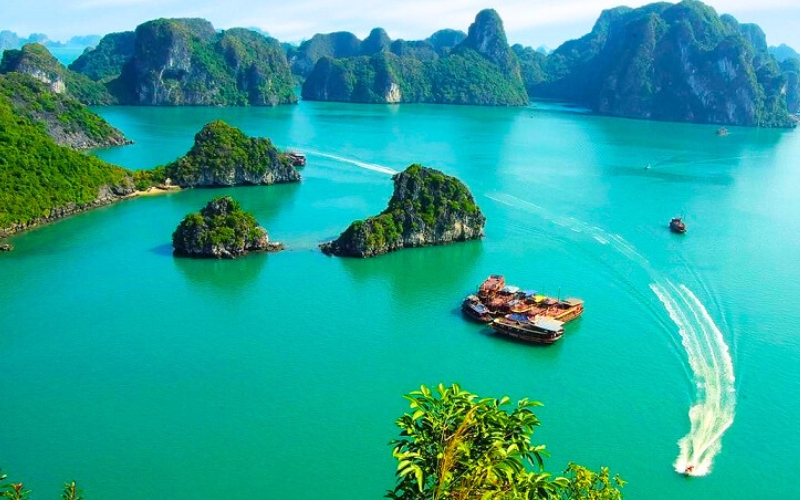
Bai Tu Long Bay
Located east of Ha Long Bay, Bai Tu Long is a quieter and more secluded alternative. Less frequented by tourists, it is appreciated for its serene atmosphere, wild islets, and clear waters. Cruises often depart from Hon Gai port (near Ha Long City) and include visits to discreet caves, deserted beaches, and traditional fishing villages. Ideal for travelers seeking serenity and unspoiled nature.
Lan Ha Bay
South of Ha Long Bay, Lan Ha is connected to Cat Ba Island, making it easily accessible for those wishing to combine a cruise with a land stay. It fascinates for its exceptional biodiversity, isolated beaches, and water activities: kayaking, swimming, snorkeling, and even climbing on limestone walls. Less developed than the main bay, it offers an immersive and authentic experience, perfect for lovers of nature and gentle adventure.
Ha Long Bay is one of those rare places where nature touches the sublime. Classified as a UNESCO World Heritage Site, it strikes both for its beauty and the peace it inspires. Whether departing on a cruise, a kayaking excursion, or simply to admire the landscapes, each visitor finds something unique. Choosing the right time allows you to fully enjoy the experience, but whatever the season, Ha Long always has some magic to offer. Between rocks carved by time, floating villages, and morning mists, the journey is experienced as much with the eyes as with emotions. Taking the time to discover Ha Long Bay means allowing yourself a parenthesis away from chaos, a breath of escape, an encounter with the soul of Vietnam.



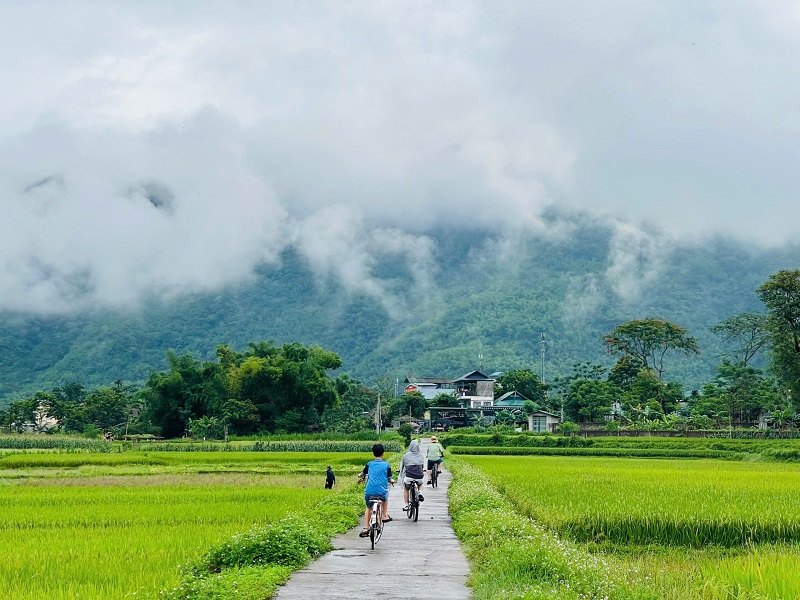
Our recommended itineraries
 Nature and Active travel
Northern Vietnam Explorer in 9 days and 8 nights
About ten days
Hanoi - Ha Long Bay - Saigon - Mekong Delta - Siem Reap - Luang Prabang - Pak Ou Caves - Kuang Si Waterfall
 Classic
Vietnam Exclusive in 13 Days
About 2 weeks
Hanoi - Bai Tu Long - Hue - Da Nang - Hoi An - Saigon - Mekong Delta