+84 9 75 46 33 10 (Whatsapp)
  info@horizon-vietnamtravel.com
  Français
  Español
  Português
  Deutsch

Hanoi – Vietnam’s Millennial Capital
Table of contents
Hanoi is the capital of Vietnam, located in the north of the country, on the banks of the Red River (Sông Hồng). Its name means “the city beyond the river,” referring to its geographic position. A millennial city and the political, economic and cultural center, Hanoi combines history, colonial architecture, an intense cultural life and a renowned street food scene. For the traveler, Hanoi is often the starting point for a journey through the north of the country — but it deserves several days of discovery on its own.
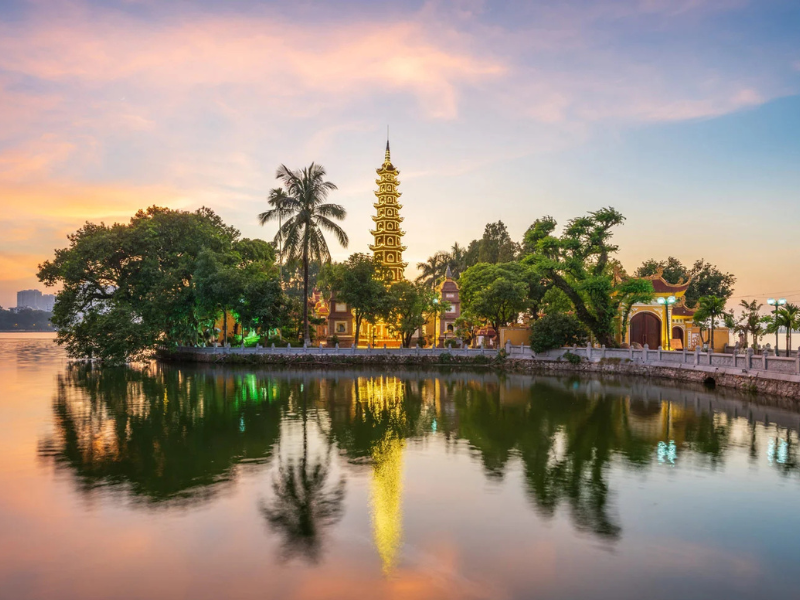
General Information About Hanoi
- Area: approximately 3,300 km² (administrative area that includes suburbs and suburban districts).
- Population: the urban population is approximately 4–8 million according to sources and definitions (the metropolitan perimeter / daytime population is higher).
- Language: Vietnamese (frequent use of English in tourist areas).
- Currency: Vietnamese dong (VND).
- Time zone: UTC+7.
What Time is it in Hanoi?
Hanoi is in UTC+07:00.
- Difference with France: +6 hours in winter (Central European Time), +5 hours in summer (French daylight saving time).
- Example: when it is 12:00 in Paris in January it is 18:00 in Hanoi.
Climate in Hanoi – When to Visit?
Hanoi has a humid subtropical climate: four distinct seasons but tempered by latitude.
- Spring (February-April): mild temperatures (18–25°C), moderate humidity, blossoms.
- Summer (May-August): hot and humid, heavy rain and sometimes storms; temperatures often above 30°C.
- Autumn (September-November): considered by many as the best season: clear skies, pleasant temperatures (20–28°C).
- Winter (December-January): cool, sometimes gray and humid; cool nights (15-20°C).
Best times to visit: October-December and February-April (dry and pleasant weather). Avoid, if possible, July-August for the heat and monsoon.
Note on air quality: Hanoi sometimes experiences air pollution episodes (fine dust). Check local indices (AQI) if you have respiratory issues.
How to Get to Hanoi?
Noi Bai International Airport
- Location: Sóc Sơn district, approximately 40–45 km north of the center.
- Flights: domestic connections (to Da Nang, Ho Chi Minh City, etc.) and international flights (Asia, some direct flights from/to Europe and Oceania depending on seasons and airlines).
- Transfer to the center: airport shuttles (express buses), public buses (line 86 and others), official taxis, VTC (Grab, Be). Allow 45–90 minutes depending on traffic.
- Tip: favor the express shuttle for an economical fare and avoid unofficial taxis; ask for a receipt.
Hanoi Train Station
- Address: main station located near Lê Duẩn Street, short distance from the Old Quarter.
Trains: North-South connections (Hanoi – Saigon), Hanoi – Lào Cai (for Sapa), and regional lines. Vietnamese trains vary in - comfort: “soft sleeper” berth recommended for long distances.
Buses and Cars
- Night buses: numerous companies serve Hanoi from neighboring regions.
- Private car / transfer: practical for groups; it is common to organize private transfers from the airport or for excursions in the surrounding area.
How to Get Around Hanoi?
On Foot and by Cyclo
- Old Quarter: ideal on foot; the cyclo (xe lôi) is touristic and pleasant for short trips.
- Safety: cross carefully because the flow of scooters can surprise pedestrians.
Buses, VTC and Taxis
- Bus: dense and economical network, but often confusing for the uninitiated.
- Taxi: reliable companies (Mai Linh, Vinasun); check the meter or ask for a fixed price.
- VTC: Grab and Be are very popular and generally convenient and economical.
Bike / Scooter Rental
- Scooter: widely used, but caution required (traffic chaos, local rules). Many agencies offer scooters by the day. Make sure you have insurance and an international driving license.
- Bicycles: possible for short rides, especially along Tây Lake (Tây Hồ).
Tips on Safety, Pollution and Traffic
- Avoid rush hours (morning 7am–9am and evening 4pm–7pm).
- Check air quality (AQI); sensitive people should plan for masks or reduce outings during peaks.
- Take official taxis or VTC rather than tuk-tuks or unofficial taxis.
- Beware of small tourist scams (inflated prices, ride scams with estimates).
What to See, What to Do in Hanoi?
Here is a detailed list of must-see sites and experiences, updated for 2025.
The Old Quarter and the 36 Artisan Streets
- Description: historic heart of Hanoi; narrow streets historically dedicated to specific trades (silk, shoes, tea, etc.).
- To do: walk, craft shopping, taste street food (phở, bún chả, chè), have egg coffee. There is also a night market every Friday, Saturday and Sunday from 6pm to 11pm.
- Atmosphere: from dusk onward, the lanterns and activity make it a magical place.
Hoàn Kiếm Lake (Lake of the Returned Sword)
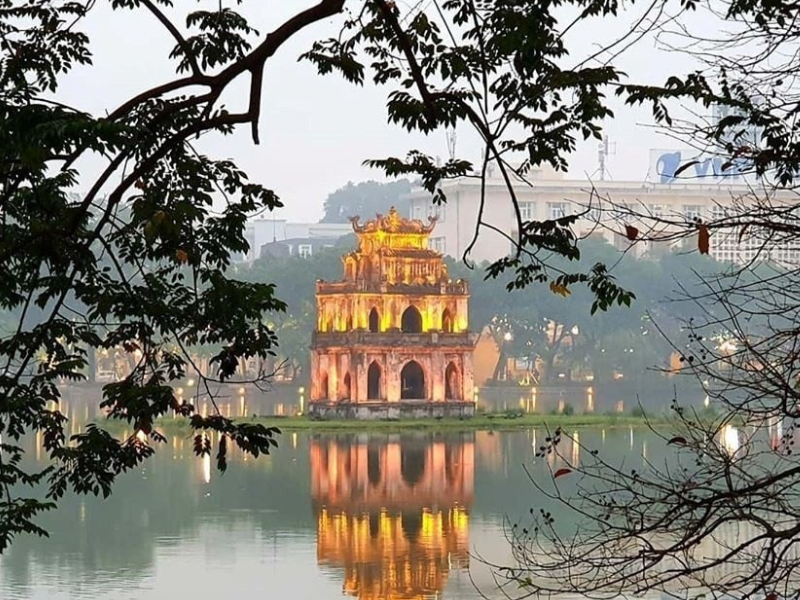
- Central attraction: the red bridge (Thê Húc), Turtle Island and the Ngọc Sơn temple.
- Recommended time: early morning or late afternoon to avoid crowds and enjoy joggers and Hanoi residents’ morning exercises.
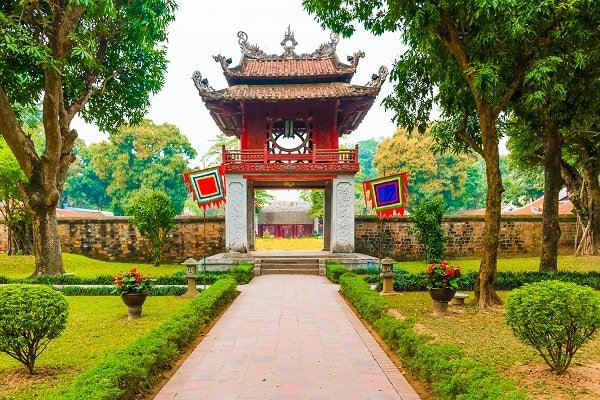
Temple of Literature (Văn Miếu)
- Role: Vietnam’s first “university” (Confucian); steles of doctors.
- Interest: traditional architecture, peaceful gardens; educational visit on the country’s intellectual history.
One-Pillar Pagoda (Chùa Một Cột)
- Spectacular small Buddhist monument, symbol of the city.
Ho Chi Minh Mausoleum and Ba Đình Complex
- Content: Ho Chi Minh Mausoleum (closed some days and open only in the morning), presidential stilt house and museum. Strict respect for dress code rules and opening hours.
Vietnam Museum of Ethnography
- Why go there: comprehensive exhibition on Vietnam’s 54 ethnic groups — excellent for understanding the country’s cultural diversity.
Water Puppet Theater
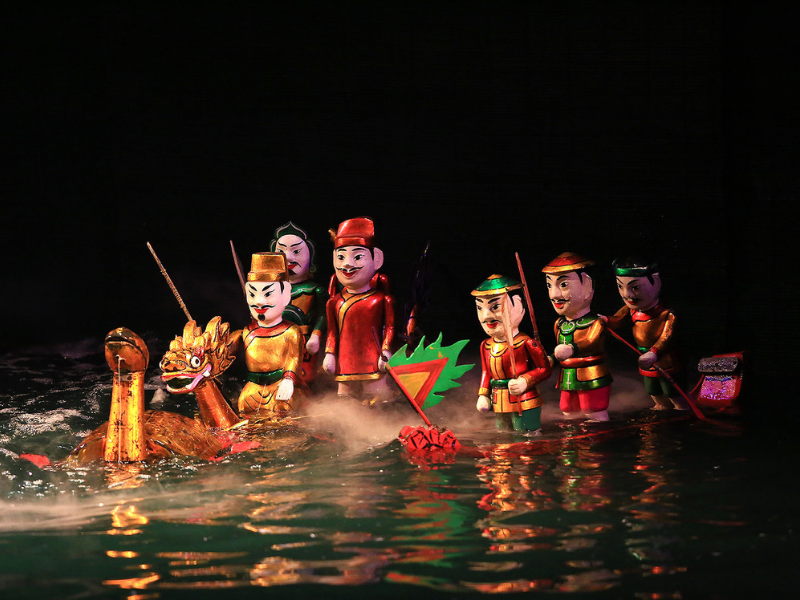
- Cultural specialty: immersive traditional Vietnamese show; book for the evening.
Perfume Pagoda (Chùa Hương) – Day Excursion
- Location: 70 km southwest of Hanoi. Large complex of pagodas and caves, major pilgrimage during Tết and at the beginning of the lunar year.
Museums & Walks
- Museum of History, Museum of Fine Arts, Habsburg Archduke House-Museum (if you have reason to stop by), commercial streets (Trang Tien, Hang Gai), cafés and art galleries.
Street Food Gastronomy
- Must-try: phở (noodle soup), bún chả (grilled pork + vermicelli), nem (spring rolls), cà phê trứng (egg coffee), bia hơi (local draught beer).
- Tip: favor popular establishments and lines of people because it guarantees quality.
Where to Stay in Hanoi?
- Old Quarter (Hoàn Kiếm): ideal for being in the heart of the action, restaurants and shops. Hotels for all budgets.
- Tây Hồ (West Lake): more residential and chic neighborhood, on the lake, good restaurants, quieter atmosphere.
- Ba Đình: near institutions, mausoleum, embassies — quiet and convenient for business travelers.
- Hoàng Mai / Hai Bà Trưng: more economical options and quick access to transport.
Tip: book well in advance during holidays (Tết, Golden Week); favor hotels with air conditioning and good ventilation (for pollution and heat).
Festivals in Hanoi (Traditional and Key Dates)
Hanoi is rich in celebrations: rituals, village festivals, religious pilgrimages.
Tết (Lunar New Year)
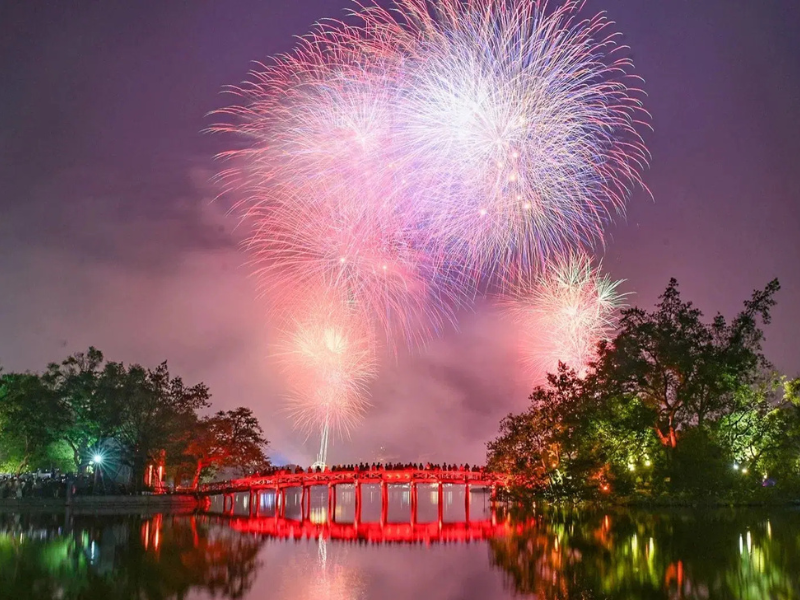
- Period: late January – February (variable according to the lunar calendar).
- Characteristics: family celebrations, decorations, flower markets, some activities and shops closed for a few days; major cultural moment to observe traditions and rituals.
Perfume Pagoda Festival (Chùa Hương)
- When: begins on the 6th day of the 1st lunar month and can last into spring (variable). Important pilgrimage.
Gióng Festival (Sóc Temple)
- When: generally from the 6th to the 8th day of the 1st lunar month; celebration of a legendary hero, recognized as intangible heritage by UNESCO.
Đống Đa Event (Quang Trung Victory)
- When: beginning of the lunar year (5th day); commemorates the victory against invaders.
Bat Tràng Village Festival (Ceramics)
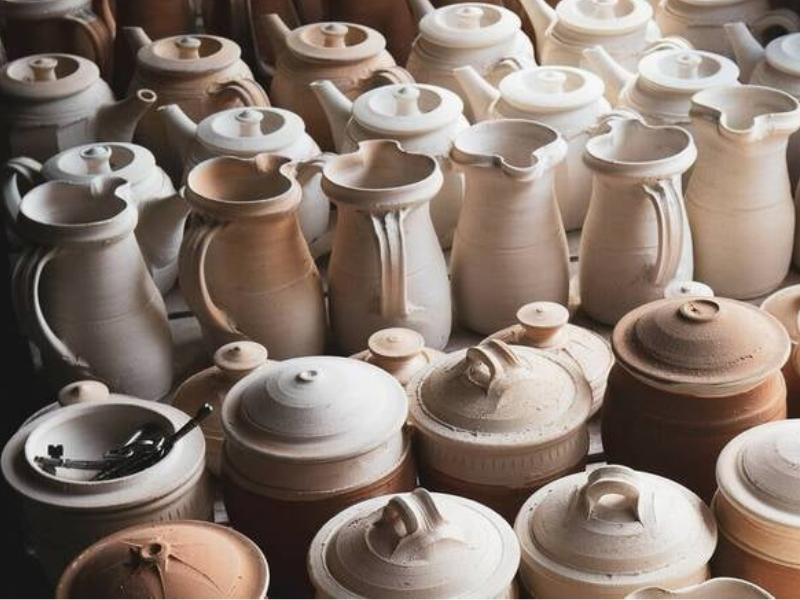
- When: from the 14th to the 16th day of the 2nd lunar month; craft demonstrations.
Other Events (2025)
- Hanoi organizes a calendar of many dozens of tourist events in 2025 (cultural festivals, concerts, exhibitions). Check the official calendar before traveling.
https://www.vietnam.vn/en/events
History of Hanoi (Brief Overview)
Hanoi is a millennial city: founded centuries ago, it was the capital under various dynasties, then an administrative center during the French colonial period. After independence, it became the capital of the Democratic Republic of Vietnam. Hanoi preserves a rich architectural heritage — temples, pagodas, colonial buildings — that overlap with urban modernity.
Practical Tips
Money
- Currency: VND. Many establishments accept cards in hotels and restaurants; have cash for street food and markets.
- ATMs: numerous in the city center; check your bank fees.
Health
- Basic vaccinations (hepatitis A, tetanus) recommended according to your profile; tap water is not potable — prefer bottled water.
- Many pharmacies; carry a first aid kit.
Language
- Vietnamese; English common in tourist areas, less widespread in local areas. Some courtesy expressions are useful.
Safety
- Hanoi is generally safe; show customary vigilance (petty theft, pickpocketing in tourist areas).
Beware of fake guides / scams and drivers who refuse to activate the meter.
Conclusion
Hanoi is a capital that fascinates with its unique blend of history, traditions and bustling urban life. From the old quarter to museums, through street gastronomy and traditional festivals, the city offers a thousand reasons to spend several days there. For every traveler who wishes to understand the North of Vietnam, Hanoi is a must-see.



Our recommended itineraries
 Nature and Active travel
Northern Vietnam Explorer in 9 days and 8 nights
About ten days
Hanoi - Ha Long Bay - Saigon - Mekong Delta - Siem Reap - Luang Prabang - Pak Ou Caves - Kuang Si Waterfall
 Classic
Vietnam Exclusive in 13 Days
About 2 weeks
Hanoi - Bai Tu Long - Hue - Da Nang - Hoi An - Saigon - Mekong Delta