+84 9 75 46 33 10 (Whatsapp)
  info@horizon-vietnamtravel.com
  Français
  Español
  Português
  Deutsch

Ho Chi Minh City: Complete Guide to Plan Your Trip
Table of contents
The economic capital of Vietnam, Ho Chi Minh City — still called Saigon by locals — captivates with its overwhelming energy, rich historical heritage, and vibrant culinary scene. Among modern skyscrapers, bustling alleyways, colorful markets, and remnants of the colonial era, the city offers a fascinating blend of tradition and modernity. Whether you are a culture enthusiast, history curious, or simply seeking authentic experiences, this complete guide will help you organize your stay in Ho Chi Minh City at its best. You will find practical advice, unmissable destinations to visit, great recommendations, and ideas to experience the city like a local.
Best Times to Visit Ho Chi Minh City
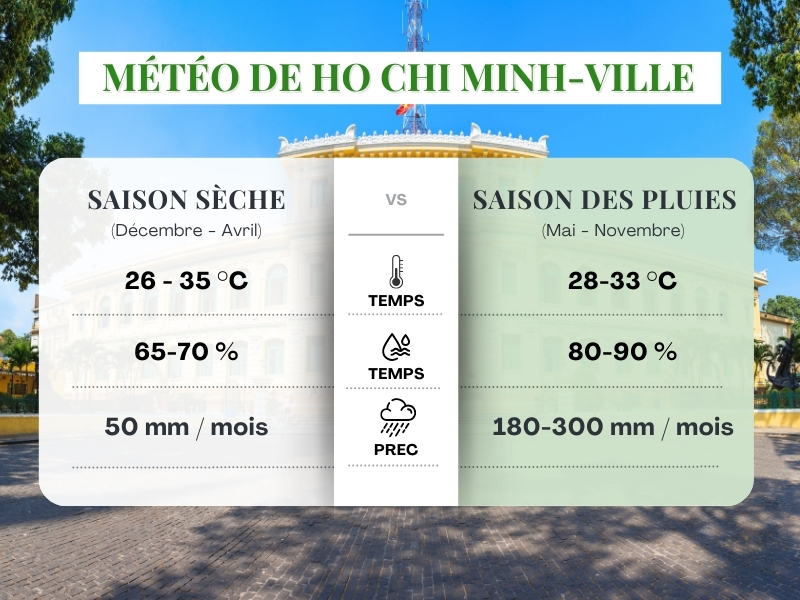
Ho Chi Minh City enjoys a tropical climate characterized by two major seasons. The dry season, from December to April, is the most pleasant for discovering the city: days are sunny, rainfall is almost nonexistent, and average temperatures range between 26 and 35°C, with milder conditions between January and February and hotter weather between March and April. It is the ideal time to walk through lively neighborhoods, visit temples, or enjoy café terraces. The rainy season, from May to October, is characterized by humid heat and frequent downpours, often in the late afternoon. Temperatures can reach 33-35°C, especially between April and May, with peak rainfall in September. These rains, while regular, are brief and often leave space for clear skies. In summary, the dry season offers the most comfortable conditions, but the city can be visited year-round by adapting to the climate.
How to Get to Ho Chi Minh City?
Ho Chi Minh City is served by Tân Son Nhất International Airport (SGN), located about 6 km from the city center. It is one of Vietnam’s major transportation hubs, offering numerous travel options.
By Air
From Vietnam (domestic flights)

Vietnam Airlines is the national airline of Vietnam
Many Vietnamese airlines such as Vietnam Airlines, VietJet Air, or Bamboo Airways offer regular flights to Ho Chi Minh City from:
- Hanoi: approximately 2h10 flight time
- Da Nang: approximately 1h30
- Hue, Nha Trang, Can Tho, Phu Quoc and many other cities
These flights are frequent and affordable, especially if booked in advance. By choosing to travel with Horizon Vietnam, we handle the booking of domestic flights, coordination with your international schedules, and all airport transfers, for a smooth and stress-free journey from your arrival in Vietnam.
From Abroad (international flights)
Tân Son Nhất Airport is well connected to major French-speaking and European cities. Direct or connecting flights are available from:
- Paris (direct flights with Vietnam Airlines or Air France)
- Brussels, Geneva, Montreal, Quebec (connecting flights, usually via Bangkok, Doha, Frankfurt, Istanbul, or Seoul)
Reputable airlines such as Qatar Airways, Emirates, Turkish Airlines, Air France, or Vietnam Airlines ensure comfortable connections with services suited to long-haul travelers. For those wanting to optimize their budget, a connecting flight can be an excellent option, sometimes offering the opportunity to briefly discover another major city along the way.
By Train
The north-south railway network of Vietnam is served by the famous Reunification Express (Reunification Express), a historic line connecting Hanoi to Ho Chi Minh City for over 1,700 km. The complete journey takes between 30 and 35 hours, with numerous stops in emblematic cities such as Hue, Da Nang, Nha Trang, or Phan Thiet.

From the Cloud Pass to the Mekong Delta plains, the North-South train is one of the most beautiful ways to reach Ho Chi Minh City
Although the journey is long, it offers an unforgettable experience, at the slow and relaxing pace of the train. The landscapes traversed — mountains, rice paddies, coast — are of extraordinary beauty. It is an excellent choice for curious travelers, lovers of authenticity and local encounters. Several classes are available, from simple seats to air-conditioned berths, to suit all budgets and comfort levels.
By Bus or Car
Ho Chi Minh City is well served by a network of intercity buses. Many private companies offer comfortable trips from nearby southern cities, as well as from the center (Da Lat, Nha Trang) or even from the north of the country, with regular stops for eating or resting.
Overnight buses are a popular option for long distances, particularly between Hanoi and Ho Chi Minh City, with relatively comfortable berths for traveling on a low budget.
From abroad, it is also possible to reach Ho Chi Minh City by bus from Cambodia. Regular routes connect Phnom Penh to the Vietnamese city in 6–8 hours, with border crossing at Bavet/Moc Bai. For greater freedom, a private car with a driver is a flexible and comfortable solution, ideal for families or small groups wishing to travel at their own pace.
What to See and Do in Ho Chi Minh City?
Ho Chi Minh City is a vibrant metropolis, where historical heritage blends with modern dynamism. Here is a selection of must-do activities to experience in the city and its surroundings:
Discover the Reunification Palace
📍 Location: 28 Vo Van Tan, District 3, HCMC
The Reunification Palace, also called Dinh Doc Lap, is one of the strongest symbols of modern Vietnamese history. Located in the heart of District 1, this building combines 1960s architecture with significant political meaning. It was the seat of the South Vietnamese government until the end of the war in 1975 and remains an emblematic memorial place. The visit allows you to discover the reception halls, meeting rooms, private quarters, an underground bunker, and an exhibition that traces its history from the colonial era. The visit lasts approximately 1 hour and 30 minutes. Audio guides and multilingual brochures are available. The site is very busy on weekends and public holidays, particularly around April 30 (Reunification Day).
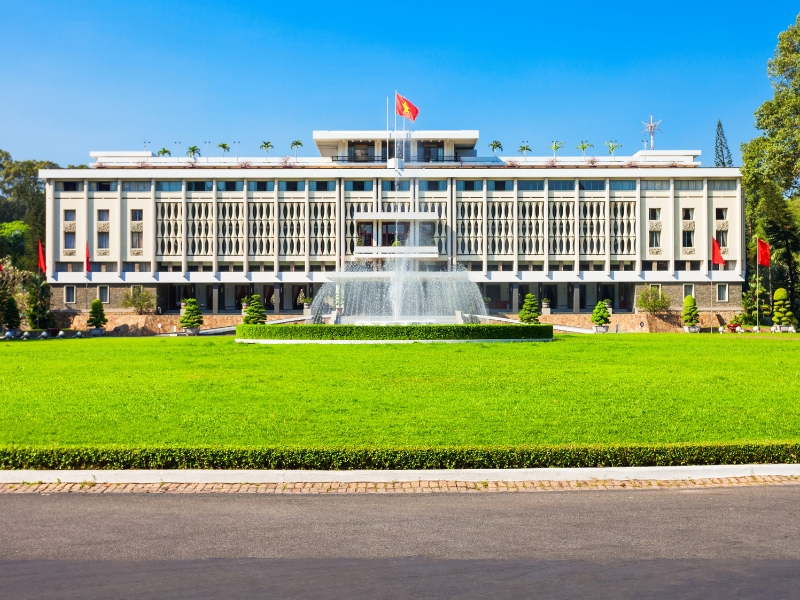
Reunification Palace
🕘 Opening Hours: Every day, from 7:30 a.m. to 11:00 a.m. and from 1:00 p.m. to 4:00 p.m.
🎟️ Admission Fees:
- Palace only: from 10,000 to 40,000 VND (~0.40 to 1.60 €)
- Complete visit (palace + exhibition): from 15,000 to 65,000 VND (~0.60 to 2.50 €)
Visit the War Remnants Museum
📍 Location: 28 Vo Van Tan, District 3, HCMC
The War Remnants Museum is one of the most visited museums in Vietnam, ranked among the 100 unmissable places in the world. Located in District 3, on Vo Van Tan Street, it was founded in 1975 and is entirely dedicated to the contemporary history of Vietnam through the lens of wars.
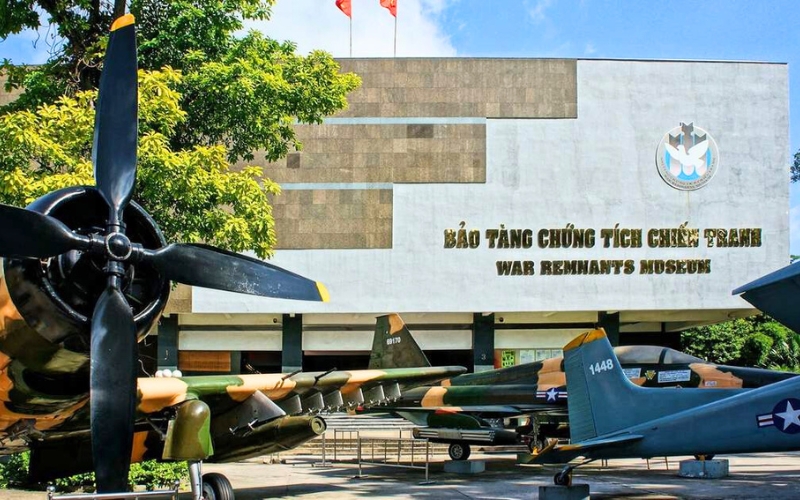
War Remnants Museum
The museum displays more than 20,000 documents, objects, and photographs that trace the atrocities and consequences of the Indochina and Vietnam wars. Among the permanent exhibitions: the weapons used, detention conditions, the effects of Agent Orange, photographic testimonies, and accounts of civilian victims. It is a touching and educational visit, recommended for adults and teenagers. The visit lasts approximately 1 to 1 hour and 30 minutes. It is recommended to visit in the morning to avoid crowds and enjoy a more peaceful visit.
🕘 Opening Hours:
- Monday to Friday: from 7:30 a.m. to 11:30 a.m.
- Weekend: from 7:30 a.m. to 4:30 p.m.
🎟️ Admission Fees: 40,000 VND (~1.60 €) / Free for children under 6 years old
Visit the Ho Chi Minh City Museum of History
📍 Location: 2 Nguyen Binh Khiem, District 1, HCMC
The Ho Chi Minh City Museum of History is located within the Saigon Zoo and Botanical Garden park, in a colonial building built in 1929 by French architect Auguste Delaval. Its harmonious architecture combines European and Asian influences, with a gilded octagonal dome and galleries illuminated by natural light.
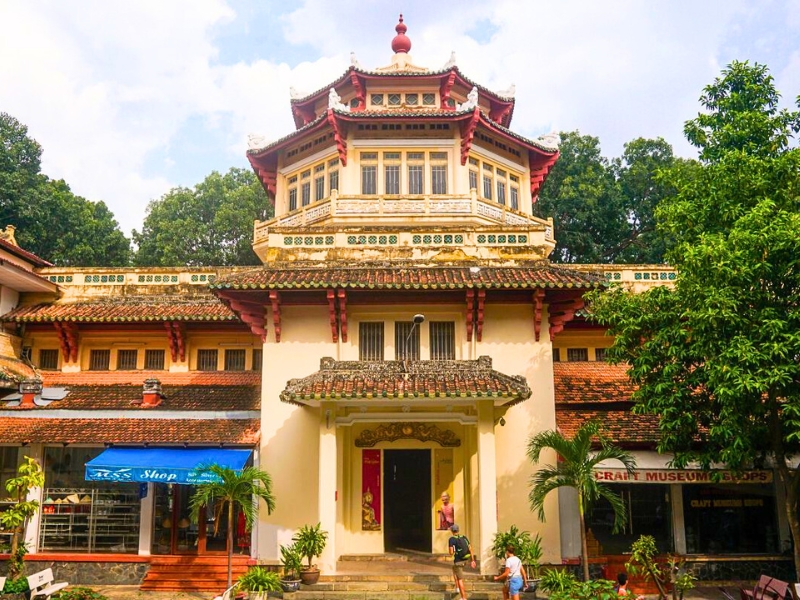
Ho Chi Minh City Museum of History
The museum preserves nearly 36,000 objects and documents that trace the history of Vietnam, from prehistoric times until 1945. It also highlights ancient civilizations that marked Vietnamese territory, such as the Oc Eo, Cham, or Khmer cultures. The visit is ideal for better understanding the millennial past of the country. Plan between 1 and 1 hour and 30 minutes to discover the main collections, in a quiet and green environment.
🎟️ Admission Fees: 30,000 VND (~1.20 €) per person
🕘 Opening Hours:
- Every day: from 8:00 a.m. to 11:30 a.m. and from 1:00 p.m. to 5:00 p.m.
Admire Saigon’s Central Post Office
The central post office is one of the most emblematic buildings in Ho Chi Minh City. Located in Paris Commune Square, in District 1, it was built between 1886 and 1891 by French architects Alfred Foulhoux and Henri Auguste Vildieu.
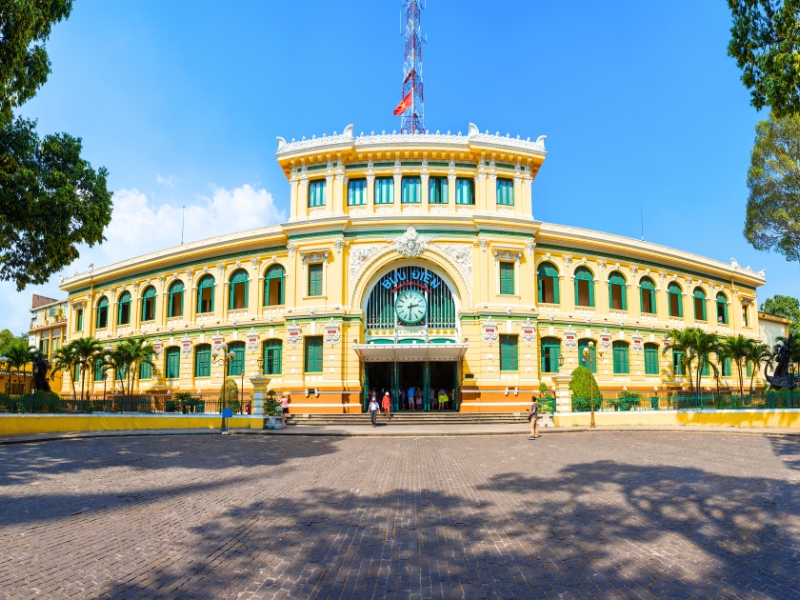
Saigon Central Post Office
Its architectural style is reminiscent of Orsay Station in Paris, with a large metal vault, ancient wall frescoes, and a portrait of Roman god Mercury, a symbol of communications. The building is still in operation today and offers a pleasant cultural and historical respite in the heart of the city center.
Discover the Nightlife of the “Backpacker District” Bui Vien
Located in District 1, Bui Vien Street is the pulsing heart of Ho Chi Minh City’s nightlife. Very popular with international travelers, this street nicknamed the “backpacker district” comes alive every evening with colorful neon lights, outdoor music, and a cosmopolitan crowd.
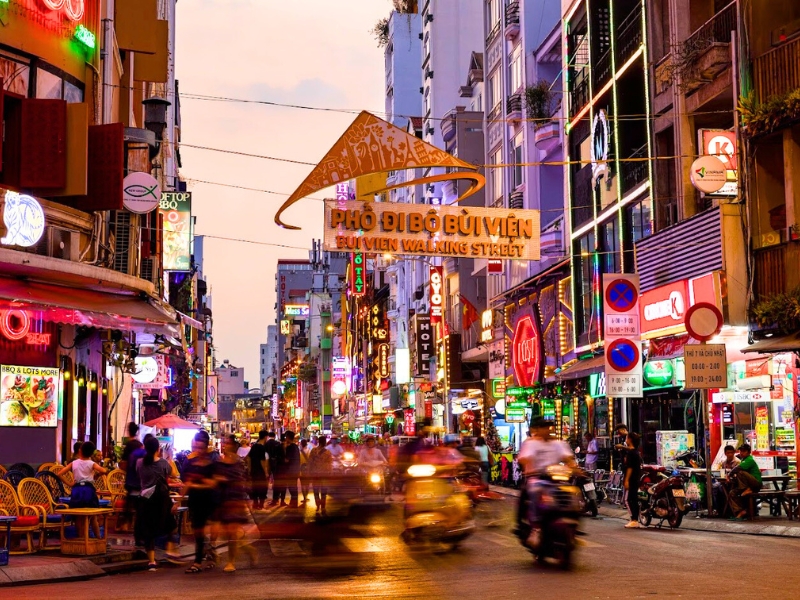
“Backpacker District” Bui Vien
Here you will find a multitude of bars, pubs, cafés, and restaurants with different atmospheres — perfect for sipping a local or international cocktail, listening to live music, or simply watching the energy of the street. Street food stalls offer tasty Vietnamese dishes at reasonable prices, ideal for late-night cravings.
Explore the Chinese Quarter (Cholon)
Ho Chi Minh City’s Chinese quarter, located mainly in District 5, is a world apart, rich in color and history. You can admire ancient houses of Chinese inspiration dating back more than 100 years, traditional temples, Chinese pharmacies selling medicinal herbs, and, of course, delicious gastronomy: lacquered duck, dim sum, fish curry soup, hand-pulled noodles, chicken stewed with herbs…
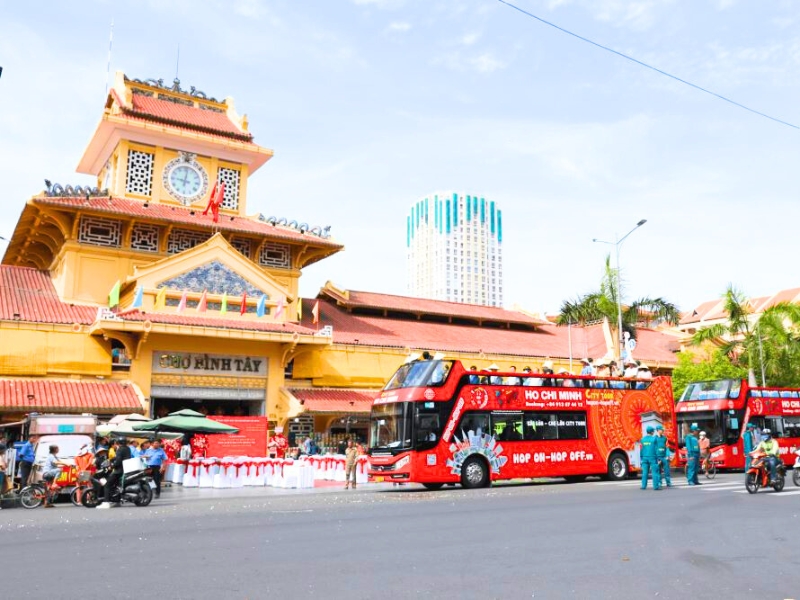
Chinese Quarter (Cholon)
Not to be missed is Luong Nhu Hoc Street, famous for its handmade lanterns, particularly magical during the Mid-Autumn Festival. The atmosphere of the quarter, between incense, bustling stalls, and ancient architecture, will transport you to another world.
Admire Notre-Dame Cathedral
📍 Location: Paris Commune Square, District 1
Notre-Dame Cathedral in Saigon is one of the most emblematic monuments in Ho Chi Minh City. Located in the heart of District 1, it was built between 1877 and 1880 by French architect J. Bourard in a style that blends Romanesque and Gothic elements. Its interior includes a central nave, two side naves, and several chapels, with a capacity of up to 1,200 people.
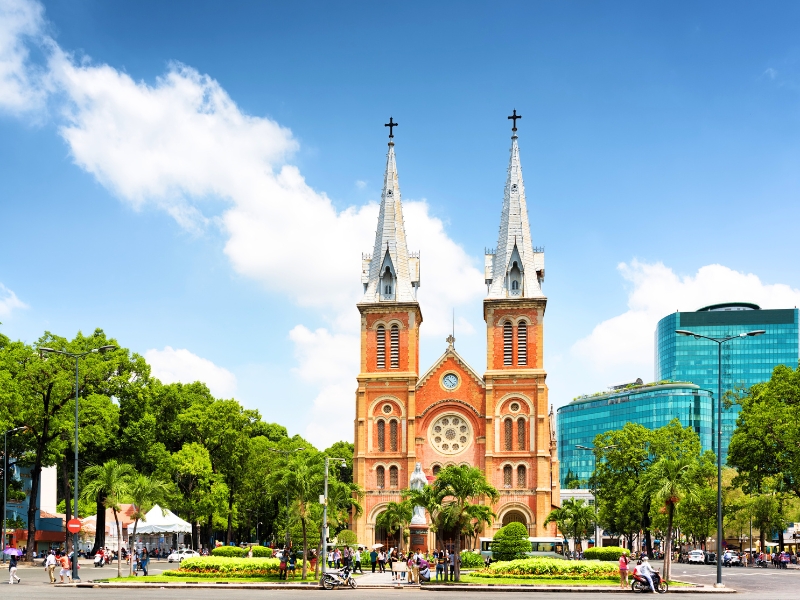
Notre-Dame Cathedral of Saigon
The façade overlooks a small cross-shaped park, formed by the intersection of four streets. Although the cathedral is currently undergoing renovation until 2027, it remains visible from outside and continues to attract many visitors.
🎟️ Admission Fees: Free entrance
🕘 Opening Hours: Every day: from 8:00 a.m. to 11:00 a.m. and from 2:00 p.m. to 4:00 p.m.
Explore Ben Thanh Market
📍 Location: Quach Thi Trang Square, District 1
Ben Thanh Market, located in District 1, is one of the oldest and most emblematic markets in Ho Chi Minh City. Open for over 100 years, it reflects the vitality of Vietnamese daily life. Beneath its imposing colonial structure hides a labyrinth of colorful stalls, bustling from morning to evening.
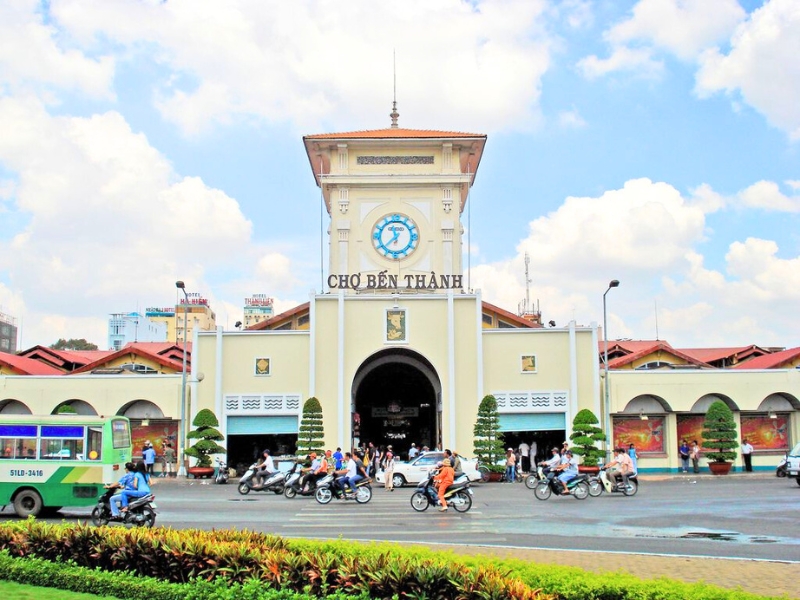
Ben Thanh Market
Here you will find a wide variety of souvenirs, local crafts, textiles, spices, and also a culinary section very much appreciated. It is the perfect place to taste typical dishes such as pho, spring rolls, banh xeo, or fresh fruit juices.
🎟️ Admission Fees: Free entrance
🕘 Opening Hours:
- Every day: from 6:00 a.m. to 7:00 p.m. (daytime market)
- Night market in the surroundings: from 7:00 p.m. to 11:00 p.m.
What to Do Around Ho Chi Minh City?
A few tens of kilometers from the center, the outskirts of Ho Chi Minh City hold many surprises. Between nature, history, and changes of scenery, these half-day or full-day excursions are ideal for enriching your stay without venturing too far.
Take an Excursion to the Cu Chi Tunnels
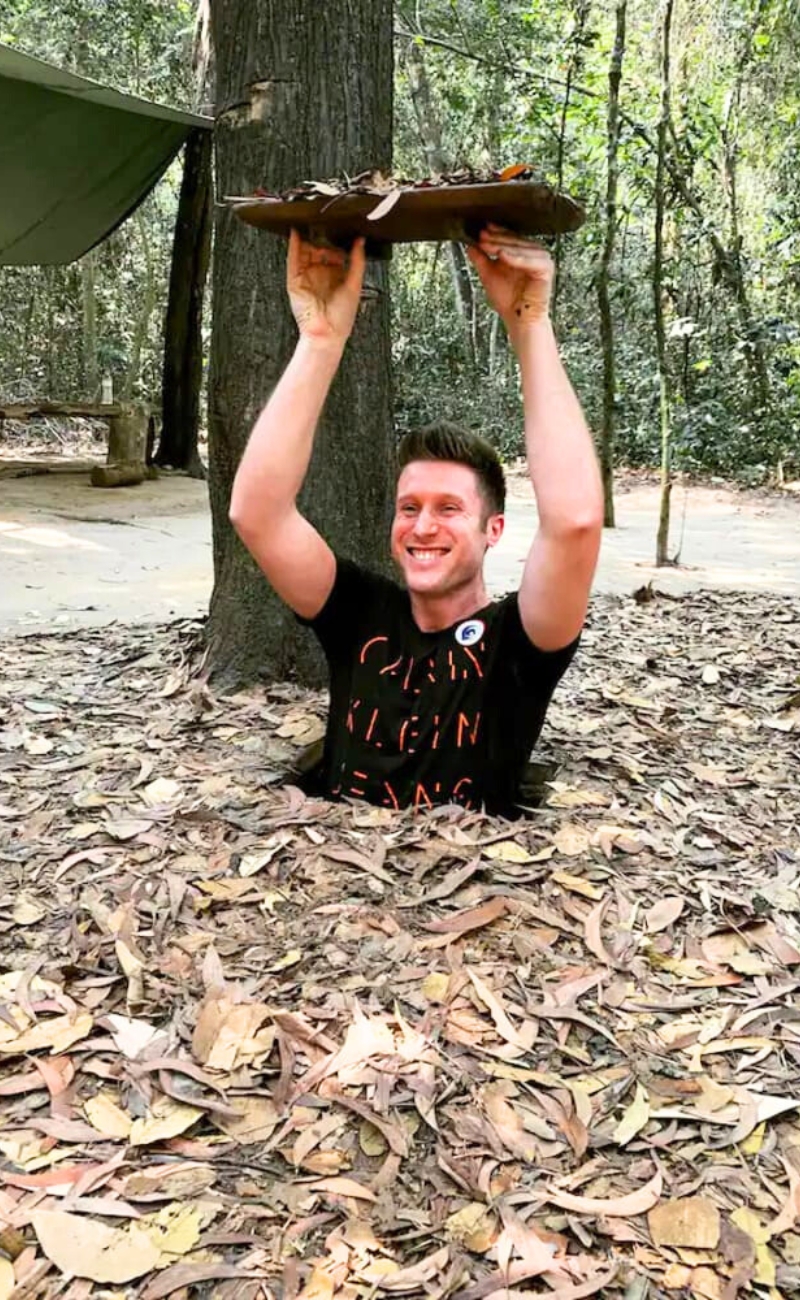
An experience that fascinates a large number of international visitors at the Cu Chi Tunnels
Located about 70 kilometers northwest of Ho Chi Minh City center, in the Cu Chi district, the Cu Chi Tunnels form a vast underground network built by Vietnamese resistance fighters during the war. Spanning more than 250 kilometers, these tunnels served as hideaways, communication routes, hospitals, weapon depots, and living spaces. Today, some sections are open to the public and enlarged for easier exploration. Visitors can crawl through the tunnels, observe reconstructed traps, visit bunkers, or watch explanatory videos about the Vietnam War. The site offers two distinct areas: Ben Dinh (more accessible, often visited in groups) and Ben Duoc (larger and more authentic). It is a must-do excursion for those who want to immersively understand a significant part of modern Vietnamese history.
🕘 Opening Hours: every day from 7:00 a.m. to 5:00 p.m.
🎟️ Admission Fees: approximately 90,000 VND per person (≈ 3.5 €) for foreigners – additional fee for guide or optional shooting activities
Explore the Can Gio Natural Reserve
Located about 50 km southeast of Ho Chi Minh City center, Can Gio is an ideal destination for a day trip, combining nature, history, and marine gastronomy. It is the only district of the city that borders the sea and hosts Vietnam’s first mangrove forest classified as a UNESCO World Biosphere Reserve.

Can Gio Natural Reserve
Among the main experiences, you can kayak through mangroves to the former revolutionary base of the Sac forest, visit war remnants, observe more than 1,000 monkeys in the semi-wild area, or navigate to the Vam Sat eco-tourism site. There you will find several activities: a boat ride in the heart of the bat sanctuary, crab fishing, observation of storks and crocodiles, or a climb up the Tang Bong tower for a panoramic view of the forest. Finally, do not miss Hang Duong Market, considered a true seafood paradise. You will find shells, crabs, shrimp, squid, and other delights of the sea at very reasonable prices, cooked on the spot.
What to Eat in Ho Chi Minh City?
Banh Mi – Saigon’s Iconic Sandwich
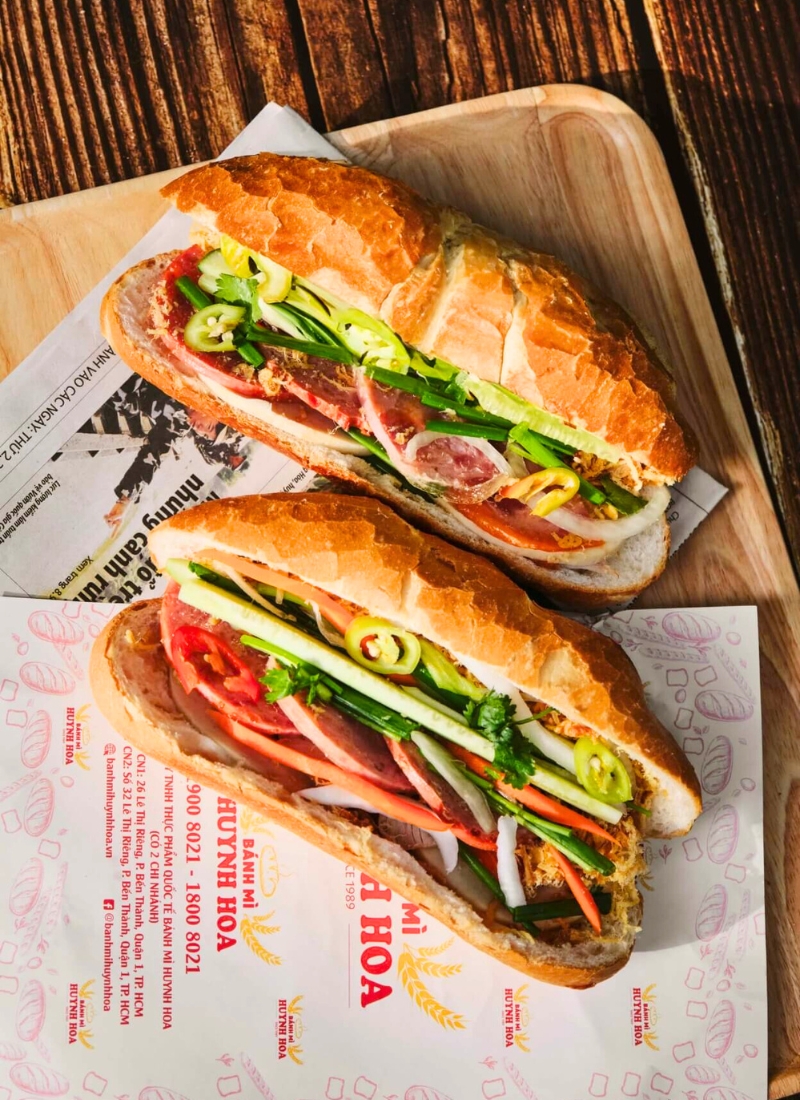
The legendary Banh Mi Huynh Hoa, renowned for its generous fillings and unique taste
It is impossible to talk about Saigon cuisine without mentioning banh mi, the emblematic sandwich that wins over both locals and travelers. Its bread, crispy on the outside and soft on the inside, holds generous filling: Vietnamese pâté, local cold cuts, crispy cucumber, pickled carrots and radishes, fragrant cilantro, and a touch of homemade sauce slightly spicy. The whole thing offers a perfect balance between crispness and softness, sweet and savory, acidity and freshness.
📍 Where to Taste It?
- Street stalls: often located at street corners, these small shops attract busy locals from early in the morning.
- Banh Mi Huynh Hoa: one of the most famous addresses in the city, known for its generous fillings.
- Small local markets: you can taste homemade versions and affordable prices, with recipes that vary depending on the neighborhoods.
Pho – Vietnam’s Essential Noodle Soup
Pho is probably the most famous dish in Vietnam. It is a noodle soup made with rice noodles in a hot broth, usually accompanied by beef or chicken, fresh herbs, bean sprouts, lime, and chili. Each bowl is prepared with care, and the broth simmers for several hours to develop all its flavors. In Ho Chi Minh City, Pho has a touch of the South: the broth is a little sweeter and the herbs more abundant. It is a simple but comforting dish that can be eaten in the morning, at lunch, or even in the evening.
📍 Where to Taste It?
- Pho Hoa Pasteur (260C Pasteur, District 3) – One of the most well-known addresses in the city.
- Pho Le (413–415 Nguyen Trai, District 5) – Very popular with locals for its intense flavor.
- Pho Ong Hung – A modern chain, ideal for travelers.
Banh Xeo – Crispy Vietnamese Pancake
Banh Xeo is a large thin and crispy pancake, typical of South Vietnam. Its name comes from the sound it makes while cooking: “xèo xèo” in the hot pan. It is prepared with rice flour, turmeric, and coconut water, then filled with shrimp, sautéed pork, bean sprouts, and sometimes mushrooms or onions.
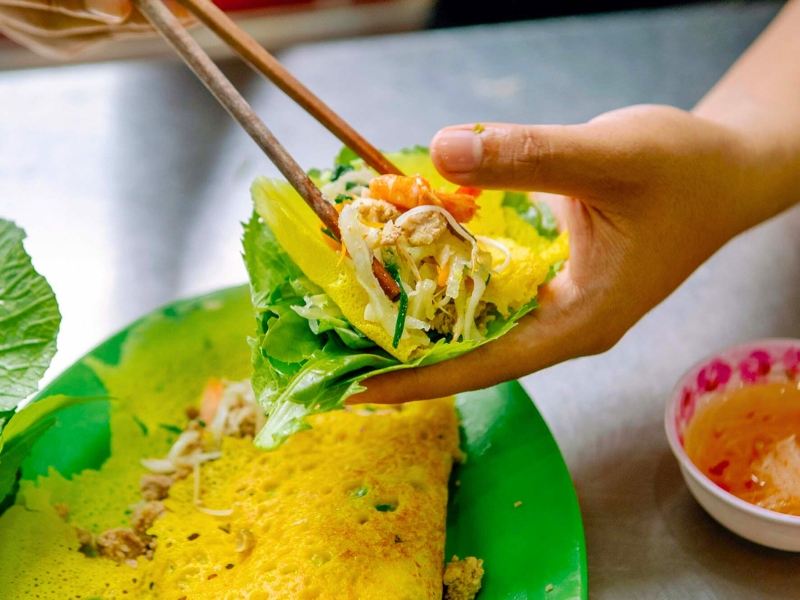
Banh xeo, a golden and light Vietnamese pancake, unmissable specialty of Saigon cuisine
It is enjoyed in small pieces, rolled in lettuce leaves with fresh herbs (mint, basil…) and then dipped in a slightly sweet and citrusy nuoc mam sauce. It is at the same time crispy, fresh, and very fragrant — a true pleasure to share!
📍 Where to Taste It?
- Banh Xeo 46A Dinh Cong Trang (46A Dinh Cong Trang, District 1) – A great classic of Saigon, very popular.
- Banh Xeo Muoi Xiem (190 Nam Ky Khoi Nghia, District 3) – Family restaurant with a Mekong Delta recipe.
- Banh Xeo An Là Ghien (74 Suong Nguyet Anh, District 1 + other locations) – Renowned chain for its well-browned banh xeo, served with plenty of fresh vegetables.
Com Tam Suon Bi Cha – Saigon’s Broken Rice
Com tam, literally “broken rice,” was originally a simple dish from the southern countryside. Today it is an unmissable classic of Ho Chi Minh City street food. It consists of broken rice (smaller than normal rice), served with a grilled pork chop (suon), shredded pork with crispy skin (bi), a savory flan with eggs and meat (cha), and sometimes a fried egg.

Com Tam Suon Bi Cha (Rice with Three Treasures)
The whole thing is seasoned with slightly sweet nuoc mam and accompanied by some slices of cucumber, tomato, and pickled carrots. Simple, tasty, and hearty — a true everyday dish that Vietnamese people eat at any time.
📍 Where to Eat It?
- Com Tam Ba Ghien: 84 Dang Van Ngu, Phu Nhuan District – Thick pork chop, well-marinated and grilled to perfection. A local landmark for years.
- Com Tam 77 (77 Bui Vien, District 1) – Located in the backpacker quarter, perfect for tourists. Generous portions and quick service.
- Com Tam Kieu Giang (21 Nguyen Trung Truc, District 1) – Famous for its long-marinated pork, crispy on the outside and tender on the inside.
Hu Tieu – A Typical Southern Soup
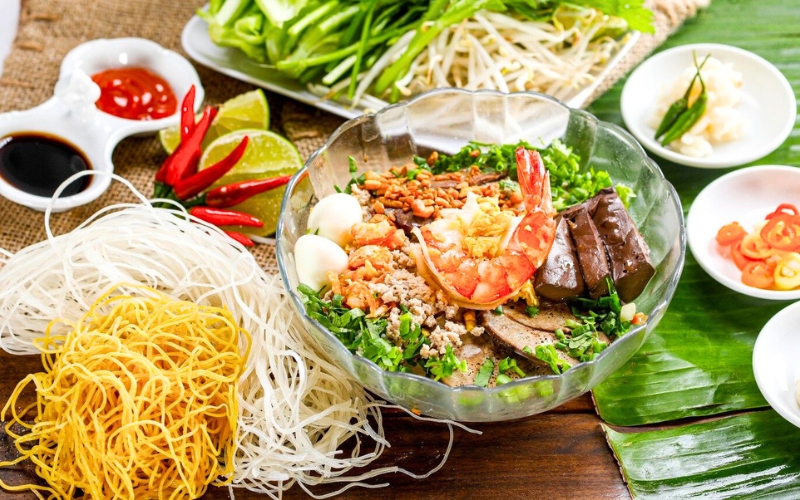
Hu tieu (Saigon Soup)
Hu tieu is a soup very much appreciated in Ho Chi Minh City, considered a specialty of the South. It is lighter than pho, with a clear, sweet, and slightly sugared broth. It consists of translucent noodles, sliced pork, shrimp, sometimes liver or meatballs, and always some fresh herbs to enhance its flavor.
There is also a “khô” (dry) version, in which the noodles are served dry, in a bowl separate from the broth. This format is very popular among locals for its more concentrated flavor and more varied texture.
📍 Where to Taste It?
- Hu Tieu Nhan Quan (District 3) – One of the best addresses for hu tieu Nam Vang.
- Hu Tieu Thanh Xuan (62 Ton That Thiep, District 1) – A family institution for over 70 years.
- Hu Tieu Mi Sa Dec – To discover another version from the Mekong Delta.
Useful Tips to Make the Most of Ho Chi Minh City
To make the most of Ho Chi Minh City’s energy, it is best to be well prepared. Here are some practical tips for a smooth and pleasant trip:
-
Choice of Period: Prefer the months from December to April, when the climate is dry and pleasant. If you depart between May and October, bring an umbrella or raincoat with you, as tropical downpours are frequent but brief.
-
Organization of Transfers: To move around easily, choose official taxis or use applications like Grab, which are more practical and transparent in their pricing. Motorcycle taxis (xe ôm) are an economical solution for short trips, but they are less comfortable and less safe. If you travel with Horizon Vietnam, a private driver picks you up from the airport and takes care of all your transfers, for a comfortable, safe, and worry-free trip.
-
Accommodation Location: Staying in Districts 1 or 3 allows you to stay close to the main tourist sites, restaurants, and activities, with easy access to transportation.
-
Local Currency Management: Always keep some small bills in Vietnamese dong with you, essential in markets and on street stalls, where credit cards are generally not accepted.
-
Internet Connection: Buy a local SIM as soon as you arrive at the airport or in the city. It will allow you to access the Internet at low cost and stay connected everywhere, particularly useful for using transportation applications or translation applications.
-
Security of Personal Items: Be careful in crowded places like markets or tourist areas and avoid displaying your phone or wallet. A well-closed cross-body bag is the most practical solution.
-
Adaptation to Climate: Choose light and breathable clothing, do not forget a hat or cap, apply sunscreen, and drink water regularly in bottles to stay hydrated.
-
Crossing Streets: Faced with heavy traffic, always advance slowly and at a constant pace. Scooters adapt to your rhythm, so it is important not to run or stop abruptly in the middle of the road.
-
Basics of the Language: Learning a few Vietnamese words like “Xin chào” (hello) or “Cảm ơn” (thank you) creates warm contact with the locals and enriches daily interactions.
Preparing your trip to Ho Chi Minh City means already immersing yourself in the unique energy of this great southern metropolis. With a few simple precautions — choosing the right season, organizing transfers, planning some cash, and adapting to the climate — your stay will be even smoother and more pleasant. A city of contrasts, where modern skyscrapers stand alongside traditional markets and ancient temples, Ho Chi Minh City captivates with its dynamism, generous cuisine, and the warm welcome of its inhabitants. Between a stroll through lively alleyways, a tasting of banh mi or pho, and an immersion in local life, each day brings new discoveries and encounters. If you have questions or would like to receive personalized advice, do not hesitate to contact us: we will be happy to help you prepare your trip.



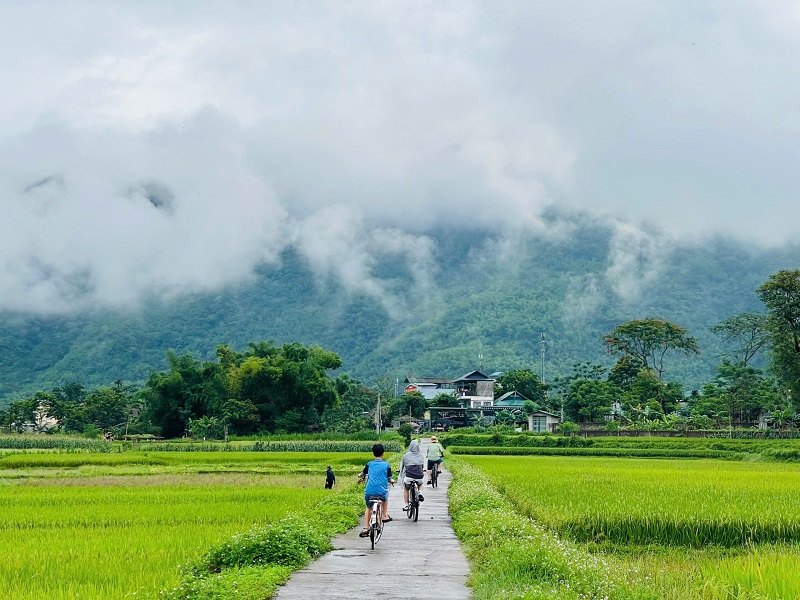
Our recommended itineraries
 Nature and Active travel
Northern Vietnam Explorer in 9 days and 8 nights
About ten days
Hanoi - Ha Long Bay - Saigon - Mekong Delta - Siem Reap - Luang Prabang - Pak Ou Caves - Kuang Si Waterfall
 Classic
Vietnam Exclusive in 13 Days
About 2 weeks
Hanoi - Bai Tu Long - Hue - Da Nang - Hoi An - Saigon - Mekong Delta