+84 9 75 46 33 10 (Whatsapp)
  info@horizon-vietnamtravel.com
  Français
  Español
  Português
  Deutsch

Temple of Literature: Everything You Need to Know
Table of contents
The Temple of Literature is one of the most beautiful historical sites in Hanoi. An ancient university built in 1070 to honor Confucius, it is today an important symbol of Vietnamese culture. Visiting this peaceful place, you will discover splendid gardens, ancient buildings, inscribed stone stelae, and a calm atmosphere in the heart of the city. It is an ideal place to deepen your knowledge of Vietnam’s history and enjoy a moment of tranquility. In this guide, you will find all the information you need to organize your visit: what to see, when to come, how much the entrance costs, and some practical advice.
Essential Information about the Temple of Literature
- Address: 58 Quôc Tu Giam Street, Đông Đa District, Hanoi
- Opening Hours: 8:00 AM to 5:00 PM (every day)
- Entrance Fee: Adults (70,000 VND ≈ 2.47 €); Children under 16 years old: Free
Located in the central Dong Da district, the Temple of Literature – Quoc Tu Giam is situated in a lively context, at the intersection of four major thoroughfares in Hanoi: Nguyen Thai Hoc, Van Mieu, Quoc Tu Giam, and Ton Duc Thang. Access can be a bit tricky due to traffic and one-way streets: it is therefore recommended to arrive on foot or by taxi.
Founded in 1070, this emblematic site is much more than a temple: it is the first university in Vietnam, dedicated to teaching literature, Confucian values, and the education of the elite. Three visionary sovereigns are honored there: Ly Thanh Tong, Ly Nhan Tong, and Le Thanh Tong, symbols of wisdom and respect for knowledge.
The Temple of Literature remains today a high place of memory and culture, where Vietnamese tradition of honoring scholars is perpetuated. Its harmonious architecture, its peaceful gardens, its ancient pavilions, and its reflecting pools reflect the refined beauty of Oriental aesthetics.
Visitors can admire a precious collection of manuscripts, historical objects, as well as the 82 stelae of Doctors, inscribed in UNESCO’s Memory of the World Register – unique testimonies of the Vietnamese imperial educational system.
Classified as a national monument in 1962, the Temple of Literature is today one of the must-visit cultural landmarks for anyone wishing to discover the intellectual and spiritual soul of Vietnam.
History of the Temple of Literature
The Temple of Literature – Quoc Tu Giam was founded in 1070 under the reign of King Ly Thanh Tong. Initially constructed to honor Confucius, his disciples, and scholars, it quickly became a great place of learning within Vietnamese society.
In 1076, King Ly Nhan Tong established Quoc Tu Giam, the first national university of Vietnam, intended to educate the sons of mandarins and members of the nobility. It was the most prestigious intellectual center in the country for over 700 years.

Main Facade of the Temple of Literature in Former Times
Over the course of dynasties, particularly under the reigns of the Tran, Le, and Nguyen, the site was restored and expanded several times. It maintained its role as an educational institution until the early 19th century, before being transformed into a place of memory.

The Khuê Van Cac Pavilion in Former Times
Among the most notable elements are the 82 stelae of Doctors, erected between 1442 and 1779 to celebrate the winners of imperial examinations. Each rests on a stone turtle – a symbol of longevity and wisdom in Vietnamese culture.

The Khuê Van Cac Pavilion Today
Today, the Temple of Literature is much more than a vestige of the past. It is a powerful symbol of respect for education, culture, and Confucian values. Classified as a national historic monument in 1962, it remains one of the most emblematic places in Hanoi and an essential stop for all those who wish to understand the intellectual soul of Vietnam.
Unique Architecture of the Temple of Literature
The Temple of Literature in Hanoi is much more than a historical monument: it is a true sanctuary of education, a symbolic space where spirituality, knowledge, and Vietnamese aesthetics intertwine. Built in 1070 under the Ly dynasty, this temple is dedicated to Confucius and was, from 1076 onward, the seat of the first university in Vietnam: Quoc Tu Giam.
Today it constitutes one of the most emblematic architectural complexes in the country, spanning over 54,000 m² and organized into five successive courtyards, each representing a stage of the intellectual and moral journey of the Confucian scholar.
First Courtyard: Entrance to the World of Learning
The main access to the temple is through Van Mieu Mon, a majestic three-arched gate topped by glazed tile roof. This structure introduces the visitor into a calm and verdant environment, conducive to contemplation.
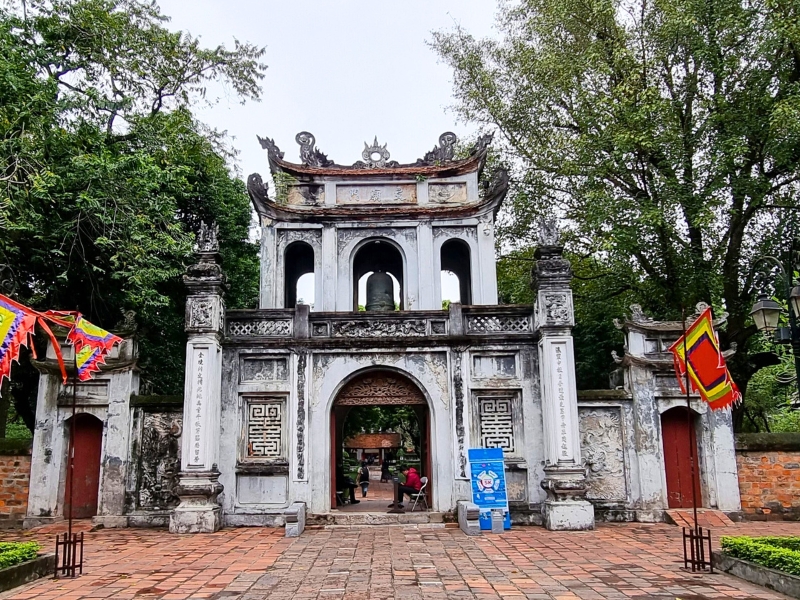
The Van Mieu Mon Gate
At the end of this first courtyard stands a trio of symbolic portals:
- Dai Trung Mon (Great Central Gate) in the center,
- Thanh Duc Mon (Gate of Accomplished Virtue) on the right,
- Dat Tai Mon (Gate of Achieved Talent) on the left.
These three gates embody the foundations of Confucian thought: inner balance, moral integrity, and intellectual merit. They form an invitation to elevate oneself through study and discipline.

Dai Trung Môn (Great Middle Gate)
Second Courtyard: The Splendor of Learning – Khue Van Cac
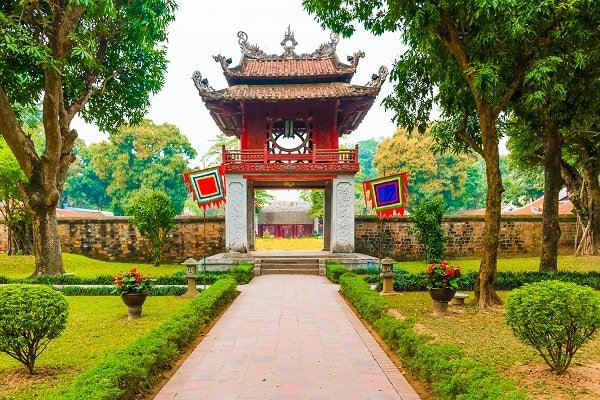
Passing through these portals, the visitor enters the second courtyard, dominated by an architectural jewel: Khue Van Cac, the Pavilion of the Constellation of Letters, built in 1805.

Symbol of knowledge, the central pavilion evokes the Khuê star that radiates in the heart of the sky, spreading the light of intelligence.
Its refined architecture – four brick pillars supporting a wooden structure with two-tiered roofs, with circular windows on each side – symbolizes the Khue star, associated with literature in Asian tradition. The pavilion appears suspended between earth and sky, like a lantern of intelligence illuminating the path of future generations. Today it has become one of the official emblems of the city of Hanoi.
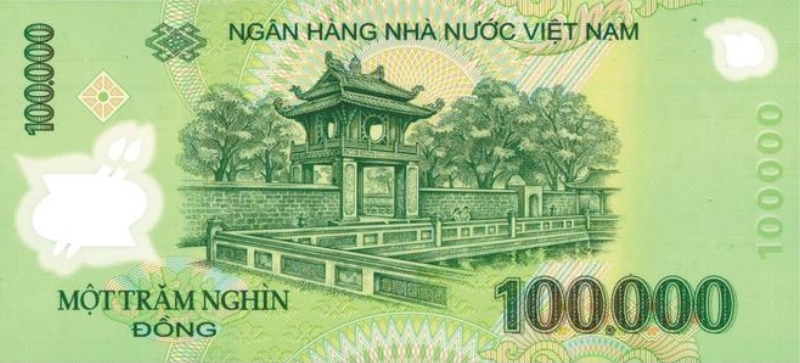
The Reverse of the 100,000 Vietnamese Dong Banknote Depicts an Illustration of the Khuê Van Cac Pavilion
Third Courtyard: The Mirror of Heaven and the Stelae of Memory
In the center of this courtyard lies the Gieng Thien Quang, or Well of Celestial Clarity. Square in shape, it represents the earth, in harmony with the round windows of the previous pavilion, which represent the sky. This cosmic symbolism evokes the idea of a place where natural elements align in service of knowledge.

Garden of the Stelae of Doctors
Along the sides of the basin are aligned 82 stone stelae, placed on the backs of turtles – symbols of longevity and wisdom. These stelae are inscribed with the names, origins, and merits of 1,307 winners of imperial examinations organized between 1442 and 1779. Each is an engraved page of Vietnamese intellectual history. In 2010, they were inscribed in the UNESCO Memory of the World register.
Fourth Courtyard: The Sanctuary of the Wise
After passing through the Dai Thanh Mon gate, the visitor enters the most sacred space of the complex. This courtyard is dominated by two main buildings:
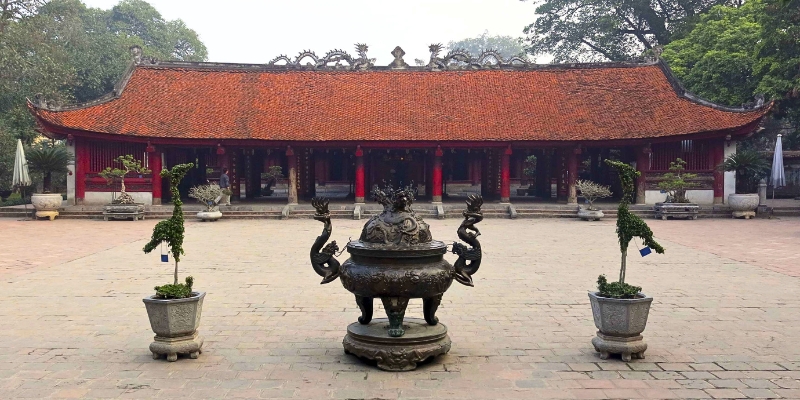
Main Hall (Đai Bai) – a solemn place where homage is paid to the great masters and Confucian tradition.
- The Dai Bai Hall, a space for reflection and ceremonies,
- The Dien Dai Thanh Sanctuary, where statues of Confucius, his four most eminent disciples (Nhan Hoi, Tang Tu, Tu Tu, Manh Tu), and ten other scholars are enthroned.

To this are added two lateral pavilions, Ta Vu and Huu Vu, which pay homage to the great Vietnamese scholar Chu Van An, embodiment of rectitude, modesty, and the Vietnamese educational ideal.
Fifth Courtyard: The Thai Hoc House – Living Educational Heritage
Located behind the sanctuary, the Thai Hoc House was reconstructed on the foundations of the ancient imperial Academy Quoc Tu Giam. This vast architectural complex, restored in the late 1990s, respects the codes of traditional Vietnamese architecture.
It contains:

The Front and Back Building
- The front building (Tien Duong),
- The back building (Hau Duong),
- The lateral wings (Ta Vu – Huu Vu),
- The drum and bell houses.
This space is today dedicated to educational exhibitions, ceremonies honoring deserving teachers and students, and the preservation of the spirit of Confucian education. It is a living place, where past and present dialogue in the name of knowledge.
The Temple of Literature in Hanoi is one of the finest examples of traditional Vietnamese architecture. Every stone, every pillar, every curved roof testifies to a worldview founded on harmony between man, nature, and knowledge. This historical site, at once majestic and intimate, attracts thousands of Vietnamese and foreign visitors each year, curious to discover this high place of Vietnamese culture, education, and wisdom.
Must-See Monuments Around the Temple of Literature
The Temple of Literature is located in the heart of a neighborhood rich with historical and cultural sites. Here is a selection of the most emblematic monuments to discover nearby.
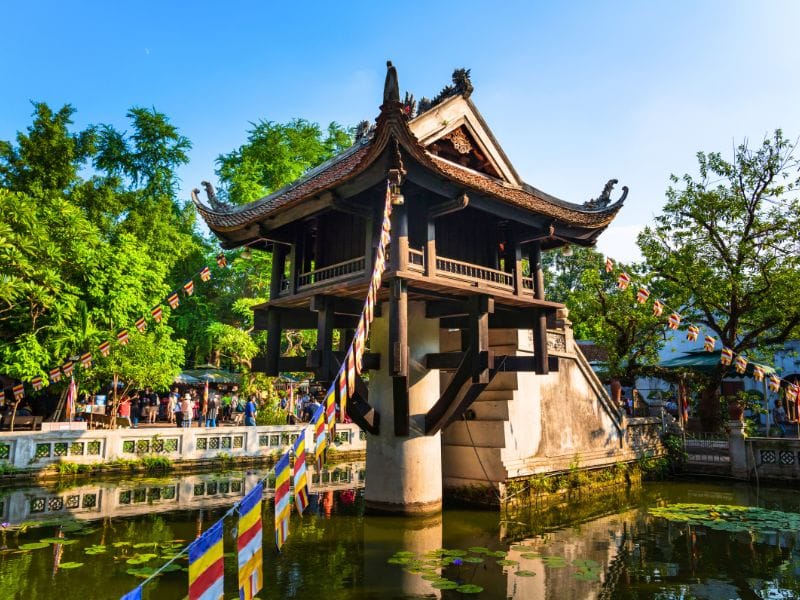
One Pillar Pagoda (Chua Mot Cot)
📍 Chua Mot Cot Street – approximately 0.6 km away
One Pillar Pagoda
An emblematic architectural jewel of Hanoi, this small Buddhist pagoda was built in the 11th century on a single stone pillar, symbolizing a lotus flower emerging from water. Its unique aesthetic and spiritual dimension make it a highly appreciated place for travelers seeking serenity and beauty.
Ho Chi Minh Mausoleum
📍 Ba Dinh Square – approximately 0.8 km away

Ho Chi Minh Mausoleum
Located on Ba Dinh Square, this imposing monument houses the embalmed remains of President Ho Chi Minh, a founding figure of modern Vietnam. A place of reflection and patriotism, it impresses with its solemn atmosphere. The changing of the guard attracts many visitors each day, particularly the French, who are sensitive to the country’s contemporary history.
Tran Quoc Pagoda
📍 Thanh Niên Street – approximately 2.5 km away

The Tran Quoc Pagoda is a Must-See Destination for Visitors from All Corners of the World.
Set on the banks of West Lake (Ho Tay), this pagoda is considered the oldest in Hanoi. Founded in the 6th century, it fascinates with its calm, its elegant multi-tiered tower, and its romantic setting. It is a place appreciated by photography enthusiasts and visitors seeking spirituality and harmony.
Practical Tips for Your Visit to the Temple of Literature
- Dress Code Respect: Since the temple is a sacred and historical place, it is advisable to wear modest clothing that covers shoulders and knees. This shows your respect for local heritage and culture.
- Choice of Visiting Hours: Prefer the early hours of the day or late afternoon to avoid crowds and enjoy soft light, ideal for photography.
- Preparation for Walking: The site comprises several courtyards, paved walkways, and gardens. Comfortable shoes will allow you to move around easily.
- Respect for Silence and Spaces: Maintain a calm demeanor, avoid touching ancient objects or stelae, and be discreet in areas of contemplation.
- Thoughtful Use of the Camera: Photos are generally authorized, but the use of flash is discouraged. Please respect any panels indicating potential restrictions.
- Climate Precautions: In hot periods, plan for a hat, sunglasses, sunscreen, and water to stay hydrated throughout your visit.
- Consultation of Official Information: Before your visit, you can consult the official website vanmieu.gov.vn to learn about seasonal hours, temporary exhibitions, or cultural events taking place.
A symbol of Vietnam’s deep attachment to knowledge, culture, and respect for scholars, the Temple of Literature remains one of the most significant sites to visit in Hanoi. Beyond its architectural beauty, it is a place of living memory, peaceful spirituality, and Confucian elegance. By taking the time to discover its five courtyards, its millennia-old stelae, and its fascinating history, you will immerse yourself in the intellectual soul of the country. And all around, the Vietnamese capital has many other cultural treasures in store for you to explore, just a few steps away. Whether you are a history enthusiast, a lover of fine architecture, or simply curious to better understand Vietnamese identity, a visit to the Temple of Literature is an essential and unforgettable stop, both enriching and inspiring.




Our recommended itineraries
 Nature and Active travel
Northern Vietnam Explorer in 9 days and 8 nights
About ten days
Hanoi - Ha Long Bay - Saigon - Mekong Delta - Siem Reap - Luang Prabang - Pak Ou Caves - Kuang Si Waterfall
 Classic
Vietnam Exclusive in 13 Days
About 2 weeks
Hanoi - Bai Tu Long - Hue - Da Nang - Hoi An - Saigon - Mekong Delta