+84 9 75 46 33 10 (Whatsapp)
  info@horizon-vietnamtravel.com
  Français
  Español
  Português
  Deutsch

The Most Beautiful Beaches of Hôi An, Vietnam: Complete Guide 2025
Table of contents
When one thinks of Hôi An, what comes to mind are its colorful streets, floating lanterns, and its rich architectural heritage, declared a UNESCO World Heritage Site. But did you know that this iconic city is also home to some of the most beautiful beaches in central Vietnam? Although their waters do not compete with the deep blue of Nha Trang or the silky sand of Phu Quôc, the beaches of Hôi An captivate with their peaceful atmosphere, unspoiled natural beauty, and ideal proximity to the old town. Whether you seek relaxation in the shade of palm trees, water adventures, or authentic experiences alongside local fishermen, these beaches will enchant you. In this complete 2025 guide, discover our selection of the most beautiful beaches of Hôi An and all practical advice to make the most of your seaside stay.
Best Time to Visit Hôi An Beaches
Hôi An, a pearl of central Vietnam, captivates visitors with its sandy beaches, crystal-clear waters, and serene atmosphere. However, to fully enjoy these natural wonders, it is important to choose your travel dates carefully, as Hôi An’s climate presents two very different seasons.
Dry Season (February – August): The Ideal Period
The best time to visit Hôi An’s beaches is from February to August, corresponding to the dry season. During these months:
- The weather is sunny, with clear skies and abundant sunshine (up to 277 hours of sun per month between May and June). Average temperatures hover around 33°C, with peaks that can reach 39.8°C in June, July, and August.
- Humidity remains moderate, around 75%, making the heat more bearable.
- Rainfall is scarce, generally between 23 mm and 85 mm per month, greatly reducing the risk of rainy days.
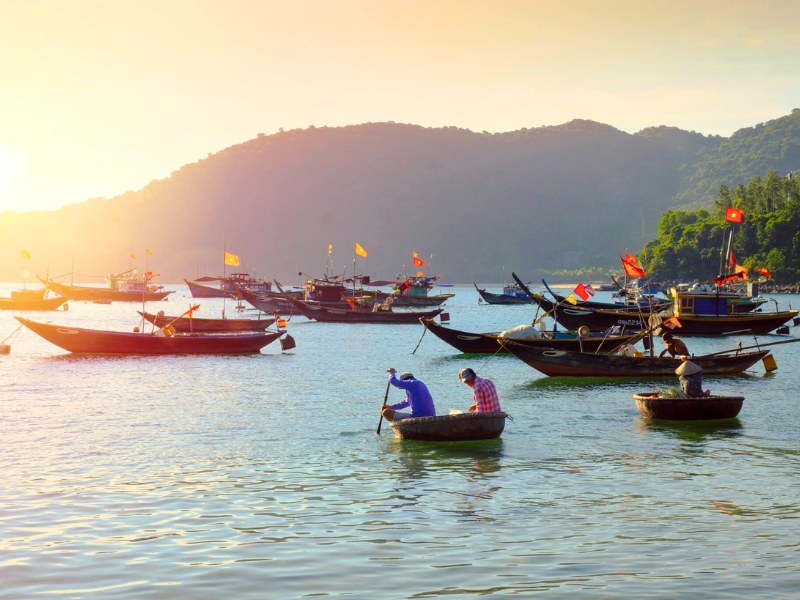
Cu Lao Cham, peaceful and accessible during the dry season, when the sea is calm.
These climatic conditions guarantee perfect days for:
- Swimming and sunbathing on An Bang or Cua Dai beaches.
- Practicing water sports such as kayaking, paddling, or diving.
- Participating in maritime excursions, particularly to the Cu Lao Cham islands (accessible by boat only during the dry season).
Moreover, the months of March to May stand out for their mild climate and low tourist crowds. It is therefore the ideal period for those who wish to enjoy the tranquility of the beaches before the summer peak and the influx linked to Vietnamese school holidays. In summary, the dry season undoubtedly represents the best time to discover Hôi An in all its coastal beauty and to experience unforgettable seaside experiences.
Rainy Season (September – January): A Less Favorable Period
From September to January, Hôi An enters the rainy season, characterized by a humid and unstable climate that contrasts sharply with that of the dry season.
During this period, temperatures drop, ranging between 18°C and 28°C, bringing relative coolness but often accompanied by high humidity. Relative humidity can reach 85%, accentuating the feeling of mugginess.
Rainfall becomes abundant, especially in the months of October and November, the rainiest of the year. Monthly averages can reach 650 mm in October and 430 mm in November. However, in particularly rainy years, these values can rise to 1,000 mm, especially when coinciding with typhoons or extreme weather phenomena.
The risk of storms and rough seas is also high. These conditions make beach activities difficult and maritime crossings dangerous, particularly to Cu Lao Cham.
Although the old town retains a certain romantic charm in the rain, with its narrow streets and colored lanterns reflected in wet cobblestones, this period is not recommended for those who wish to fully enjoy the beaches and water activities.
In summary, to have an optimal seaside experience at Hôi An, it is highly recommended to plan your trip between February and August, when the climate offers ideal conditions for swimming, excursions, and relaxing by the sea.
The Most Beautiful Beaches of Hôi An
1. The Cham Islands (Cù Lao Chàm)
About 15 kilometers from the coast, the Cham Islands archipelago – consisting of eight islets – is a true ecological treasure. Declared a UNESCO Biosphere Reserve in 2009, it hosts exceptional biodiversity, both terrestrial and marine. To reach them, simply take a speedboat from Cua Dai port: the crossing takes only about twenty minutes. Once there, you will discover pristine beaches, coral-rich seabeds, and a serene atmosphere, perfect for relaxation.
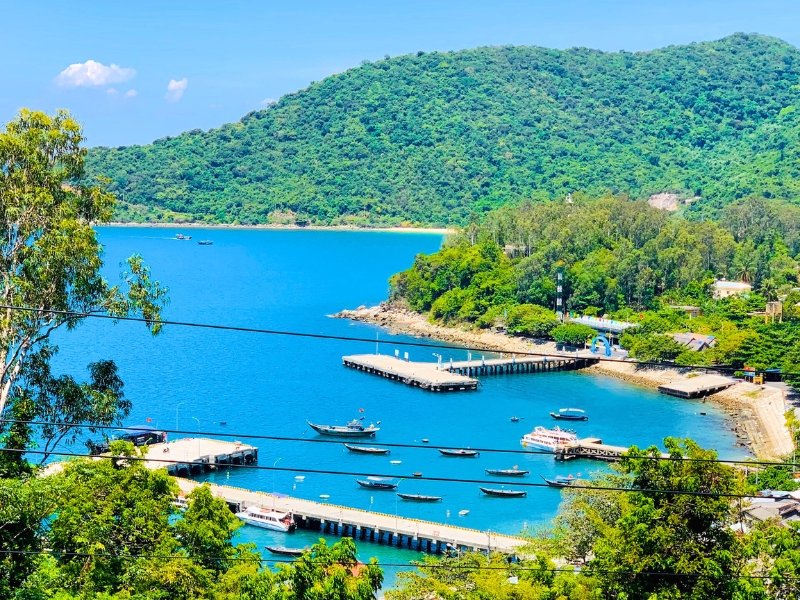
Cu Lao Cham
Moreover, here you can practice snorkeling, go hiking through tropical vegetation, or visit traditional fishing villages. Do not miss the Hai Tang pagoda and the small local museum, which recount the culture of the island’s inhabitants. Due to strong winds and rough seas, the islands are generally not accessible from September to January. It is therefore advisable to check the weather conditions before planning your visit.
2. An Bang Beach
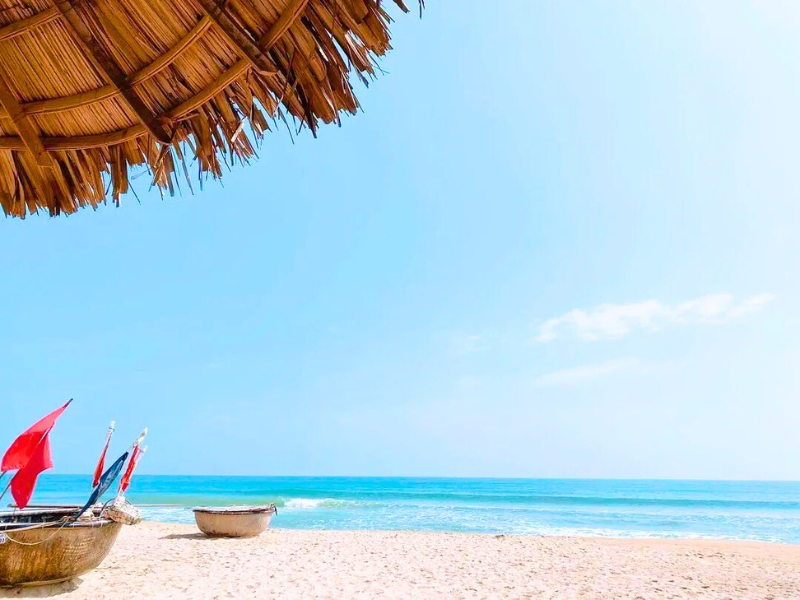
An Bang Beach
Located just 4 kilometers from Hôi An’s city center, An Bang is undoubtedly the most popular beach in the region. With its golden sand, calm waters, and beachfront restaurants, it attracts locals, expats, and tourists alike. The atmosphere is relaxed, with live concerts in the evening, upscale bars serving cocktails, and even yoga classes on the beach at sunrise. It is the ideal place to bask in the sun or sip a fresh juice while enjoying the ocean view.
The best time to enjoy it is from February to August. However, if you prefer tranquility, it is better to avoid the months of June to August, when the beach is more crowded with Vietnamese families.
3. Cua Dai Beach
Even closer to the city, Cua Dai beach extends for several kilometers. Although it has been affected by erosion in recent years, it has regained its charm thanks to restoration work and today remains one of the most peaceful beaches of Hôi An.
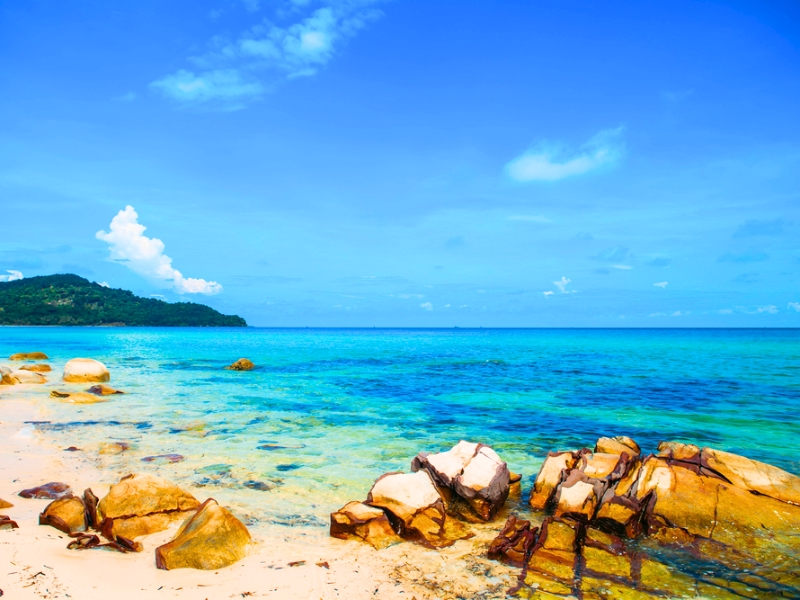
Cua Dai Beach
During the week you can find true serenity, in the shade of coconut palms or during a bike ride along the coast. On weekends, the atmosphere becomes a bit more lively, but it remains far from mass tourism.
It is also an excellent beach for seafood lovers, with several simple but delicious restaurants lining the shore.
4. Ha My Beach
Between Hôi An and Đà Nẵng, Ha My beach is still little known to the general public, making it an ideal destination for those seeking to escape the crowds. Its golden sand, crystal-clear waters, and pristine vegetation create a perfect setting for a tranquil getaway.
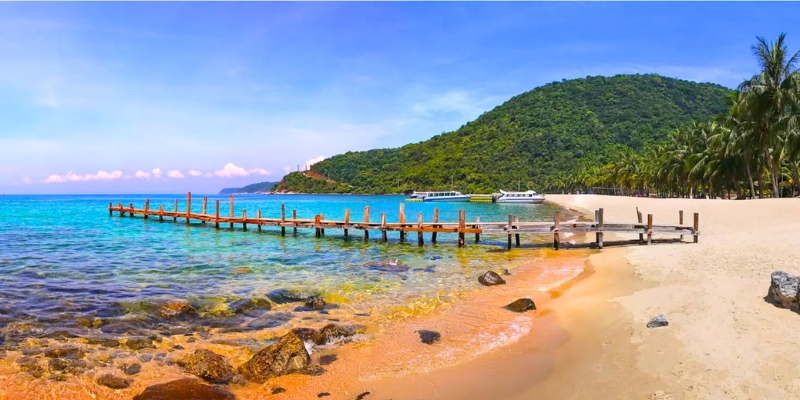
Ha My Beach
According to the newspaper The Telegraph, it even ranks among the 16 most beautiful beaches in Asia. Unlike the more touristy beaches, here you will not find neat rows of loungers: only the sea, the sky, and tranquility. The best time to visit is from December to April, when temperatures are mild and the climate is dry. Reachable by scooter or bike from Hôi An, it truly deserves a stop if you are looking for a still-unspoiled corner of paradise.
Practical Tips for Enjoying Hôi An’s Beaches to the Fullest
To have a successful seaside experience at Hội An, here are some essential practical tips, simple to follow and respectful of the environment.
1. Choice of Transportation
To reach the beaches located a few kilometers from the city center, bicycles and scooters are ideal options: economical, liberating, and perfect for enjoying the scenery.
If you travel with Horizon Vietnam, you can move by private car with a driver, a comfortable and convenient solution that allows you to reach the beaches and other sites with complete peace of mind, without worrying about traffic or parking.
2. Adapting to Climate Conditions
To avoid heat peaks and sunburn, it is advisable to go to the beach early in the morning or in the late afternoon. The light is softer, the atmosphere more peaceful, and the conditions ideal for swimming or relaxing.
3. Sun Protection

Effective sun protection is essential under the intense sun of Hôi An
Hôi An’s climate can be very strong, especially in summer. Remember to bring high SPF sunscreen, a hat, sunglasses, and a reusable water bottle. Even on equipped beaches, it is always better to be self-sufficient.
4. Environmental Respect
To preserve the natural beauty of the beaches, always take away your trash, limit single-use plastic, and avoid touching corals or marine life during water activities. Every action counts.
5. Financial Caution
On some beaches, small eateries or street vendors accept only cash payments. It is therefore advisable to carry some Vietnamese dong with you for greater convenience.
6. Sea Safety
Most of Hội An’s beaches are not supervised. It is therefore important to be careful, especially if swimming alone or with children. If the sea is rough, it is better not to venture too far from shore.
7. Discover Available Activities
Each beach has its own atmosphere: some offer surfing or yoga classes, others rent paddleboards, loungers, or small local restaurants. Find out in advance to choose the one that best suits your desires at the moment.
Hôi An, famous for its cultural heritage and charming streets, also captivates with the beauty of its beaches. Whether you seek peaceful stretches for relaxation, ideal spots for water activities, or lively places with beachfront restaurants, Hôi An’s beaches offer experiences suited to every type of traveler. To make the most of these coastal treasures, it is advisable to plan your trip between February and August, during the dry season. During this period you can benefit from ideal weather for swimming, relaxing, and taking maritime excursions.
Are you ready to explore the most beautiful beaches of Hôi An? Prepare your swimsuit, sunscreen, and let yourself be seduced by the seaside charm of this unmissable Vietnam destination.



Our recommended itineraries
 Nature and Active travel
Northern Vietnam Explorer in 9 days and 8 nights
About ten days
Hanoi - Ha Long Bay - Saigon - Mekong Delta - Siem Reap - Luang Prabang - Pak Ou Caves - Kuang Si Waterfall
 Classic
Vietnam Exclusive in 13 Days
About 2 weeks
Hanoi - Bai Tu Long - Hue - Da Nang - Hoi An - Saigon - Mekong Delta