+84 9 75 46 33 10 (Whatsapp)
  info@horizon-vietnamtravel.com
  Français
  Español
  Português
  Deutsch

What to Do in Mui Ne? Complete Guide for Visiting Mui Ne
Table of contents
With its white sand beaches, multi-hued dunes and charming fishing village atmosphere, Mui Ne has become one of Vietnam’s most beloved beach destinations. Located just a few hours from Ho Chi Minh City, it captivates both relaxation seekers and adventure enthusiasts alike, as well as those curious to discover local culture. In this comprehensive guide, you’ll find all the essential information about what to do in Mui Ne: must-see sites, local specialties to savor, the best times to visit, and practical tips to make the most of your stay.
Essential Information About Mui Ne – Phan Thiet
Where is Mui Ne?
Nestled on Vietnam’s south-eastern coast, Mui Ne belongs to Phan Thiet city in Binh Thuan province. This region fascinates with its unique contrasts: on one side, azure waters and long beaches fringed with coconut palms; on the other, multi-colored dunes and fishing villages that preserve an authentic way of life. Situated roughly 220 kilometers from Ho Chi Minh City, Mui Ne offers an exotic escape from urban hustle while remaining easily accessible within a few hours’ drive.
How to Get There
From Ho Chi Minh City
Located about 220 km from Ho Chi Minh City, Mui Ne is one of the most easily accessible beach destinations:
- By train: Several daily trains connect Saigon station to Phan Thiet in 4-5 hours. From there, it’s about twenty kilometers by taxi or shuttle to reach Mui Ne.
- By bus or limousine: Overnight buses and luxury minivans make the direct journey in 4.5-5.5 hours, offering a simple and comfortable option.
- By private car: Plan for about 4 hours of driving, with the possibility of stopping along the way to visit a dragon fruit plantation or a small coastal village.
From Hanoi
From the capital, travelers have two main options:
- By plane + road: The fastest way is to take a roughly two-hour domestic flight to Ho Chi Minh City, then continue by train, bus, or private car.
- By long-distance train or bus: Direct connections exist between Hanoi and Phan Thiet, but they often exceed 30 hours and suit only those wanting to traverse the country from north to south.
If you travel with Horizon Vietnam Travel, you won’t need to worry about these choices: we organize your transfers based on your needs, ensuring your arrival in Mui Ne is as pleasant as your stay itself.
Best Times to Visit Mui Ne
With warm and sunny weather almost year-round, Mui Ne stands out as an ideal beach destination in every season. However, the most favorable period runs from November to April, during the dry season: the skies are blue, temperatures hover between 25 and 30°C, the sea remains calm, and the dunes display their most beautiful colors. It’s also peak tourism season, perfect for beach lovers and those keen to try kitesurfing, the emblematic sport of the region.
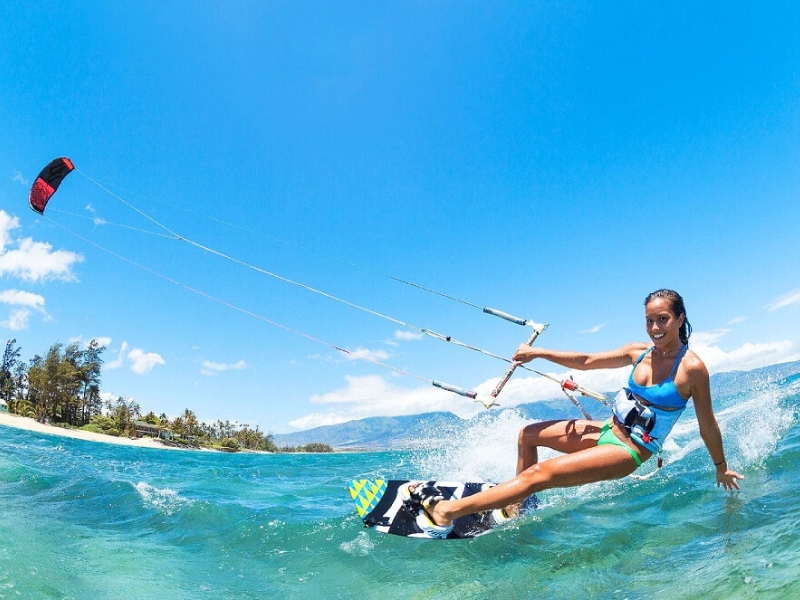
Under mild and sunny skies, Mui Ne reveals its beaches and colorful dunes, the perfect playground for kitesurfing
From May to October, Mui Ne enters the rainy season: downpours, often brief but intense in late afternoon, still leave many luminous mornings. This period attracts fewer visitors, making it an appealing choice for those seeking tranquility and lower rates. Overall, Mui Ne enjoys milder and more stable weather compared to other Vietnamese regions, which explains its reputation as a welcoming beach destination year-round.
What to See and Do in Mui Ne?
Mui Ne is far more than its white sand beaches and beach atmosphere. The region is rich in surprising landscapes, historic sites, and living testimony to Cham culture. Here are some must-see places to discover:
Mui Ne Bay
Mui Ne Bay, a natural canvas where endless beaches and turquoise waters meet.
With its vast stretches of white sand beaches fringed with coconut palms and turquoise waters, Mui Ne Bay epitomizes the beach paradise. It’s the perfect place for swimming, relaxing, and practicing water sports like kitesurfing or windsurfing. For those seeking more tranquility, you can rent a small boat and explore nearby still-wild islands, where sea and sky seem to merge on an infinite horizon.
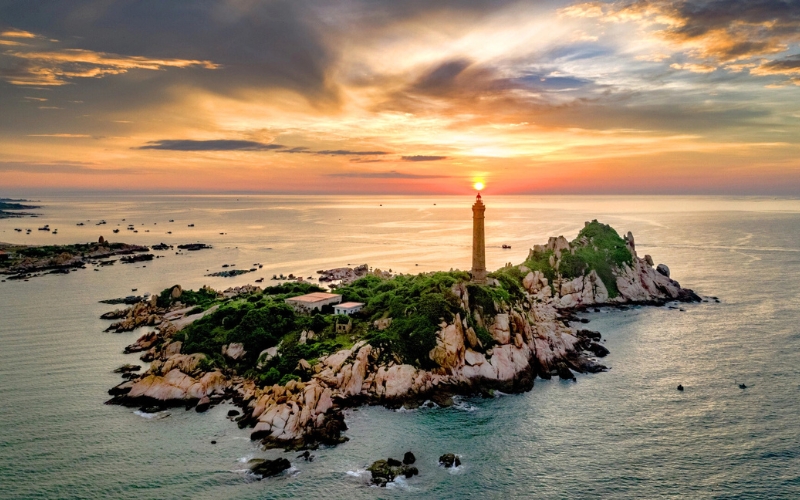
Hon Rom (Straw Hill)
Hon Rom (Straw Hill)
Located in Long Son village, Hon Rom is a small preserved hill whose name literally means “straw hill,” referring to the sun-bleached grasses that cover its slopes during the dry season. The site attracts visitors with its peaceful beaches, crystal-clear waters free of rocks, where waves remain gentle and ideal for swimming. It’s a perfect place to regenerate at nature’s pace: camping by the sea, watching the fiery colors of dawn and dusk, or spending a convivial evening around a bonfire under a star-studded sky.
Đồi Cát Hồng (Red Sand Dunes)
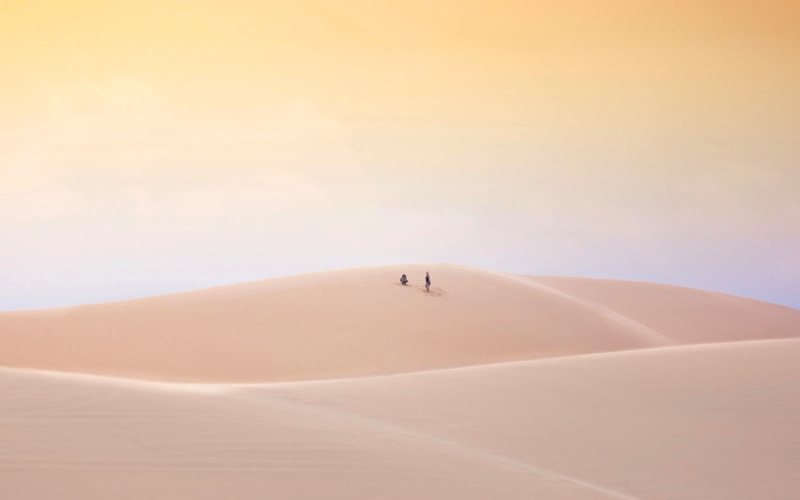
Đồi Cát Hồng (red sand dunes)
True emblem of Mui Ne, the red sand dunes—called Đồi Cát Hồng in Vietnamese—paint an undulating landscape that shifts with the wind and light. Their uniqueness lies in the surprising palette of colors they offer: from golden yellow to deep red, sometimes revealing up to eighteen shades throughout the day.
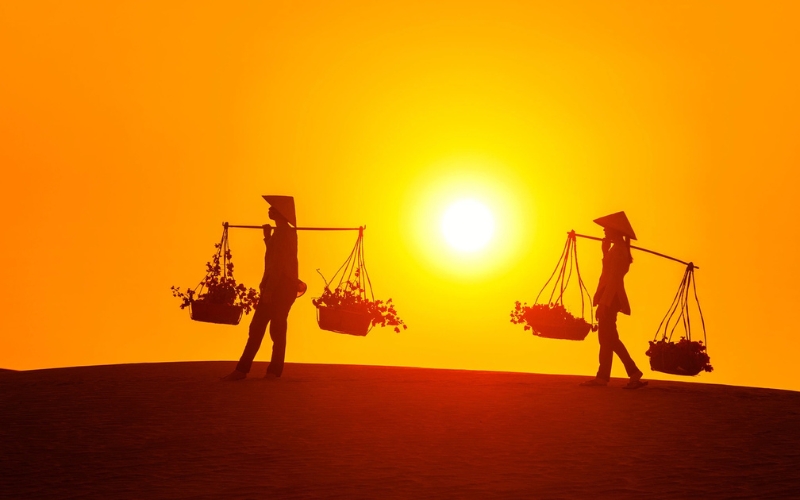
Walking across these sand hills creates the impression of venturing into a small desert in the heart of Vietnam. To add a playful touch, visitors can rent a board and try “sandboarding,” an activity especially popular with children and families. And at sunset, the fiery horizon gives the place an almost surreal atmosphere.
Hon Ghenh
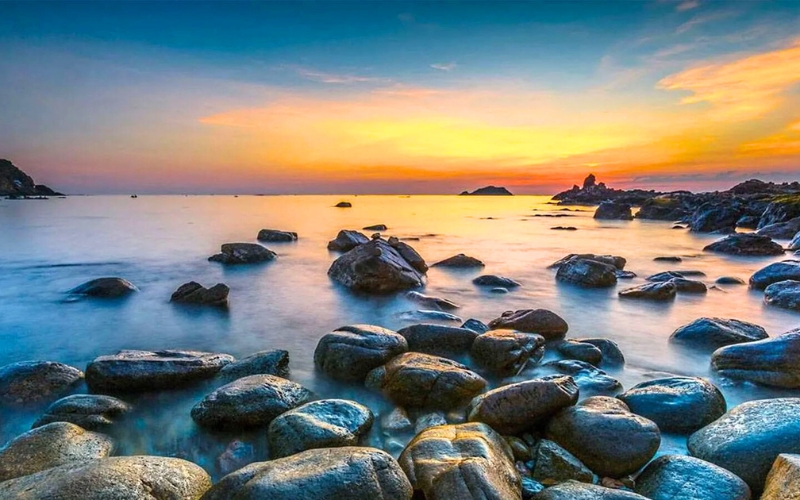
Also known as Hòn Lao, Hon Ghenh is a small preserved islet located just one kilometer off Mui Ne’s coast. It’s easily reached by boarding a local fishing boat or via shuttles offered by some hotels and resorts. The place appeals for its wild character: rocky cliffs caressed by waves, crystal-clear waters revealing coral-rich seabeds and colorful fish, and a peaceful atmosphere far from the coastal buzz. It’s ideal for fishing, snorkeling, or simply watching the sunset set the horizon ablaze. A perfect escape for those seeking an intimate moment with the sea.
Bàu Trắng (White Lake) – Bàu Sen (Lotus Lake)
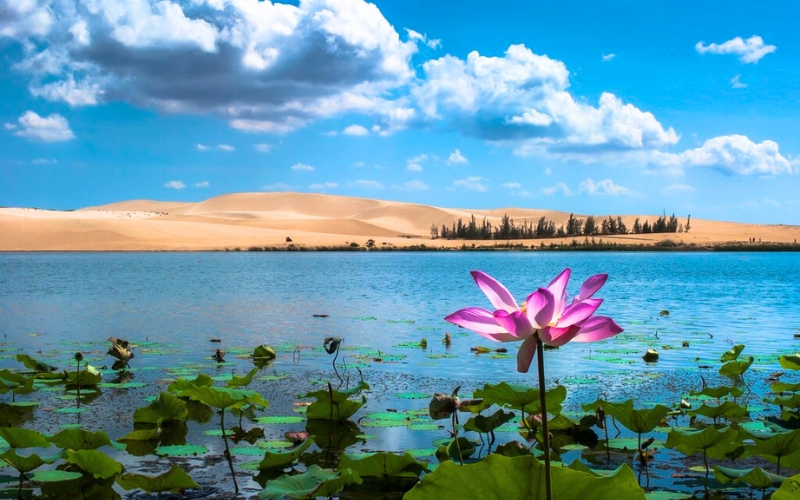
Bàu Sen (Lotus Lake)
Amid Mui Ne’s vast white sand expanses lie two spectacular freshwater lakes: Bàu Trắng (the white lake) and Bàu Sen (the lotus lake). These mirrors of water, set like oases within the dunes, create a striking contrast between the surrounding aridity and the gentleness of fresh water. In summer, Bàu Sen becomes covered with thousands of lotus flowers, transforming the landscape into a living fresco of delicate hues. Bàu Trắng is often nicknamed Vietnam’s “little Sahara,” so much do its dunes evoke the endless expanse of distant deserts. For thrill-seekers, you can rent a quad or Jeep and launch yourself down the sandy slopes, while peace lovers may prefer to contemplate the serene beauty of these unique places.
Suối Tiên (Fairy Spring)
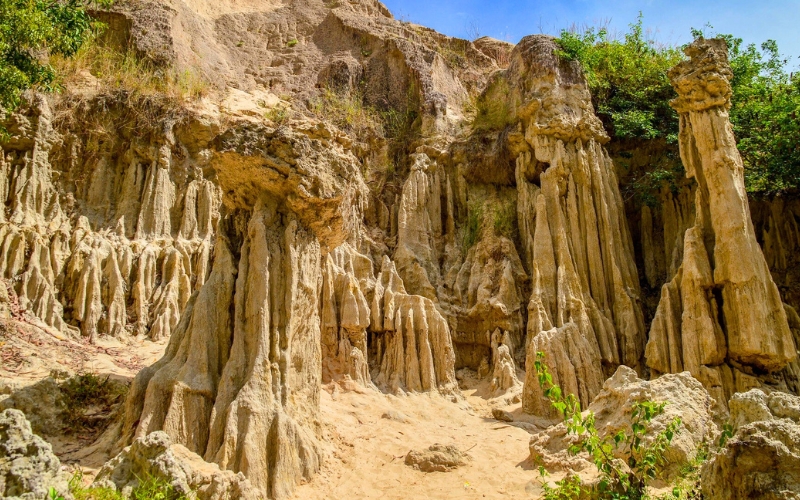
Considered one of Mui Ne’s most unusual landscapes, Suối Tiên is a small shallow stream that winds through cliffs of sand and rock in shades of red, white, and orange. Shaped by erosion, these oddly-formed formations create an almost surreal setting. Walking barefoot in the cool water, with colored walls rising on either side, brings a sensation both soothing and fairy-tale-like. It’s an easy but unforgettable walk, ideal for travelers seeking gentleness and escape.
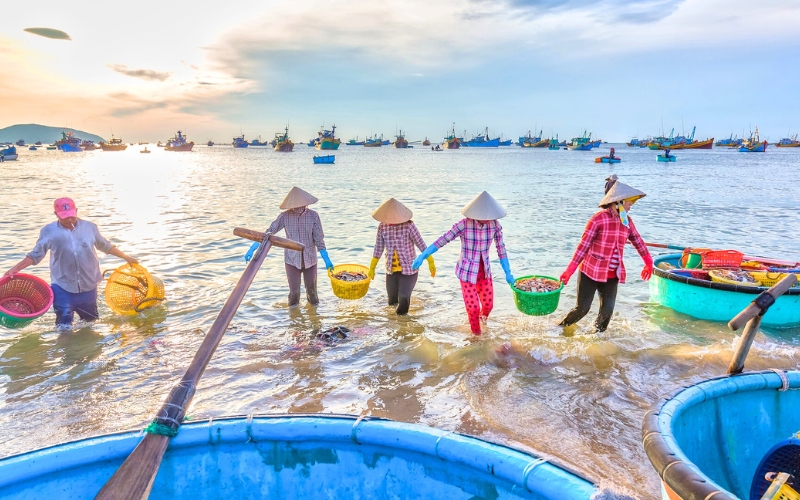
Mui Ne Fishing Village
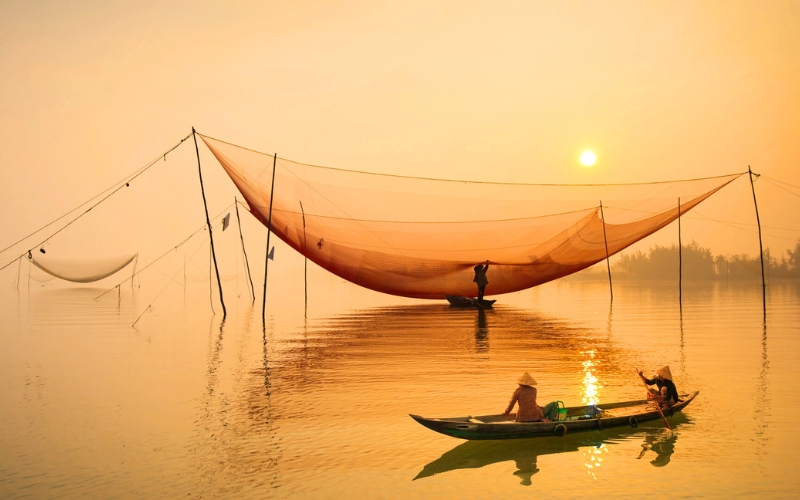
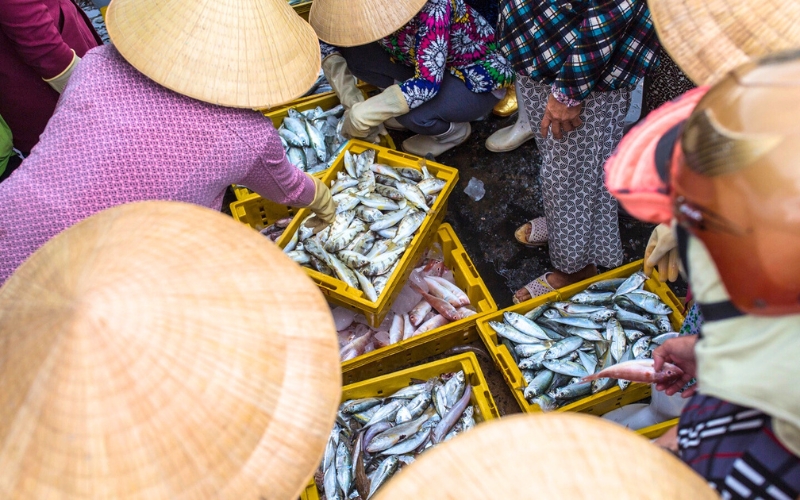
Just three kilometers from the center, Mui Ne’s fishing village reveals an authentic and lively side of the region. Each morning at dawn, dozens of colorfully painted boats return to port laden with fish, shrimp, and mollusks.
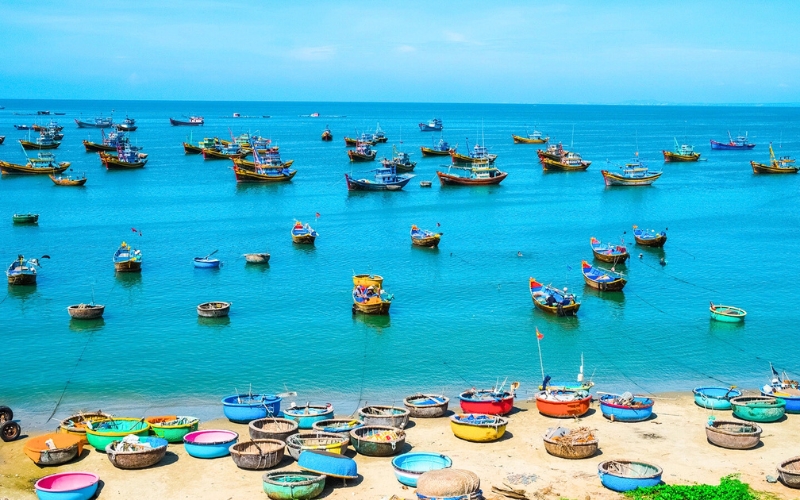
The sight is both animated and picturesque: nets stretched on the sand, sellers’ cries in the small nearby market, baskets brimming with still-wriggling seafood. For visitors, it’s a unique opportunity to observe the fishermen’s daily life and, why not, taste the freshest seafood around.
Van Thuy Tu Sanctuary
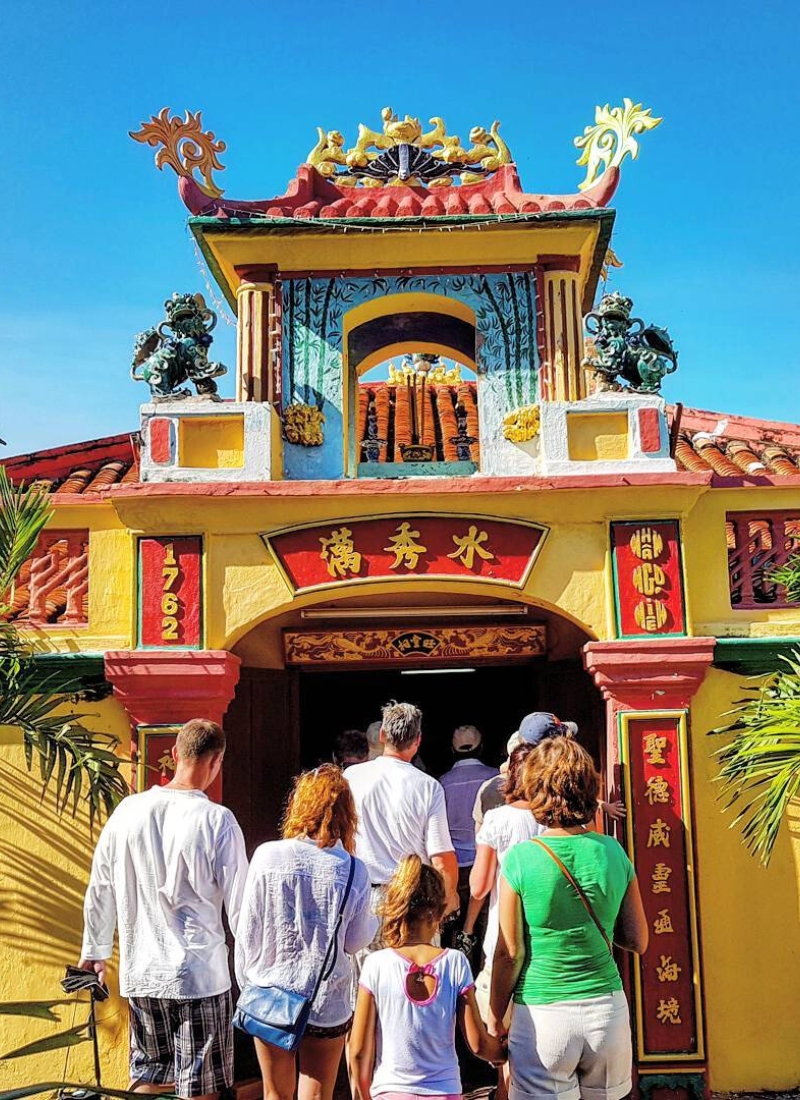
The entrance gate of Van Thuy Tu Sanctuary, animated by visitor flows
Built in 1762, Van Thuy Tu Sanctuary is one of Phan Thiet’s oldest temples and an important spiritual place for the region’s fishermen. Dedicated to whale worship—the protector of sailors—it houses Southeast Asia’s largest whale skeleton, measuring 22 meters long and weighing approximately 65 tons.
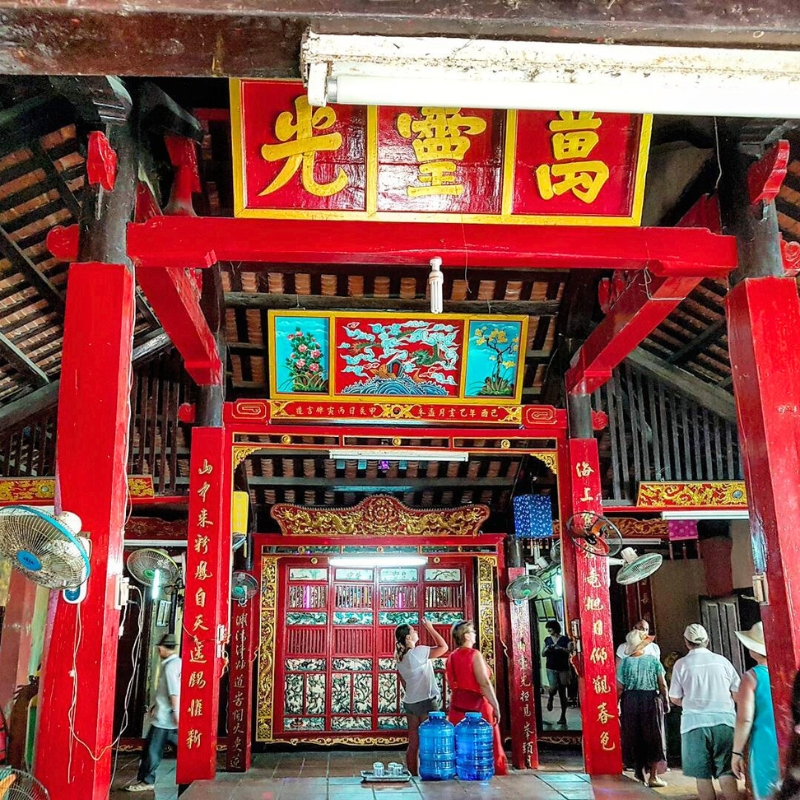
Ancient architecture adorned with delicate dragon sculptures
Throughout the year, various ritual ceremonies take place according to the lunar calendar, combining solemn prayers, traditional dances, and songs of folk theater. A visit that helps you understand the ocean’s importance and beliefs in local culture.
Fish Sauce Museum
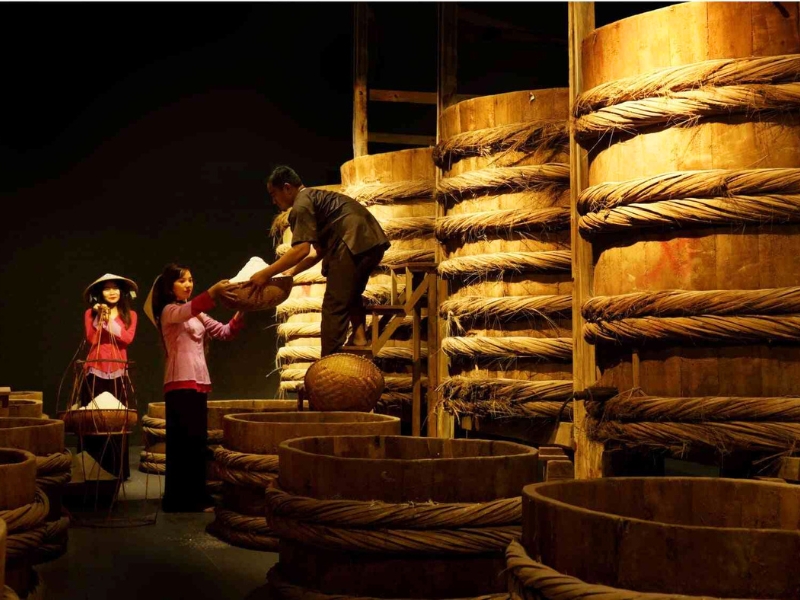
Fish Sauce Museum
Recently opened in Phan Thiet, the Fish Sauce Museum (Làng Chài Xưa) is an original and unusual stop. Dedicated to the emblematic nuoc mam—an indispensable condiment in Vietnamese cuisine—it traces over three centuries of history linked to fishing and the artisanal production of this sauce. Through reconstructions, antique objects, and interactive exhibits, visitors discover the central role fish sauce has played in local economy, but also in the culture and daily life of inhabitants. A true journey through time, the museum illustrates the transmission of ancestral knowledge, from the Cham era to the present day, and helps you understand why Phan Thiet is today considered Vietnam’s “fish sauce capital.”
What to Eat in Mui Ne?
Discovering Mui Ne wouldn’t be complete without exploring its local gastronomy, rich in marine flavors and unique specialties found nowhere else in Vietnam. Here are some must-try dishes:
Seafood
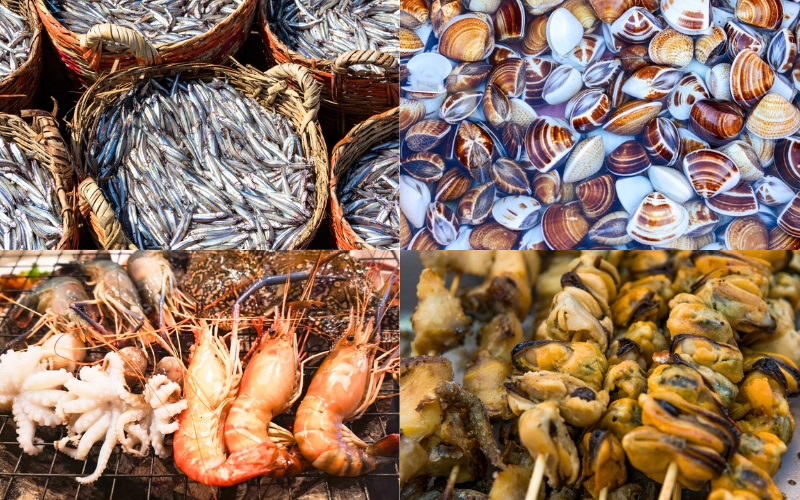
Freshly caught seafood, ready to be savored
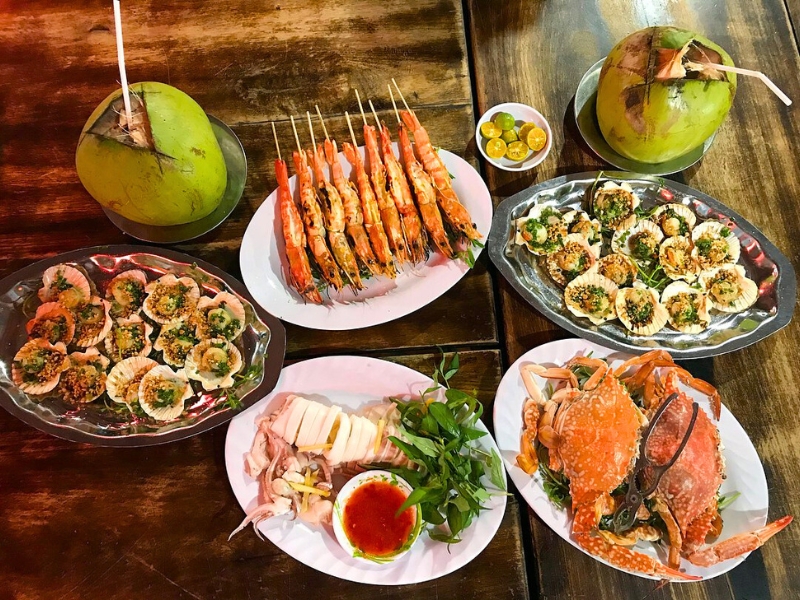
In Mui Ne, it’s impossible to resist the seafood—true treasures of local gastronomy. Each morning, fishermen bring ashore shrimp, crabs, mollusks, and still-wriggling fish that quickly land on market stalls and small beachside stands. Grilled over charcoal, steamed, or sautéed with garlic and butter, seafood is enjoyed in a simple and convivial atmosphere, almost with your feet in the sand. For an authentic experience, nothing beats a shared meal at Mui Ne’s night market, where you can choose fresh products directly and watch them being prepared before your eyes. Delicious, affordable, and varied, Mui Ne’s seafood perfectly embodies the culinary richness of this beach destination.
Dishes with Dông (Sand Lizard)
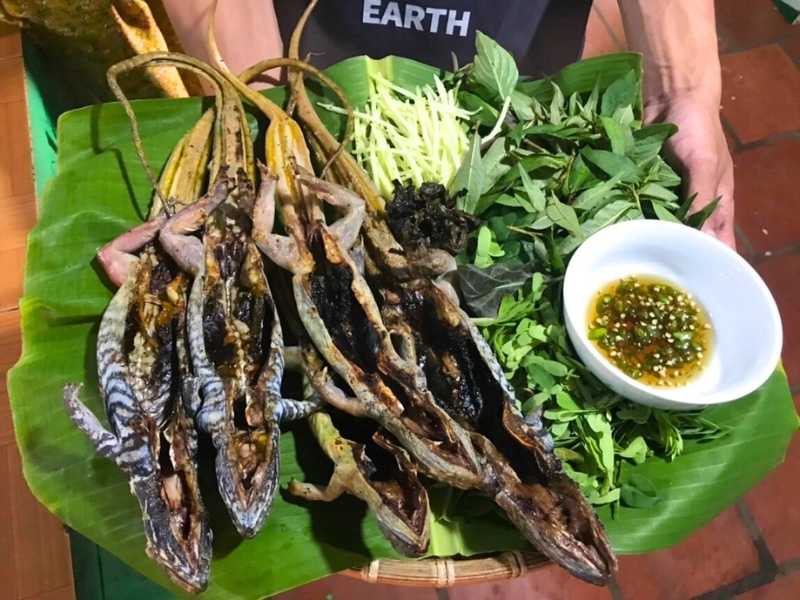
Dishes with dông (sand lizard)
A unique specialty of Mui Ne’s dunes, dông is a small desert lizard whose white meat resembles chicken but is finer and more flavorful. It’s cooked many ways: grilled (dông nướng), roasted (dông rô ti), in salad (gỏi dông), in meatballs (chả dông), or in rice soup (cháo dông).
Lẩu Thả (Phan Thiet Fish Fondue)
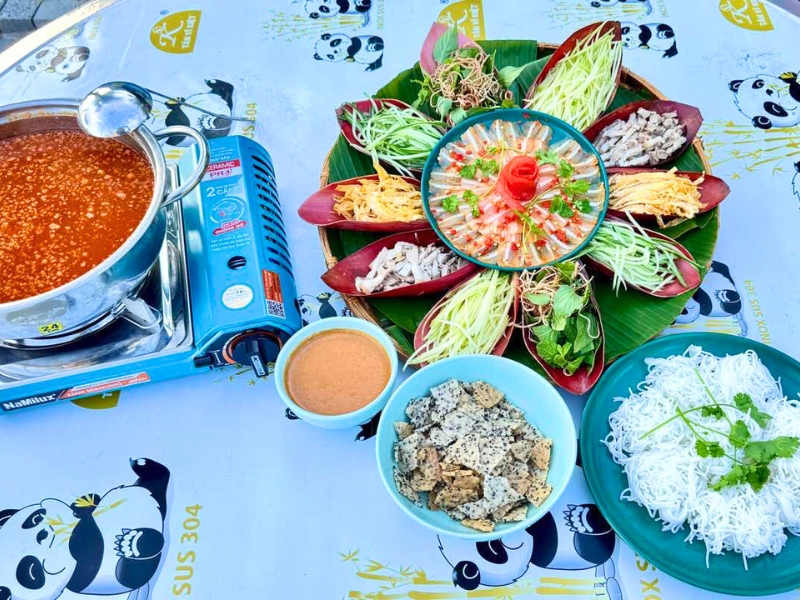
An emblematic Phan Thiet dish, lẩu thả is a delicate fondue prepared with finely sliced fresh fish fillets. Particularly featured are the local sardine, herring, or mackerel, sometimes replaced by other varieties like tilapia or catfish. These fillets come with an assortment of thinly sliced vegetables and herbs, which are dipped into clear, fragrant broth. The culinary experience reaches its peak with the accompanying dipping sauce, prepared with tamarind juice, toasted peanuts, garlic, chili, and mashed ripe banana, all enhanced with pure fish sauce. This subtle combination of freshness, acidity, and aromatic notes makes it one of the most refined and representative dishes of Phan Thiet’s culinary art.
Thick Noodle Soup with Fish Pâté
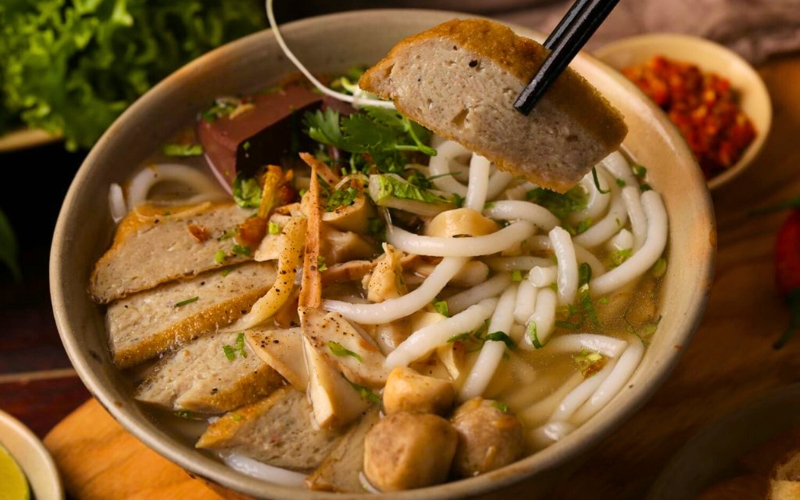
Thick Noodle Soup with Fish Pâté
An emblematic Phan Thiet dish, thick noodle soup with fish pâté has long captivated both residents and travelers. Behind its apparent simplicity—a few thick rice noodles, pieces of perfectly golden-fried fish pâté, clear but flavorful broth, all sprinkled with scallions and fried shallots—lies a flavor combination that enchants from the first taste. The broth’s sweetness, the noodles’ soft texture, and the fish’s subtle smoky aroma combine perfectly, offering a dish that’s both comforting and full of character.
Mì Quảng Vịt (Quảng-Style Duck Noodles)
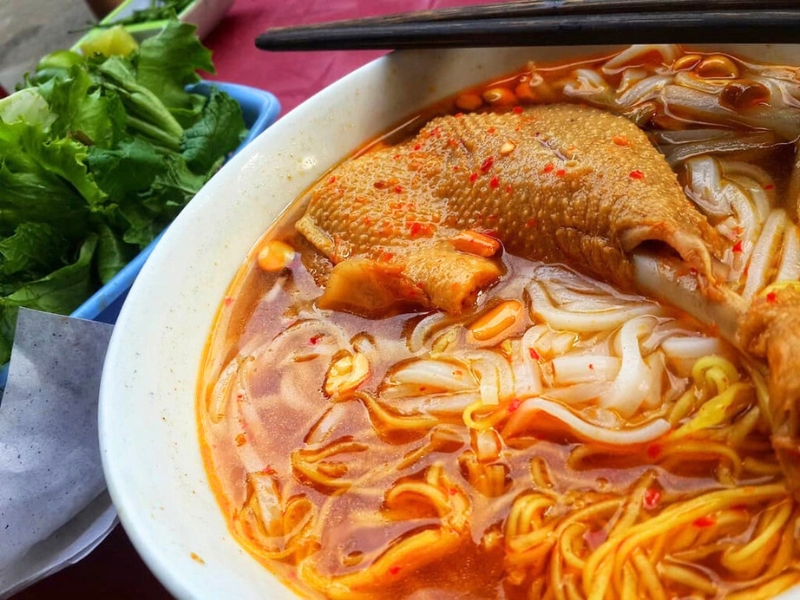
Mì Quảng Vịt (Quảng-style duck noodles)
While Mì Quảng is primarily associated with Hoi An, Phan Thiet has created its own equally delicious and original variation: duck Mì Quảng. In this dish, thick rice noodles pair with tender, fragrant duck meat, served with aromatic herbs, toasted peanuts, and clear broth with the region’s signature slightly sweet flavor. To adjust sweetness or balance taste, simply add a squeeze of lime juice before eating. Phan Thiet restaurants typically offer several versions: with duck, pork, or pork knuckle. Each variation has its own personality, but all offer visitors a surprising culinary experience that artfully reimagines a great classic of Vietnamese cuisine.
Practical Tips for Visiting Mui Ne Well
- Book your hotel in advance, especially between November and April (high season).
- Choose to travel by limousine bus or private car for more comfort from Ho Chi Minh City.
- Rent a scooter only if you’re comfortable with Vietnamese traffic; otherwise, prefer taxis or car with driver.
- Always carry Vietnamese dong cash, as small shops don’t accept credit cards.
- Use high-protection sunscreen, wear a hat, and stay hydrated regularly: the sun is very strong.
- Wear comfortable shoes for walking on hot sand and exploring the dunes or Suối Tiên.
- Wake up early to watch the sunrise and experience the fishing village atmosphere.
- Taste signature dishes like Lẩu Thả (fish fondue), Bánh Canh Chả Cá (fish noodle soup), and grilled seafood.
- Always ask the price before buying or using a service to avoid any misunderstanding.
- Respect the locals and smile: Vietnamese friendliness will make your stay even more enjoyable.
Between turquoise seas, endless dunes, and living traditions, Mui Ne emerges as an unmissable destination on Vietnam’s coastline. Every corner of this small paradise offers a unique experience: a stroll through fishing villages, sunrise over the dunes, a shared meal around fragrant Lẩu Thả… Exploring Mui Ne means granting yourself escape, relaxation, and encounter with authentic culture all at once. Whether your stay is brief or extended, you’ll depart with images etched in memory and the desire to return and savor again the sweetness of this unique corner of Vietnam.



Our recommended itineraries
 Nature and Active travel
Northern Vietnam Explorer in 9 days and 8 nights
About ten days
Hanoi - Ha Long Bay - Saigon - Mekong Delta - Siem Reap - Luang Prabang - Pak Ou Caves - Kuang Si Waterfall
 Classic
Vietnam Exclusive in 13 Days
About 2 weeks
Hanoi - Bai Tu Long - Hue - Da Nang - Hoi An - Saigon - Mekong Delta