+84 9 75 46 33 10 (Whatsapp)
  info@horizon-vietnamtravel.com
  Français
  Español
  Português
  Deutsch

But Thap Pagoda: A Buddhist Gem of Vietnam
Table of contents
Located in Bac Ninh province in northern Vietnam, But Thap Pagoda is considered one of the most beautiful Buddhist temples in the country. Bac Ninh is known not only for its Quan Ho folk singing (a UNESCO intangible cultural heritage) but also for its traditional festivals, ancient temples, and its foundational role in the development of Vietnamese Buddhism.
A Bit of History
According to ancient chronicles of Ha Bac province, But Thap Pagoda was founded in the 13th century under the reign of King Tran Thanh Tong, by the monk Huyen Quang. He built a nine-story stone tower adorned with a lotus – unfortunately lost today.
However, other sources indicate that the current site dates to the 17th century, at the end of the Le dynasty, under the direction of a Chinese monk, Zhui Zhui (Chuyet Chuyet). In 1646, Queen Mother Trinh Thi Ngoc Truc asked Lord Trinh Trang to expand and restore the pagoda. It was during this period that But Thap assumed its current architectural form and gained fame throughout the country.
Harmonious and Symbolic Architecture
But Thap Pagoda was built according to the traditional Vietnamese architectural style called “Noi Cong Ngoai Quoc” – a floor plan shaped like a Chinese character, symbolizing harmony between man and the cosmos. The complex comprises ten main buildings, from the three-entrance gate to the bell tower, passing through sanctuaries and the rear pavilion.
The entire complex is oriented south, in accordance with Vietnamese geomancy principles.
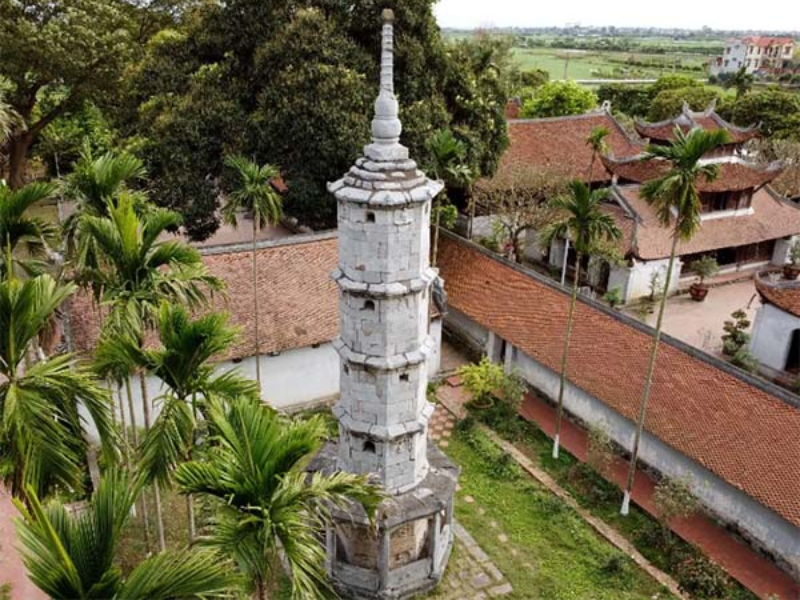
The two main towers, Ton Duc and Bao Nghiem, in white stone, still stand today. They preserve numerous precious artifacts dating to the 17th century: donations, lacquered wooden sculptures, ancient altars, and carved stelae.
The carved motifs depict trees, flowers, birds, and animals in a style both realistic and poetic, typical of Vietnamese Buddhist art of that era.
Sculptural Masterpieces
The pagoda houses over 50 statues of various sizes, including those of the Buddha of the Triad, Van Thu (Manjushri) on a blue lion, and Pho Hien (Samantabhadra) on a white elephant.
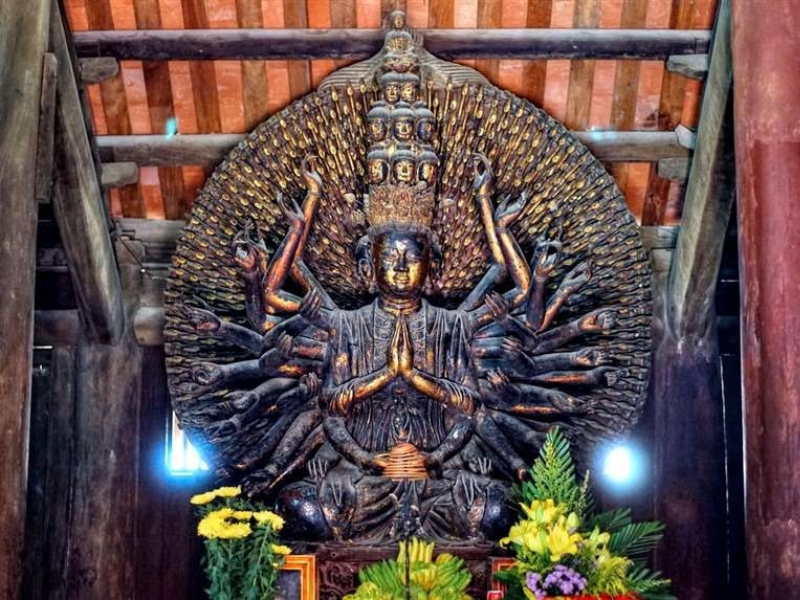
The most celebrated is undoubtedly the statue of Guanyin with a thousand eyes and thousand arms (Quan Am Thien Thu Thien Nhan), standing over 3 meters tall, a 17th-century masterpiece classified as a national treasure of Vietnam. This work perfectly illustrates the craftsmanship of Vietnamese artists in wood sculpture.
The Bao Nghiem Tower and Stone Bridge
The Bao Nghiem tower, tall and slender, evokes the shape of a gigantic brush pointing toward the sky – hence the name But Thap, literally “brush tower”.
It comprises five stories, topped by a blue marble dome. Small bells hang from the corners of each roof, and sculptures of mythical animals adorn the stone. The tower is dedicated to the monk Zhui Zhui, a spiritual master of Chinese influence.
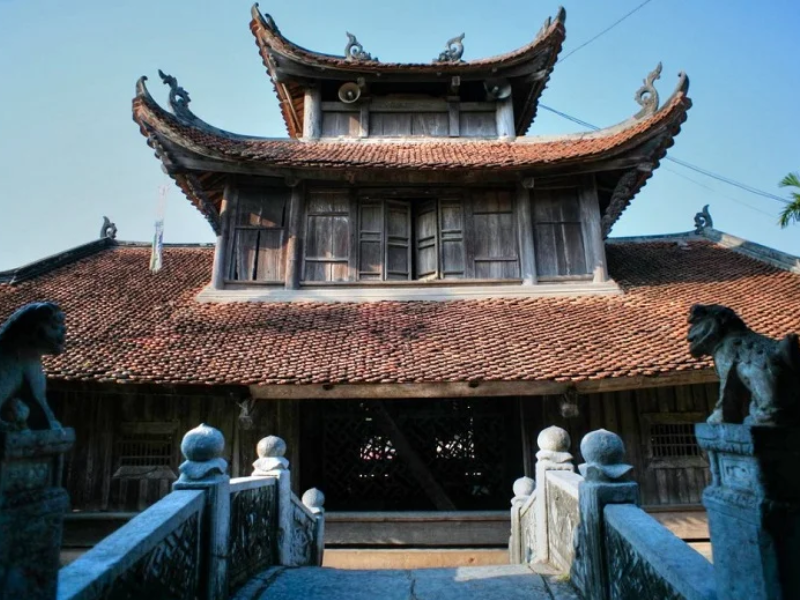
Between the upper palace and the Tich Thien pavilion, a stone bridge crosses a lotus pond. From this bridge, the visitor can admire a serene view of the entire pagoda – a place where architecture, nature, and spirituality merge in perfect harmony.
A Spiritual Celebration in the Heart of Spring
Each spring, the But Thap Pagoda festival attracts numerous devotees and visitors who come to pay homage to the Buddha and the founding masters.
The program includes: processions, prayers, folkloric performances, and Quan Ho songs. This event embodies the religious fervor and cultural wealth of the people of Bac Ninh.
An Essential Site of Vietnamese Buddhism
But Thap Pagoda is much more than a simple monument: it is a living symbol of Vietnamese art, faith, and identity.
Visiting Bac Ninh, let yourself be captivated by its craft villages, its peaceful landscapes, and above all by the timeless majesty of But Thap Pagoda – a treasure of Vietnam’s Buddhist heritage.



Our recommended itineraries
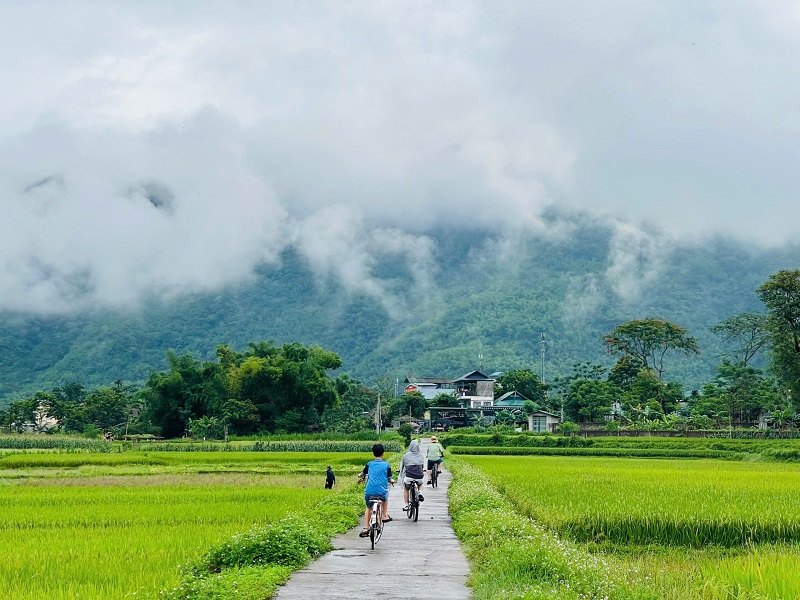
 Nature and Active travel
Northern Vietnam Explorer in 9 days and 8 nights
About ten days
Hanoi - Ha Long Bay - Saigon - Mekong Delta - Siem Reap - Luang Prabang - Pak Ou Caves - Kuang Si Waterfall
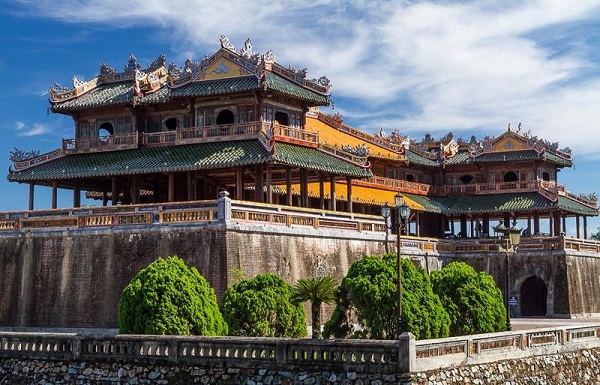 Classic
Vietnam Exclusive in 13 Days
About 2 weeks
Hanoi - Bai Tu Long - Hue - Da Nang - Hoi An - Saigon - Mekong Delta