+84 9 75 46 33 10 (Whatsapp)
  info@horizon-vietnamtravel.com
  Français
  Español
  Português
  Deutsch

Can Tho Travel Guide: What to See and Do
Table of contents
Located in the heart of the Mekong Delta, Can Tho is the largest city in the region and an unmissable stop for those wishing to discover the authentic river life of southern Vietnam. Famous for its legendary floating markets, quiet canals bordered by coconut palms, tropical fruit orchards and warm hospitality, Can Tho offers a perfect combination of nature, culture and gastronomy. In this guide, discover the best things to see and do in Can Tho, from emblematic activities to unique experiences, plus practical tips for planning your stay and fully enjoying this city that symbolizes the Mekong Delta.
1. Where is Can Tho Located?
Can Tho is located in southern Vietnam, in the heart of the Mekong Delta, approximately 170 kilometers west of Ho Chi Minh City. It sits on the south bank of the Hau River (one of the main branches of the Mekong) and is the largest city in the entire delta region.
Thanks to its central location, Can Tho is an ideal starting point for exploring nearby provinces such as Vinh Long, Soc Trang and Hau Giang. The city is also well connected to the rest of Vietnam thanks to modern roads, an international airport and a dense river network that facilitates travel by boat.
Easy access, river charm and cultural diversity make Can Tho an unmissable destination for discovering authentic life in the Mekong Delta.
2. How to Get to Can Tho?
From Ho Chi Minh City, travelers have several options to reach Can Tho, whether they seek comfort, flexibility or an authentic local experience.
By Private Car or Taxi
This is the most comfortable solution. The journey takes approximately 3 hours via the Trung Luong – My Thuan – Can Tho expressway. If you travel with Horizon Vietnam, you can enjoy a private car with a driver and, if you wish, a French-speaking guide to enrich the journey. This service offers not only comfort, but also the flexibility to make stops along the way to discover scenery or interesting sites at your own pace.
By Bus
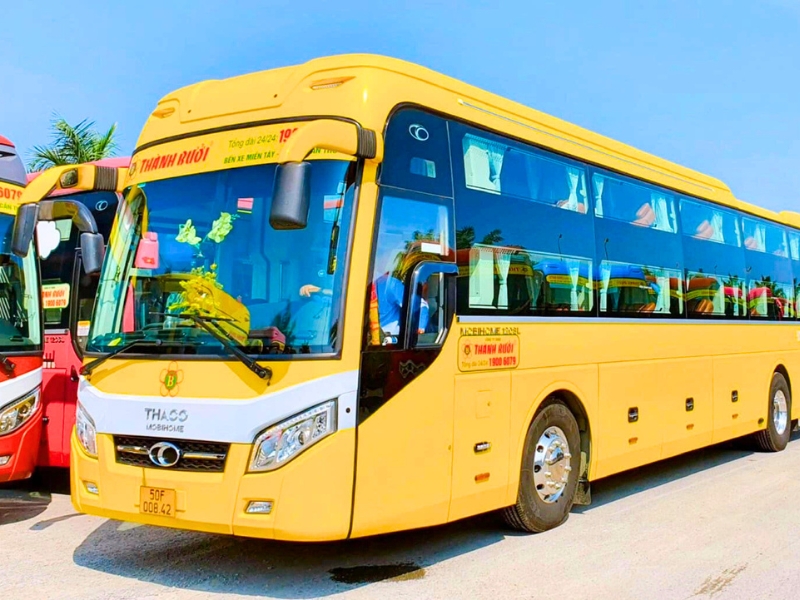
Reach Can Tho easily with Thanh Buoi buses: comfort and frequent departures from Ho Chi Minh City
Numerous buses connect Ho Chi Minh City to Can Tho daily. Renowned companies such as Phuong Trang (Futa Bus) and Thanh Buoi offer frequent departures throughout the day. The journey takes approximately 3 to 3.5 hours, depending on traffic and any stops. It is a practical and economical option, ideal for independent travelers wishing to reach Can Tho comfortably.
By Air

Can Tho International Airport
Can Tho’s international airport welcomes several domestic flights from Hanoi, Da Nang and other major cities in Vietnam. It is the fastest and most convenient option for travelers coming from the north or central part of the country, allowing you to reach Can Tho directly without going through Ho Chi Minh City.
By Cruise

Cruise from Sai Gon to Can Tho
For a unique and immersive experience, some agencies offer multi-day cruises between Ho Chi Minh City and Can Tho. These itineraries combine calm sailing on the Mekong with stops in authentic villages, floating markets and lush fruit orchards. It is an excellent option for those wishing to discover the diversity of river landscapes while enjoying a relaxed and comfortable travel pace.
3. Best Times to Visit Can Tho
Can Tho enjoys pleasant weather year-round, with a distinct dry season and rainy season. The city is little affected by typhoons, making it an accessible destination in every season.
May to August – The Season of Tropical Fruits
This is one of the best times to visit Can Tho. The orchards are in full production and offer visitors the opportunity to taste a wide variety of freshly harvested tropical fruits: mango, rambutan, longan, durian and many others. It is also the ideal time to explore the floating markets and lush orchards.
September to November – The High Water Season

The beauty of Can Tho during the high water season
This period, called the high water season, transforms the Mekong Delta into a vast aquatic landscape. It is the perfect time to experience unique activities, such as traditional fishing or discovering culinary specialties typical of this season. The landscapes are particularly photogenic and river life is at its peak of activity.
December to February – The Period Before Tet
As the Lunar New Year (Tet) approaches, Can Tho transforms into a true flower garden. The streets are illuminated with colorful decorations, markets are filled with ornamental plants and Tet flowers such as marigolds, kumquats and chrysanthemums, and the atmosphere is filled with excitement and joy.

Can Tho markets overflow with flowers during Tet
This is a unique period to experience the spirit of southern Vietnam, among festive preparations, offerings, traditional clothing, special dishes and exchanges of wishes. Visitors will have the opportunity to witness local traditions, taste Tet specialties and feel the human warmth that characterizes this emblematic celebration.
4. What to See and Do in Can Tho?
Can Tho, the vibrant capital of the Mekong Delta, offers a wide variety of activities that fascinate lovers of culture, gastronomy and nature. Here are the best experiences not to be missed during your stay.
Explore Cai Rang Floating Market

Cai Rang Floating Market
Cai Rang Floating Market is one of Vietnam’s most emblematic markets and a true institution of the Mekong Delta. At dawn, dozens of boats laden with fruit, vegetables and local products create a colorful and lively scene. It is recommended to visit very early in the morning, ideally between 5:30 and 7:00 AM, to avoid crowds and enjoy the authentic atmosphere before the market gets going. Boat excursions allow you to explore the market up close and observe the daily life of river inhabitants. It is a unique immersion into the river culture of the region.
Visit the Ancient House of Binh Thuy
The ancient house of Binh Thuy is one of the most remarkable architectural treasures of Can Tho. Built in 1870 by the Duong family, it reflects an era when European and Vietnamese influences intertwined in the architecture of dwellings of wealthy families in the delta.
Its unique style elegantly combines French colonial architecture – with its tall shuttered windows, decorated columns and floral motifs – with traditional Vietnamese elements, such as intricately carved wooden structures and richly adorned family altars.
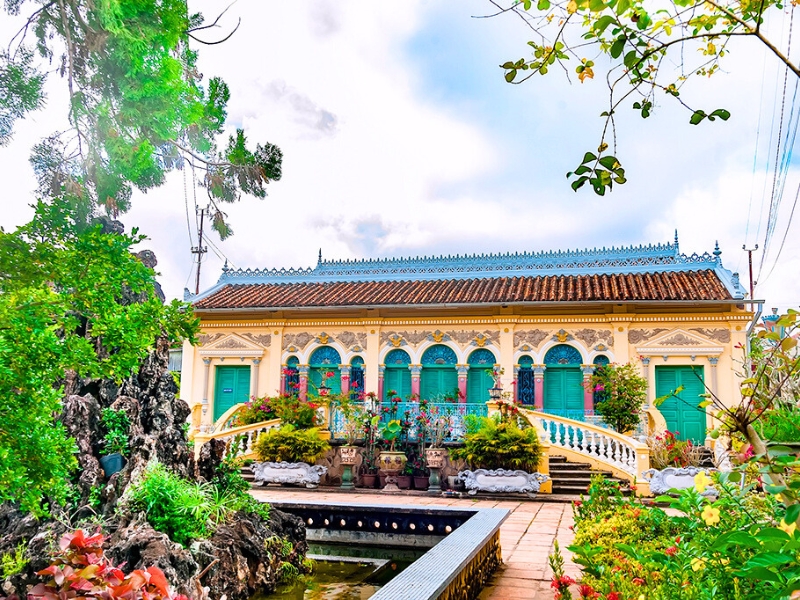
Ancient House of Binh Thuy
The house gained international fame as the setting for Jean-Jacques Annaud’s film The Lover, inspired by Marguerite Duras’s novel. When visiting this place, travelers can not only admire the architectural beauty of the residence, but also immerse themselves in the cultural and social history of the region through antique objects, period furnishings and stories about the lives of past generations. Perfectly preserved, the house offers a tranquil and authentic setting, ideal for understanding the lifestyle of great families in the delta between the 19th and early 20th centuries.
Visit the Delta’s Orchards
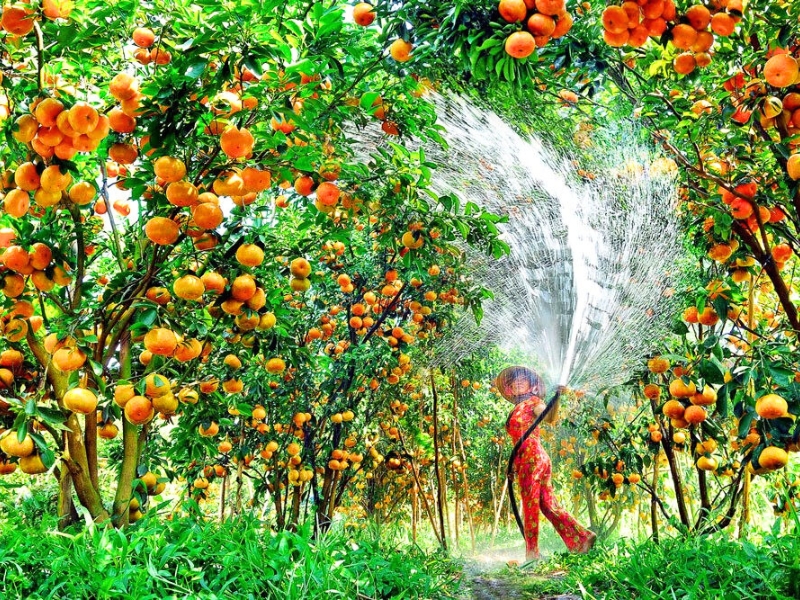
Orange Orchard
The areas surrounding Can Tho are renowned for their lush tropical orchards lining the canals. Depending on the season, you will find mango, rambutan, longan, durian and many other fruits. During guided walking or cycling tours, travelers can harvest ripe fruits, taste them on the spot and chat with the producers, while discovering traditional agricultural techniques of the delta.
Located on the Hau River, Côn Sơn is a peaceful islet that perfectly reflects the warm and welcoming spirit of the Mekong Delta. It is accessible by boat or ferry from the Cô Bac pier (alley 13, Le Hong Phong street). Côn Sơn is recognized as a community tourism village where each family offers visitors an activity or local product. The inhabitants, true to southern Vietnamese culture, welcome visitors with a smile and consider them as family members.
Explore Floating Fish Farms
-
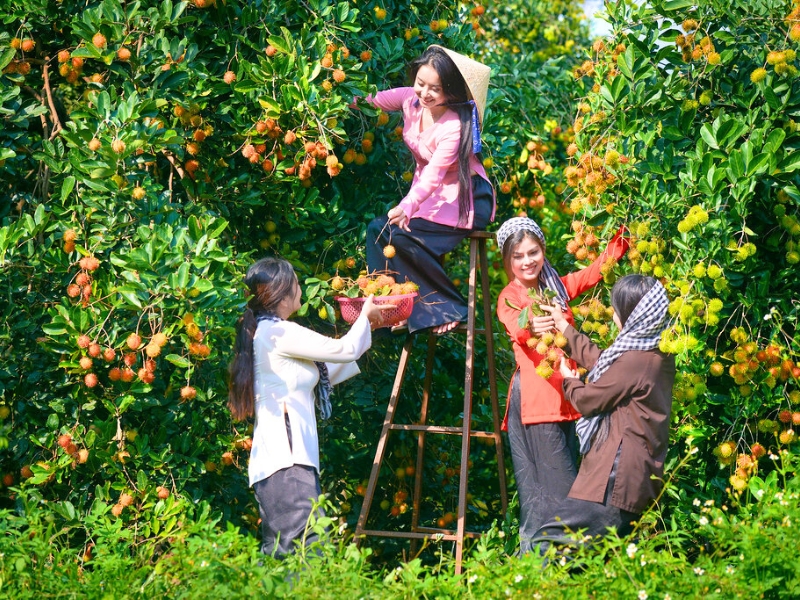
- Verger des ramboutans
-
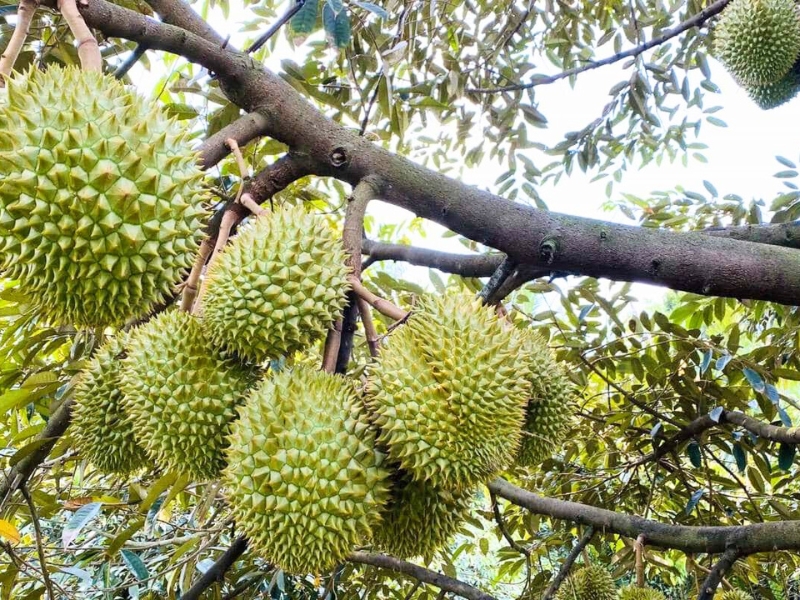
- Verger des durians
For an unusual gastronomic experience in Can Tho, do not miss the Muoi Cuong Cacao Garden, one of the rare places in Vietnam where you can discover the entire cacao chain, from plantation to tasting.
Founded in the 1960s, this family garden now covers over 1.2 hectares and has more than 2,000 cacao plants. Visitors are welcomed warmly and invited to participate in the various transformation stages: harvesting, fermentation, drying of beans, grinding, through to the production of finished products.
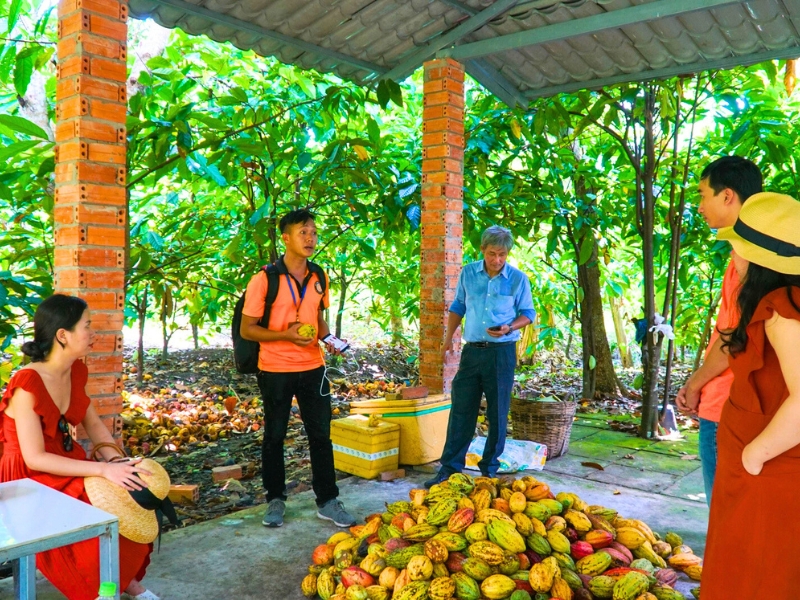
Muoi Cuong Cacao Garden
The visit takes place daily from 7:00 AM to 12:00 PM, in a shaded and tranquil environment. At the end of the tour, you can taste various cacao-based creations and purchase artisanal products as souvenirs: cocoa powder, candies, chocolate, fresh fruit juices…
Discover Côn Son Island

Multicolored koi carp at Côn Son
At the entrance to Côn Sơn, several floating fish farms have been raising fish for nearly 20 years. They host various freshwater species such as red-tail fish, the giant Mekong eel, the giant Mekong catfish, as well as rare fish such as tiger catfish, multicolored koi carp and fire eel. Visitors can feed the fish and discover traditional breeding techniques.
Watch the Flying Snake Fish Show
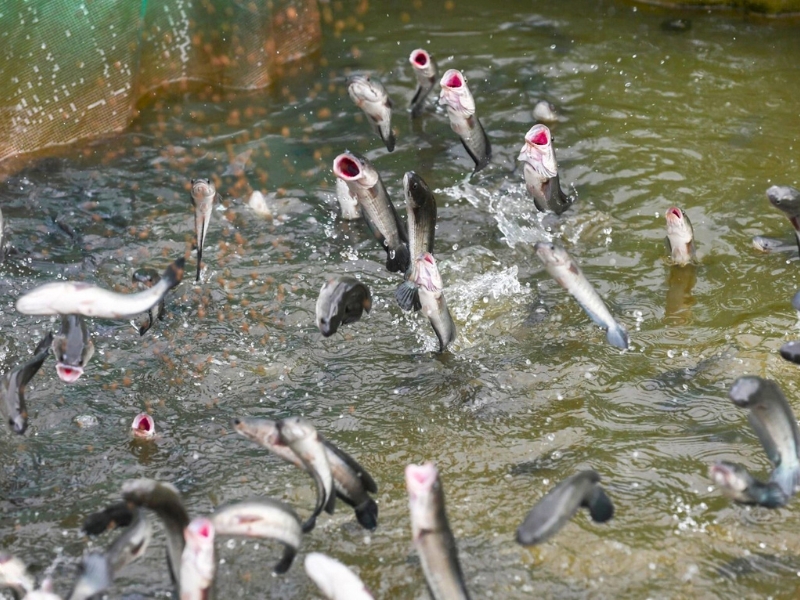
Flying snake fish
An original activity in which fish, trained from a young age, jump out of the water at a signal from their keeper. Only fish under 5-6 months of age participate in the show; older ones are released to preserve the ecosystem.
Participate in a Traditional Sweet Preparation Workshop

Visitors can learn to prepare Banh la mit (steamed rice cake in a jackfruit leaf) and Banh phu the (a “husband and wife” cake), made with rice and wheat flour. Once the cakes are prepared, you move on to tasting in a convivial atmosphere.

Visit Traditional Craft Villages
In Can Tho, several traditional craft villages offer visitors the opportunity to discover the ancestral knowledge of the Mekong Delta. Among the most notable is the Chin Cua rice noodle family workshop, passed down through three generations. Located near the Cai Rang floating market, it is easily accessible by boat right after visiting the market, or by land via hamlet 476 on Vong Cung street (street 923).
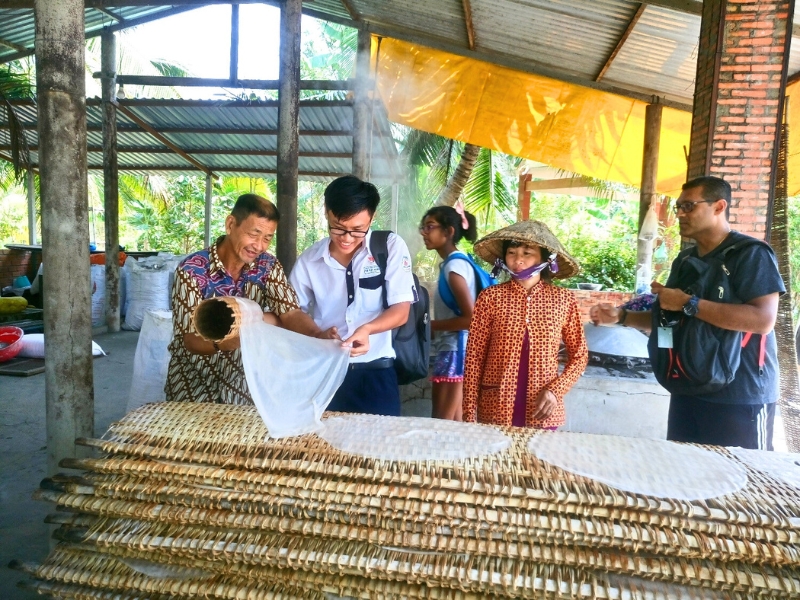
Chin Cua Rice Noodle Family Workshop
The visit is free and allows you to observe the entire production process of hu tieu, from cooking to cutting. Travelers can even try to pour the batter onto molds like the artisans do and take home a package of noodles as a souvenir (approximately 40,000 VND per kilo, depending on the type chosen).
Other villages also deserve a visit:
- The Thuan Hung rice cake village
- The Thom Rom fishing net weaving village
- The Thoi Nhut vegetable growing village, renowned for its flowers
- The Thoi Long bamboo basket village
- The banh hoi mat vong village, with vermicelli cakes as delicate as lace
These visits offer a beautiful immersion into the craft culture of the South, where precise gesture, family transmission and the kindness of inhabitants remain at the heart of the experience.
What to Eat in Can Tho?
The cuisine of Can Tho reflects all the culinary wealth of the Mekong Delta, with bold flavors and fresh ingredients from both land and water. Here are some must-try specialties:
Banh hoi nem nuong (Vermicelli Rice Cake with Grilled Pork)

Banh hoi nem nuong (Vermicelli Rice Cake with Grilled Pork)
Banh hoi is a delicate, thin rice vermicelli cake hand-rolled to perfection. This dish is served with grilled pork (nem nuong) and a generous assortment of fresh herbs and crudités: carambola, cucumber, pineapple, green banana, banana flower, pickled shallots and salad. Each ingredient is presented with care, ready to be rolled together and then dipped in a homemade sweet and sour sauce. Light, fragrant and brimming with freshness, this dish perfectly embodies the culinary art of the Mekong Delta.
Banh Cong (Vietnamese Fritters with Shrimp and Mung Beans)
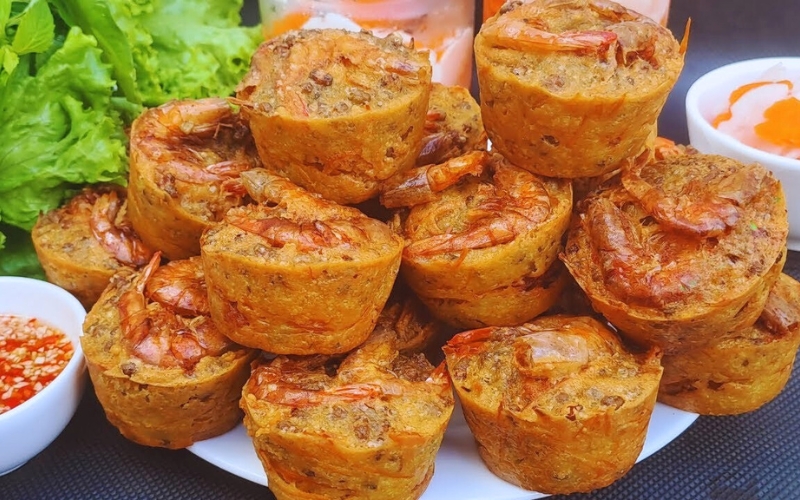
Banh cong (Vietnamese Fritters with Shrimp and Mung Beans)
Banh cong is an emblematic specialty of southern Vietnam. These are small, golden fritters, crispy on the outside and soft inside, made with rice batter, mung beans and topped with whole shrimp. Each bite combines the sweetness of the batter, the softness of the beans and the salty flavor of the shrimp. They are generally served hot, accompanied by crudités, fresh herbs and a sweet and sour nuoc mam sauce. A must in the markets and small restaurants of Can Tho.
Vit nau chao (Duck Braised in Fermented Soy Paste)

Vit nau chao (Duck Braised in Fermented Soy Paste)
Among the numerous duck recipes such as soups, salads, roasts or duck in coconut milk, vit nau chao is undoubtedly the most emblematic of Can Tho. The dish consists of pieces of duck braised in a creamy broth based on chao (fermented soy paste), served with noodles or vermicelli and accompanied by fresh vegetables, like a Vietnamese fondue.
Chuot dong chien nuoc mam (Field Mice Fried with Nuoc Mam Sauce)

Chuot dong chien nuoc mam (Field Mice Fried with Nuoc Mam Sauce)
A rustic but popular dish, fried field mice are often served in restaurants specializing in southern cuisine. The meat, which resembles chicken, is crispy on the outside and well seasoned thanks to the famous nuoc mam sauce with garlic and chili.
Banh xeo co hu dua (Crispy Crepe with Coconut Heart)

Banh xeo co hu dua (Crispy Crepe with Coconut Heart)
This typical delta dish takes the form of a large, thin and crispy crepe, golden-fried in a pan. It is filled with fresh shrimp, pork, bean sprouts and a rare and local ingredient: coconut heart (co hu dua), extracted from the core of the young coconut palm trunk. This heart provides a tender consistency and a slightly sweet taste, perfectly balanced by the crispy frying. The whole is served with an assortment of fresh herbs and salad, to be rolled in rice paper and dipped in a sweet nuoc mam sauce.
Practical Tips for Visiting Can Tho
Can Tho, the vibrant capital of the Mekong Delta, is discovered at a leisurely pace, between floating markets, waterside walks and local gastronomy. To make the most of your stay, here are some practical tips to follow before your departure or once on site:
- Wake up early to visit the Cai Rang floating market before the arrival of tourists (between 5:30 and 7:00 AM).
- Plan for a hat or visor, especially if you explore the islets or outdoor markets.
- Choose accommodation near the Ninh Kieu pier to facilitate boat or walking trips.
- Dedicate half a day to Côn Sơn, to explore by bicycle or boat, for a complete immersion in rural life.
- Book excursions the day before if you contact an agency, especially for private circuits or French-guided tours.
- Respect local inhabitants and artisans: politely ask before taking photos and support them by purchasing their products.
- Carry cash in small bills with you: many activities take place outside the city center and do not accept credit cards.
And if you travel with Horizon Vietnam, you don’t have to worry about anything: everything is carefully organized for you. All you have to do is let yourself be carried by the sweetness of the Mekong, savor every encounter and fully enjoy your stay in Can Tho.
Capital of the Mekong Delta, Can Tho fascinates with the richness of its river landscapes, the warmth of its inhabitants and the authenticity of its traditions. From the hustle and bustle of floating markets to peaceful walks among tropical fruit orchards, passing through cuisine rich in colors, every moment spent here is an invitation to slow down and marvel. Whether you choose to discover the city by bicycle, boat or through the stories of local artisans, Can Tho promises you a lively, generous and deeply human experience – an essential stop for those wishing to understand the soul of southern Vietnam.



Our recommended itineraries
 Nature and Active travel
Northern Vietnam Explorer in 9 days and 8 nights
About ten days
Hanoi - Ha Long Bay - Saigon - Mekong Delta - Siem Reap - Luang Prabang - Pak Ou Caves - Kuang Si Waterfall
 Classic
Vietnam Exclusive in 13 Days
About 2 weeks
Hanoi - Bai Tu Long - Hue - Da Nang - Hoi An - Saigon - Mekong Delta