+84 9 75 46 33 10 (Whatsapp)
  info@horizon-vietnamtravel.com
  Français
  Español
  Português
  Deutsch

Cu Chi Tunnels: Living Testament of the Vietnam War
Table of contents
Less than two hours from Ho Chi Minh City, the Cu Chi Tunnels immerse you in the heart of a moving chapter of Vietnamese history. This underground network of over 200 km, hand-dug by Vietnamese resistance fighters, served simultaneously as a military base, living quarters, and a symbol of resilience against American forces. Today open to visitors, the site allows you to walk in the footsteps of Viet Cong fighters, understand their ingenuity, resilience, and the extreme conditions under which they survived. Between memory, emotion, and discovery, a visit to the Cu Chi Tunnels is an experience that is both impressive and profoundly human.
Essential Information about the Cu Chi Tunnels
1. Location
The Cu Chi Tunnels are located in Cu Chi District, approximately 35 km northwest of Ho Chi Minh City. The journey takes between 1.5 to 2 hours, depending on traffic. Access is easy by private car, taxi, or through an organized tour from the city center.
2. Opening Hours
The tunnels are accessible every day from 8:00 AM to 5:00 PM.
3. Entry Fees
- Ben Dinh: approximately 110,000 VND (~4 EUR)
- Ben Duoc: approximately 90,000 VND (~3.5 EUR)
(Prices may vary depending on the season)
4. How to Get There from Ho Chi Minh City?
-
Organized Tour
For a comfortable and well-guided visit, opting for an organized tour remains the most practical option. If you travel with Horizon Vietnam, we offer you a complete experience: round-trip transportation in a private vehicle, accompaniment by a passionate French-speaking guide, entry tickets included, and the possibility of stopping along the way according to your preferences. An ideal way to discover these places while being guided.
-
Private Car or Taxi
A flexible solution if you want to manage your schedule freely. The journey takes approximately 2 hours. Be mindful of traffic, especially at the end of the day.
-
Local Bus
An economical option but less suitable if you don’t speak Vietnamese, due to connections and sometimes limited signage. Recommended if you are comfortable with local transportation.
History of the Cu Chi Tunnels
The history of the Cu Chi Tunnels begins quietly in the 1940s, when Vietnam was struggling to free itself from French domination. During that time, the first underground galleries were hand-dug, primarily to hide and escape surveillance. But this was only the beginning.
Several decades later, during the war against the United States, these tunnels took on a completely new dimension. The network extended over 200 kilometers underground in the red earth of southern Vietnam. This true underground labyrinth became an essential tool for Vietnamese fighters: they moved protected from bombs, communicated, treated the wounded, gathered together, and sometimes lived… for several weeks.
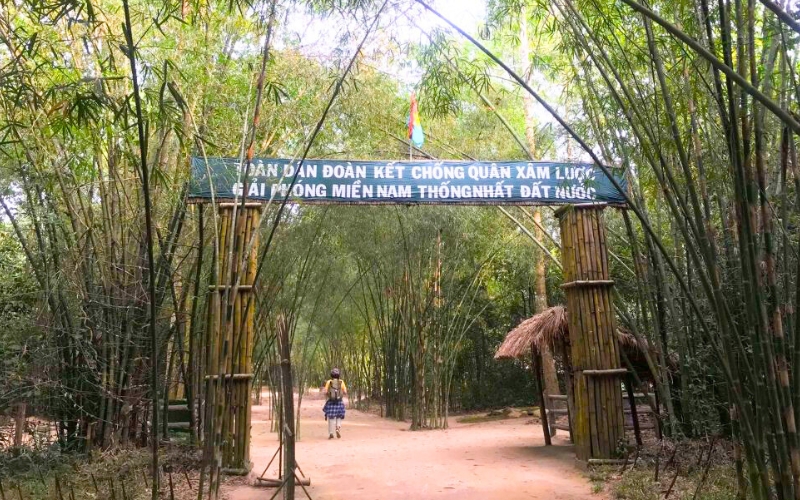
The Cu Chi Tunnels, one of the most emblematic historical sites of Ho Chi Minh City
The tunnels were not just a shelter: they were an underground village, with dormitories, infirmaries, kitchens, schools, and command posts. Carefully camouflaged and protected by rudimentary but formidable traps, they represented a form of resistance both invisible and powerful.
Working and surviving under these conditions, with little oxygen, little light, and great courage, testifies to the determination and ingenuity of the Vietnamese people in the face of adversity.
Unique Architecture of the Cu Chi Tunnels
The architecture of the Cu Chi Tunnels is the result of over 20 years of ingenuity and tireless work, carried out by successive generations of Vietnamese fighters. Hand-dug in clayey soil mixed with robust laterite and resistant to collapse—these tunnels were initially used in the 1940s against the French, and then significantly expanded during the war against the Americans. Their role was crucial, particularly during the Tet Offensive of 1968.

The system of Cu Chi Tunnels is reconstructed in the form of a model
The network extended approximately 250 kilometers and was organized on three levels of depth:
- The upper level, 3 meters underground, resistant to artillery and tank passage;
- The middle level, between 5 and 6 meters, protected from light bombs;
- The deep level, at 10-12 meters, capable of resisting the most powerful bombs.
From a main spine, secondary galleries extended, intersecting or ending depending on the terrain. Some led all the way to the Saigon River to allow for strategic retreats. The tunnels included living spaces, weapon stockpiles, infirmaries, command posts, as well as defense zones with bamboo traps, mines, and camouflaged hatches.

A visitor ventures into the narrow tunnels of the Cu Chi historical site.
The tunnels were narrow, dark, and challenging: one moved by crawling or crouching, often without light or sufficient air. Air was conveyed through ventilation openings cleverly hidden, often in the form of false termite mounds. These devices also served as firing ports, transforming the invisible into a formidable defensive weapon.
-
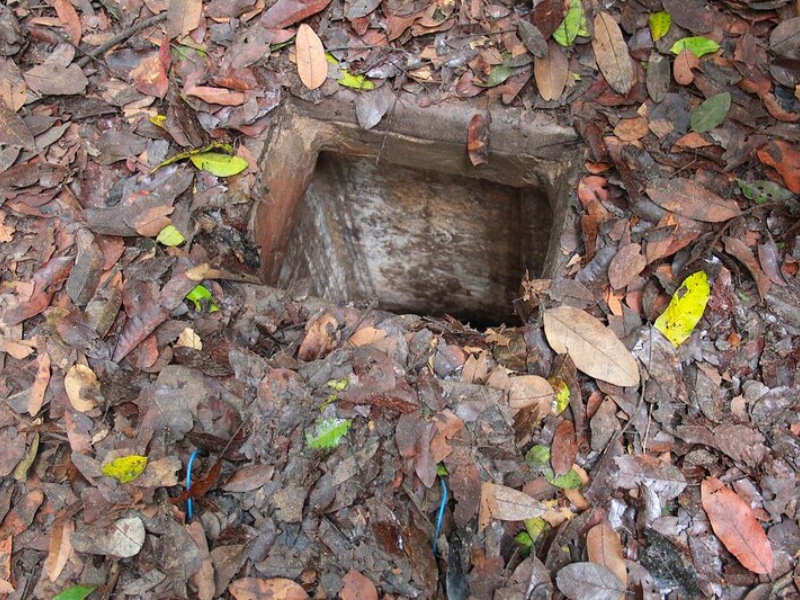
- L’entrée du tunnel de combat est habilement camouflée.
-
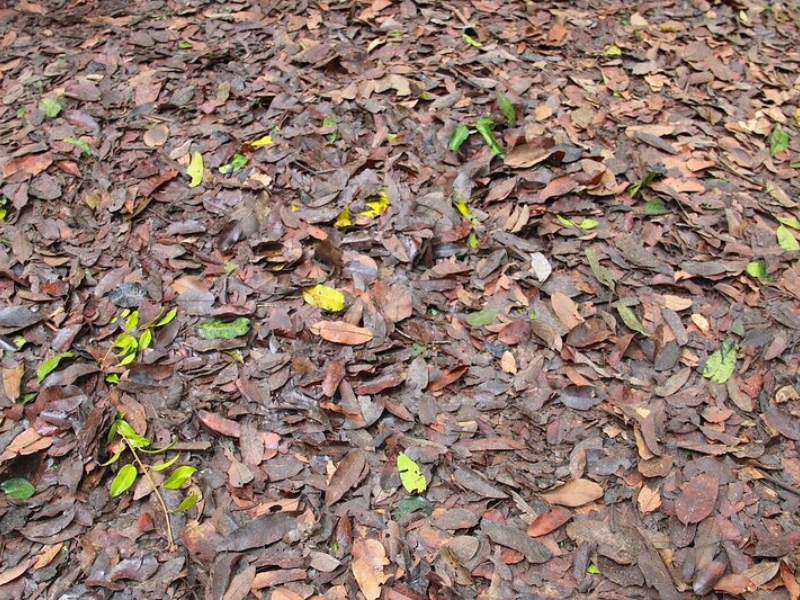
- Peu de gens imaginent qu’un réseau complexe de structures se cache sous ce tapis de feuilles.
The whole formed a true underground fortress, capable of withstanding bombardments, gases, and repeated attacks. Despite extremely precarious living conditions—heat, humidity, snakes, disease—hundreds of fighters lived there, slept in hammocks, cooked on smokeless stoves, and continued the struggle.
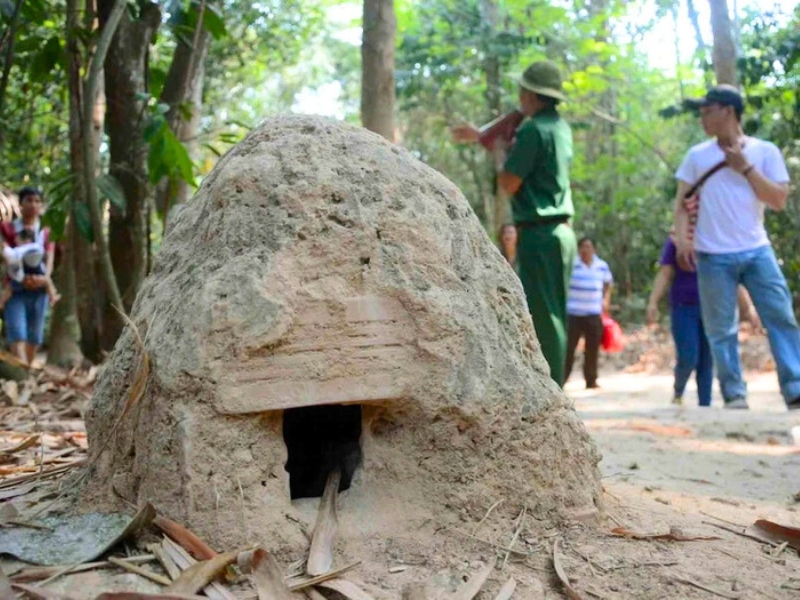
The ventilation ducts of the tunnels are camouflaged in the form of termite mounds
Today, the Cu Chi Tunnels are not just a remnant of war: they embody a formidable military strategy, extraordinary popular ingenuity, and above all, the unwavering resilience of the Vietnamese people.
Must-Do Activities at the Cu Chi Tunnels
Venturing into the Underground Tunnels

Inside the Cu Chi Tunnels
The must-do experience during a visit to the Cu Chi Tunnels remains descending into the narrow galleries dug directly into the earth. Step by step, you become aware of the extreme living conditions that Vietnamese fighters endured for years: darkness, suffocating heat, cramped spaces… It is an intense moment, full of emotion, that testifies to the resilience and ingenuity of a people in struggle.
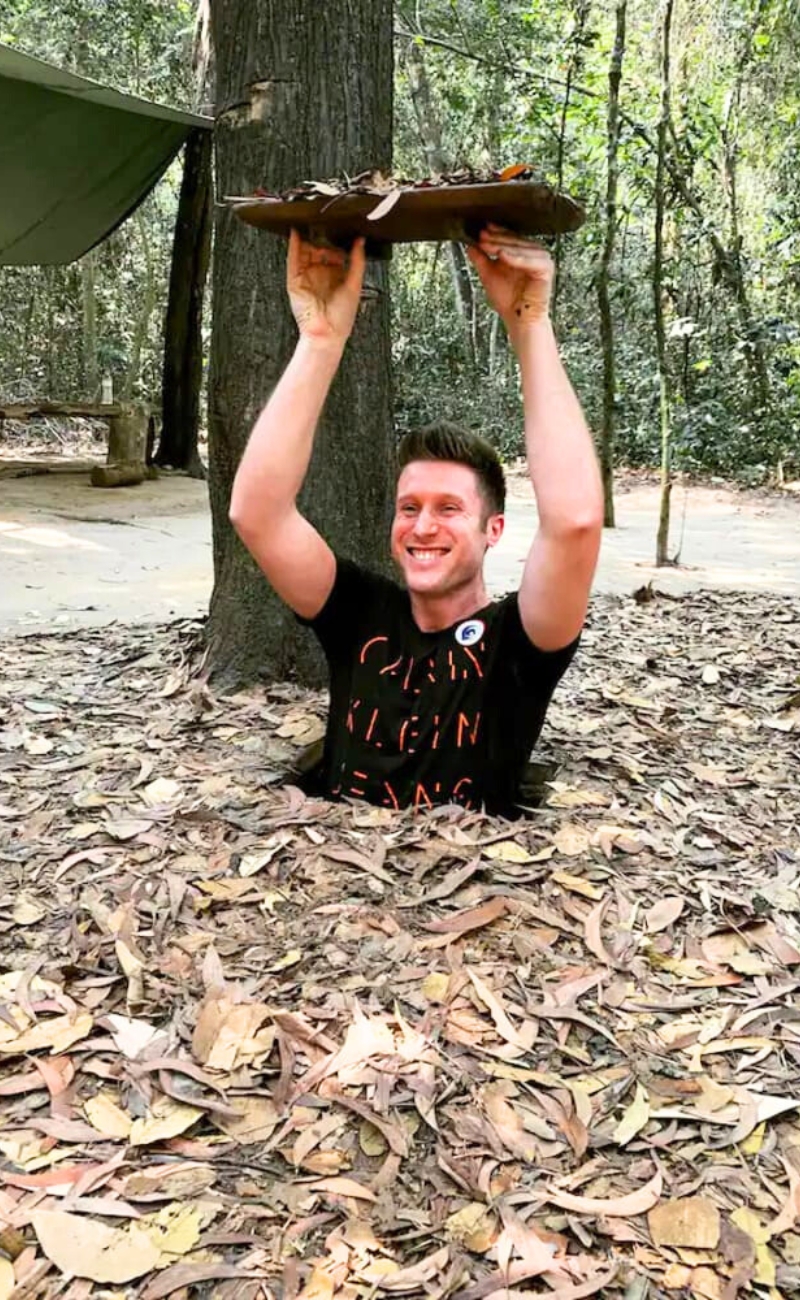
An experience that fascinates a large number of international visitors.
To deepen the immersion, it is possible to take a break at the tunnel entrance to taste simple but nourishing foods from the era, such as cassava, sweet potato, or yam, often dipped in sesame salt. A way to connect, through tastes, to the daily life of the resistance fighters.
Explore the War Reconstruction Zone
In a gallery set up near the surface, visitors immerse themselves in the atmosphere of the past through archival film projections and touching reconstructions of wartime life. These scenes, which combine authentic documents and immersive reconstructions, retrace the daily activities of soldiers and civilians, from combat to underground life.
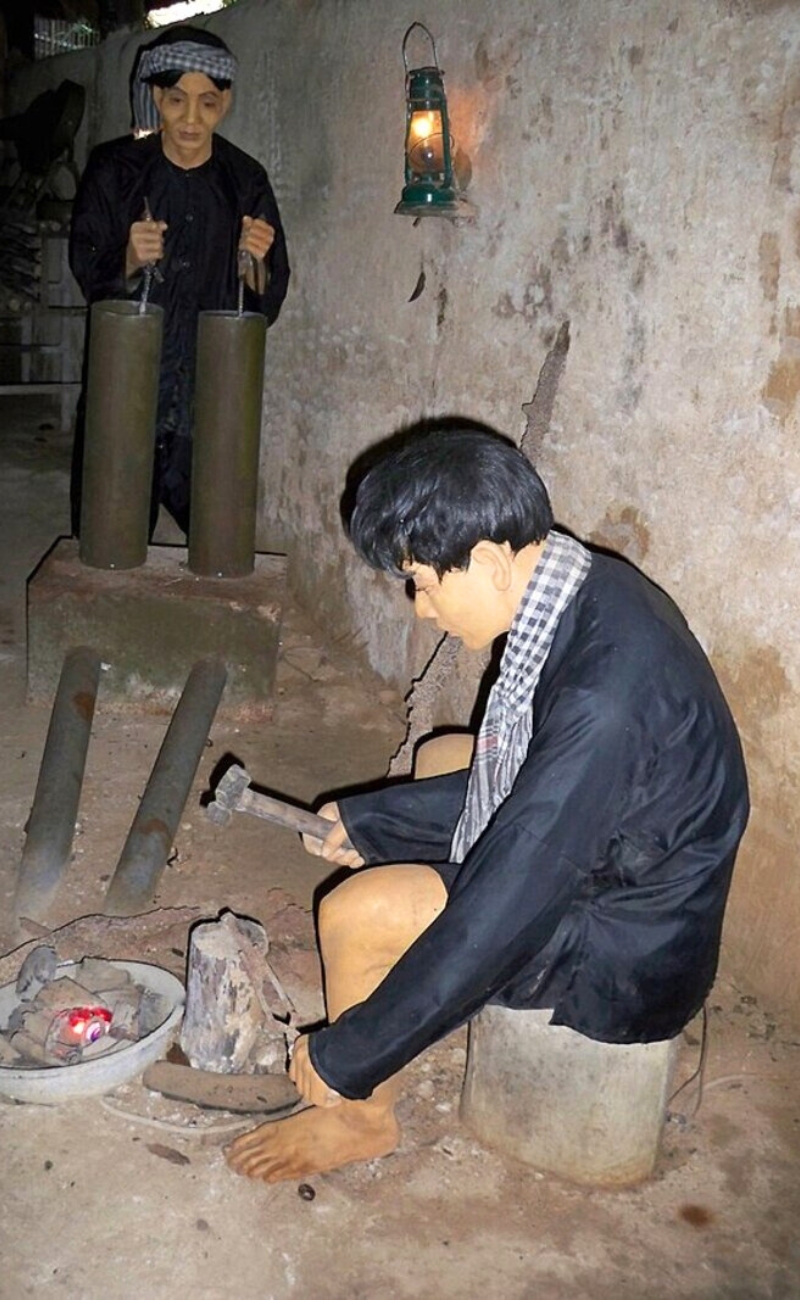
The scene of weapon manufacturing under the tunnels is faithfully reconstructed
Around it, an impressive collection of historical objects is displayed: weapons used by Vietnamese fighters, tanks, first aid posts, underground kitchens, workshops for making military uniforms… Every detail testifies to the ingenuity and meticulous organization of the resistance network.
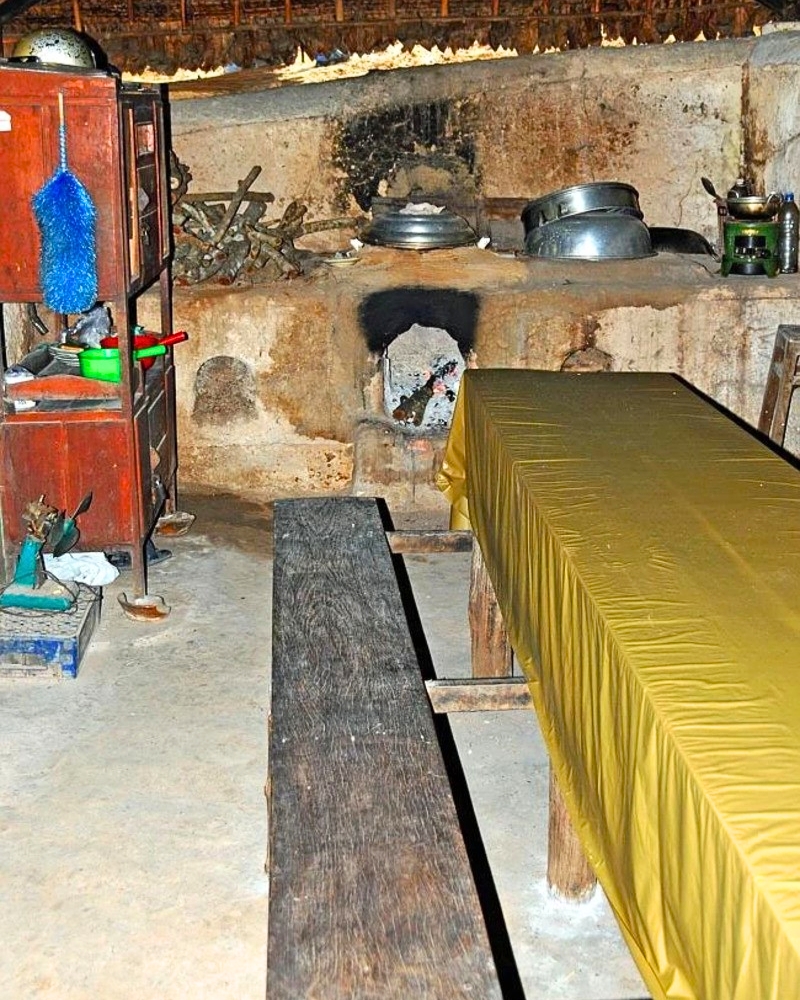
The kitchen and dining area of the former fighters
Experience the Magic of the “Moon of Liberated Zones” Nighttime Tour
The nighttime tour of the Cu Chi Tunnels immerses visitors in an immersive reconstruction of daily life during the war, by moonlight. Titled Trang Chien Khu, this unique program evokes the atmosphere of the liberated zones of the 1960s, between tension and resilience. You witness faithfully recreated life scenes: basket weaving, night market, craft work, patriotic songs, departures of young volunteers… all punctuated by realistic sound effects of bombings and aircraft.
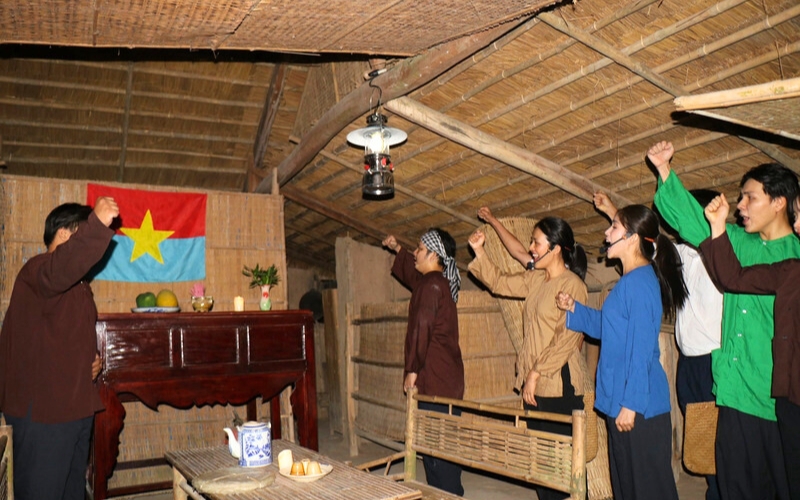
Reconstructed scene of young volunteers enlisting under the flag of the National Liberation Front of South Vietnam
The program includes:
- 6:00 PM – 6:50 PM: visit of the site model and screening of a 3D film that retraces the Cedar Falls battle (1967)
- 7:30 PM – 8:30 PM: live performance and immersion in the nighttime life of the war years, followed by a meal at the popular market
A rare, moving, and memorable experience that brings history to life in a completely different light.
Try Sport Shooting or Paintball
For those who wish to experience something more dynamic after the historical visit, the Cu Chi Tunnels also offer outdoor shooting activities. You can try sport shooting with real assault rifles, under the supervision of professionals, in a safe space. This activity allows you to concretely understand the military environment in which soldiers operated.
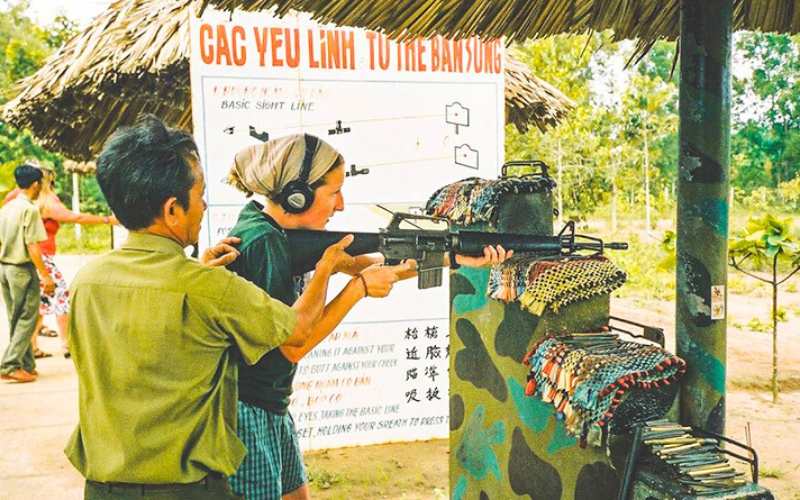
Visitors try sport shooting with military rifle
Another option: paintball, particularly appreciated by groups of friends or families. This team game combines strategy, reactivity, and cohesion, all in a natural environment inspired by the battlefield.
Both experiences are paid, with a fee calculated based on ammunition or playing time. These activities, while optional, offer an immersive complement to the discovery of the site.
Practical Tips for Visiting the Cu Chi Tunnels
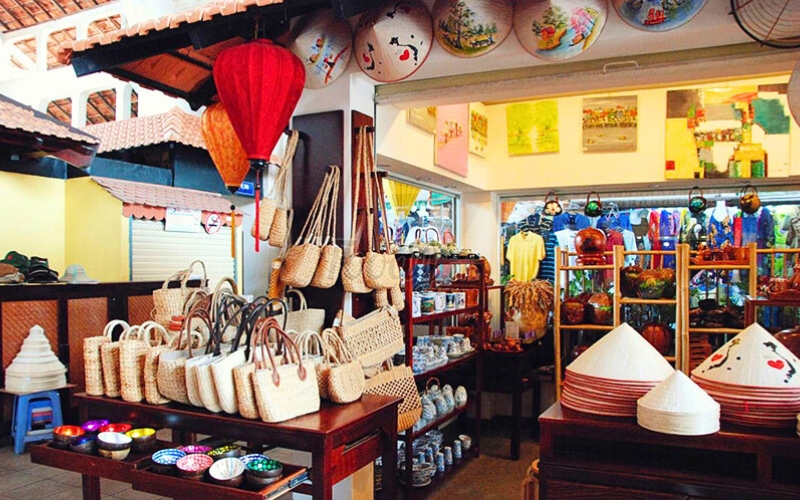
Souvenir sales area at the Cu Chi Tunnels site
- Dress Properly for Exploration: The site is extensive and some areas require long walks or crawling through narrow galleries. Wear comfortable, light clothing and closed-toe shoes, such as sneakers or hiking boots.
- Refresh Yourself on Site: Stands offer cold drinks, ice cream, simple Vietnamese snacks (cassava, sweet potato…). Perfect for a break between sections.
- Buy Souvenirs in the Right Place: To avoid unpleasant surprises, favor official shops inside the site. Prices are clear and fixed. Be wary of street vendors outside who may inflate prices.
- Choose a Guided Tour: To truly understand the history and importance of the tunnels, opt for a visit with a local guide, preferably French-speaking. You will gain in clarity, anecdotes, and emotions.
- Claustrophobic: Although some tunnels have been enlarged for visitors, they remain dark, low, and cramped. If you are sensitive to this type of environment, prefer the surface routes.
- Avoid Peak Heat Hours: Visit early in the morning or after 3 PM, especially between April and October. The inside of the tunnels is suffocating and there is little shade outside.
- Respect This Place of Memory: Keep in mind that this site is a symbol of resistance, but also of suffering. Adopt respectful and discreet behavior, especially in the reconstruction areas.
- Plan to Carry Some Cash: Some services on site (shooting, snacks, souvenirs) do not accept credit cards. Bring some Vietnamese dong banknotes with you.
- Drink Regularly: The humid heat can be surprising. Remember to bring a bottle of water, especially if you visit the tunnels or attend a reconstruction.
- Travel Light: You don’t need a bulky backpack: some sections require bending over or crawling. A small shoulder bag is enough for essentials.
Visiting the Cu Chi Tunnels means entering the heart of a significant chapter of Vietnamese history. This underground network, shaped by courage and ingenuity, testifies to the resilience of a people facing oppression. Every corridor, every corner tells a clandestine life story, a strategy, an act of survival. The site strikes as much as it moves. You leave with a better understanding of the past, but above all with a deep respect for those who lived and fought there. With Horizon Vietnam, this discovery happens under the best conditions, thanks to the accompaniment of a local guide and careful organization, to live an experience that is both enriching and respectful.



Our recommended itineraries
 Nature and Active travel
Northern Vietnam Explorer in 9 days and 8 nights
About ten days
Hanoi - Ha Long Bay - Saigon - Mekong Delta - Siem Reap - Luang Prabang - Pak Ou Caves - Kuang Si Waterfall
 Classic
Vietnam Exclusive in 13 Days
About 2 weeks
Hanoi - Bai Tu Long - Hue - Da Nang - Hoi An - Saigon - Mekong Delta