+84 9 75 46 33 10 (Whatsapp)
  info@horizon-vietnamtravel.com
  Français
  Español
  Português
  Deutsch

Differences Between Hanoi and Saigon: Everything You Need to Know
Table of contents
Hanoi and Saigon (officially Ho Chi Minh City) are the two largest cities in Vietnam, and yet everything seems to set them apart. One, the political and cultural capital, charms visitors with its peaceful atmosphere, its streets full of character, and its still deeply rooted traditions. The other, the country’s economic heart, embodies a city on the move — modern, lively, and open to the world. If you are wondering which one to discover first, or if you are thinking of visiting both, understanding the differences between Hanoi and Saigon will help you better appreciate what makes each of these cities so unique.
In this article, we explore everything that sets them apart: atmosphere, lifestyle, cuisine, climate, architecture… to help you make the right choice, or simply to enjoy how well they complement each other.
Weather: two very distinct climates
Hanoi, in the north of Vietnam, lives to the rhythm of the four seasons. Summer, from May to September, is hot and humid — sometimes stifling — with temperatures that can climb to 40°C. Winter, from November to March, is surprisingly cool and damp, occasionally dropping below 10°C. Between these extremes, autumn remains the favourite season of locals and travellers alike for its mildness.

Weather between Hanoi and Saigon
Saigon, in the south, enjoys a more stable climate. Two seasons mark the year: the dry season, from December to April, pleasant and sunny, and the rainy season, from May to November, characterised by short but intense downpours. The temperature stays warm all year round, between 28°C and 35°C.
Lifestyle: peaceful Hanoi, dynamic Saigon
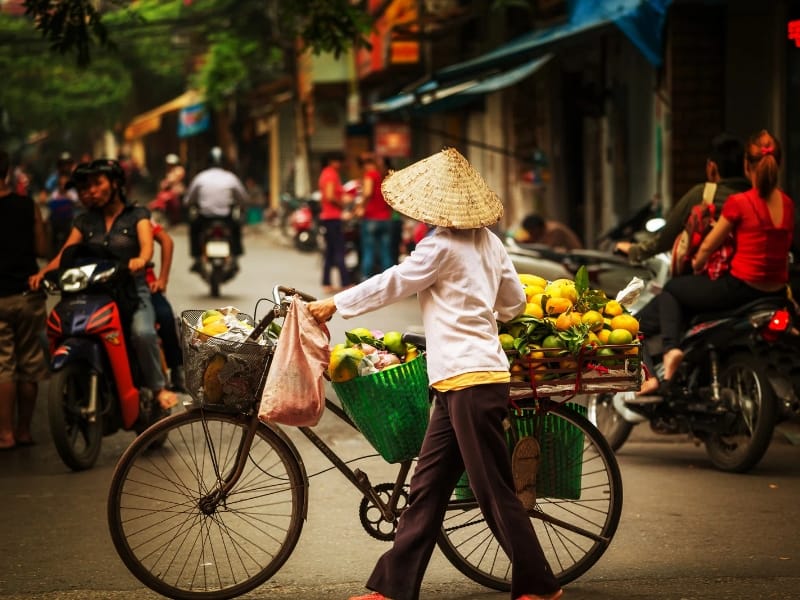
A corner of Hanoi’s Old Quarter
Hanoi preserves the discreet charm of a capital steeped in tradition. The Old Quarter, with its lively alleys, ancient houses, temples, and markets, breathes authenticity. Life here is calmer, the nights are relatively quiet, and everyday life is marked by simplicity: morning markets, open-air cafés on small plastic stools, tai chi around Hoan Kiem Lake at dawn. This peaceful atmosphere clearly illustrates the differences between Hanoi and Saigon, where bustle and modernity prevail. In Hanoi, everything seems to invite you to take your time, faithful to a pace of life inherited from the past.
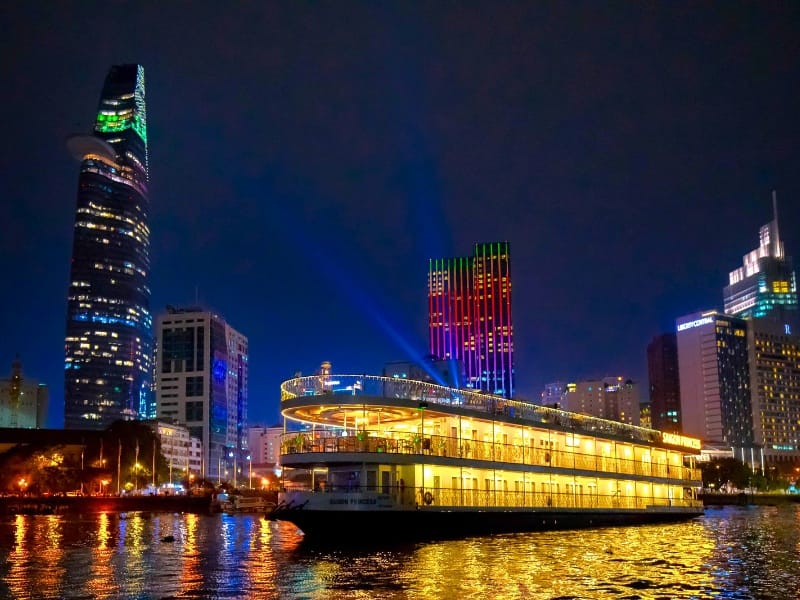
Saigon at night
Saigon, for its part, never sleeps. A cosmopolitan city open to the world, it radiates an effervescent modernity. Skyscrapers, shopping malls, trendy cafés, rooftop bars, and clubs bring the city to life day and night. Yet behind this vitality, you will still find traditional temples and pagodas — evidence of a heritage the people of Saigon have not forgotten. The pace is fast, mirroring Saigon’s youth, who dream, work, and go out tirelessly.
Shopping: tradition in Hanoi, modernity in Saigon

Street vendor in Hanoi carrying traditional handicrafts
Hanoi remains the capital of traditional shopping. The Old Quarter — also known as the quarter of the 36 streets and guilds — is full of small specialised shops (silk, ceramics, silver, local crafts). Street vendors, bustling markets, and small neighbourhood stalls are an integral part of the Hanoi experience.
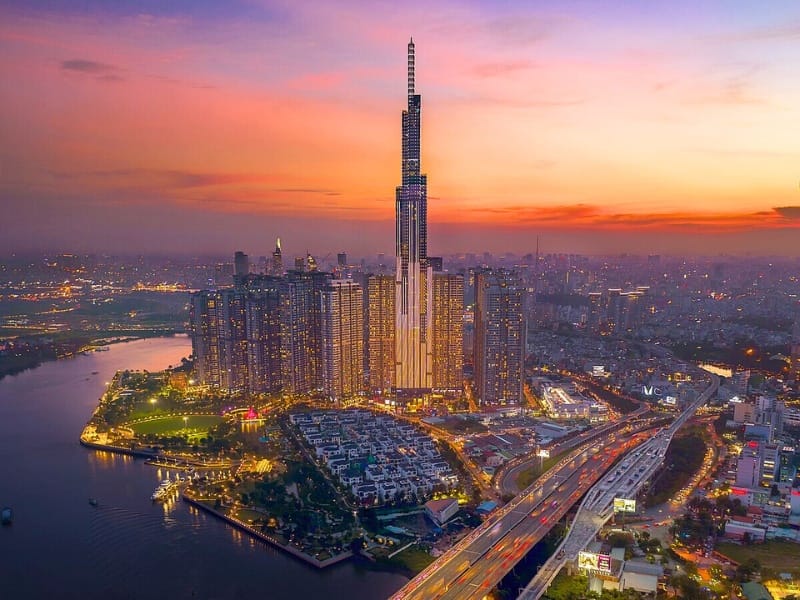
Modern Saigon: between skyscrapers, shopping malls, and lively streets.
Saigon offers a completely different atmosphere. Here you will find large modern shopping centres such as Vincom Center, Saigon Centre, and Takashimaya, alongside major international brands. That said, popular markets like Ben Thanh and Binh Tay still offer the chance to haggle and to find a more authentic — if more touristy — atmosphere.
Gastronomy: two ways of eating
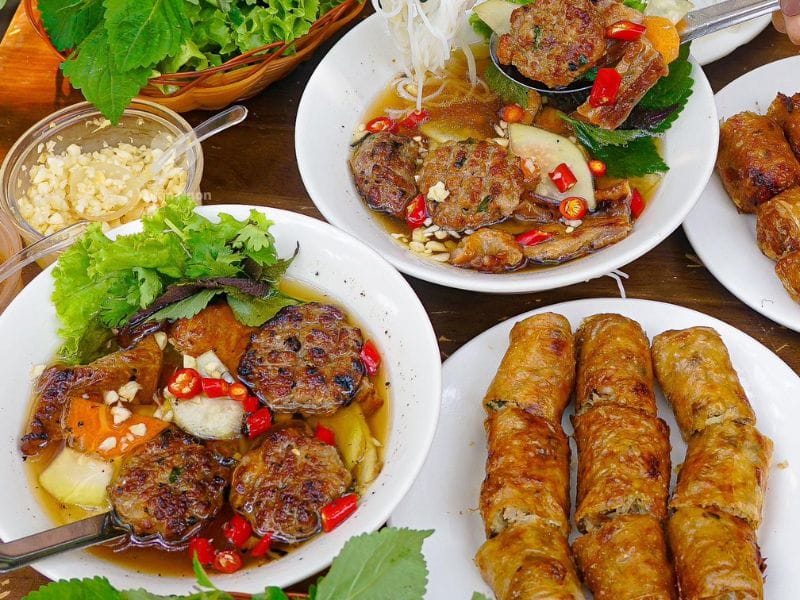
Bún chả (rice vermicelli with grilled pork) is a must-try dish in Hanoi
In Hanoi, eating is above all a moment of simplicity and sharing. In every neighbourhood, the pavements turn into genuine little open-air kitchens. You sit on modest plastic stools, around an often improvised table, to enjoy a piping-hot phở from early morning or a fragrant bún chả at lunchtime. Street vendors and small family eateries are everywhere. Here there is nothing superfluous: meals are quick and convivial, yet always prepared with care and respect for traditional know-how. It is in this authentic, down-to-earth atmosphere that the charm of Hanoi’s cuisine lies.

Cơm tấm, a symbol of southern cuisine, combining broken rice, grilled meat, and the sweet notes typical of Saigon
In Saigon, the culinary experience is more varied and abundant. The city is full of markets, street-food stalls, contemporary restaurants, and lively food courts. Here you can taste southern dishes such as bánh xèo, a large crispy coconut-milk crêpe, cơm tấm (broken rice), or hủ tiếu, a much-loved noodle soup. But Saigon does not stop at traditional cuisine. An open, cosmopolitan city, it also offers a multitude of dishes inspired by Chinese, Khmer, and Western cooking. Whether on a street corner, in a small shop, or in a modern restaurant, eating in Saigon is always a lively, generous moment, accessible to every taste.
Flavours: balanced in the North, generous in the South
In Hanoi, the flavours are defined by restraint and balance. The emphasis is on savoury, slightly tangy dishes, always brightened by fresh herbs such as coriander, mint, and basil. Fish sauce (nước mắm), rice vinegar, and sometimes a few fermented condiments refine the flavours without ever weighing them down. Here, lightness and finesse are prized: phở offers a clear, aromatic broth without being greasy, bún chả plays on the contrast between grilled pork and sweet-and-sour sauce, and bánh cuốn melt delicately in the mouth. Northern cuisine adapts to the seasons, offering dishes that are both comforting in winter and refreshing on fine days.

The difference between northern phở and southern phở
In Saigon, the flavours become more generous and rounded. Sugar and coconut milk are often present, bringing sweetness and creaminess to the dishes. The sauces are thicker, sometimes slightly sweet, but always balanced by the acidity of lime or the freshness of herbs. The South also loves to pair fruit with savoury dishes: green papaya, mango, coconut, and pomelo appear regularly in meals. Saigon’s cuisine, indulgent and colourful, reflects the abundance of its tropical climate and the conviviality of its people.
Hanoi and Saigon are two very different cities, but each has something unique to offer. One breathes tradition and tranquillity, the other vibrates with energy and modernity. These differences between Hanoi and Saigon only reinforce how well they complement each other. By visiting both, you discover two atmospheres, two rhythms, two ways of experiencing Vietnam. And it is precisely in this contrast that the journey becomes all the richer.



Our recommended itineraries
 Nature and Active travel
Northern Vietnam Explorer in 9 days and 8 nights
About ten days
Hanoi - Ha Long Bay - Saigon - Mekong Delta - Siem Reap - Luang Prabang - Pak Ou Caves - Kuang Si Waterfall
 Classic
Vietnam Exclusive in 13 Days
About 2 weeks
Hanoi - Bai Tu Long - Hue - Da Nang - Hoi An - Saigon - Mekong Delta