+84 9 75 46 33 10 (Whatsapp)
  info@horizon-vietnamtravel.com
  Français
  Español
  Português
  Deutsch

Fine Arts Museum of Hanoi: A Cultural Treasure to Discover
Table of contents
Located just a short walk from the Temple of Literature, the Fine Arts Museum of Hanoi is an essential stop for anyone wishing to discover the artistic and cultural richness of Vietnam.\r\nYet, this museum often remains in the shadow of the capital’s main tourist sites, when it fully deserves a thorough visit.
\r\n
 A place steeped in history
\r\n
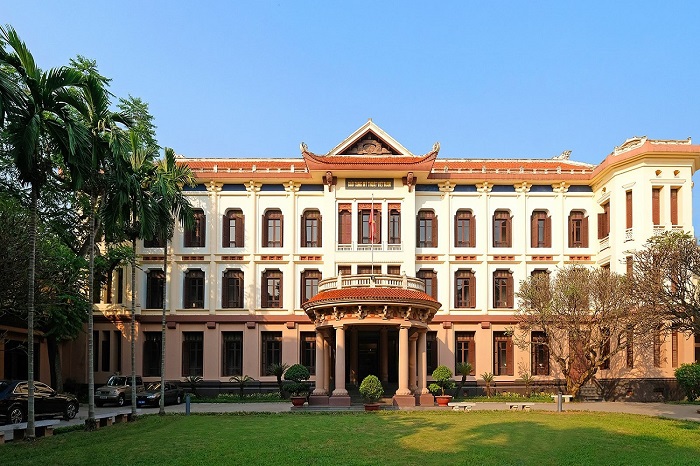
The museum occupies an old Catholic college for young girls, built during the time of French Indochina.\r\nThis splendid three-story building combines colonial architecture and local influences. The roofs are adapted to the tropical climate and there is a large shaded courtyard.\r\nAt the center, a Cham sculpture representing a linga stands out. It is a sacred symbol of Cham civilization, which immediately recalls the historical depth of the collections.
\r\n\r\n
Collections of exceptional richness
\r\n
The Fine Arts Museum of Hanoi houses one of the most extensive art collections in the country, covering the entire artistic history of Vietnam.\r\nMore than 20,000 works are preserved there, of which approximately 3,000 are displayed to the public.
\r\n\r\n
- \r\n \t
- The exhibition is organized chronologically, tracing the evolution of Vietnamese arts through several major periods:
- Prehistory and Antiquity: stone sculptures and ritual objects that testify to the first artistic expressions.
- The feudal era (11th – 15th century): a period of apogee of Vietnamese arts, marked by Buddhist influences and powerful dynasties such as the Ly and Tran.
- 17th – 18th centuries: affirmation of a more personal Vietnamese style, visible in religious and popular arts.
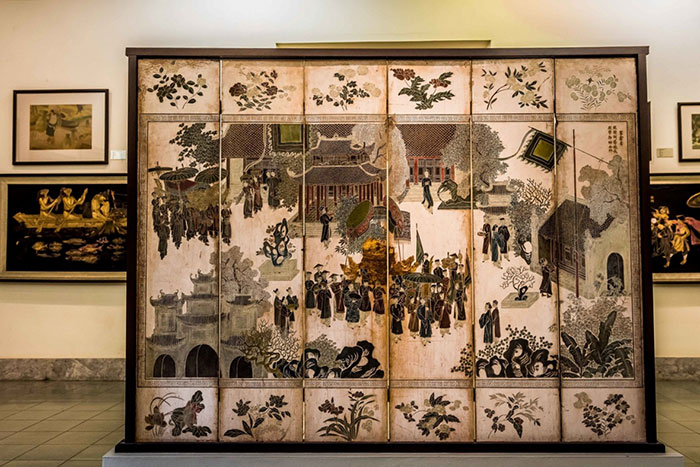
- 20th century: introduction of Western techniques, in particular oil painting and silk painting, as well as the birth of lacquer painting, a typically Vietnamese art.
- Modern and contemporary period: works from the “Đổi Mới” (Renewal) movement and creations by contemporary artists that reflect the social and cultural transformations of the country.
\r\n \t
\r\n \t
\r\n \t
\r\n \t
\r\n \t
\r\n
\r\n
Between tradition and modernity
\r\n
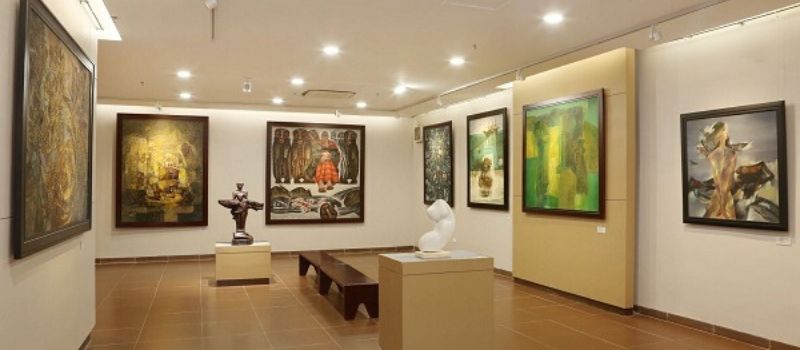
The visit allows you to appreciate the evolution of Vietnamese artistic style. Styles that range from Asian influences to colonial heritage.\r\nSilk paintings seduce with their fineness and delicate tones. And lacquer paintings impress with their brilliance and depth.\r\nSome rooms also highlight patriotic works. These works created during the wars of independence testify to the role of art in resistance and collective memory.
\r\n
The museum regularly organizes temporary exhibitions dedicated to contemporary Vietnamese artists.\r\nIt’s an opportunity to discover a modern Vietnam, creative and in permanent dialogue with its past.
\r\n
\r\n\r\n
Practical information for your visit
\r\n
- \r\n \t
- \r\n
Address: 66 Nguyễn Thái Học, Ba Đình, Hanoi (just behind the Temple of Literature)
\r\n
\r\n
- \r\n
Hours: Open every day except Monday, from 8:30am to 5:00pm
\r\n
\r\n
- \r\n
Photography: permitted with a small additional fee at entry
\r\n
\r\n \t
\r\n \t
\r\n
\r\n
Why visit the Fine Arts Museum of Hanoi?
\r\n
The museum offers a complete vision of Vietnam’s artistic identity. From the most ancient past to contemporary creation.\r\nIt is also a tranquil place, often less crowded, perfect for taking a cultural break in the heart of the bustling capital.\r\nAmong history, spirituality, and creativity, the museum reveals another face of Hanoi. A refined, inspiring, and deeply Vietnamese face.




Our recommended itineraries
 Nature and Active travel
Northern Vietnam Explorer in 9 days and 8 nights
About ten days
Hanoi - Ha Long Bay - Saigon - Mekong Delta - Siem Reap - Luang Prabang - Pak Ou Caves - Kuang Si Waterfall
 Classic
Vietnam Exclusive in 13 Days
About 2 weeks
Hanoi - Bai Tu Long - Hue - Da Nang - Hoi An - Saigon - Mekong Delta