+84 9 75 46 33 10 (Whatsapp)
  info@horizon-vietnamtravel.com
  Français
  Español
  Português
  Deutsch

Mausoleum of Ho Chi Minh: Eternal Symbol of Vietnam
Table of contents
The Mausoleum of Ho Chi Minh is one of the most important and emblematic monuments of Hanoi, the capital of Vietnam. Located on Ba Dinh Square, in the heart of the city, it pays tribute to Ho Chi Minh, the revolutionary leader and president who marked the history of modern Vietnam. This mausoleum attracts not only Vietnamese who have come to pay tribute to their national hero, but also thousands of tourists from around the world who wish to discover Vietnamese history and culture.
Overview of the Mausoleum of Ho Chi Minh
Location

Mausoleum of Ho Chi Minh
The Mausoleum of Ho Chi Minh was built at number 2 Hung Vuong, in the Dien Bien district of Ba Dinh district, in Hanoi, the capital of Vietnam. This monument was erected to preserve Ho Chi Minh’s body, in accordance with the wishes of the leadership of the Communist Party and the Vietnamese people. Construction of the mausoleum began on September 2, 1973, and was officially inaugurated, opening its doors to visitors, on August 29, 1975.
Opening times
The mausoleum is open in the morning on Tuesday, Wednesday, Thursday, Saturday and Sunday. Hours vary depending on the season:

The mausoleum is generally closed for approximately two months each year for maintenance work. Exact dates are communicated in advance by the competent authorities.
The mausoleum is open on the following days, even if they fall on Monday or Friday:
- January 1 (New Year’s Day)
- May 19 (Anniversary of Ho Chi Minh)
- September 2 (National Holiday)
- First day of Lunar New Year (variable date)
Admission fees
- Vietnamese visitors: free admission
- Foreign visitors: 25,000 VND (≈1 USD) per person
Must-see activities during your visit
When you visit the Mausoleum of Ho Chi Minh in Hanoi, you will have the opportunity to immerse yourself in a solemn atmosphere while exploring the history and legacy of this emblematic leader of Vietnam. Here are some essential activities not to miss to make your visit even more meaningful:
1. Attend the flag-raising and flag-lowering ceremony

Flag-raising ceremony at Ho Chi Minh Mausoleum
A unique moment to experience: every day, at 6:00 AM and 9:00 PM, the flag-raising and flag-lowering ceremony takes place on Ba Dinh Square. This solemn ceremony, during which a detachment of 37 soldiers performs ritual gestures to the sound of the national anthem, attracts many visitors. It is at this precise moment that the Mausoleum of Ho Chi Minh opens its doors to the public.
2. Explore the architecture of the Mausoleum

The exterior is decorated with gray granite and stone columns, with the inscription “CHỦ TỊCH HỒ-CHÍ-MINH” in pink stone at the top
The mausoleum is a masterpiece of architecture, designed to withstand extreme conditions such as earthquakes and bombings. The structure consists of three levels and measures 21.6 meters in height. The exterior is decorated with gray granite and stone columns, while the inscription “CHỦ TỊCH HỒ-CHÍ-MINH” in pink stone dominates the top. The building reflects solidity, but also the ideals of freedom and independence dear to Ho Chi Minh, as testified by the inscription: “Nothing is more precious than independence and freedom”.
3. Visit the interior of the Mausoleum
The interior of the Mausoleum is a sacred area, where Ho Chi Minh’s body rests. The coffin is placed under soft light, in a room entirely in marble where silence and respect reign. The body is kept in a glass coffin, placed on a marble base, and is guarded by honorary guards during visits. This atmosphere full of respect and solemnity makes every moment spent here particularly touching.
4. Discover the Presidential Palace (Phủ Chủ Tịch)

Presidential Palace
The Presidential Palace, built in classical French style, is an integral part of the mausoleum complex. Once the residence of the colonial governor, it welcomed Ho Chi Minh from 1954 onwards. Today it serves for the reception of foreign dignitaries and the organization of official meetings. The garden surrounding the palace is adorned with ancient trees, creating a peaceful space conducive to reflection.
5. Stroll around the Stilt House and the Fish Pond
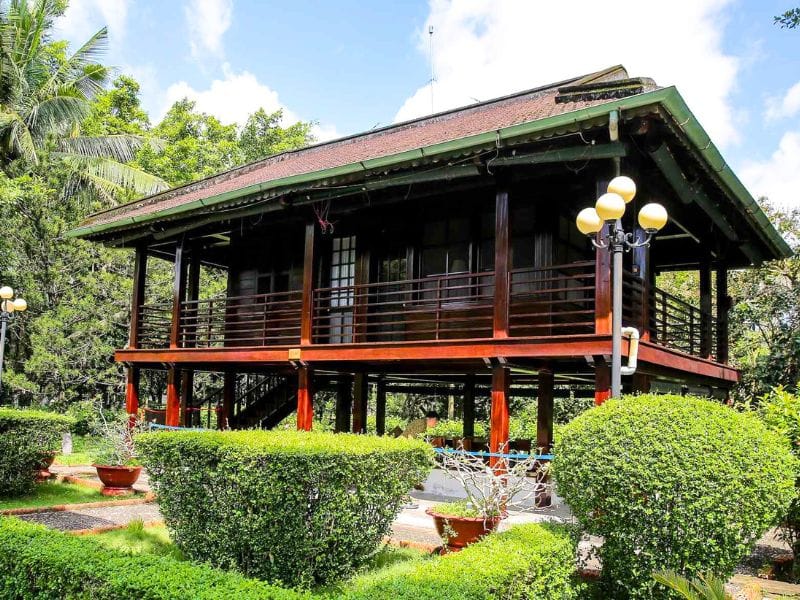
Ho Chi Minh’s stilt house
One of the surprises of this visit is Ho Chi Minh’s stilt house. Refusing the luxurious residence of the palace, he chose to live in this simple house, built in the style of traditional dwellings of the ethnic groups of northern Vietnam. The fish pond, located in front of the house, was a place where Ho Chi Minh relaxed by feeding the fish. This house is a symbol of the simplicity and humility of the leader.
6. Visit the Ho Chi Minh Museum

Ho Chi Minh Museum
The Ho Chi Minh Museum, located not far from the mausoleum, is one of the largest and most modern in Vietnam. With its lotus-shaped architecture and spacious exhibition spaces, it traces the life and work of Ho Chi Minh, from his beginnings to his struggle for Vietnamese independence. The museum also houses more than 2,000 historical objects and documents, offering a comprehensive perspective on the life of this exceptional leader.
7. Discover the One-Pillar Pagoda
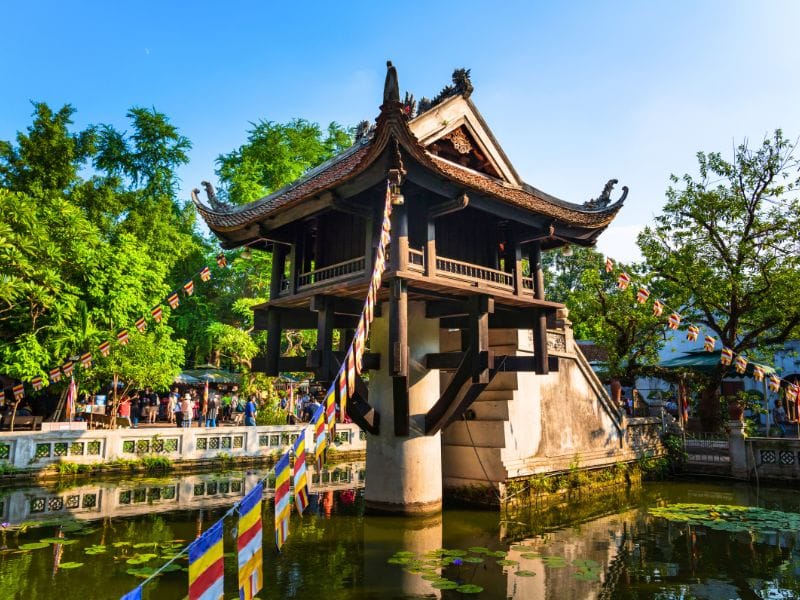
One-Pillar Pagoda
The One-Pillar Pagoda, located within the Mausoleum complex, is one of the most famous monuments in Hanoi. With its lotus-shaped structure, it symbolizes purity and stability and is an important place of worship for Vietnamese people. This temple is one of the first constructions of the Ly regime and continues to fascinate with its architectural singularity.
Rules to respect when visiting the Mausoleum of Ho Chi Minh
1. Dress code
- Decent clothing: It is required to wear clothes that cover shoulders and knees. It is recommended to avoid short shorts and tank tops. Formal or respectful clothing is recommended, in view of the solemn character of the place.
2. Behavior
- Silence and respect: It is required to maintain silence and walk calmly inside the mausoleum. It is also important to speak in a low voice.
- Respect for conduct rules: It is essential to adopt a respectful attitude, avoiding any noisy or casual behavior.
- Appropriate gestures: It is forbidden to touch the coffin, statues or any other part of the mausoleum. Furthermore, it is necessary to avoid any inappropriate questions.
3. Photography and electronic devices
- Photography ban: Taking photos inside the mausoleum is strictly forbidden, out of respect for the solemn environment.
- Use of mobile phones: Mobile phones can be brought with you, but it is recommended to turn them off or put them on silent mode during your visit.
4. Personal belongings
- Avoid bulky bags: Large bags and voluminous items are prohibited inside the mausoleum. It is recommended to leave your personal effects in the appropriate storage areas or to carry only the essentials.
- Inappropriate items: Entry is prohibited for any item deemed inappropriate for a place of recollection.
5. Respect for opening times
- Respect for opening hours: It is essential to respect the opening hours and ensure you arrive with sufficient notice, as the mausoleum closes at a precise time each day. Given the heavy influx, it is advisable to arrive before closing time.
6. Behavior during ceremonies
- Respect for ceremonies: In case of presence during ceremonies such as flag-raising or flag-lowering, it is essential to respect the protocol and follow the instructions of the guards.
It is essential to remember that the mausoleum is a sacred site and a place of national memory. Therefore, respect for the rules is fundamental not only to honor Ho Chi Minh, but also to respect Vietnamese culture and traditions. For up-to-date information, during your trip with our agency, the rules will be provided to you by our guide, who will offer you all the information needed to ensure a respectful and enriching visit.
The Mausoleum of Ho Chi Minh embodies the soul of Vietnam, a living testimony to the struggle for independence and unity of the country. Through its imposing architecture and solemn atmosphere, it reminds everyone of Ho Chi Minh’s determination and ideals, whose legacy continues to inspire Vietnam today. Visiting the mausoleum means paying tribute to a man who marked world history, understanding the resilience of the Vietnamese people and touching with your own hands the values of freedom and justice that run through generations. It is a place of memory, a symbol of the greatness of Vietnam and a meeting point between past and future.




Our recommended itineraries
 Nature and Active travel
Northern Vietnam Explorer in 9 days and 8 nights
About ten days
Hanoi - Ha Long Bay - Saigon - Mekong Delta - Siem Reap - Luang Prabang - Pak Ou Caves - Kuang Si Waterfall
 Classic
Vietnam Exclusive in 13 Days
About 2 weeks
Hanoi - Bai Tu Long - Hue - Da Nang - Hoi An - Saigon - Mekong Delta