+84 9 75 46 33 10 (Whatsapp)
  info@horizon-vietnamtravel.com
  Français
  Español
  Português
  Deutsch

The One-Pillar Pagoda – A Spiritual Gem in the Heart of Hanoi
Table of contents
The One-Pillar Pagoda (Chùa Một Cột), nestled in the heart of Hanoi, is one of Vietnam’s most iconic monuments. Built in the 11th century, it stands out for its unique structure: a small wooden sanctuary perched on a single stone pillar, surrounded by a lotus-shaped pond. Its form resembles a lotus flower, a symbol of purity in Buddhism, and gives it rare elegance. This spiritually charged place is far more than a simple building. Embodying the harmony between people and nature, it is simultaneously a center of devotion for Vietnamese people. A true symbol of resilience, the pagoda has endured centuries, surviving destruction and restoration, yet always maintaining its place in the hearts of Hanoi’s residents and beyond. Today, the One-Pillar Pagoda is a pilgrimage site and an unmissable destination for visitors, offering both a testament to history and a serene retreat amid the city’s vibrant energy.
Pagoda Overview
Among Hanoi’s cultural and spiritual treasures, the One-Pillar Pagoda holds a prominent place alongside Trân Quôc and Phuc Khanh. It attracts thousands of visitors each year, fascinated by both its unique architecture and tranquil atmosphere.
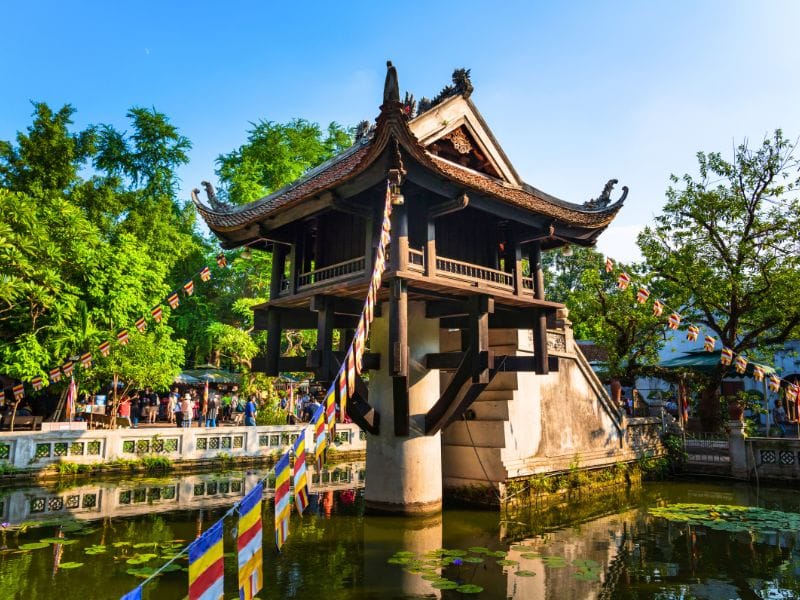
One-Pillar Pagoda
Location
The pagoda is located in Ba Đình District, on Chua Môt Côt Street, in the immediate vicinity of Ông Ích Khiêm Street. It is integrated into the historic complex of Hô Chi Minh’s Mausoleum and Ba Đình Square, an emblematic location in the capital.
Opening Hours
Chùa Một Cột is accessible daily from 7am to 6pm. Hours may vary slightly based on the opening of nearby sites.
Admission Fees
-
Free for Vietnamese visitors coming to pray or visit.
-
25,000 VND (approximately 1 USD) for foreign visitors.
Visiting Tips
- Respect the pagoda’s rules by dressing modestly and maintaining silence during your visit.
- Climb the stairs carefully, as they can be slippery after rain.
- Take photos, but be mindful not to disturb other visitors or practitioners.
- Do not touch sacred objects and maintain a respectful demeanor throughout your visit.
- Check visiting hours before your trip, as the pagoda may be closed on certain days or during prayer times.
- Bring a hat or sunscreen if visiting during summer months, as the sun can be intense.
- Take a moment to meditate or relax within the pagoda to fully enjoy the tranquility of the space.
History of the One-Pillar Pagoda
The One-Pillar Pagoda was founded in 1049 under the reign of Emperor Lý Thái Tông, in the heart of the ancient imperial capital of Thang Long (present-day Hanoi). According to legend, the emperor, desiring an heir, dreamed that the Goddess of Mercy, Quan Âm, appeared to him seated on a lotus flower and handed him a child. Moved by this dream, the emperor commissioned the construction of a unique pagoda that symbolized the lotus flower, as a tribute to the goddess and an expression of his gratitude.
At that time, the pagoda was a place of prayer for fertility and prosperity. It was also a powerful symbol of imperial power and harmony between royalty and Buddhism. The choice to construct the sanctuary on a single pillar, rather than traditional multi-pillar structures, made it a building of great originality. This architecture was inspired by the image of a lotus rising gently above the water, embodying both the beauty and purity of Buddhism.
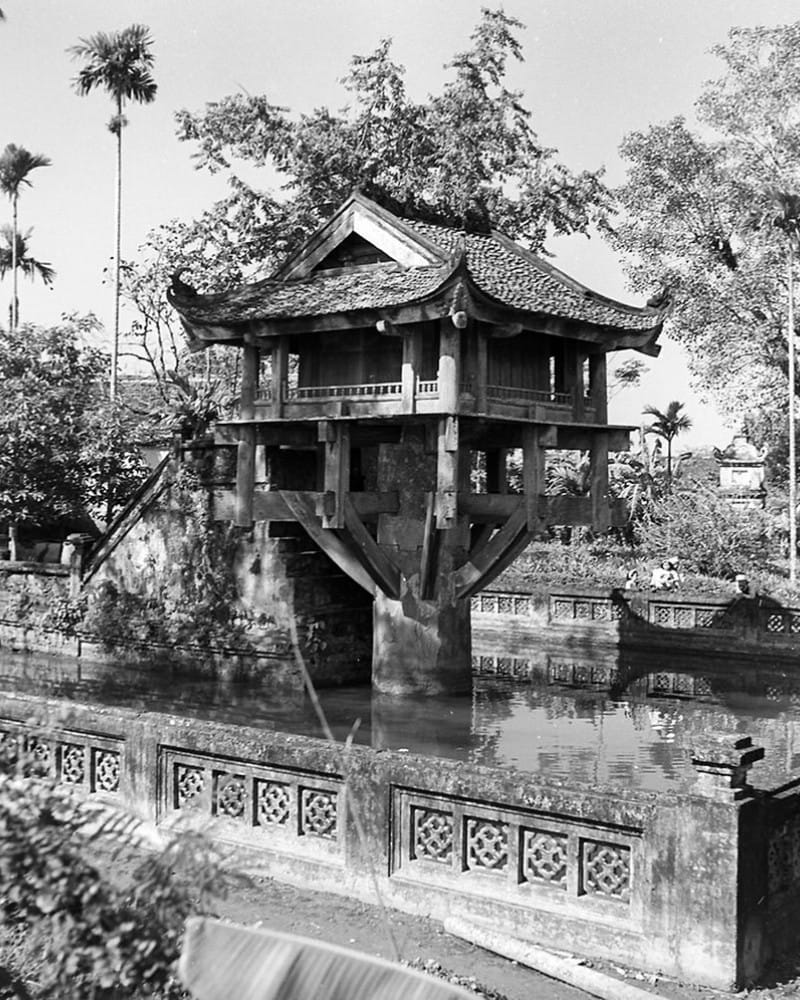
The One-Pillar Pagoda impresses with its history and cultural wealth
Over the centuries, the pagoda suffered various destructions and restorations. Notably, in 1954, it was destroyed by French colonial forces during the Indochina War. Only in 1955, following the end of the conflict, was the pagoda rebuilt identically to the original to reclaim its place in Hanoi’s religious and cultural landscape. The modern reconstruction allowed it to preserve its symbolism and maintain its reputation as an emblematic monument of Vietnam.
Today, although restored multiple times, the One-Pillar Pagoda remains a place of immense spiritual and cultural importance. Each year it attracts countless pilgrims and visitors, eager to admire its beauty and reconnect with the history and spirituality of this unique site.
Architecture of the One-Pillar Pagoda
The One-Pillar Pagoda captivates visitors not only for its spiritual symbolism but also for its exceptional architecture, which harmoniously unites aesthetics, traditional engineering, and profound cultural values.
From the entrance, visitors can admire the Tam Quan gate, topped by a panel bearing the inscription “Diên Hựu Tự” (延祐寺) – the pagoda’s original name. Far more than a simple designation, this name is laden with spiritual and historical significance.
- “Diên” (延): means “extend,” “prolong,” or “endure.”
- “Hựu” (祐): means “blessing,” “divine protection,” or “grace.”
- “Tự” (寺): means “pagoda” or “temple.”
Together, “Diên Hựu Tự” can be translated as “Pagoda of Prolonged Blessings,” expressing a wish for longevity, lasting peace, and prosperity for the sovereign and the people. This designation dates back to King Lý Thái Tông’s era and testifies to the acknowledgment of a sacred dream linked to Quan Âm, goddess of compassion.
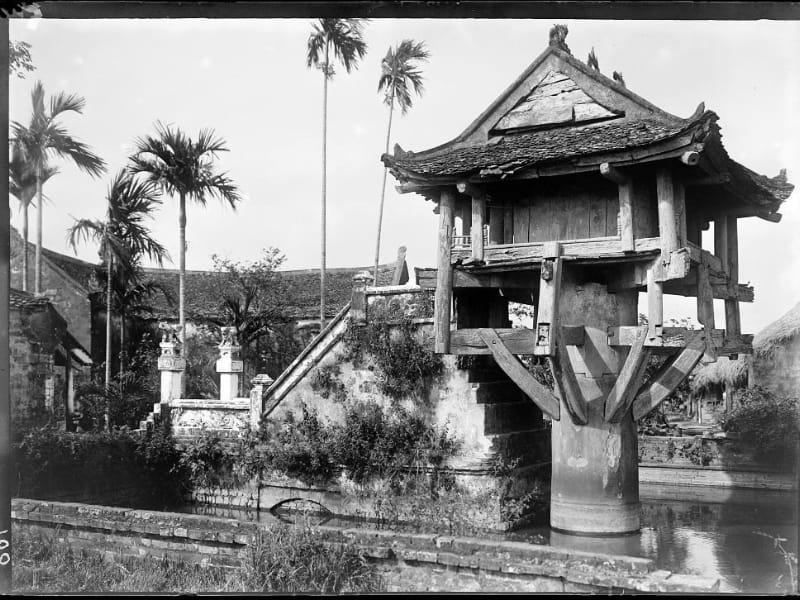
The ancient architecture of the One-Pillar Pagoda differs little from its present form.
The original structure was based on an ingenious system of wooden beams affixed to a single stone pillar, embedded in a lotus-shaped basin. Today, this central column, standing 4 meters tall with a diameter of 1.2 meters, continues to support the heart of the monument: the Liên Hoa Pavilion (蓮花臺 – Lotus Throne). This square-shaped pavilion, surrounded by railings, rests solidly on the pillar and auxiliary columns. The interior, richly adorned, houses a golden statue of Quan Âm with a thousand eyes and a thousand arms, surrounded by ritual objects: ceramic vases, incense burners, lotus bouquets, and tea sets. The altar is finely decorated with cloud motifs and lacquered in gold and red, topped by a small red panel engraved with the characters “Liên Hoa Đài” (蓮花臺).
The pagoda roof, covered with ancient brick-colored tiles, bears the marks of time, adding to the authentic charm of the place. On its summit stands the traditional ornament of the “lưỡng long chầu nguyệt” – two dragons facing the lunar pearl – a motif symbolizing fertility, the harmony of yin and yang, and the vital energies of the universe according to Eastern cosmology.
Designated a national historical and artistic monument in 1962, the pagoda was recognized in 2012 by the Asia Record Organization as “the pagoda with the most unique architecture in Asia,” underscoring its importance both architecturally and spiritually within Vietnam’s heritage.
Religious and Spiritual Significance
Dedicated to Quan Âm – Goddess of Mercy
The One-Pillar Pagoda is dedicated to Quan Âm, goddess of mercy, a central figure in Buddhism. She embodies compassion, protection, and healing. Quan Âm is particularly revered in Vietnam, where she is perceived as a benevolent mother watching over her children. The pagoda, built in her honor, is a place where the devout come to seek blessings and answers to their prayers, whether regarding health, prosperity, or personal desires.
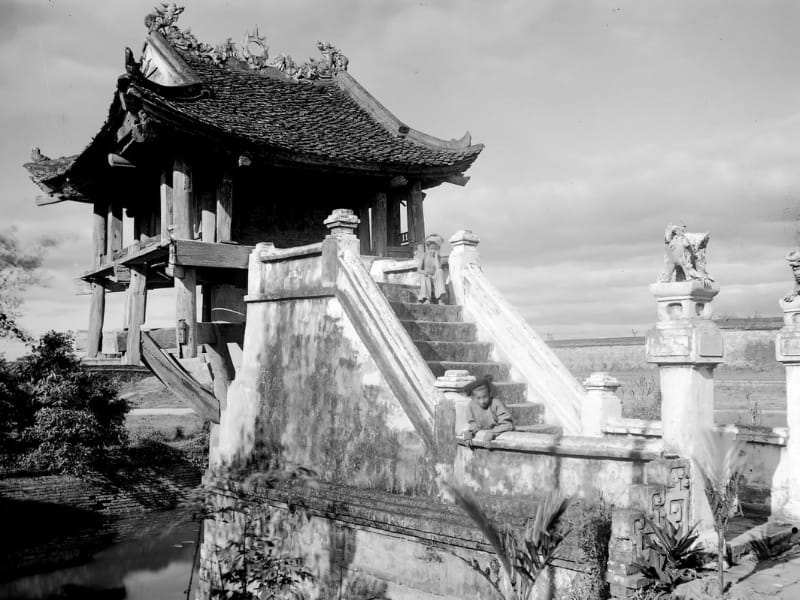
Originally, the pagoda housed a single stone pillar that supported a sacred pavilion dedicated to the goddess of mercy, Quan Âm.
The faithful often come to pray to Quan Âm for healing or inner peace. The pagoda is also a place where people seek blessings of fertility, a practice deeply rooted in popular beliefs, reinforcing its status as an essential spiritual site.
A Place of Prayer for Fertility, Health, and Peace
The One-Pillar Pagoda is particularly renowned for its power to fulfill wishes related to fertility. Numerous couples visit hoping to receive Quan Âm’s blessing to have children. Prayers for health and inner peace are also frequent, as this location is perceived as a sanctuary of serenity where one can reconnect spiritually and find balance in life.
The ceremonies and rituals practiced in the pagoda are simple yet powerful. The devout light incense and make offerings to honor the goddess and seek her benevolence. These moments of contemplation, often accompanied by Buddhist monks, represent an opportunity to find oneself and deepen one’s faith.
A Pilgrimage Destination
The pagoda has become an important pilgrimage site for Vietnamese and foreign visitors alike. Each year, thousands of people visit to pay homage to Quan Âm, seek blessings, or simply find a moment of calm. This place is a bridge between popular faith and spiritual heritage, a meeting point between religious culture and local traditions.

The pagoda is heavily visited by pilgrims, particularly on new moon and full moon days.
Couples seeking children are especially numerous in making vows at the pagoda. The belief that Quan Âm can grant this wish is deeply embedded in Vietnamese culture, and many leave with hope for a divine response.
The One-Pillar Pagoda embodies a perfect harmony between architecture, spirituality, and culture. Its unique structure, resting on a single stone pillar, is a symbol of stability and purity, while its profound connection to Buddhism and devotion to Quan Âm make it a place of veneration and serenity. This monument, laden with religious and historical significance, continues to captivate all who pause to admire its beauty and seek blessings and spiritual answers. Come discover this peaceful place full of history, a true sanctuary of tranquility in the heart of Hanoi’s vibrant energy. When you visit, take time to immerse yourself in the serenity it radiates and respect the living legacy it represents for the Vietnamese people. The One-Pillar Pagoda, though modest in size, radiates a spiritual and cultural light that transcends the centuries. It remains a living testament to the richness of the Vietnamese spirit, where every stone and every prayer resonates with a profound connection between past and present.



Our recommended itineraries
 Nature and Active travel
Northern Vietnam Explorer in 9 days and 8 nights
About ten days
Hanoi - Ha Long Bay - Saigon - Mekong Delta - Siem Reap - Luang Prabang - Pak Ou Caves - Kuang Si Waterfall
 Classic
Vietnam Exclusive in 13 Days
About 2 weeks
Hanoi - Bai Tu Long - Hue - Da Nang - Hoi An - Saigon - Mekong Delta