+84 9 75 46 33 10 (Whatsapp)
  info@horizon-vietnamtravel.com
  Français
  Español
  Português
  Deutsch

Visiting Chau Doc: What to Do and See in the Mekong Delta
Table of contents
Located in southwestern Vietnam, Chau Doc stretches peacefully along the Hau River (Bassac River), at the border with Cambodia. This city with discreet charm is much more than just a stopover for travelers following the river route between the two countries: it is a land of cultural confluences, a place where spirituality, nature, and the traditions of the Mekong Delta intertwine harmoniously. Here, Khmer, Cham, and Vietnamese peoples have coexisted for centuries, creating a rich cultural fabric reflected in the mosques, pagodas, temples, and churches scattered throughout the city and its surroundings. Exploring Chau Doc, you will discover a facet of Vietnam influenced by Cambodia, without even leaving the country.
Planned activities: boat excursions to the floating Cham villages, climb to Sam Mountain, visit the Tra Su bird sanctuary, and stroll through the lively alleys of the local market. Whether you are a lover of spirituality, a nature enthusiast, or simply curious to experience a deeper Vietnam, Chau Doc will surprise you with its sweetness and human richness.
Where is Chau Doc Located?
Located at the far southwestern tip of Vietnam, Chau Doc is a tranquil town in An Giang Province, nestled in the heart of the Mekong Delta, a few kilometers from the Cambodian border. It stretches along the Hau River (a branch of the Mekong) and the Vinh Te Canal, about 250 km west of Ho Chi Minh City.
Map of Chau Doc
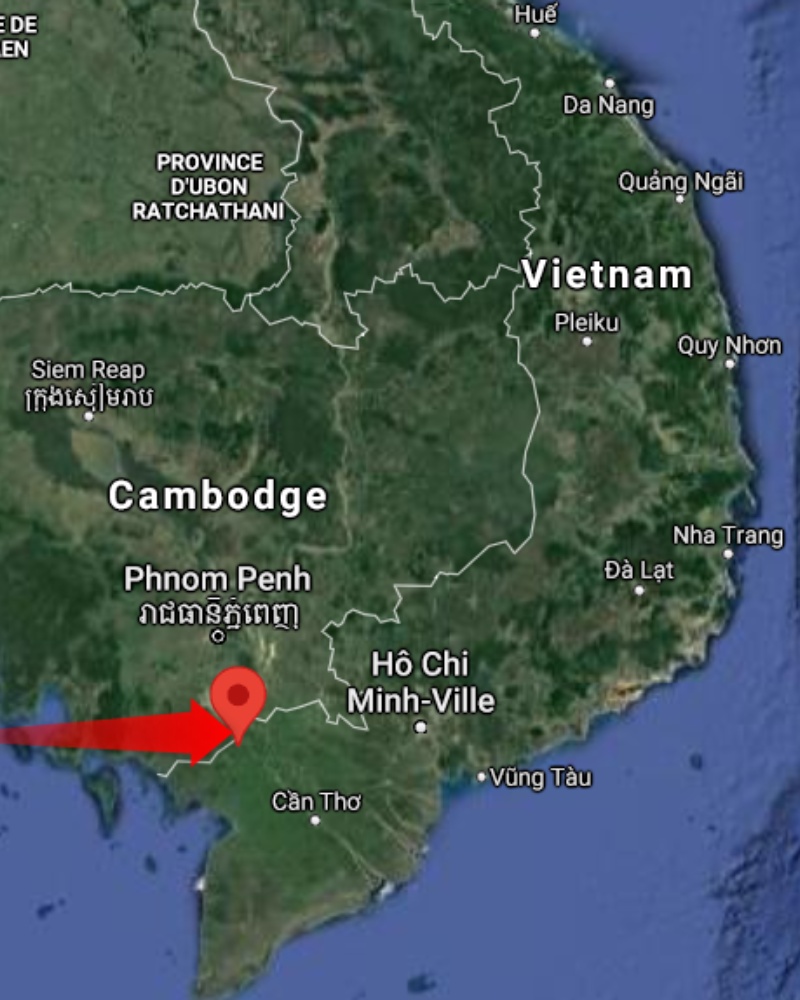
Map of Chau Doc
As the map above shows, Chau Doc occupies a strategic border position, making it an ideal stop for travelers following the river route between Vietnam and Cambodia, particularly toward Phnom Penh. Its geographical location gives it both a unique charm and a role as a cultural and commercial crossroads in the delta region.
How to Get to Chau Doc?
From Ho Chi Minh City, it takes approximately 6-7 hours to reach Chau Doc, depending on the mode of transport chosen. Here are the most common options:
By Bus
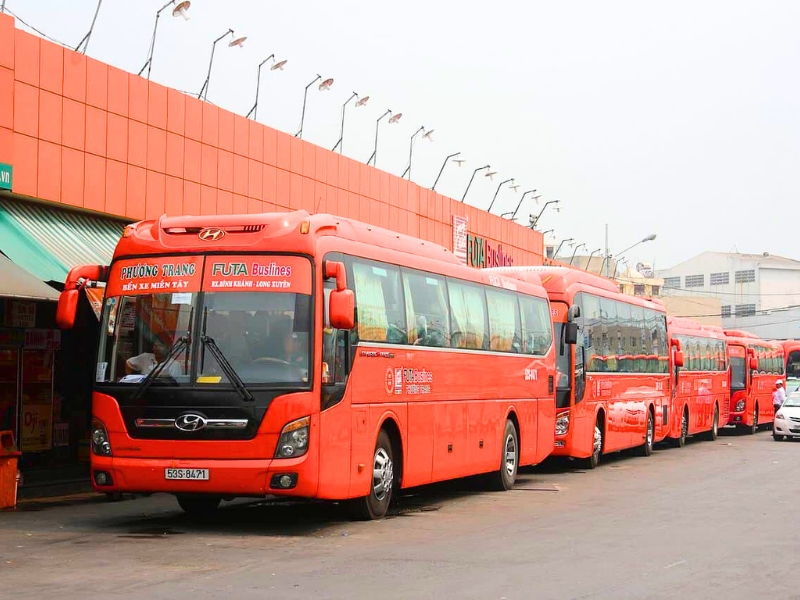
Phuong Trang Bus – A popular option for traveling by bus from Ho Chi Minh City to Chau Doc
Public buses connect Ho Chi Minh City to Chau Doc daily, with various stops in the delta provinces. The journey takes approximately 6-7 hours depending on traffic. It is an economical solution, with a one-way ticket costing between 7 and 8 euros. Several companies offer comfortable trips, with reclining seats and air conditioning.
By Motorcycle
For travelers seeking freedom, the motorcycle is a beautiful adventure. From central Saigon, follow National Highway 1A through Long An and Tien Giang, then cross the My Thuan Bridge to Vinh Long. Then take Route 30 toward Long Xuyen, and continue for about 50 km to Chau Doc. This route will allow you to discover the tropical landscapes of the delta, the fruit orchards, and authentic scenes of rural life.
By Private Vehicle
It is undoubtedly the most comfortable and flexible means of transport. In a private car with a driver, you can stop freely in delta cities like My Tho, Ben Tre, Can Tho, or Tien Giang to discover other facets of this fertile region.
If you travel with Horizon Vietnam, you need not worry about anything: we organize custom private transfers for you, enriched with authentic visits along the route, all accompanied, if desired, by a French-speaking guide. An ideal way to transform the journey to Chau Doc into a true experience.
When to Visit Chau Doc?
Two major periods attract travelers to Chau Doc: the beginning and end of the year.

Têt Chol Chnam Thmay
At the beginning of the year, Chau Doc vibrates with the rhythm of great spiritual festivals. In particular, the Têt Chol Chnam Thmay is celebrated, the traditional New Year of the Khmer people (from the 5th to the 8th of the lunar month of March), followed by the famous festival of the Goddess of Sam Mountain (Lê hôi Ba Chua Xu, from the 15th to the 27th of the lunar month of April), which every year brings together thousands of pilgrims from across the country.

Festival of the Goddess of Sam Mountain (Lê hôi Ba Chua Xu Nui Sam)
At the end of the year, from September to December, Chau Doc enters the high water season, typical of the Mekong Delta. It is the ideal time to observe the rising waters, spectacular flooded landscapes, lotus fields, and golden rice paddies ready for harvest. Nature reveals all its beauty at this time.
Best Attractions in Chau Doc
Tra Su Bird Sanctuary
The Tra Su bird sanctuary, located about 25 km from Chau Doc, is a must-see destination for nature lovers. This flooded forest of cajeput trees spans approximately 850 hectares and hosts remarkable biodiversity, with over 70 bird species and more than 140 plant species.
The typical visit begins with a motorboat ride of about 20 minutes, followed by a peaceful rowing boat ride of about 30 minutes through narrow canals flanked by cajeput trees. This route offers complete immersion in a serene and lush natural environment.
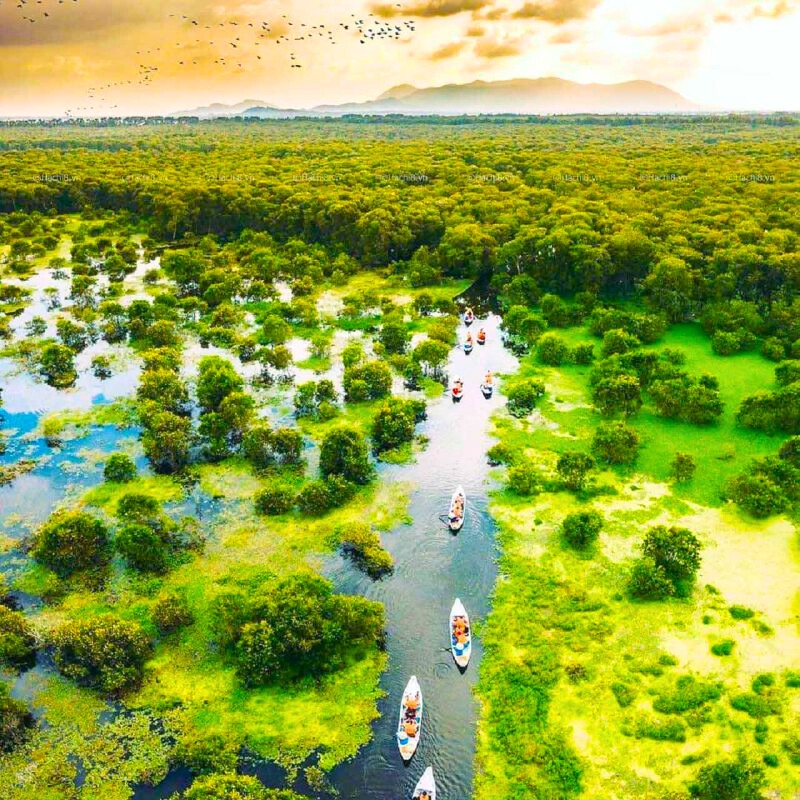
Tra Su Bird Sanctuary
The best time to visit the sanctuary is during the rainy season, from September to November, when the forest is flooded, offering spectacular landscapes and intense bird activity. However, the dry season, from December to May, is also suitable for a visit, with easier navigation conditions and better wildlife observation.
For an optimal experience, it is recommended to visit the sanctuary in the early morning or late afternoon, when birds are most active.
Floating Houses
During your stay in Chau Doc, it is difficult not to notice the numerous floating houses that line the Hau River. In this Mekong Delta region, water is an integral part of daily life, and many families literally live on the river.

Floating Houses in Chau Doc
By renting a small local boat, you can approach these unique dwellings, perched on rafts and connected by wooden walkways. Beneath each house, submerged metal cages serve as tanks: families raise fish directly under the floor, feeding them with kitchen scraps or available forage. This ingenious system allows inhabitants to support themselves while remaining in harmony with the natural environment.
Observing life around these floating houses is an authentic experience, which allows you to better understand the ingenuity, simplicity, and harmony with nature that characterize life in the delta.
Floating Market of Chau Doc
The floating market of Chau Doc offers a living snapshot of the river lifestyle typical of the Mekong Delta. Less touristy than the one in Cai Rang near Can Tho, it retains a local and authentic atmosphere, where inhabitants meet every morning to sell and buy fresh products directly from their boats.

Floating Market of Chau Doc
The ideal time to visit it is between 5 and 6 in the morning, when activity is at its peak. At this hour, commercial boats gather in the center of the Hau River, loaded with fruit, vegetables, fish, and other goods, creating a colorful and lively morning bustle.
To discover this market, visitors must board a small local boat, accessible from the shores of Chau Doc. The price generally varies between 100,000 and 200,000 VND, depending on the duration of the tour. An immersive experience not to be missed to feel the heartbeat of the delta in the early hours of dawn.
Sam Mountain
Sam Mountain is undoubtedly one of the most emblematic sites to visit in Chau Doc. Considered a sacred place of popular Buddhism, it hosts numerous temples, pagodas, and sanctuaries, nestled on its slopes or at its summit. Its spiritual atmosphere, mixed with Vietnamese and Chinese cultural influences, attracts thousands of Vietnamese pilgrims every year… but also Chinese visitors.
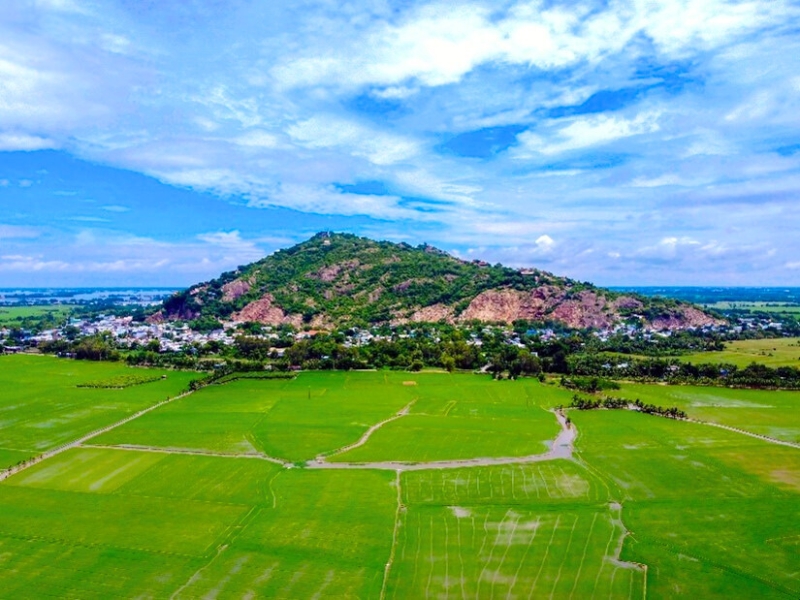
Sam Mountain
From its summit, located at 230 meters in altitude, you can enjoy a spectacular panorama of green rice paddies, canals, Chau Doc, and the Cambodian border in the distance.
You can reach the summit in two ways:
- On foot, via a 2 km path (about 45 minutes of walking, with possible stops);
- By motorbike taxi (xe ôm), a faster and more local option.
During the climb, you will encounter several small stands selling drinks, incense, and offerings, as well as splendid panoramic viewpoints. Halfway up stands the Tay An temple, recently rebuilt, which deserves a stop both for its architecture and its serenity.
Temple of the Goddess of Sam Mountain (Mieu Ba Chua Xu)
Located at the foot of Sam Mountain, the Temple of the Goddess of Sam Mountain is one of the most celebrated religious sites in the Mekong Delta. Every year, thousands of pilgrims from across Vietnam flock here to pray, make offerings, and ask for health, protection, and prosperity.

Temple of the Goddess of Sam Mountain (Mieu Ba Chua Xu)
The culminating moment takes place between the 23rd and 27th of April on the lunar calendar, during the Goddess Festival, one of the largest spiritual events of the South. This traditional festival honors Ba Chua Xu, a legendary figure venerated for having protected the population and promoted peace in the An Giang region. More than a sacred place, this temple represents a strong symbol of Vietnamese folk faith and a living testimony to the history of pioneers who settled in this southwestern land.
Cave Pagoda (Chua Hang)
Among the main spiritual sites of Sam Mountain, the cave pagoda (Chua Hang) is one of the most impressive. Perched on the mountainside, it requires moderate physical effort: you must climb about 400 steps to reach this spectacular Buddhist temple, nestled in the rock and surrounded by lush vegetation.
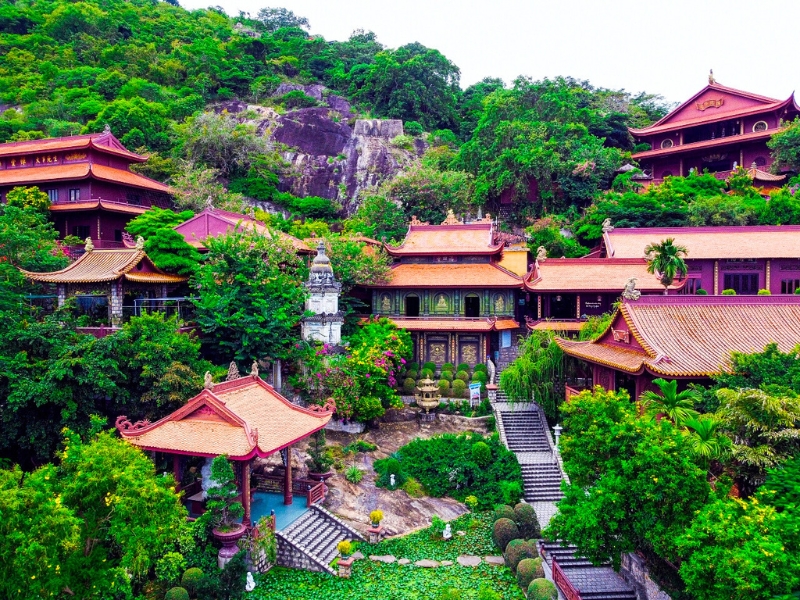
Cave Pagoda (Chua Hang)
Founded in 1926, the pagoda honors Nguyen Huu Canh, a military figure of the Nguyen Dynasty, known for asserting Vietnamese sovereignty in the South in the 17th century. The site is therefore as rich in history as it is in spirituality.
The architecture blends Vietnamese and Chinese elements, with wavy roofs, colorful lanterns, and funeral altars dedicated to the ancients. The interior of the cave, cool and solemn, emanates a peaceful atmosphere, ideal for contemplation. The climb also offers splendid views over the delta plains, especially in the late afternoon, when light softens the contours of Sam Mountain.
Archaeological Site of Oc Eo
Halfway between Chau Doc and Long Xuyen, the archaeological site of Oc Eo is a historic place of primary importance in the Mekong Delta. This vast site corresponds to the remains of an ancient flourishing port city of the Funan kingdom, a prosperous civilization that dominated the region between the 1st and 7th centuries.

Archaeological Site of Oc Eo
Excavations conducted in the 20th century have brought to light precious objects, including ceramics, tools, gold jewelry, as well as remains of canals, Hindu temples, and advanced urban structures. These discoveries testify to the commercial and cultural importance of Oc Eo, once connected to other regions of Southeast Asia.
Today, the site retains only a modest portion of the remains, as most of the artifacts have been transferred to museums in Can Tho, Ho Chi Minh City, and Hanoi. However, a visit to the site allows you to imagine the vastness of this forgotten city and to appreciate the historical depth of the An Giang region.
Market of Chau Doc
Chau Doc is renowned throughout Vietnam for its fermented fish sauces (mắm), an indispensable ingredient in Mekong Delta cuisine. If you are curious to discover this authentic aspect of local culture, the fish sauce market is a must-see stop.

Market of Chau Doc
Located at the confluence of the Tien and Hau rivers, this market is filled with jars, vessels, and bottles with intense aromas, containing a wide variety of sauces: mắm cá linh, mắm cá sặc, mắm tôm…, each with its own intensity, consistency, and culinary use. The vendors, often local artisans, will be happy to let you taste different preparations or explain the traditional recipes that accompany them. It is a lively, colorful, and typical place, perfect for bringing home a gastronomic souvenir or simply for expanding your palate toward new flavors.

The market of Chau Doc is famous throughout Vietnam for its countless varieties of Mam
What to Eat in Chau Doc?
1. Bun ca Chau Doc (Vermicelli Soup with Fish)
This emblematic dish is prepared with snake fish (cá lóc), slow-cooked in a fragrant broth with fresh turmeric, fermented shrimp paste (mắm ruốc), and lemongrass.
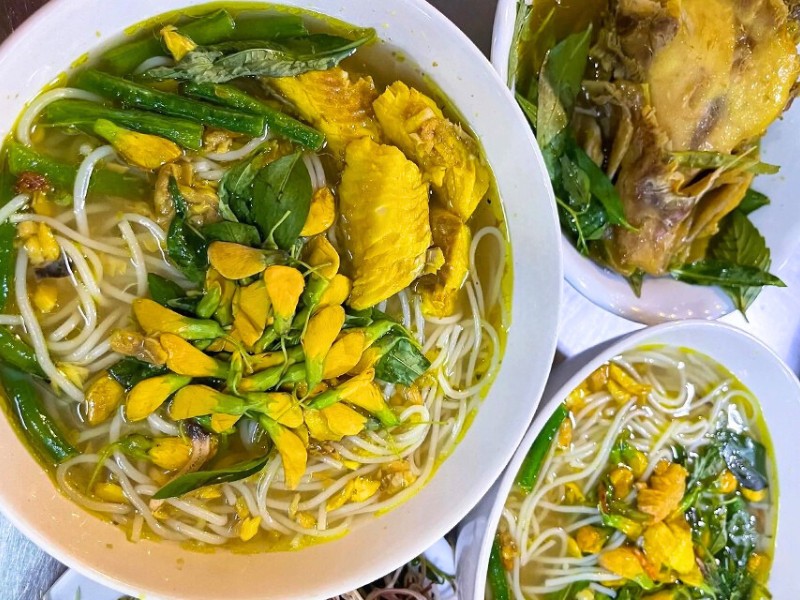
Bun ca Chau Doc (Vermicelli Soup with Fish)
Served with rice vermicelli and a wide variety of Mekong vegetables (sesbania flowers, grated banana, fresh herbs…), this soup is at once light, flavorful, and deeply rooted in local traditions.
2. Lâu Mam (Fermented Fish Fondue)
An emblematic specialty of Chau Doc, Lâu Mam is a fondue with a rich, fragrant broth based on fermented fish sauces (Mam ca linh, Mam ca sac). Seafood, pork, fish, and a variety of vegetables typical of the Mekong Delta are cooked in it.

Lâu Mam (Fermented Fish Fondue)
The taste is intense, salty, deeply umami – a memorable culinary experience to be shared around a steaming pot, accompanied by rice vermicelli and fresh herbs.
3. Ca loc nuong trui (Snake Fish Grilled Over Flame)
A typical and rustic dish of the Mekong Delta, cá lóc nướng trui is a whole snake fish grilled directly over flame, following a traditional method handed down from generation to generation. The fish is wrapped in straw or dried leaves, then slowly grilled over a wood fire, giving it juicy, tender meat with a deliciously smoky flavor.
It is served with an assortment of fresh herbs (mint, cilantro, Thai basil…), rice vermicelli, crisp vegetables (cucumber, lettuce, carrot), and rice cakes for wrapping everything together.

Ca loc nuong trui (Snake Fish Grilled Over Flame)
The essence of the dish lies in its spicy fish sauce, made from fish sauce, lime, garlic, sugar, and fresh chilies. Each bite – fish, herbs, and vegetables wrapped in a rice cake and dipped in the sauce – offers a perfect balance between freshness, smokiness, and spice.
It is a specialty not to be missed for those who want to savor true Vietnamese peasant cuisine, simple, warm, and deeply authentic.
4. Bo Bay Mon Nui Sam (Beef in 7 Courses from Sam Mountain)
Beef in 7 Courses from Sam Mountain is an emblematic culinary specialty of the Bay Nui region in An Giang Province, in southwestern Vietnam. This region, famous for its mountainous landscapes and rich cultural heritage influenced by Cham and Khmer communities, offers beef of exceptional quality thanks to traditional open-air raising. The Beef in 7 Courses banquet highlights the diversity and richness of local culinary preparations: grilled dishes, fragrant marinades, delicate carpaccios, flavorful meatballs, and stews with deep flavors.

Bo Bay Mon Nui Sam (Beef in 7 Courses from Sam Mountain)
Accompanied by rice cakes, fresh herbs, and homemade sauces, each dish offers a balance of textures and flavors, from crispy to tender. This culinary experience celebrates Vietnamese hospitality and the art of sharing meals, while revealing the richness of the gastronomic traditions of the Bay Nui highlands.
5. Xoi Xiem (Thai-Style Sticky Rice)
Inspired by Khmer and Thai culinary traditions, xôi xiêm is a dessert made with sticky rice infused with pandan, topped with a velvety cream prepared with coconut milk, eggs, palm sugar, and sometimes enriched with a subtle note of crushed durian.

Xoi Xiem (Thai-Style Sticky Rice)
Its texture is dense and melting, its flavor at once sweet, rich, and floral, making it a true popular delicacy in Chau Doc, often enjoyed at breakfast or as a substantial snack.
6. Banh bo thot not (Steamed Cakes with Palm Sugar)
These small round cakes are fluffy, slightly honeycomb-textured, and fragrant thanks to the use of pure palm sugar, an emblematic ingredient of the An Giang region. The flavor is delicately sweet, with a caramel note that evokes the earth and sun of the Mekong.
Traditionally steamed from fermented rice flour, they can be served plain or accompanied by coconut milk, grated coconut, and toasted sesame seeds for an even more indulgent touch.
7. Chuoi nep nuong (Grilled Bananas with Sticky Rice and Coconut Milk)
A true emblem of street food in the South, Chuoi nep nuong is a traditional dessert easily found in Chau Doc, in markets or street corners. It was even celebrated by CNN as one of the “best desserts in the world” for its crispy texture and irresistible aroma.

Chuoi nep nuong (Grilled Bananas with Sticky Rice and Coconut Milk)
This dessert is composed of a sweet banana (Chuoi su), marinated with a touch of sugar and salt, then wrapped in sticky rice infused with coconut milk. Everything is rolled in a banana leaf and grilled over hot coals until the rice crust turns golden and slightly crispy, while keeping the heart soft.
Enjoyed warm, drizzled with coconut cream and sprinkled with crushed roasted peanuts, it is an explosion of flavors and textures. In Chau Doc, do not miss this local sweetness: simple, generous, and deeply rooted in the culinary soul of the delta.
What to Bring Back from Chau Doc?
A trip to Chau Doc would not be complete without some typical souvenirs to take home in your suitcase. Here are some ideas for emblematic products of the region, perfect for extending your Mekong Delta experience or delighting your loved ones.
Fermented Fish Sauce (Mam)

Fermented Fish Sauce typical of Chau Doc, a culinary souvenir full of character
It is the emblematic product of Chau Doc. The city is famous throughout Vietnam for its artisanal fermented fish sauces, rich in flavor and personality. Mắm cá linh, mắm cá sặc, or mắm tôm are ideal for accompanying southern dishes. They are easily found in the local market, packaged in airtight jars suitable for transport.
Coconut Candies

Coconut Candies
Produced nearby, particularly in Ben Tre but widely sold in Chau Doc, these soft candies are flavored with durian, sesame, or pandan. Easy to transport, they are a popular sweetness to give as a gift.
Medicinal Plants and Local Teas
In the markets or at the foot of Sam Mountain, you will find dried plants and infusions made from lotus or local ginseng leaves, often used in traditional Vietnamese medicine.
Cham Handicrafts

Hand-woven Cham Scarves – Colorful traditional handicrafts to bring back from Chau Doc, reflecting the expertise of the Cham people.
During your visit to the floating Cham villages near Chau Doc, do not miss their unique handicraft creations. Hand-woven scarves, embroidered fabrics, and small traditional jewelry testify to ancient knowledge and a cultural identity deeply rooted.
Each piece, often made in a family setting, is rich in symbols and finesse, perfect to give as a gift or keep as a souvenir of an authentic journey in the heart of the Mekong.
Religious Objects or Spiritual Souvenirs
Around the emblematic places of worship in Chau Doc, such as the temple of Lady Xu or the Tay An pagoda, numerous spiritual objects are found that Vietnamese people willingly bring back for their symbolic and protective value.
Rosaries, blessed bracelets, Buddhist statuettes, fragrant incense sticks, or lucky charms: these modest souvenirs but laden with faith are at once acts of contemplation and gifts rich in meaning.
Palm Sugar
An emblematic product of An Giang, palm sugar is extracted from the nectar of palm flowers, then cooked for a long time until a golden sugar is obtained with a melting consistency, with a round, caramelized, and slightly buttery flavor.
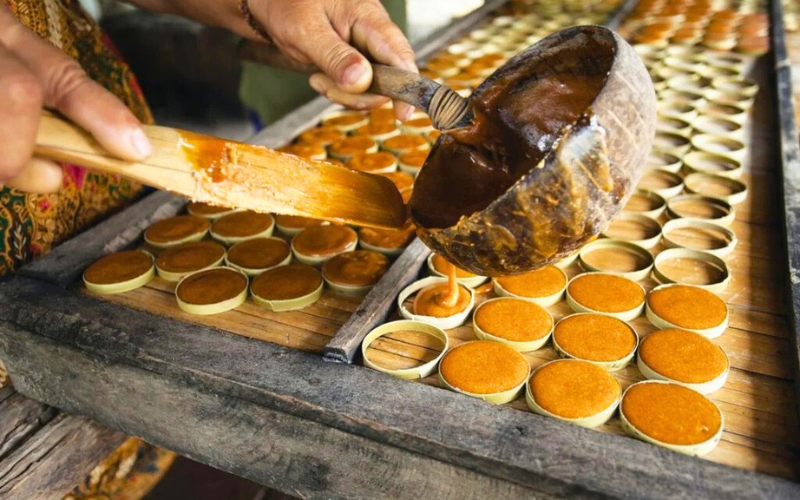
Palm Sugar
This artisanal sugar is used in numerous Vietnamese desserts, but is also enjoyed simply in infusions or pastries. Thanks to its unique aroma and traditional production method, it is an ideal gift to bring back to your loved ones.
Tung lo mo (Fermented Cham Beef Sausage)
Tung lo mo is an emblematic specialty of the Cham community living in Chau Doc. Unlike classic Vietnamese sausages often made with pork, this sausage is prepared exclusively with beef, finely minced, seasoned with local spices, and slightly fermented.

Tung lo mo (Fermented Cham Beef Sausage)
Its flavor is decisive, slightly tangy, with a compact consistency and a unique taste derived from ancestral knowledge. It can be enjoyed grilled or sautéed in a pan, and pairs perfectly with a cup of tea or a cold beer. This artisanal and culturally marked product makes an original and flavorful souvenir to give as a gift, reflecting the particular culinary identity of Chau Doc.
Practical Tips for Visiting Chau Doc Well
To fully enjoy your stay in Chau Doc, follow these simple and effective recommendations:
- Choose the dry season for travel (from December to April).
- Plan light and covering clothes.
- Protect yourself from the sun with a hat and sunscreen.
- Bring a scarf to visit temples.
- Book boat excursions in advance.
- Rent a car with a driver for more comfort.
- Visit markets in the early morning.
- Greet the inhabitants with a smile.
- Be respectful in Cham villages.
Chau Doc, in the heart of the Mekong Delta, is a destination that unfolds in slowness and authenticity. Far from the hustle and bustle of big cities, it invites you to discover a plural Vietnam, at the crossroads of Cham, Khmer, and Vietnamese cultures. Between tranquil floating villages, traditional markets full of color, venerated temples, and local specialties both flavorful and unique, every moment spent in Chau Doc is a gentle immersion in the soul of the South. It is a place where nature can be heard, people can be met, and spirituality can be felt. If you seek a cultural, human, and profoundly evocative stop in the Mekong Delta, Chau Doc is a choice both unexpected and unforgettable.



Our recommended itineraries
 Nature and Active travel
Northern Vietnam Explorer in 9 days and 8 nights
About ten days
Hanoi - Ha Long Bay - Saigon - Mekong Delta - Siem Reap - Luang Prabang - Pak Ou Caves - Kuang Si Waterfall
 Classic
Vietnam Exclusive in 13 Days
About 2 weeks
Hanoi - Bai Tu Long - Hue - Da Nang - Hoi An - Saigon - Mekong Delta