+84 9 75 46 33 10 (Whatsapp)
  info@horizon-vietnamtravel.com
  Français
  Español
  Português
  Deutsch

What to Do in Ha Giang? Discover the Wild Pearl of North Vietnam
Table of contents
Nestled at the far north of Vietnam, Ha Giang seduces travelers seeking authenticity, grand nature, and unforgettable human encounters. Spectacular karst mountains, vertiginous terraced rice fields, colorful ethnic groups, and perched villages compose a picture of raw and sincere beauty.
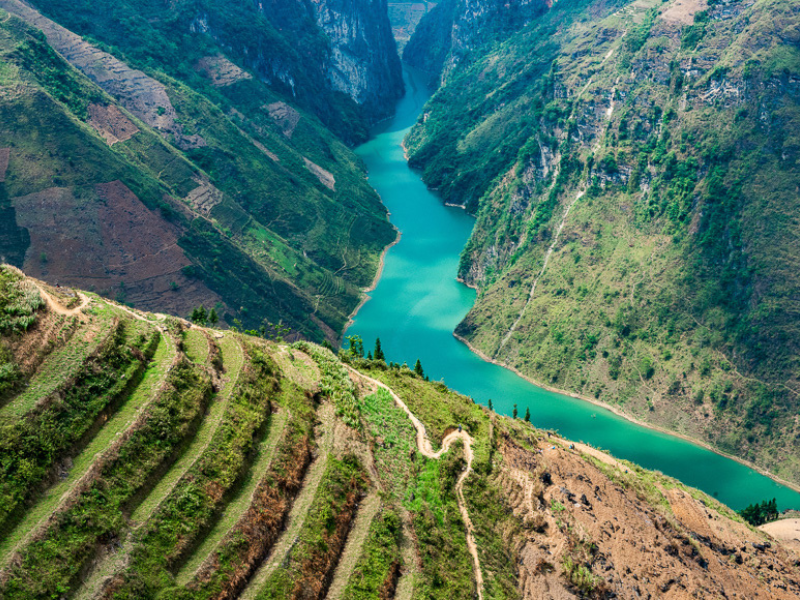
A remote region still preserved from mass tourism, Ha Giang is discovered by motorbike, car, or even on foot, at the pace of curves and smiles from locals. In this article, discover the most beautiful sites and unforgettable experiences to enjoy in Ha Giang, as well as a 3 to 4-day loop itinerary, perfect for a first exploration.
How to Visit Ha Giang?
Ha Giang is located about 300 km north of Hanoi, or 6 to 7 hours by road. Most travelers choose to arrive by overnight bus, but it is also possible to organize a private transfer for greater comfort.
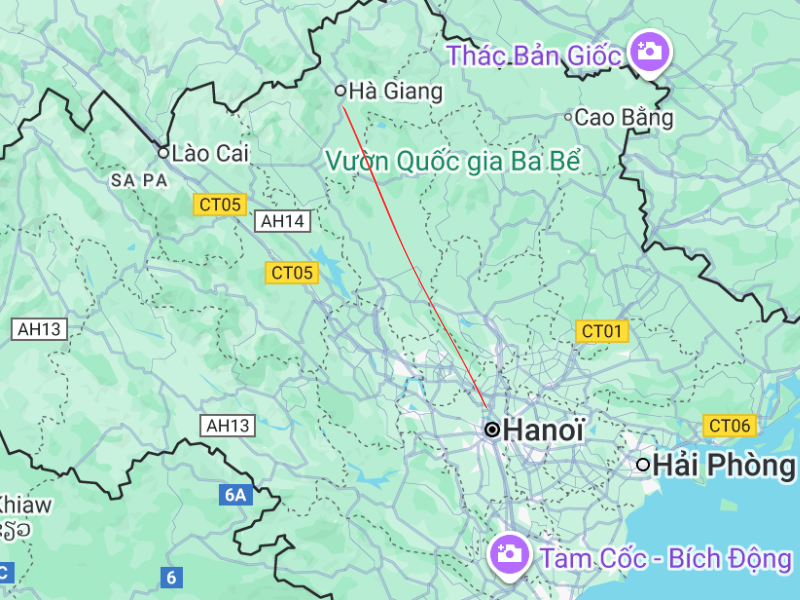
On the spot, two options are available to you:
-
Ride the Ha Giang loop by motorbike, for a free and immersive experience (have an international license or be driven by a driver).
-
Choose a private vehicle with a driver, ideal for enjoying the landscapes without effort or stress.
However you choose to explore Ha Giang, prepare yourself for an exceptional adventure through the most impressive mountains of Vietnam.
The Ha Giang Loop: 3 to 4-Day Itinerary
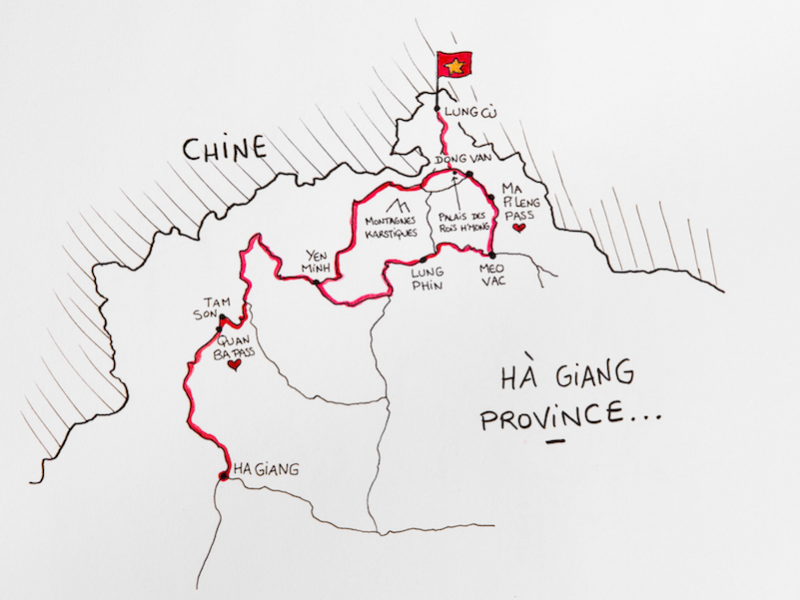
The famous “Ha Giang Loop” is one of the most beautiful circuits in the country. This mythical road crosses deep canyons, ethnic villages, and vertiginous passes offering breathtaking views.
Day 1 – Ha Giang → Quan Ba → Yen Minh
Your adventure begins in the town of Ha Giang, gateway to the province. Following road QL4C northward, the first mountain reliefs appear quickly.
>Quan Ba pass, nicknamed the “heavenly gate,” offers an exceptional viewpoint over the twin mountains of the fairy. The landscapes of rice fields and verdant valleys are sublime.
Stop in a village of the Hmong or Dao ethnicity to discover rammed earth houses and mountain lifestyle. Overnight in Yen Minh, a charming village surrounded by pine forests.
Day 2 – Yen Minh → Dong Van → Lung Cu
The road becomes increasingly spectacular as it enters the Dong Van karst plateau geopark, classified by UNESCO.
The limestone formations, deep gorges, and corn fields clinging to cliffs compose a unique scenario.
The Hmong King Palace at Sa Phin
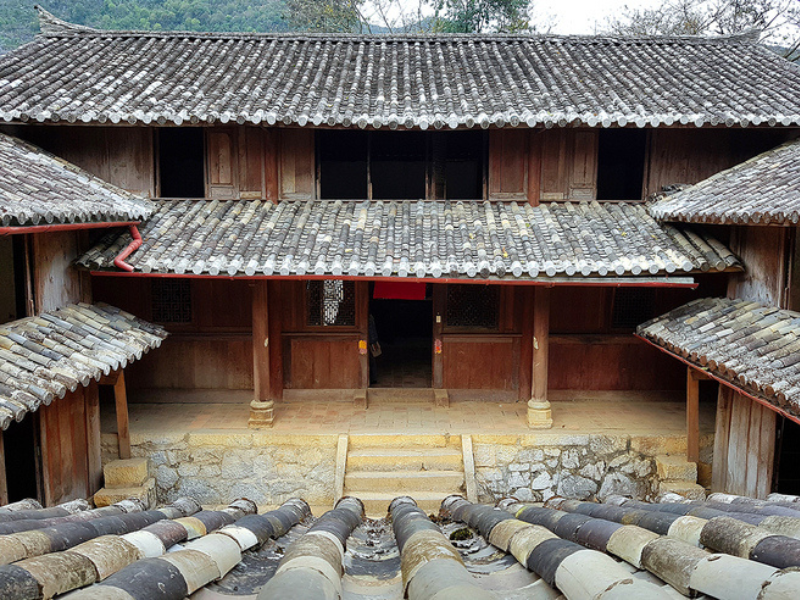
At Sa Phin, visit the palace of the Hmong King, built in the 1920s for Vuong Chinh Duc. This fascinating building blends European and Chinese influences, symbolizing the power of the Hmong leader of that time. Today transformed into a museum, it testifies to the rich cultural past of the region.
The Old Town of Dong Van
Continue to Dong Van, a historic village with a unique atmosphere. Its stone houses, colorful market, and presence of inhabitants in traditional costumes make it an unmissable stop.
Take advantage of the evening to taste some local specialties and stroll through the alleyways lit by lanterns.
The Lung Cu Flag Tower
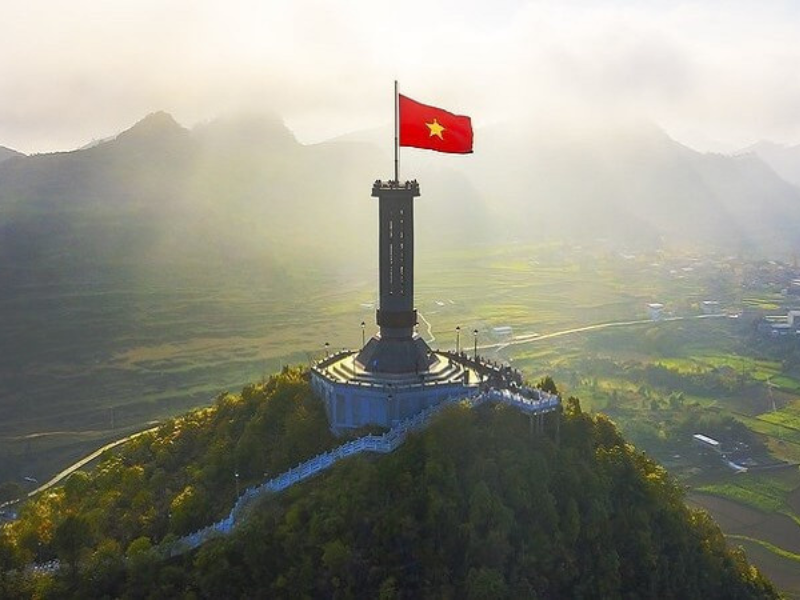
About thirty kilometers from Dong Van, do not miss the Lung Cu flag tower, the northernmost point of Vietnam. From its altitude of 1,700 m, it offers a breathtaking view over the mountains and the Chinese border. The place, nicknamed “the roof of Vietnam,” symbolizes national pride.
Day 3 – Dong Van → Ma Pi Leng → Meo Vac
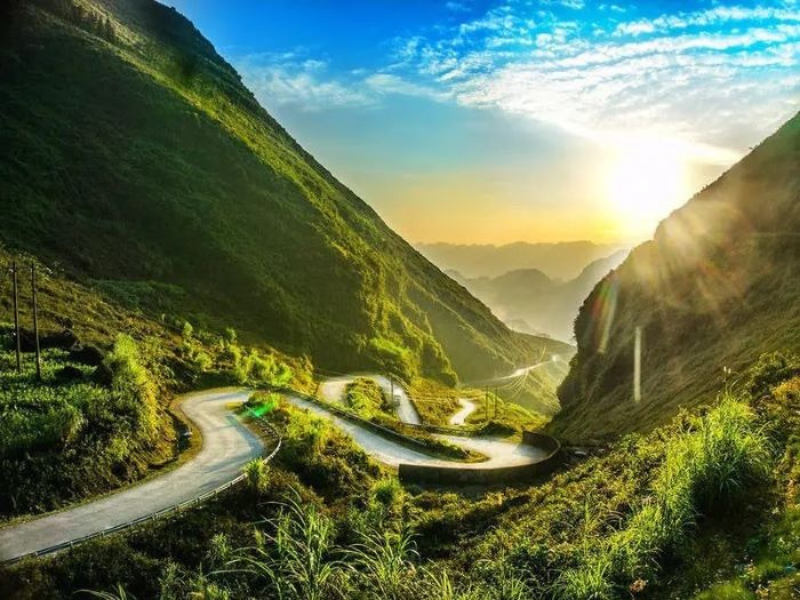
This stretch is often considered the climax of the journey. The Ma Pi Leng pass, suspended between sky and earth, dominates the Nho Que River and one of the most beautiful canyons in Asia.
Each curve reveals a new perspective on the mountains, valleys, and villages clinging to steep slopes. It is an emblematic site of North Vietnam, not to be missed under any circumstances.
Descending toward Meo Vac, take advantage of the local market if you find yourself there on a Sunday morning. You will see the Hmong, Tay, and Lo Lo ethnicities exchanging products, livestock, and textiles in a lively and authentic atmosphere.
Day 4 – Meo Vac → Yen Minh → Ha Giang
On the way back, take time to stop in the villages of Sung La and Lung Cam, known for their rammed earth houses and blooming fields. It is here that numerous scenes of the famous Vietnamese film The Story of Pao were filmed.
Return to Ha Giang in the late afternoon, your head full of unforgettable images.
Other Must-See Sites to Discover in Ha Giang
If you have more time, extend your stay to explore these hidden treasures of the province.
Hoang Su Phi and Its Terraced Rice Fields
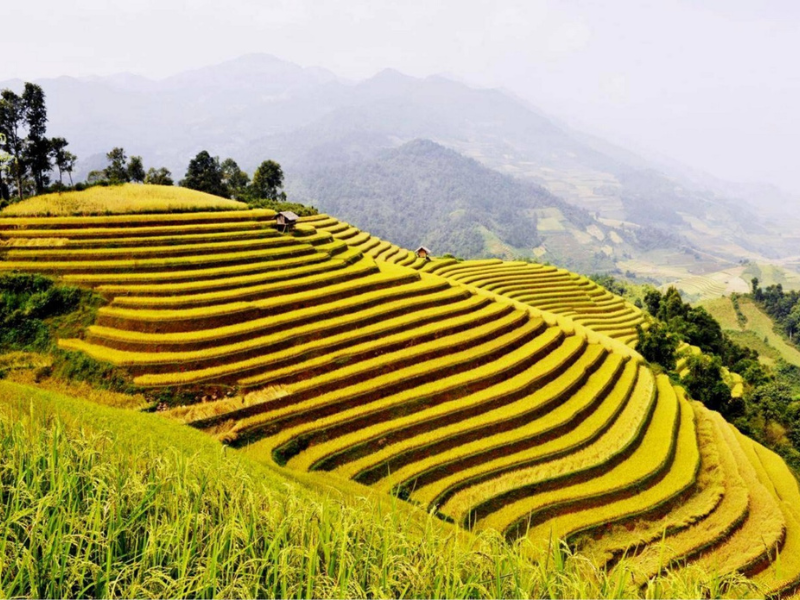
The terraced rice fields of Hoang Su Phi are among the most beautiful in Vietnam. Carved for centuries by the Dao and Nung ethnicities, they offer an extraordinary spectacle, especially between September and October, at harvest time.
The villages of Ban Phung, Ban Luoc, and Thong Nguyen are particularly renowned for their vertiginous panoramas.
Thon Tha Village and Waterfall
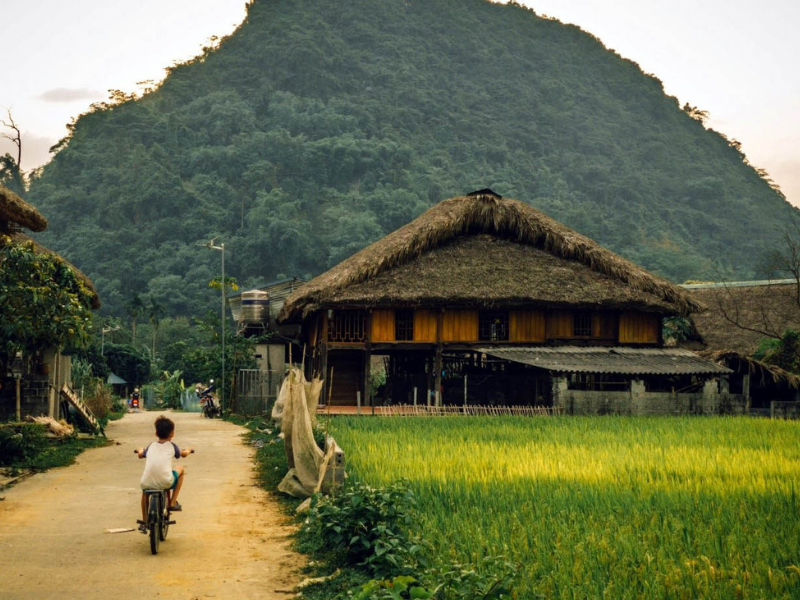
A few kilometers from the town of Ha Giang, Thon Tha is a peaceful Tay village composed of stilt houses bordered by rice fields. It is the ideal place to experience a homestay, discover local cuisine, and swim at the nearby waterfall after a walk.
Trekking to Tay Con Linh Summit
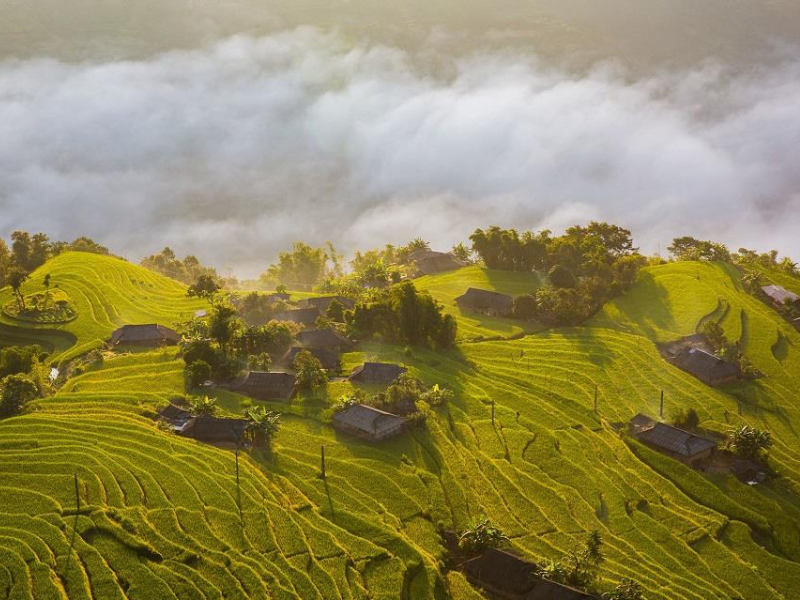
For trekking enthusiasts, climbing Mount Tay Con Linh (2,427 m) offers a sporting adventure and complete immersion in nature. From the village of Khuoi My, the trail winds through forests and remote hamlets. This hike will reveal splendid views over the surrounding mountains.
Meeting with Local Ethnicities
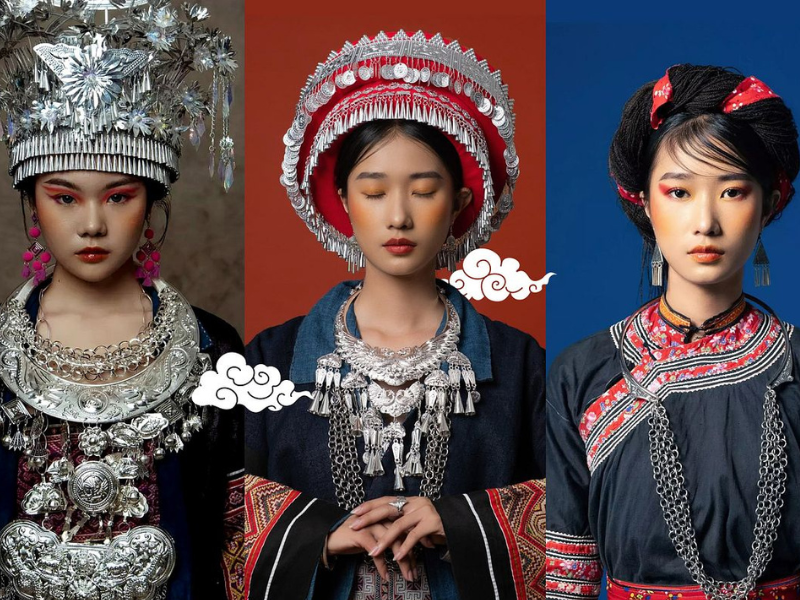
Ha Giang is home to more than 20 ethnic groups, including Hmong, Dao, Lo Lo, Tay, and Nung. Each possesses unique traditions, customs, and crafts.
The weekly markets of Dong Van, Meo Vac, or Khau Vai are excellent places to observe local life. You can witness colorful exchanges and even taste the famous mountain dish: “thang co.”
The Khau Vai Market – The Market of Love
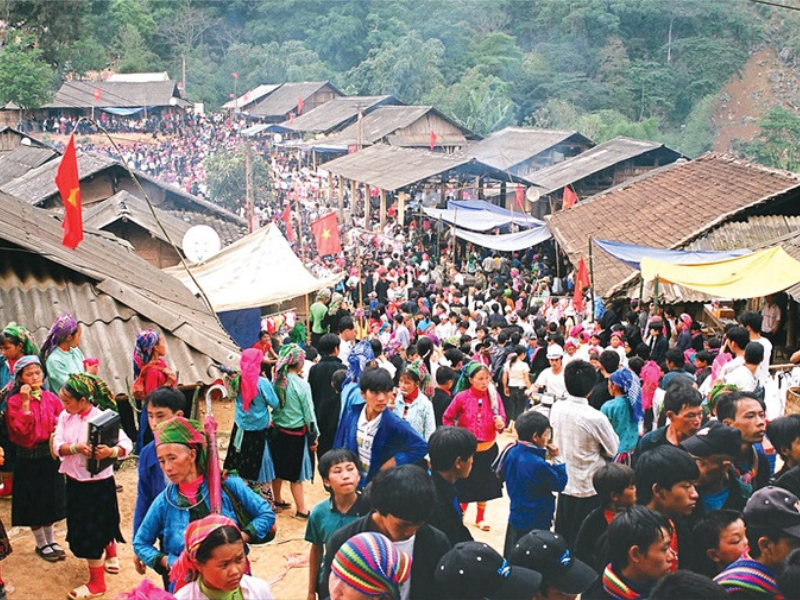
Unique in Vietnam, this market is held only once a year, on the 27th day of the third lunar month. Inhabitants go there to reunite with their old loves, exchange, sing, and dance. It is a moving celebration of the freedom of feelings and the loyalty of the heart.
Practical Tips for Visiting Ha Giang
-
Best time: from March to May (flowering spring) and from September to November (golden season of rice fields).
-
Accommodation: choose homestays (local guest houses) for an authentic experience.
-
Guide: if you rent a motorbike, make sure you have an international license. Otherwise, hire a local guide or experienced driver.
-
Climate: bring warm clothes, especially at night, as temperatures can drop at altitude.
Conclusion: Why Visit Ha Giang?
Visiting Ha Giang means going back in time and finding the Vietnam of yesterday. The Vietnam of living traditions and still-intact landscapes.
Each curve brings an emotion, each village a sincere encounter. It is an experience at once human, spiritual, and visual—an adventure you will never forget.
So, ready to set off on the roads of the wild North of Vietnam?
Ha Giang awaits you, proud and majestic, for a journey outside of time.


Our recommended itineraries
 Nature and Active travel
Northern Vietnam Explorer in 9 days and 8 nights
About ten days
Hanoi - Ha Long Bay - Saigon - Mekong Delta - Siem Reap - Luang Prabang - Pak Ou Caves - Kuang Si Waterfall
 Classic
Vietnam Exclusive in 13 Days
About 2 weeks
Hanoi - Bai Tu Long - Hue - Da Nang - Hoi An - Saigon - Mekong Delta