+84 9 75 46 33 10 (Whatsapp)
  info@horizon-vietnamtravel.com
  Français
  Español
  Português
  Deutsch

Different Modes of Transportation in Hanoi
Table of contents
If you are planning to travel to Hanoi, it is necessary to consider the various modes of transportation in this city. Since Hanoi is one of the great cultural, political and economic centers of Vietnam, there is significant population density. Over many years, this city has also become one of the most attractive destinations for tourists. Consequently, there is a variety of transportation methods available in this capital.
In this article, Horizon Vietnam Travel presents the different modes of transportation in Hanoi
Motorcycles, Cars
In every corner of Hanoi, you easily see motorcycles in different categories, different shapes, different colors. With a motorcycle, you can easily immerse yourself in the daily life of Hanoi residents, discover the hidden beauty of Hanoi’s ancient streets, venture into some small lanes where cars cannot go.
If you prefer to travel alone, the motorcycle is an ideal means of transport for getting around Hanoi more quickly, more easily. You are not dependent on driver schedules or public transport timetables. To rent a motorcycle for 1 day, rates are from 6 to 10 euros.
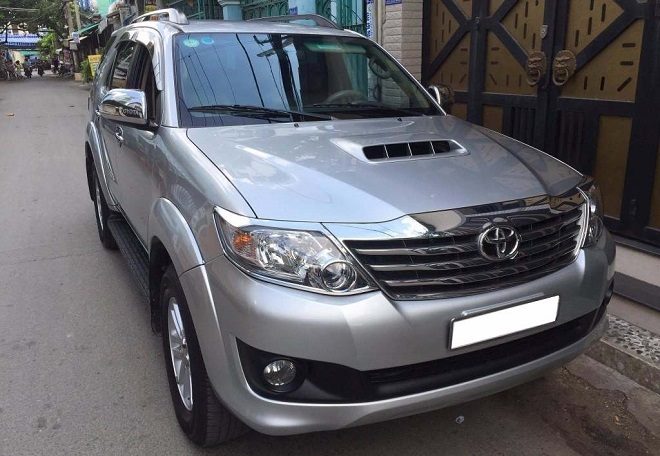
If you think driving alone in Vietnam is dangerous, you can rent a car with a driver from many agencies. Without a driver, rates are 40 to 70 euros per day. With a driver, you should plan for 80 to 100 euros per day, but it all depends on the car category and the number of kilometers you plan to travel.
Motorbike Taxi, Taxi
You can easily catch a taxi on the streets of Hanoi’s capital or request one from numerous taxi companies by phone. Although prices are indicated by the meter, it is better to ask for fares before getting in a vehicle. Taxi CP (84 43 826 2626), Hanoi Taxi (84 43 853 5353) and Mai Linh Taxi (84 43 861 6161) are among the most renowned taxi companies in Hanoi.
Taxis can also be rented by the hour, half day, full day… Then agree on a price with the driver after explaining exactly all the places you want to go – the price depends mainly on the distance.
The motorbike taxi is also a fast and practical means of transport for getting around Hanoi. You can find motorbike taxis everywhere, at every intersection, at every corner of the city. These vehicles do not have a meter, so negotiate well. In general, this costs much less than a taxi. Prices are very reasonable, you should budget around 7,000-10,000 dong per kilometer. And most drivers speak limited English, so it is preferable to write down the address of your destination. The price should be negotiable and will depend on the distance you want to travel.
In recent years, “technology taxis” (Grab, GoViet, Be) have dominated the transport services market in Vietnam. When using traditional taxis and motorbike taxis, you will have to negotiate. But with this new type, you can easily check the price of your trip. The fare for this type of taxi is very reasonable.
Cyclo-Rickshaw
The cyclo-rickshaw is considered one of the most extraordinary forms of transportation in the world by the Boredpanda newspaper. It is also particularly popular transportation in Hanoi, as it allows you to visit the city in a new way. A cyclo ride lets you contemplate the beauty of a corner of the old quarter, see life unfolding in Hanoi, immerse yourself in the daily life of residents… It should cost you about 100,000 VND per hour of travel (the cyclo drivers will take you around Hoan Kiem Lake and through some craft streets in the old quarter).
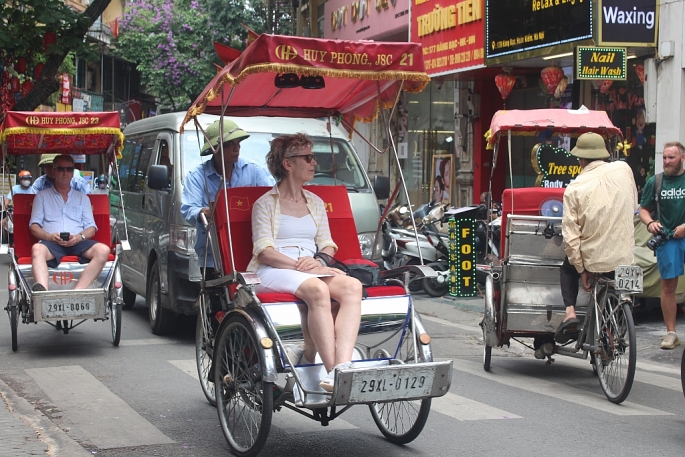
Traveling through the narrow streets of the old quarter by cyclo is one of the best options for an enriching experience during your visit to Hanoi.
Local Bus
To save the most money when traveling in Hanoi, it is best to choose public transport – the bus – to get around the city. It is the most economical means of transport, 7,000 dong per trip. There are local buses serving regular routes around the city, most of which stop near and in front of famous attractions like Hoan Kiem Lake, the old quarter, Hanoi station, Ho Chi Minh Mausoleum, the Temple of Literature…
However, you are entirely dependent on the schedules and routes of these public transports. This means is also the choice of many people, especially during rush hours, it can sometimes be uncomfortable due to the crowds using it. Additionally, you might encounter some mishaps like pickpocketing, fights on the bus. This is however rare!
Metro
Hanoi needs more means of transportation to reduce traffic congestion. A metro system of eight lines is being planned. One line connects Noi Bai Airport and stops in the expatriate quarter, Tay Ho, at West Lake, then at Hoan Kiem Lake and Hai Ba Trung, which is a real advantage for you travelers. The city has begun construction of a metro line connecting Hanoi railway station to the city center. This work is expected to be completed by the end of this year.
Train
From Hanoi (the capital of Vietnam), you can travel anywhere in Vietnam by train. The station has two entrances. Located at 120 rue Le Duan, Hoan Kiem district, Hanoi, the main gate (Station A) is generally intended for trains heading south. And conversely, Station B located on rue Tran Quy Cap, in Hoan Kiem district, Hanoi mainly sees trains heading north.
An overnight train journey from Hanoi to Hue or Da Nang leaves the capital in the evening and arrives in these cities the next morning. A morning journey allows you to contemplate the picturesque landscapes of Vietnam: rice fields, palm trees, water buffalo, villages…
The train hugs the South China Sea, winding and skirting beaches and islands, then heading through the green mountains from Hai Van Pass to reach Da Nang. The Vietnamese sun, the brilliant blue sky, crystal clear waters and golden beaches will amaze you…
Taking a train is an authentic experience you should not miss during your visit to Vietnam.