+84 9 75 46 33 10 (Whatsapp)
  info@horizon-vietnamtravel.com
  Français
  Español
  Português
  Deutsch

Map of Northern Vietnam: Discovering the Treasures of the North
Table of contents
Northern Vietnam captivates with the diversity of its landscapes, ethnic cultures, and historical richness. Among majestic mountains, golden terraced rice fields, and ancient cities, this region offers a unique travel experience.
Thanks to this map of Northern Vietnam, visualize the main destinations and let yourself be guided through the natural and cultural wonders that make the country famous.
Map of Northern Vietnam
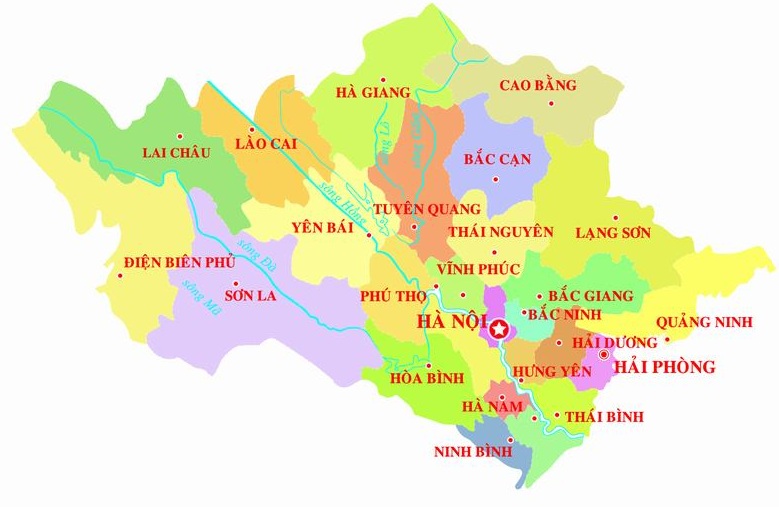
Map of Northern Vietnam
This map highlights the emblematic sites of Northern Vietnam, from the bustling capital Hanoi to the isolated mountains of Ha Giang, passing through the legendary Halong Bay. It is an excellent starting point for organizing your itinerary or customizing your circuit.
Hanoi – The Cultural Heart of Vietnam
The thousand-year-old capital of the country, Hanoi blends traditions and modernity. Its tree-lined alleys, tranquil lakes, and lively Old Quarter seduce every visitor.
Stroll around Hoan Kiêm Lake, explore the Temple of Literature or visit Ho Chi Minh’s mausoleum to understand Vietnamese history and soul.
Autumn, particularly in September and October, is an ideal time to enjoy its gentle and poetic charm.
> Discover more about Hanoi: Complete guide to discover Vietnam’s thousand-year-old capital
Sapa – Terraced Rice Fields and Ethnic Minorities
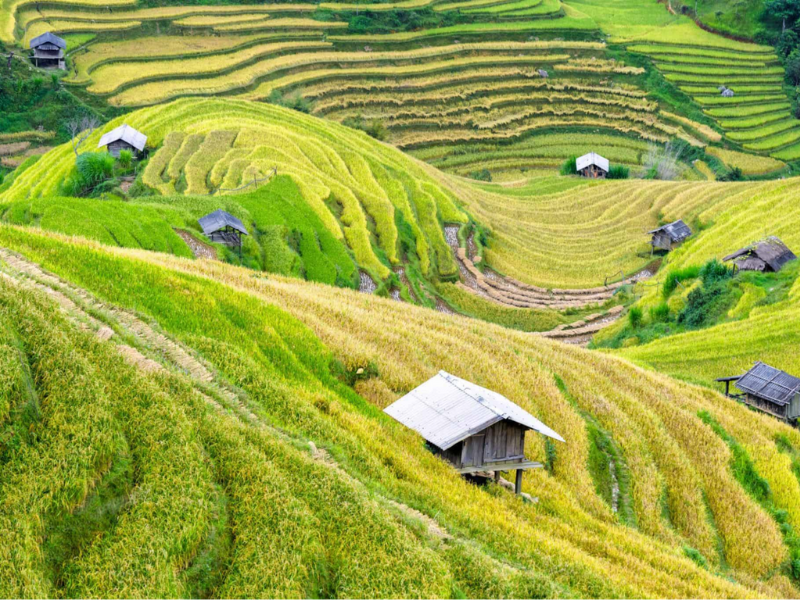
Located in the mountains of Lào Cai, Sapa is famous for its spectacular landscapes and rice fields carved into the mountainsides.
In September, the region is covered in golden hues: an unforgettable spectacle.
It is also a privileged place to meet Hmong, Dao, and Tay ethnicities, discover their traditions, and make magnificent hikes between villages.
> Sapa: what to do, what to see, and when to go? The complete guide of Northern Vietnam
Ha Giang – Wild and Authentic Vietnam
Even further north, Ha Giang is a province still preserved from mass tourism.
Its winding roads cross dizzying valleys and impressive karst landscapes.
The Ma Pi Leng pass, one of Asia’s most beautiful, offers breathtaking panoramas.
In September and October, the rice fields are at their peak and villages of local minorities welcome travelers with warmth and curiosity.
> Want to know more about Ha Giang? Discover all our articles!
Halong Bay – The Pearl of Tonkin
Classified as a UNESCO World Heritage site, Halong Bay is one of Vietnam’s jewels.
Its thousands of karst islets emerging from an emerald-colored sea create a dreamlike landscape.
A cruise on a traditional junk is the ideal way to explore its caves, hidden beaches, and floating villages.
For a more tranquil experience, opt for Lan Ha Bay or Bai Tu Long Bay, equally splendid but less crowded.
Ninh Binh – The “Terrestrial Halong Bay”
Just two hours south of Hanoi, Ninh Binh seduces with its limestone mountain landscapes and tranquil rivers winding through rice fields.
The sites of Tam Cốc and Tràng An, classified by UNESCO, offer unforgettable boat trips under caves and along cliffs.
Do not miss the Bích Động pagoda or the ancient temples of Hoa Lư, Vietnam’s former royal capital.
> What to do in Ninh Binh? Here is our top 6 of activities not to miss!
Mai Chau – Serenity and Local Immersion
Nestled in a verdant valley, Mai Chau is an oasis of peace just hours from Hanoi.
Stilt villages host the White Thai community, known for their warm hospitality.
Here, time seems suspended: discover Vietnamese rural life, traditional dances, and local cuisine.
It is an ideal stop for lovers of nature, culture, and tranquility.
> Discover our complete guide on Mai Chau!
Cao Bang – Nature and Spectacular Waterfalls
Lesser known, Cao Bang province hosts exceptional natural treasures, including the majestic Ban Gioc waterfall, Vietnam’s most impressive.
Surrounded by karst mountains and tropical forests, the region offers beautiful hikes and a peaceful atmosphere.
Also not to be missed: Thang Hen Lake and Nguom Ngao caves, true geological wonders.
> To learn more: Complete guide to visit this preserved region!
When to Visit Northern Vietnam?
The best time to visit Northern Vietnam extends from September to November and March to May.
The climate is milder. Rain less frequent and landscapes particularly spectacular. Especially during rice harvest.
In summer (June to August), temperatures rise and showers are more numerous, but the mountains remain lush and rice fields abundant.
> For more details, we recommend checking out our article: When to Travel to Vietnam?
In Conclusion
Northern Vietnam is an invitation to discovery and contemplation.
Between grand landscapes, cultural heritage, and warm hospitality, this region reveals the deep soul of the country.
Thanks to the map of Northern Vietnam, you can easily plan your itinerary.
Want to explore Northern Vietnam? Discover our customized and immersive circuits for an authentic and unforgettable experience.