+84 9 75 46 33 10 (Whatsapp)
  info@horizon-vietnamtravel.com
  Français
  Español
  Português
  Deutsch

Vietnam Identity Card: Everything to Know About This Country
Table of contents
Situated in the heart of Southeast Asia, Vietnam fascinates through its thousand-year history, spectacular landscapes, and the richness of its culture. Between modernity and traditions, this country with its elongated shape that extends from the Red River delta in the North to the Mekong in the South, hosts a mosaic of ethnicities, languages, and customs.
From its thousand-year-old capital Hanoi to the dynamic Ho Chi Minh City, Vietnam stands out for its energy, its resilience, and its legendary hospitality. Before immersing yourself in its culture, economy, or tourist strengths, discover here Vietnam’s complete identity card to better understand this fascinating country full of contrasts.
The Vietnamese Flag: Symbol of Unity and Independence
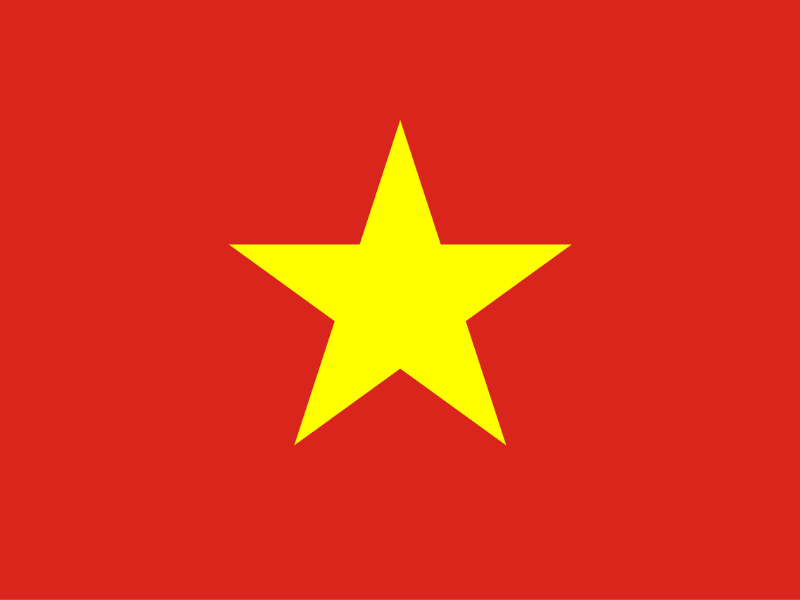
The national flag of Vietnam is one of the most recognizable emblems of Southeast Asia. It consists of a bright red background, in the center of which stands a five-pointed yellow star. This simple yet symbolically rich design tells a large part of the country’s history and values on its own.
The Meaning of Colors
-
Red symbolizes the blood shed and the sacrifices of the Vietnamese people for their independence and freedom. It also represents revolution, strength, and Vietnam’s fighting spirit.
-
The yellow star embodies the unity of the people and the solidarity of social classes—workers, peasants, soldiers, intellectuals, and youth—working together to build the nation.
History of the Flag
The current flag was officially adopted on November 30, 1955, by the Democratic Republic of Vietnam (North Vietnam), after being used for the first time by the Viet Minh during the struggle against French colonization.
At that time, it symbolized the people’s resistance and determination to regain their independence.
In 1976, after the reunification of North and South, this same flag became that of the Socialist Republic of Vietnam, now representing the country’s recovered unity.
Today, it waves proudly over the entire territory, from the mountains of the North to the beaches of the South, reminding at every moment of Vietnam’s long struggle for its sovereignty and peace.
To Know: the yellow star at the center of the flag is slightly tilted to the right, a detail intended to symbolize movement, progress, and the future.
Some Essential Figures
Population
-
In 2025, Vietnam’s population is estimated at 99.5 million inhabitants, making it the 15th most populated country in the world.
-
The average density is about 300 inhabitants/km², but exceeds 2,000 inhabitants/km² in Hanoi or Ho Chi Minh City.
-
Median age: 33 years—a still-young population, but one that is beginning to age rapidly.
-
Urbanization rate: 42%, with sustained growth in major cities.
Surface Area and Geography
-
Total surface area: 331,690 km²
-
Coastline: over 3,200 km of coasts overlooking the East Sea (South China Sea).
-
The country extends 1,650 km in length, from the mountainous North to the tropical and fertile South.
Capital and Major Cities
-
Capital: Hanoi (over 8.5 million inhabitants with its surrounding areas).
-
Largest city: Ho Chi Minh City (formerly Saigon), approximately 10.2 million inhabitants.
-
Other major cities: Da Nang, Hai Phong, Can Tho, Hue.
Economy
-
Total GDP (2024): approximately 490 billion USD, one of Southeast Asia’s most dynamic economies.
-
GDP per capita: approximately 4,800 USD (compared to only 400 USD in the early 1990s!).
-
Economic growth: +5.8% on average over the last five years.
-
Key sectors: textile industry, electronics, agriculture (rice, coffee, pepper, tropical fruits), tourism, and technology.
-
Vietnam is the world’s 2nd largest exporter of coffee and one of the main exporters of rice and cashews.
Language and Religion
-
Official language: Vietnamese (romanized since the 17th century)
-
Minority languages: Thai, Hmong, Khmer, Cham, Chinese, etc.
-
Main religions: Buddhism (over 60%), Catholicism, Caodaism, Protestantism, and animism.
Education and Society
-
Literacy rate: 97%
-
Life expectancy: 74.5 years
-
Poverty rate: 2.9% (in sharp decline over the last 20 years)
-
Currency: Dong (VND)
Political Regime and Economy
Vietnam is a socialist republic with a single party, led by the Vietnamese Communist Party (VCP).
Since the economic reforms of Doi Moi in the 1980s, the country has opened up to market economy while maintaining centralized political control.
Today, the Vietnamese economy is based on four pillars:
- state enterprises,
- the private sector,
- foreign investment,
- and family economy, which remains very active.
This opening has allowed Vietnam to become one of the most dynamic countries in Asia, supported by steady growth and rapid industrialization.
Head of State: Tô Lâm (since May 2024)
Prime Minister: Phạm Minh Chính
Main Tourist Attractions
Vietnam fascinates through its exceptional natural and cultural diversity. In 2024, Vietnam welcomed approximately 16 million international visitors.
From the mountains of the North to the beaches of the South, each region reveals a unique face of the country:
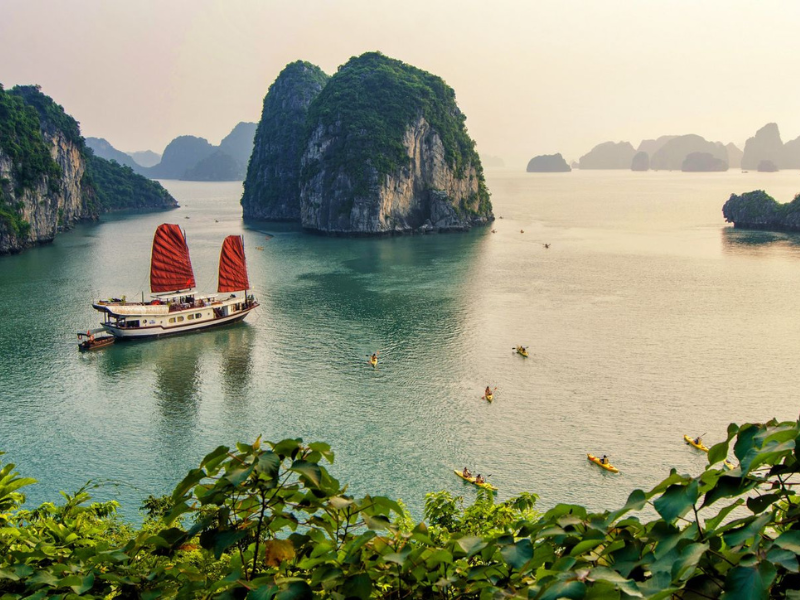
- Halong Bay, a natural gem classified twice as a UNESCO World Heritage site, elected among the 7 natural wonders of the world.
- The limestone plateaus of Dong Van, at the far North, offer spectacular landscapes.
- Hue, the ancient imperial city, preserves its royal tombs and cultural refinement.
- Hoi An, a charming ancient city with colorful lanterns, inscribed as a world heritage site.
- My Son, a sacred Hindu sanctuary, a testament to the Champa kingdom.
- Phong Nha-Ke Bang National Park, an underground paradise with giant caves.
- The Mekong Delta, realm of floating markets and water villages.
Between nature, history, and traditions, Vietnam offers a mosaic of unforgettable journeys, blending serenity, authenticity, and modernity.
Vietnam is the meeting of a people with great hearts, breathtaking landscapes, and a culture of infinite richness.