+84 9 75 46 33 10 (Whatsapp)
  info@horizon-vietnamtravel.com
  Français
  Español
  Português
  Deutsch

Vietnam’s UNESCO World Heritage Sites Recognized Worldwide
Table of contents
Introduction
Vietnam is a country rich in history and diverse culture. The Vietnamese are therefore very proud to have 22 UNESCO World Heritage Sites recognized in Vietnam.
In this article, we provide you with details about these UNESCO World Heritage Sites recognized in Vietnam. They can be natural wonders or man-made buildings. But also music or festivals, or even some sculptures!
Let’s discover together Vietnam’s UNESCO World Heritage Sites!
Natural World Heritage
1. Ha Long Bay
On December 17, 1994, Ha Long Bay was recognized by UNESCO as a natural world heritage site for its exceptional aesthetic value. For the second time, on December 2, 2000, Ha Long Bay continued to be recognized as a natural world heritage site according to geological and geomorphological value criteria.

Ha Long Bay is the most famous site among Vietnam’s UNESCO World Heritage Sites!
2. Phong Nha–Ke Bang National Park
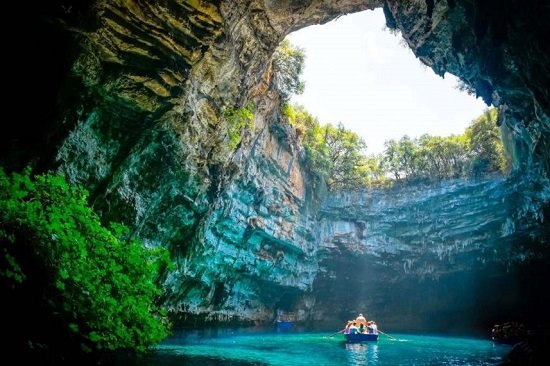
This national park is located in central Vietnam and was designated as a UNESCO natural world heritage site in 2003. The park is composed of the oldest karst mountain in Asia, which is believed to have formed over 400 million years. The karst cave hosts several cave systems and underground rivers. Besides being home to Asia’s largest cave system, the karst formations have also protected the limestone forest of the region. It is classified in the natural category for its exceptional geological values.
Cultural Heritage
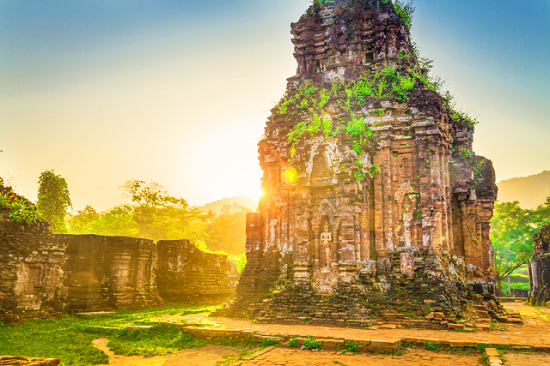
3. My Son Sanctuary
During the 23rd World Heritage Committee Conference on December 1, 1999, the Cham archaeological site of My Son was recognized as a world cultural heritage site as it represents a typical example of cultural exchange with integration into indigenous culture. External influences, particularly Hindu architectural art, vividly reflect the process of Champa cultural development in Southeast Asian cultural history.
Indeed, the My Son Sanctuary is a complex of partially ruined and abandoned Hindu temples that were constructed from the 4th to the 14th century AD. These Hindu temples were built to worship the Hindu god Shiva. The temples were constructed in a valley surrounded by two mountain ranges. It is also recognized as the oldest inhabited archaeological site in Indochina. However, most of the temples and structures in the region were destroyed during the Vietnam War.
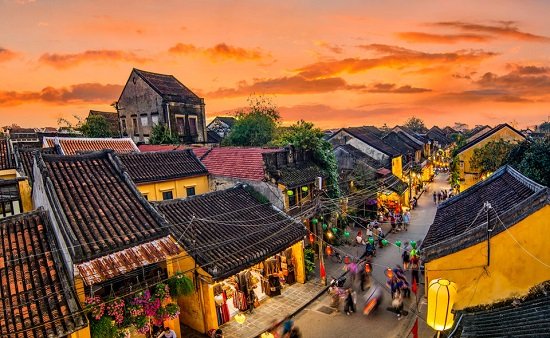
4. Hoi An Ancient Town
Among Vietnam’s UNESCO World Heritage Sites, Hoi An is a magnificent place to visit. On December 4, 1999, UNESCO recognized the ancient city of Hoi An as a world cultural heritage site based on two criteria: the exceptional heritage of the combination of cultures through the ages in a national commercial port and being a typical example of a completely preserved traditional Asian port city.
The city of Hoi An was an important commercial port from the 15th to the 19th century. But even today, you can see the remains of the port city that flourished in previous centuries. The buildings and street layout remain largely intact despite foreign invasions. At the same time, traces of the influence of foreign invaders and indigenous people are still visible, making it a unique world heritage site.
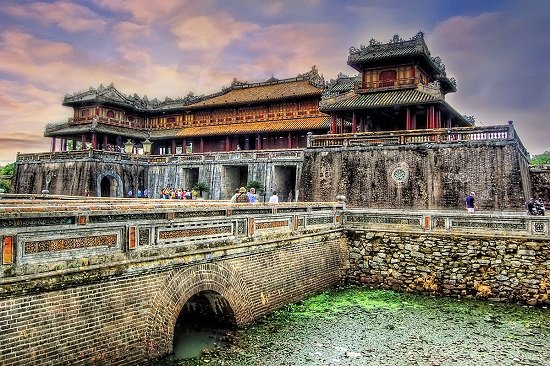
5. The Complex of Ancient Monuments in Hue
Hue was named the capital of Vietnam in the early 19th century. It served as the political, religious, and cultural center until 1945 under the Nguyen Dynasty. The monumental complexes located in the city also serve as Vietnam’s geographic center, making it easily accessible by sea. The monuments and the entire city of Hue were designed in accordance with their natural context while integrating ancient Oriental philosophy. The most majestic is the Imperial Citadel.
Why is it called a complex?
The complex of ancient monuments in Hue designates the ensemble of monuments in this city inscribed on UNESCO’s world heritage list in 1993. It mainly comprises:
- The Citadel, the outermost, intended to house administrative buildings
- The Imperial City intended to house royal palaces and pilgrimage sites
- The Forbidden Purple City to accommodate royal residences
Outside the works that constitute the ancient Imperial Capital – Citadel, Forbidden Purple City – there are also pagodas, temples, convents, and schools, but especially the remarkable funeral complexes of the Nguyen Dynasty, such as: the mausoleum of King Minh Mang, the tomb of Emperor Tu Duc, the Pagoda of the Heavenly Lady, etc.
Consequently, the 17th Conference of the World Heritage Committee on December 11, 1993, recognized the complex of ancient monuments in Hue as a world cultural heritage with the following criteria: Hue is an exceptional testimony to Vietnamese feudal power that had lost its peak in the early 19th century and is a remarkable example of an Oriental feudal capital.
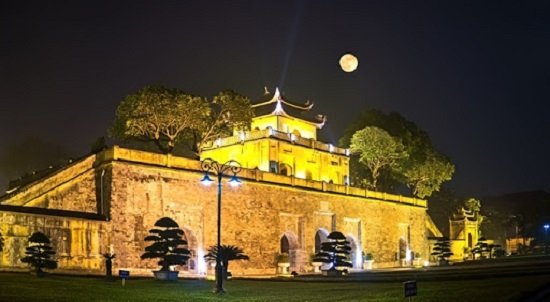
6. Central Sector of Thang Long Imperial Citadel – Hanoi
Built in the 11th century, the Thang Long Imperial Citadel in Hanoi was inscribed on the UNESCO world heritage list in Vietnam on July 31, 2010 based on the following criteria:
– Testament to influences of exchanges primarily with China to the north and with the Kingdom of Champa to the south
– Testament to the long cultural tradition of the Vietnamese people established in the Red River Delta
– Being the center of power from the 7th century until today
– Directly connected to numerous important cultural and historical events in the country
Furthermore, to this day, the Imperial Citadel and the Hoang Dieu archaeological site reflect Southeast Asian culture that evokes life in the lower Red River Valley in Hanoi.
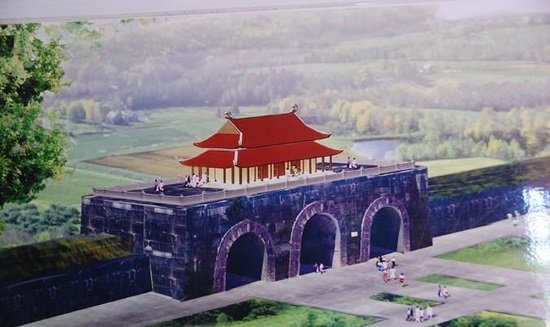
7. Ho Dynasty Citadel
The Ho Dynasty Citadel was built in the 14th century and based on feng shui principles. The Ho Dynasty Citadel is located in Thanh Hoa. It is evidence of the development of neo-Confucianism in Vietnam at that time and its diffusion to other parts of East Asia. Furthermore, the citadel represents a new style of emerging imperial city in Southeast Asia. This world heritage site comprises three elements: the inner citadel, the outer wall of La Thanh, and the Nam Giao altar.
Consequently, at the 35th Conference of the World Heritage Committee on June 27, 2011 in Paris, the Ho Dynasty Citadel was officially inscribed on the list of cultural and natural world heritage with two criteria:
– A clear manifestation of cultural interference and important exchanges of human values between Vietnam and countries of East Asia and Southeast Asia from the late 14th to the early 20th century
– A striking example of a type of imperial architecture that symbolizes imperial power typical of the Orient, and at the same time a solid and majestic military fortress
Natural and Historical Heritage
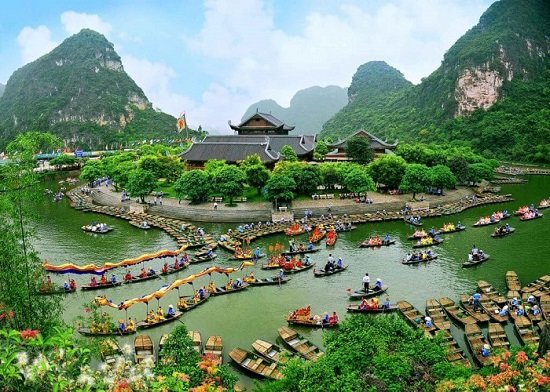
8. Trang An Landscape Complex
Located in Ninh Binh, this region is known for its picturesque landscapes and cave visits by boat. It was included on UNESCO’s world heritage site list in Vietnam in 2014 for both its cultural and natural value. It is often called “the terrestrial Ha Long Bay.” The landscape comprises numerous limestone karst peaks, valleys, and steep cliffs. The caves have been explored by scientists who have been able to discover evidence of human activity in the cultural landscape dating back 30,000 years ago. According to evidence collected, people living in the region were seasonal hunter-gatherers. There are also small villages, temples, rice fields, and pagodas in the region.
Intangible Cultural Heritage
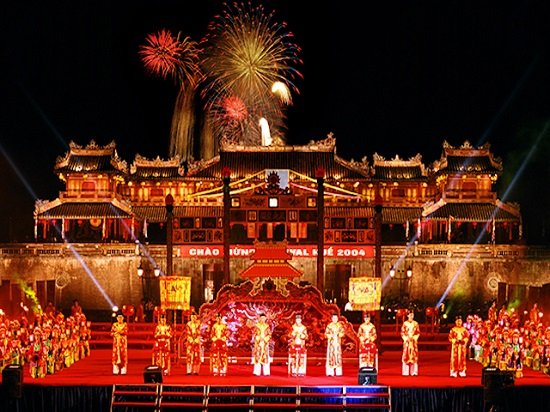
9. Nha Nhac – Royal Court Music of Hue
Among Vietnam’s UNESCO World Heritage Sites, we also find music! The royal court music of Hue is a feudal court music genre performed during festivals (coronation of the king, anniversaries, other religious celebrations) throughout the year of the Nguyen Dynasty of Vietnam. On November 7, 2003, Hue’s court music was inscribed on the list of Intangible and Oral Masterpieces of Humanity.
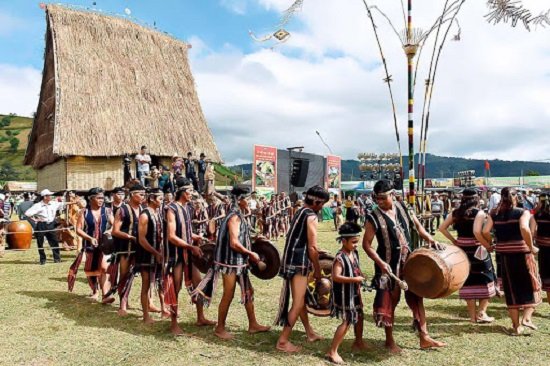
10. Gong Culture Space of Tay Nguyen
Inscribed in 2008 on the Representative List of the Intangible Cultural Heritage of Humanity (originally proclaimed in 2005), the cultural space of the gongs of the central highlands of Vietnam is closely tied to the daily life of local peoples. Their belief systems form a mystical world in which gongs produce a privileged language between men, divinities, and the supernatural world.
Behind each gong hides a god or goddess. Every family owns at least one gong, which indicates the wealth, authority, and prestige of the family. While a range of copper instruments is used in various ceremonies, the gong alone is present in all rituals of community life.
Each instrumentalist carries a different gong measuring between 25 and 80 cm in diameter. Three to twelve gongs are played by village ensembles, composed of men or women. Various arrangements and rhythms are adapted to the context of the ceremony, for example ritual buffalo sacrifice, rice blessing, or funeral rites.
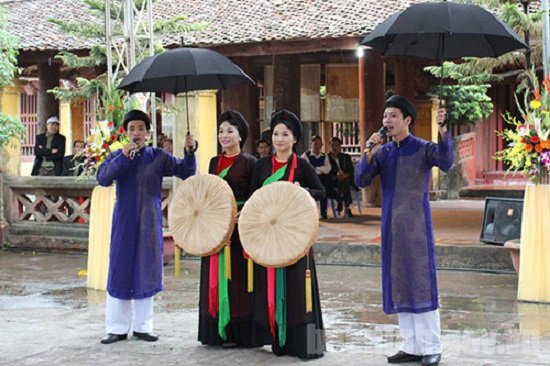
11. Quan Ho Folk Songs of Bac Ninh
On September 30, 2009, the quan ho folk song of Bac Ninh was recognized by UNESCO on the Representative List of the Intangible Cultural Heritage of Humanity. These are the “Quan Ho Bac Ninh” folk songs that are performed as alternating verses between two women from one village who sing in harmony and two men from another village who respond with similar melodies but different words. The women traditionally wear large distinctive hats and round headscarves; the men’s costumes include turbans, umbrellas, and tunics.
The lyrics of the songs express emotional states of nostalgia and sadness for separation and happiness at the meeting of lovers.
The “quan ho” song is common in rituals, festivals, competitions, and informal gatherings, where guests will perform different verses for their hosts before singing farewell.
The “quan ho” songs testify to the spirit, philosophy, and local identity of the communities in this region and help create social bonds within villages that share a common cultural practice.
12. Ca Tru (Courtisan Songs)
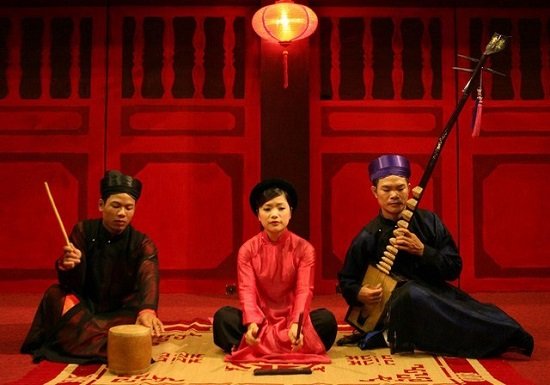
Inscribed in 2009 among Vietnam’s UNESCO World Heritage Sites, “Ca Tru” is a complex form of sung poetry widely diffused in northern Vietnam, based on texts written in traditional Vietnamese poetic forms.
Ca Tru groups comprise three performers: a singer who uses breathing techniques and vibrato to create unique ornate sounds while simultaneously playing castanets or striking a wooden box, and two instrumentalists who produce the deep sound of a three-stringed lute and the loud sounds of a praise drum.
Some Ca Tru performances also include dance. The various forms of Ca Tru serve different social functions, including worshipping song, entertainment song, song in royal palaces, and competitive song.
Ca Tru possesses 56 different musical forms or melodies, each called “the ca” (form). Folk artists transmit the music and poetry that compose the Ca Tru pieces through oral and technical transmission, in the past within their family line, but today to all those who wish to learn.
13. Giong Festival
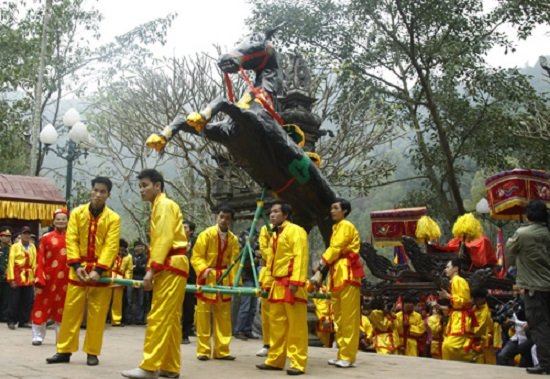
On October 1, 2019, UNESCO recognized the Giong festival as intangible cultural heritage of humanity. The Giong festival of the temples of Phu Dong and Soc is celebrated every year in the outlying quarters of Hanoi, the capital of Vietnam.
Every spring, before the rice harvest, the Vietnamese people pay homage to the hero, god, and mythical saint “Saint Giong,” who is recognized for defending the country against foreign enemies and is venerated as the god protecting the harvest, national peace, and family prosperity.
The festival at the Phu Dong temple, which takes place in the fourth lunar month in the village of his birth, symbolically recreates his feats by riding a white horse in battle and orchestrating a complex flag dance to symbolize the battle itself. Young men receive extensive training to play the roles of Flag Captain, Drum Master, Gong Master, Army Master, and Master of Children, while 28 girls aged 9 to 13 are selected to play the enemy generals. The dance movements of the flag master and the sounds of drum and gong convey the development of the battle, and paper butterflies released from the flag symbolically scatter the invaders.
The arrival of rain after the festival is considered a blessing from the saint for an abundant harvest. Celebrations at the Soc temple, where Saint Giong ascended to heaven, take place in the first lunar month and include the ritual bathing of his statue and a procession of bamboo flowers to the temple as offerings to the saint.
Learn more about festivals in Vietnam!
14. Xoan Song
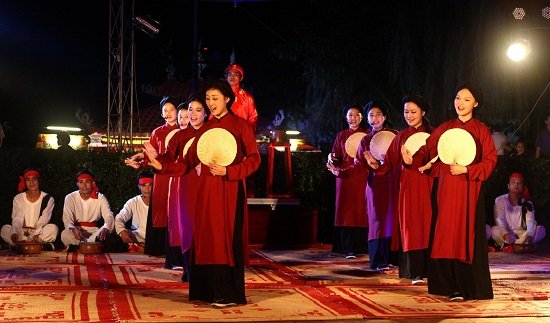
Inscribed in 2017 on the Representative List of the Intangible Cultural Heritage of Humanity, Xoan singing in the northern province of Phu Tho comprises singing, dance, drumming, and castanets.
It is closely tied to the worship of the Hung Kings, a belief rooted in the practice of ancestor worship of the Vietnamese people. The bearers and practitioners form four guilds, in which the male and female “Trum” plays the most important role: they preserve the songs, select students, transmit singing styles and repertoires, and organize practices. They are also active in introducing and teaching Xoan singing in clubs and guilds.
As a community performance art, Xoan singing promotes cultural understanding, community cohesion, and mutual respect. The Vietnamese Institute of Musicology has collected 31 Xoan songs and, thanks to the efforts of various Xoan artists, four guilds have been created. There are also thirty-three dedicated clubs and seminars are organized to deepen knowledge about Xoan. Senior Xoan artists transmit the song orally, combined with the use of written texts and audio and video recordings.
15. Worship of the Hung Kings
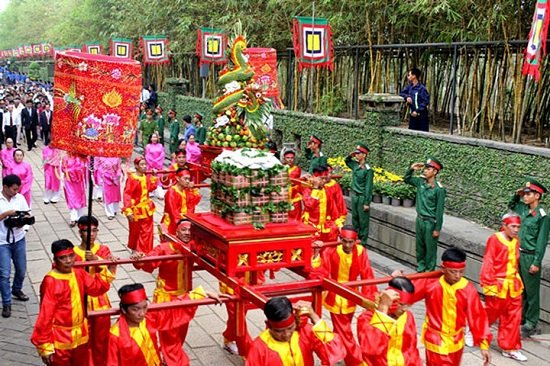
A festival is inscribed among Vietnam’s UNESCO World Heritage Sites. The worship of the Hung Kings in the northern province of Phu Tho attracts millions of people every year to commemorate their ancestors and pray for good weather, abundant harvests, good fortune, and good health.
The largest ceremony, the ancestral anniversary festival of the Hung Kings, is celebrated for approximately one week in the early third lunar month. People from surrounding villages wear splendid costumes and compete to offer the finest sedan chair and the most precious worship objects for the key ritual, during which drums and gongs are carried to the main temple site.
Communities offer rice-based dishes such as square cakes and glutinous rice cakes, and there are folk art and verbal performances, bronze drum strikes, Xoan songs, prayers, and supplications.
On December 6, 2012, the worship of the Hung Kings was inscribed on the Representative List of the Intangible Cultural Heritage of Humanity.
16. Don Ca Tai Tu
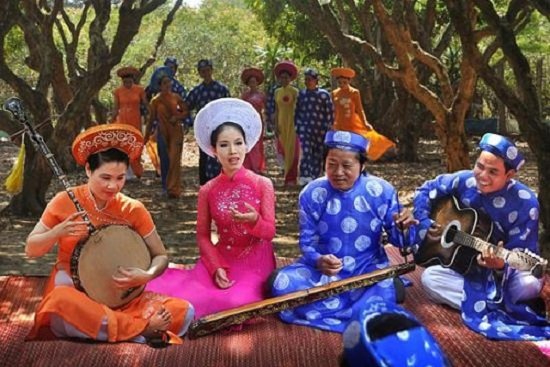
Inscribed in 2013 on the Representative List of the Intangible Cultural Heritage of Humanity, the art of music and song “Don Ca Tai Tu” is an indispensable element of the spiritual activity and cultural heritage of the populations of southern Vietnam.
The music and songs evoke the life and work of people on the lands and rivers of the Mekong Delta region. Played during numerous events such as festivals, death anniversary rituals, and celebrations, “Don Ca Tai Tu” is thus intimately linked to other cultural practices and customs, oral traditions, and craftsmanship.
The performers express their feelings by improvising, ornamenting, and varying the skeletal melody and main rhythmic motifs of these pieces. Don Ca Tai Tu is played with a variety of different instruments, including the moon-shaped lute, the two-stringed violin, the sixteen-stringed zither, the pear-shaped lute, percussion, the monochord, and the bamboo flute. Its repertoire is based on twenty principal songs and seventy-two classical songs.
The musical art is transmitted orally, based on imitation, from master instrumentalists and singers to students. Musicians must study for at least three years to learn basic instrumental techniques and master musical modes to express different atmospheres and emotions. Singing students study traditional songs and learn to improvise subtly, using various ornamental techniques.
17. Vi and Giam Folk Songs
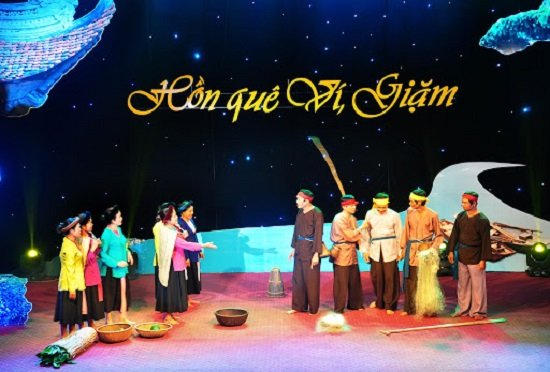
The Vi and Giam songs are sung by a wide range of communities in the central-northern provinces of Nghe An and Ha Tinh. Some songs are sung without instrumental accompaniment as people cultivate rice in the fields, row boats, make conical hats, or lull children to sleep.
Some songs are sung without instrumental accompaniment as people cultivate rice in the fields, row boats, make conical hats, or lull children to sleep.
The texts of Vi and Giam use the specific dialect and linguistic idioms of the Nghe Tinh region and practitioners sing with the particular voice of the inhabitants.
Many songs focus on key values and virtues, including respect for parents, loyalty, attentiveness and dedication, the importance of honesty and good heart in maintaining village customs and traditions.
The song offers people the opportunity to alleviate difficulties during work, to soothe pain in their lives, to express feelings between men and women.
The “Vi and Giam” folk songs were recognized as intangible cultural heritage of Humanity on November 27, 2014 by UNESCO during the 9th session of the Intergovernmental Committee for the Safeguarding of Intangible Cultural Heritage at the organization’s headquarters in Paris.
Today, Vi and Giam are commonly performed during community cultural events and are sung by artists in theaters.
Documentary Heritage
18. Wood Engravings of the Nguyen Dynasty
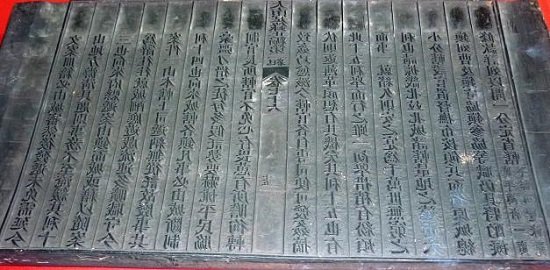
The wood engravings of the Nguyen Dynasty are Vietnam’s first documentary world heritage, recognized by UNESCO on July 31, 2009.
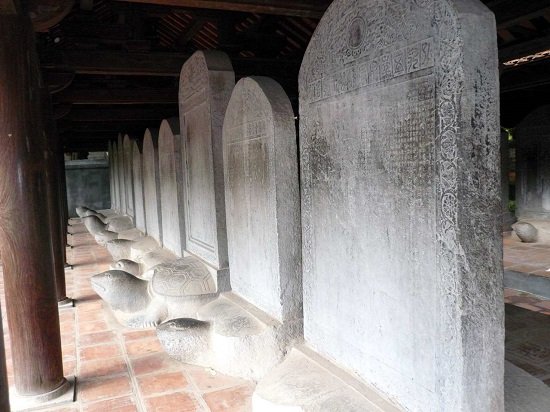
19. Stone Stelae Recording Royal Examinations of the Le and Mac Dynasties
In March 2010, 82 doctoral stelae under the Le-Mac Dynasty (1442-1779) at the Temple of Literature – Quoc Tu Giam (Hanoi) were recognized as UNESCO documentary world heritage. They are the only doctoral stelae in the world to have an inscription (epitaph) that lists not only the doctors who passed the exams nearly 300 years ago (from 1442 to 1779), but also records the history of the exams and the dynasty’s philosophy on education, training, and use of talent.
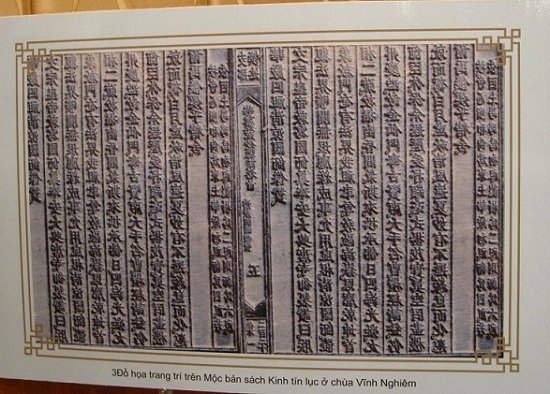
20. Wooden Tablets of Vinh Nghiem Pagoda
On May 16, 2012, the UNESCO Asia-Pacific Commission officially registered the wooden tablets of Vinh Nghiem Pagoda on the list of documentary heritage sites of World Memory in Asia-Pacific. Vinh Nghiem Pagoda currently preserves and maintains numerous sets of Buddhist Scriptures; the wooden tablets contain more than 10 books with 3,050 engravings.
21. Imperial Archives of the Nguyen Dynasty
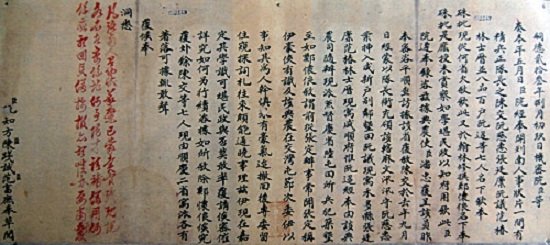
The Imperial Archives of the Nguyen Dynasty, commonly called “Chau Ban,” are now among the 78 new inscriptions on UNESCO’s international register “Memory of the World.”
The Imperial Archives of the Nguyen Dynasty are administrative archives of the Nguyen Dynasty, the last feudal dynasty of Vietnam and the region, which lasted from 1802 to 1945. The historical collection reflects all aspects of the history of Vietnamese society of that era and the external relations of the Nguyen Dynasty with other countries around the world. The Imperial Archives of the Nguyen Dynasty are an important original source for compiling the history of the Nguyen Dynasty. Furthermore, they are essentially manuscripts on “Do” paper in Chinese and in “nom” (Vietnamese written in Chinese characters). Some of those created later are in French and Vietnamese. The collection is also the only original administrative document containing the autographs of ten Nguyen emperors. The collection is now preserved at the National Archives Center No. 1 of the State Archives Department of Vietnam.
Global Geological Park
22. Dong Van Rocky Plateau
The plateau was recognized by UNESCO as one of the 77 geological parks in the world and the second in Southeast Asia after the Langkawi Geological Park in Malaysia in October 2010. Dong Van was Vietnam’s first geological park.
More than 80% of the surface is covered by limestone and presents a high concentration of rocky peaks at over 2,000 m altitude. Dong Van rock would contain fossils dating back 400-600 million years.
The park extends over the districts of Meo Vac, Dong Van, Yen Minh, and Quan Ba, covering a total area of 2,300 square kilometers. The center of the rocky plateau is the city of Dong Van, 150 kilometers from the center of Ha Giang Province.
From Noi Bai International Airport, tourists will travel national road no. 2 northward for 320 kilometers to reach the quiet city of Ha Giang on the banks of the Mien River.
The plateau is the place where tourists can experience a thrilling sensation and admire magnificent landscapes.