+84 9 75 46 33 10 (Whatsapp)
  info@horizon-vietnamtravel.com
  Français
  Español
  Português
  Deutsch

When to Visit Vietnam: Best Periods by Region and Climate
Table of contents
My thoughts. From its misty northern mountains to its tropical southern beaches, through the lantern-lit alleys of Hoi An or the unforgettable flavors of street food, the country offers a wealth of unparalleled experiences. Whether you’re passionate about nature, curious about culture, or seeking relaxation, Vietnam will answer all your desires. But to fully enjoy it, an essential question arises: when should you visit Vietnam? The climate is as varied as its landscapes: dry season or rainy season, cool temperatures in the north or tropical heat in the south… Choosing the right time is crucial to avoid climate discomfort and get the most from your trip. In this article, we guide you to know when to visit Vietnam based on regions, seasons, cultural events, and must-see activities. Thanks to our practical advice, you’ll be able to plan a tailor-made stay, at the right time and in the best conditions.
Vietnam’s Climate: A Regional Overview
Vietnam, stretching 1,650 km, benefits from a tropical and subtropical climate, with significant variations between the northern, central, and southern regions. Due to its particular geography, the country experiences distinct climatic conditions that influence the best time to visit based on your location and the activities you wish to pursue. For this reason, it’s essential to be well-informed about when to visit Vietnam so you can travel in the best possible conditions according to local weather.
Northern Vietnam
Northern Vietnam’s climate is humid subtropical, characterized by four distinct seasons, each bringing its own charm and particular climatic conditions.
Winter (November to February)
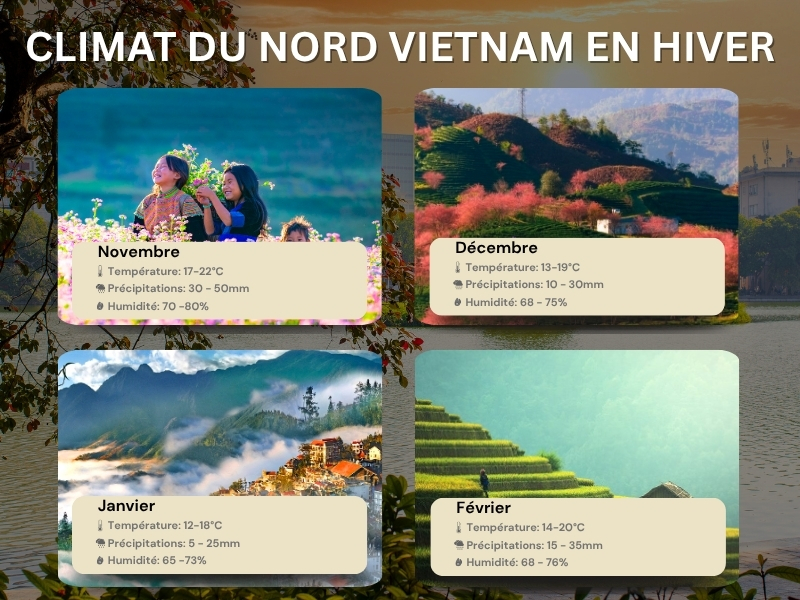
During winter, northern Vietnam experiences a cool, sometimes cold climate. In Hanoi, temperatures can drop around 10°C, and in mountainous regions like Sapa, they can be even lower. Snow is not uncommon in higher elevations. Although the weather is cool, it remains pleasant for exploring landscapes, provided you’re well-equipped.
Spring (March to May)
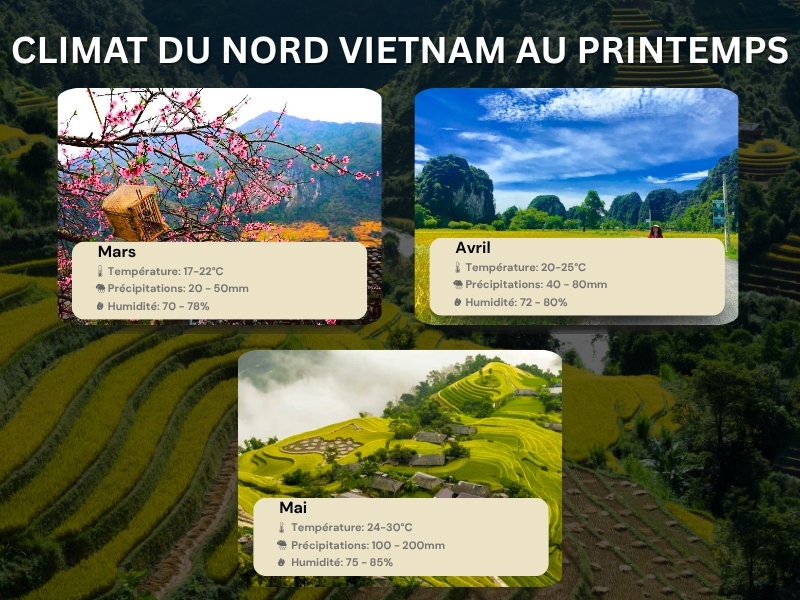
Northern Vietnam’s climate in spring
Spring is an ideal period to visit the north. Temperatures range between 18°C and 25°C, offering mild and pleasant weather. It’s also the season when nature blooms: Sapa’s terraced rice fields take on a brilliant green, and Halong Bay dresses itself in surprising colors. This period offers perfect conditions for hiking and discovering natural landscapes.
Summer (June to August)

Summer in northern Vietnam is hot and humid, with temperatures ranging from 25°C to 35°C. It’s also the monsoon season, with frequent and often torrential rains, especially late in the day. The high humidity can make outdoor visits somewhat uncomfortable. However, the vegetation is lush, and tourist sites like Halong Bay benefit from a particularly verdant atmosphere.
Autumn (September to November)
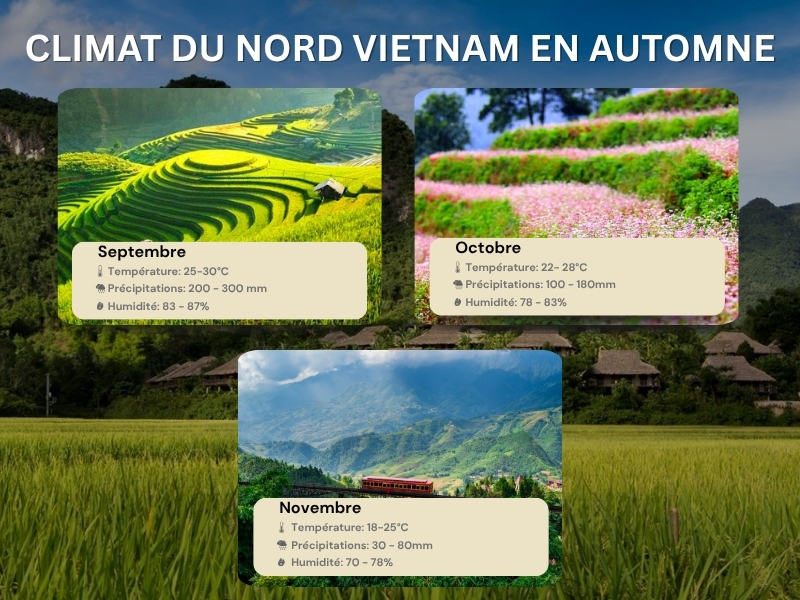
Autumn is often considered the best period to visit the north. Temperatures are moderate, ranging between 20°C and 28°C, and the weather is generally dry. The landscapes are spectacular, particularly around Halong Bay and the Sapa mountains, where rice fields are beginning to be harvested, offering breathtaking views and a peaceful atmosphere. It’s also an ideal season for hiking, with pleasant weather and magnificent landscapes.
Central Vietnam
Central Vietnam experiences a tropical monsoon climate, with a strong distinction between the dry and rainy seasons.
Dry Season (February to August)

The best time to explore the center, including Hoi An, Da Nang, and Huế. Temperatures range between 25°C and 35°C, with little rain, creating ideal conditions for cultural visits and outdoor activities. It’s also an excellent time to enjoy the beaches.
Rainy Season (September to December)
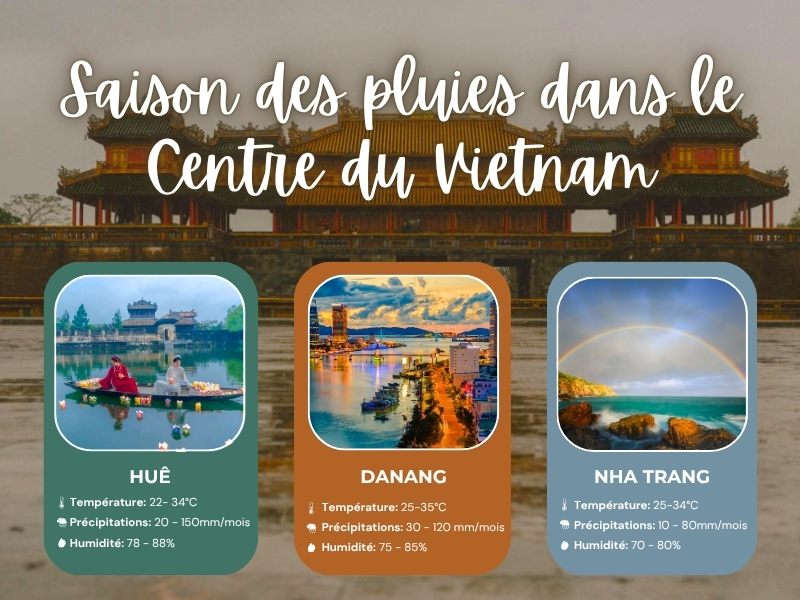
This period is marked by regular rainfall, sometimes in the form of typhoons in October and November. In Huế and Da Nang, rain can be abundant, making outdoor visits less pleasant. It’s also the season when temperatures remain high but with strong humidity, which can make the atmosphere feel oppressive.
Southern Vietnam
The south enjoys an equatorial climate, hot and humid year-round.
Dry Season (November to April)

It’s the ideal period to visit this region, with moderate temperatures between 25°C and 35°C and little rain. The dry season is perfect for enjoying Phu Quoc’s beaches, exploring the Mekong Delta, and discovering Ho Chi Minh City. The heat is intense, but the climate is pleasant for outdoor activities.
Rainy Season (May to October)
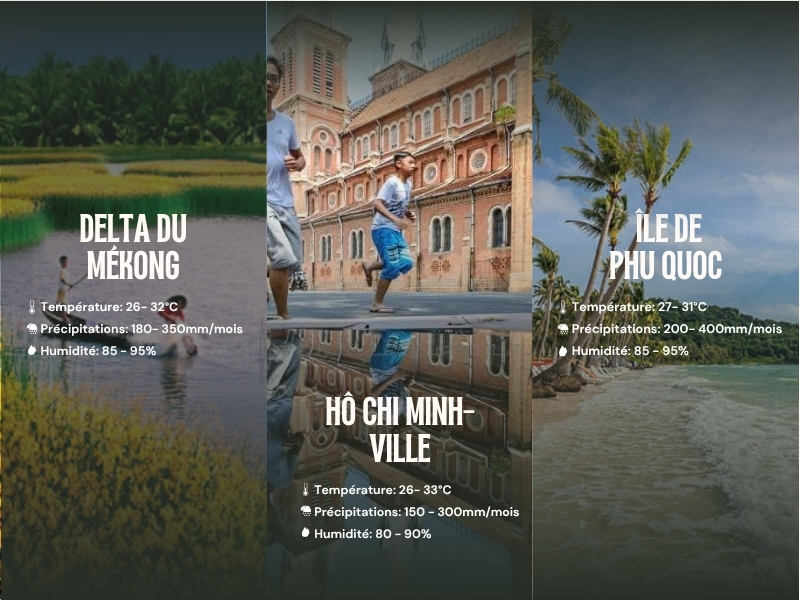
The rainy season in the south is characterized by brief but intense showers, mainly in the afternoon. Heat persists (around 30°C), but humidity is high, which can make explorations in the delta or city walks less pleasant. However, rains generally don’t last all day, and mornings remain dry and sunny.
When to Visit Each Region of Vietnam?
Since Vietnam is a vast country, each region has a unique climate, influenced by its geographic location and terrain. Here’s a detailed guide to knowing when to visit each region of Vietnam based on optimal climatic conditions.
Northern Vietnam

Halong Bay
Northern Vietnam presents great landscape diversity, ranging from spectacular mountain ranges to fertile Red River plains, including the famous Halong Bay. The climate is subtropical with four well-defined seasons, making each time of year unique in terms of travel experience.
Northern Mountain Regions (Sapa, Ha Giang, Mu Cang Chai, Bac Ha…)
The mountainous landscapes of northern Vietnam are among the country’s most spectacular. To enjoy them fully, two periods stand out as most conducive to exploration, both for the beauty of the rice fields and favorable weather.
- March to May – Verdant Spring

Verdant spring in Ha Giang
This is one of the most pleasant periods to explore the mountains. Temperatures are mild (15 to 25°C), rice fields begin their cycle, valleys are covered in tender green, and trails are dry. Peach and plum blossoms bloom in villages, creating a poetic atmosphere. Ideal for hiking, motorbike circuits, and cultural immersion with ethnic minorities.
-
September to early November – Golden Autumn

Golden rice field at Mu Cang Chai
The most spectacular season for landscapes. Rice fields reach maturity and dress themselves in golden hues, ready for harvest. The sky is often clear, the light magnificent, and the air cooler. It’s the dreamed-of period for photographers, lovers of wide open spaces, and circuits through Ha Giang or Mu Cang Chai. The conditions are also excellent for outdoor activities, without the crowds.
Red River Plains and Delta (Hanoi, Ninh Binh, Halong Bay…)
The historic and cultural cradle of the country, this region is ideal to visit when the climate is dry and temperate, with lush vegetation or landscapes bathed in golden light.
- March to May – Bright Spring
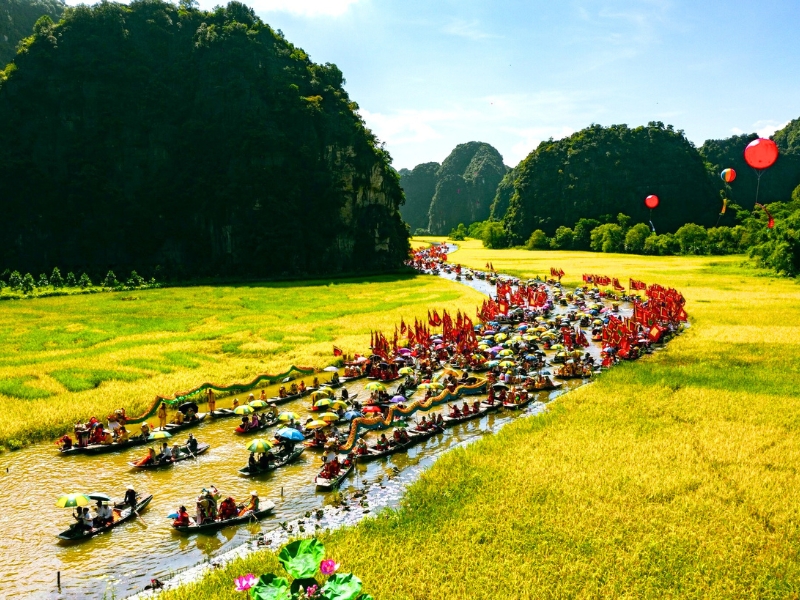
The “Tam Coc – Trang An Golden Color” festival in May
The weather is mild (20 to 28°C), rainfall rare, and trees are in bloom. Hanoi is pleasant to explore on foot, and Ninh Binh’s rice fields are beginning to turn green. It’s also a perfect time for a cruise in Halong Bay.
- October to November – Clear and Temperate Autumn

Carpet of golden leaves in Hanoi
The season offers a serene atmosphere with moderate temperatures and often clear skies. In Hanoi, leaves fall and lakes become tranquil. The light is ideal for photos, and sailing conditions in Halong Bay are excellent.
Central Vietnam (Huế, Hoi An, Da Nang,…)
Bordered by the sea and crossed by mountain ranges, Vietnam’s central region offers a rich combination of historic sites, beaches, and culturally significant landscapes classified by UNESCO. It experiences a particular climate, marked by a prolonged dry season and a brief but intense rainy season.
- February to August – Ideal and Sunny Season
The period from February to August is ideal for exploring central Vietnam, offering favorable climate conditions for both beach and cultural activities. During these months, temperatures generally range between 25°C and 35°C, with abundant sunshine and low precipitation. The beaches of Da Nang, Nha Trang, and Quy Nhon are particularly welcoming for swimming, relaxation, or water sports. Moreover, this season is conducive to discovering the region’s rich cultural heritage: strolling through the lantern-lit alleys of Hoi An, visiting Huế’s historic sites, such as the citadel and imperial tombs, in a pleasant atmosphere, without excessive heat or strong humidity. Furthermore, this period is enlivened by important cultural events, particularly the Huế Festival (held in April on even-numbered years) and Hoi An’s traditional celebrations, which enrich your travel experience.

Huế Festival
In contrast, from September to December, the region experiences a marked rainy season, with regular showers and an increased risk of typhoons, particularly in October and November. These conditions can cause localized flooding in Huế or Hoi An, making some outdoor activities difficult. However, for travelers seeking to avoid crowds and who have flexible itineraries, this period offers a unique atmosphere and more advantageous rates.
Southern Vietnam (Ho Chi Minh City, Mekong Delta, Phu Quoc, Con Dao…)

Ho Chi Minh in December
The best time to visit southern Vietnam extends from December to April, during the dry season. The climate is stable, warm (between 28°C and 35°C), and sunny, with very little precipitation. It’s the perfect moment to explore the canals of the Mekong Delta, visit Ho Chi Minh City without weather constraints, or fully enjoy the beaches of Phu Quoc and Con Dao, renowned for their calm waters and pristine beauty. The sea is clear, tropical landscapes lush, and conditions perfect for cruises, snorkeling, or simply relaxing with your feet in the sand. This period is also marked by major celebrations such as Tet (Lunar New Year), which enlivens cities and countryside with colors, flower markets, and family traditions.

Phu Quoc in its finest sunshine: from November to April, it’s the perfect time to enjoy its paradisiacal beaches!
In contrast, from May to November, the south enters its rainy season, marked by high humidity and showers that are often brief but intense, especially late in the day. Although temperatures remain high, around 30°C, conditions can be less favorable for beach stays. However, mornings are often clear, and it’s entirely possible to visit cultural sites or take morning cruises in the Mekong. It’s also a quieter period from a tourism perspective, which may suit travelers seeking tranquility or more advantageous rates, provided you plan some flexibility in outdoor activities.
Practical Advice on Vietnam’s Weather
Before you close your suitcase, some practical advice is essential. Vietnam’s climate, as rich as it is contrasting, deserves to be approached with adaptation to travel in the best conditions. Anticipating the weather well based on regions will help you organize your days better… and know when to visit Vietnam to fully enjoy every stop. Here’s what’s essential to know for managing the weather on the ground.
1. Don’t Trust Uniform Weather
The climate varies strongly from one region to another. It can be cool and misty in Sapa while it’s 35°C and dry in Ho Chi Minh City. Be sure to check forecasts for each region of your itinerary, especially if you’re traveling across the country from north to south (or vice versa).
2. The Rainy Season Is Not an Obstacle
From May to October, the south and center of the country experience their rainy season. But rest assured: it doesn’t rain all day. Showers are often brief and fall in the late afternoon. Simply adjust your schedule: sightseeing in the morning, relaxation or sheltered activities after 3–4 PM.
3. Pack Your Suitcase Intelligently
- Bring light, breathable clothing to cope with heat and humidity.
- A poncho or light raincoat is essential during the rainy season.
- For the north in winter (December to February), plan for a warm jacket, especially in mountainous regions (Sapa, Ha Giang).
- Don’t forget sunglasses, high-SPF sunscreen, and mosquito repellent.
4. Prepare for Heat… Even in Winter
Even in the so-called “cool” season, particularly in the south, temperatures often remain high (25–30°C). Light, breathable clothing is recommended year-round, except in northern winter where you’ll need to plan for warm layers.
5. Keep an Eye on the Forecast
Before each leg of your journey, check the local weather with reliable apps like Windy, AccuWeather, or Weather.com. This will help you avoid surprises, particularly in the event of typhoons (rare but possible between August and October in the center).
The question “When should you visit Vietnam?” has no single answer: it all depends on which regions you wish to explore and what experiences you’re seeking. While spring and autumn offer the most balanced conditions for traveling throughout the country, winter and summer can equally be suitable for certain specific itineraries, provided you plan them well. By understanding the climatic characteristics of each zone — mountainous north, coastal center, and tropical south — you’ll be able to organize a tailor-made trip, in harmony with the weather, tourist crowds, and your interests. Whether you’re heading for nature, culture, beaches, or local encounters, choosing well when to visit Vietnam is the first step toward a successful stay.