+84 9 75 46 33 10 (Whatsapp)
  info@horizon-vietnamtravel.com
  Français
  Español
  Português
  Deutsch

Complete Travel Guide to Quang Binh: Hidden Treasures of Vietnam
Table of contents
Nestled in the heart of central Vietnam, Quang Binh province is a land of spectacular contrasts. Known for hosting Phong Nha – Ke Bang National Park, a UNESCO World Heritage site, it reveals a fascinating underground universe with some of the world’s largest and most impressive caves, including the famous Son Doong. But Quang Binh is more than just a paradise for adventurers and speleologists: the region captivates with its wild beaches lined with golden sand, tranquil villages, and landscapes of rice paddies and karst mountains shrouded in lush greenery. Whether you are a nature enthusiast, seeking adrenaline rushes, or simply hoping to discover an authentic and preserved Vietnam, this travel guide to Quang Binh will reveal all the keys to exploring its hidden treasures.
Where is Quang Binh Located?
Located in central Vietnam, Quang Binh province belongs to the Bắc Trung Bộ (North-Central) region. It borders Hà Tĩnh to the north, Quang Tri to the south, Laos to the west, and the South China Sea to the east. Thanks to its strategic position, Quang Binh is both a gateway to the country’s central region and a crossroads connecting Vietnam to Laos through the Cha Lo pass.
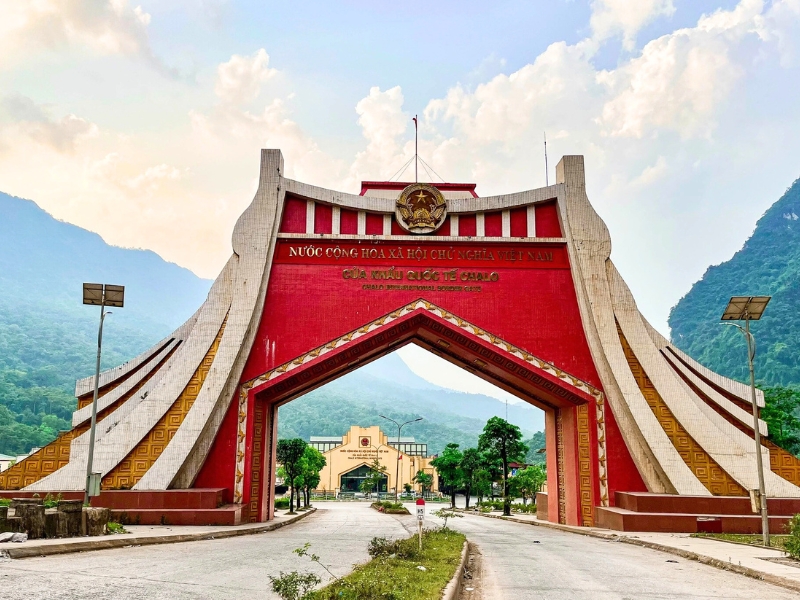
International Border Post at Cha Lo
Its capital, Dong Hoi, is a charming coastal city crossed by the Nhật Lệ River. It is often the starting point for exploring Phong Nha – Ke Bang National Park, famous for its ancient karst formations and spectacular caves.
With a coastline of over 100 km and diversified natural landscapes, Quang Binh is today one of the most promising destinations for Vietnamese tourism.
How to Reach Quang Binh?
Thanks to its central location and varied connections, reaching Quang Binh is now quite straightforward, whether you’re traveling from Hanoi, Ho Chi Minh City, or other parts of Vietnam.
By Air

Vietnam Airlines is Vietnam’s national airline
The quickest option is to take a domestic flight to Dong Hoi Airport (VDH), located just 6 km from the city center.
- From Hanoi: approximately 1 hour 15 minutes flight.
- From Ho Chi Minh City: approximately 1 hour 30 minutes flight.
- From Da Nang: approximately 1 hour flight.
Subsequently, transfers by taxi, shuttle, or private car make it easy to reach your hotel in Dong Hoi or directly to Phong Nha – Ke Bang National Park.
By Train
The North-South Reunification railway line connects Hanoi and Ho Chi Minh City to Dong Hoi station.
- From Hanoi: 9–10 hours of travel, day or night.
- From Ho Chi Minh City: approximately 20–22 hours.
It’s a comfortable option, especially in a sleeper cabin, that allows you to discover Vietnam’s coastal and rural landscapes.
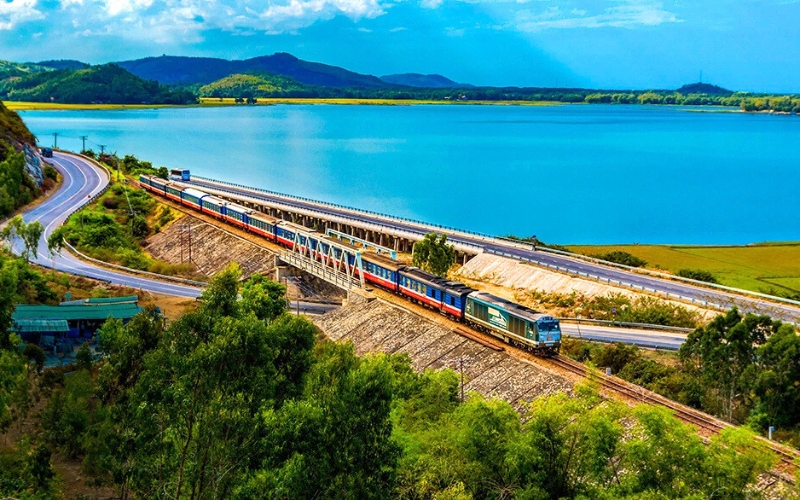
The North-South Reunification railway line, connecting Hanoi to Ho Chi Minh City, passes through Dong Hoi station
By Bus or Limousine
Numerous long-distance buses connect Quang Binh to Hanoi, Huế, Da Nang, and Ho Chi Minh City.
- From Hanoi: approximately 10 hours (often overnight).
- From Huế: approximately 4 hours.
Bus-limousines offer greater comfort, with reclining seats and sometimes Wi-Fi onboard.
By Private Car
Renting a car with a driver is a practical and flexible solution, especially if you’re traveling with family or in small groups.
- From Hanoi: approximately 9 hours of travel (500 km).
- From Huế: 3–4 hours (180 km), with the possibility of making stops along beaches or coastal villages.
If you travel with Horizon Vietnam, you’ll benefit from a private driver, an air-conditioned vehicle, and the accompaniment of a French-speaking guide. This personalized service allows you to travel with complete peace of mind, with stops organized according to your wishes to fully enjoy the landscape.
When to Visit Quang Binh?
Choosing the right time to visit Quang Binh is essential to fully enjoy its unique landscapes, from spectacular caves to wild beaches. The climate of this central Vietnam province is characterized by two major seasons.
- From March to August: the best time to travel to Quang Binh
It’s the dry season, ideal for hiking. Temperatures range from 25 to 30°C, perfect for swimming in the waters of Dong Hoi or exploring the world-famous caves of Phong Nha – Ke Bang National Park, inscribed on the UNESCO World Heritage list. The sky is clear and roads are easily passable, making this the most recommended period for a stay.
- From September to November: the rainy season in Quang Binh
Rainfall can be intense, sometimes accompanied by typhoons. Some caves or outdoor activities may be temporarily closed. This period is therefore less favorable for travelers.
- From December to February: a cooler season
With temperatures between 17 and 22°C, it’s a good time for hiking and cultural visits. However, swimming is less pleasant as the sea becomes cooler.
In summary, the best time to visit Quang Binh is between March and August, when the climate is dry and sunny, perfect for combining beach relaxation and cave exploration.
Top Attractions Not to Miss in Quang Binh
Phong Nha – Ke Bang National Park
Inscribed on the UNESCO World Heritage List, Phong Nha – Kẻ Bàng National Park is one of Vietnam’s most spectacular natural treasures. Located approximately fifty kilometers from Đồng Hới, it extends across Bố Trạch and Minh Hóa districts and hosts an impressive system of over 400 caves stretching for 220 km. The underground Chày, Son, and Troóc rivers sculpt this unique karst landscape found nowhere else in the world.
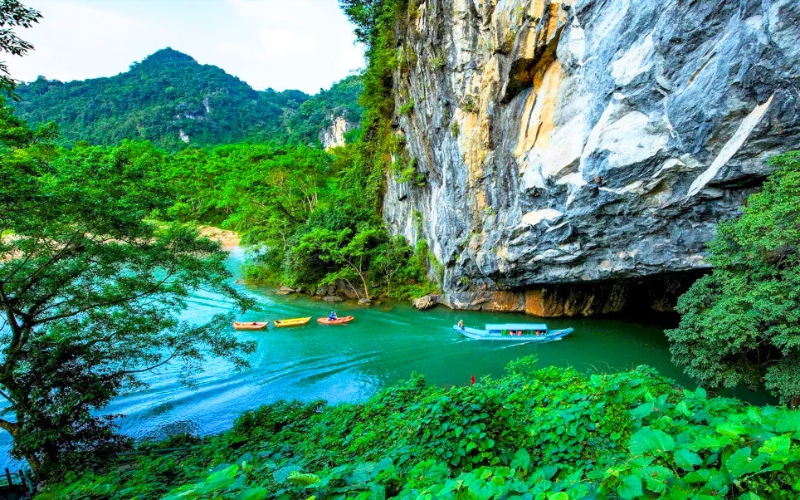
Phong Nha – Ke Bang National Park
The park is not limited to its monumental caves alone. It also hosts a botanical garden where visitors can discover the wealth of local flora and observe rare and endemic species, listed among Vietnam’s protected species. A short walk around the garden leads to Gió Waterfall and wildlife care areas, offering an immersive experience between scientific discovery and nature walks.
The Kingdom of Caves of Quang Binh
Nicknamed the “kingdom of caves,” Quang Binh province hosts hundreds of spectacular cavities, some of which hold world records. Among underground rivers, monumental stalactites, and karst landscapes, each cave offers a unique experience that combines adventure and wonder. Here are the most famous ones:
Phong Nha Cave
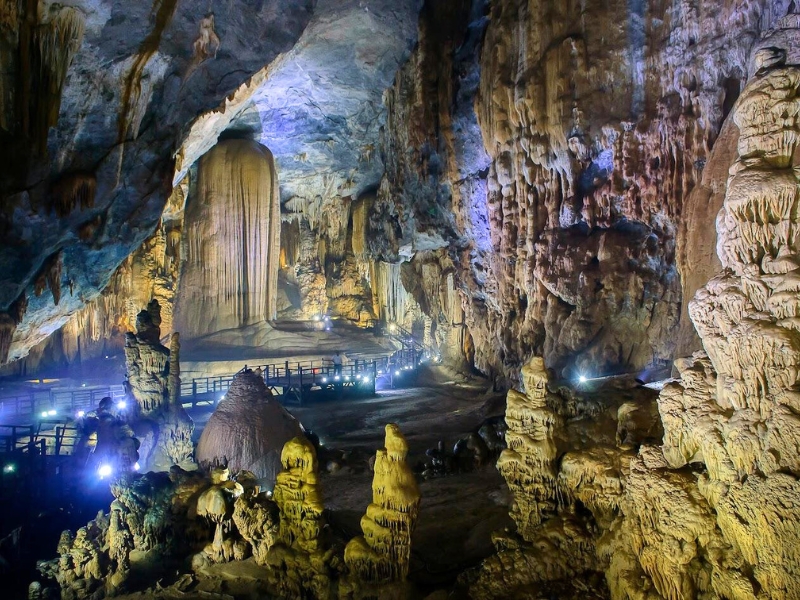
Phong Nha Cave
Hundreds of millions of years old, Phong Nha Cave is one of Vietnam’s most emblematic natural wonders. It was rated by British explorers for 7 exceptional criteria: the most beautiful underground river, a majestic entrance, scenic underground beaches and pools, a sumptuous network of stalactites, and the world’s longest underwater cave. Discovery of this site begins with a tranquil boat journey on the Son River, lasting about thirty minutes before reaching the cave’s imposing entrance.
Thiên Đường Cave (the “Paradise Cave”)
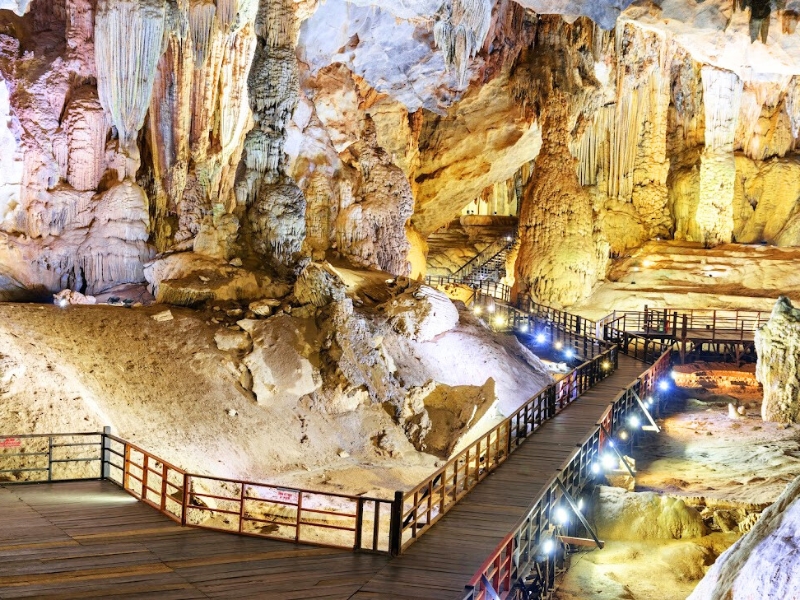
Paradise Cave
Thiên Đường Cave, nicknamed the “Paradise Cave,” is often described as a true underground palace of Vietnam. With its 31.4 km of galleries, it holds the record for Asia’s longest dry cave. To access it, visitors must climb over 500 steps before crossing the entrance and discovering a grand space. Inside opens a spectacular mineral universe: stalactites and stalagmites with fantastic shapes, sculpted by nature over millennia, create an almost surreal scenery that fully justifies its nickname.
Sơn Đoòng, the World’s Largest Cave
Recently discovered but already legendary, Sơn Đoòng Cave is a unique masterpiece of nature, formed 2 to 5 million years ago. Considered the largest natural cave on the planet, it impresses with its vertiginous dimensions: nearly 9 km in length, over 200 m in height, and a colossal volume estimated at 38.5 million cubic meters.
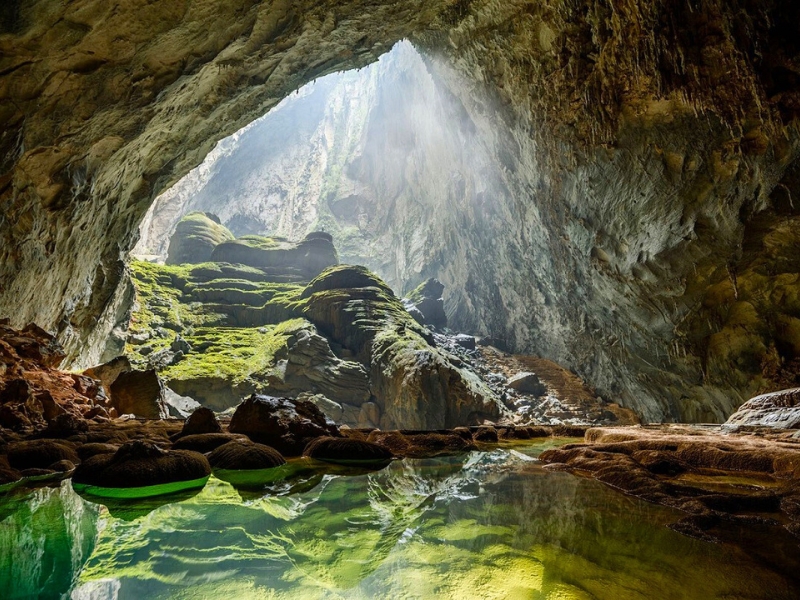
Sơn Đoòng Cave
Inside, the spectacle is breathtaking: an underground river winds through a grand mineral setting, while 14 m-high calcite columns rise like stone cathedrals. Thanks to its two immense “light wells,” the cave hosts an entire internal tropical forest, where trees and ferns grow under the sun’s rays filtering through the opening. Fossils are also found here, silent testimonies to millions of years of evolution.
Exploring Sơn Đoòng is an extraordinary adventure, possible only through guided expeditions of 5 days and 4 nights, organized between January and August. It is an extreme experience, physically demanding and strictly limited in number of participants, reserved each year for a select few.
Én Cave
Located in Phong Nha – Ke Bang National Park, Én Cave is the world’s third largest cave. Stretching 1.6 km, it stands out for a spectacular entrance 120 m high and 110 m wide, worthy of a natural cathedral. Inside, a winding stream crosses the cavity and leads directly to the mythical Sơn Đoòng, adding further magic to the place.
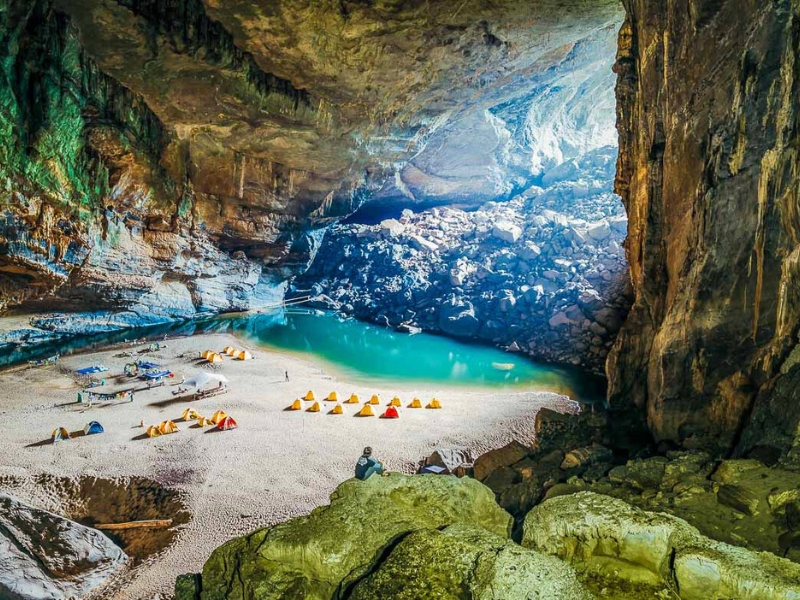
Én Cave
Its name, “Én,” comes from thousands of swallows that nest on its rocky walls every year, offering a unique spectacle of songs and graceful flights. The cave has also served as a film setting: in 2015 it appears in the film Pan, testament to its uncommon beauty.
The excursion to discover Én Cave takes 2 days. It combines jungle trekking, river crossings, and camping at a site set up in the very heart of the cave. The experience is also cultural, as it includes a meeting with the Bru – Vân Kiêu community, a highland people who still live in harmony with the surrounding nature.
Pygmy Cave
Nestled in the heart of Phong Nha – Kẻ Bàng National Park, Pygmy Cave is the fourth largest cave on the planet, discovered in 1997. Its entrance impresses with colossal dimensions: almost 100 m in height and 845 m in length. During the day, natural light penetrates deep inside, revealing a grand scenario where rock, vegetation, and an almost supernatural luminosity intertwine.
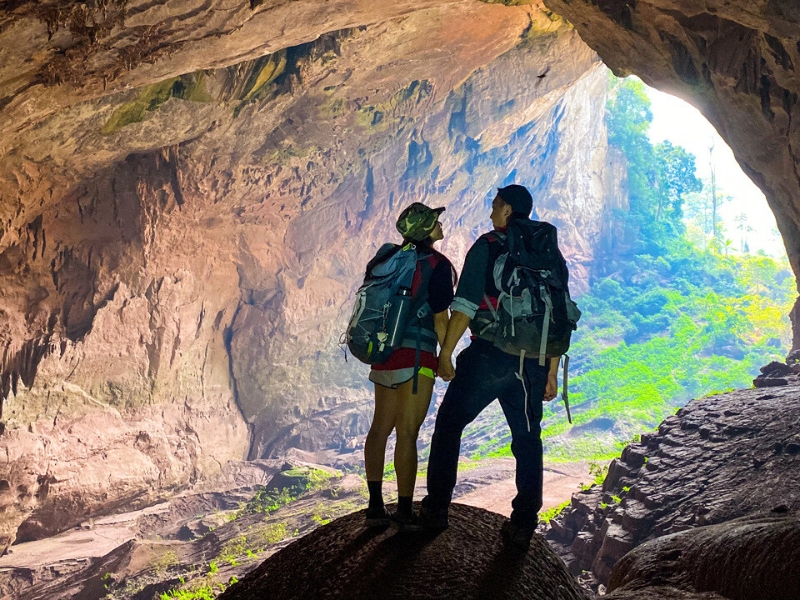
Pygmy Cave
The cave features water dripping from the ceiling, used by explorers as a drinking water source. Thanks to light wells, lush ferns grow inside, creating an almost fairy-tale atmosphere. The cave exit serves as a campsite for adventurers, an unusual place between rock and jungle.
Outside, you can still see twisted ropes of vines and bamboo left by local inhabitants, used for climbing along the walls and collecting precious natural resources like honey and swiftlet nests. Exploring Pygmy Cave means experiencing a total immersion in the wild nature of central Vietnam, at the border between adventure and cultural discovery.
Kong Collapse (Kong’s Abyss)
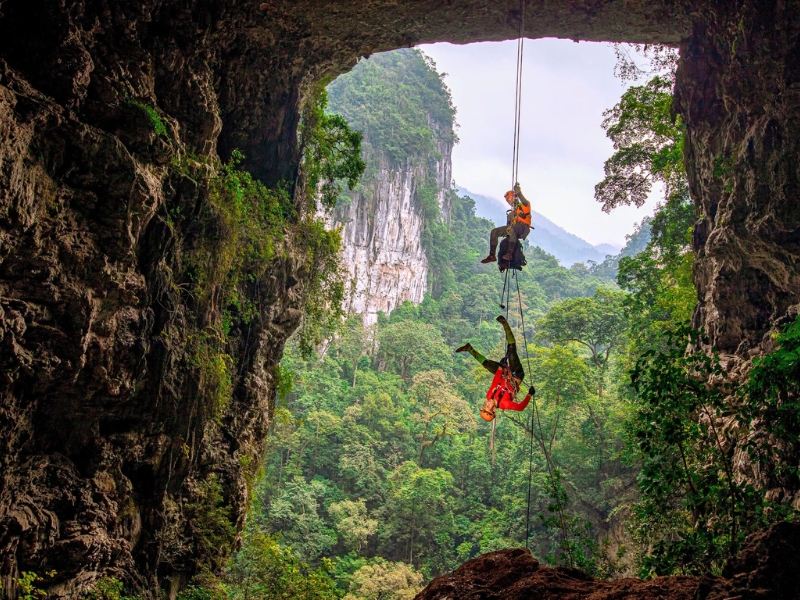
Kong Collapse, or Kong’s Abyss, is one of Quang Binh’s most spectacular natural sites, set in the heart of the Phong Nha – Ke Bang karst massif. Its singular silhouette evokes the head of a gigantic gorilla, reminiscent of the scenery from the film Kong: Skull Island shot in the region. With its 450-meter depth, it ranks among the world’s most vertiginous karst collapses.
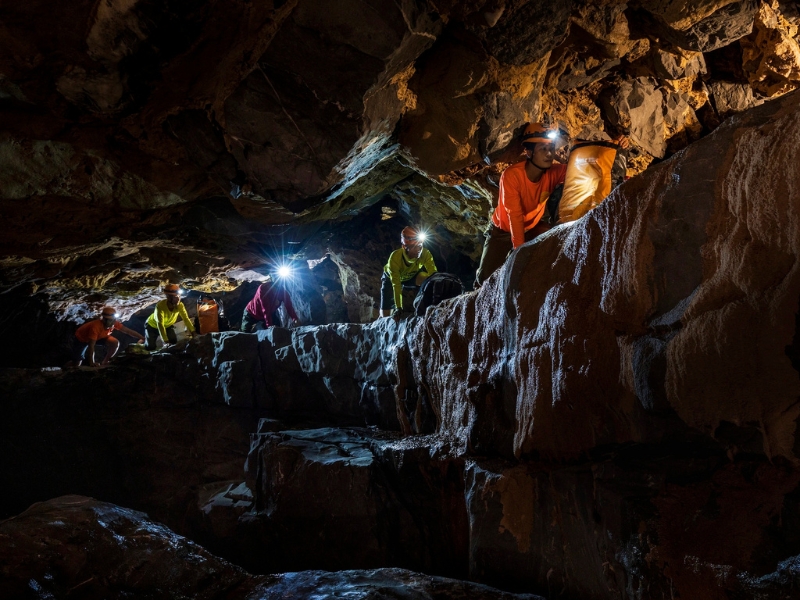
Exploring this abyss is considered Vietnam’s most extreme adventure: 100-meter double rope descent, 23-kilometer jungle trekking, 300-meter swimming in underground rivers, and 7 kilometers of exploring dark galleries. Along the way, explorers also discover Pygmy Cave, the world’s fourth largest cave, and spend an unusual night in the mysterious Over Cave. A unique and extraordinary experience, reserved for speleology enthusiasts and thrill-seekers.
Emblematic Rivers of Quang Binh
Gianh River
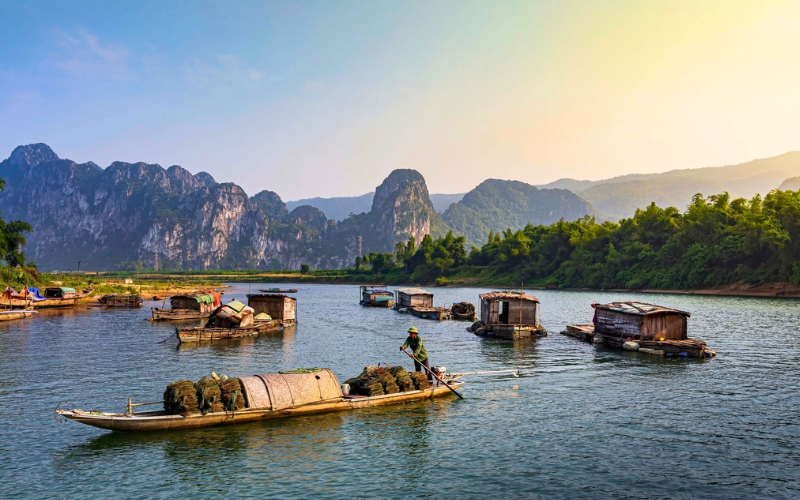
A geographic symbol of the province, the Gianh River extends for 160 km from its source on Mount Cô Pi (2,017 m), in the Trường Sơn chain, to its mouth in the Eastern Sea near Giang Harbor. It crosses the districts of Minh Hóa, Tuyên Hóa, Quảng Trạch, and Bố Trạch, playing a vital role in the lives of inhabitants for centuries. Beyond the Gianh River, Quang Binh is also home to four other river systems: the Roon, Lý Hòa, Dinh, and Nhật Lệ rivers.
Son River
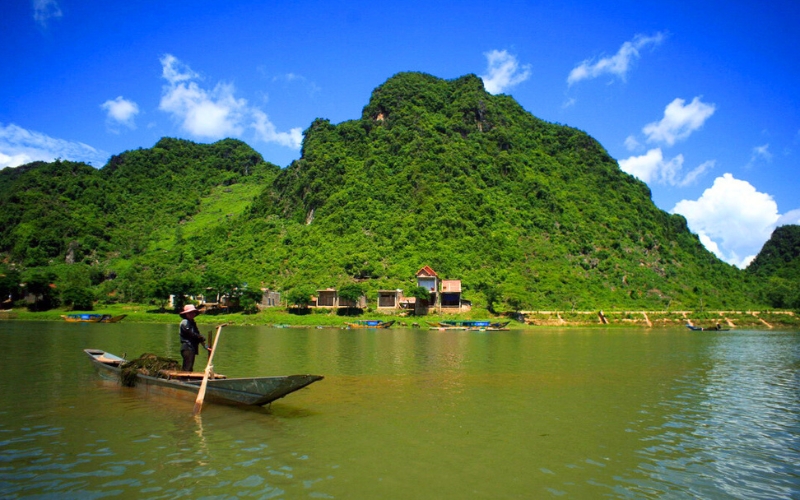
Son River
Also known as Nguồn Son, Rào Son, or Troóc, the Son River flows entirely through Quang Binh territory. Its particularity lies in a section of its upper course, stretching over 7.7 km, that flows underground through the limestone mountains of the province’s west. It reappears at the entrance to Phong Nha Cave before joining the Gianh River at Ba Đôn. Today, boat excursions allow visitors to admire its landscapes: picturesque villages, majestic mountains, and scenes of rural life.
Beaches of Quang Binh
Nhật Lệ Beach
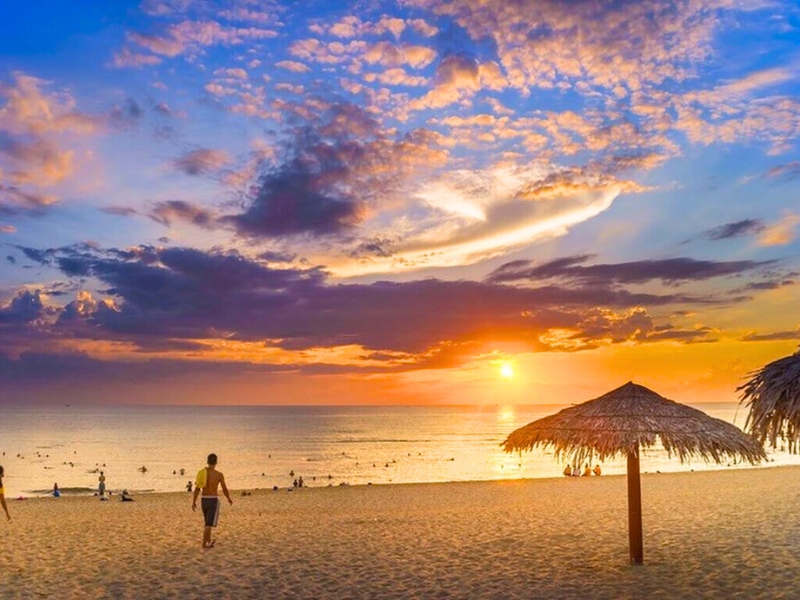
Nhật Lệ Beach
Numbered among the ten most beautiful beaches in Vietnam, Nhật Lệ stretches elegantly along Đồng Hới, just two kilometers from the city center. Its pristine white sand, crystal-clear waters, and tranquil atmosphere make it an ideal spot for swimming, relaxing, or simply enjoying a magnificent sunrise over the Eastern Sea. Various equipped beaches allow visitors to fully appreciate the beauty of this still-preserved coastline.
Bảo Ninh Peninsula
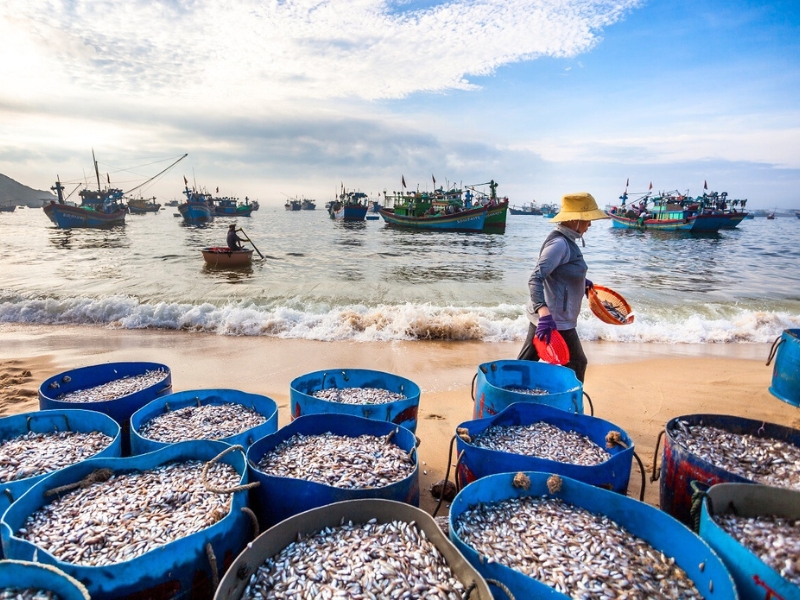
The Fishing Village of Bảo Ninh, an Ancient Village Located on the Bảo Ninh Peninsula
Situated east of Đồng Hới, Bảo Ninh Peninsula offers a unique environment, between sea and river. Its long stretches of fine sand, still wild, invite swimming and outdoor walks. More than just a relaxation spot, Bảo Ninh is also a space for activities: volleyball, football, kite flying, surfing, or parasailing enliven the beach. But the peninsula also captivates with its cultural heritage: the remains of ancient fortifications, the temple dedicated to the Ca Ong sea spirit, the Truong Sa fortification, the Sa Chuy military post, and the monument to Me Suot, a local heroine, all recall the peninsula’s rich maritime and cultural history.
What to Eat in Quang Binh?
Seafood
Thanks to its long coastline and active fishing villages, Quang Binh is one of Vietnam’s best destinations for enjoying fresh seafood. Here the sea offers daily abundance of shrimp, crabs, shellfish, and fish, prepared according to unique local recipes and offered at very accessible prices.
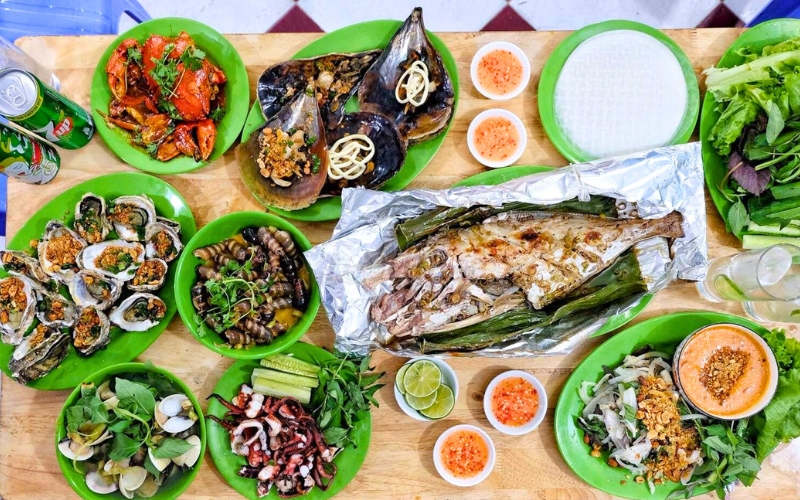
Fresh Quang Binh Seafood, Caught That Day and Ready to Be Enjoyed in an Authentic Atmosphere
Among the main specialties are lau ca khoai, a delicate fish fondue with tangy flavors, goi ca, salad of raw fish marinated in lemon and then wrapped in a rice paper sheet with herbs and vegetables, and ram den, crispy fried rolls made with sea eel. More curious gourmands can also taste mam lep, an intensely flavored fermented fish paste, expressing the local culinary tradition.
Cháo Canh (Thick Noodle Soup)
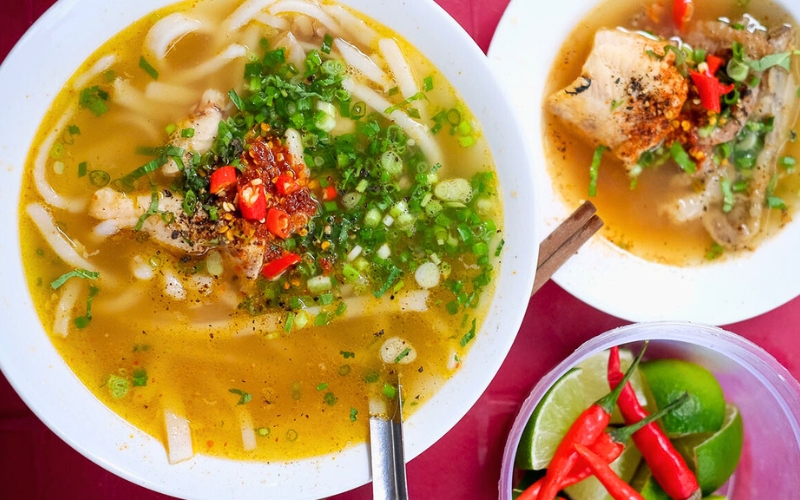
Cháo canh (Thick Noodle Soup)
An essential specialty of Quang Binh, chao canh is not really a porridge as the name might suggest, but a soup of thick and soft noodles. Served in a clear, slightly sweet, fragrant broth, it comes with pork, fish, or shrimp depending on the recipes. Rich and comforting, this simple and generous dish is particularly enjoyed at breakfast or lunch.
Lâu ca khoai (Bombay Duck Fish Fondue)
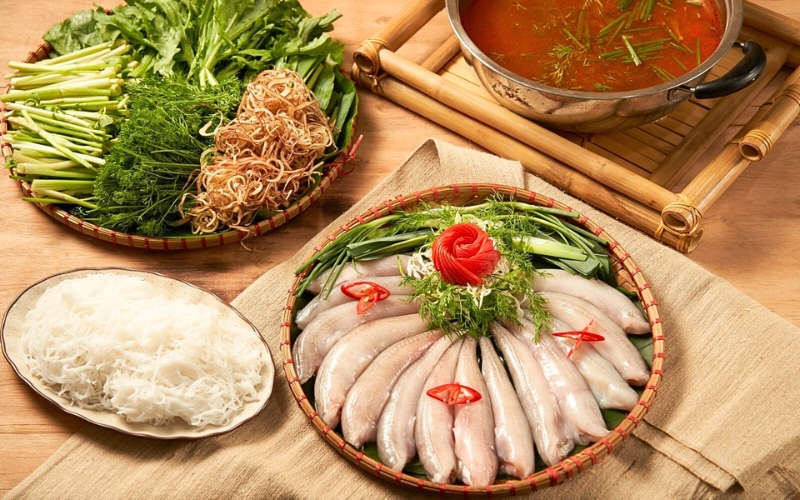
Lâu ca khoai (Bombay Duck Fish Fondue)
A highly appreciated seasonal dish in Quang Binh, lau ca khoai is available only from October to February. The “ca khoai,” a fish with tender and melting flesh (often compared to Bombay duck), is braised in a sweet and sour broth enriched with seasonal vegetables. The result is a convivial, fragrant, and comforting fondue, ideal for warming up during cooler evenings.
Gà nướng muối chéo (Grilled Chicken with Cheo Salt)
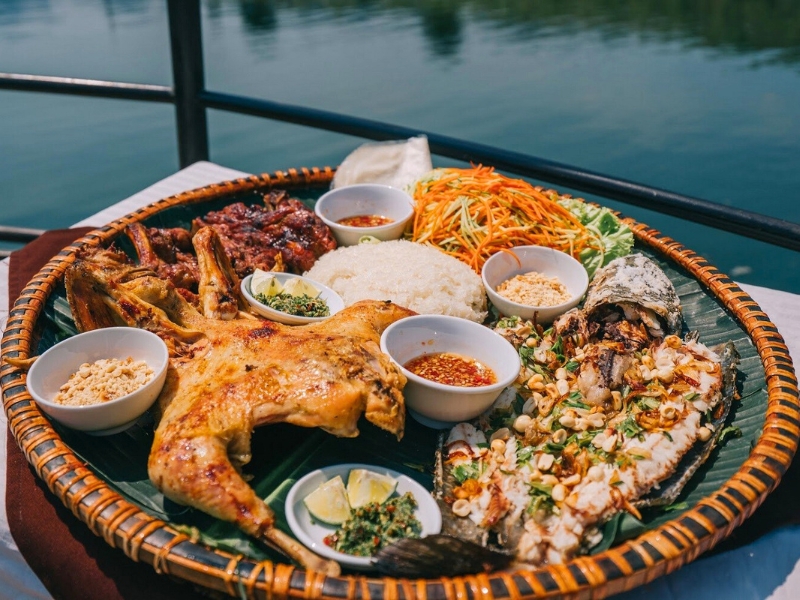
Gà nướng muối chéo (Grilled Chicken with Cheo Salt)
An essential specialty of Quang Binh, this dish celebrates free-range chicken, marinated and then grilled over charcoal. The golden and slightly crispy skin contrasts with tender and succulent meat, delicately flavored by charcoal cooking. The whole is accompanied by the famous muối chéo, a condiment typical of the region composed of salt, chili pepper, lemongrass, and aromatic herbs, which enhances every bite with a spicy and fragrant note. A true delight to share in a convivial atmosphere.
Bánh lọc (Tapioca Ravioli) and Bánh bèo (Steamed Rice Cakes)
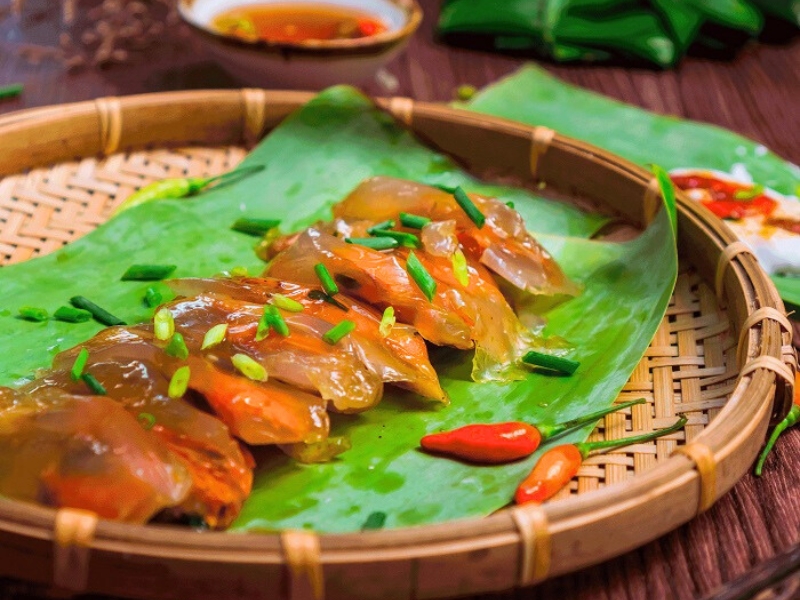
Bánh lọc (Tapioca Ravioli)
In Quang Binh, you can’t miss bánh lọc, small translucent tapioca ravioli filled with shrimp and pork, often steamed in banana leaves and served with fragrant nuoc mam. Equally emblematic, bánh bèo, delicate steamed rice cakes presented in small cups, garnished with minced shrimp, fried onion, and fresh herbs, captivate with their soft texture and delicate flavors. Together, these two specialties offer travelers a delicious immersion into local culinary art, between refinement and authenticity.
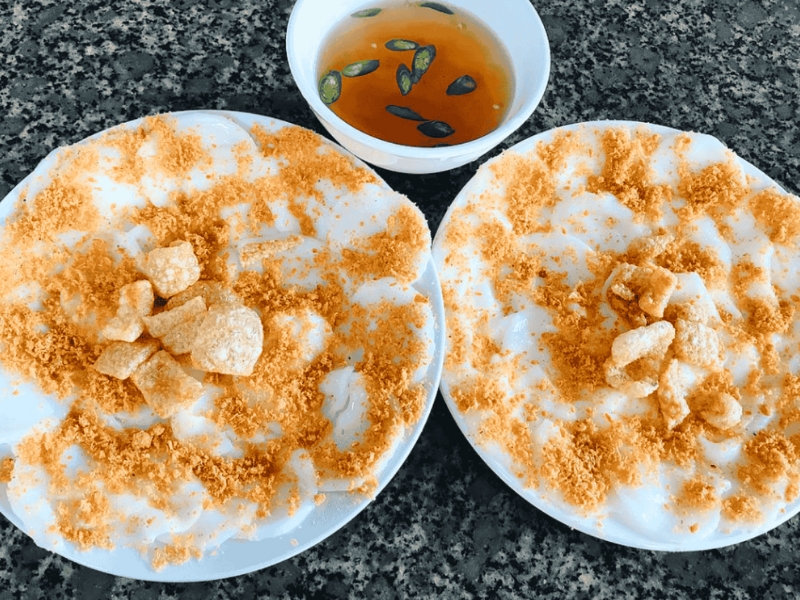
Bánh bèo (Steamed Rice Cakes)
Khoai deo (Dried Sweet Potatoes)
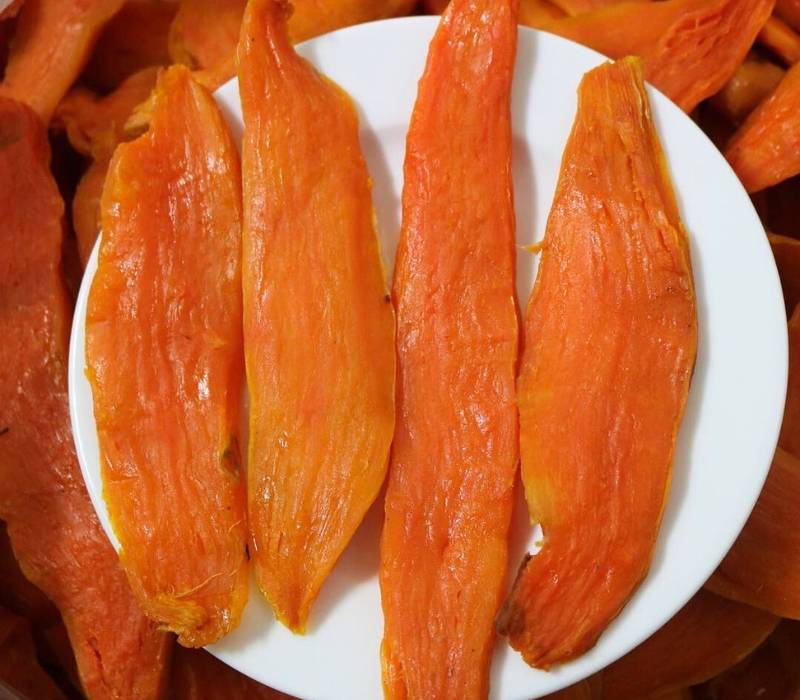
Khoai deo (Dried Sweet Potatoes)
Khoai deo is undoubtedly one of Quang Binh’s most emblematic specialties. Prepared with local red sweet potatoes, the recipe involves slicing them thinly and letting them dry for several days in the sun, until they achieve a unique texture: soft, slightly elastic, and delicately caramelized thanks to the tuber’s natural sugar. This simple dish perfectly reflects Vietnamese culinary ingenuity, transforming an everyday ingredient into a delicious and healthy treat. Traditionally, locals enjoy khoai deo with a cup of hot green tea, which brings out all its natural sweetness. Even today it remains a popular snack, ideal for accompaniment during breaks or as a culinary souvenir to bring home from Quang Binh.
Practical Tips for Exploring Quang Binh
1. Allow Time for the Caves
Some expeditions like Son Doong, Én Caves, or Pygmy require several days. Book months in advance, as the number of visitors is limited.
2. Appropriate Equipment
Non-slip trekking shoes, headlamp, lightweight but protective clothing, and waterproof bag are essential for underground routes and river crossings.
3. Strengthen Your Physical Fitness
Although some caves are accessible to everyone, others require endurance and energy (20 km treks, rope descents, underwater swimming). Minimal training will make the experience more enjoyable.
4. Taste Local Specialties After Your Adventure
A bowl of chao canh (thick noodle soup) or bánh lọc (tapioca ravioli) enjoyed in a Đồng Hới market is the perfect reward after a day of exploration.
5. Sleep Immersed in Nature
If possible, spend a night in a cave or in a homestay along the Son River: an unforgettable experience, between mineral silence and Vietnamese hospitality.
6. Respect for the Environment
Quang Binh protects a natural heritage designated by UNESCO. Use reusable bottles, avoid single-use plastics, and leave caves and trails as you found them.
Among karst mountains, spectacular caves, tranquil rivers, and wild beaches, Quang Binh stands out as one of Vietnam’s best-preserved natural treasures. Whether you’re a speleology enthusiast, a sea lover, or simply seeking authenticity, this province offers a variety of unique experiences that mark every traveler. Exploring Quang Binh means immersing yourself in a UNESCO heritage site, tasting generous local gastronomy, and sharing the daily lives of warm inhabitants. A trip here is not just a discovery, but a true adventure, between grand nature and living traditions. If you’re seeking a destination still far from mass tourism, this complete travel guide to Quang Binh invites you to take the step and let yourself be surprised by its hidden treasures of Vietnam.


Our recommended itineraries
 Nature and Active travel
Northern Vietnam Explorer in 9 days and 8 nights
About ten days
Hanoi - Ha Long Bay - Saigon - Mekong Delta - Siem Reap - Luang Prabang - Pak Ou Caves - Kuang Si Waterfall
 Classic
Vietnam Exclusive in 13 Days
About 2 weeks
Hanoi - Bai Tu Long - Hue - Da Nang - Hoi An - Saigon - Mekong Delta