+84 9 75 46 33 10 (Whatsapp)
  info@horizon-vietnamtravel.com
  Français
  Español
  Português
  Deutsch

Betel in Vietnam
Table of contents
Betel and areca (called trầu cau in Vietnamese) have been part of the Vietnamese landscape for millennia. Long before our era, these two plants already held an important place in the lives of inhabitants. Chewing betel is an ancient custom, passed down from generation to generation, deeply rooted in daily life and social traditions. In Vietnam as in several Southeast Asian countries, this simple gesture accompanied exchanges, celebrations, and moments of encounter. Once, no conversation began without a pinch of betel. Offering betel was a way to welcome, to respect, and to create a bond. Much more than a plant, betel symbolizes harmony between people and nature, an art of living imbued with sweetness, sharing, and respect.
What is Betel?
Betel (trau) and the areca palm (cau) grow naturally in the tropical regions of Southeast Asia, including Vietnam. The custom of chewing betel dates back several millennia, long before our era, as evidenced by archaeological traces from prehistoric times.
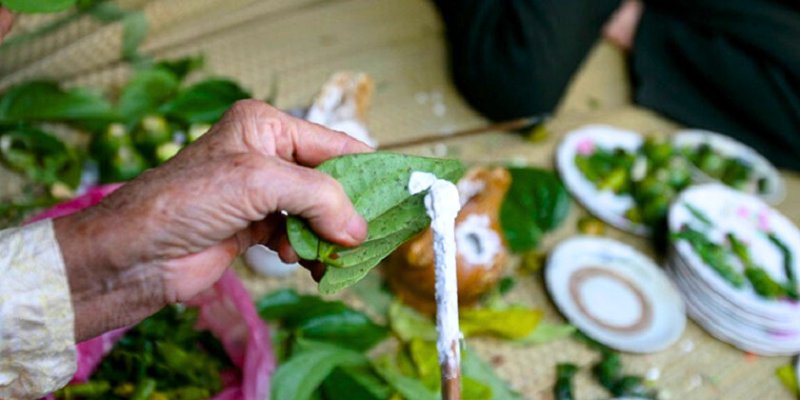
The traditional betel pinch is composed of a betel leaf, a small slice of areca nut, a pinch of slaked lime, and sometimes a fragment of bark from the chay root (Artocarpus tonkinensis). It is chewed for a long time, then the bright red saliva and residue are spit out.
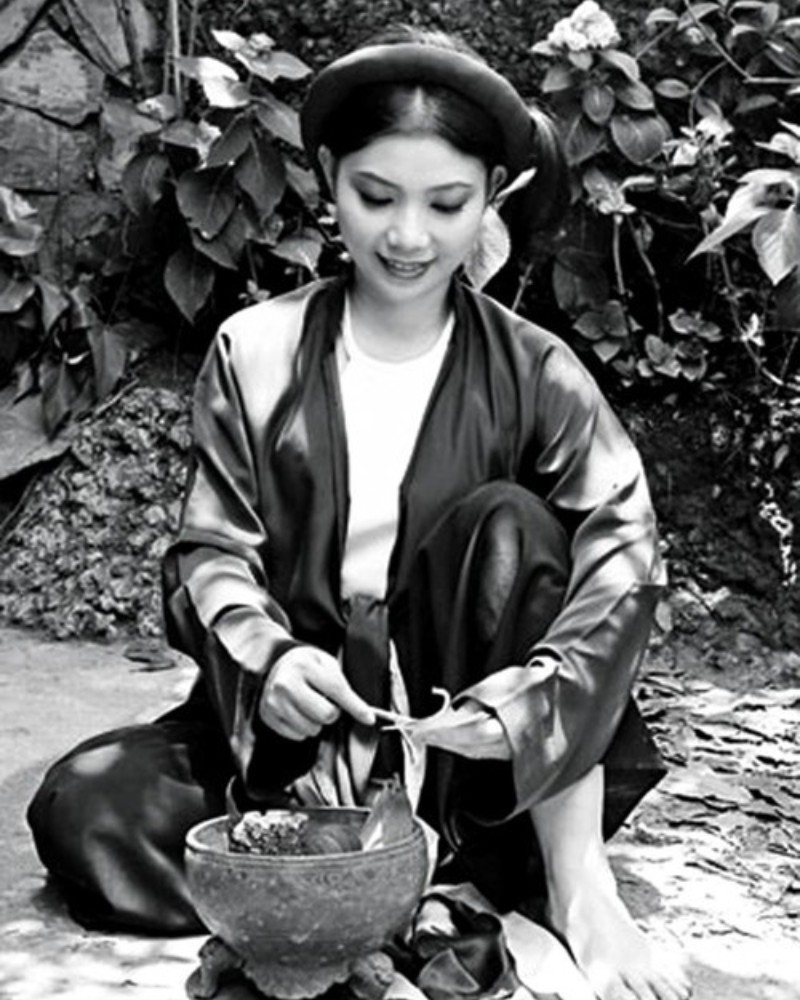
Until the 1960s, the majority of Vietnamese women consumed it regularly — some chewed it almost without interruption. This habit, a symbol of hospitality and loyalty, holds an important place in traditional Vietnamese culture.
Betel in Traditional Medicine
The combination of these plant elements — the betel leaf, the areca nut, and the lime — has long been a popular remedy for various ailments.
Chewing betel helps prevent bad breath and reduce cavities. The betel leaf, with its spicy taste and warm nature, possesses antiseptic properties. It is traditionally used to calm colic, relieve swelling, combat rheumatism, children’s hiccups, or even some intestinal infections.
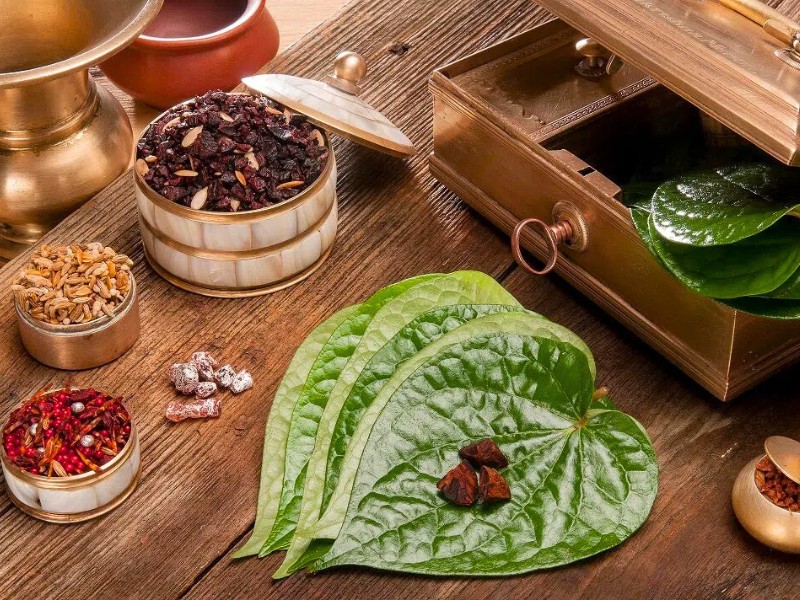
Betel in traditional medicine
Used for external application, the betel leaf is applied as a rubbing treatment for colds, or as a poultice on boils to speed up their maturation. In a bath, it soothes heat pimples.
The areca nut, for its part, is recognized for its astringent and stimulating properties. It tightens the gums, strengthens the teeth, and exercises the jaw during chewing. Its seed also has an intestinal antiparasitic action.
Finally, lime, in small quantities, is believed to be able to balance the acidity of the mouth and, according to tradition, to help regulate heart rhythm.
The Betel Custom
The betel custom embodies a profound philosophy, that of harmony between natural elements. The areca, reaching toward the sky, represents the masculine principle — Yang. Lime, coming from a mineral, tends toward the earth and symbolizes the feminine principle — Yin. As for the betel vine, which wraps around the areca trunk, it embodies the harmonious bond between the two opposing forces, their mediator.
This synthesis of Yin and Yang creates a perfectly balanced combination. The betel pinch brings together the slightly bitter freshness of the areca nut, the spicy heat of the betel leaf, the salty touch of slaked lime, and the subtle sweetness of the chay bark (Artocarpus tonkinensis). Together, these flavors create a tonic mixture that perfumes the breath, colors the lips, and activates facial blood circulation, giving a complexion comparable to a slight intoxication.
Chewing betel without swallowing it is a singular gesture: it is neither food, nor a beverage, nor a product to smoke, but a habit that is at the same time aesthetic, social, and spiritual.
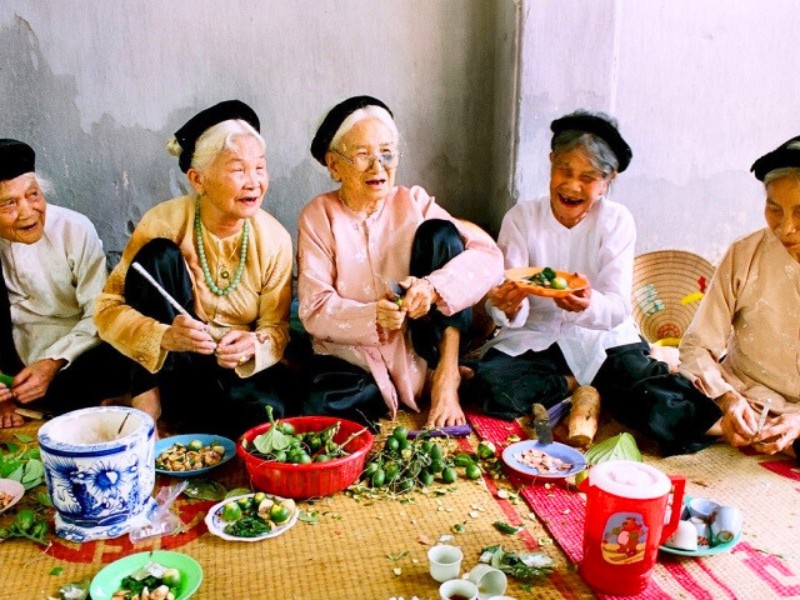
Betel thus holds an essential place in Vietnamese cultural life. It is a symbol of welcome and conviviality: as the proverb says: “Mieng trau la dau cau chuyen” — “The betel pinch opens the conversation.”
Offering betel means inviting to speech, to social bonding. Once, when one wanted to ask a young girl when she thought of getting married, one would humorously ask her: “When will you invite us to chew betel?”
Even today, in villages, it is not uncommon to see old women with blackened teeth chewing betel, faithful testimony to a living cultural heritage. Betel remains essential in great Vietnamese ceremonies — weddings, funerals, or traditional celebrations — where it symbolizes respect, unity, and loyalty.
Preparing a Betel Pinch: A True Art
Preparing a betel pinch is a true art, reflecting the knowledge and refinement of the lady of the house. The way one wraps betel and chews it reveals much about the personality, character, and education of the one who prepares it.
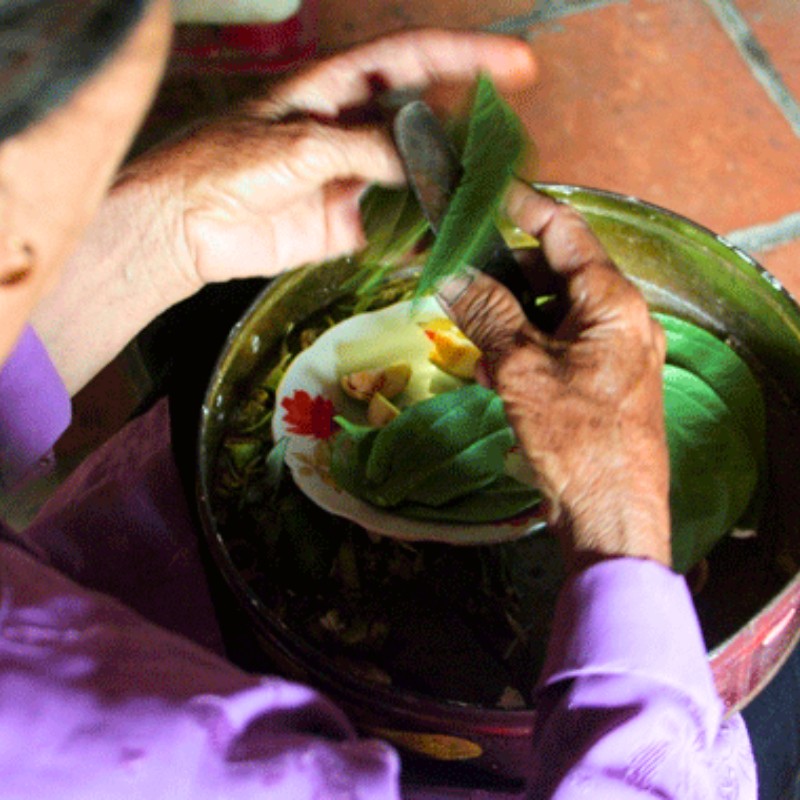
Once, when families came to ask for the hand of a young girl for their son, they carefully observed the way she prepared the betel pinch and served the tea. This moment allowed them to appreciate not only her beauty, but also her delicacy, her education, and her bearing. A poorly rolled betel pinch was often perceived as a sign of a certain clumsiness in manual work — sewing, embroidery, or other domestic activities.
Betel also symbolizes respect toward ancestors. On the offering tray, placed on the family altar, betel leaves always accompany areca nuts, thus recalling the continuity of traditions and the indissoluble link between generations.
Betel is one of those simple but meaningful traditions that tell the soul of Vietnam. Behind a small leaf, a nut, and a bit of lime, lies an entire art of living, a way of expressing respect, love, and the bond between generations. Once present in every home and at every ceremony, betel symbolized hospitality, loyalty, and conviviality. Today, although this custom has become rarer, it continues to live in the memory and heart of Vietnamese people. Offering a pinch of betel is much more than a gesture: it is sharing a moment of human warmth, an invitation to speech and encounter — all that makes Vietnam beautiful.