+84 9 75 46 33 10 (Whatsapp)
  info@horizon-vietnamtravel.com
  Français
  Español
  Português
  Deutsch

Complete Guide to the Ao Dai: Everything You Need to Know About Vietnam’s Traditional Dress
Table of contents
The epitome of Vietnamese elegance, the áo dài embodies grace, gentleness, and the soul of Vietnam all at once. Its flowing cut, refined lines, and delicate hues make it far more than a simple garment: it is a true expression of Vietnamese culture, a living link between tradition and modernity. Over time, the áo dài has evolved in rhythm with the country’s history. Once worn by nobility and scholars, it gradually became everyday attire before being reinvented by today’s designers. Ever present in Vietnamese life, it appears at weddings, Têt celebrations, in schools, and simply along the bustling streets of Hanoi and Huế. Beloved by all generations, the Ao Dai seduces with its timeless elegance. Worn by both women and men, it enhances the silhouette while reflecting the modesty, refinement, and pride of the Vietnamese people. From Horizon Vietnam Travel’s perspective, we see in this emblematic dress a reflection of Vietnam itself: refined, authentic, and deeply rooted in its heritage. Ready to immerse yourself in its history, its symbolism, and its secrets of craftsmanship? Follow us in the footsteps of the áo dài, this silk thread that connects yesterday’s Vietnam to today’s.
History of the Ao Dai
The history of the ao dai dates back to 1744, when Vietnam was still divided into two regions: the Dang Trong (the South) and the Dang Ngoai (the North). Wishing to distinguish his subjects from those of the North, Lord Nguyen Phuc Khoat, governor of the South, ordered his inhabitants to wear a long tunic buttoned down the front, paired with trousers. This five-panel garment, known as ao ngu than, is considered the direct ancestor of the modern ao dai.
At that time, members of the nobility and royal families wore versions made from the finest silks, adorned with refined embroidery and vivid colors that symbolized their rank and status at court. The ao dai was then a reflection of a certain prestige and elegance unique to Vietnamese aristocracy.
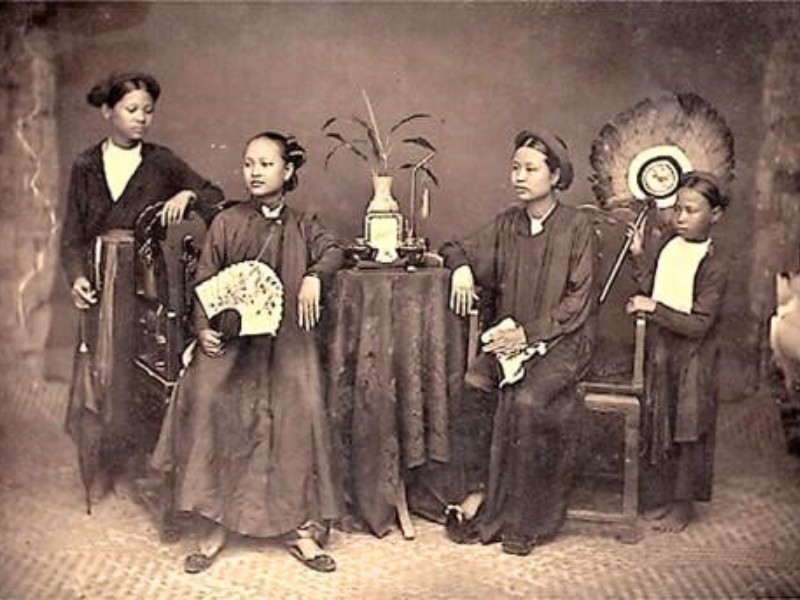
Nearly two centuries later, in the 1930s, Vietnamese artist and designer Le Mur Nguyen Cat Tuong revolutionized the traditional dress. He simplified the cut into two parts, lengthened the front panel to the ankles, and refined the silhouette to better fit feminine curves.
Initially judged too modern and influenced by Western fashion, this new version was eventually adopted after being worn by Queen Nam Phuong, wife of the last emperor Bao Dai. Very quickly, women of major cities, particularly in Hanoi and Saigon, embraced this elegant dress and transformed it into a symbol of femininity, modernity, and national pride.
Ao Dai in the Twentieth Century: Between Tradition and Modernity
After the founding of the Democratic Republic of Vietnam in 1947, Ho Chi Minh noted in a text that the ao dai, being too elegant and sophisticated, was not really suited to manual labor in fields or factories. Gradually, this garment therefore became reserved for grand occasions, official ceremonies, or important events.
Despite these changes, the ao dai never disappeared. Throughout the country, it remains deeply rooted in daily life, particularly through high school girls who wear it proudly once a week. These young women, gliding through the streets on bicycles with their white dresses flowing in the wind, offer an image that is at once poetic and peaceful of Vietnam. Their graceful silhouettes have inspired countless artists, poets, and musicians over generations.
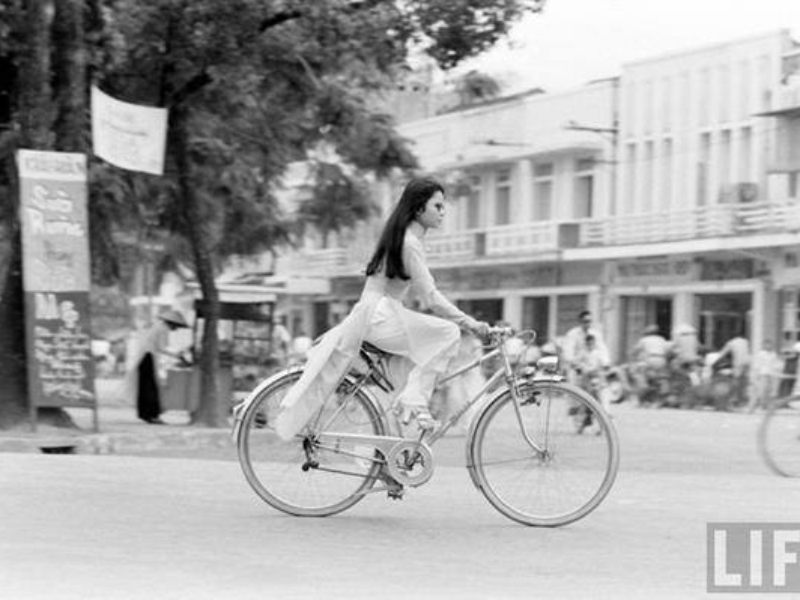
In Hue, women in Ao Dai glide gently on bicycles, embodying the grace and poetry of Vietnam
Even today, the ao dai remains a symbol of respect, femininity, and elegance. It is worn with pride at weddings, traditional festivals, or family celebrations. It represents this delicate balance between preserved tradition and modern spirit, between the memory of the past and the beauty of an ever-moving present.
💡Quick tip: if you are in Hanoi, take time to visit the Vietnamese Women’s Museum. You will find a splendid collection of ao dai there, which traces its evolution and the diversity of styles throughout the ages.
Modern Styles of the Ao Dai
If once the ao dai was worn only for grand occasions, today it stands out as a timeless symbol capable of constantly reinventing itself. Vietnamese designers, strong in their heritage but open to global influences, no longer hesitate to revisit this traditional dress with boldness and creativity.
New generations of designers bring a wind of modernity to the ao dai: boat necklines, short sleeves, fluid fabrics, or asymmetrical cuts. Some models stop at the knee to ease movement by motorbike or bicycle, a perfect adaptation to modern Vietnamese city life. Other versions adopt light materials, such as muslin or linen, ideal for tropical climates.

On runways as on the street, the ao dai asserts itself as a garment that is both practical and elegant, uniting tradition and modernity. Young designers explore softer colors, prints inspired by nature, or minimalist embroidery, while couture houses breathe new life into the traditional silk from Van Phuc village to create refined and contemporary versions.
The modern ao dai now comes in numerous forms: some models adapt to official events, others to everyday moments or even to high fashion collections. It has become a true ground for artistic expression, a bridge between Vietnamese fashion and international trends.
Yet, despite all these transformations, the ao dai preserves its primary essence: elegance, refinement, and respect for tradition. Each seam, each fold still seems to tell the story of a country where beauty is always coupled with simplicity.
When to Wear the Ao Dai?
Today, the Ao Dai is no longer merely a traditional garment, but a true symbol of style and Vietnamese identity. Worn both during grand ceremonies and in everyday life, it accompanies Vietnamese people through every important phase of their existence. But then, when to wear the Ao Dai and on which occasions does this elegant dress reveal all its beauty?
Major Festivals and National Celebrations
The Ao Dai holds a very special place in the hearts of Vietnamese people, especially during major traditional festivals. Among these, Têt Nguyen Dan, the Lunar New Year, is undoubtedly the most important. It is a time when the entire country dresses in vibrant colors and when the atmosphere breathes joy, gratitude, and hope for a prosperous new year.
On this occasion, families gather, homes are decorated with peach or apricot blossoms, and everyone wears their finest Ao Dai. Wearing this dress is not merely a matter of elegance: it is a way to honor one’s ancestors, express gratitude toward family, and attract fortune and prosperity for the months to come.
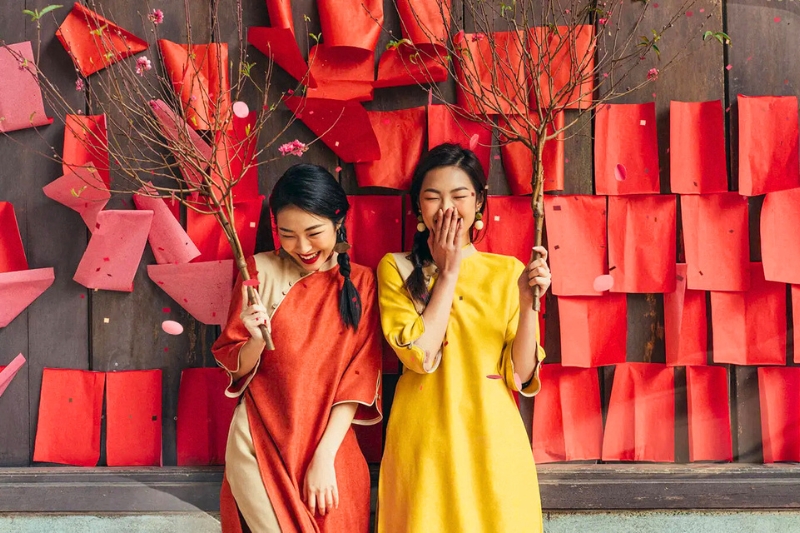
Colors have a strong significance: red evokes happiness and vitality, yellow symbolizes wealth and success, while pink recalls gentleness and family love. In bustling streets, at spring markets, or in temples, figures dressed in Ao Dai add a touch of grace and poetry, like a living painting of eternal Vietnam.
Even today, this tradition remains very much alive. Many young women choose to wear a modern Ao Dai for their Têt photos, blending classical elegance with contemporary touches. It is a delicate way to reconnect with one’s roots while asserting a Vietnamese identity that is proud and open to the world.
Weddings and Family Events
Vietnamese wedding is one of the moments when the Ao Dai reveals all its beauty and meaning. A true symbol of love, respect, and happiness, it accompanies the bride and groom throughout this important day.
Traditionally, the bride wears a red or gold Ao Dai, lucky colors in Vietnamese culture. Red symbolizes passion, fortune, and prosperity, while gold evokes wealth and light. These vibrant tones reflect the joy of the union and the wish for a radiant future for the couple.
The groom, for his part, often chooses a coordinated Ao Dai in more subdued but equally elegant tones, thus creating harmony between the two.
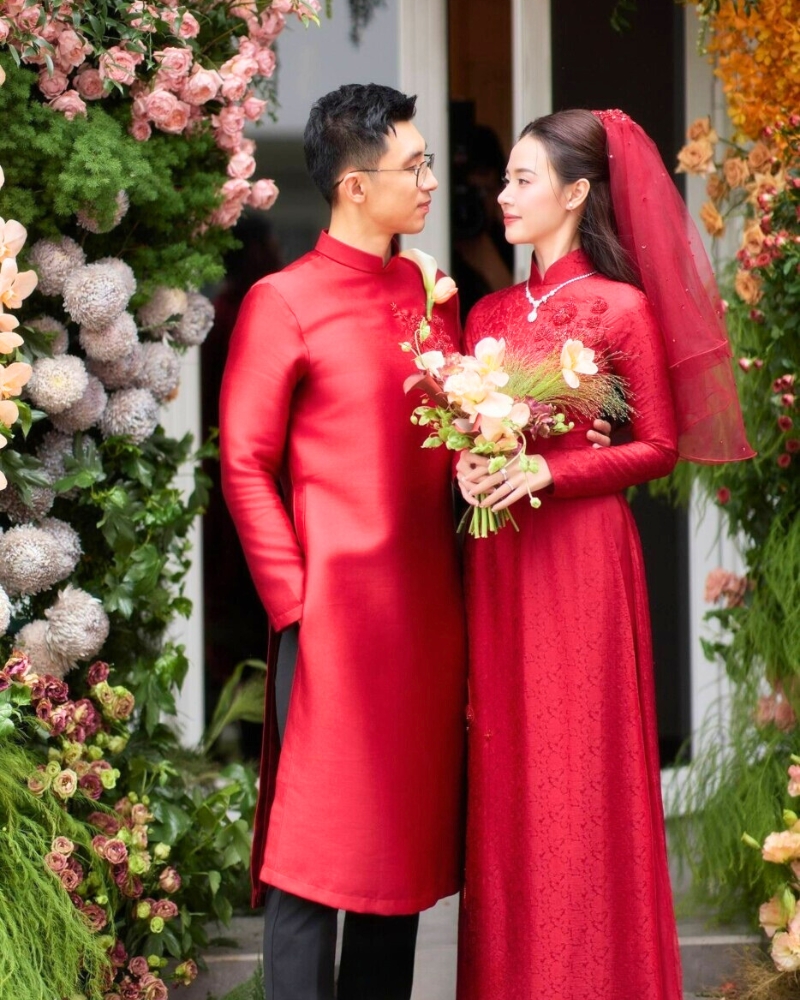
Guests too wear their finest Ao Dai to celebrate the couple. It is a way to express their respect and participate in the beauty of the ceremony. Wedding photos then become true colorful paintings in which tradition and emotion blend.
Today, many couples reinvent this tradition. They opt for modernized Ao Dai, which blend light fabrics, contemporary cuts, and refined embroidery. Some even choose models inspired by Western fashion while maintaining the Vietnamese soul of the dress. This evolution demonstrates how the Ao Dai remains alive and timeless, capable of crossing generations without losing its profound meaning.
School and University
In many Vietnamese schools, especially in the southern part of the country, the white Ao Dai is much more than a simple uniform: it is a symbol of identity and pride. Every morning, the streets come alive with graceful silhouettes of female students dressed in this flowing garment, walking or cycling to school — a familiar and touching image of Vietnam.
The immaculate white of the Ao Dai represents purity, modesty, and youth. It also evokes the freshness of beginnings, delicacy, and the simplicity of heart, values dear to Vietnamese culture. Wearing this uniform means learning not only discipline and respect, but also the beauty of gesture and posture.
In high schools and universities, this tradition imparts an atmosphere of peacefulness and elegance to classes. The Ao Dai then becomes the reflection of an education that unites knowledge and sensitivity, tradition and modernity. While some schools today adopt more practical uniforms, many continue to preserve this custom, considering that the Ao Dai better embodies than any other garment the soul and grace of Vietnamese youth.
School and University
In many Vietnamese schools, especially in the southern part of the country, the white Ao Dai is much more than a simple uniform: it is a symbol of identity and pride. Every morning, the streets come alive with graceful silhouettes of female students dressed in this flowing garment, walking or cycling to school — a familiar and touching image of Vietnam. The immaculate white of the Ao Dai represents purity, modesty, and youth. It also evokes the freshness of beginnings, delicacy, and the simplicity of heart, values dear to Vietnamese culture. Wearing this uniform means learning not only discipline and respect, but also the beauty of gesture and posture.
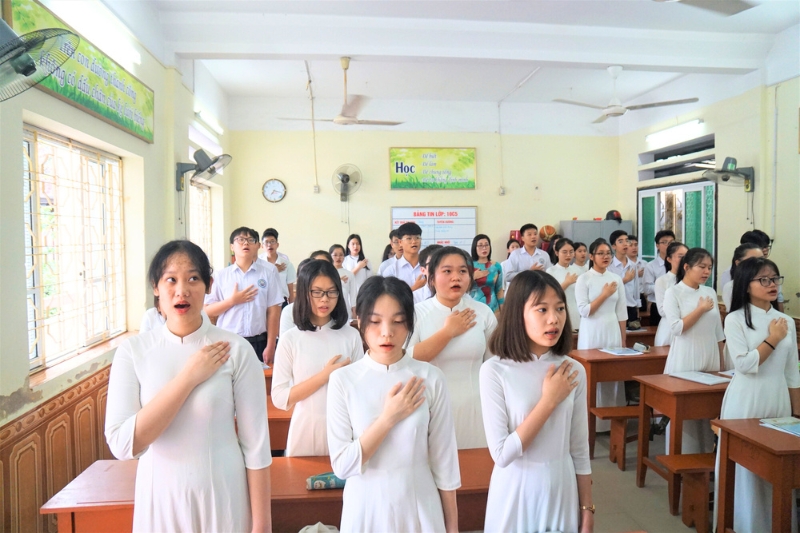
In high schools and universities, this tradition imparts an atmosphere of peacefulness and elegance to classes. The Ao Dai then becomes the reflection of an education that unites knowledge and sensitivity, tradition and modernity.
While some schools today adopt more practical uniforms, many continue to preserve this custom, considering that the Ao Dai better embodies than any other garment the soul and grace of Vietnamese youth.
Photo Sessions and Cultural Events
Over time, the Ao Dai has become much more than a traditional dress: it is a symbol of beauty and Vietnamese pride. Its fluid silhouette and elegant lines make it a perfect outfit to enhance the natural grace of the wearer.
Today, the Ao Dai is very present during photo shoots, fashion shows, or cultural festivals. Many women choose to wear it to capture important moments — a birthday, a graduation ceremony, or simply for the pleasure of celebrating Vietnamese culture through the lens.
Contemporary designers never stop revisiting this emblematic garment. They use lighter fabrics, modern motifs, and fitted cuts that follow current trends while preserving the essence of traditional style. Thus, the Ao Dai crosses generations without losing its soul: it remains at once classical and modern, timeless and alive.
Religious and Commemorative Ceremonies
On a more spiritual plane, the Ao Dai is also worn during visits to temples, religious ceremonies, or family commemorations. In these moments of reflection, the dress takes on a more sober and respectful dimension. The colors chosen are often delicate and calming — white, cream, light blue, or pastels — symbols of purity, peace, and serenity. Wearing the Ao Dai in this context means manifesting one’s respect toward ancestors and traditions, while expressing an elegance infused with humility.
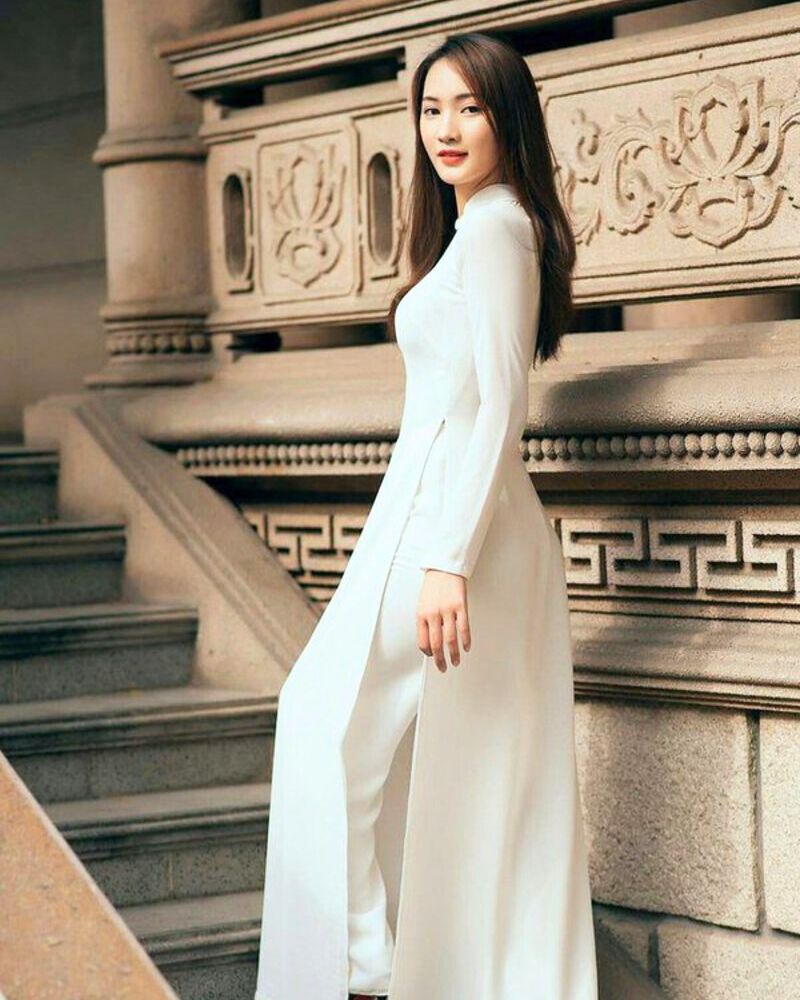
These moments remind us that, regardless of the occasion, the Ao Dai remains the connecting thread of a culture in which outward elegance reflects inner beauty. It unites spirituality, tradition, and a sense of refinement in a single gesture.
Where to Have Your Own Custom Ao Dai Made in Vietnam?
Vietnam is rich with renowned addresses for having a custom Ao Dai made, blending traditional craftsmanship and modernity. Whether you are in Hanoi, Hoi An, or elsewhere in the country, you will find passionate artisans capable of creating a garment perfectly adapted to your body and style.
In Hoi An
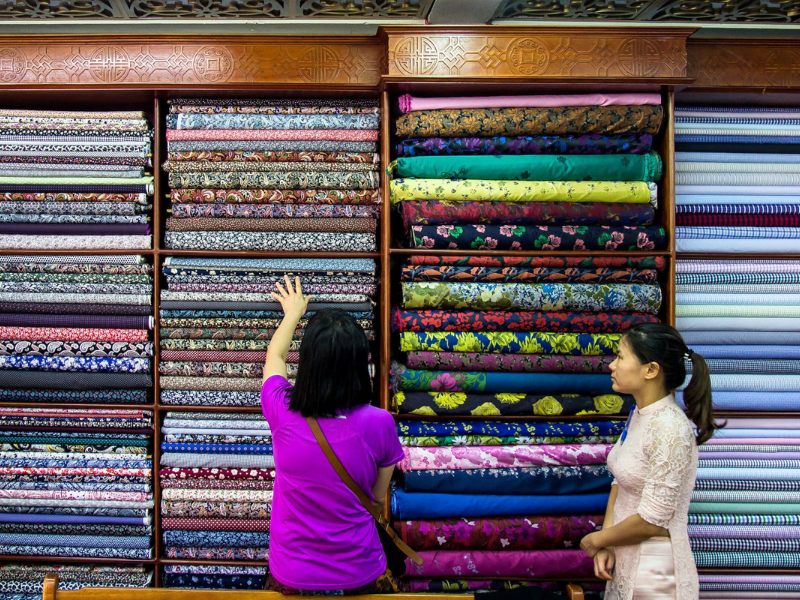
Hoi An’s Old Town, classified as a UNESCO World Heritage site, is famous for its skilled tailors. In just a few days, they can design a custom Ao Dai according to your wishes. Choose the fabric, patterns, colors, and cut, then return for a fitting before final finishing.
>> The streets Tran Phu, Le Loi, and Nguyen Thai Hoc are full of renowned ateliers. Among the best-known: Yaly Couture, Thu Thuy Silk, or Bebe Tailor….
In Hanoi
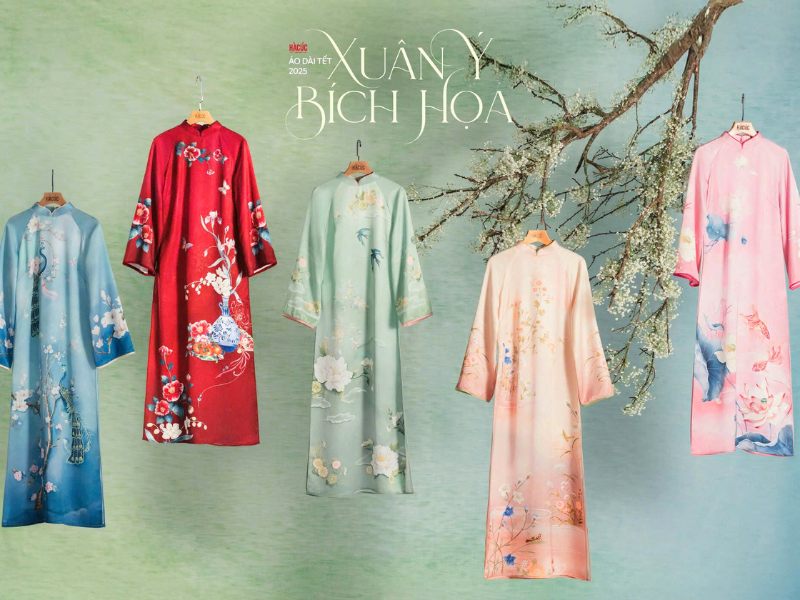
In Hanoi, several boutiques in the Old Quarter offer ready-to-wear or custom Ao Dai. For a more authentic experience, visit the Van Phuc silk village, just 20 minutes from the city center. This emblematic place is the historic heart of Vietnamese silk: you can discover the weaving, choose your fabric, and have your Ao Dai made directly on site. It is also an ideal place to take magnificent photos among the colorful silk ribbons.
In Hue
Ancient imperial capital of Vietnam, Hue is deeply connected to the history of the Ao Dai. Numerous ateliers here perpetuate the royal tradition with refined models, often adorned with fine embroidery and high-quality silk. It is the perfect place for those seeking an Ao Dai that is both authentic and noble.
To know: if you wish to have your custom Ao Dai made during your stay, plan 2 or 3 days on site for fittings and adjustments. Most tailors offer a fast service, but perfection always requires a little time.
A true emblem of Vietnamese identity, the Ao Dai embodies at once the tradition, femininity, and modernity of Vietnam. Worn during ceremonies, festivals, or simply in everyday life, this long dress with side slits remains a timeless symbol of elegance, grace, and respect. Whether custom-tailored in Hoi An, purchased in boutiques of Hanoi’s Old Quarter, or woven in silk at Van Phuc, each Ao Dai tells a unique story — that of an artisanal expertise passed down through generations. The Ao Dai is a cultural and artistic expression, a link between past and present, between the delicacy and strength of the Vietnamese people. It continues to enchant both Vietnamese and travelers from around the world, as an invitation to discover the beauty and soul of Vietnam.