+84 9 75 46 33 10 (Whatsapp)
  info@horizon-vietnamtravel.com
  Français
  Español
  Português
  Deutsch

Vietnamese Brocade, the Elegance of Ethnic Minorities
Table of contents
When you pass through a village of Vietnam’s ethnic minorities, it is impossible not to be seduced by brocade costumes, shimmering colors and motifs. Vietnamese brocade alone embodies the identity and spiritual wealth of each community. Every woven thread tells a story, carries beliefs and reflects a cultural heritage transmitted from generation to generation. Entirely handmade, this fine textile is far more than a garment: a treasure of craftsmanship, a symbol of pride, patience and tradition.
What is Brocade?
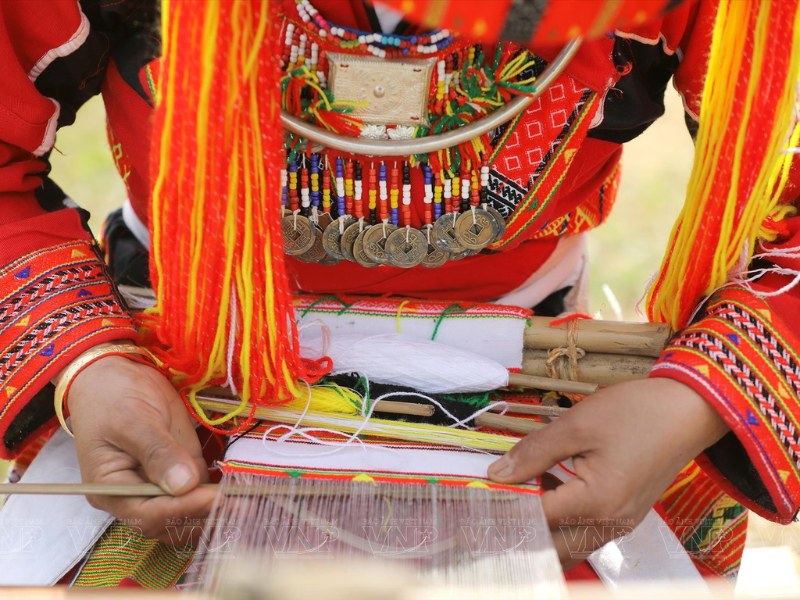
Brocade is an artisanal textile closely linked to the lives of Vietnam’s ethnic minorities. Handwoven according to traditional methods, it is distinguished by its complex motifs, created directly during the weaving process. This textile is made from natural materials, mainly cotton, hemp and linen, which gives it a unique texture. Brocade products are varied and include clothing, bags and shoes. These articles, rich in symbolism and craftsmanship, are highly appreciated by tourists, Vietnamese or foreign, who consider them as precious souvenirs from the mountainous regions of the country.
Color of Brocade
One of the peculiarities of brocade lies in the exclusive use of natural dyes to create its vibrant motifs. Contrary to modern textiles dyed with chemical products, every brocade color is obtained from plants, bark, roots and other natural elements. This ancestral knowledge reflects the deep connection of ethnic minorities with their environment and their respect for natural resources.
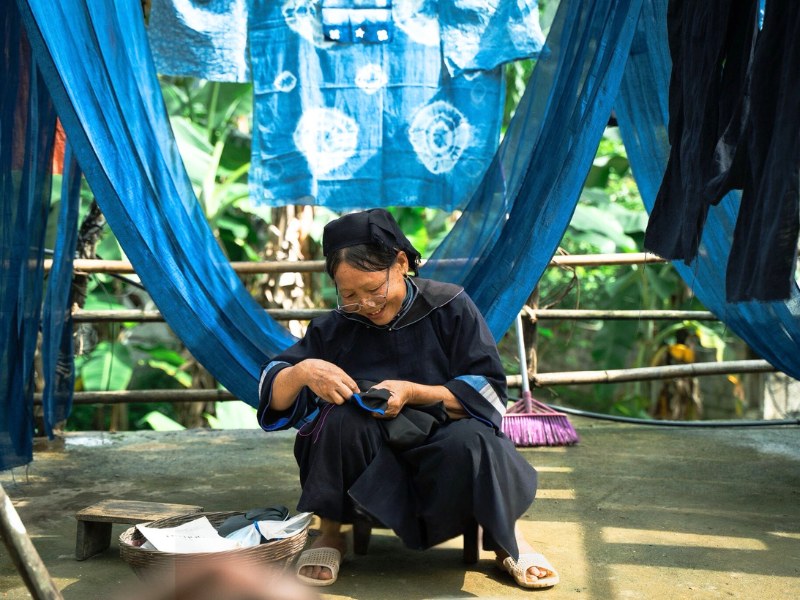
For example, to obtain a bright red hue, artisans use the bark of the Krung tree, carefully ground and transformed into pigment. Yellow comes from turmeric, a root with powerful coloring properties, while black is obtained through a mixture of pumpkin leaves and mud. Each color is the result of meticulous preparation technique and deep respect for the surrounding nature.
These natural tones are not only aesthetic, they also tell a story, that of the beliefs and traditions linked to the elements of the earth. Each color symbolizes specific values and echoes the very soul of the peoples who wear it. Thanks to this artisanal process, brocade is not just a textile, but a true testimony to the cultural and spiritual wealth of Vietnam’s ethnic minorities.
Production Process
The brocade production process in ethnic communities is based on fundamental traditional stages, essential to the creation of this precious textile. Although these techniques can vary according to regions and ethnic groups, they are rooted in ancestral knowledge, carefully transmitted from generation to generation, ensuring the preservation of these unique artisanal methods.
1. Preliminary Cotton Transformation
Before weaving brocade, cotton is harvested by hand, dried, then carded to separate the fibers. It is then spun manually to obtain fine and regular yarns, ready to be dyed with natural dyes. This artisanal preparation guarantees the quality and durability of the fabric while respecting the traditional techniques of ethnic minorities.
2. Spinning
Spinning is a key stage in cotton preparation before brocade weaving. After being carded, cotton is transformed into yarns through a manual process that uses a traditional spindle. This work requires patience and precision, as artisans must obtain regular, fine and strong yarns. These yarns will then be used to create the complex motifs of the brocade. Manual spinning ensures not only the quality of the fabric, but also preserves ancestral weaving techniques, transmitted from generation to generation.
3. Yarn Treatment
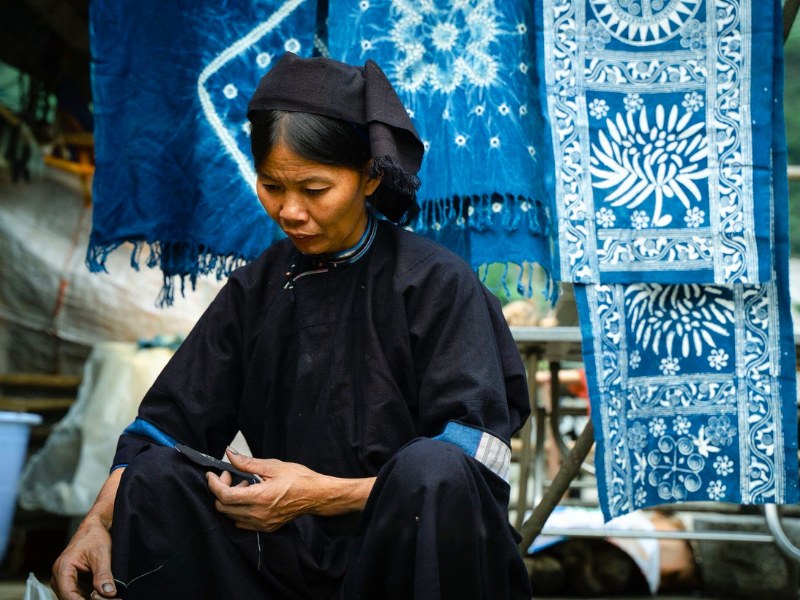
After spinning, cotton yarns are aligned, then dyed by hand with natural dyes. The dyeing process is repeated to obtain intense colors, before drying the yarns and rolling them for weaving. This treatment guarantees the quality and durability of the brocade while respecting traditional artisanal techniques.
4. Yarn Coloring
After spinning, cotton yarns are aligned, then dyed by hand with natural dyes. The dyeing process is repeated to obtain intense colors, before drying the yarns and rolling them for weaving. This treatment guarantees the quality and durability of the brocade while respecting traditional artisanal techniques.
5. Weaving
Brocade weaving, performed manually on traditional looms, assembles yarns in refined motifs. Each motif, rich in symbols, embodies the cultural identity of ethnic minorities, making each piece a unique and precious creation.
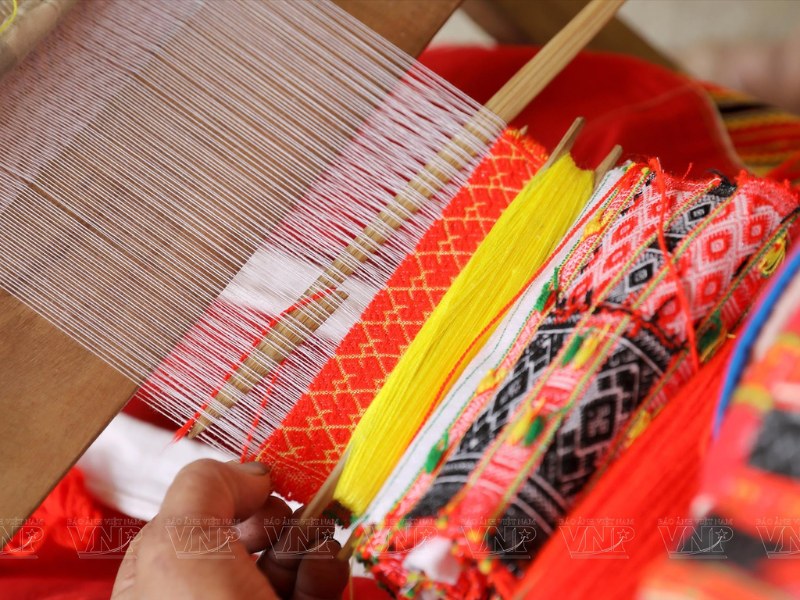
Brocade motifs are conceived during the weaving process, starting with yarns of different colors. As a result, brocade weaving is often more difficult than other weaving methods because it is necessary to remember every yarn and motif to correctly change color. If there is an error or forgotten details in the weaving process, they must be corrected immediately.
It can be said that a brocade fabric requires a lot of work to be made. For a large fabric with complex motifs, it can even take one year to produce it. It is not just a product of passion, of perseverance; it also has numerous cultural values: custom, identity, craftsmanship.
Meaning of Motifs
Since ancient times, Vietnam’s minority ethnic groups have woven motifs on their clothes, evoking their daily lives, their culture. Some motifs are deeply rooted in folktales and legends of their region, while others are inspired by natural landscapes and animals.
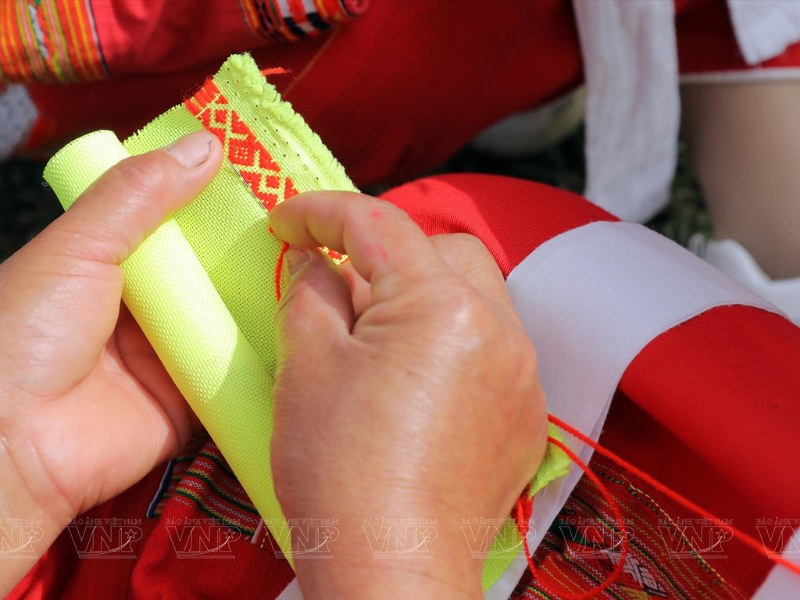
- The elephant motif, which is the largest forest animal with extraordinary strength and lives in a group, shows solidarity and care for one another.
- The motif of the sun and star represents the transformation of the sun, of time, space and time in the universe.
- The image of the dragon symbolizes goodness, happiness, and is also a symbol of power.
- The symbol of thunder and lightning represents the worship of the gods and the desire for favorable weather and good harvests.
Importance of Brocade
In Cultural Life
Brocade fabric has long played an important role in the cultural life of ethnic minorities. Besides preserving and transmitting cultural values through motifs, these are costumes that ethnic minorities can wear in daily life, expressing their cultural characteristics. Furthermore, on important occasions such as festivals, weddings, brocade products are also chosen as a meaningful gift. Or even, for the Êdê, during funerals, family members will offer brocade blankets to the deceased.
In Economic Life
With vibrant colors and unique motifs, brocade products attract a lot of attention from both domestic and foreign tourists. To create a brocade fabric, it takes a lot of time and effort from the weavers, so the price of a brocade product is also quite high. Through the sale of brocade products, ethnic minorities can improve their economic lives.
As a Beautiful Souvenir
Currently, traditional brocade costumes appear more and more in fairs everywhere, particularly in famous tourist destinations. Clothing for women, loincloths for men, scarves, linens, shawls, bags and other brocade products are increasingly diverse and rich in motifs.
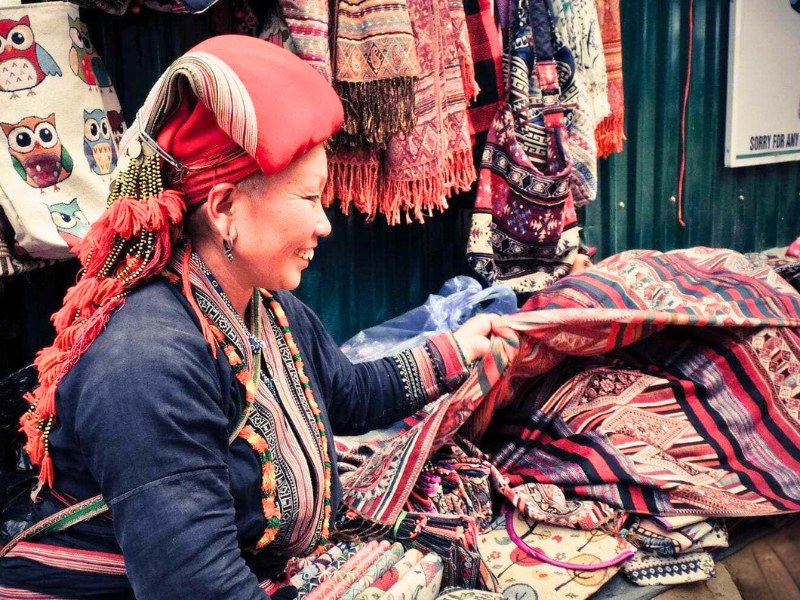
If you have the opportunity to visit the mountainous regions of northern Vietnam, you will find the paradises of colorful and magnificent brocade. In particular, the Bac Ha market, the largest market in this region, will surprise you with the variety of brocade-based products. When coming here, don’t forget to choose a product as a souvenir; it will be a meaningful and precious gift.
Conclusion
Brocade is the culture, beauty and quintessence of ethnic minorities. It plays a primary role in preserving the heritage of an ancestral past. Handmade brocade products are always sophisticated with particular values. However, today, with the help of some more modern machines, inhabitants can more easily create complex and captivating fabrics. It can be said that each brocade costume possesses its own identity with its own designs and different decorative motifs, showing the particular cultural values of the minority group that creates them. Do not hesitate to plan your stay in Vietnam with us to discover this cultural beauty!