+84 9 75 46 33 10 (Whatsapp)
  info@horizon-vietnamtravel.com
  Français
  Español
  Português
  Deutsch

Cai Luong – Traditional Theater of Southern Vietnam
Table of contents
Born in the heart of Southern Vietnam at the beginning of the 20th century, Cai Luong, literally “reformed theater,” is far more than a simple performing art: it is a harmonious fusion of singing, music and drama. Heir to Đờn ca tài tử – traditional music of the Mekong Delta – and classical Vietnamese theater, Cai Luong reflects both the soul of the Southern people and their ability to renew tradition. Through its sweet melodies, poetic dialogues and deeply human stories, this scenic art highlights the emotions, values and dreams of modern Vietnam while preserving the beauty of the past. A true symbol of Vietnamese cultural heritage, Cai Luong continues today to move and inspire, giving voice to a people between memory and modernity.
What is Cai Luong?
Cai Luong is an emblematic form of theatrical art in Vietnam, born from the fusion of singing, dramatic play and spoken dialogue. The term “Cai Luong,” which literally means “reform” or “improvement,” expresses the spirit of renewal and creativity that gave birth to this unique art, at the same time traditional and modern.
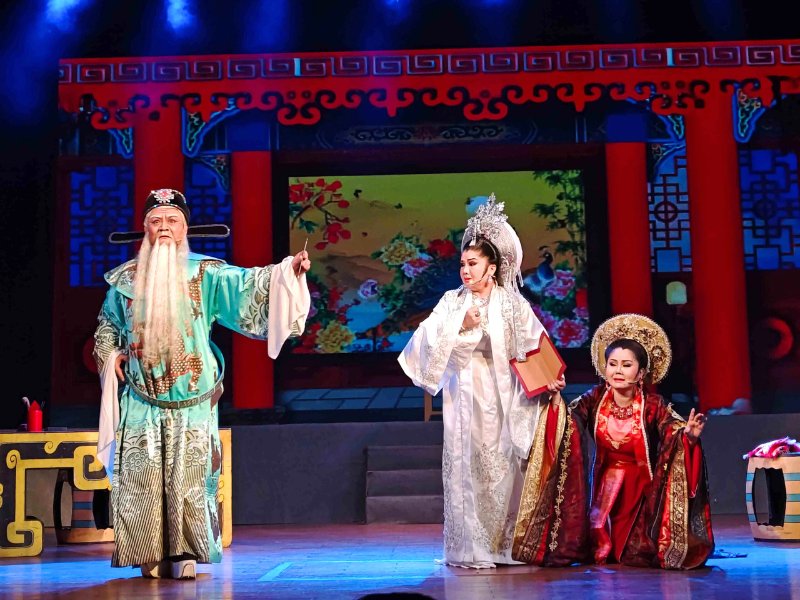
Scene of Cai Luong: a Vietnamese dramatic art in which singing, music and tradition are intertwined
Unlike Tuong (classical theater) or Cheo (popular theater of the North), Cai Luong seduces with its sweet and accessible melodies, its profound and human stories, often inspired by daily life, love, family or popular morality. On stage, artists do not limit themselves to interpreting a text: they sing, act and live their emotions through poetic and sincere scenic expression.
Origins and history of Cai Luong
Cai Luong appeared at the end of the 19th century and the beginning of the 20th century, in Southern Vietnam, particularly in the provinces of the Mekong Delta. It is the fruit of a fusion between the popular music of the South, the Don Ca Tai Tu (form of traditional music recognized by UNESCO) and classical Vietnamese theater, enriched by some Western influences.
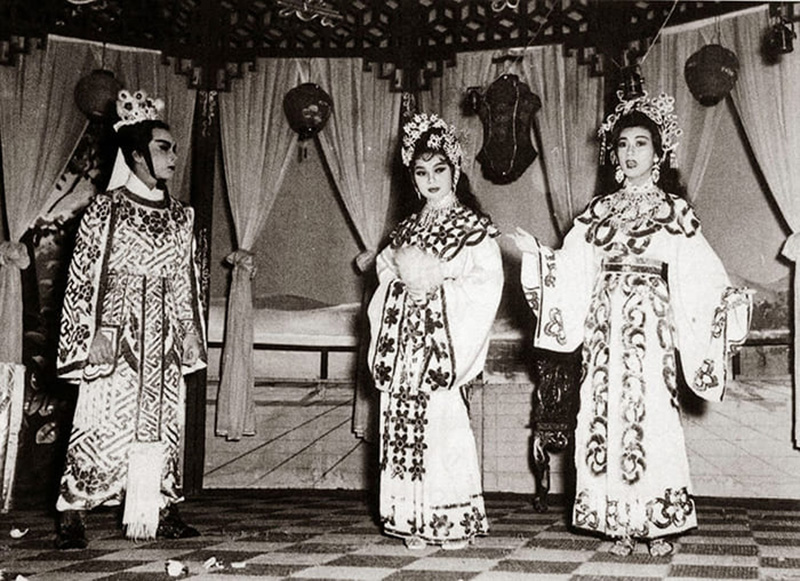
At that time, artists wanted to bring theater closer to the people, drawing inspiration from folk tales, legends, poems and novels to create living and accessible works. The year 1940 marked a decisive step with the creation of the National Cai Luong Theater, which officialized and professionalized this artistic genre. Over time, Cai Luong became a cultural symbol of Southern Vietnam, reflecting the sensitivity, nostalgia and generosity of the people of this region. It still embodies a bridge between tradition and modernity, expressing all the emotional and spiritual wealth of Vietnam.
Artistic characteristics of Cai Luong
The plot and dramatic expression
A Cai Luong performance generally consists of three parts: introduction, dramatic development and conclusion. The themes most often addressed are love, family, loyalty, social justice and human destiny. Behind these seemingly simple stories, Cai Luong always conveys moral and philosophical reflection, in which characters struggle between duty, passion and traditional values.
The acting
Cai Luong artists are true complete performers: singers, narrators and sometimes dancers. Their acting is based on emotional accuracy, delicate gesture and voice flexibility. They must express the entire range of human emotions – from joy to sorrow, from tenderness to tragedy – with a sincerity that deeply touches the audience.
The music and rhythm
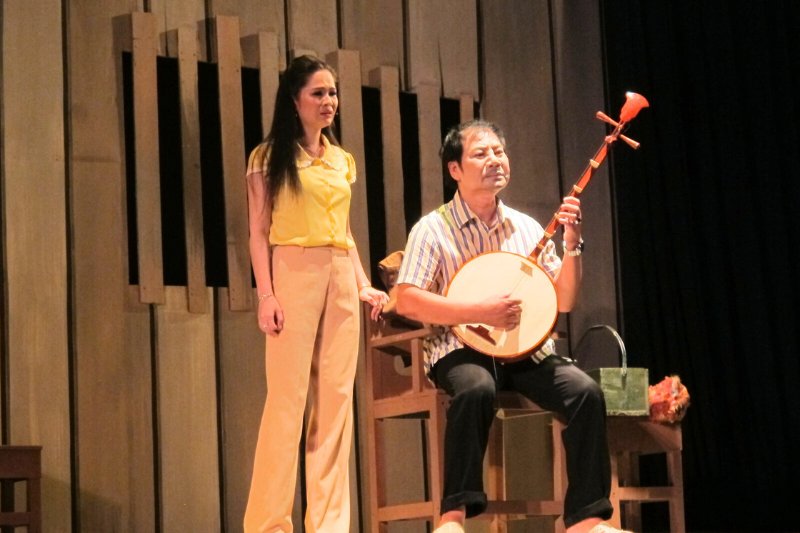
The music, true soul of Cai Luong, accompanies every scene and amplifies the emotions of the characters. Traditional instruments such as the dan tranh (zither), the dan bau (monochord), the dan nguyet (moon lute) and the sao truc (bamboo flute) sometimes blend with modern instruments such as the guitar or organ. Slow and nostalgic melodies convey the depth of feelings, particularly through the famous vong co, the emblematic song of Southern Vietnamese theater. Derived from Don Ca Tai Tu, this musical accompaniment gives Cai Luong its unique lyrical and melancholic character.
Costumes and makeup
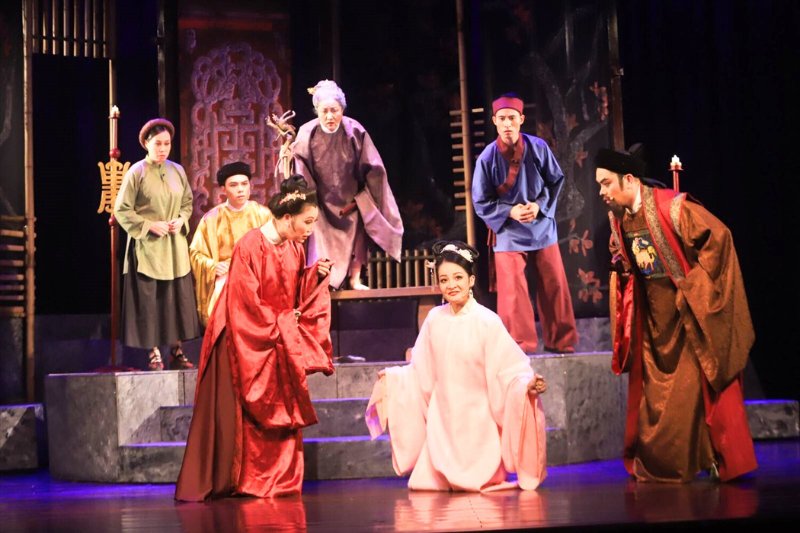
Colorful and elegant costumes vary according to the context of each performance – whether it is a contemporary drama, a legend or a historical fresco. Theatrical makeup reinforces the personality of the characters, emphasizes their emotions and adds a poetic visual dimension to the staging.
Structure of a Cai Luong performance
A Cai Luong performance follows a clear and balanced dramatic progression, inspired at the same time by traditional theater and modern storytelling.
- The opening presents the characters, the context and the first tensions of the plot.
- The heart of the action stages the growth of emotions and conflicts, in which the characters reveal themselves through singing, speech and gesture.
- The resolution brings the resolution of the drama, often accompanied by a moral or philosophical message, faithful to the humanist spirit of Vietnamese theater.
The charm of Cai Luong lies in the fluidity between singing, dialogue and body expression. Natural transitions between speech and singing allow emotions of the character to be transmitted directly to the audience, creating a sensitive and profound connection. Traditional music, derived from Don Ca Tai Tu, is not just accompaniment to the action: it becomes a character in its own right, guiding the dramatic rhythm and amplifying the emotional charge of each scene.
Cultural and social role of Cai Luong
Cai Luong is a form of popular expression deeply rooted in the spiritual and emotional life of Vietnamese people, particularly in the South of the country. It reflects the mentality, values and sensitivity of the Vietnamese people: loyalty, compassion, faithfulness and love for the homeland. Even today, Cai Luong occupies an essential place in festivals, local celebrations and cultural programs. Numerous theaters, companies and young artists are working to preserve and modernize this ancestral art, infusing it with new vitality adapted to contemporary audiences. A symbol of Vietnamese cultural heritage, Cai Luong remains a living art, at once ancient and modern, capable of moving spectators through the sincerity of its emotions and the richness of its universal messages. It continues to transmit timeless human values and to testify to the cultural depth of Vietnam.
Great classical works of Cai Luong
Among the most celebrated works in the Cai Luong repertoire, several have deeply marked generations of spectators and remain today symbols of Vietnamese theater :
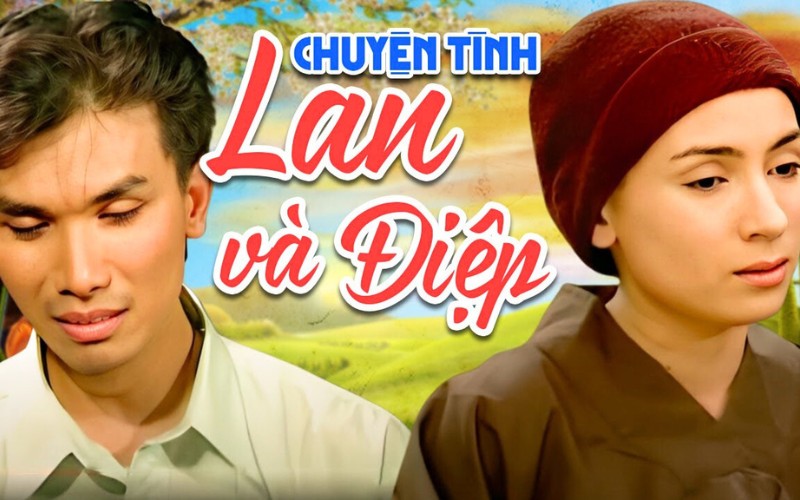
Lan and Điệp, two hearts linked by love but torn by life — an eternal story of Vietnamese Cải Lương theater
- Lan va Diep – A timeless and deeply moving love tragedy, which has become a classic of the Southern Vietnamese repertoire.
- Doi Co Luu – The tragic fate of a woman victim of injustices and social conventions.
- To Anh Nguyet – A touching story about sacrifice and maternal love, one of the most moving performances of Cai Luong.
- Ben Cau Det Lua – A tale of passion and faithfulness, steeped in poetry, that celebrates the sweetness of rural Vietnamese life.
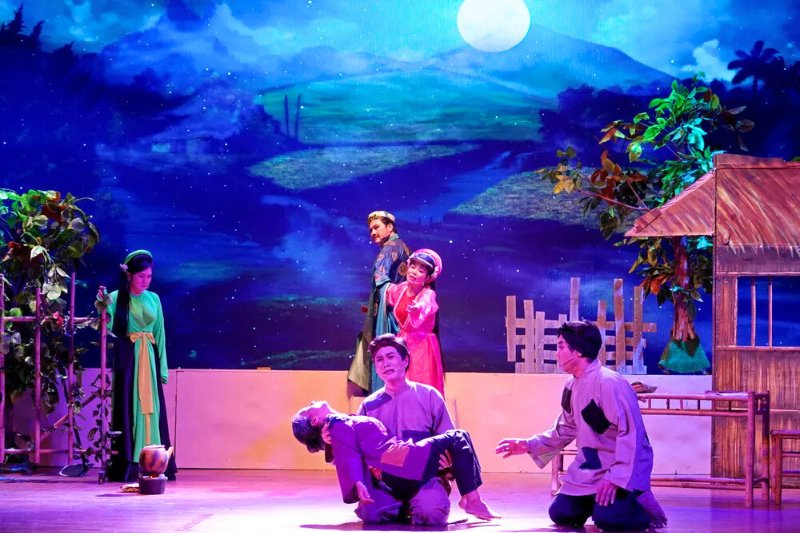
Through “Bến Cũ Dệt Lụa”, Cải Lương tells the story of love and perseverance of a people attached to their land and their art
These works are an integral part of Vietnam’s artistic and cultural heritage. They illustrate the aesthetic richness, emotional depth and narrative strength of Cai Luong, an art that continues to move audiences with its sincerity and its humanity.
Cai Luong, born from the heart of Southern Vietnam, remains far more than a simple performing art: it is a living voice of the Vietnamese soul. Through its moving melodies, its human stories and its emotionally charged acting, Cai Luong embodies the Vietnamese people’s capacity to preserve their traditions while renewing themselves at the same time. Despite the changes of time and the evolution of modern forms of entertainment, this art continues to live on stage, in festivals, and in the hearts of those who love it. It remains a treasure of Vietnamese cultural heritage, a symbol of a Vietnam that is both modern and deeply rooted in its own identity.