+84 9 75 46 33 10 (Whatsapp)
  info@horizon-vietnamtravel.com
  Français
  Español
  Português
  Deutsch

Cheo Theater in Vietnam – Traditional Vietnamese Popular Theater
Table of contents
Cheo is one of the oldest and most beautiful arts in Vietnam. Born in the villages of the Red River delta, this Vietnamese popular theater blends singing, dancing, music, and comedy to tell stories of everyday life, with humor and emotion. Passed down from generation to generation, Vietnamese Cheo reflects the soul of the people: simple, profound, and deeply connected to nature and community.
During village festivals and Buddhist celebrations, residents gather around an improvised stage to admire the singer-actors and laugh at characters in vivid colors. More than simple entertainment, Cheo is a living expression of Vietnamese culture, a popular art that unites tradition, music, and collective spirit.
Origin of Cheo in Vietnam
Cheo (in English: Vietnamese popular theater) is a traditional theatrical genre deeply rooted in the culture of Northern Vietnam. Very present in the Red River delta region and in villages of the intermediate region, it is performed mainly during village festivals, local fairs, or religious celebrations.
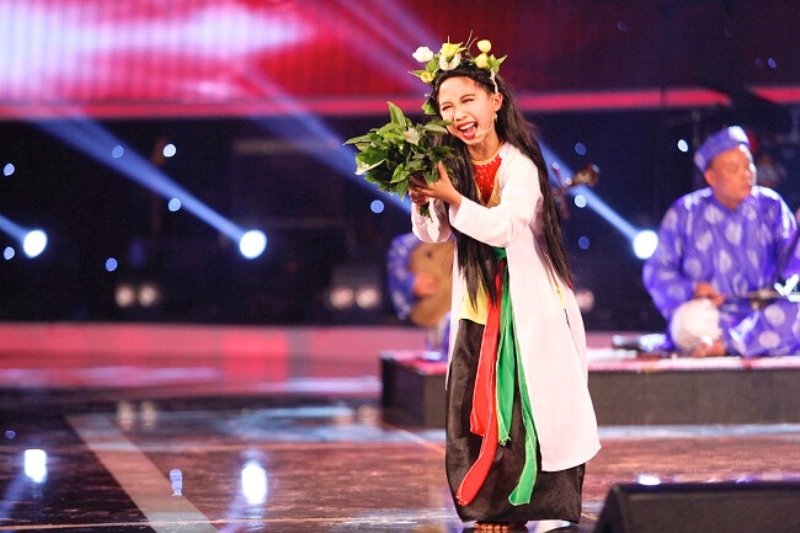
Cheo performance in Vietnam
Truly popular theater, Vietnamese Cheo was born under the Ly and Tran dynasties (11th – 14th centuries). Inspired by folk songs, popular dances, and rural pantomimes, it gradually evolved to become, in the 15th century, a theatrical genre in its own right. Uniting music, poetry, comedy, and satire, Cheo reflects the soul of traditional Vietnam and the daily life of peasants, with humor, wisdom, and emotion.
Rich Theatrical Performance
Cheo performances take place in front of the Dinh or in front of a Buddhist pagoda. The troupe, composed of singer-actors and musicians, moves from village to village; all props fit in a trunk that constitutes, along with a mat, the only element of scenography. Vietnamese Cheo possesses a vast repertoire that leaves considerable room for improvisation by the actors and a troupe is judged on its ability to renew and update a known theme. The orchestra, which includes drums, gongs, crackles, two string instruments, and a flute, is seated to the right of the stage. An expert Cheo audience member strikes a large drum reserved for the public to signal the beginning of the performance. When an actor performs or sings particularly well, one of the spectators strikes the drum skin, thus signaling general approval. If the audience judges the performance poor, the wooden part of the drum is struck.
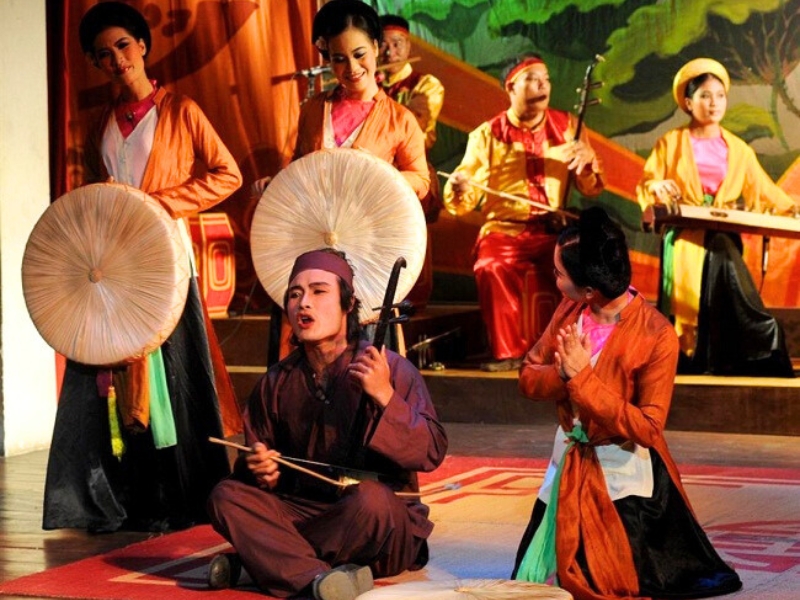
The performance begins with a series of drum rolls that end with three beats. It is at this moment that the orchestra intones the overture during which the main actress presents the plot of the piece. The audience knows perfectly all the rules of Cheo, which were defined as early as 1501. Throughout the performance, the actors comment on the action, question the audience who responds to them. Melodies known to all symbolize certain events such as marriage, birth, death. All the gestures of the actors, including the movements of the eyes and mouth, have a particular meaning. The chorus and the buffoon, an omnipresent key character, underscore the dramatic moments. The buffoon (he), made up in black, interrupts the actors and comments on their actions, ridicules them, or praises their feats. Often, the audience addresses an actor to ask him to repeat a sequence or question him about a detail of the plot. Theater cheo, close to peasant life, carries the spirit of synthesis of agricultural culture, a spirit that is clearly revealed in the art of sounds and colors. Vietnamese cheo is also the most democratic form of popular theater.