+84 9 75 46 33 10 (Whatsapp)
  info@horizon-vietnamtravel.com
  Français
  Español
  Português
  Deutsch

Com Vong (Green Glutinous Rice): The Autumn Blessing of Hanoi
Table of contents
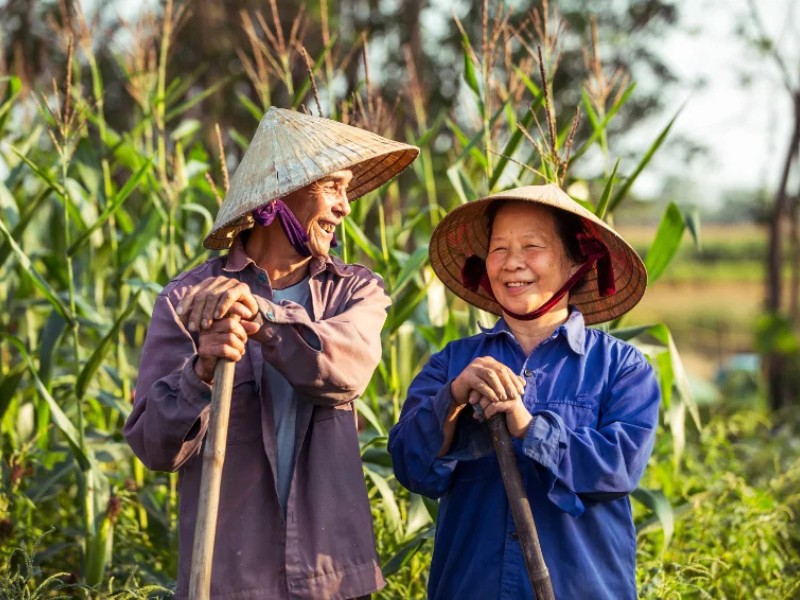
When autumn envelops Hanoi with its sweet golden reflections, an enchanting fragrance drifts through the air, announcing the arrival of Com (Green Glutinous Rice). This gastronomic treasure, often described as a blessing from the Gods, embodies the quintessence of the season and the magic of Vietnamese tradition. Imagine a small village nestled in the heart of Hanoi, where rice fields stretch as far as the eye can see. It is here, in the murmur of the wind caressing young rice ears, that Com is born. The farmers, with almost sacred devotion, rise before dawn to harvest the grains still green, a symbol of purity and renewal. Each grain is a promise, a fragment of the soul of Vietnamese earth. Every autumn, the inhabitants of Hanoi wait eagerly for this moment when Com returns to their lives. They savor it during family meals, offer it as a sign of respect to their ancestors, and use it in religious ceremonies, all in an atmosphere steeped in nostalgia and poetry. Thus, Com is not merely young glutinous rice, but a living story, a link between past and present, a celebration of the beauty and generosity of Vietnamese earth. Savoring each grain, one tastes a piece of eternity, an echo of the songs of ancestors, and a promise for future generations.

Every autumn, numerous street vendors sell Com in the streets of Hanoi
Com Vong – An Ancient Legacy
The history of Com from the village of Vong dates back more than a millennium, anchored in memories like a living legend. One day, as the ears of milky rice began to form and bend under their weight, a violent storm struck the region. The embankments collapsed under the pressure of the waters, and swollen rivers flooded the fields, destroying the harvests. Famine threatened, and cries of desperation echoed through the village.
Faced with this calamity, the inhabitants of Vong could not resign themselves to seeing months of hard work reduced to nothing. Defying the waters, they recovered the young rice ears, still green and full of milk, and brought them home. With ingenuity, they roasted these ears to make food reserves. This improvised product, born from desperate necessity, revealed an unexpected taste: sweet, tender, with an intoxicating fragrance.

Com Vong – An Ancient Legacy
This food, which had saved an entire village from famine, quickly became a tradition. Each year, when rice reached its maturity, the inhabitants of Vong repeated this ancestral gesture, harvesting the ears to make Com. It was no longer merely a survival food, but a celebration of human resilience and ingenuity.
Com Vong, with its sweet flavor and delicate texture, has become a symbol of prosperity and tradition. Savoring it, one tastes not only delicious food, but also the history of a people, their struggle against the elements and their ability to transform adversity into culinary beauty.
Thus, every autumn, the village of Vong fills with the intoxicating aroma of freshly prepared Com, perpetuating a thousand-year-old heritage. The tender green grains, wrapped in lotus leaves, remind everyone of the ingenuity and determination of their ancestors, celebrating the cultural and spiritual wealth of Vietnam.
Com Vong – Artisanal Precision in Every Grain
The process of preparing Com from the village of Vong is a meticulous art, inherited over centuries and perpetuated with devotion. This delicate food is made from various varieties of glutinous rice, but the most appreciated remains “nep cai hoa vang” glutinous rice. This rice is harvested during two seasons: the summer season and the autumn season, the latter (from mid-July to late September according to the lunar calendar) being the period when Com is most flavorful thanks to the cool autumn climate, which contributes to the sweetness and delicate aroma of Com.

Rice grains carefully selected from the fields are transformed into delicious Com by artisans through their skill
The ears of glutinous rice are harvested when still green and full of milk. These ears, carefully cut by hand, are chosen to preserve their freshness and flavor. The round and fragrant rice grains are first separated from their stem, then selected to eliminate straw and empty grains before being washed with water. This stage ensures that only the highest quality grains are used.

The pans used to roast Com are generally made of cast iron, which allows the grains not to burn while keeping them tender and fragrant.
For roasting, the cleaned grains are poured into large cast iron woks, heated over a wood fire, which allows the sweetness and fragrance of the grains to be preserved while giving them a natural emerald green color. This stage lasts about an hour, and it is essential to maintain constant heat and continuously stir the grains so they cook evenly without burning.
After roasting, the grains are cooled before being placed in a hulling machine for approximately 30 to 60 minutes to remove the husk. This stage is essential to prepare the grains for grinding. The cooled grains are then pounded in a mortar. This process is carried out regularly and continuously, typically seven times, to reach the desired consistency. Each batch of grains is pounded for approximately ten minutes, and residual husks are removed as they appear.

Each batch of Com is ground for approximately 3 minutes, but the process must be repeated 3 times
The Com is sifted and pounded three more times to obtain a clean final product ready to be packaged. The Com is then wrapped in two layers of leaves: an inner layer of taro leaves to maintain moisture and preserve the green color, and an outer layer of lotus leaves to add a subtle fragrance.
Packages of Com are distributed throughout the city, bringing the unique flavor of Vong to small corners of the streets of Hanoi. Every autumn, the village of Vong fills with the intoxicating aroma of freshly prepared Com, perpetuating a thousand-year-old tradition that celebrates the resilience and ingenuity of ancestors. This complex and laborious process is essential to produce Com of the highest quality, appreciated and celebrated not only for its taste but also for its cultural and spiritual heritage.
Fresh Com must be consumed quickly. Indeed, in humid weather, it tends to mold easily, while in dry weather it becomes hard and loses its soft consistency, which is one of the most appreciated characteristics of Com. Moreover, without the necessary equipment to pound it again, it is difficult to find this soft consistency, unlike merchants who can repound dried Com to restore its original consistency.

Com is wrapped in lotus leaves or taro leaves to maintain its moisture and freshness.
Many people prefer early-season Com for its pronounced rice milk flavor and exceptional tenderness. Others, however, prefer late-season Com, as the grains are then fuller, thicker and more flavorful, with the rice partially mature. The fragrance of Com is intoxicating, coming partly from the rice itself, from the pandan leaves used for color, and from the old lotus leaves that wrap it, impregnating each grain with the scent of the fields and the winds of the countryside.
Various Dishes Made with Com
Com, a Vietnamese culinary specialty, is young glutinous rice harvested before maturity and prepared according to traditional methods. Although Com is appreciated throughout Vietnam, it is in Hanoi that it is particularly renowned. This delicate food comes in a variety of dishes, each of which highlights the sweet flavor and unique texture of Com. Used in both sweet and savory recipes, Com adds a refined dimension to Vietnamese cuisine, reflecting the richness of its cultural and gastronomic heritage. Here are some of the different types of Com dishes that perfectly illustrate this culinary diversity.
Chuoi Cham Com (Bananas with Green Glutinous Rice)

To fully savor Chuoi Cham Com, you must eat slowly and carefully, to appreciate all the flavor of Hanoi
Com is even more flavorful when consumed with bananas. It is not known exactly when the inhabitants of Hanoi began the habit of eating bananas with Com, but no one can deny the perfect combination of these two foods.
To accompany Com, tieu bananas are used, with their yellow skin, sweet and firm, rather than tay bananas. Indeed, bananas have a sticky consistency that allows them to be easily dipped in Com without the grains falling off. By dipping the banana in Com and savoring it, one perceives a harmonious combination of sweetness, fineness and softness, creating a rich and delicious flavor.
Xoi Com (Glutinous Rice with Green Glutinous Rice)

Xoi Com with coconut, lotus seeds, mung beans, deliciously fragrant…
Xoi Com, or glutinous rice with green glutinous rice, is a traditional Vietnamese dish that harmoniously combines the soft texture of steamed glutinous rice with the fragrant sweetness of Com. This delicate food is often enriched with mung beans, shredded coconut, sugar, lotus seeds and sometimes coconut milk, offering a subtle combination of flavors and textures.
To prepare this dish, mung beans are first soaked, steamed and crushed into a smooth paste. Meanwhile, Com is carefully washed to remove impurities and mixed with a pinch of salt to enhance its taste. Com is then steamed until it becomes tender but still soft. Lotus seeds can also be steamed until they become tender.
Once the Com is cooked, it is gently mixed with the crushed mung beans, lotus seeds, shredded coconut and sugar. To add a touch of richness and creaminess, coconut milk can be incorporated, thus giving Xoi Com an even deeper and velvety flavor. For an authentic presentation, Xoi Com is often served on banana or lotus leaves, which adds an aesthetic touch and an additional aromatic dimension. This dish is particularly appreciated during festivals and celebrations, symbolizing the prosperity and wealth of the harvests.

Enjoy a cup of egg coffee accompanied by Xoi Com, a delicious and typically Hanoian experience
In Hanoi, a new trend enchants young people: buying Xoi Com to enjoy it while sipping coffee. In addition to enjoying walks in the beautiful autumn weather, they gather to savor this local specialty together in a warm and friendly atmosphere. This autumn ritual, which blends culinary tradition and moments of relaxation, quickly becomes a fascinating fashion, perfectly embodying the spirit of Hanoi in this season. The combination of fragrant Xoi Com and coffee creates a unique sensory experience that increasingly seduces young people, adding a delicious touch to their autumn outings.
Cha Com

Cha Com is a savory Vietnamese patty made with young glutinous rice
Cha Com is an emblematic dish of Vietnamese cuisine, particularly appreciated in the Hanoi region. This delicacy combines Com (young green glutinous rice) with ground pork and pork paste (gio song), to create savory and fragrant patties. To prepare this food, ground pork is mixed with pork paste and fish sauce, then dried Com is incorporated to achieve a homogeneous consistency. The formed patties are then steamed on banana or lotus leaves, adding a subtle aroma and preventing the patties from sticking. After steaming, they are lightly cooled and then fried in oil until golden and crispy on both sides. Served hot, Cha Com patties are often accompanied by fresh vegetables and a dipping sauce, offering a unique combination of textures and flavors, making this dish a must for lovers of Vietnamese cuisine.

Cha Com is often included in Bun Dau Mam Tom, thus enhancing the flavor of this popular dish
Furthermore, Cha Com is frequently included in Bun dau mam tom, a popular dish composed of rice vermicelli, fried tofu and fermented shrimp paste. The addition of Cha Com brings a rich and unique flavor, as well as a crispy and soft texture, which perfectly complement the other ingredients. This combination enhances the overall dish, making it even more irresistible for lovers of Vietnamese cuisine.
Com Xao (Green Glutinous Rice Stir-Fried with Coconut)

Com Xao (Green Glutinous Rice Stir-Fried with Coconut) – A simple autumn sweetness in Hanoi that enchants so many people
Com Xao, also known as green glutinous rice stir-fried with coconut, is a traditional Vietnamese dessert that highlights the sweetness and unique texture of Com, a young green glutinous rice. This dish is appreciated for its simplicity and richness of flavors, often consumed during autumn festivities. Com is first rinsed and lightly rehydrated before being stir-fried over gentle heat with water to reach a soft consistency. Subsequently, ingredients such as shredded coconut, sugar and coconut milk are added, creating a harmonious combination of sweetness and creaminess. Com Xao is often served in lotus leaves to add a touch of additional aroma and visual appeal. This dish is ideal to accompany a cup of green tea during autumn afternoons, offering a delicate and comforting culinary experience.
Che Com (Sweet Soup with Young Green Glutinous Rice)

Che Com (Sweet Soup with Young Glutinous Rice) is a classic Vietnamese delicacy
Che Com, or sweet soup with young glutinous rice, is a classic Vietnamese delicacy, particularly appreciated in Hanoi. This elegant dessert is prepared with Com, a young green and tender glutinous rice, combined with ingredients such as arrowroot starch and sugar to create a velvety and refreshing soup. Che Com is particularly popular in autumn, when the rice is freshly harvested, bringing a soft texture and sweet and subtle flavor. Sometimes, aromas of pomelo or jasmine flowers are added for an additional aromatic dimension, and coconut milk can be incorporated for a richer texture. This dessert, served hot or cold, is often garnished with shredded coconut for additional texture and an attractive presentation. Che Com embodies the simplicity and elegance of traditional Vietnamese cuisine, offering a unique and memorable gustatory experience.
Vietnamese Omelette with Com (Green Glutinous Rice)

Vietnamese Omelette with Com (Green Glutinous Rice)
The preparation begins with rinsing the Com to remove impurities, followed by draining it. Eggs are beaten in a bowl with fish sauce, salt, pepper and chopped chives, then Com is incorporated into the mixture. Oil is heated in a pan over medium heat, and the mixture of eggs and Com is poured into the pan and cooked until the omelette is golden on both sides. The omelette is served hot, often accompanied by fresh vegetables or a light sauce.
Banh Com (Young Glutinous Rice Cake)
Banh Com, or cake made with young glutinous rice, is an emblematic Vietnamese dessert, particularly appreciated in Hanoi. Made from Com, a young green glutinous rice, this delicate cake is often tasted during festivals and weddings. The main ingredients include Com, mung beans, sugar, shredded coconut and aromas such as vanilla extract or orange blossom water. The preparation begins with steaming the Com until it becomes tender. Mung beans, steamed and then crushed into a smooth paste, are mixed with sugar and coconut to create a savory filling. Com is flattened, filled with this paste and then folded to form square or round cakes, often wrapped in banana leaves to add a traditional and fragrant touch.

Banh Com (Young Glutinous Rice Cake) is an emblematic Vietnamese dessert, particularly appreciated in Hanoi
Beyond being a delicious dessert, Banh Com (Young Glutinous Rice Cake) is also a perfect souvenir to take back from your trip to Vietnam, symbolizing the cultural and culinary wealth of the region. This cake symbolizes not only sweetness and prosperity but also artisanal knowledge and the gastronomic heritage of Vietnam. Take it with you to introduce your loved ones to a unique specialty, full of flavors and traditions.
Conclusion
Com (Green Glutinous Rice) symbolizes a cultural and culinary wealth deeply rooted in the traditions of Hanoi and other regions of Vietnam. This unique glutinous rice is found in a variety of delicious dishes such as Xoi Com, a delicate combination of steamed glutinous rice with green glutinous rice, the appetizing Cha Com patties, and the refined dessert that is Che Com. Each dish highlights the versatility and distinctive consistency of this glutinous rice.
Com is also appreciated for its aesthetic and aromatic qualities. Frequently associated with lotus or banana leaves, it adds a touch of tradition and refinement to every preparation. These leaves not only enhance the visual appearance of the dishes but also infuse the Com with subtle aromas, enriching the culinary experience. The ability of Com to harmoniously blend with diverse ingredients while retaining its own identity makes it an indispensable element of Vietnamese gastronomy.
It combines simplicity and elegance, offering a range of flavors and textures that seduce the senses. Incorporating Com into your culinary creations means not only appreciating the authentic taste of Vietnam but also honoring a centuries-old tradition that continues to delight the palates of people around the world. By incorporating this green glutinous rice into your dishes, you celebrate a rich culinary and cultural heritage that reflects the history and soul of Vietnam.