+84 9 75 46 33 10 (Whatsapp)
  info@horizon-vietnamtravel.com
  Français
  Español
  Português
  Deutsch

From Flowers to Plate: The Floral Touch of Vietnamese Cuisine
Table of contents
Vietnamese floral cuisine is a true ode to nature, where flowers become far more than simple ingredients. Renowned for its sophistication and creativity, this unique gastronomy integrates flowers such as lotus, jasmine, squash blossoms, and banana blossoms, which bring delicate fragrances, exquisite textures, and a dazzling aesthetic to every dish. From the mountainous North to the lush plains of the South, these natural treasures enrich traditional recipes, transforming simple dishes into true culinary masterpieces. Through this perfect fusion of nature and culinary art, Vietnamese cuisine celebrates the beauty, flavors, and benefits of flowers, offering a sensory experience of rare elegance.
Hoa sen (Lotus Flowers)
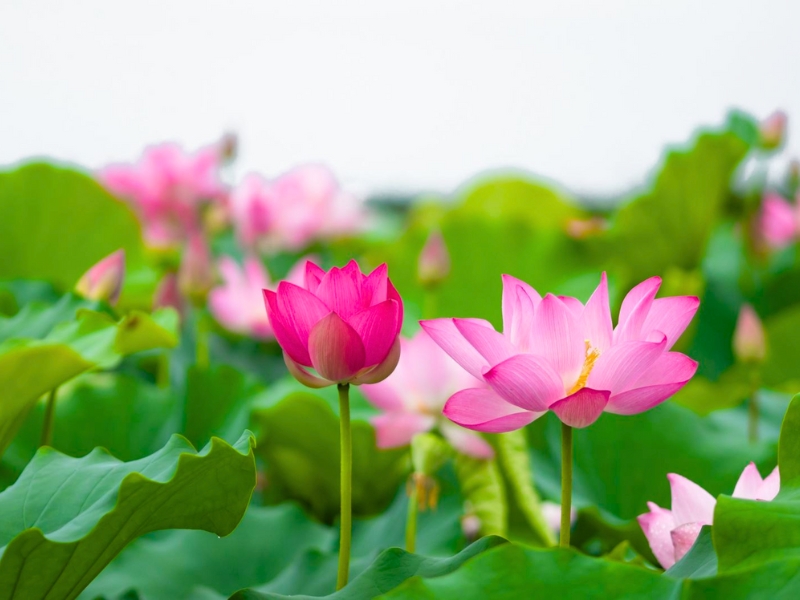
Vietnamese floral cuisine highlights lotus, the national symbol of purity, serenity, and beauty, integrated ingeniously into numerous dishes. Far more than a decorative element, every part of this plant, from the bud to the stems, is utilized to offer delicate flavors and remarkable nutritional virtues.
Steamed meatballs with lotus flowers (chả hấp hoa sen) offer a subtle and aromatic culinary experience, while the lotus stem salad with shrimp (gỏi ngó sen tôm), which blends lotus stems, shrimp, fresh vegetables, and herbs, is dressed with a sweet and sour sauce. The lotus flower tea (trà hoa sen) is prized for its relaxing properties and digestive benefits, while glutinous rice steamed in lotus leaves (xôi lá sen) releases a delicate fragrance, perfect for special occasions.
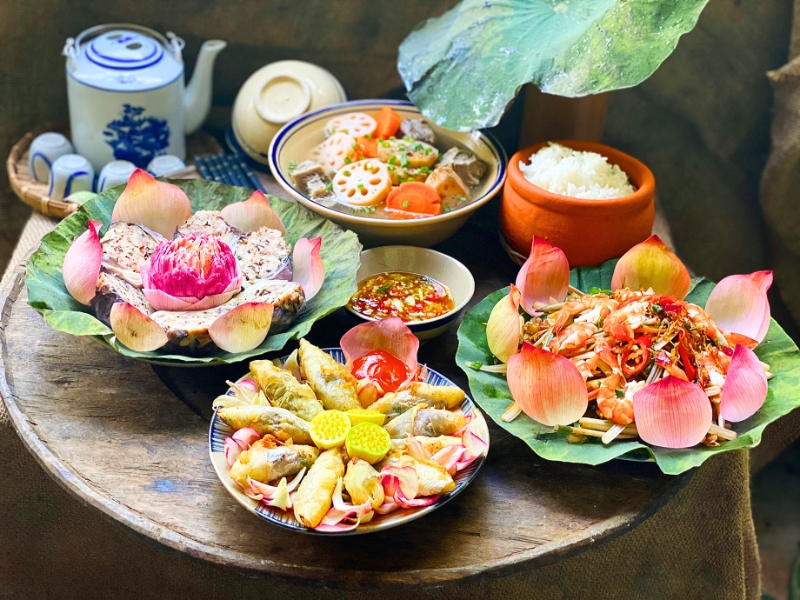
Thus, the lotus, far more than a simple decoration, finds its place at the heart of Vietnamese cuisine, transforming every dish into a refined and enriching gastronomic experience. Dishes prepared with lotus are not only beautiful to see, but also rich in flavors and nutrients, bringing a touch of purity and serenity to the table. From fresh and crispy salads to calming beverages and fragrant rice, lotus truly embodies the essence of Vietnamese gastronomy, where every meal becomes a celebration of nature and culture.
Hoa buoi (Grapefruit Flower)
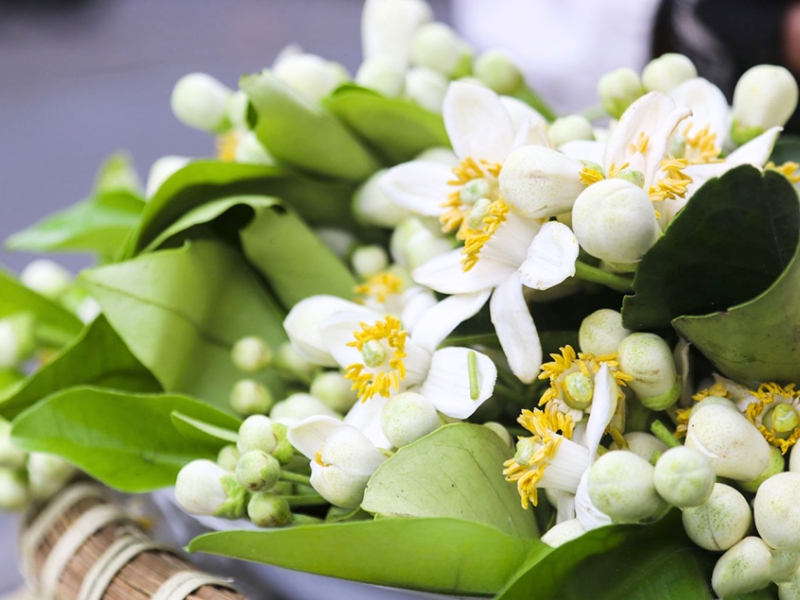
Hoa buoi (Grapefruit flower)
The hoa buoi, or grapefruit flower, holds a special place in Vietnamese cuisine. Not only for its intoxicating fragrance, but also for its numerous culinary applications. A symbol of freshness and renewal, the grapefruit flower is used creatively to enhance flavors and add a touch of elegance to various dishes and beverages.
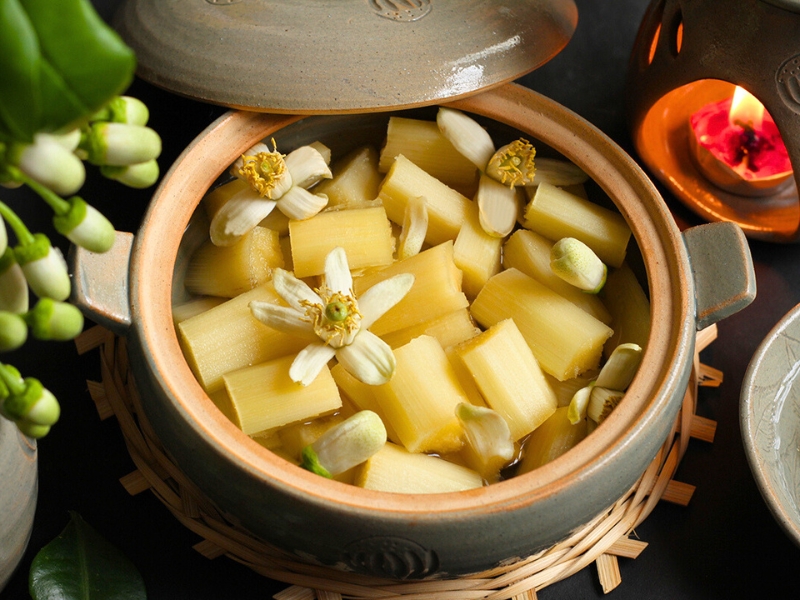
Mia uop hoa buoi (Sugarcane perfumed with grapefruit flower)
The grapefruit flower-perfumed sugarcane (Mia uop hoa buoi) offers a sweet flavor and an enveloping fragrance, perfect for hot summer days. Moreover, grapefruit flower syrup, prepared from the essence of the flower, can be used in various beverages and desserts, adding a refined floral touch to every dish. Grapefruit flower honey combines the sweetness of honey with the subtle fragrance of the flower, known for its therapeutic benefits, helping to relieve colds and headaches while offering a sense of relaxation. Grapefruit flowers are sometimes also used to perfume traditional Vietnamese desserts, adding a unique and delicate floral note.
Another interesting use of grapefruit flowers is the cassava starch perfumed with grapefruit flower (bot san uop huong buoi). This preparation involves perfuming cassava starch with the essence of grapefruit flowers, thus creating a versatile ingredient for various desserts. This starch can be used to prepare puddings, jellies, and other sweets, bringing to every bite a touch of floral fragrance and a delicate texture.
Hoa tam giac mach (Buckwheat Flower)
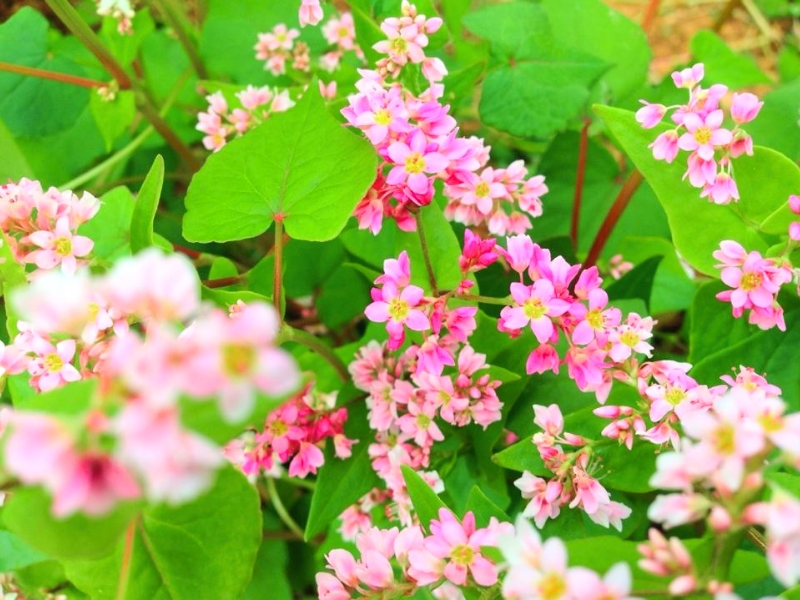
Hoa tam giac mach (Buckwheat flower)
The hoa tam giac mach (buckwheat flower) is emblematic of the mountainous regions of northern Vietnam, particularly in Hà Giang province. These delicate and colorful flowers play an important role in local culture and are also used creatively in Vietnamese cuisine.
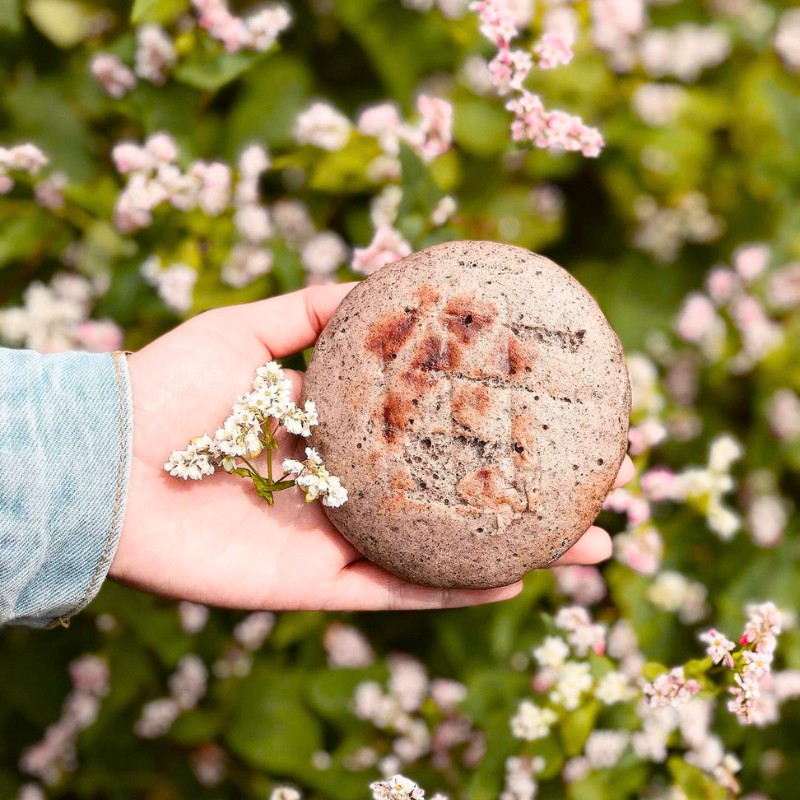
Banh tam giac mach (Buckwheat sweets)
In Vietnamese floral cuisine, buckwheat flowers (hoa tam giác mạch) and their seeds occupy a unique place, bringing a variety of textures and flavors to dishes. Transformed into flour, buckwheat seeds allow for creating buckwheat sweets (banh tam giac mach), small treats with a sweet and nutty taste and a slightly crispy texture, often consumed as a snack or dessert. Buckwheat noodles (mì tam giác mạch), also made from this flour, enrich soups and stir-fried dishes with their distinctive flavor and delicate texture.
Furthermore, buckwheat flowers and seeds are sometimes infused to obtain buckwheat tea (tra tam giac mach), a tea appreciated for its antioxidant properties and beneficial effects on digestion. This tea with sweet and subtly toasted aromas is an ideal calming beverage. Buckwheat flowers are also used as a garnish for salads and other dishes, bringing a decorative touch and a light floral note that enhances flavors. Vietnamese floral cuisine, thus enriched by buckwheat, celebrates the harmony between nature and culinary art.
Hoa chuoi (Banana Flower)
Hoa chuoi, or banana flower, is an emblematic ingredient in Vietnamese cuisine, particularly popular in rural regions. Known for its crispy texture and slightly astringent flavor, banana flower is used in a variety of traditional dishes.
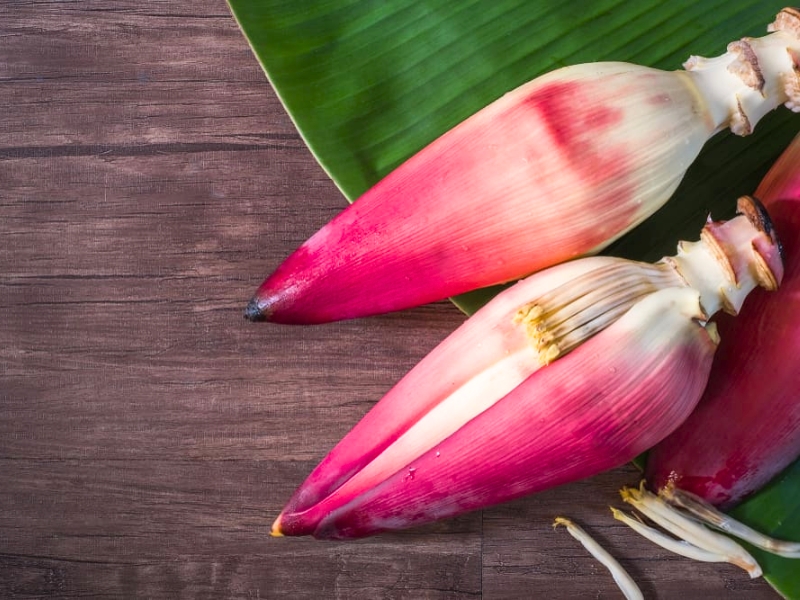
Hoa chuoi (Banana flower)
The banana flower salad (nom hoa chuoi) is a refreshing and nutritious dish. The flowers are finely sliced and mixed with fresh herbs, vegetables, and often seafood or chicken. The salad is dressed with a sweet and sour sauce based on lime, nuoc mam (fish sauce), and sugar, creating an explosion of flavors. In this traditional soup (canh hoa chuoi), banana flowers are added to a clear broth with pork or fish, vegetables, and aromatic herbs. The soup is light, nutritious, and offers a unique texture thanks to banana flowers.
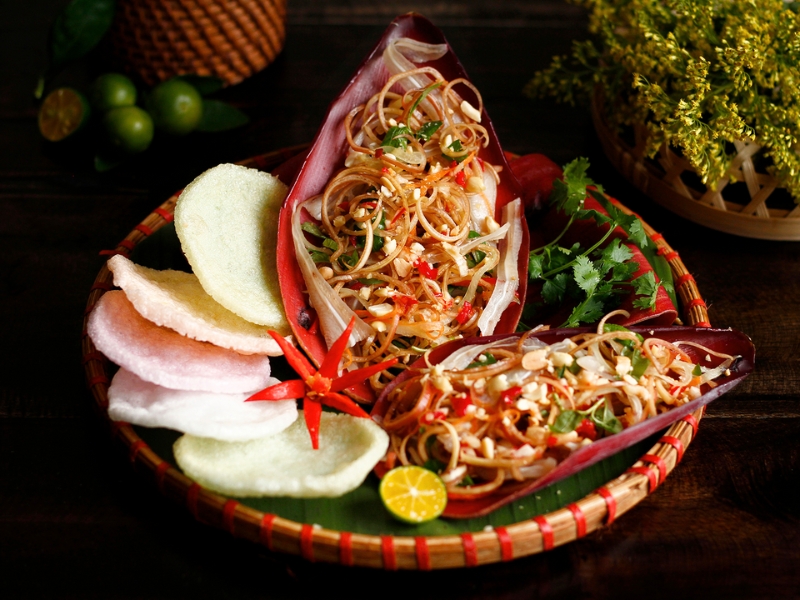
Nom hoa chuoi (Banana flower salad)
Banana flowers are rich in fiber, vitamins, and minerals, particularly vitamin A, calcium, and iron. They are also known for their anti-inflammatory and antioxidant properties, helping to improve digestion, regulate blood sugar, and strengthen the immune system.
The hoa chuoi (banana flower) is a versatile and valuable ingredient in Vietnamese cuisine. Its ability to be used in a multitude of dishes, from refreshing salads to nutritious soups through crispy tempura, demonstrates the culinary ingenuity of the Vietnamese. By integrating banana flowers into various dishes, Vietnamese cuisine celebrates not only the richness of its local ingredients, but also the diversity of its culinary traditions.
Hoa Thien Ly (Tonkin Jasmine)
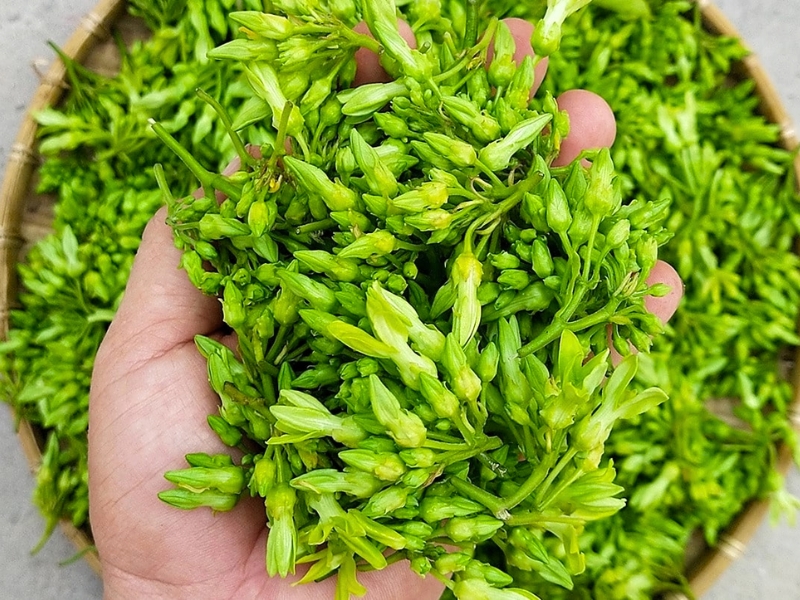
Hoa Thien Ly (Tonkin jasmine)
Tonkin jasmine (Hoa thien ly) is a fragrant climbing plant widely used in Vietnamese cuisine for its delicate aroma and health benefits. Integrated into various Vietnamese recipes, it brings a subtle flavor and pleasant fragrance. The Tonkin jasmine soup (canh hoa thien ly), often prepared with shrimp or pork, is light and nourishing, appreciated for its refreshing and calming properties. Beef stir-fried with Tonkin jasmine flowers (thit bo xao hoa thien ly) combines the flowers with marinated pieces of beef, garlic, and onions, offering a perfect balance between the tenderness of the meat and the delicacy of the flowers.
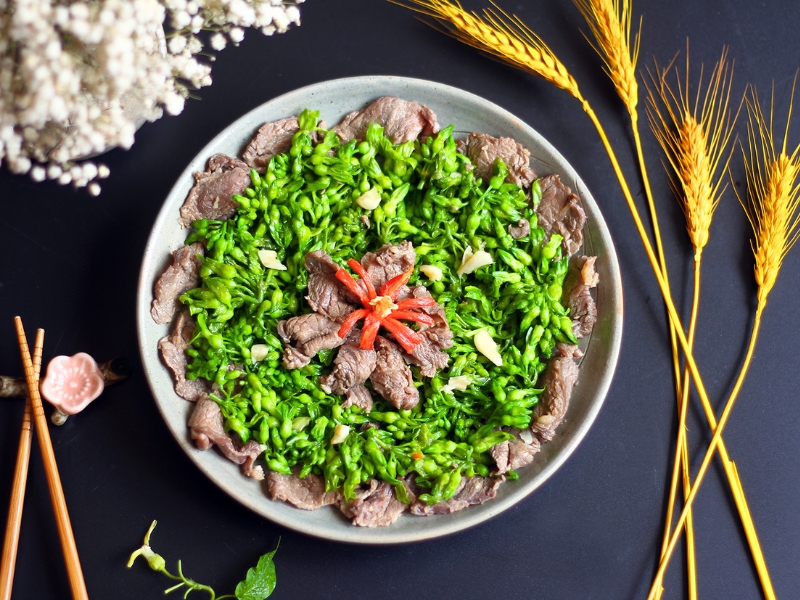
Thit bo xao hoa thien ly (Beef stir-fried with Tonkin jasmine flowers)
Vietnamese floral cuisine highlights Tonkin jasmine, a natural treasure rich in vitamins and minerals, particularly vitamin C, iron, and calcium. Appreciated for its calming properties and digestive benefits, it helps reduce stress, improves sleep quality, and strengthens the immune system. Integrated into delicate soups, stir-fried dishes, or fresh salads, Tonkin jasmine perfectly illustrates the art of sublimating natural ingredients, transforming every meal into a unique and elegant gastronomic experience, steeped in tradition and refinement.
Hoa bí (Squash Flower)
Hoa bi (Squash flower) is widely used in Vietnamese cuisine for its delicate flavors and pleasant texture. These vibrant yellow flowers are particularly appreciated for their versatility and ability to enrich various dishes with their unique taste.
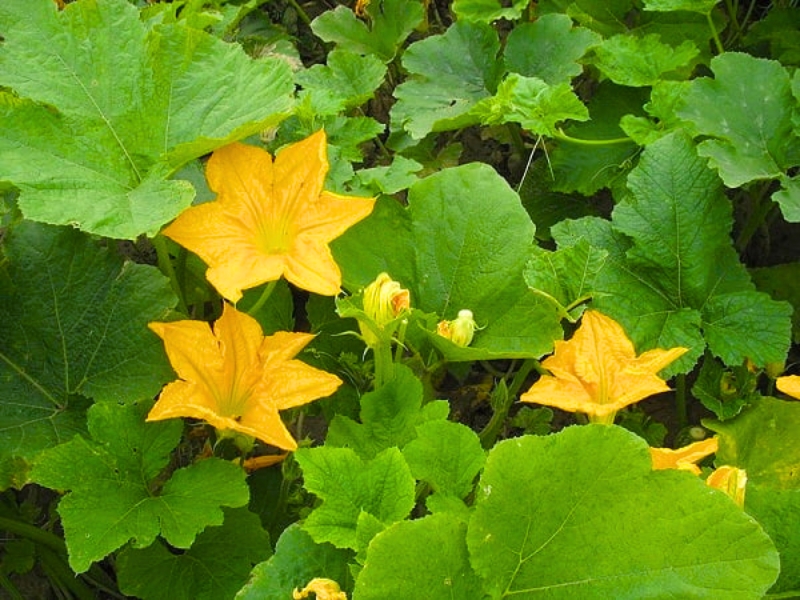
Hoa bí (Squash flower)
Squash flowers are commonly used to prepare various dishes. The squash flower soup (canh hoa bi) is a light and nutritious dish often prepared with shrimp or pork. The flowers add a subtle sweetness and crispy texture to the soup, completed by aromatic herbs for a refreshing taste. They can also be stir-fried with garlic, onions, and other vegetables in the hoa bi xao dish, highlighting their tender texture and slightly sweet flavor, often accompanied by beef, pork, or shrimp. A popular example is hoa bi xao tom, where squash flowers are stir-fried with shrimp for a delicious combination of flavors and textures.
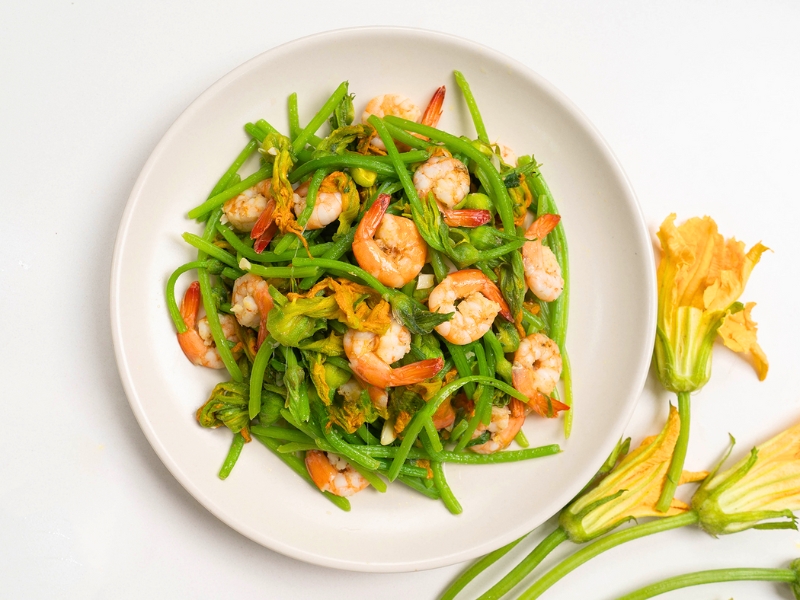
Bong bi xao tom (Squash flowers stir-fried with shrimp)
For a more festive preparation, squash flowers can be wrapped in a light batter and fried to create crispy tempura (hoa bí chiên giòn). This dish is popular for its contrasting textures and delicious taste. Finally, squash flowers can be mixed with fresh herbs, vegetables, and sometimes seafood or chicken to create a squash flower salad (gỏi hoa bí), dressed with a sauce based on lime, fish sauce, and sugar for an explosion of flavors.
Squash flowers are rich in vitamins and minerals, particularly vitamin A, calcium, and iron. They also contain antioxidants that help strengthen the immune system and protect against disease. Furthermore, they are low in calories, making them an excellent choice for healthy and balanced nutrition.
Bong artiso xanh (Green Artichokes)
Green artichokes are widely used in Vietnamese cuisine, particularly in Đà Lạt, a region renowned for artichoke cultivation. Appreciated for their delicate flavor and health benefits, green artichokes are integrated into a variety of Vietnamese dishes.
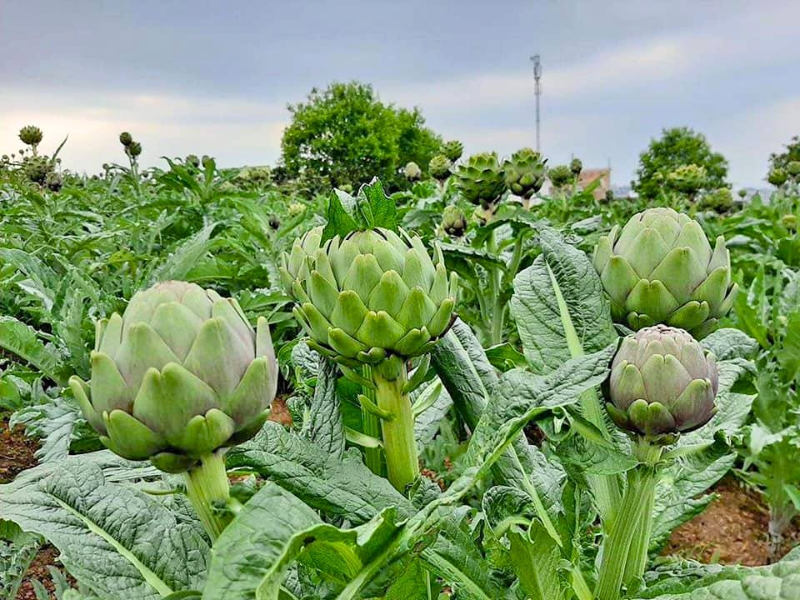
Bong artiso xanh (Green artichokes)
The bông artiso xanh, or green artichokes, are widely used in Vietnamese cuisine for their delicate flavors and numerous health benefits. Artichoke soup, for example, is a nourishing and light dish often prepared with pork ribs, vegetables, and aromatic herbs. Artichokes add a sweet flavor and tender texture to it, offering a clear, refreshing, and soothing broth.
The bông artiso xanh, or green artichokes, are widely used in Vietnamese cuisine for their delicate flavors and numerous health benefits. Artichoke soup, for example, is a nourishing and light dish often prepared with pork ribs, vegetables, and aromatic herbs. Artichokes add a sweet flavor and tender texture to it, offering a clear, refreshing, and soothing broth.
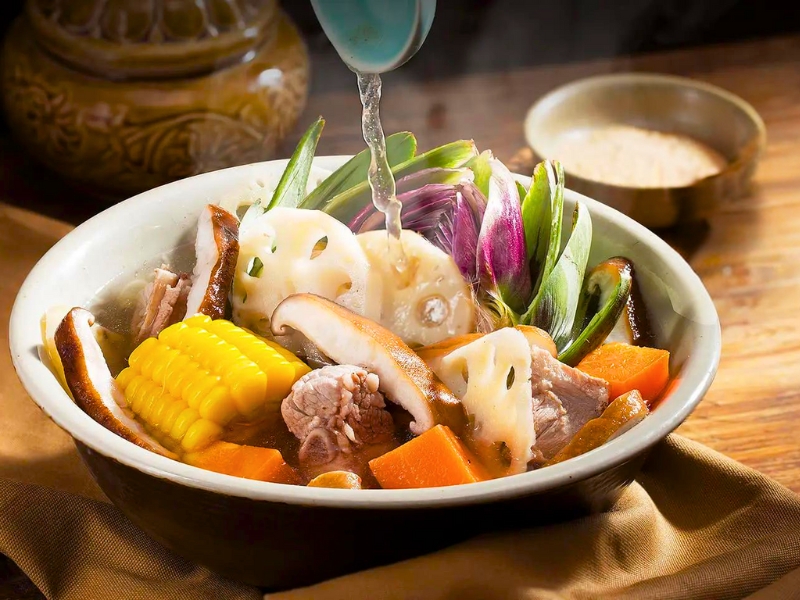
Canh Atiso (Artichoke soup)
Vietnamese floral cuisine also celebrates the benefits and flavors of artichokes, an ingredient appreciated for its multiple uses. Artichoke tea, or tra atiso, is an emblematic beverage, recognized for its detoxifying and digestive properties. Prepared from artichoke leaves and flowers, this tea offers a slightly sweet and refreshing taste. Artichokes themselves, simply boiled, are often served with an accompaniment sauce based on fish sauce or lemon vinaigrette, highlighting their natural and sweet flavor.
In its more elaborate version, the artichoke is stuffed with a mix of ground meat, herbs, and spices, then steamed or baked, giving life to atiso nhồi thịt. This refined dish seduces for its complex flavors and appealing presentation, testifying to Vietnamese culinary art.
Rich in antioxidants, fiber, vitamins (C and K), and essential minerals such as magnesium and potassium, artichokes bring benefits for digestion, liver health, and cholesterol regulation. Artichoke tea, in particular, is appreciated for its calming and revitalizing effects, embodying the very essence of Vietnamese floral cuisine: uniting flavors, aesthetics, and wellness.
Hoa ban (Bauhinia Flower)
The bauhinia flower (hoa ban) is a culinary specialty of the mountainous regions of northwestern Vietnam, particularly among ethnic communities such as the Thai and H’mong. Appreciated for its unique flavor and nutritional properties, bauhinia flower is used in a variety of traditional dishes.
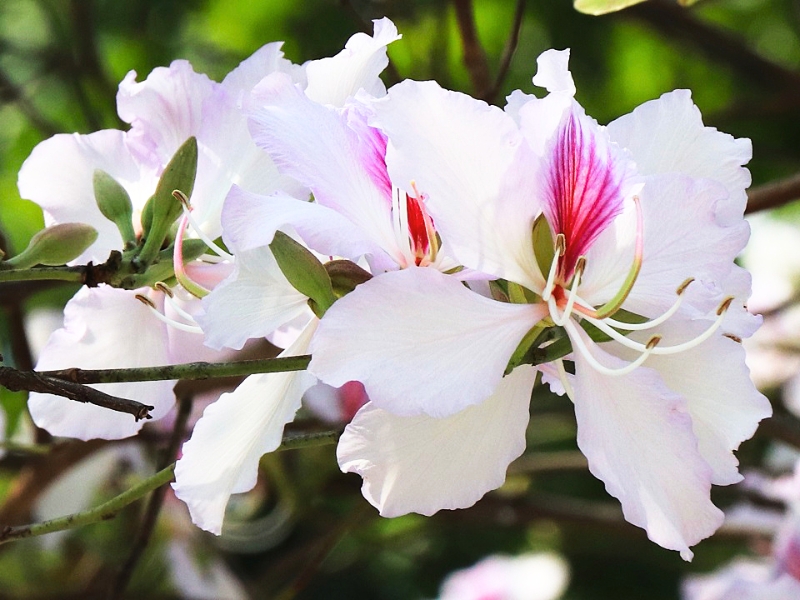
Hoa ban (Bauhinia flower)
Bauhinia flowers are often used to prepare refreshing salads. Mixed with fresh herbs, vegetables, and sometimes proteins such as chicken or shrimp, the flowers are dressed with a sweet and sour sauce based on lime, fish sauce, and sugar, offering an explosion of flavors and a crispy texture. They can also be stir-fried with garlic, onions, and other vegetables, highlighting their tender texture and slightly sweet taste. This simple but flavorful dish, often accompanied by pork or beef, is a delicious main course.
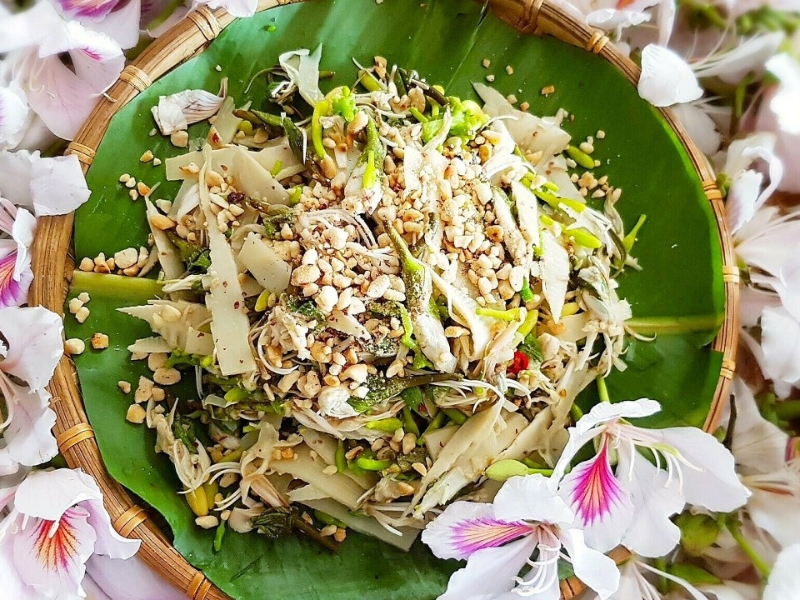
Nom hoa ban mang dang (Salad of Bauhinia flowers and bitter bamboo shoots)
Vietnamese floral cuisine perfectly illustrates the art of transforming flowers into exquisite dishes. In clear soups, bauhinia flowers bring a subtle sweetness and delicate texture to the broth, often prepared with chicken or pork for a light and nourishing dish. Another specialty features these flowers stuffed with a mix of ground meat, herbs, and spices, then steamed. This refined dish seduces both for its visual elegance and the richness of its flavors, embodying the ingenuity and refinement of Vietnamese floral cuisine.
Bông điên điển (Sesbania Flowers)
The bông điên điển, or sesbania flowers, are a culinary delicacy highly appreciated in the Mekong Delta region of Vietnam. These vibrant yellow flowers are prized for their delicate flavor and crispy texture, enriching a variety of traditional dishes.
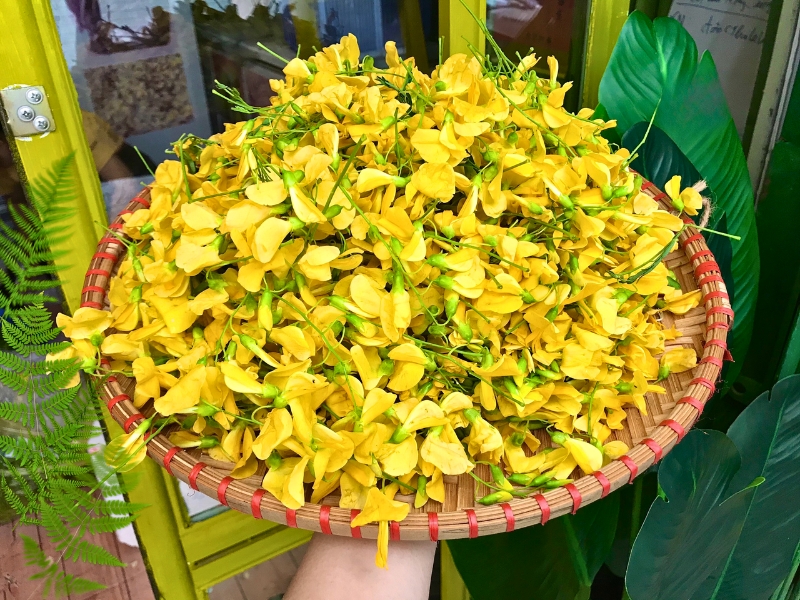
Bong dien dien (Sesbania flowers)
The sour soup with sesbania flowers (canh chua bong dien dien) is an emblematic dish, prepared with fresh fish, tomatoes, and sesbania flowers, offering a combination of sour and sweet flavors. Sesbania flowers can also be stir-fried with garlic, onions, and sometimes shrimp or pork, creating a simple but delicious dish. Mixed with fresh herbs, vegetables, and seafood or chicken, sesbania flowers bring a unique floral touch to salads, dressed with a sweet and sour sauce based on lime, fish sauce, and sugar. Furthermore, the fermented fish fondue with sesbania flowers (lẩu mắm cá linh bông điên điển) is an emblematic dish that combines fermented fish with fresh vegetables and sesbania flowers, offering a combination of intense and unique flavors.
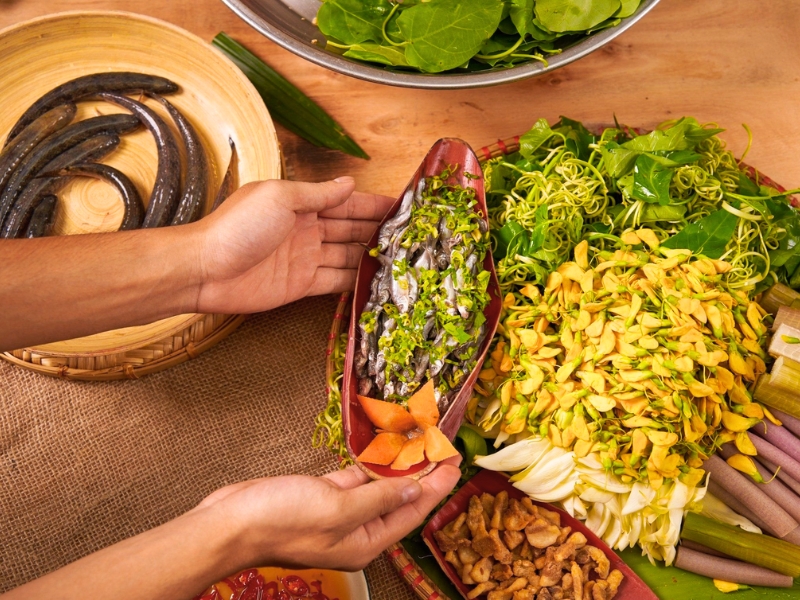
Lau mam ca linh bong dien dien (Fermented fish fondue with sesbania flowers)
Finally, added to beaten eggs, they create a tasty and nutritious omelet, often served for breakfast or as a side dish. Rich in vitamins and minerals, particularly vitamin A and iron, sesbania flowers also contain antioxidants that help strengthen the immune system and protect against disease. They are known for their anti-inflammatory properties and the ability to improve digestion. By integrating bông điên điển into various dishes, Vietnamese cuisine celebrates the richness of its local ingredients and the diversity of its culinary traditions.
Vietnamese floral cuisine is a true celebration of the senses, where the integration of flowers transforms every dish into a unique culinary work. From fragrant grapefruit flowers to crispy sesbania flowers, through delicate lotus flowers and vibrant squash flowers, each variety brings its own richness of flavors, textures, and benefits. Far more than simple ornaments, these flowers play a central role in creating refined and nutritious dishes. Through the ingenious use of edible flowers, Vietnamese cuisine pays homage to nature while sublimating its culinary traditions, offering gastronomic experiences that are both authentic and unforgettable.