+84 9 75 46 33 10 (Whatsapp)
  info@horizon-vietnamtravel.com
  Français
  Español
  Português
  Deutsch

Ha Giang Cuisine: Local Specialties Not to Miss
Table of contents
Nestled in the heart of northern Vietnam’s mountains, Ha Giang province captivates travelers with its spectacular landscapes, authentic ethnic villages… and its cuisine as unknown as it is delicious. Here, every dish tells a story, that of the Hmong, Dao, Tay or Lo Lo peoples, who pass down from generation to generation simple, nutritious and characterful recipes. Far from tourist restaurants, Ha Giang cuisine is discovered at the market, in a stilt house or by the fire, during a shared meal. Fragrant broths, dried meats, corn flatbreads or artisanal liquors: the flavors are bold, local and deeply rooted in the rhythm of nature and seasons. Whether you are passionate about culinary discoveries or simply curious, follow us for a gastronomic immersion into the heart of a culinary heritage still preserved.

Au Tau Soup
Au tau soup, or chao au tau, is one of the most emblematic dishes of Ha Giang cuisine. Prepared with rice, pork bones cooked for a long time and au tau root – a local plant with tonic properties – this soup stands out for its flavor that is at once sweet and slightly bitter. The inhabitants of the mountains particularly appreciate it for its warming and comforting properties, ideal for long winter nights.
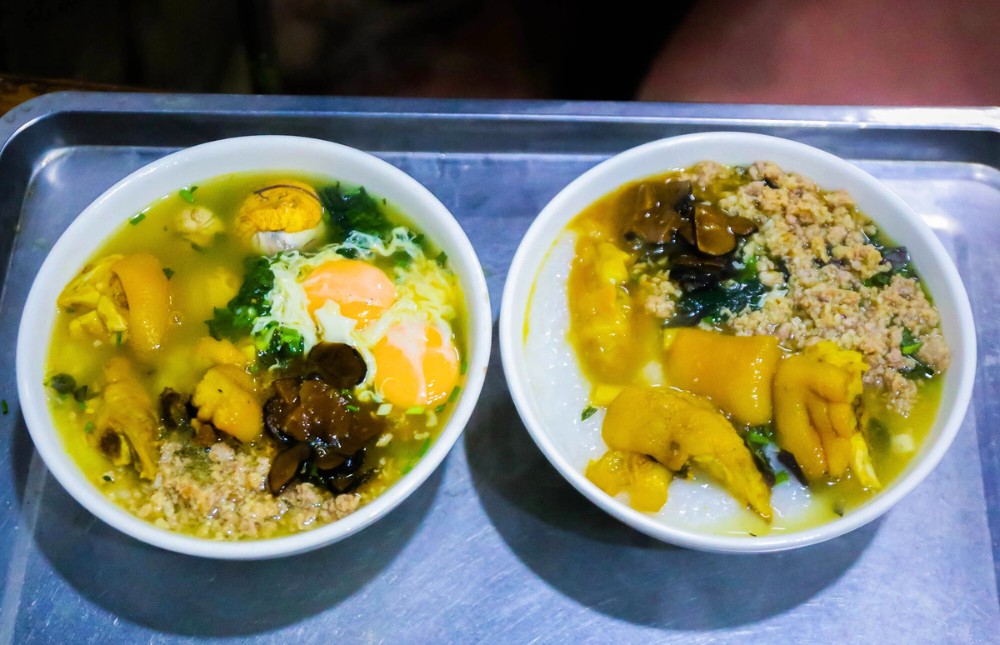
Au tau soup – a nocturnal treasure of Ha Giang, combining sticky rice, pork shin and toxic root turned remedy
Its singular flavor is sweetened by the addition of shredded pork and fresh aromatic herbs, creating a harmonious balance between the woody scent of the root and the sweetness of the broth. Served piping hot, au tau soup is not only a nourishing dish, but also a folk remedy against the cold, passed down from generation to generation.
Thang Den (Sticky Rice Balls in Ginger Syrup)
Thang Den is a small delicacy well known to Ha Giang inhabitants, often enjoyed at winter markets or during traditional festivities. These sticky rice balls, sometimes filled with sesame or peanuts, are gently boiled before being served in a hot ginger syrup lightly sweetened with sugar.

Thang Den (Sticky Rice Balls in Ginger Syrup)
Warm, soft and fragrant, this dessert comforts sweet-tooths by giving a pleasant sensation of warmth, ideal for braving the cold of the northern mountains. Simple, generous and convivial, thang den remains one of the small unmissable pleasures of Ha Giang cuisine.
Banh Tam Giac Mach (Buckwheat Cake)
The buckwheat cake is prepared with buckwheat flour, a grain typical of the northern mountains, and has long accompanied the daily life of the inhabitants. Its soft texture, slightly sweet taste and hazelnut note evoke all the simplicity and authenticity of the region.

Banh Tam Giac Mach (Buckwheat Cake)
It is easily found in markets or during buckwheat flower festivals, ready to be enjoyed while still warm, often shared among friends or family in a convivial atmosphere. This modest and flavorful small cake is today one of the symbols of Ha Giang cuisine, appreciated both for its taste and for the story it carries with it.
Lau Ga Den (Black Chicken Hotpot)
In Ha Giang villages, black chicken hotpot often accompanies shared meals, especially when evenings become cool. Black chicken, a local breed raised outdoors, offers dense and flavorful meat, quite different from common chicken. The broth, fragrant with mountain herbs and spices found only in this region, simmers slowly before welcoming the meat.

Lau Ga Den (Black Chicken Hotpot)
Around the pot, everyone takes turns immersing vegetables, tofu or noodles. The meal extends, marked by simple gestures and conversations, in an atmosphere where warmth comes not only from the fire but also from the pleasure of being together. This hotpot, far from being merely a dish, is part of those moments of life that give Ha Giang cuisine its quiet beauty.
Banh Cuon Ha Giang (Steamed Rolled Rice Crêpes)
Banh cuon is a dish found throughout Vietnam, but its Ha Giang version has peculiarities that distinguish it from other regions. Traditionally, banh cuon is served with a sauce based on nuoc mam (fish sauce). However, in Ha Giang, it is accompanied by a hot broth prepared with pork bones cooked for a long time, which offers a sweet and comforting flavor.

Banh Cuon Ha Giang (Steamed Rolled Rice Crêpes)
This culinary adaptation responds to the needs of mountain inhabitants, where mornings are often cold. Consuming hot dishes, such as banh cuon with steaming broth, helps warm up and face the local climate. Another specificity of Ha Giang is banh cuon egg, a variant in which an egg is added directly to the batter during cooking, creating a rich texture and unique flavor. This type of banh cuon is particularly appreciated in the region. Thus, Ha Giang’s banh cuon stands out for its accompaniment with hot broth and its local variants, reflecting the adaptation of cuisine to the climatic and cultural peculiarities of the mountainous region.
Pho Chua (Sour Pho)
Among the popular specialties of Ha Giang cuisine, pho chua offers an experience different from traditional pho. Here, no steaming soup, but a dish of rice noodles served cold or warm, accompanied by a slightly tart sweet-and-sour sauce. This surprising combination is made up of shredded pork, roasted meat, roasted peanuts, marinated papaya or carrots and fresh herbs.
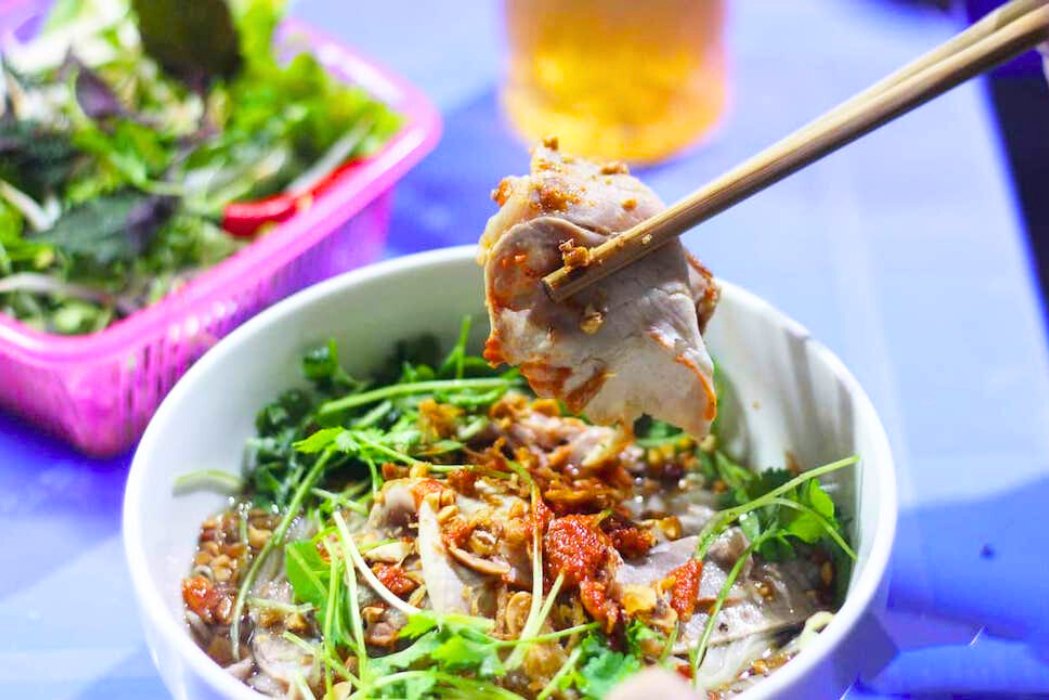
Pho Chua (Sour Pho)
The peculiarity of pho chua lies in its sauce, often based on rice vinegar and sugar, which balances the flavors by bringing freshness and lightness. Enjoyed during hot days or after long hikes through the mountains, this simple and colorful dish is enjoyed in small restaurants and markets in Ha Giang, often as a snack or quick lunch.
Thang Co (Horse and Offal Stew)
Thang co is one of the oldest and most typical dishes of Ha Giang cuisine. Originally, this stew was prepared exclusively with horse offal, but today, to adapt to visitors’ tastes, it is often found also with beef, pork or sometimes buffalo. Despite these variations, the soul of the dish remains unchanged: a rich and fragrant soup whose heart lies in the broth.
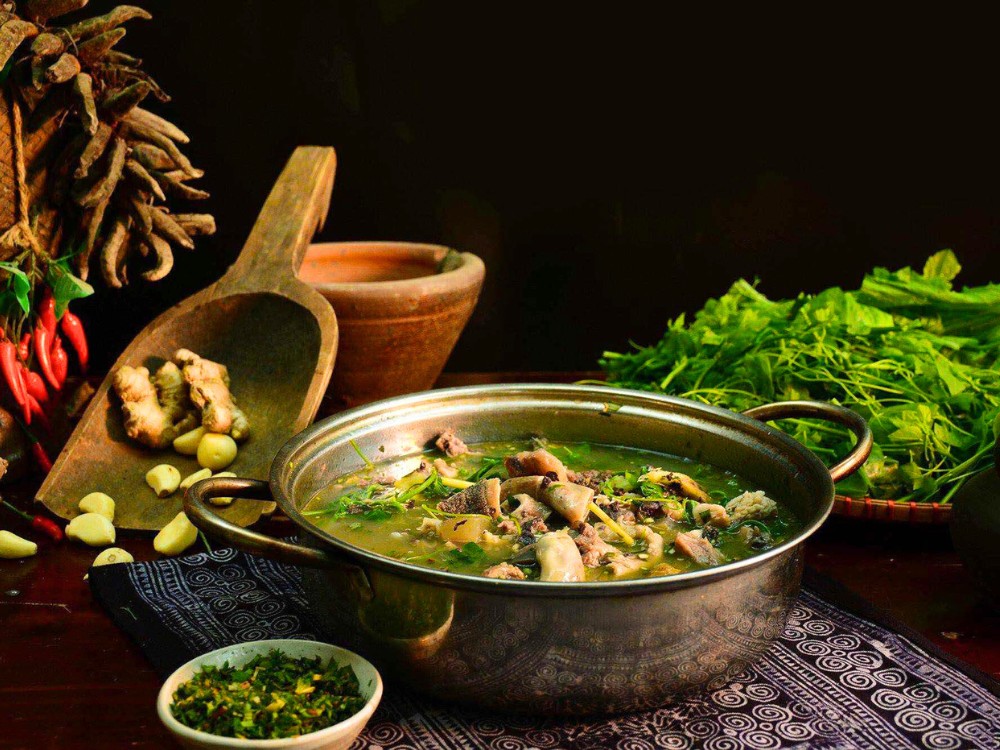
Thang Co (Horse and Offal Stew)
The broth is cooked for a long time with bones and various offals, accompanied by no less than twelve local mountain spices, such as lime leaf, star anise, black cardamom or mac khen. This mixture offers a singular taste, both rustic and intense, which can surprise on the first spoonful for the particular aroma of the offals, but to which many end up becoming attached. Traditionally served at ethnic markets and major celebrations in villages, thang co is not just a nourishing dish, it is also a symbol of conviviality, where people gather around a steaming bowl to share a warm moment.
Lap Xuong Gac Bep (Mountain-style Smoked Sausage)
In Ha Giang, the inhabitants have the habit of hanging their lap xuong (sausages) above the fire, in the kitchen, to preserve them longer and give them that characteristic smoky aroma. Prepared with selected pork, often fillet, shoulder or lean ham, this sausage is finely minced and seasoned with mac khen (mountain wild pepper) and lightly fried garlic.

Lap Xuong Gac Bep (Mountain-style Smoked Sausage)
The sausages are then smoked at home, above a wood fire, for 12 or 14 hours, the time necessary for the spices and smoke to penetrate the meat. The result is fragrant meat, with a slightly dry texture, with notes of smoke, grilled and a discreet touch of woody pepper. This dish, often enjoyed during festive meals or shared with guests, is an integral part of Ha Giang cuisine, between simplicity and mountain mastery.
Pho with Chicken from Trang Kim
Among the typical Ha Giang breakfasts, pho with chicken from Trang Kim is much appreciated by the inhabitants. At first glance, it resembles the pho ga found throughout Vietnam, but some details make the difference. This dish owes its authenticity to the meat of mountain chicken raised by the H’Mong, a local breed renowned for firm meat, naturally sweet taste and golden skin that is slightly crispy.
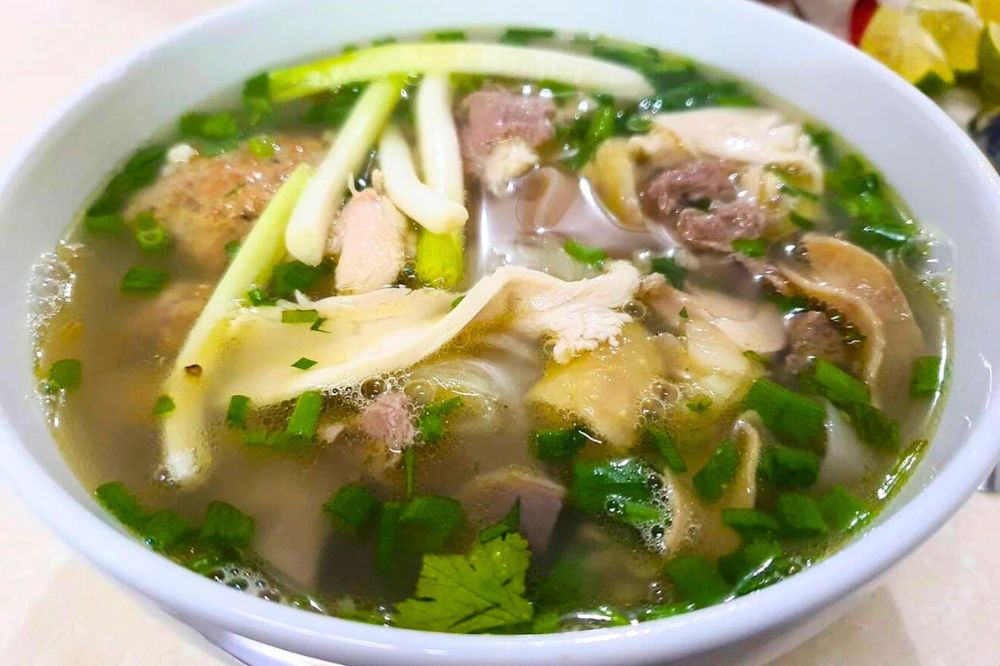
Pho with Chicken from Trang Kim
The broth is carefully cooked starting from chicken bones, fragrant with ginger, cinnamon, star anise and black cardamom, which give it a subtle and comforting aroma. The rice noodles, made by hand by artisans from Trang Kim, are fine, soft and slightly translucent, perfectly suited to this rich and fragrant broth. Flavorful, light and full of character, pho with chicken from Trang Kim is one of those simple dishes that the inhabitants love to enjoy in the morning, often at small stands along the road or in markets.
Shan Tuyet Tea
It is impossible to talk about Ha Giang cuisine without mentioning Shan Tuyet tea, an emblematic tea grown on the misty heights of the region. Coming from centuries-old tea trees rooted in mountain forests, this tea is recognizable by its thick leaves covered with a light white fuzz, similar to snow, from which its poetic name derives. Harvested by hand and processed by hand by local minorities, Shan Tuyet tea comes in three varieties: green tea, with vegetable notes and slightly bitter; white tea, more subtle, with delicate aromas of wild flowers and honey; and black tea, with a more decisive taste, which reveals notes of cocoa, wild flowers and honey, giving it a unique aromatic richness. Every cup of tea reflects the purity of the mountains and the authenticity of local know-how.

Harvest of Shan Tuyet Tea in the Mountains of Ha Giang
With Horizon Vietnam, we invite you to continue this tradition through our tea ceremony, a privileged moment that we reserve exclusively for our travelers to offer them an authentic and intimate experience, in the very spirit of Vietnamese hospitality.

Tea Ceremony with Horizon Vietnam
Ha Giang cuisine does not seek to impress, it simply touches through its sincerity. Here, every dish tells the story of a people accustomed to living at the rhythm of the mountain, to gathering, cultivating, transforming what nature wishes to offer. Behind the flavors, sometimes discreet, sometimes surprising, are the patience of the hands that prepare, the knowledge passed down from generation to generation and the desire, ever alive, to share. In a bowl of steaming soup, in a tea served with care, in a dish shared during a meal at home, you discover not just food, but an art of living, humble and deeply human. And very often, it is these ordinary but meaningful moments that leave the most beautiful travel memories.