+84 9 75 46 33 10 (Whatsapp)
  info@horizon-vietnamtravel.com
  Français
  Español
  Português
  Deutsch

How to Behave in Vietnam?
Table of contents
Traveling to Vietnam means meeting a warm, smiling, and deeply respectful people. But to fully enjoy your stay, it is important to understand Vietnamese etiquette, made up of delicacy, modesty, and respect for others. The Vietnamese place great importance on good manners, courtesy, and harmony in relationships. Some gestures or attitudes, mundane for a foreigner, can sometimes surprise or offend. So, how should you behave during a trip to Vietnam?
Here are some simple and essential guidelines to discover the country in respect of its traditions and share, with its inhabitants, the Vietnamese art of living.
How to Dress in Vietnam?
Knowing how to dress in Vietnam is essential to travel peacefully and show your respect for local culture. Vietnamese etiquette values modesty, cleanliness, and discretion — qualities that are also reflected in the way you dress.
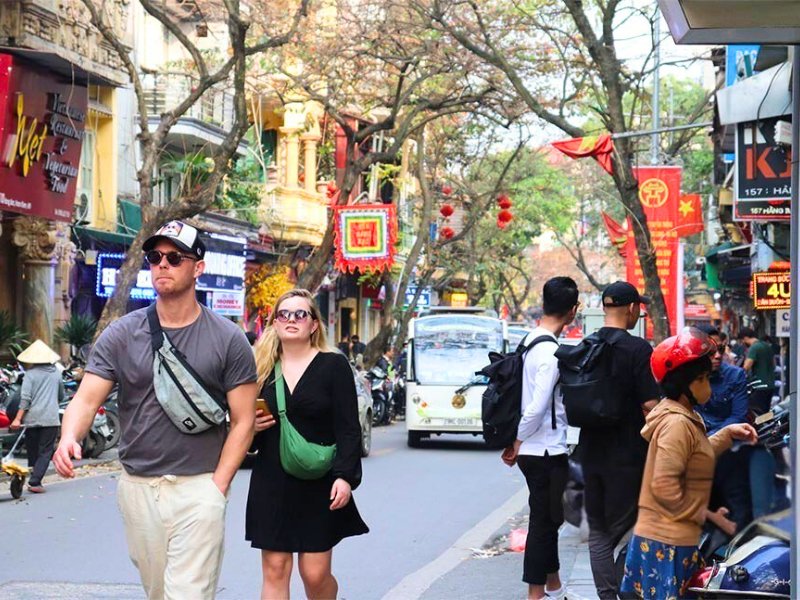
In public places, avoid clothes that are too short or too tight. Walking shirtless or wearing clothes with bare shoulders (for women) is frowned upon. Miniskirts and very short shorts are reserved for evenings, never for cultural visits or temples.
For your travels, favor light, comfortable but decent clothing: linen pants, long skirts, short-sleeved shirts or loose tunics. Modest shorts are generally tolerated in tourist areas.
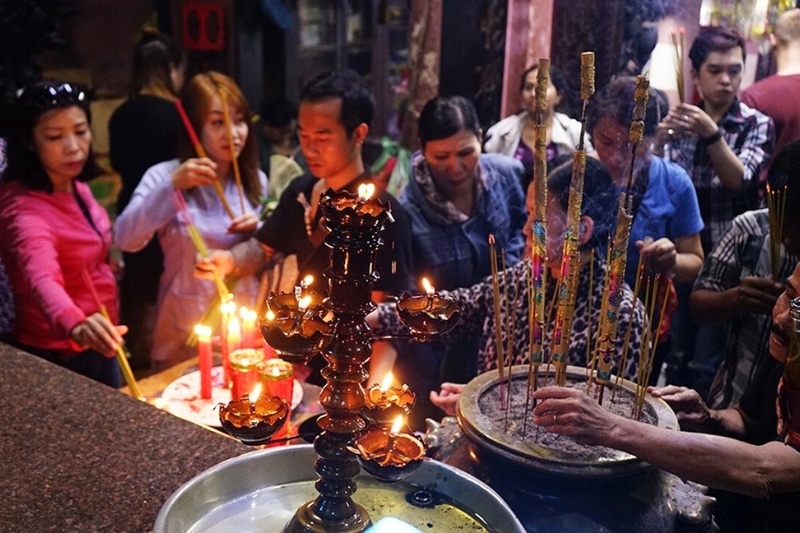
When visiting a pagoda or temple, wear modest clothing and remove your shoes before entering. This simple gesture is a sign of respect for the spiritual traditions of the country.
It is not uncommon for your Vietnamese hosts to welcome you to their home in pajamas. This is not a lack of courtesy, but quite the opposite a sign of trust and conviviality. In Vietnam, “pajamas” are often worn as traditional indoor clothing, at once comfortable and practical — much more than a simple nighttime garment.
How to Behave with Children in Vietnam?
In France, when someone sneezes, we say “bless you” or “to your health”.
In Vietnam, when a child sneezes, we say rather, in a playful tone: “Rice, Salt!”. These simple words, coming from folk traditions, symbolize luck, health, and prosperity: rice evokes abundance, and salt protects from bad influences.
When a child chokes on a fish bone, people don’t panic. According to an old belief, it is enough to discreetly turn the serving tray or gently tap the trivet of the hearth with a chopstick to ward off bad luck.
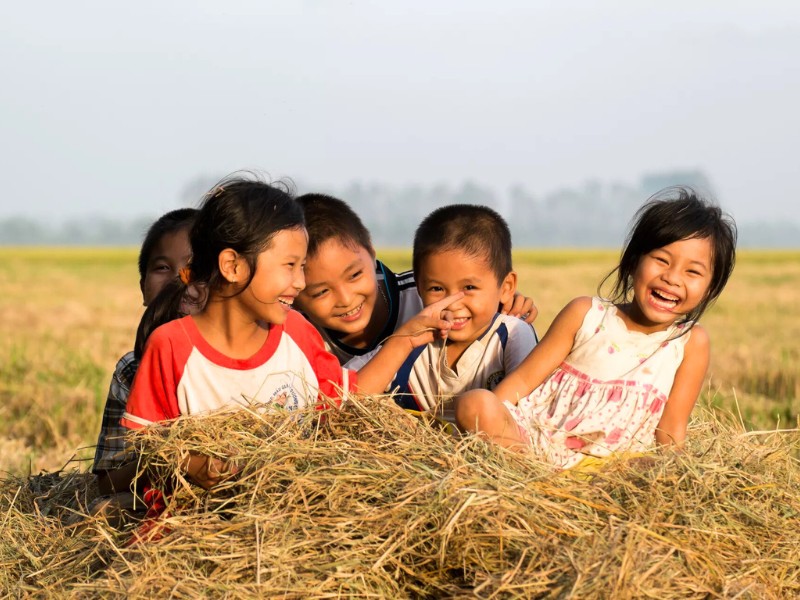
There are also respectful gestures to know: never touch a child’s head, as it is considered a sacred part of the body.
Similarly, it is best to avoid complimenting a newborn or praising a young mother for the beauty of her child: there is a fear that this will attract the jealousy of evil spirits.
In front of an infant, a simple smile is worth more than a thousand words — a sign of benevolence while respecting Vietnamese traditions.
How to Behave with the Vietnamese?
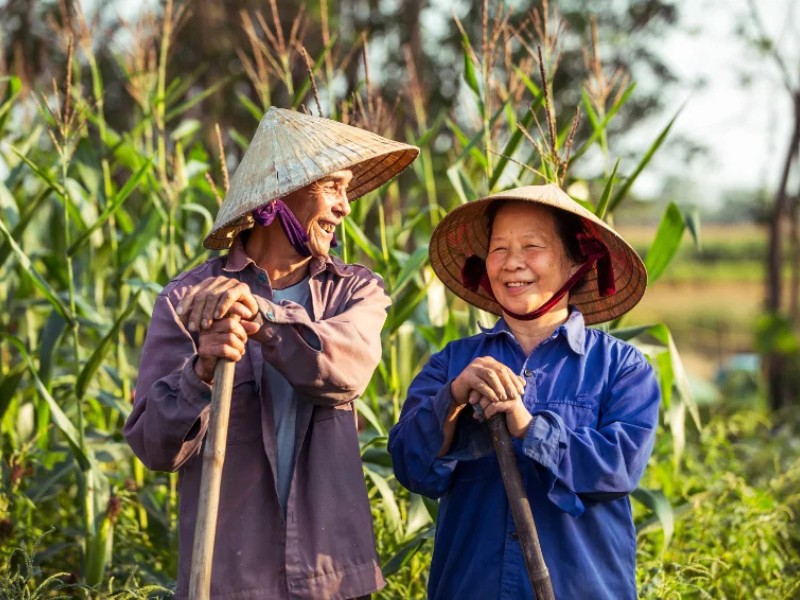
From the moment you arrive in Vietnam, a smile welcomes you — from a passerby, a street vendor, or a curious child. Behind this simple gesture lies a whole art of living: gentleness, respect, and harmony. To gain appreciation from the Vietnamese, often a little goes a long way: a benevolent look, a calm demeanor, and a sincere smile.
The Vietnamese are known for their modesty and their sense of balance in relationships. Speaking softly, avoiding abrupt gestures, and maintaining composure are signs of respect that are highly valued. Getting angry in public is considered a lack of self-control, while a calm and smiling person immediately inspires sympathy.
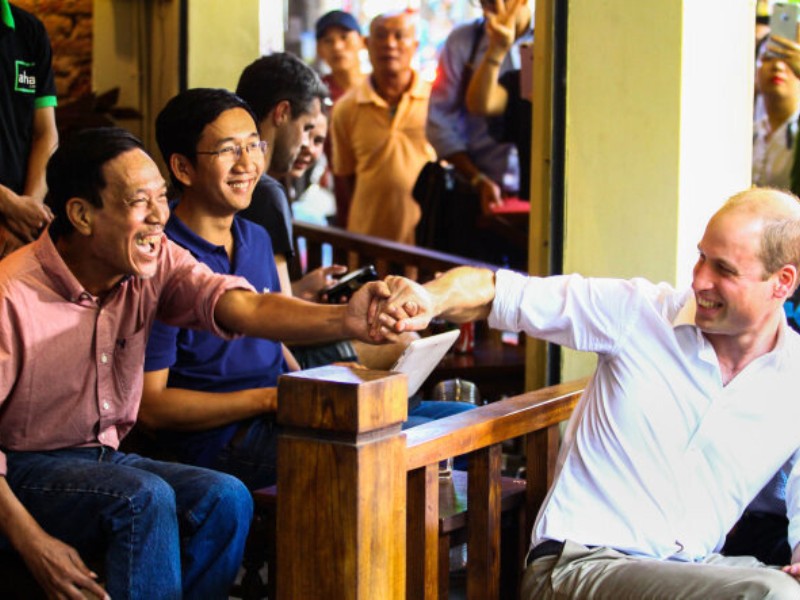
Greetings are generally made with a smile and a slight nod of the head. Handshakes exist, especially in large cities or professional settings, but remain more flexible than in Western countries. Between men, it is sometimes accompanied by a hand placed on the other’s arm, a sign of friendship. With women, a simple nod of the head or a smile is often sufficient: the Vietnamese avoid excessive physical contact, out of respect and modesty.
Respect for elders is an essential value. Greet them first, listen to them with attention, and avoid contradicting them. Offering or receiving an object with both hands is a gesture of universal courtesy in Vietnam, as is saying a few simple words in Vietnamese — “Xin chào” (hello), “Cảm ơn” (thank you) — which always touches the hearts of your interlocutors.
The Vietnamese also know how to express their compassion with modesty. When a loved one is going through a trial, they prefer symbolic words rather than long speeches. For example, they might say: “Goods replace the person” (Của đi thay người) — to comfort someone who has lost money or a precious object. This phrase expresses Vietnamese wisdom: material possessions are worth nothing compared to human life.
In daily life, a smile, a cup of shared tea, or a simple gesture of attention are often enough to create a sincere bond. The Vietnamese appreciate modesty, gratitude, and simplicity — qualities that translate the true elegance of the heart.
How to Behave at the Table in Vietnam?
In Vietnam, mealtime is a moment of conviviality and respect. Before starting, you always wait for the eldest people to pick up their chopsticks. Out of courtesy, the youngest invites his or her elders to eat in turn, starting with the family’s eldest.
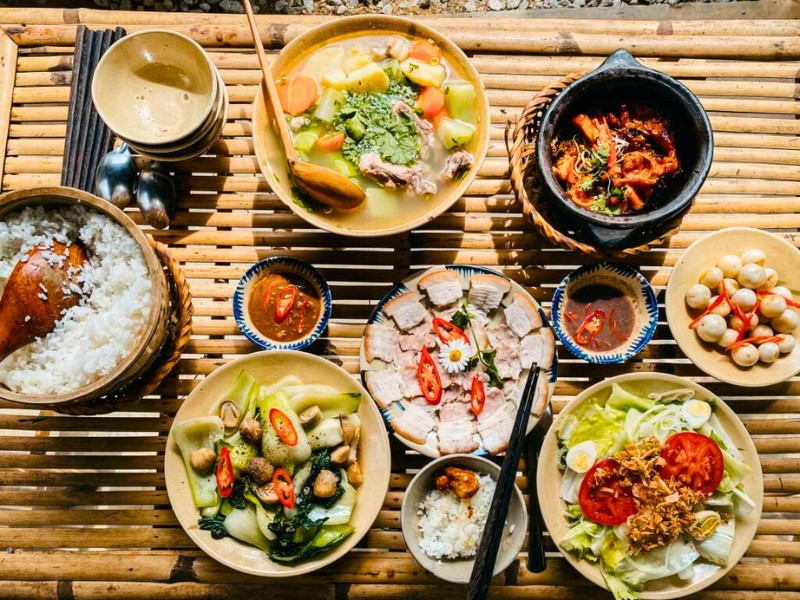
When you are finished, put your chopsticks on the bowl and say: “Excuse me, I have eaten enough.” This phrase does not express a refusal, but on the contrary, satisfaction and recognition toward the hostess.
When a dish is served to you, it is customary to say “Thank you, sir / madam” while gently advancing your bowl. It is frowned upon to serve yourself directly with your own chopsticks: this gesture could be interpreted as a lack of respect or haste. Similarly, avoid making noise by rubbing your chopsticks against the bowl: this would be considered rude.
If you are offered another glass of alcohol and don’t want any more, simply refuse by making a slight wave of your hand, without turning over your cup: this gesture would be perceived as a sign of rupture or disagreement.
Vietnamese meals are also steeped in small folk beliefs. For example, students never eat burnt rice, for fear of becoming “hardheaded,” nor chicken feet, for fear that their hands will shake when writing. Conversely, before an exam, some parents prepare glutinous rice with mung beans (xôi đỗ): in Vietnamese, đỗ means both “bean” and “to pass”. Conversely, eating bananas before an exam is discouraged: in Vietnamese, they are associated with the idea of “slipping” (trơn, trượt), thus of “failing”.
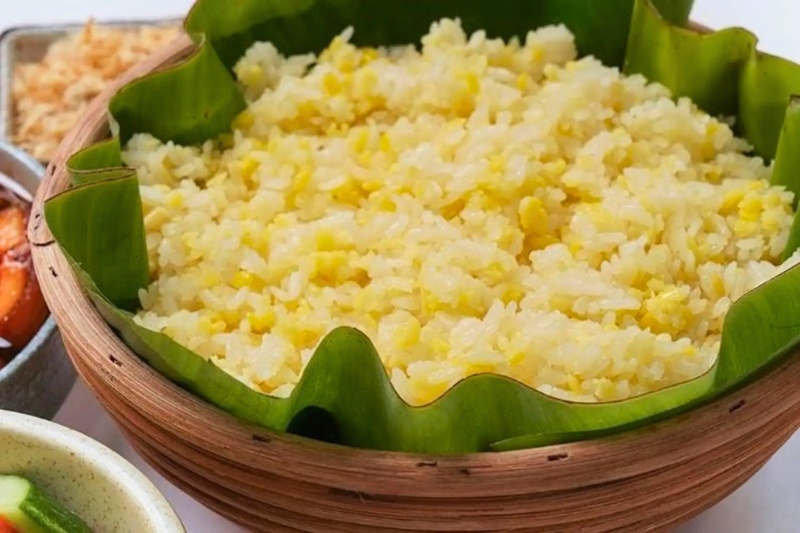
Glutinous rice with mung beans (xôi đỗ)
In Vietnam, all dishes are served at the same time on a large shared platter. In summer, a bowl of clear soup always takes pride of place in the center, shared by the whole family. You serve yourself vegetables or solid pieces of the broth with a spoon, and you avoid drinking the broth noisily — this would be judged impolite.
Traveling to Vietnam is much more than just a change of scenery. It is discovering a smiling people, attentive, respectful, and deeply human. Here, every gesture counts: a smile, a cup of shared tea, a kind word can create sincere bonds. Adopting the codes of Vietnamese etiquette means entering a world where benevolence and harmony guide daily life. And if the secret to feeling good in Vietnam was simply to welcome life with the same smile as its inhabitants?
Discovering Vietnam is much more than just visiting a country: it is meeting a people with open hearts, bound by gentleness, modesty, and respect for others. Vietnamese etiquette, woven from traditions and delicacy, is reflected in every smile, every shared gesture, every meal offered. Knowing how to behave in Vietnam means above all understanding this simple philosophy: to live in harmony with others and with yourself. Behind courtesy and discretion lies an immense human warmth — that of a people for whom respect is the most beautiful form of hospitality.