+84 9 75 46 33 10 (Whatsapp)
  info@horizon-vietnamtravel.com
  Français
  Español
  Português
  Deutsch

Islam in Vietnam
Table of contents
Little known to the general public, the presence of Islam in Vietnam is nevertheless ancient, rich, and deeply rooted in the country’s history. Introduced to the region between the 9th and 10th centuries, Islam arrived through maritime trade routes connecting the Middle East, India, and Southeast Asia. Unlike other regions of the world, it spread here in a peaceful manner, conveyed through commercial exchanges, marriages, and mutual curiosity between peoples.
General overview of Islam in Vietnam
Islam in Vietnam is a minority religion but an ancient one, introduced as early as the 9th century by Arab, Persian, and Indian merchants who came to trade with the Kingdom of Champa. Established primarily among the Cham people, this faith spread peacefully, giving rise to two main currents: Cham Bàni, which blends Cham traditions and Quranic teachings, and Cham Islam, Sunni and closer to the practices of the Muslim world.
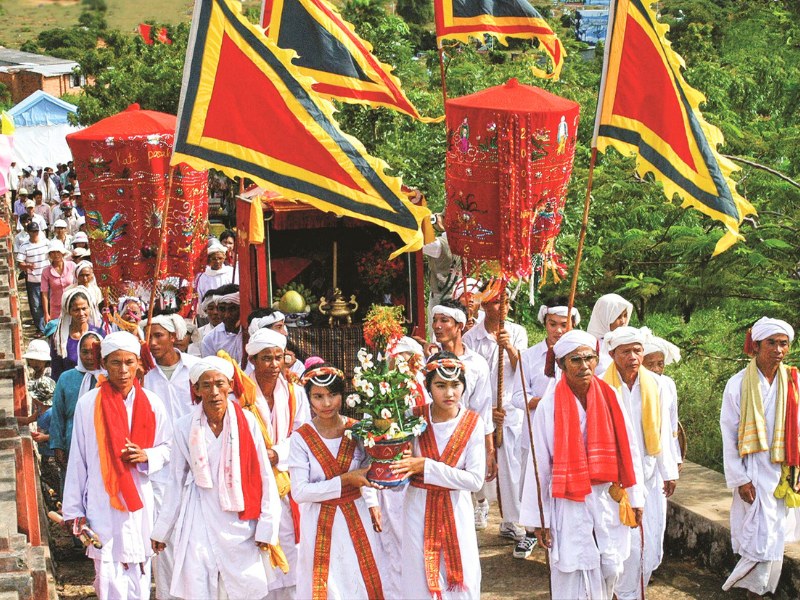
Katê Festival in Bình Thuận – procession of costumes and royal decrees toward the Po Sah Inư tower, spiritual symbol of the Cham
Today, Vietnam is home to approximately 80,000 Muslims, distributed mainly in the provinces of An Giang, Ninh Thuận, Bình Thuận, Tây Ninh, and Ho Chi Minh City. Although small in number, Vietnamese Muslims hold an important place in the country’s religious diversity. Their culture, their mosques, and their celebrations – particularly Ramadan and Ramưwan – testify to an Islam that is Vietnamese, open, peaceful, and rooted in national history.
Origins and development of Islam in Vietnam
Islam reached the ancient Kingdom of Champa (central Vietnam today) through maritime exchanges with Arab, Persian, and Indian merchants. The precise date of this arrival remains uncertain; researchers place the first settlements rather between the 11th and 12th centuries, before more marked consolidation between the 17th and 19th centuries thanks to Malay-Muslim networks.
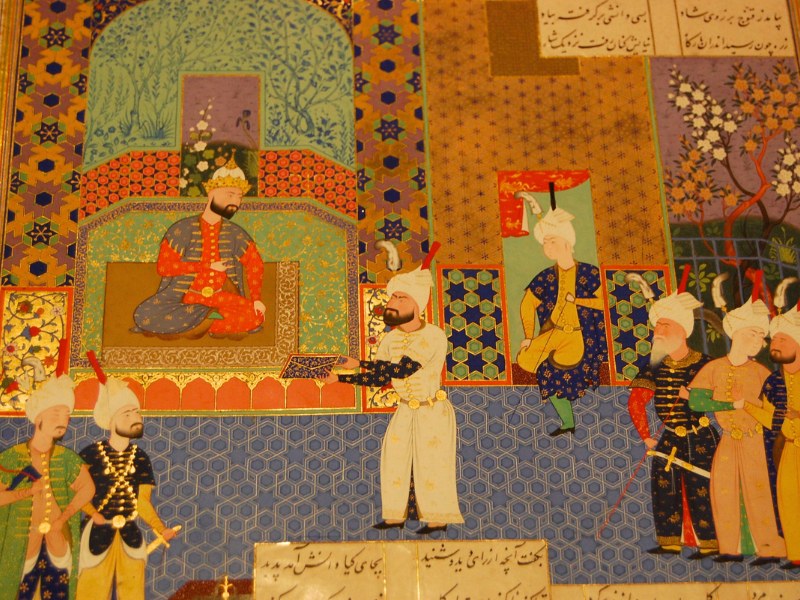
Over time, two main expressions of Cham Islam became established:
- The Cham Bàni, whose practice is strongly marked by Cham culture and local rituals, mainly in Ninh Thuận and Bình Thuận;
- The Cham Sunnis, closer to Sunni orthodoxy, established mainly in the Mekong Delta (particularly An Giang, Tây Ninh) and Ho Chi Minh City.
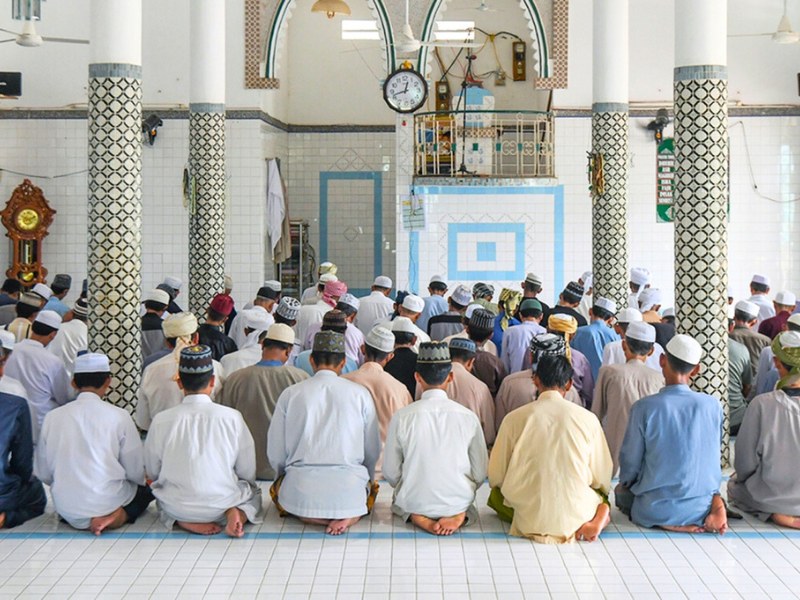
Cham Muslim believers of An Giang in prayer during Ramadan
From the 19th to the 20th century, these communities built mosques, Quranic schools, and associations, structuring contemporary Islam in Vietnam. Today, Islam remains numerically minority (on the order of tens of thousands of believers), present in various provinces and major cities; in Hanoi, the Al-Noor mosque represents a point of reference for believers and visitors.
Muslim communities in Vietnam
Islam in Vietnam is organized mainly around two major Cham communities: the Cham Bàni and the Cham Islam, each representing a different facet of Muslim faith and its integration into local culture.
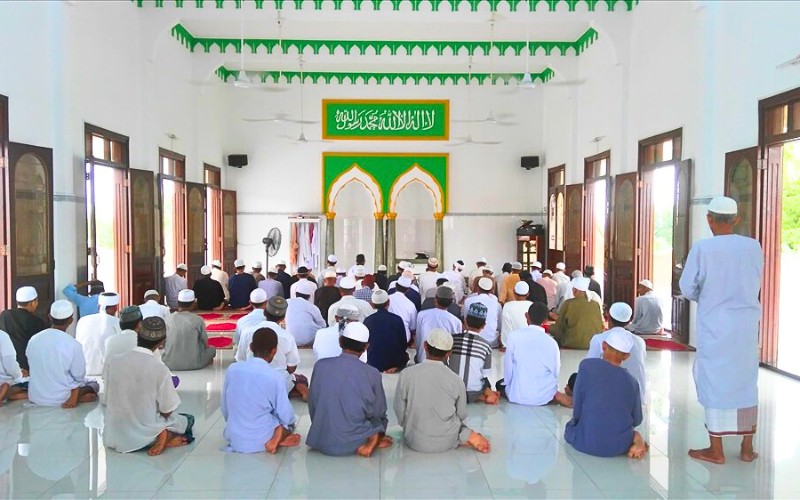
Islam in Ninh Thuận, in Vietnam, testifies to the living faith of the Cham community, guardian of centuries-old traditions
The Cham Bàni, established in the provinces of Ninh Thuận and Bình Thuận, practice a localized Islam, born from contact between ancient Cham traditions and teachings of the Quran. Their religion, inherited from centuries of cultural adaptation, preserves elements of ancestor worship and community rituals, while respecting the fundamental principles of Islam.
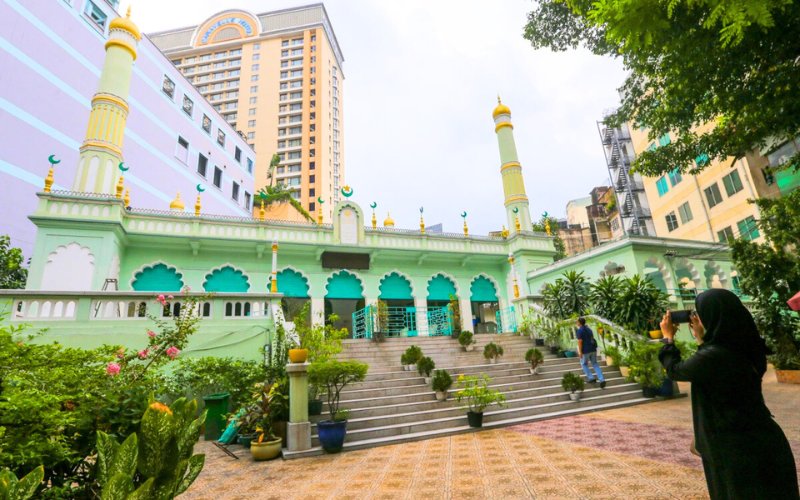
Mosque nearly 90 years old, one of the most beautiful in Ho Chi Minh City, symbol of Islam’s historical presence in Vietnam
The Cham Islam, present in the Mekong Delta — particularly in An Giang, Tây Ninh, and Ho Chi Minh City — follow orthodox Sunni Islam, closer to practices observed in Malaysia and Indonesia. They have active mosques, Quranic schools, and maintain religious and educational ties with the Muslim world.
Alongside these two majority groups, the country is also home to small Muslim communities of foreign origin, from families of Indian, Malay, Pakistani, or Arab descent established in Vietnam since the colonial period. Today they participate in economic and cultural life, particularly in Ho Chi Minh City and in the south of the country.
Religious life and Muslim celebrations in Vietnam
The religious life of Vietnamese Muslims revolves around the great fundamental practices of Islam: prayer (salat), fasting during the month of Ramadan, profession of faith, almsgiving (zakat), and pilgrimage to Mecca (hajj). These rituals, though common to the entire Muslim world, are lived with a cultural flavor particular to the Vietnamese context.
Each year, believers observe Ramadan, a month of spiritual purification marked by daytime fasting and collective prayer. At the end of the month, the festival of Aïd el-Fitr (Raya Idil Fitri) is celebrated with joy, with shared meals and family visits. Later in the year, the festival of sacrifice – Aïd el-Adha (Raya Idil Adha) commemorates Ibrahim’s faith through the distribution of meat to those in need.
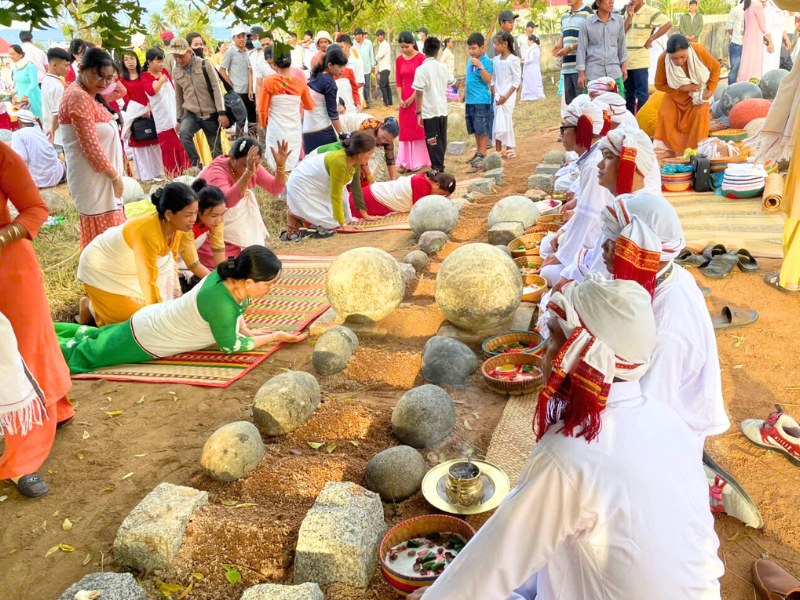
The beauty of the traditions of the Cham Bàni during the sacred month of Ramưvan, symbol of faith, purity, and spiritual unity in Vietnam
The Cham Bàni also celebrate Ramưwan, a traditional festival that combines fasting, prayers, tomb cleaning, and community rituals. This sacred moment, both religious and cultural, symbolizes the fusion between Islam and Cham traditions. The Muslim clergy plays an essential role in the lives of the faithful. The Imâm lead prayers and ensure religious teaching, while the Sư cả (among the Cham Bàni) maintain the role of spiritual guides and guardians of local customs. Religious activities are often organized around mosques and community associations, true centers of solidarity and cultural transmission.
Today, Vietnamese Muslims participate fully in the social, economic, and cultural life of the country while preserving their faith and traditions. Present in commerce, craftsmanship, education, and community activities, they actively contribute to local development, particularly in southern provinces such as An Giang and Ho Chi Minh City. Islam in Vietnam is recognized as a peaceful and respected religion, a symbol of coexistence and interreligious tolerance. The faithful respect national laws, cooperate with other denominations, and engage in social and humanitarian actions. The ongoing dialogue between Cham, Buddhist, and Catholic communities illustrates the richness of Vietnamese cultural pluralism. In a context of modernization and international openness, young Vietnamese Muslims continue to promote an Islam that is open and harmonious, faithful to its spiritual values while fully integrating into contemporary Vietnamese society.