+84 9 75 46 33 10 (Whatsapp)
  info@horizon-vietnamtravel.com
  Français
  Español
  Português
  Deutsch

Legend of Giong Genius: The Iron Horse of the Kingdom of Van Lang
Table of contents
Under the reign of the sixth king of the Hung dynasty, the Kingdom of the South (Van Lang) experienced difficult times. An invaders mercilessly burned villages and cities, devastated fields and gardens. No one could resist them.
Cries and pleas for help rose to Heaven. The Celestial Emperor, moved by the suffering of the people, summoned the Genius of Lightning (Set) and said to him: “It is time to pay your debts and make amends for the wrongs caused to men. Send your son to earth so he may save this kingdom.”
That same night, the Emperor appeared in a dream to King Hung Vuong and ordered him to search throughout the land for a hero capable of facing the enemy and saving the homeland.
At that time, in a village then called Ke Dong (today Phu Dong), lived a woman of a certain age, still unmarried. One day, while hoeing her plots, she discovered a giant footprint. She placed her own upon it; as soon as she had done this, a bolt of fire lightning passed through her entire body. Shortly after, she gave birth to a son whom she named Giong. The child grew normally, but he did not laugh or babble like other newborns. At three years old, he had not yet spoken a single word and spent his days lying down, motionless.
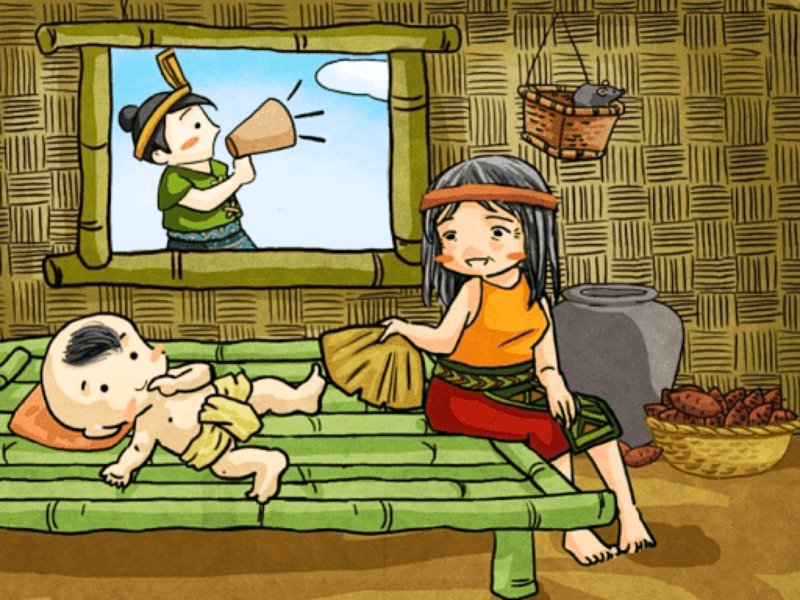
One day, the king’s messengers, traveling through the land in search of a savior, arrived at Ke Dong. At the sound of their trumpets, Giong suddenly stood up and said:
“Mother, bring the king’s messengers here!”
The mother, astonished, ran to call them. The boy declared to the bewildered messengers:
“Return without delay to the court and tell the king that I need a giant bronze horse, solid armor, an iron helmet, and a well-sharpened sword. With this, I will annihilate the enemy.”
The royal messenger did not dare reply anything. He remounted his horse and galloped to the palace. Informed of the boy’s requests, the king remembered his dream. He immediately summoned his ministers and mandarins and ordered them to do what the boy had asked.
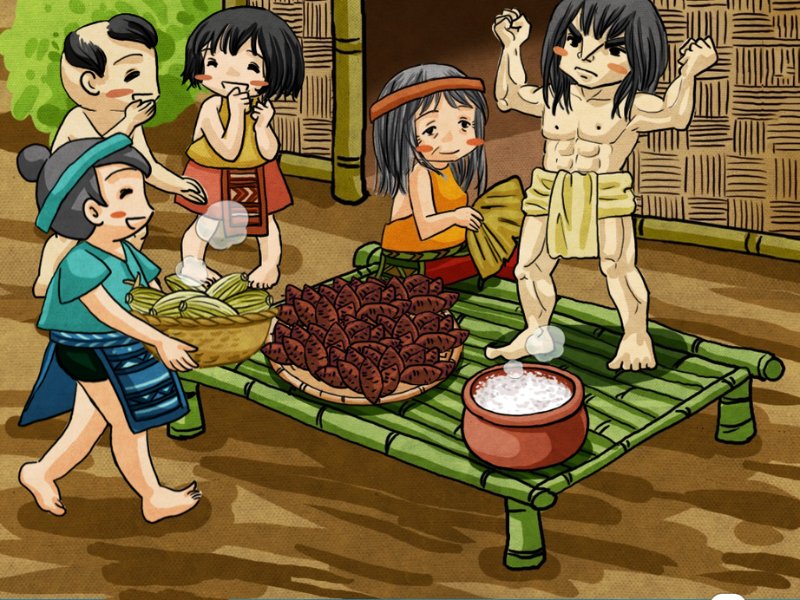
From the day Giong had spoken, he began to grow prodigiously. He ate enormously. The clothes his mother sewed for him in the morning burst at the seams in the evening. The poor woman no longer had enough rice to feed him or cloth to dress him. But, from the entire village and then from the surrounding areas, people came to bring what they could to this extraordinary child.
The horse and equipment were sent to Phu Dong. As soon as Giong tapped the back of the mount, it collapsed like a pile of sand. A second one was forged; larger and more robust, it could not resist the young man’s weight either. As for the armor, the metal plates jumped off in all directions. Bewildered, the messengers returned to the court and told the king everything.
Then, the king ordered all the bronze drums, gongs, and bells to be melted down. At the four corners of the country, night and day, the people forged; flames roared, sweat poured. Finally, the work was completed.
The hero left his house, put on his helmet, dressed in his armor, grasped his iron whip, and mounted his steed. Immediately, the bronze horse came to life: it let out a thunderous neigh and flames leaped from its nostrils. Giong greeted the crowd, spurred on, and threw himself into the heart of enemy lines. He pursued with fury those who had devastated his country. When the whip broke, Giong tore bamboo stalks from the roadsides and finished annihilating the enemy troops.
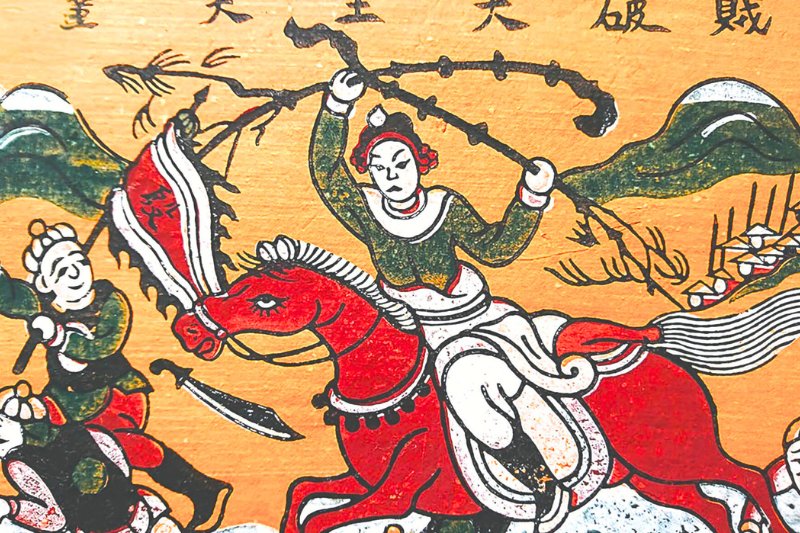
The hero rode off at full gallop toward the Soc Son mountains. There, he removed his armor, gazed one last time at the homeland he loved, then whispered with emotion: “Good fortune, my Southern Kingdom!” And he ascended to Heaven on his horse.
The king had a temple built in the village renamed Phu Dong, in honor of the savior of the homeland, and Giong received the title of Celestial Prince of Phu Dong (Phu Dong Thien Vuong).
Today people still come to admire the traces of the bronze horse’s hoofprints, which over time became a series of small circular lakes. As for the bamboo in the region, it seems reddened by the flames once that came from the horse’s nostrils. Since then, every year, a great festival celebrates the victory of the Giong hero: at Phu Dong on the ninth day of the fourth lunar month, and at Soc Son on the sixth day of the first lunar month.