+84 9 75 46 33 10 (Whatsapp)
  info@horizon-vietnamtravel.com
  Français
  Español
  Português
  Deutsch

Mekong Delta Cuisine: What to Eat?
Table of contents
The Mekong Delta, a fertile and verdant region of Vietnam, is renowned for its picturesque landscapes and winding waterways, but also for its rich and diverse Mekong Delta cuisine. The dishes of the Mekong Delta are a true feast for the senses, showcasing fresh local ingredients, traditional cooking techniques, and bold flavors. In this blog, we invite you to explore the culinary delights of the Mekong Delta, highlighting the most emblematic dishes that reflect the culture and soul of this fascinating region.
1. Banh Xeo (Vietnamese Crepe)
Vietnamese crepes from the Mekong Delta are large, crispy crepes filled with shrimp, pork, soybean sprouts, and scallions, served with fresh herbs and a fish sauce for dipping. These golden and flavorful crepes are an excellent example of Mekong Delta cuisine, offering a perfect blend of textures and flavors, combining the crispiness of the crepe with the tenderness of the fillings.
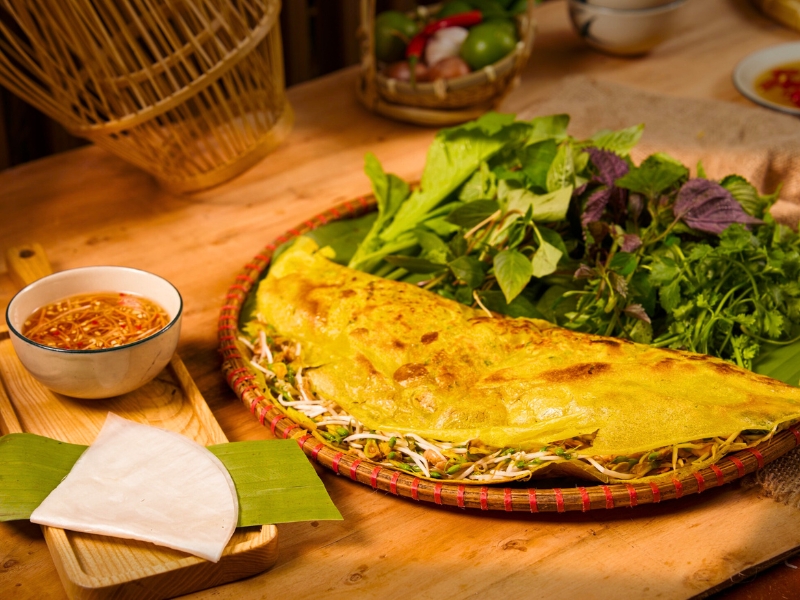
Made with rice flour, turmeric, and coconut water, the batter of bánh xèo gets its distinctive yellow color and light sweet flavor from these ingredients. Cooked until crispy, the crepe is then filled with shrimp, pork, and soybean sprouts before being folded in half.
The “banh xeo” are accompanied by an assortment of fresh herbs like mint, cilantro, Thai basil, and lettuce, as well as crispy vegetables like cucumbers and grated carrots. The fish sauce for dipping, prepared with sugar, lime juice, minced garlic, and fresh chilies, adds a spicy touch and a depth of flavor that perfectly complement the other ingredients. TasteAtlas published its ranking of the 85 best crepes in the world, where the crispy Vietnamese crepe (Bánh xèo) ranks 32nd, based on 6,339 ratings collected through February 5, 2024.
2. Banh khot (Mini Crispy Vietnamese Crepe)
Bánh khọt are small crispy Vietnamese crepes, originating from southern Vietnam, and particularly popular in the Mekong Delta. These delightful bites are prized for their crispy exterior and soft interior, often topped with shrimp, scallions, and sometimes dried shrimp powder.
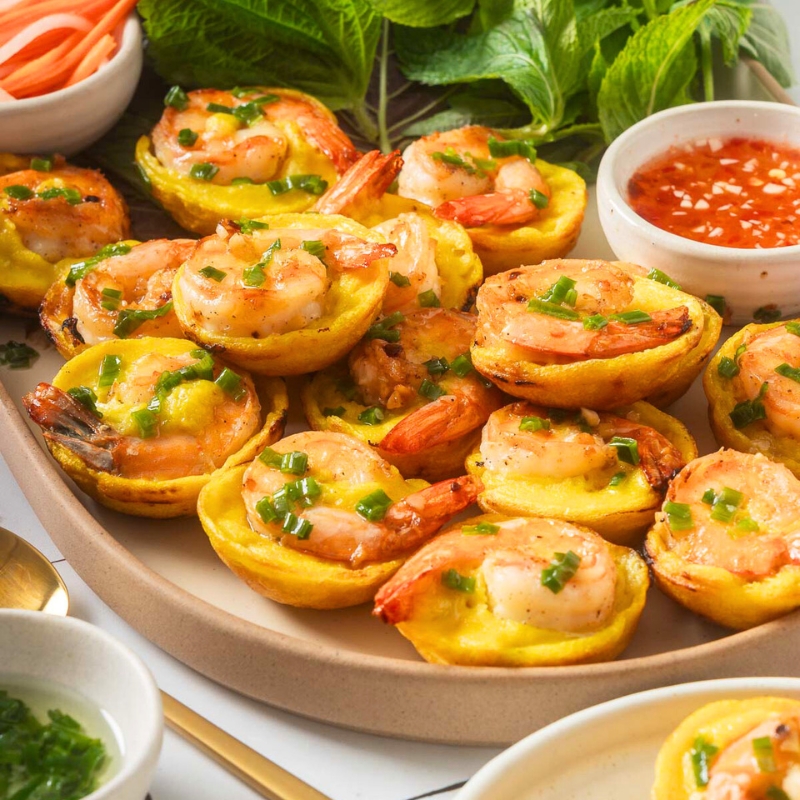
The batter of bánh khọt, a specialty of Mekong Delta cuisine, is made with rice flour, coconut milk, and turmeric, which gives it a golden yellow color and a slightly sweet flavor. The crepes are traditionally topped with shrimp, scallions, and sometimes dried shrimp powder. The topping is added to the batter before cooking. Bánh khọt are cooked in a special cast-iron mold with multiple cavities, similar to those used for Japanese takoyaki. The mold is heated with oil, which gives the crepes their crispy texture and savory taste.
The bánh khọt are served with an assortment of fresh vegetables and herbs, such as lettuce, mustard greens, mint, and cilantro. They are accompanied by a fish sauce (nước mắm) for dipping, often prepared with sugar, lime juice, minced garlic, and fresh chilies. Each bite is wrapped in a lettuce leaf with fresh herbs, then dipped in the fish sauce, offering an explosion of flavors with every bite.
3. Ca Loc Nuong Trui (Grilled Snakehead Fish)
The “Ca loc” is a whole grilled snakehead fish (cá lóc), often served with fresh herbs, rice vermicelli, and a spicy fish sauce. The simplicity of wood-fire cooking gives the fish a delightful smoky flavor. This dish is appreciated not only for its unique taste but also for its traditional preparation process that embodies the essence of rural Vietnamese cuisine. Fresh herbs and spicy sauce perfectly complement the taste of grilled fish, making it a memorable culinary experience.
The preparation process begins with cleaning and preparing the snakehead fish, which is then grilled whole over an open flame or in a pit dug in the ground. The traditional method involves covering the fish with straw or dried leaves, which are then lit. Slow and even cooking preserves the moisture of the fish, giving it a tender, juicy texture and a distinctive smoky flavor.
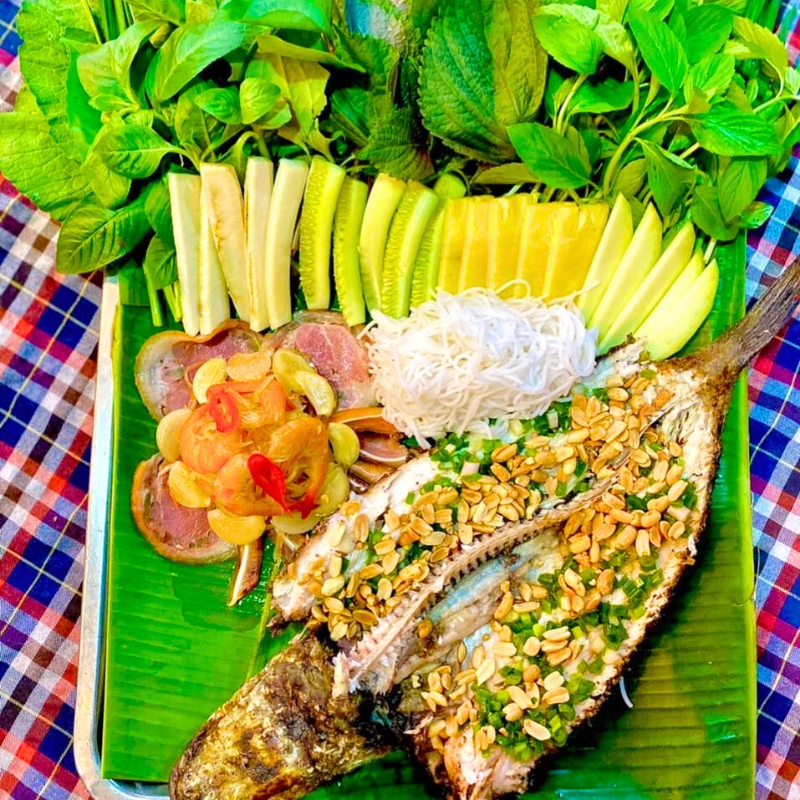
The cá lóc nướng trui is generally accompanied by various elements that enhance its flavor and bring freshness to the dish: an assortment of herbs like mint, cilantro, Thai basil, and other local herbs, light and delicate rice vermicelli, crispy vegetables like cucumbers, lettuce, and carrots, as well as rice crackers for wrapping the fish, herbs, and vegetables.
The spicy fish sauce, prepared with fish sauce, sugar, lime juice, minced garlic, and fresh chilies, is essential for this dish. It adds a depth of flavor and a spicy touch that enhance the taste of grilled fish. Each bite of grilled fish, wrapped in a rice cracker with fresh herbs and dipped in the spicy sauce, offers a perfect blend of flavors and textures. This dish is a true embodiment of Mekong Delta cuisine: simple, authentic, and deeply rooted in local traditions.
4. Lâu mam (Fermented Fish Fondue)
The “Lâu mam” is a fondue made with fermented fish, typical of the Mekong Delta. This rich and flavorful dish is served with a variety of vegetables, seafood, meat, and rice vermicelli. The broth, prepared with fermented fish paste, offers a unique and intense depth of flavor, characteristic of Delta cuisine.
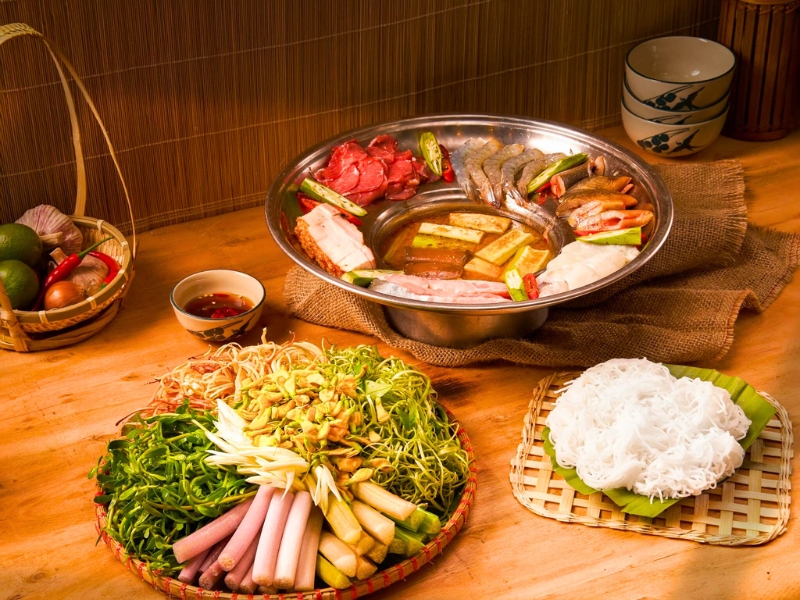
Lẩu mắm is a convivial dish, often shared with family or friends. Dipped into it are fresh vegetables like cucumber, zucchini, banana flowers, sesbania flowers (bông điên điển), and aromatic herbs like Thai basil and cilantro. Seafood such as shrimp, squid, and fish are also essential, as well as pieces of pork or beef.
This dish perfectly embodies local cuisine, reflecting the abundance of natural resources in the Mekong Delta and the richness of its culinary traditions.
5. Lâu vit nâu chao (Duck Fondue with Fermented Tofu)
Lẩu vịt nấu chao is a duck fondue prepared with chao, a fermented tofu paste, typical of Vietnamese cuisine. This rich and flavorful dish is particularly appreciated for its complex aromas and umami taste.
The duck is marinated with chao, garlic, ginger, and sometimes additional spices, then braised in a fragrant broth made from fermented tofu paste. The broth is often enriched with ingredients like coconut milk, onions, and chilies, which add depth and richness to the dish.
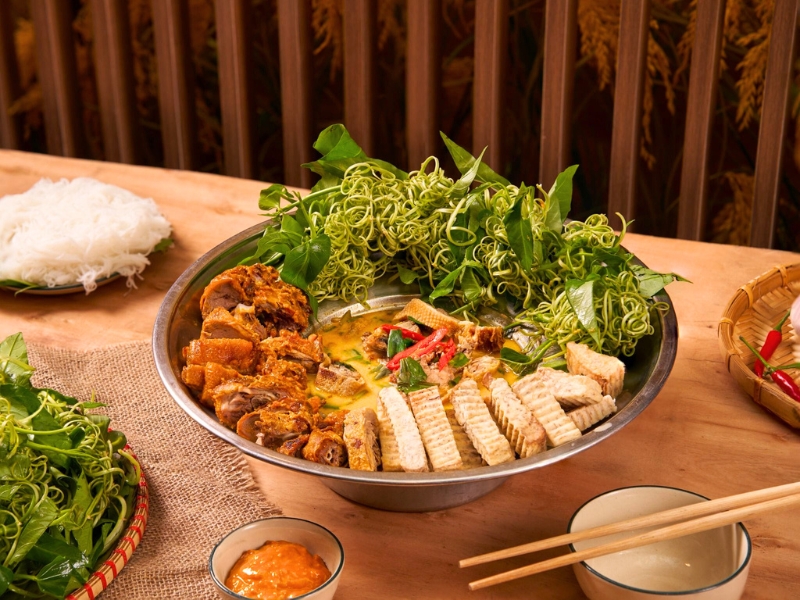
The lẩu vịt nấu chao is generally served with a variety of fresh vegetables and rice vermicelli. Among the vegetables you often find Asian leafy greens, mushrooms, carrots, and cabbage. These vegetables are added to the hot broth at the table, where they cook quickly, absorbing the rich flavors of the broth.
This dish embodies the art of Mekong Delta cuisine, combining fresh ingredients with traditional cooking techniques to create a meal that is both comforting and memorable. Lẩu vịt nấu chao is a true celebration of Vietnamese flavors, offering an authentic and delicious culinary experience.
6. Lâu Ca Keo (Goby Fondue)
The Mekong Delta, located in southwestern Vietnam, is a region blessed by nature with an abundance of natural resources. This region is renowned for its numerous freshwater fish species, among which the goby holds a prominent place in the local diet. Lẩu cá kèo is an emblematic dish of this region, appreciated for its fragrant broth and fresh ingredients.
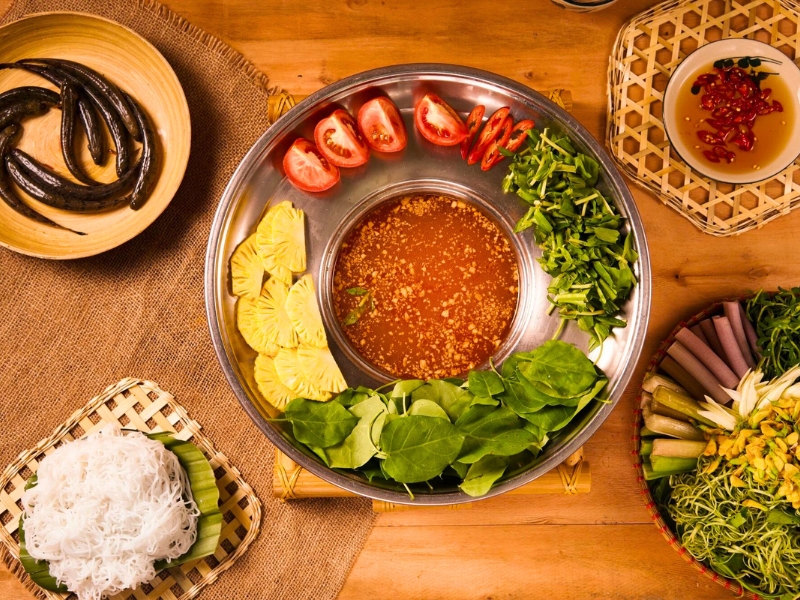
A specific ingredient of lẩu cá kèo is the giang leaf, which adds a distinctive tart note to the broth, thus enhancing the flavors of the dish. Lẩu cá kèo is generally served with a variety of fresh vegetables like soybean sprouts, banana flowers, Asian leafy greens, and mushrooms, as well as rice vermicelli.
This convivial dish is often shared with family or friends, with each person personalizing their bowl with their choice of vegetables and noodles. Lẩu cá kèo embodies the richness and diversity of Mekong Delta cuisine, offering a memorable culinary experience that celebrates the generosity of the region’s natural resources.
7. Bo Bay Mon Nui Sam (Beef Seven Ways of Mount Sam)
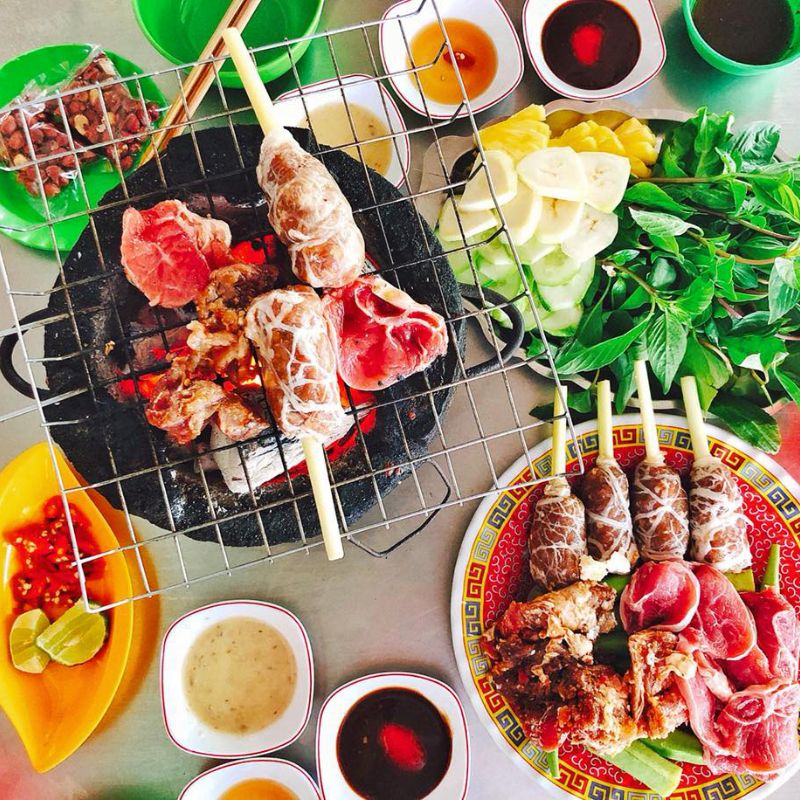
The Beef Seven Ways of Mount Sam is an emblematic culinary specialty of the Bay Nui region, in An Giang Province, in southwestern Vietnam. This region, famous for its mountainous landscapes and rich cultural heritage influenced by Cham and Khmer communities, offers beef of exceptional quality thanks to traditional open-air raising. The feast of Beef Seven Ways showcases the diversity and richness of local culinary preparations: from grilled dishes to fragrant marinades, from delicate carpaccio to flavorful meatballs and deep-flavored stews. Accompanied by rice crackers, fresh herbs, and homemade sauces, each dish offers a balance of textures and tastes, ranging from crispy to tender. This culinary experience celebrates Vietnamese hospitality and the art of sharing a meal, while revealing the richness of the gastronomic traditions of the Bay Nui highlands.
8. Ca Tai Tuong Chien Xu (Crispy Fried Elephant Ear Fish)
Ca Tai Tuong Chien Xu, or Crispy Fried Elephant Ear Fish, is a culinary treasure of southern Vietnam, prized for its impressive presentation and exquisite flavors. This dish showcases a whole fish carefully prepared and fried until its skin becomes golden and crispy, while preserving tender and juicy meat inside.
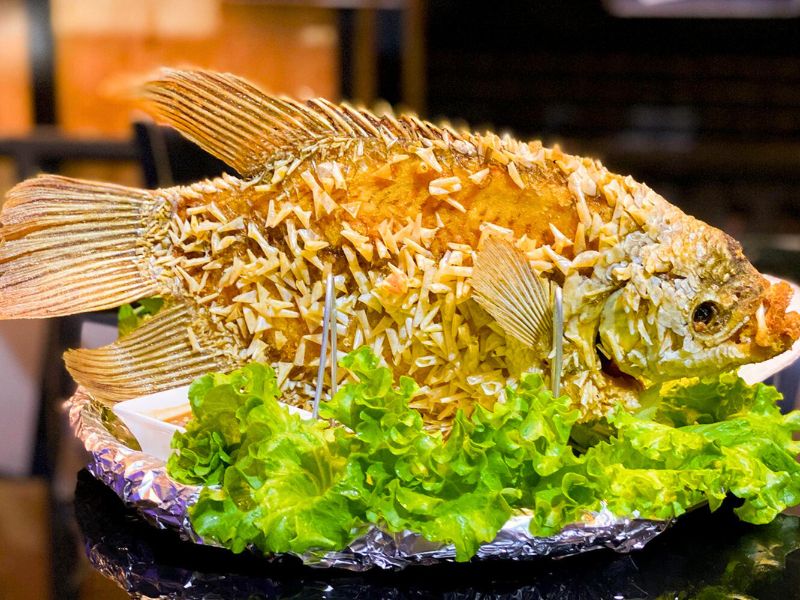
Its unique preparation, in which the fish is fried without being cut, offers a captivating visual and gustatory experience. When served, the fish immediately catches the eye for its crispy texture and intact silhouette. To accompany this delightful creation, crispy vegetables, fresh herbs, and rice sheets allow diners to make personalized rolls. Dipped in a flavorful fish sauce, these rolls reveal a perfect union of flavors and textures, between the delicacy of the fish and the liveliness of the herbs and sauce.
This dish embodies the art of Vietnamese cuisine, where the simplicity of ingredients is transformed into a culinary symphony through precise techniques and a harmony of flavors.
9. Rice Noodles (Hu Tiêu) of My Tho
The rice noodles (Hủ Tiếu) of Mỹ Tho are an emblematic specialty of this city in the Mekong Delta in Vietnam. This regional version of Hủ Tiếu is particularly appreciated for its unique texture and distinctive taste, making it an unmissable dish of local cuisine. These noodles are characterized by their texture and lightness, absorbing perfectly the rich flavors of a clear and savory broth, prepared starting from pork bones cooked slowly with spices to offer a thin and comforting base.
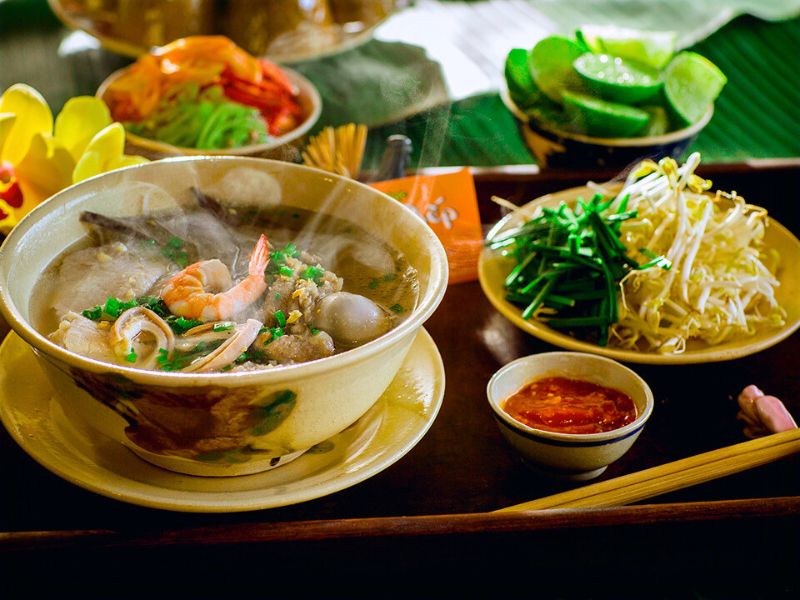
The dish is enriched with generous toppings: pieces of juicy roast pork, shrimp, squid, and fresh vegetables like bean sprouts, all enhanced by aromatic herbs like cilantro and Chinese chives. A squeeze of lime and a touch of chili heighten the whole, allowing diners to adjust flavors to their taste. The noodles of Mỹ Tho celebrate the culinary richness of the Mekong Delta, harmoniously uniting textures and flavors to offer a unique and authentic gastronomic experience.
10. Che Buoi An Giang (Grapefruit Dessert)
Chè bưởi is a traditional Vietnamese dessert from An Giang Province in the Mekong Delta. Appreciated for its crispy texture and sweet, refreshing taste, it showcases grapefruit pulp and mung beans.
The white part of the grapefruit peel is prepared to remove its bitterness, cut into small pieces, and cooked with sugar for a crispy texture. The mung beans are cooked until tender. The tapioca pearls, added for their elasticity, are cooked separately and mixed into the preparation. The dessert is sweetened with brown sugar and can be flavored with vanilla or pandan.
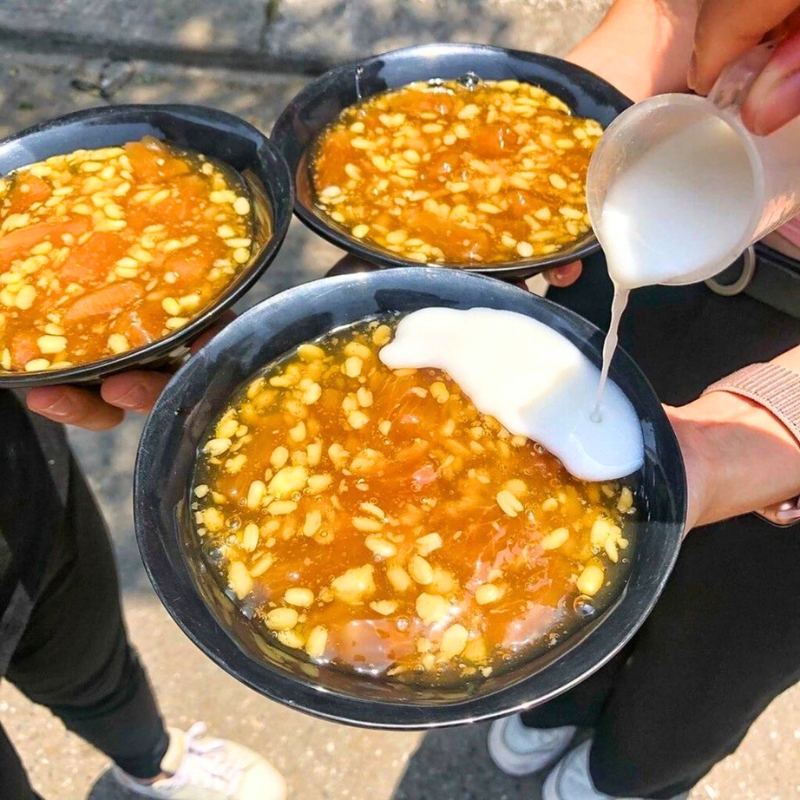
Served cold, often with crushed ice, Che buoi offers a symphony of textures: crispiness of grapefruit pulp, tenderness of mung beans, creamy sweetness of coconut milk, and elasticity of tapioca pearls. Enjoyed year-round, it is an example of Vietnamese cuisine’s ingenuity in creating unique delights from local ingredients. This dessert is a refreshing way to end a meal, offering an authentic and memorable gastronomic experience of the An Giang region.
Discovering the cuisine of the Mekong Delta is an exceptional culinary adventure that reveals the richness and diversity of this fascinating region. These delicacies are not only pleasures for the palate, but also testaments to the ingenuity and gastronomic traditions of Vietnamese cuisine. They illustrate the judicious use of local ingredients and cooking techniques passed down from generation to generation.
We hope this blog has inspired you to explore and savor the culinary treasures of this region. May each dish bring you as much pleasure and discovery as those who prepared them with passion and savoir-faire. Bon appétit and see you soon for new delicious adventures in the heart of Vietnam! If you have any questions, feel free to contact us!