+84 9 75 46 33 10 (Whatsapp)
  info@horizon-vietnamtravel.com
  Français
  Español
  Português
  Deutsch

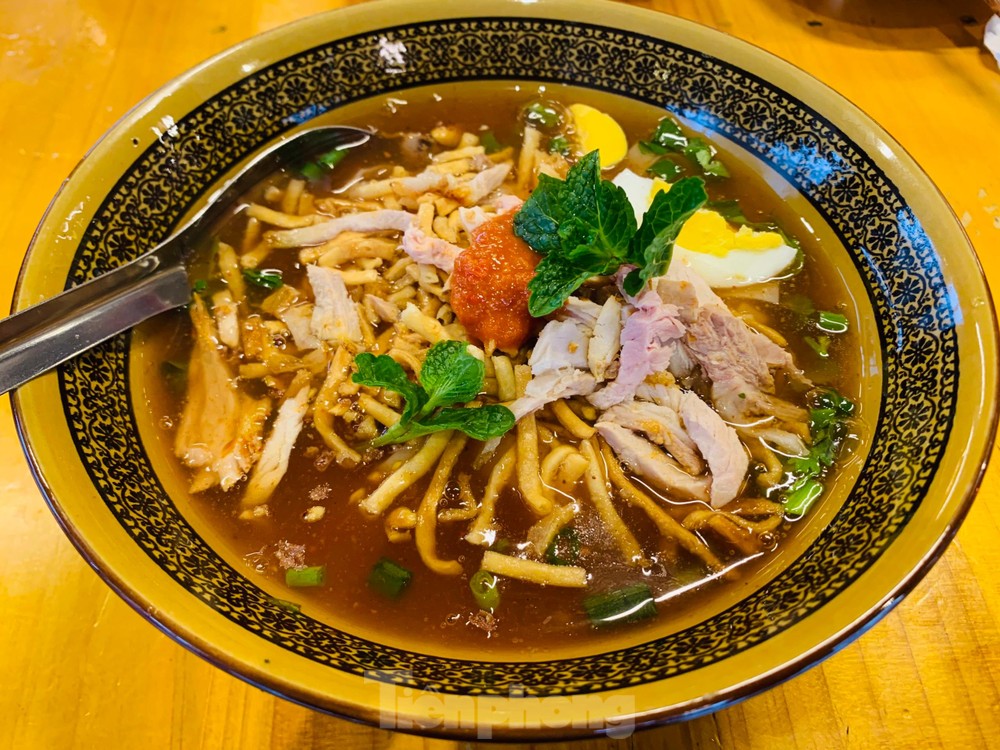
Pho Con Sui is made up of wide phở noodles placed at the bottom of the bowl. Then added to it are shredded pork, hard-boiled eggs cut into wedges, crushed peanuts, and chips of sweet potato or yam fried. These ingredients bring both sweetness and crunchiness. It all is topped with a velvety sauce, prepared from pork broth and spices like cardamom and cinnamon. This combination creates a deep and comforting flavor. Much appreciated by travelers, Phở Cốn Sủi is enjoyed hot, often early in the morning. It is today one of the emblematic dishes to taste absolutely during a stay in Sapa.
Thang Cô (Horse Meat and Offal Stew)
Thang Cô is an emblematic dish of the H’mong and Tày ethnicities. It is greatly appreciated in the mountainous regions of Vietnam. This spiced stew is prepared with horse meat and offal, such as liver, heart, and tripe. These ingredients are slowly cooked in a fragrant and well-spiced broth. Local herbs and traditional spices are added to it. This gives the dish a complex flavor and a deeply authentic taste.
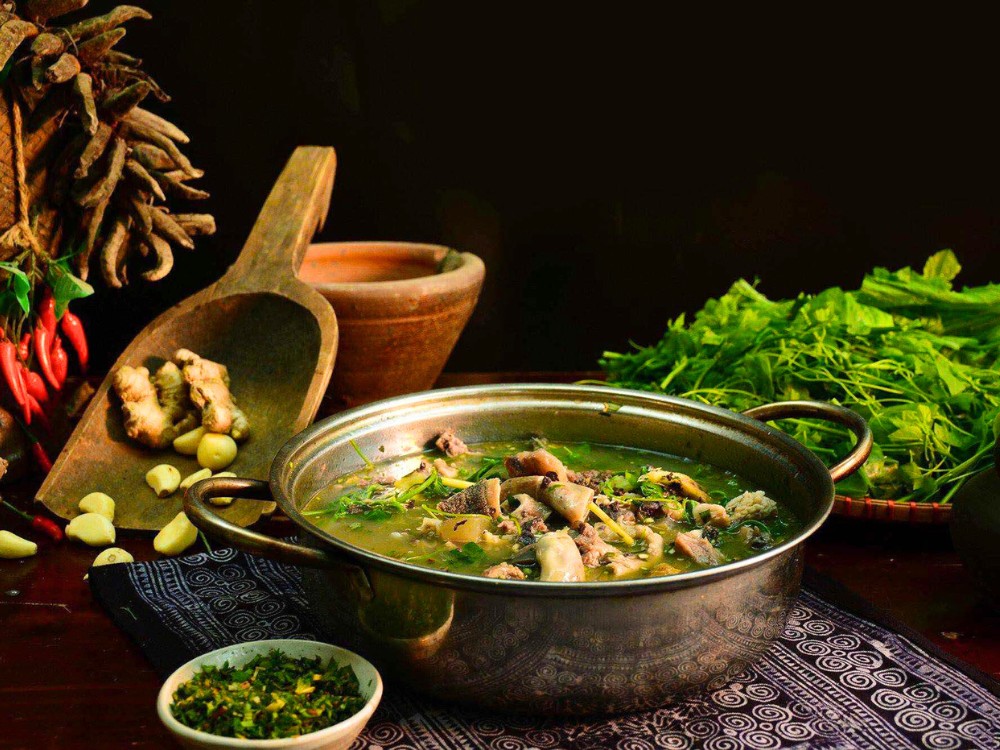
Thang Cô is a nourishing and comforting dish. It is often consumed during festivals or community gatherings. Mountain ethnicities particularly appreciate it on special occasions. This dish offers a culinary experience that is both traditional and unique. Ideal for warming up during the cool mountain evenings, it seduces with its rich flavors and its history. It is a must-have for gourmands seeking authentic discoveries.
Salmon Fondue
Salmon fondue is a comforting dish much appreciated in Sapa. It is particularly popular during cool evenings. This dish is made up of a hot broth in which pieces of fresh salmon are dipped. The cooking is quick, which allows the salmon to retain all of its tenderness. Its delicate flavor pairs perfectly with vegetables, tofu, and noodles that accompany the broth.
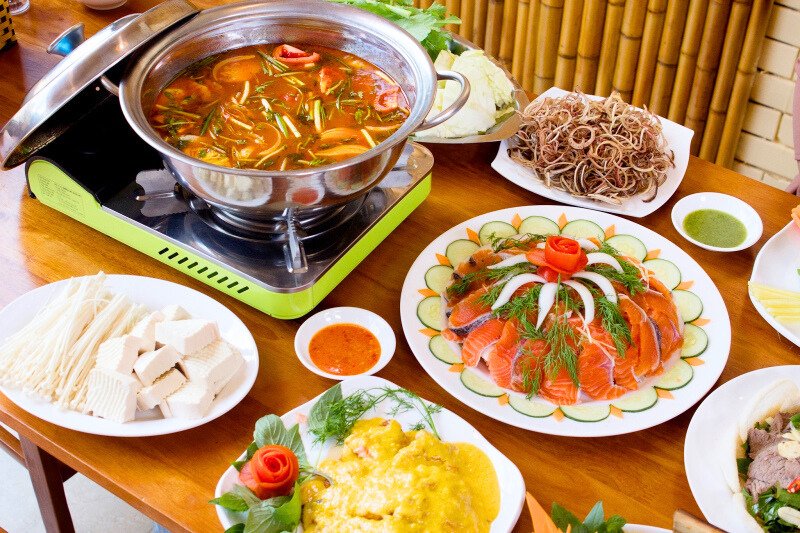
The broth is often seasoned with ginger, local spices, and sometimes citrus. It thus offers a wealth of flavors and a pleasant aroma. These aromas pair perfectly with the delicacy of the salmon. This hot pot-style dish is generally shared among friends or family. It creates a culinary experience that is both convivial and warming.
Seven-Color Glutinous Rice
Xôi Bảy Màu (seven-color glutinous rice) is an emblematic specialty of Sapa’s cuisine, in the mountains of northern Vietnam. This dish is traditionally prepared by the Nùng Dín ethnicity. It stands out for its seven vivid hues that recall the colors of a rainbow. Red, purple, green, yellow, orange, blue, and brown are obtained naturally. Turmeric, forest leaves, or vegetable ash are used, with no artificial coloring. This glutinous rice delights not only the eyes, but also offers a soft texture and a delicate aroma. These characteristics are typical of the mountain flavors of the region.
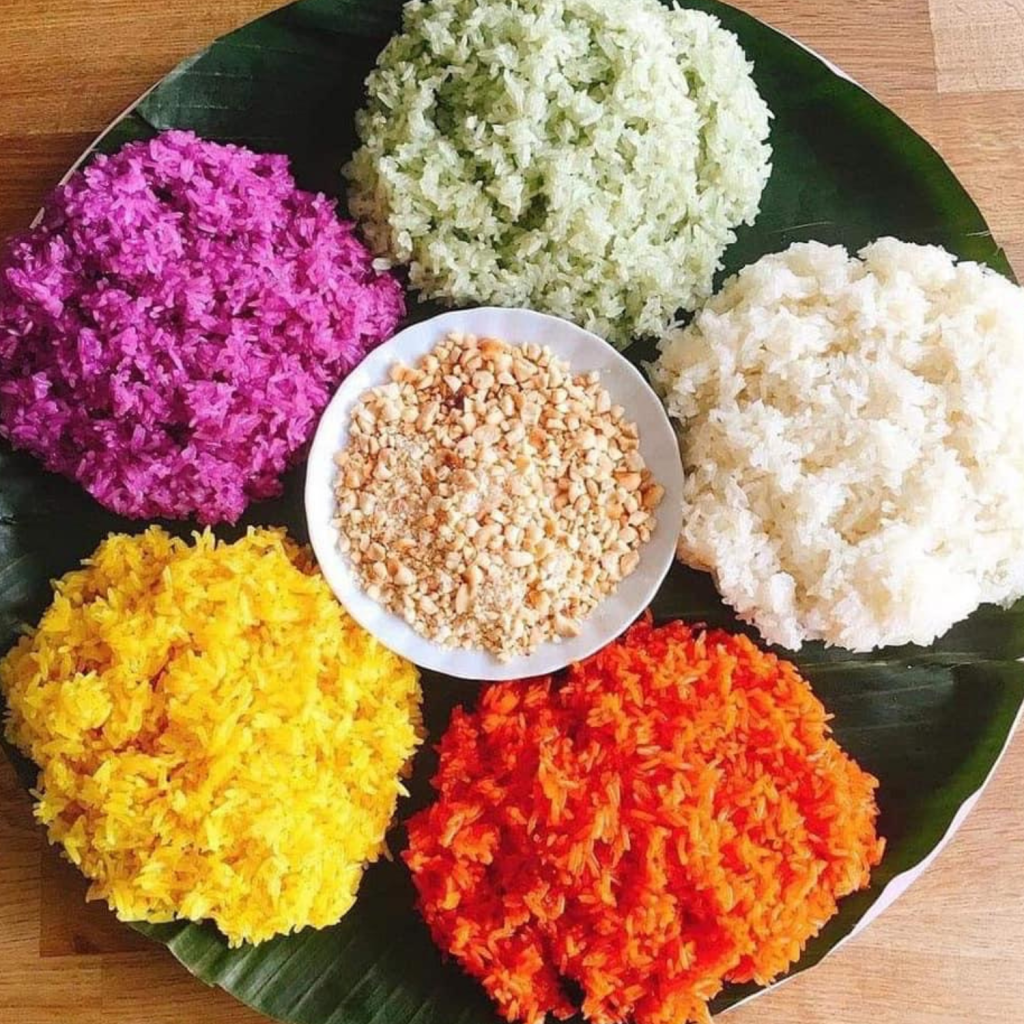
Xôi Bảy Màu has a strong symbolic dimension. Each color tells a story. Red represents spilled blood. Yellow symbolizes painful separations. Green expresses hope for renewal. According to tradition, this dish commemorates seven months of struggle by a mountain people against an invader. It embodies both collective memory and resilience. Today, travelers can discover this colorful rice in the traditional markets of the region. It is found in particular at Sapa’s weekly market, as well as those of Bắc Hà and Cốc Ly. Its vivid hues immediately catch the eye… and the palate.
Sapa Piglet
The Sapa piglet, called locally lợn cắp nách, is a specialty of the mountains of northern Vietnam. This small mountain pig is raised in semi-freedom by local ethnicities. Its meat is firm, low-fat, and very flavorful. Its name means “pig carried under the armpit.” It derives from the fact that villagers carry these piglets alive under their arm to sell them at the market.
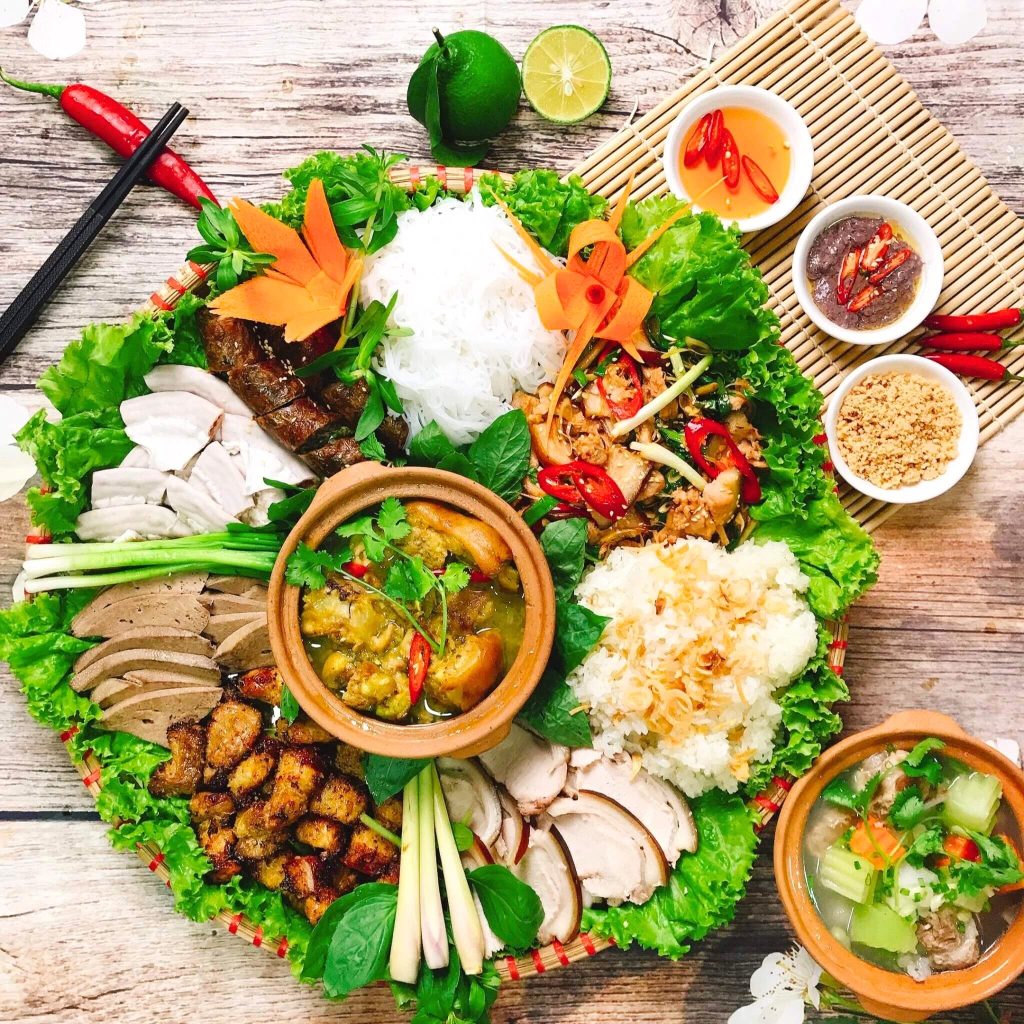
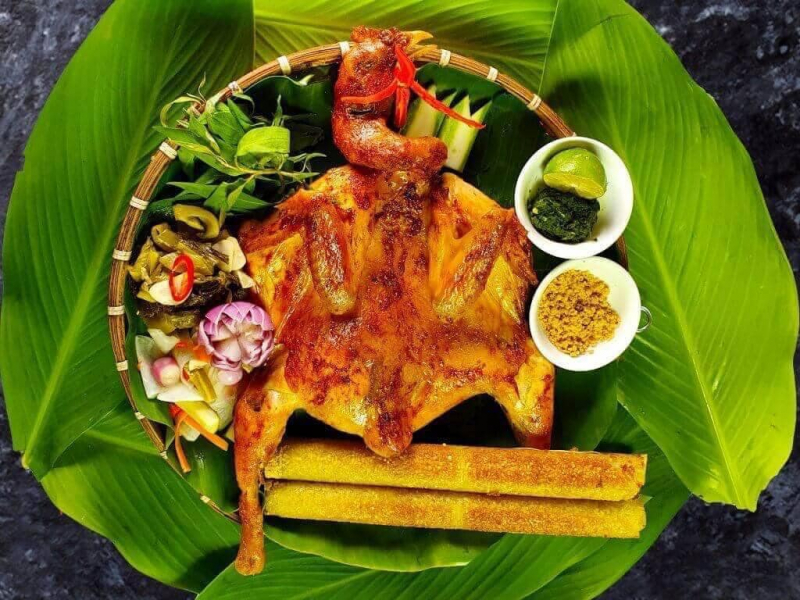
Once prepared, the meat is often grilled, roasted whole, or stir-fried with local spices like lemongrass, ginger, and aromatic leaves. The result is tender meat, slightly crispy on the outside and intensely fragrant. Much appreciated during traditional festivals or communal meals, this dish fully embodies the authenticity and generosity of Sapa’s cuisine.
In Sapa, you can enjoy this specialty in small local restaurants, in ethnic markets, or during shared meals with locals, for a culinary immersion that is both rustic and unforgettable.
Smoked Buffalo
Smoked buffalo, or trâu gác bếp in Vietnamese, is one of the most typical and emblematic dishes of the mountain ethnicities of the North, particularly the Thái and H’Mông peoples. This rustic specialty is prepared from buffalo meat marinated in a mixture of garlic, ginger, chili pepper, mắc khén (forest pepper), then slowly dried over a wood fire, suspended in traditional kitchens from the open roof.
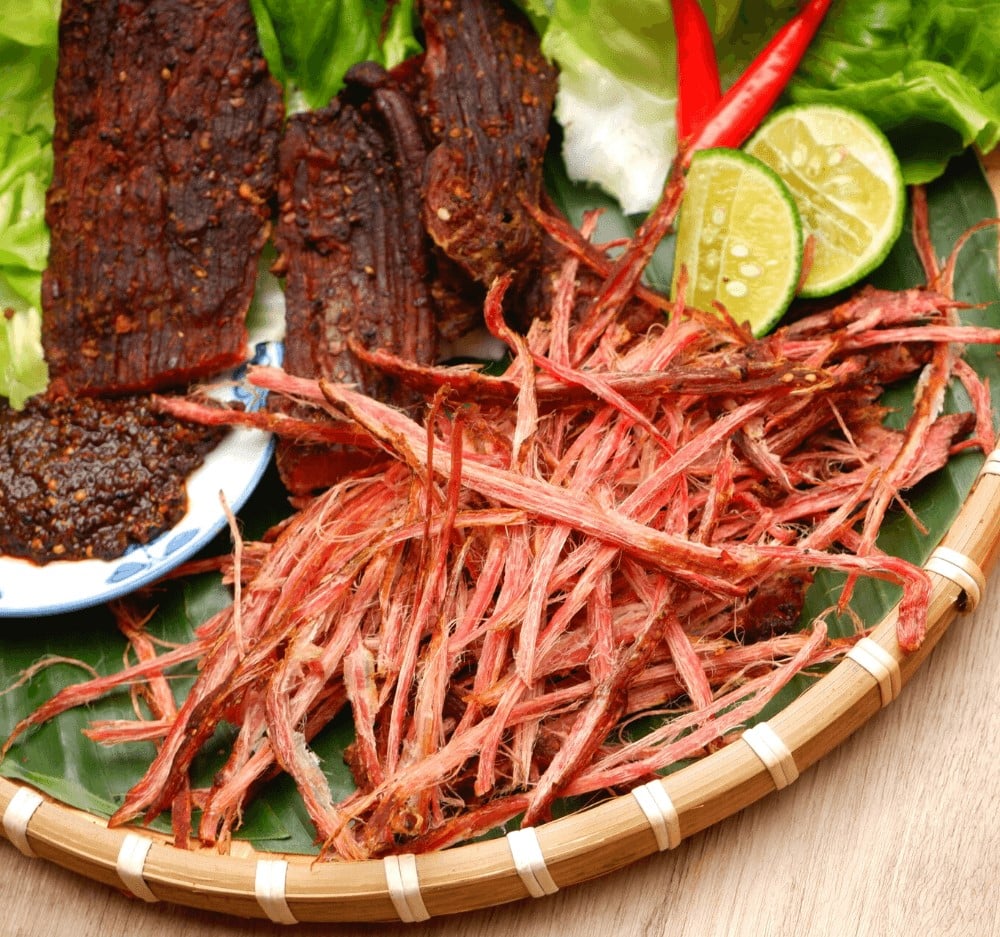
This ancestral preservation method gives the meat a firm texture, an intensely smoked taste, and deep aromas of wood and spices. The meat, dark and fibrous, is traditionally eaten in strips, torn by hand, accompanied by a spicy sauce or a glass of rice liquor. An emblematic dish of Sapa’s cuisine, smoked buffalo embodies mountain life, resilience, and knowledge passed down from generation to generation. Served with pride during festivals or offered to guests as a sign of hospitality, this dish remains a powerful symbol of the generosity of the peoples of the region.
Sapa Grills
Sapa grills are an integral part of the local culinary experience, especially in the evening, when night markets come alive. On sidewalks or in the heart of ethnic markets, small braziers made of earth or metal spread a gentle heat and an irresistible aroma of marinated meat, tofu, mushrooms, and mountain vegetables grilled over coals.
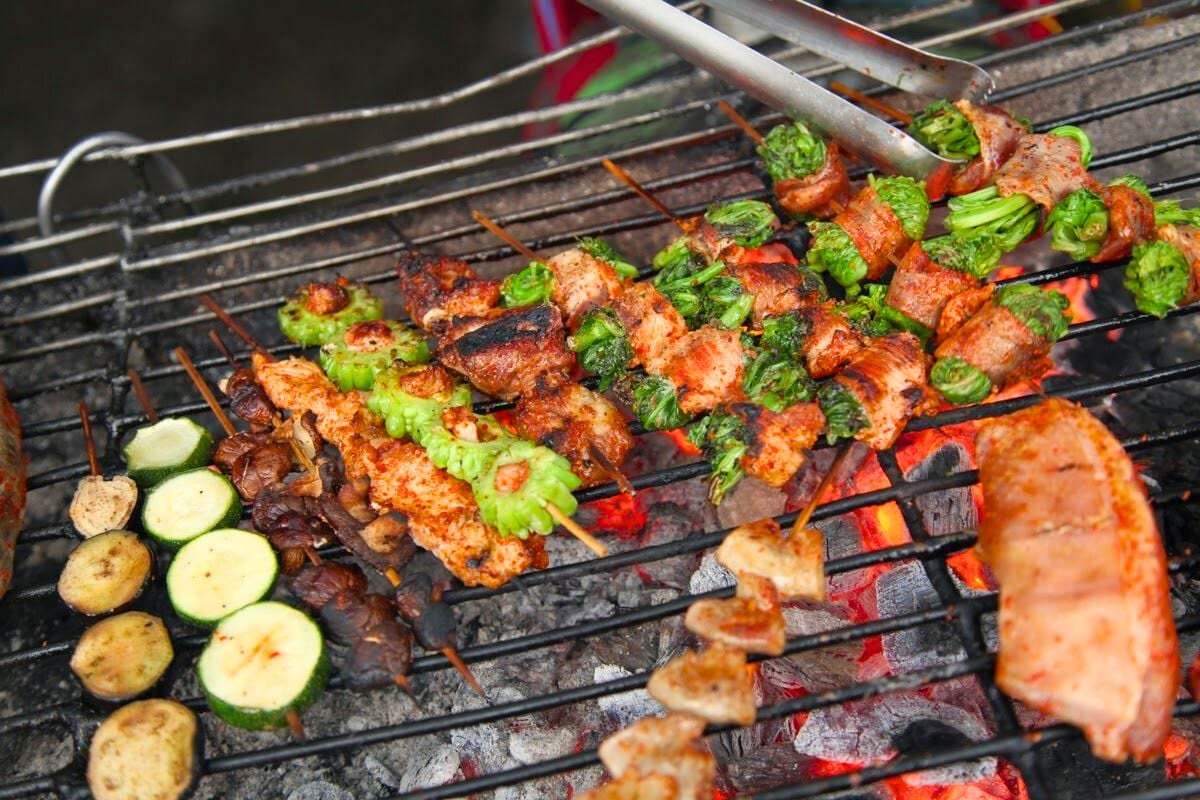 Among the most popular skewers are pork or beef marinated, sometimes wrapped in mắc mật leaves (aromatic plant from the North), locally grilled mushrooms, tofu, and roasted corn, all seasoned with lemongrass, garlic, ginger, and a pinch of chili pepper or mắc khén (wild mountain pepper). Each bite is at once smoky, tender, and fragrant.