+84 9 75 46 33 10 (Whatsapp)
  info@horizon-vietnamtravel.com
  Français
  Español
  Português
  Deutsch

Vietnam’s Seafood and Fish: A Coastal Culinary Treasure
Table of contents
Vietnam, with its coastline stretching for over 3,000 kilometers, is a true paradise for seafood lovers. From the bustling markets of Hạ Long to the small fishing ports of the Mekong Delta, seafood is an integral part of Vietnamese cuisine and its culinary identity. Each region, from North to South, offers its own specialties—from succulent shrimp to crabs from shallow waters, to squid caught offshore. Enjoyed fresh, grilled, steamed, or in fragrant soups, Vietnamese seafood offers a diversity of flavors and textures that delight both visitors and locals alike. In this article, discover the must-try treasures of the Vietnamese sea, iconic dishes, and the best places to savor this unique gastronomic wealth.
A Wide Variety of Seafood and Fish
Vietnam, with its vast coastline and fish-rich waters, is a true paradise for seafood enthusiasts. Fish, crustaceans, and mollusks abound, making these ocean products accessible and omnipresent in Vietnamese cuisine. Unlike other countries where they are often considered luxury dishes, seafood in Vietnam is affordable and an integral part of daily life, to the great delight of food connoisseurs and curious travelers.
Marine Specialties of the Three Great Regions
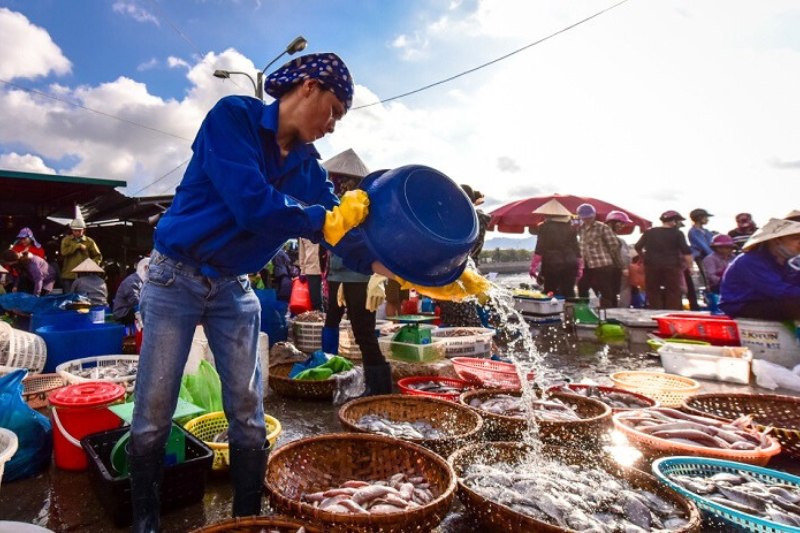
Hạ Long Seafood Market, renowned for the diversity and freshness of its produce each morning
In northern Vietnam, particularly around Hạ Long Bay, crustaceans and mollusks hold a place of honor. Crabs, oysters, mussels, and shrimp are especially prized and are often prepared with fresh herbs and delicate spices to preserve their natural taste. Steamed clams and stir-fried shrimp are among the most beloved dishes in this region, which favors simple preparations to showcase the freshness of the ingredients.
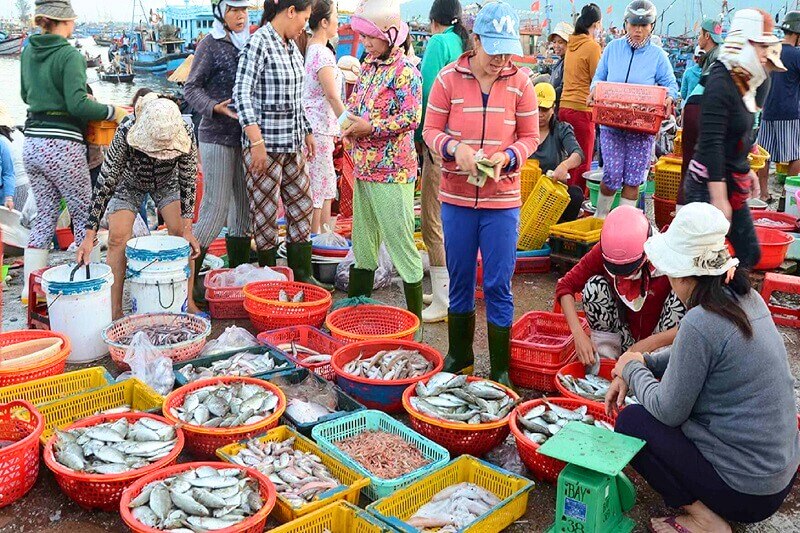
Đà Nẵng Seafood Market, lively and colorful from dawn
In central Vietnam, particularly around Đà Nẵng and Huế, the cuisine is famous for its spicy and bold character, where fish and seafood marry with intense flavors. Stuffed and grilled squid, lobster, and reef fish are local specialties, often served at festivals or family meals. Spices like chili pepper, ginger, and turmeric enhance these dishes and give them a unique character. This region’s coastline is also renowned for its fresh fish markets, where you can discover rare species, a testament to the richness of central Vietnam’s marine life.
In southern Vietnam, the proximity of the Mekong Delta allows for even greater diversification of seafood products. This region abounds with giant shrimp, blue crabs, catfish, and other local species adapted to both fresh and saltwater environments. Seafood is often grilled and served with sweet and sour sauces made from tamarind, lemongrass, and palm sugar, creating a harmonious balance between sweetness and acidity. Southern specialties are colorful, lightly sweet, and accompanied by crispy vegetables, giving them an unparalleled freshness.
Seafood Markets: An Authentic Experience
Seafood markets, omnipresent in Vietnam’s coastal cities, are essential stops for travelers seeking authenticity. Some of these markets, set up directly on beaches at dawn, allow you to purchase freshly caught seafood, offering a privileged glimpse into local life and Vietnam’s passion for the sea. In these bustling places, visitors discover a great variety of marine products, often cooked on site at small stalls or available takeaway to be enjoyed in nearby restaurants. These markets are far more than just places of commerce—they embody the maritime soul of Vietnam.
Famous and Delicious Dishes
Cha Ca La Vong (Grilled Fish with Herbs and Turmeric)
Cha Ca La Vong is one of Hanoi’s most emblematic dishes, a true symbol of northern Vietnamese cuisine. Born in the 19th century in a small house on Cha Ca Street, this dish became so famous that it gave its name to the street itself. It is prepared with ca lang, a freshwater fish with firm and delicate meat, typical of northern Vietnamese rivers. The fish is marinated with turmeric, fish sauce, and spices, then grilled and subsequently stir-fried with dill and scallions. Served still steaming in a small pan over a small burner, it retains all its heat and aroma.
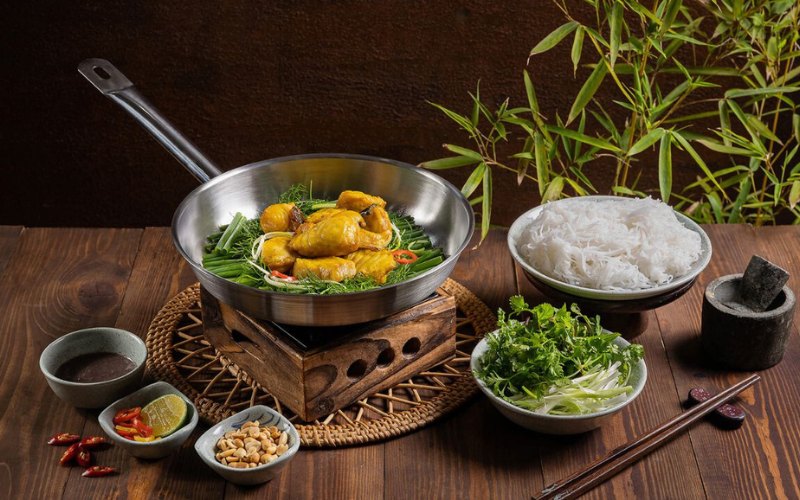
Cha ca La Vong (Grilled Fish with Herbs and Turmeric)
Cha Ca La Vong is enjoyed with rice vermicelli (bun), roasted peanuts, fresh herbs, and a slightly sweet fish sauce. Its unique taste—at once delicate, aromatic, and subtly smoky—embodies the refinement and balance of Hanoi’s gastronomy.
Jellyfish Salad (Goi Sua)
Goi sua is a traditional Vietnamese salad distinguished by the use of jellyfish as its main ingredient. This coastal specialty is composed of a unique combination of flavors and textures, uniting the tenderness of jellyfish, the freshness of green mango, and the crunchiness of crushed peanuts. Beyond jellyfish, other common ingredients include shredded chicken, onions, basil, cilantro, green mango, chili peppers, and spices, which harmoniously combine to create a light yet flavorful dish.
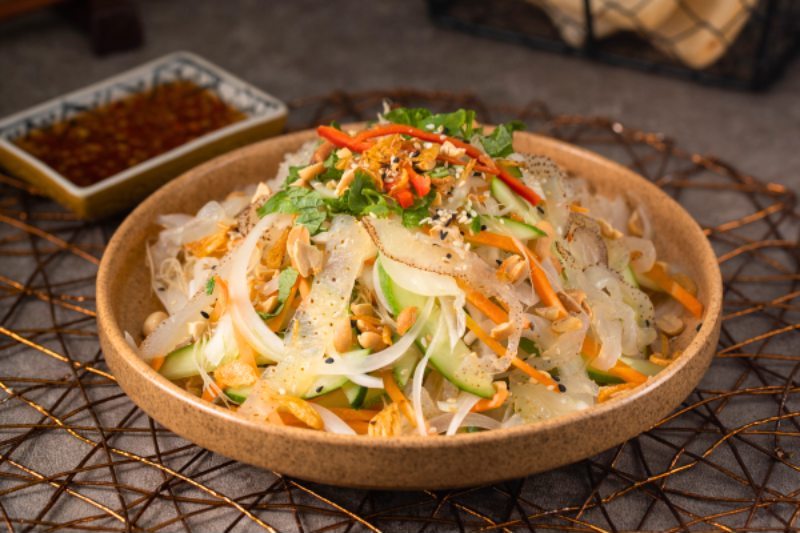
Goi sua – Vietnamese Jellyfish Salad, blending freshness, crunch, and marine flavors
The preparation of this salad follows a meticulous process: the jellyfish is sliced and immersed in hot water to soften its texture, the chicken is boiled and then shredded, and the green mango is sliced finely into strips. Everything is then mixed and garnished with roasted and crushed peanuts to add a crunchy note. A flavorful sauce, composed of sugar, salt, pepper, fish sauce, vinegar, and chili pepper, accompanies the salad, providing a perfect balance between sweetness, acidity, and spiciness.
To complement it, it is common to enjoy this salad with a fried glutinous rice pancake, a perfect complement to add crunchiness and enhance the texture of the jellyfish. Although primarily served in coastal regions, this salad is also appreciated in inland areas of Vietnam, where it is available in numerous restaurants, testament to the popularity of this original dish.
Glass Noodle Stir-Fry with Crab (Mien Xao Cua)
Mien xao cua is a refined traditional Vietnamese dish that unites the delicacy of glass noodles stir-fried with the succulent sweetness of crab meat. This dish is enriched with various vegetables such as black mushrooms, carrots, and bean sprouts, which add both texture and freshness.
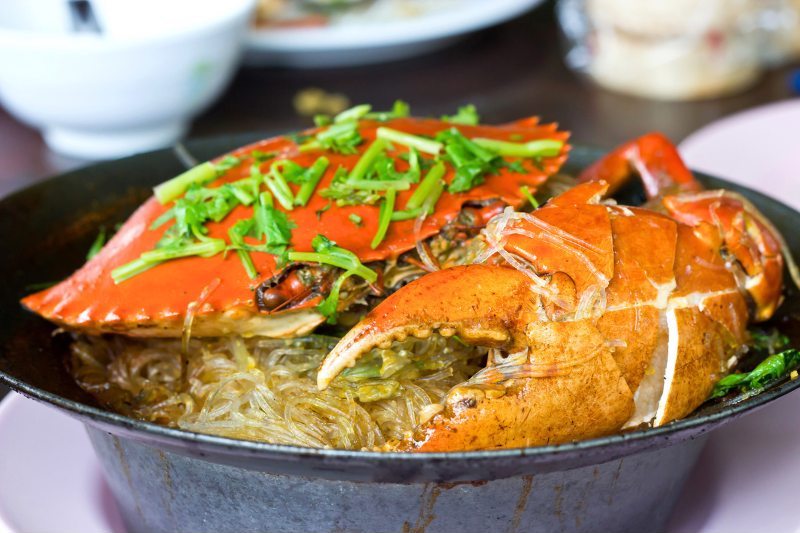
Mien xao cua – Transparent Noodles Stir-Fried with Crab, a Vietnamese specialty with delicate flavors
The preparation begins by stir-frying the ingredients in a large pan, where they are then seasoned with a light sauce that blends lime juice, minced garlic, sugar, water, and fish sauce, for a perfect balance of sweet and tangy flavors. Once the noodles are well infused with this fragrant sauce, mien xao cua is garnished with chopped scallions and cilantro, which add a touch of color and freshness to the dish. This traditional dish is enjoyed in many Vietnamese restaurants, but is also often prepared at home for special occasions, testament to its importance in Vietnamese cuisine.
Salmon or Sturgeon Hotpot (Lau Ca Tam-Ca Hoi)
Among Vietnamese fish specialties, the salmon or sturgeon hotpot ranks among the most appreciated dishes, especially in the mountainous regions of the North and Center. Served steaming at the center of the table, it fully expresses the spirit of conviviality and sharing typical of Vietnamese cuisine.
The broth, heart of the dish, is prepared with tomatoes, pineapple, lemongrass, chili pepper, and fresh herbs. It offers a flavor that is at once tangy, sweet, and subtly spicy, which enhances the tender meat of the fish.
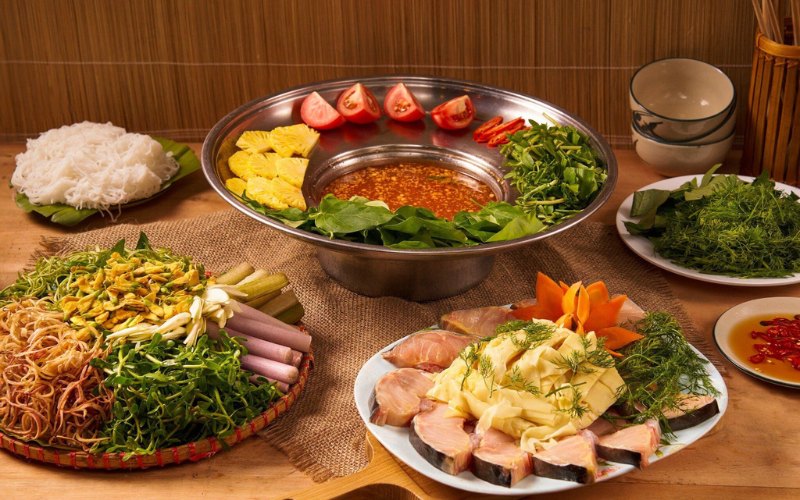
Sturgeon Hotpot (Lau ca tam)
Depending on the regions, salmon or sturgeon is added, two fish from the clear and fresh waters of the highlands. Sliced thinly, they are immersed in the simmering broth along with rice vermicelli, mushrooms, green vegetables, or even banana flowers. The ensemble creates a harmony of textures and aromas, at once light and generous.
Beyond taste, the hotpot represents a moment of encounter and human warmth: everyone participates in the cooking, exchanges, and shares around the dish. This simple and balanced dish illustrates the philosophy of Vietnamese cuisine—respect for the ingredient, freshness of ingredients, and the pleasure of being together.
Clam Rice (Com Hen)
Originating from the historic city of Huế, Com hen is an emblematic dish that unites the flavors of the sea with the simplicity of steamed rice. This local specialty is prepared with delicately cooked clams or mussels, served on a bed of thick rice at room temperature, for a light and refreshing meal.
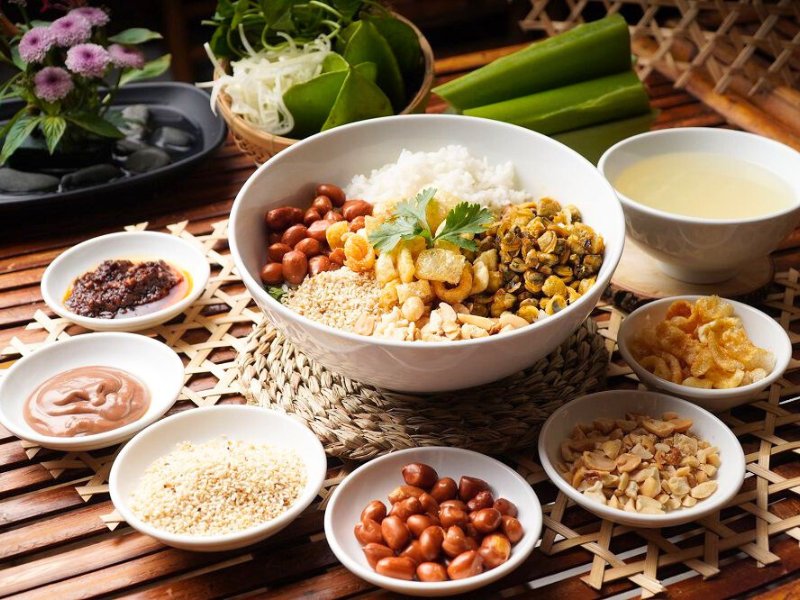
Clam Rice (Com Hen)
This rice dish is enriched by a variety of toppings: crispy peanuts, fragrant cilantro, chili peppers, fermented shrimp paste for a salty note, as well as fresh and textured ingredients like carambola slices, banana flowers, crispy fried onions, crispy pork rinds, and toasted sesame seeds.
A bowl of clam broth is served separately, allowing diners to pour it over the rice, thus adding depth of flavor and a hot-cold contrast to the dish. Com hen embodies the richness of Huế’s local flavors and offers an authentic glimpse into Vietnamese cuisine, at once simple and refined.
Jellyfish Noodle Soup (Bun Ca Sua)
Bun Ca Sua is a traditional Vietnamese soup, originating from the coastal city of Nha Trang, renowned for its unique marine flavors. This emblematic dish combines rice vermicelli, slices of jellyfish, and fried fish paste, offering a refreshing and delicately aromatic culinary experience.
The broth, light and flavorful, is prepared with fresh fish of the “paradise” or “leathery” type, which brings a subtle and aromatic note. The jellyfish, carefully prepared, is first immersed in water with alum to soften its texture, then rinsed and sliced into thin slices. At serving time, the rice vermicelli is arranged in the bowl, garnished with jellyfish slices and pieces of fried fish paste, and the hot broth is poured to complete the dish.
To accompany this soup, fresh raw vegetables, lemon slices, and chili peppers are served separately, allowing diners to personalize the dish according to their preferences. Bun Ca Sua is a must-try specialty of Nha Trang, perfect for those wishing to discover the refined maritime flavors of Vietnam.
Keo Fish Hotpot (Lau Ca Keo)
The keo fish hotpot, called Lau ca keo, is a popular specialty of the Mekong Delta in southern Vietnam. This dish highlights the ca keo, a small freshwater fish with fine and savory meat, often prepared whole.
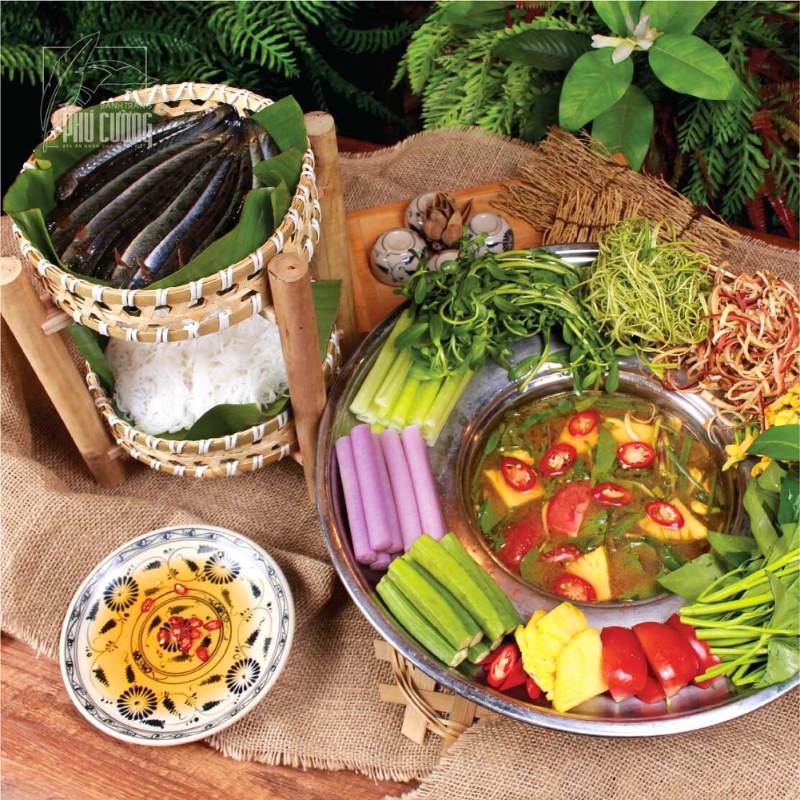
Lau ca keo, Hotpot from Southern Vietnam, fragrant with tamarind and lemongrass
The broth is lightly tangy and fragrant, prepared with tamarind, lemongrass, chili pepper, and fresh herbs. The keo fish is immersed in it live or fresh, which gives it a firm texture and a very delicate taste. Served with rice vermicelli, vegetable leaves, and fish sauce, this typical dish is shared around a table, in a simple and convivial atmosphere. A symbol of southern gastronomy, Lau ca keo perfectly illustrates delta cuisine: rich in flavors, natural, and close to the land and water.
Saigon Snails (Oc Sai Gon)
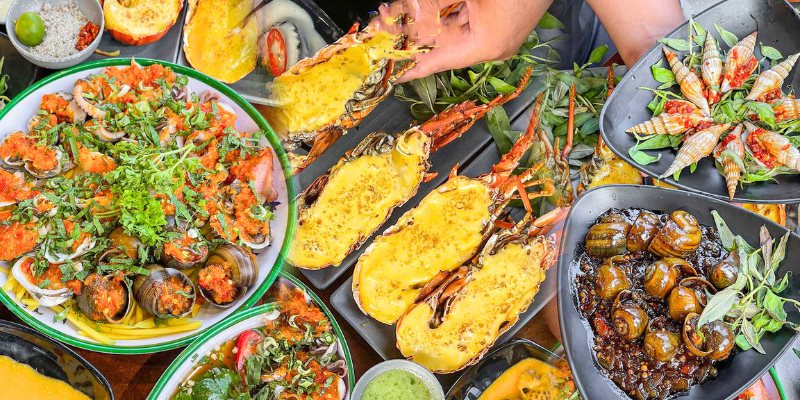
Saigon Snails (Oc Sai Gon)
Saigon snails, or Oc Sai Gon, represent a true culinary universe unto themselves. In Ho Chi Minh City, restaurants and street stalls specialized in snails are very popular, especially in the evening. Vietnamese people enjoy a wide variety of snails and mollusks here: clams, periwinkles, mussels, scallops, oysters, or sea snails. These seafoods are grilled, stir-fried, steamed, or cooked in coconut milk, and served with spicy sauces, lime, chili pepper, and lemongrass. Oc Sai Gon is not just a dish, but a gastronomic and convivial experience, where you share various dishes around a cold beer. It is one of the most authentic ways to discover the popular culinary culture of Saigon.
Braised Fish Vu Dai (Ca Kho Vu Dai)
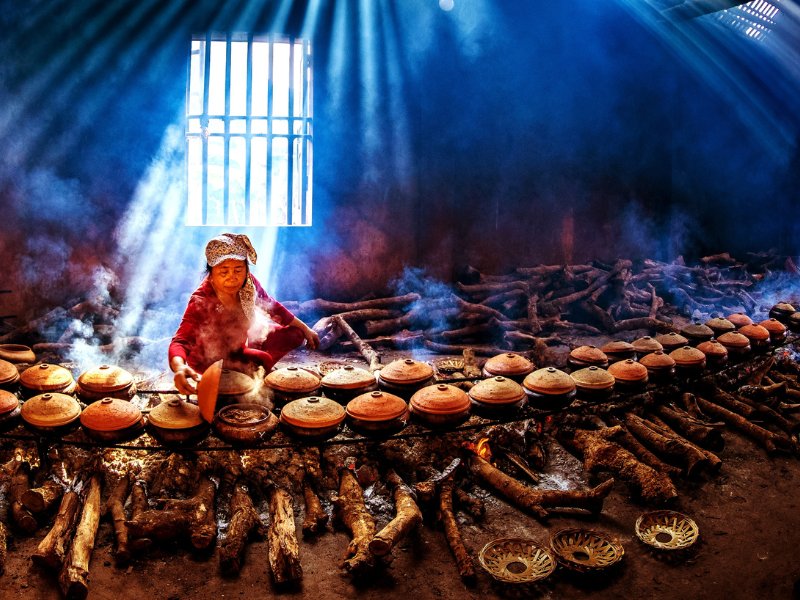
In the village of Vu Dai, residents braise hundreds of pots of fish each year, a specialty passed down from generation to generation
Vu Dai braised fish is a traditional Vietnamese dish originating from the village of Vu Dai, also known as the village of Dai Hoang. It is composed of love fish, galangal, ginger, pork belly, shallots, chili peppers, lime juice, fish sauce, pepper, and sugar.
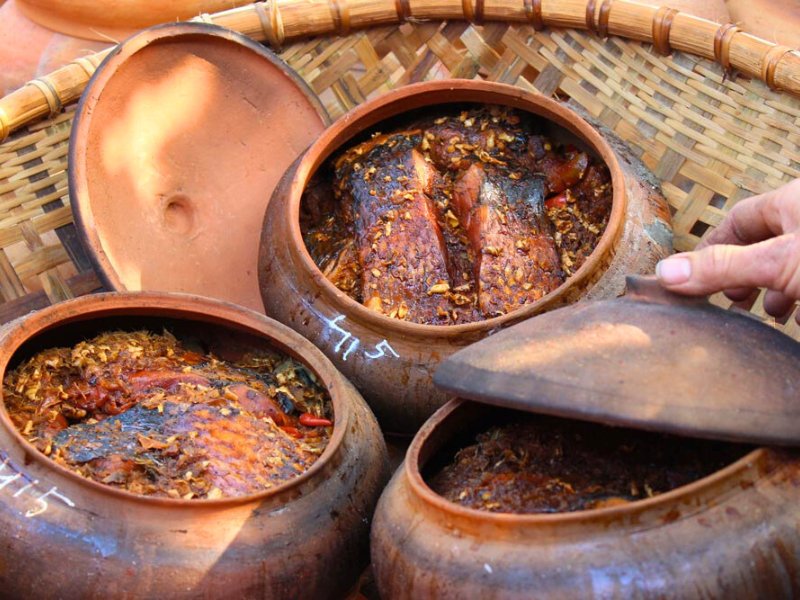
Braised Fish in the Vu Dai Manner (Ca kho Vu Dai), a Northern Specialty with Intense and Caramelized Flavor, Slowly Simmered in an Earthenware Pot
The ginger, shallots, chili peppers, and galangal are finely minced and mixed, while the rest of the galangal is sliced thinly and arranged in an earthenware pot. The galangal slices are garnished with the fish, thick slices of pork belly, and a finely minced mixture of ginger, shallots, galangal, and chili peppers.
Everything is braised for 6-10 hours in a mixture of fish sauce, broth, sugar, lime juice, and pepper. When the liquid becomes slightly thick, the pot is removed from the heat and the fish is ready to be served and enjoyed. This traditional recipe has been passed down from generation to generation in the village of Vu Dai.
Fish Braised in Caramel Sauce (Ca Kho To)
Fish braised in caramel sauce, called Ca kho to, is one of the most emblematic dishes of southern Vietnam. It is traditionally prepared in an earthenware pot (to), which retains heat and intensifies the aromas.
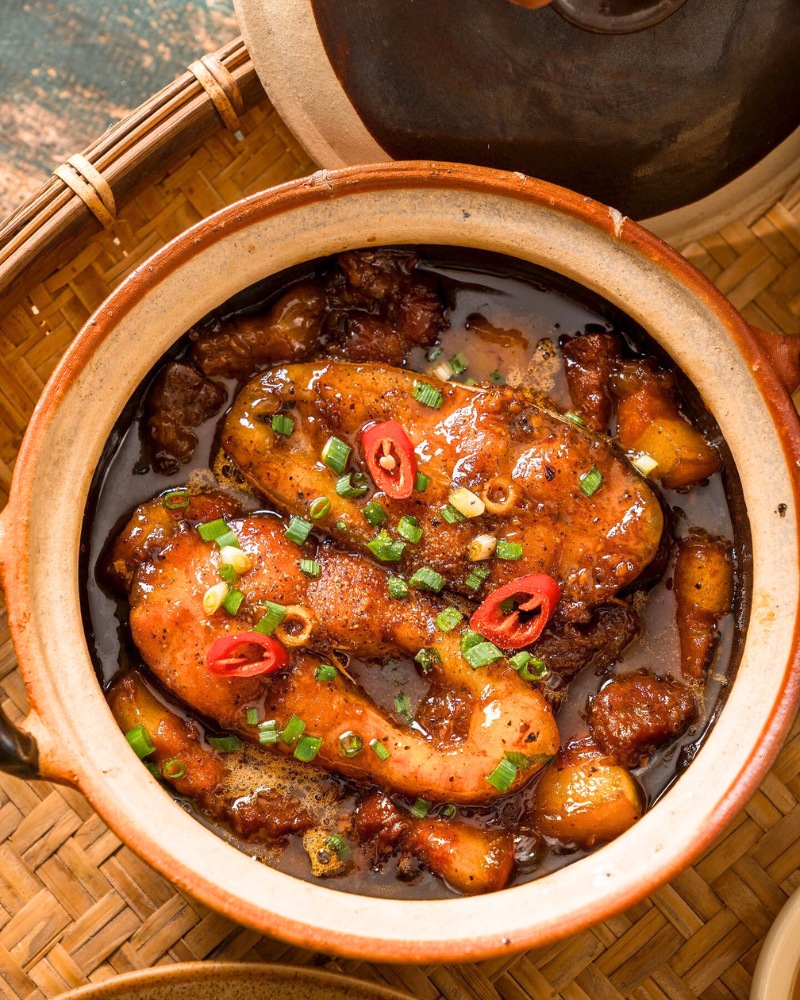
Fish Braised in Caramel Sauce, slowly simmered in an earthenware pot for a rich and fragrant flavor
The fish, often catfish or ca loc (snake fish), is marinated with fish sauce, palm sugar, garlic, pepper, and shallots, then slowly cooked until the sauce thickens and takes on an amber color.
The result is a rich, fragrant, and slightly sweet-and-sour dish, in which the fish meat becomes tender and full of flavor. Served with hot white rice and fresh vegetables, Ca kho to perfectly illustrates southern Vietnamese cuisine: simple, generous, and profoundly comforting.
Sun-Dried Squid (Muc Mot Nang)
Sun-dried squid, called Muc mot nang, is a typical specialty of the central and southern coastal regions of Vietnam, particularly in Phan Thiet, Nha Trang, or Phu Quoc. Its name literally means “squid of one day of sun.”
Just after being caught, the squid are cleaned, salted, and then briefly dried in the sun for a day. This partial drying gives them a unique texture: soft inside and slightly crispy on the outside.
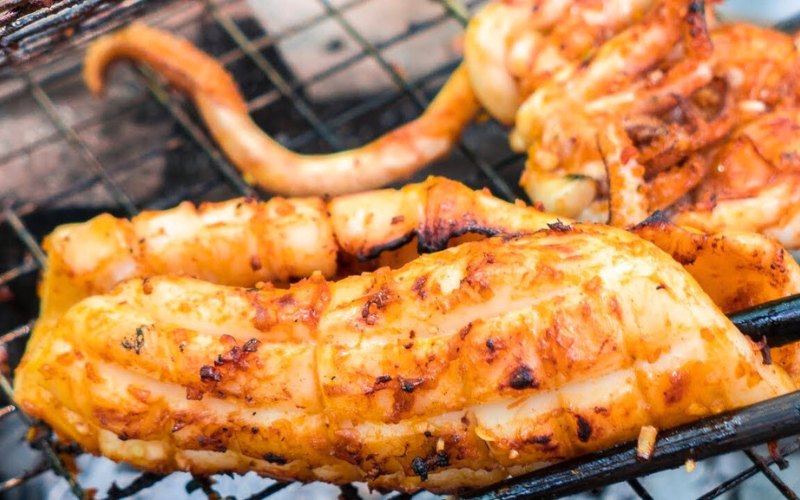
Sun-Dried Squid in Satay Sauce (Muc mot nang sa te), a Vietnamese dish with spicy and fragrant taste, typical of coastal regions
Muc mot nang can be grilled over charcoal, stir-fried in a pan, or sliced into strips to accompany rice, noodle, or beer dishes. Its flavor is delicate, fragrant, and lightly salty, and recalls the authentic taste of the sea. This simple and flavorful dish reflects the artisanal knowledge of Vietnamese fishermen, who have managed to preserve the freshness of the product while giving it at the same time an artisanal and typically local character.
Sweet and Sour Fish Soup (Canh Chua Ca)
Sweet and sour fish soup, called Canh chua ca, is one of the most popular dishes in southern Vietnam. It harmoniously combines tangy, sweet, salty, and lightly spicy flavors, typical of southern cuisine.
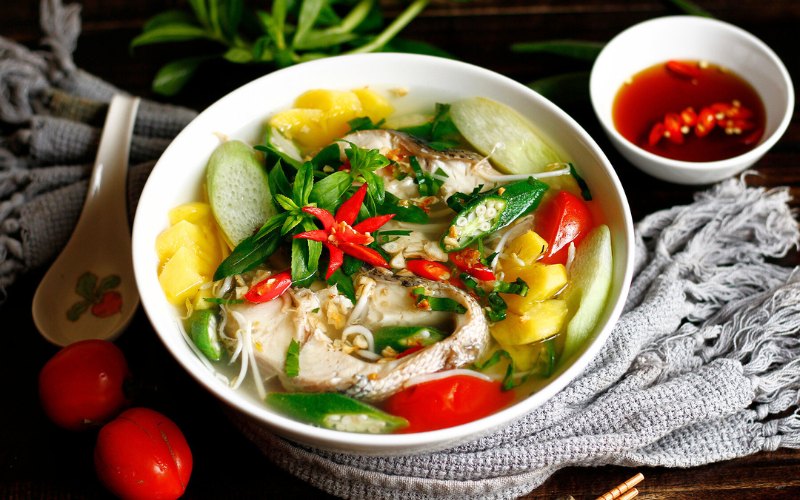
Canh chua ca, Sweet and Sour Fish Soup, a specialty of southern Vietnam
The broth is prepared with tamarind, tomatoes, pineapple, bean sprouts, and lemongrass, creating a fresh and fragrant flavor. Pieces of fresh fish—often catfish or snake fish—are then added, which cook gently in the broth. Served with hot white rice, Canh chua ca is at once light, nourishing, and comforting. This dish perfectly illustrates the Vietnamese art of balancing flavors and enhancing products from rivers and seas.
Seafood and fish occupy an essential place in Vietnamese cuisine. From the coasts of the North to the shores of the South, they offer a wealth of flavors and recipes that reflect the diversity of the country. Each region has created its own specialties, adapted to the climate, resources, and traditions. The sea is an integral part of Vietnamese life. It nourishes families, shapes traditions, and brings generations together around simple and warm meals. Dishes based on fish and seafood translate this deep bond between humans and nature, between the sea’s generosity and the cooks’ creativity. If you have the opportunity to come to Vietnam, take the time to taste these sea dishes. You will discover not only unique and authentic flavors, but also a living part of Vietnamese culture, made of simplicity, sharing, and love for nature.