+84 9 75 46 33 10 (Whatsapp)
  info@horizon-vietnamtravel.com
  Français
  Español
  Português
  Deutsch

The Buffalo in the Life of Vietnamese People
Table of contents
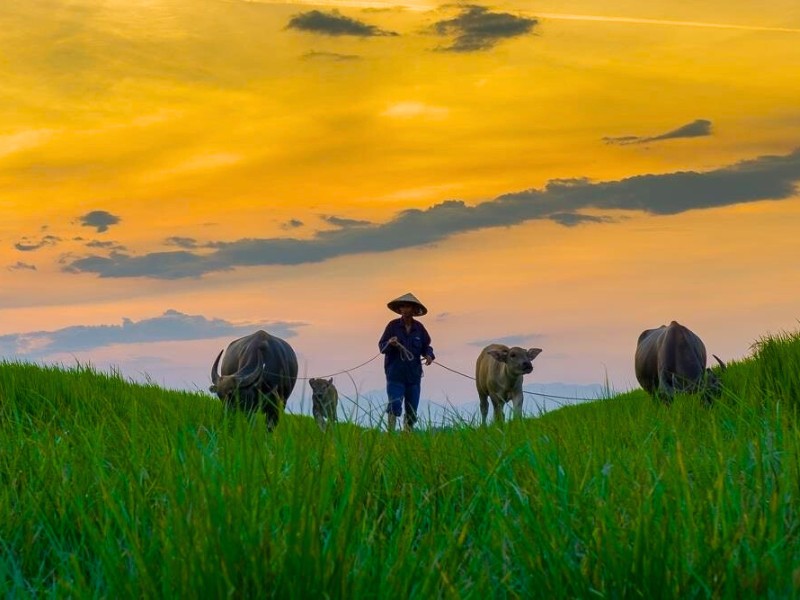
The buffalo has long played a fundamental role in the life of Vietnamese people. It is also considered an emblematic animal for the Vietnamese, and continues to be used in field work and is preferred over machines. Indeed, the Vietnamese farmer appreciates its tireless labor and its tranquility. It is perfectly suited to work in a humid and rugged environment. The image of the buffalo appears in all aspects of life, becoming a cultural and sacred symbol of the Vietnamese people.
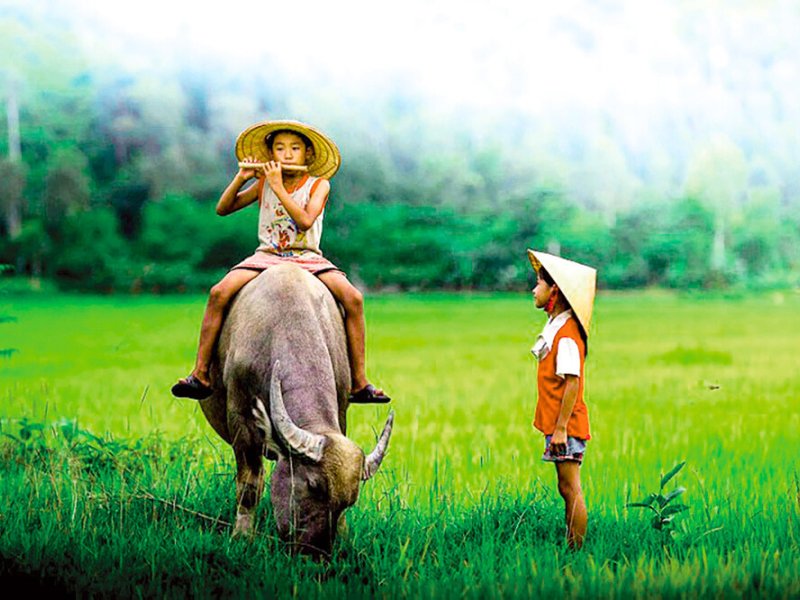
In the Vietnamese countryside, one often sees a young boy, sitting on the back of a buffalo, playing the flute
The Legend of the Buffalo in Vietnam
In the beginning of time, the Earth was still barren, dry and sterile. Human beings lived in misery, depending entirely on hunting and gathering. Seeing their suffering, the Emperor of Jade (Ngọc Hoàng), lord of Heaven, decided to help them.
The Emperor summoned a celestial god with a pure heart and exemplary work. He entrusted him with two large bags of seeds and ordered him: “In the red bag you will find grain seeds: rice, corn, wheat… meant to nourish men. In the green bag are seeds of herbs and wild plants, to beautify the land and serve as food for animals. You must first sow the grain seeds over most of the lands, and reserve a small part for herbs and pastures.”
The god humbly accepted the mission and descended to Earth, carrying the two sacred bags. But along the way, he was amazed by the beauty of the earthly world: the splendid flowers, the song of birds, the dances of fairies and the fragrance of ripe fruits intoxicated him. Dazed by so many marvels, he forgot the Emperor’s precise instructions.
When he arrived on Earth, he no longer remembered which bag contained the grain. Seeing the green color, a symbol of life and hope, he thought it must certainly be the bag of food seeds. He therefore sowed the green bag, full of herb seeds, over most of the soil.
Then, on the small land remaining, he threw the seeds from the red bag, thinking they were herbs. Soon after, wild herbs grew in abundance, covering all the earth. The grain, suffocated, could not grow. Men had to work endlessly to uproot the weeds, hoe the earth and care for their fields. The harvests were meager and life remained hard.
Upon hearing the news, Ngọc Hoàng became furious. He summoned the guilty god and said in a thunderous voice: “You have committed a grave fault against human beings. To make amends for your error, I condemn you to be reincarnated as a buffalo. You will plow the earth to help the farmers cultivate their fields and you must eat grass for your entire life, the very grass that you sowed by mistake!”
From that day on, the god was transformed into a buffalo. He worked tirelessly in the rice paddies, pulling the plow with patience and strength. His daily meal was nothing but grass, a symbol of his past guilt. But thanks to his goodness and gentleness, the buffalo became the Vietnamese farmer’s best friend. A symbol of courage, hard work and loyalty, he was nicknamed: “Đầu cơ nghiệp” – The Beginning of All Prosperity.
The Characteristics of Buffaloes
The water buffalo is an emblematic animal of Vietnamese and Asian countryside. Recognized for its strength, endurance and patience, it is indispensable for agricultural work, particularly in flooded rice fields.
Differences Between Buffaloes and Cows
Although cows can pull plows, buffaloes are more commonly used for certain reasons. Compared to cows, water buffaloes have a larger and stronger body. They can endure deep water, swampy terrain and even bad weather, while cows are unable to adapt to all conditions. Moreover, cows are afraid of water, so they cannot work in Vietnam’s flooded rice fields.
Why Does the Buffalo Love Water?
The buffalo is found in tropical and subtropical regions. In these regions, the temperature is very high, in summer it can reach 39 degrees Celsius, while the buffalo’s skin is very thick and sweat glands are not developed. For this reason, sweat cannot evaporate, and the buffalo cannot use this method to cool its body. So, when the temperature exceeds 30 degrees, especially after plowing the fields, their body temperature increases and buffaloes must immerse themselves in water.
The Buffalo – An Inseparable Companion of Farmers
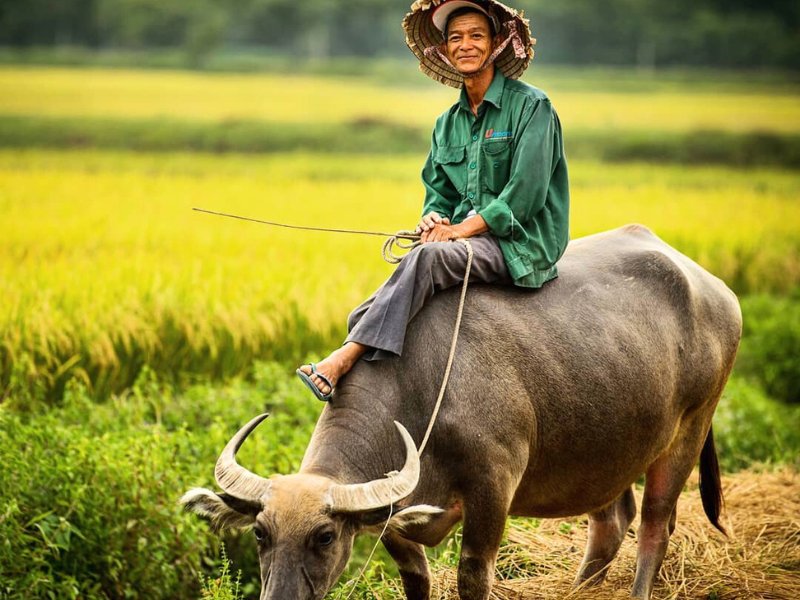
Vietnam is known as an agricultural country, so plowing is very important. In the past, when modern technologies were not yet developed in Vietnam, the buffalo was used as a useful tool to help people with hard labor. Thanks to their strength and diligence, buffaloes were one of the indispensable companions, becoming an important part of the daily life of farmers. The image of “the buffalo passing first, the plow following” or that of a buffalo grazing on the grass are now familiar and symbolic images of rustic countryside, evoking a feeling of serenity in the Vietnamese countryside.
The Buffalo in the Cultural and Spiritual Life of Vietnam
The water buffalo is not just a working animal. In Vietnamese culture, it symbolizes strength, prosperity and inner peace. A faithful companion to the farmer, it is also a sacred spiritual image, linked to gods and ancestral beliefs. The buffalo embodies the hope of abundance and human aspirations for a peaceful life.
The Buffalo Stabbing Festival (Le Đâm Trâu)
Each year, on the central highlands of Vietnam, local ethnic groups celebrate the buffalo stabbing festival, a traditional rite deeply rooted in their spiritual and community life. This ceremony has two main meanings:
- To express respect to the celestial deities (Yang) and sincerely thank them for the abundant harvests of the past year
- To pray for prosperity, peace and good fortune in the new year.
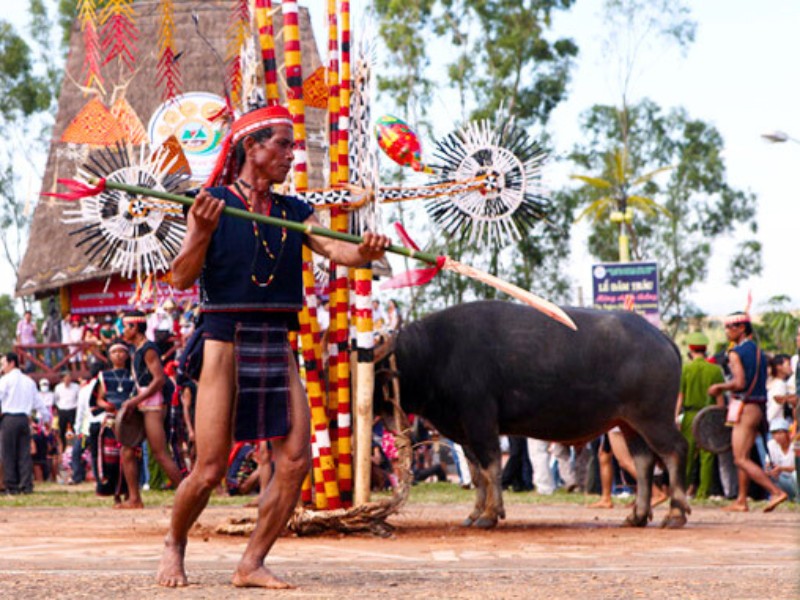
The moment dedicated to the buffalo may seem dramatic, since the animal is sacrificed at the end of the rite. However, it is not an act of cruelty, but a symbolic sacrifice. The buffalo is considered a sacred messenger, entrusted with transmitting the prayers, hopes and vows of the people to the gods. This festival, steeped in solemnity and respect, reflects the deep spirituality and sacred bond between man, nature and the divine forces within Vietnamese ethnic minorities.
The Buffalo Fighting Festival in Hai Phong
The Đồ Sơn buffalo fighting festival, in the port city of Hai Phong, is one of Vietnam’s most celebrated traditional events. Every year, it attracts thousands of visitors who come to admire the strength, courage and community spirit of the residents.
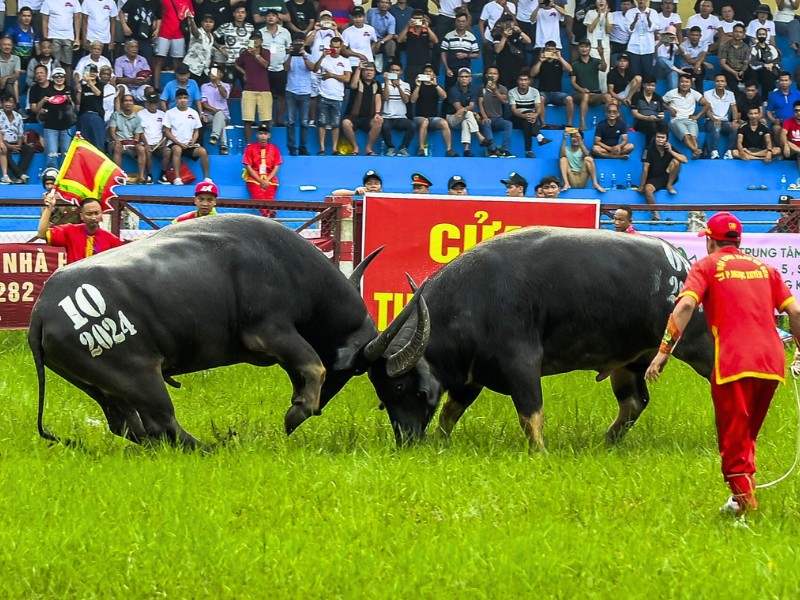
This festival is not just a popular spectacle: it carries profound spiritual significance. According to ancient beliefs, the village whose buffalo wins the fight will benefit throughout the year from favorable weather, good fishing and general prosperity. It is a rite to honor the protective deities and pray for peace and good fortune.
At the end of the fights, the buffaloes are symbolically sacrificed to Heaven and Earth to thank the gods and hope for a bountiful harvest. The residents believe that eating the meat of the winning buffalo brings good fortune, health and wealth for the year ahead.
The Buffalo, Symbol of Prosperity in Vietnam
The buffalo holds an essential place in Vietnamese culture. It represents not only a faithful working animal, but also a symbol of wealth, good fortune and lasting prosperity. Once, owning a buffalo was considered a true measure of success. A family that owned a buffalo could plow the fields, produce crops and secure their future.
An ancient Vietnamese proverb says: “Tậu trâu, lấy vợ, làm nhà” — Buy a buffalo, get married, build a house: three great difficult stages of life.
This saying underscores how central the buffalo was to farm life. It was also said: “Con trâu là đầu cơ nghiệp” — The buffalo is the essence of good fortune.
According to Feng Shui principles, the buffalo brings stability, quiet strength and prosperity. It helps to repel negative energy and attract good fortune, success and family harmony.
For this reason, many Vietnamese families still display buffalo statues or images in their homes today. They believe that the presence of this symbolic animal favors good luck, inner peace and household prosperity.
Calm, powerful and persevering, the buffalo embodies patience and success achieved through work. In Vietnamese thinking, it remains a timeless symbol of happiness and balance, connecting material wealth to spiritual wisdom.
The Image of Buffaloes in Art
The image of the buffalo holds a special place in the art and culture of Vietnam. For centuries, it has inspired numerous popular and folkloric works of art, where it symbolizes simplicity, peace and harmony between man and nature.
Among the most celebrated representations is the traditional Vietnamese painting “Watching over the Buffalo While Playing the Flute,” from the folk art of Đông Hồ, in the province of Bắc Ninh, in the north of the country.
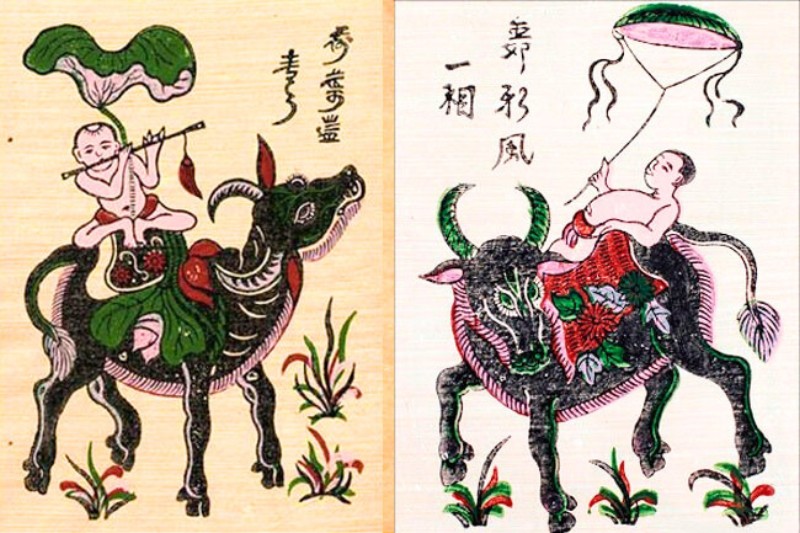
This emblematic work depicts a young boy playing the flute on the back of his buffalo, in a peaceful and poetic atmosphere. The scene illustrates the harmony between heaven, earth, men and animals, a symbol of simple and serene country life. The buffalo, calm and attentive, seems to listen to the music, reinforcing the image of a faithful and benevolent companion. Contemplating this painting, one perceives the tranquility and sweetness of Vietnamese rural life, where work, nature and art are one.
Since ancient times, the buffalo has been considered the faithful friend of the Vietnamese people, an inseparable companion of agricultural life. In the collective imagination, it embodies strength, patience and constant work, qualities that reflect the very soul of Vietnam and its inhabitants. A symbol of resilience and simplicity, the buffalo holds an essential place in the cultural and spiritual life of the country. Its image, present in legends, festivals and popular artworks, contributes to the richness and beauty of Vietnamese heritage. In the verdant rice fields, the peaceful silhouette of the buffalo blends with the landscape, evoking an authentic and serene countryside, steeped in harmony between man and nature. Come discover this emblematic scene of Vietnam, a true symbol of prosperity and living tradition, that continues to move all those who gaze upon it.