+84 9 75 46 33 10 (Whatsapp)
  info@horizon-vietnamtravel.com
  Français
  Español
  Português
  Deutsch

The Role of Vietnamese Women in Vietnam
Table of contents
With the country’s opening and globalization, Vietnamese society, like many others in the world, has experienced profound transformations. The role of Vietnamese women has thus evolved, both within the family and in professional and public life. Today, women are no longer limited to domestic chores: they actively participate in the economic, social and cultural development of the country. In this article, discover how the place of Vietnamese women has changed over time — from her traditional role to her modern position in today’s society.
1. Prehistory: Origins of a matriarchal-leaning society
Their central role in tribes
Archaeological discoveries suggest that in Vietnam women played a primordial role as early as the Upper Paleolithic. Tasked with gathering, harvesting, reproduction and food distribution, they directly contributed to the group’s survival and thus occupied a central position in the community. This social organization, sometimes described as pre-matriarchal, gave women a dominant position and deep respect within tribes, because of their economic importance and vital role for the collective.
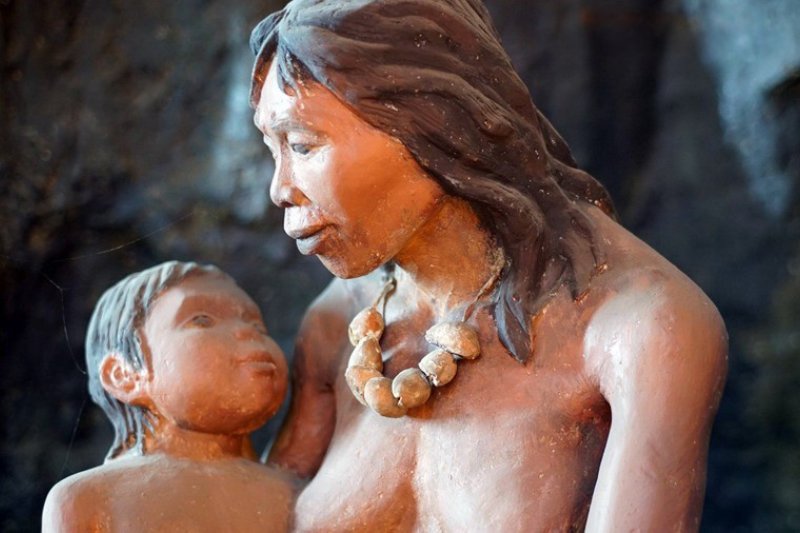
Prehistoric women in Vietnam – pillars of tribal life, responsible for gathering and the group’s survival
Their economic and social importance
The contribution of women to collective life was decisive: while men set out to hunt, they ensured the group’s food stability and actively participated in decisions essential to the community’s survival. Thanks to this economic autonomy, women enjoyed high social status and exercised real influence within the tribal structure. It can be said that, in this primitive organization, Vietnamese women were already the cornerstone of economic, social and family life, a symbol of balance and continuity in the heart of the tribe.
2. Period of Chinese domination (111 BC – 938 AD)
111 BC – 1st century: From matriarchal to patriarchal society
With over a thousand years of Chinese domination, Vietnamese society gradually adopted the patriarchal model inspired by Confucian thought. Social and family structures changed profoundly: power, once shared or attributed to women in some communities, now passed into the hands of men. This upheaval marked the end of the remnants of matriarchy and the emergence of a hierarchical society in which women gradually lost their social status.
2nd – 9th centuries: The influence of Confucianism
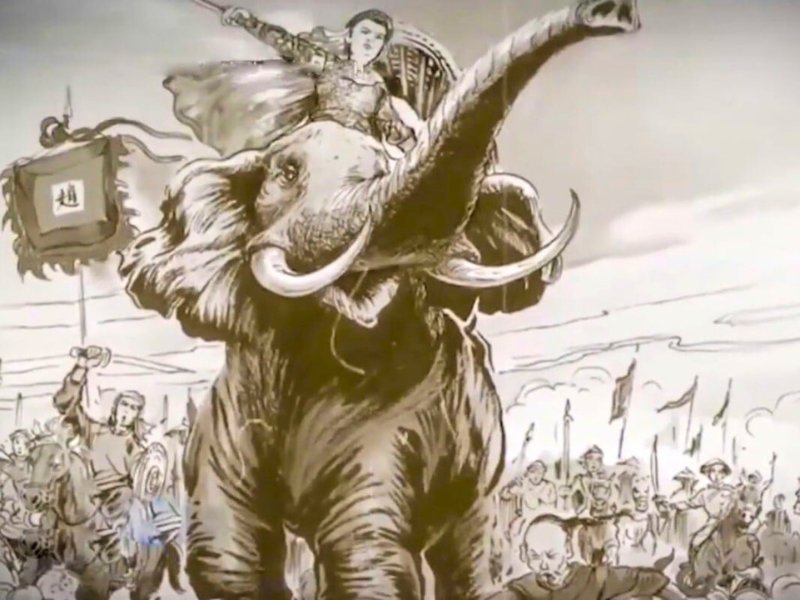
Ba Trieu, heroine of the 3rd century, led a revolt against Chinese domination in 248 – symbol of courage and Vietnamese national pride
Chinese culture and institutions introduced rigorous hierarchy, placing man at the head of the family and society. Under the influence of Confucianism, woman was to be obedient, virtuous and devoted to her husband, according to the ideal of three obediences and four virtues (tam tòng tứ đức in Vietnamese). This period thus marked a regression in the recognition of the female role, limiting women to the domestic sphere and denying them any political authority.
1st – 3rd centuries: Heroines of resistance
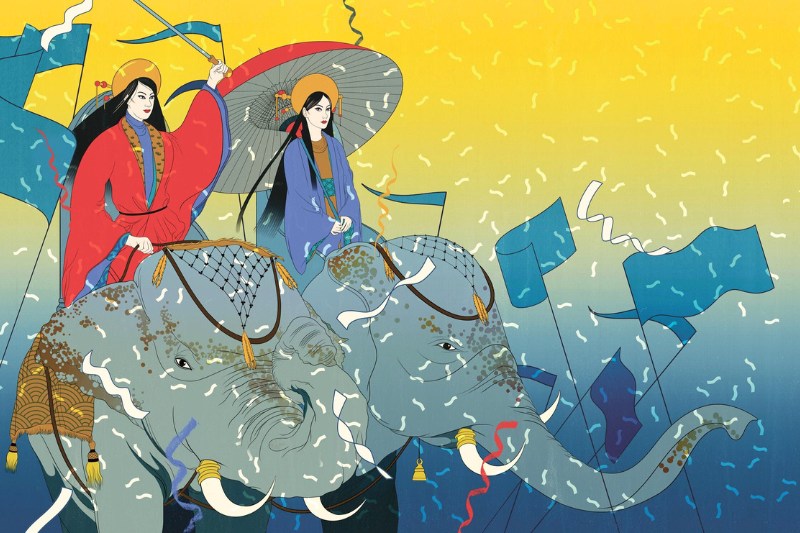
The Trưng sisters – heroines of Vietnamese resistance against Chinese domination (40–43 AD).
Despite these constraints, several women distinguished themselves through their courage and patriotism. The most famous are the Trung sisters (Trung Trac and Trung Nhi), who led a revolt against the Han dynasty between 40 and 43 AD, as well as Trieu Thi Trinh (Bà Triệu, in 248). These heroines became symbols of resistance and national pride, embodying the strength and determination of Vietnamese women in the face of foreign domination.
3. Independent Vietnamese feudal period (939 – 1884)
939–1400: The influence of Confucianism
After Ngô Quyền’s victory in 938, Vietnam regained its independence after over a thousand years of Chinese domination. However, Confucian thought, introduced during this period, continued to deeply permeate Vietnamese society. Under the Lý, Trần, Lê and Nguyễn dynasties, patriarchal values were reinforced: man remained the head of the family, master of domestic and social life, while woman was relegated to a secondary role.
15th century: The Hong Duc Code and its progress
The Hong Duc Code, under the Lê dynasty (15th century), grants women inheritance and property rights.
Despite this male domination, some laws testified to a partial recognition of female rights. The Hong Duc Code (promulgated in the 15th century, under the Lê dynasty) granted women the right to inherit and own property, as well as certain legal protection in family matters. These provisions reflect a less rigid status than in China, where female subordination was more severe.
16th–19th centuries: The daily life of women
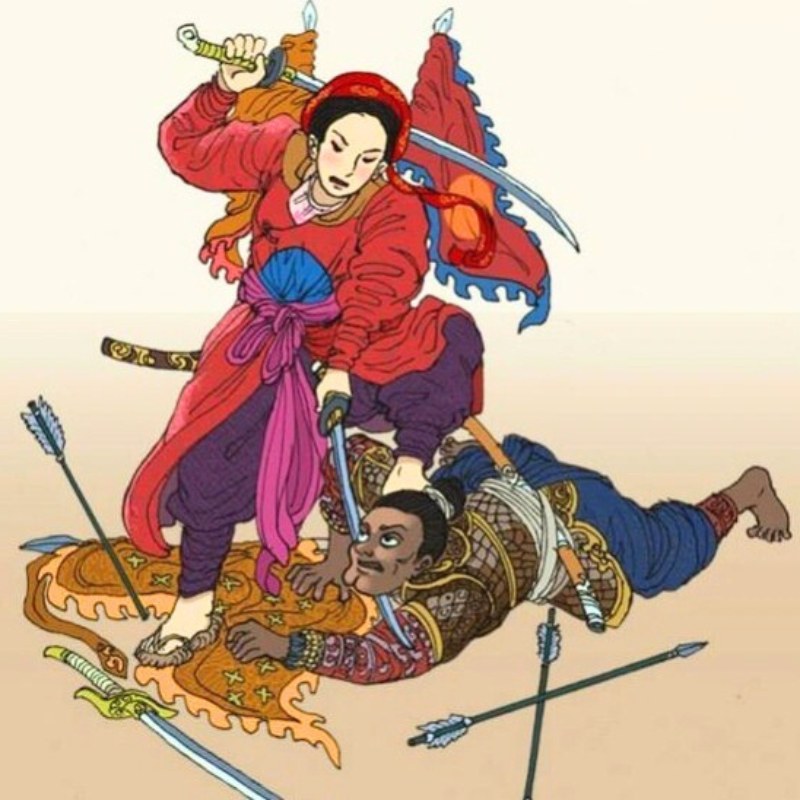
Bui Thi Xuan (18th century), heroine of the Tay Son, symbol of the courage and strength of Vietnamese women in a still patriarchal society
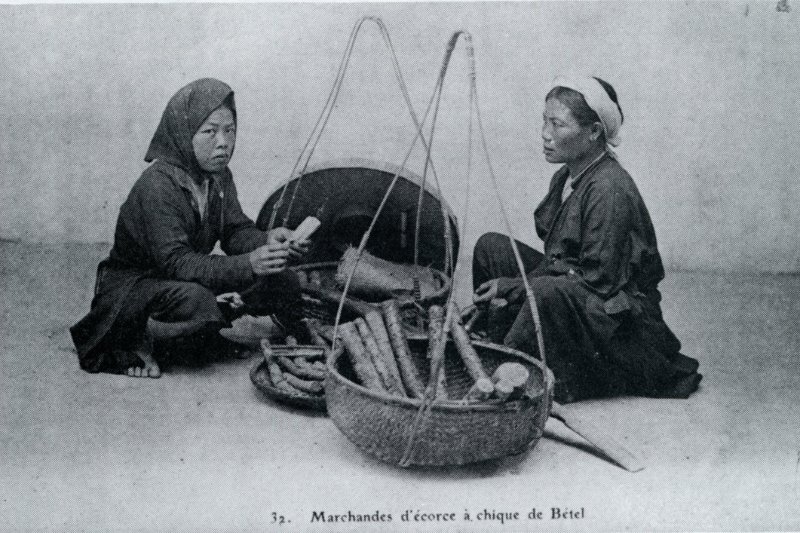
In reality, most women remained confined to domestic chores: they took care of the house, the education of children and the management of the household. Their lives were dominated by respect for Confucian rules — tam tòng tứ đức (three obediences and four virtues) — which required them to obey their father, their husband, then their son. Thus, despite some legal progress, feudal Vietnamese society remained largely patriarchal and women’s voice was limited to the family sphere.
4. Colonial and war period (1858 – 1975)
1858–1954: Under French colonization
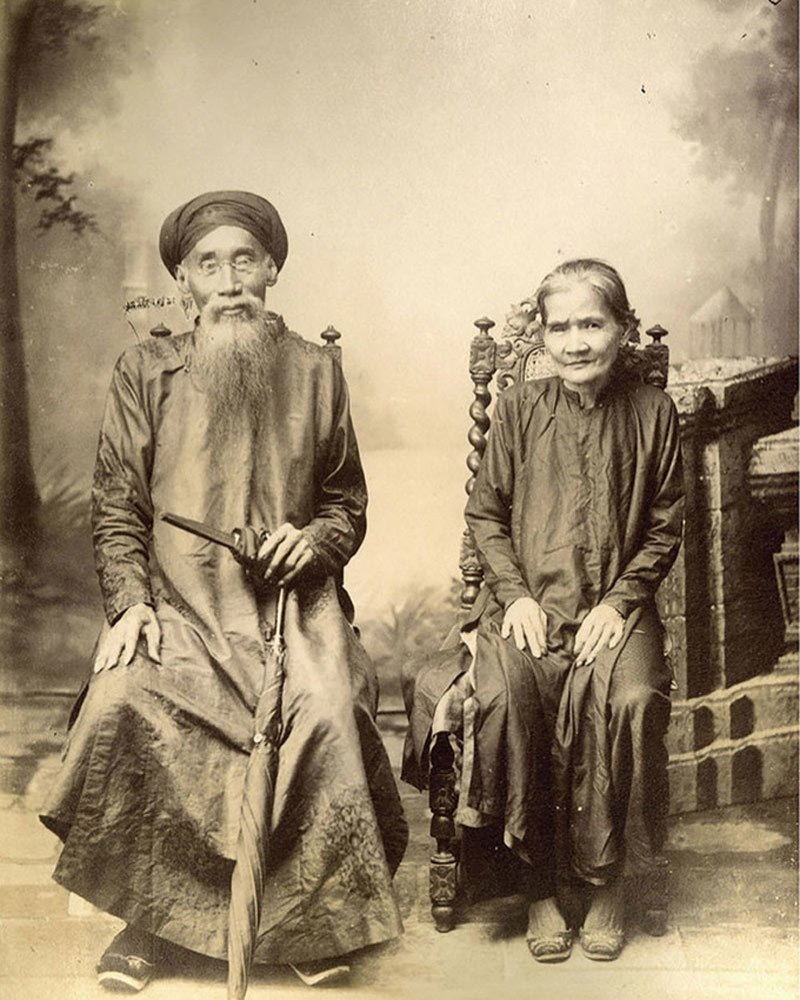
An elderly couple captured through the lens of photographer Aurélien Pestel around 1890
The arrival of the French in Vietnam marked the beginning of an era of profound political, economic and social upheaval. French colonial administration introduced a Western educational and cultural system that, despite its limitations, allowed certain Vietnamese women to access education, work in cities and gradually participate in public life. Their social status thus experienced a slight improvement compared to the feudal period, although gender inequalities remained significant, especially in rural areas.
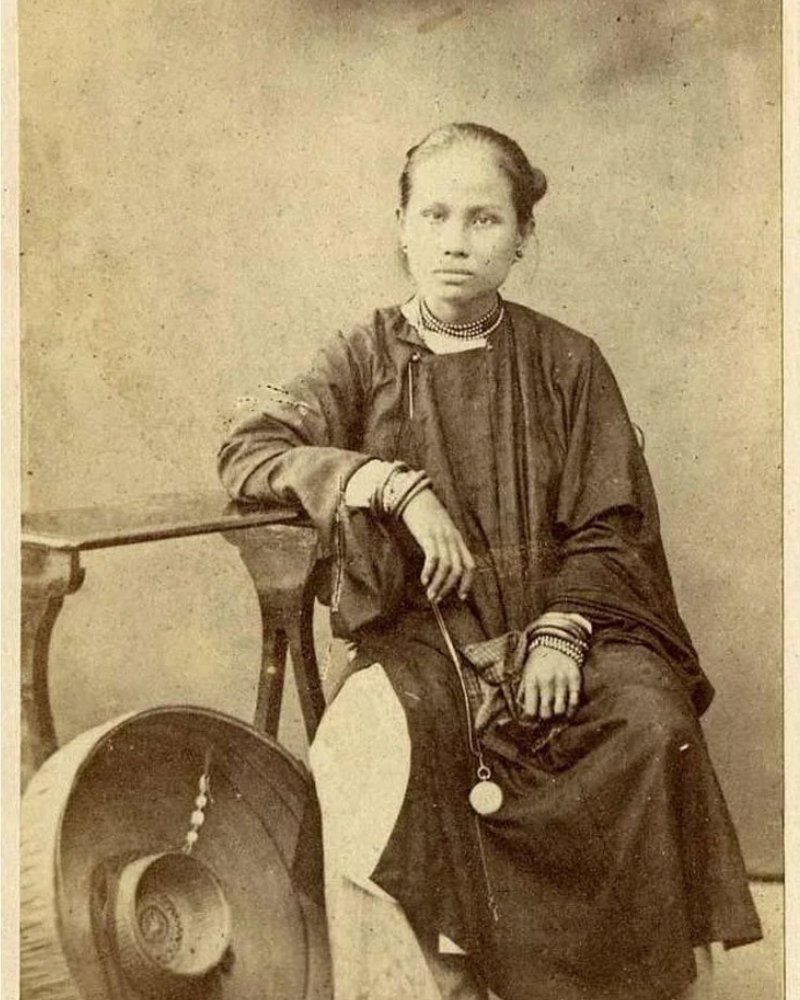
Portrait of a young Annamite girl, photographed by Clément Gillet between 1864 and 1867
1945–1954: After the August Revolution
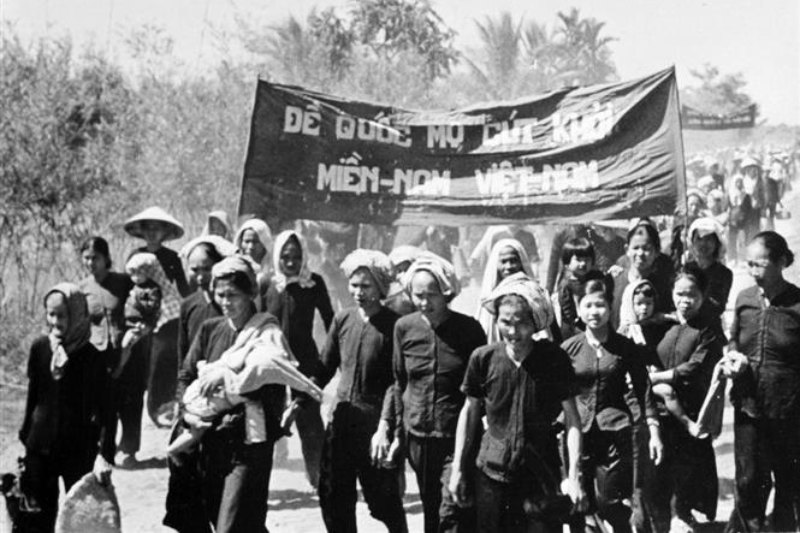
Women of South Vietnam engaged in the August Revolution and resistance against French colonization (1945–1954)
The August Revolution of 1945 marked a turning point in Vietnamese history. The 1946 Constitution of the Democratic Republic of Vietnam officially recognized equality between men and women. This legal progress opened the door for women to participate fully in the political, economic and social life of the country. They began to occupy positions of responsibility in education, health, administration and national defense, thus becoming full actors in national renewal.
1954–1975: During the wars
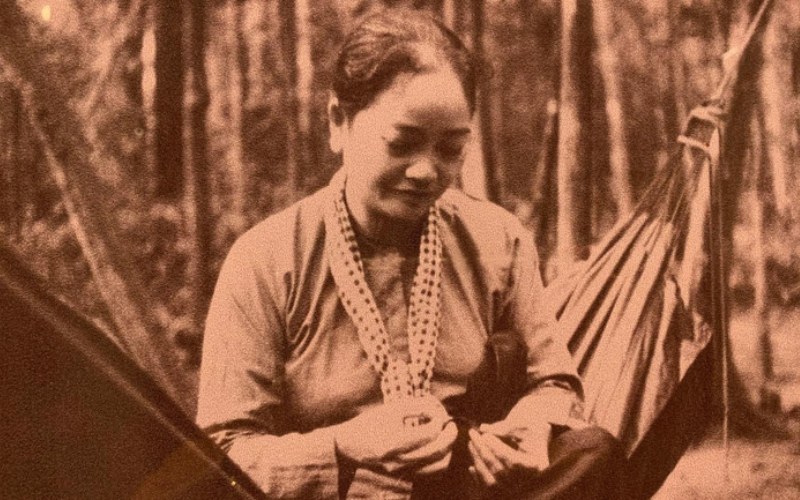
Nguyen Thi Dinh, heroine of the Dong Khoi movement and leader of the liberation struggle of South Vietnam (1954–1975)
During the Indochina War, then the Vietnam War, women played a decisive role in the fight for independence and the reunification of the country. They contributed to the war effort both in the rear — caring for the wounded, cultivating the land and supporting the troops — and at the front, as nurses, messengers, fighters and sometimes leaders in revolutionary movements. Their courage and dedication made them symbols of resistance and patriotism, honored by the nation for their contribution to victory.
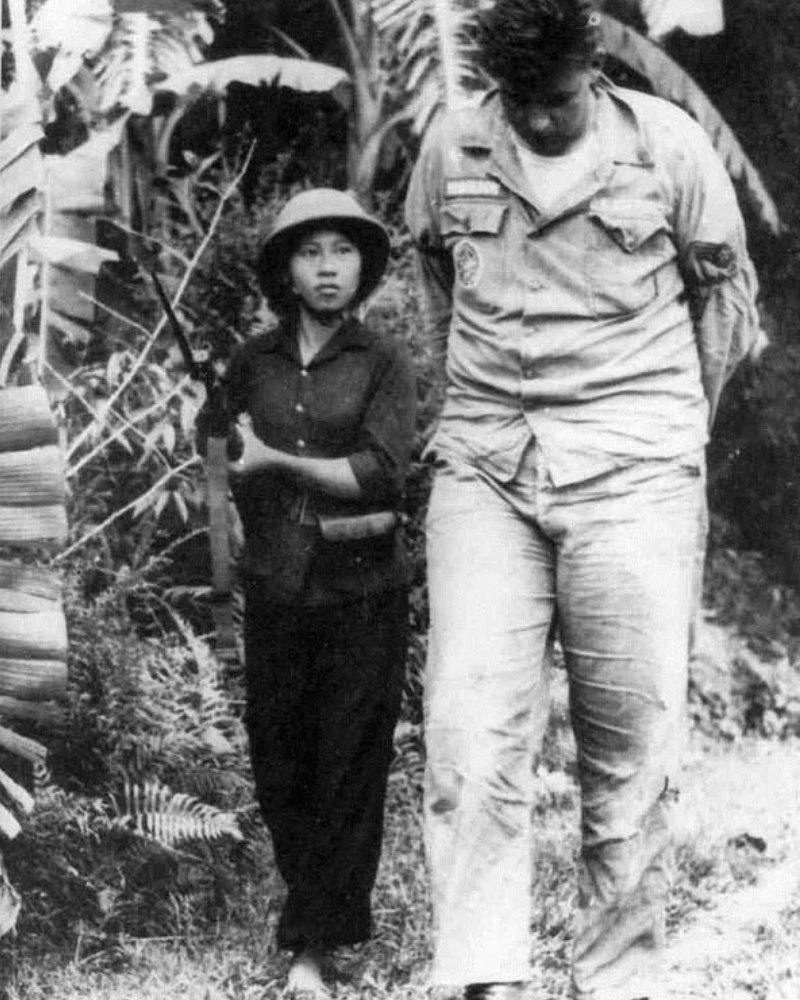
“The young female guerrilla” Nguyễn Thị Kim Lai escorting a captured American pilot, symbol of the heroic struggle of the Vietnamese people (1965)
5. Contemporary period (from 1975 to today)
1975–1985: After the reunification of the country
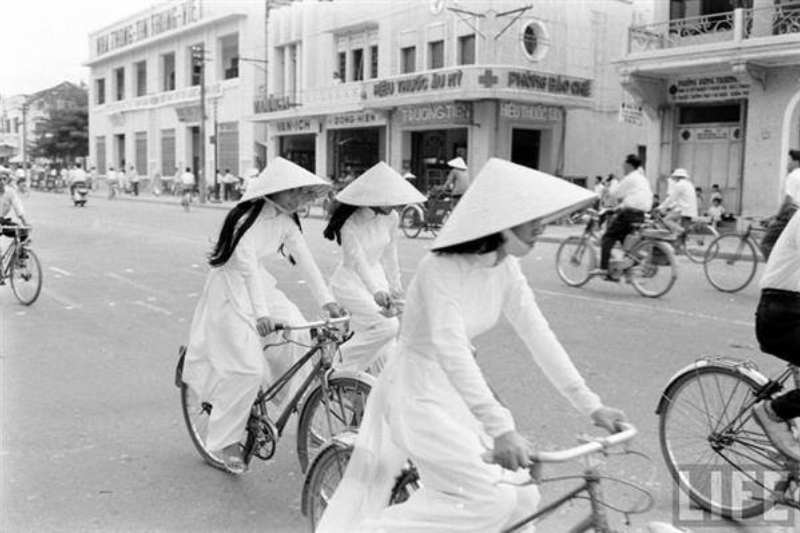
After Vietnam’s reunification in 1975, the country entered a period of reconstruction marked by numerous economic and social difficulties. Women, like men, actively participated in national revival: they worked in fields, factories, schools and hospitals.
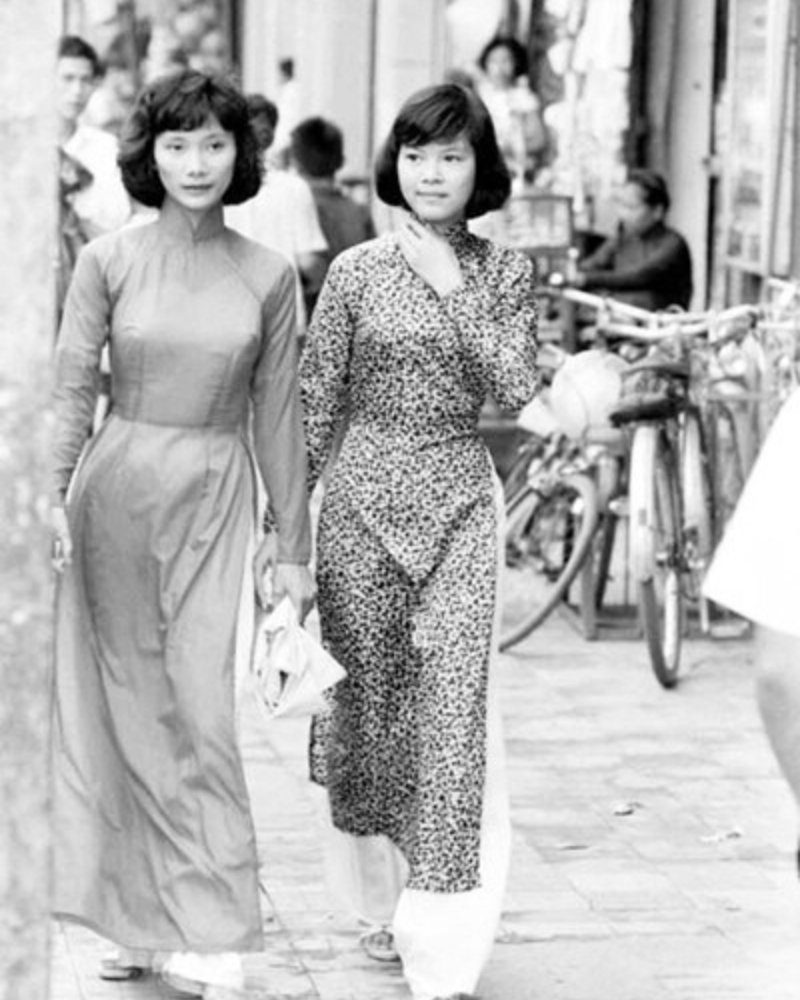
Symbol of Vietnam’s rebirth after 1975, Vietnamese women combine the gentleness of the past with the strength of a new generation.
Despite still difficult circumstances, their role in society began to be better recognized, particularly thanks to their contribution during the war and the equality policy enshrined in the Constitution.
1986–2000: The Đổi Mới period
The year 1986 marked a turning point with the adoption of the Đổi Mới policy (“Renewal”), which opened Vietnam to market economy and the outside world. These reforms brought about profound changes in the country’s social and economic structure.
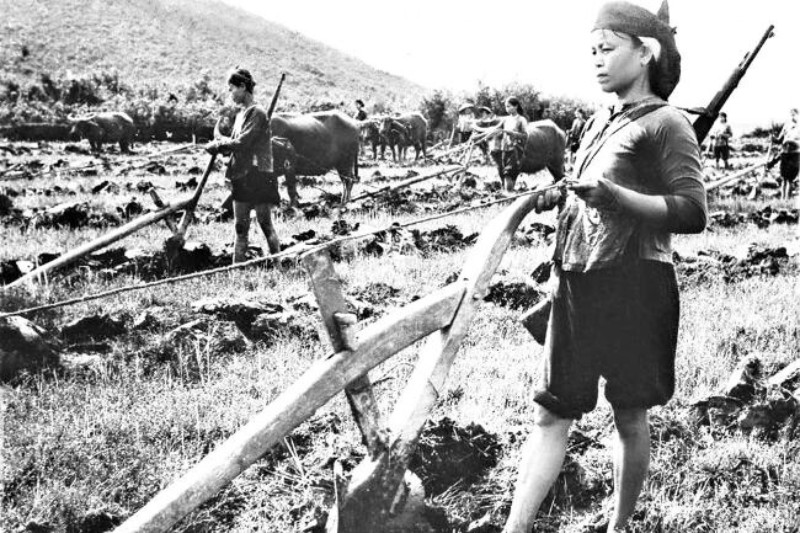
Vietnamese women in the Đổi Mới era: modern, active and players in national renewal
Women benefited from new opportunities in trade, vocational training and public service. They began to become entrepreneurs, access positions of responsibility and engage more in local and national political life.
From 2000: Women in modern society
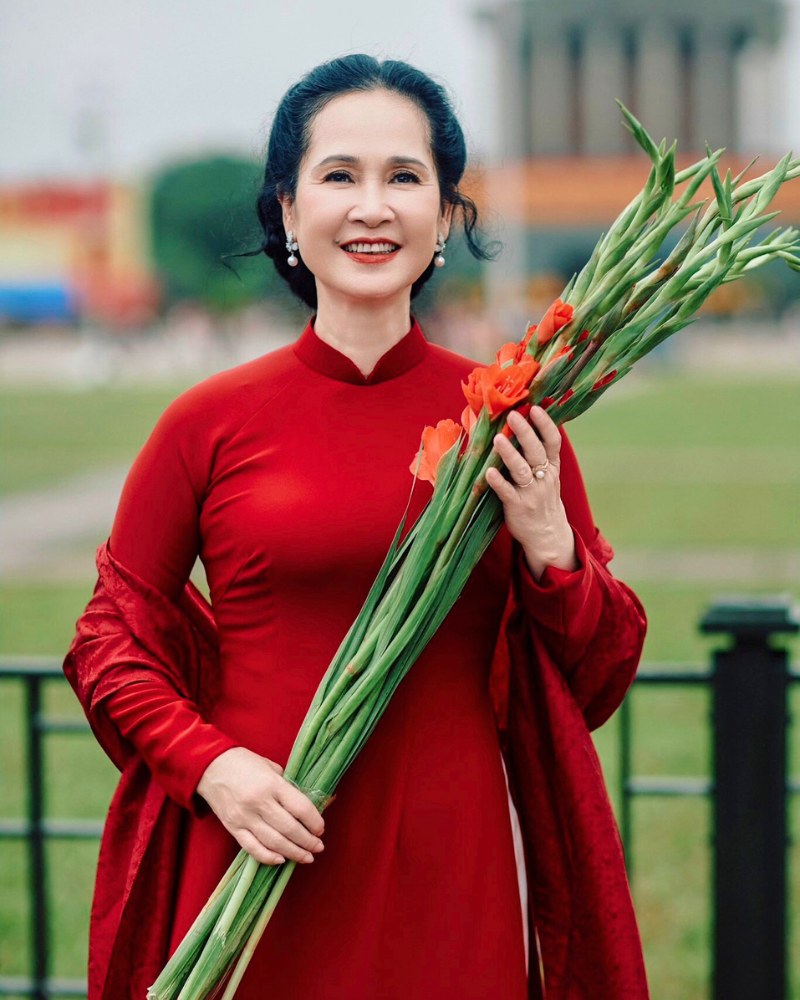
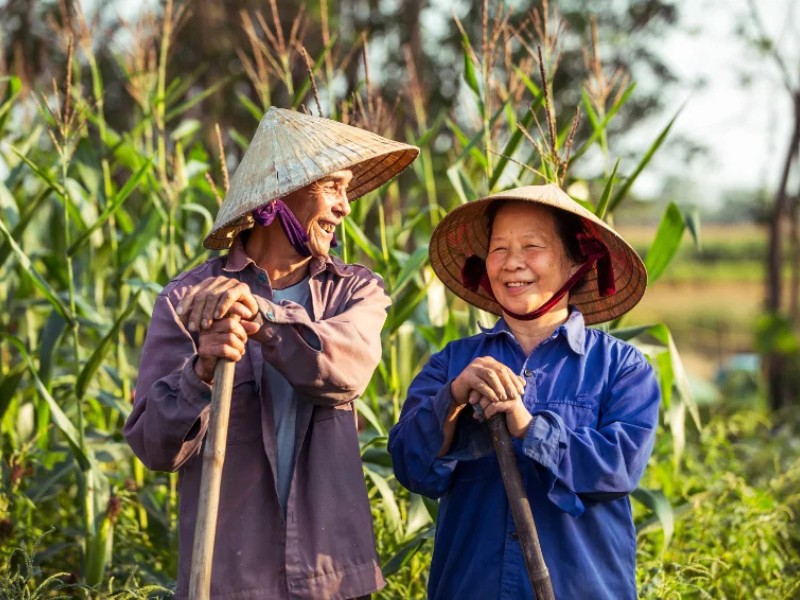
The Vietnamese woman of the 21st century: educated, independent and player in development, between tradition and modernity.
In the 21st century, Vietnamese women have become major actors in national development. They are more educated, more independent and present in all sectors: education, economy, culture, politics and innovation. In the family, mentalities are evolving towards a more balanced distribution of responsibilities, although women often continue to take on most domestic chores. Contemporary Vietnamese women now embody both traditional values of gentleness and dedication, and the modern spirit of ambition, independence and openness to the world.
Throughout history, Vietnamese women have known how to assert their place and their role within a constantly evolving society. From the respected figure of ancient times to the modern woman of today, she has endured trials, wars and social changes with courage and dignity. Heir to traditions while being open to modernity, she embodies a subtle balance between gentleness and determination, between ancestral values and new aspirations. Today, the Vietnamese woman is no longer just the pillar of the family, but also an essential player in national development and a living symbol of the resilience of the Vietnamese people. Her journey illustrates the image of a strong, humane Vietnam projected towards the future, where tradition and progress unite to build a more just and harmonious society.