+84 9 75 46 33 10 (Whatsapp)
  info@horizon-vietnamtravel.com
  Français
  Español
  Português
  Deutsch

Top 10 Exotic Fruits of Vietnam to Discover Absolutely
Table of contents
Vietnam seduces not only for its gastronomy, street food and typical Vietnamese vegetables: it is also a blessed land for fruit lovers. Thanks to its tropical climate and the diversity of its terroirs, the country offers an abundance of colorful, fragrant and sometimes surprising varieties for travelers. From North to South, markets overflow with exotic fruits with unique flavors, ranging from the most well-known to the most unexpected. Here is a selection of the 10 exotic fruits of Vietnam proposed by Horizon Vietnam, not to be missed during your trip.
1. Xoai (Mango)
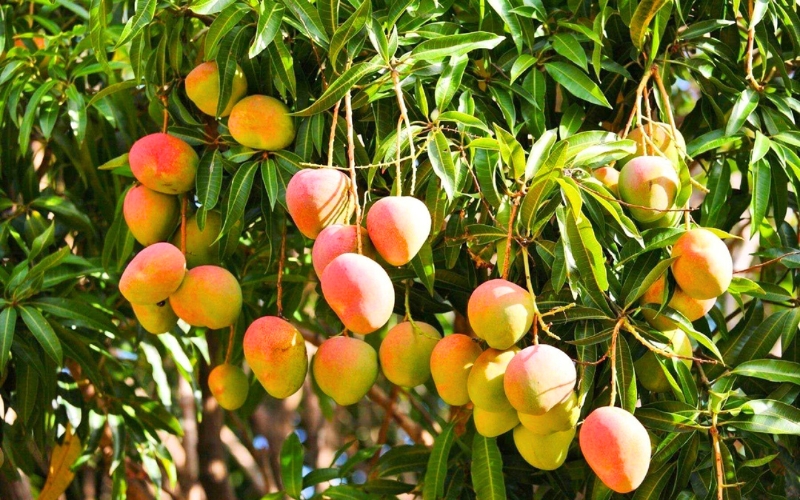
Mango in Vietnam, loaded with fruit
Vietnamese mango, or xoai, is undoubtedly one of the most appreciated exotic fruits of Vietnam by both travelers and residents. Sweet, juicy and intensely fragrant, it comes in a multitude of varieties, each unique to every region and season.
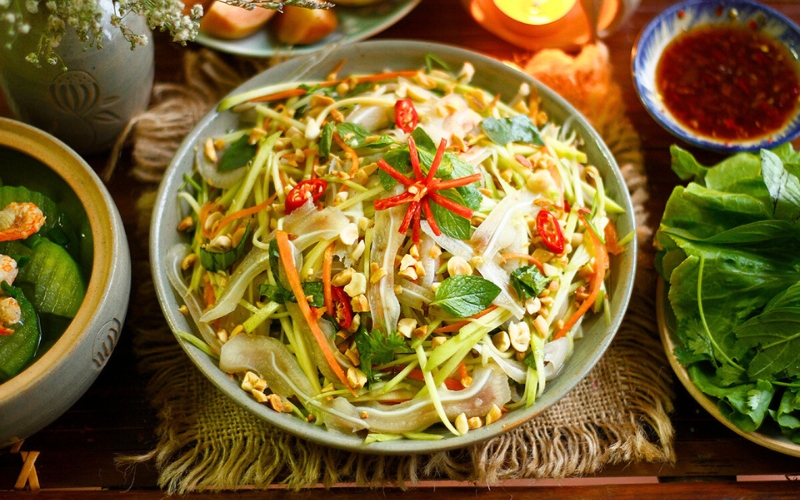
Goi xoai– Vietnamese green mango salad, fresh and savory
Crisp and tart green mango holds a special place in Vietnamese street food. It is enjoyed natural, simply accompanied by salt, sugar and chili pepper, for a contrast of flavors that is both fresh and spicy. It is also the main ingredient of the famous goi xoai (green mango salad), much appreciated for its combination of crunchiness, dried fish, fresh herbs and a tangy nuoc mam sauce. Another emblematic southern snack, xoai lac (mango shaken with spices) mixes pieces of mango with chili, salt and sugar, offering an explosion of flavors.
In contrast, ripe yellow mango seduces with its melting and sweet flesh, ideal for enjoying fresh or as a dessert. It is used in delicious preparations such as sinh to xoai (mango smoothie), a creamy and refreshing drink, or the famous xoi xoai (sticky rice with mango and coconut milk), much appreciated in summer. It is also found in che xoai, a dessert made with tapioca pearls and coconut milk, as well as in artisanal ice creams or fragrant cakes.
Beyond its culinary richness, mango is also recognized for its nutritional benefits: it is an excellent source of vitamins A and C, antioxidants and fiber. Whether enjoyed crisp or creamy, as a snack or as a dessert, mango perfectly illustrates the diversity and creativity of Vietnamese gastronomy.
2. Thanh long (Dragon Fruit)
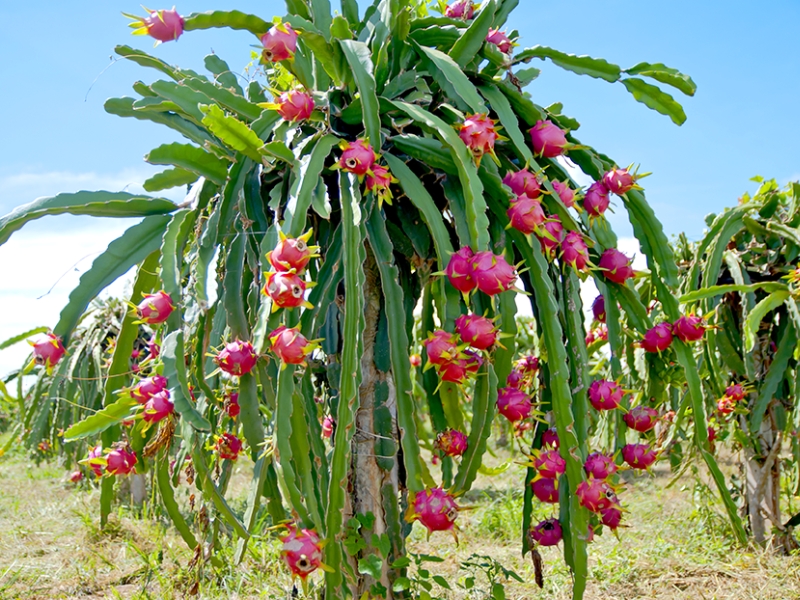
Dragon fruit orchards, laden with ripe fruit, paint a gleaming tropical landscape in Vietnam
Among the exotic fruits of Vietnam, dragon fruit, or thanh long, is undoubtedly one of the most emblematic. Easily recognizable by its bright pink skin with green protrusions, it immediately catches the eye on Vietnamese market stalls. Inside, its white or red flesh, speckled with small edible black seeds, captivates with its sweet and slightly crunchy consistency.
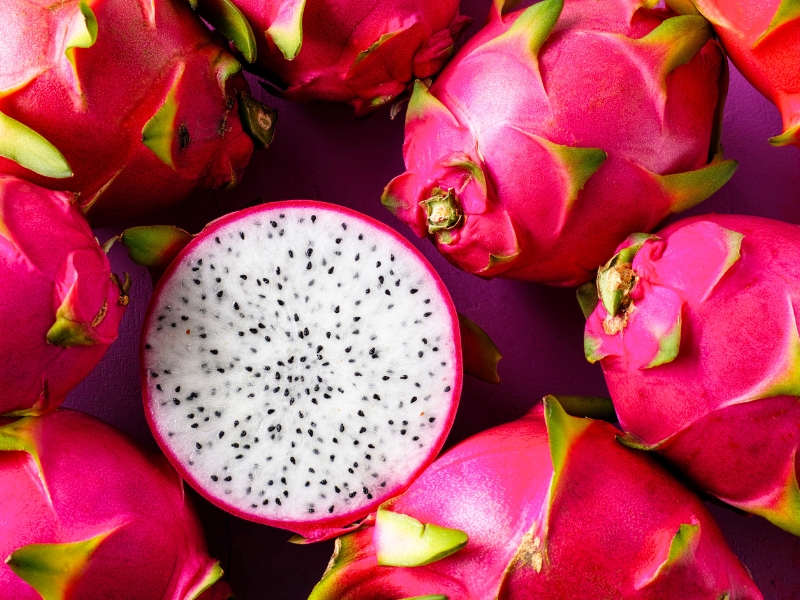
Thanh long trang (White-fleshed dragon fruit)
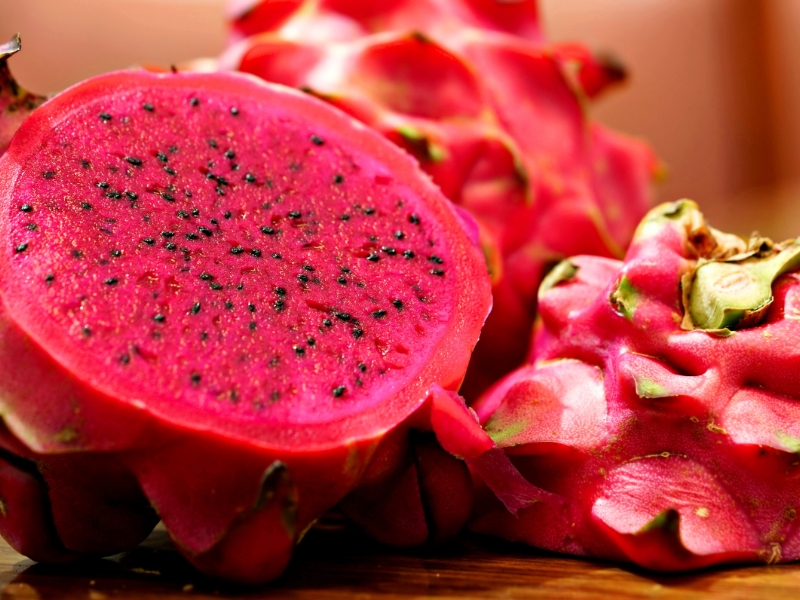
Thanh long do (Red-fleshed dragon fruit)
Not very sweet but very refreshing, dragon fruit is often consumed fresh, cut into slices or cubes, making it an ideal snack during hot days. It is also very popular in juice (nuoc thanh long), in smoothies, in fruit salads or transformed into light desserts such as ice creams and frozen yogurts. In some regions, it is even used to naturally color dishes, especially with the red-fleshed variety.
From a nutritional point of view, thanh long is an excellent source of antioxidants, fiber and vitamin C. Low in calories, it contributes to hydration and digestion, making it a fruit that is both healthy and thirst-quenching.
3. Sau rieng (Durian)
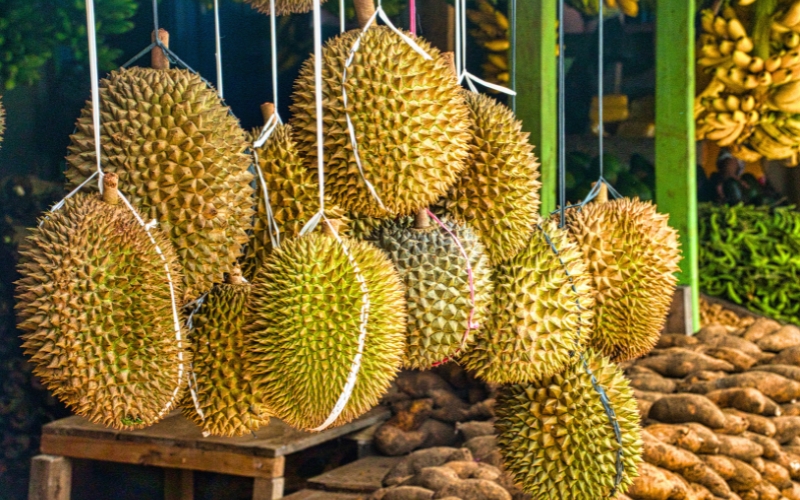
Durian, king of Vietnamese fruits, famous for its powerful aroma and unforgettable taste
Among the exotic fruits of Vietnam, durian, or sau rieng, holds a special place. Nicknamed the “king of fruits,” it is immediately recognizable by its thick, spiky shell. But what truly makes it famous or feared is its very strong smell, often judged as overwhelming, which hides a complex and unique flavor.
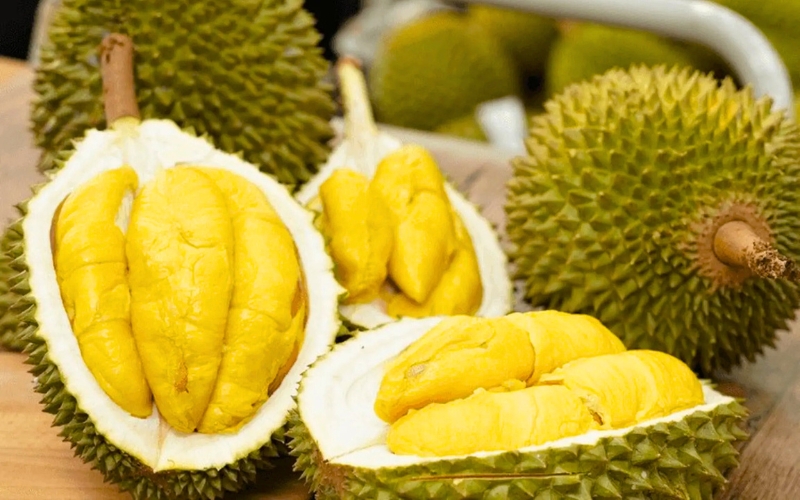
Durian, between buttery sweetness and unforgettable aroma
Inside, its yellow and fleshy lobes reveal a creamy flesh with an incomparable taste, described as a mix of cream, almond, honey and cheese. For some it is a true delicacy; for others, a culinary challenge. In any case, tasting durian is an unforgettable sensory experience for every curious traveler.
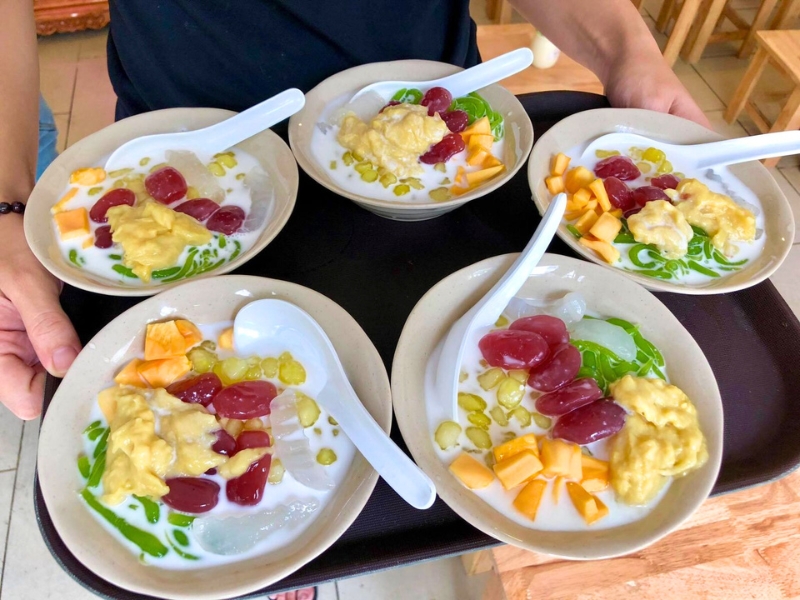
Che sau (Vietnamese durian dessert)
In Vietnam, sau rieng is mainly consumed fresh, often shared among friends or family, so intense is its flavor. In some southern regions, it is also used to flavor traditional desserts such as che (sweet preparations made with coconut milk and tapioca pearls) or artisanal ice creams. Its creamy consistency and powerful flavor make it a bold ingredient, reserved for lovers of strong sensations.
From a nutritional point of view, durian is rich in fiber, potassium, iron and vitamin C, but also caloric, hence its nourishing and energizing character. In Vietnamese tradition, it is known for invigorating the body and stimulating energy, especially during the hot season.
4. Mang cut (Mangosteen)
Nicknamed the “queen of fruits,” mangosteen, or mang cut in Vietnamese, is one of the most refined exotic fruits of Vietnam. It is recognized by its thick, dark purple skin, which must be cracked to reveal white, tender and juicy flesh. In taste, mangosteen seduces with its subtle balance: a sweet flavor enhanced by slight acidity, which makes it a fruit particularly appreciated by both travelers and residents. Consumed mainly fresh, it is enjoyed as is, but is also found in fruit salads or light desserts, where its sweetness perfectly complements other tropical fruits.
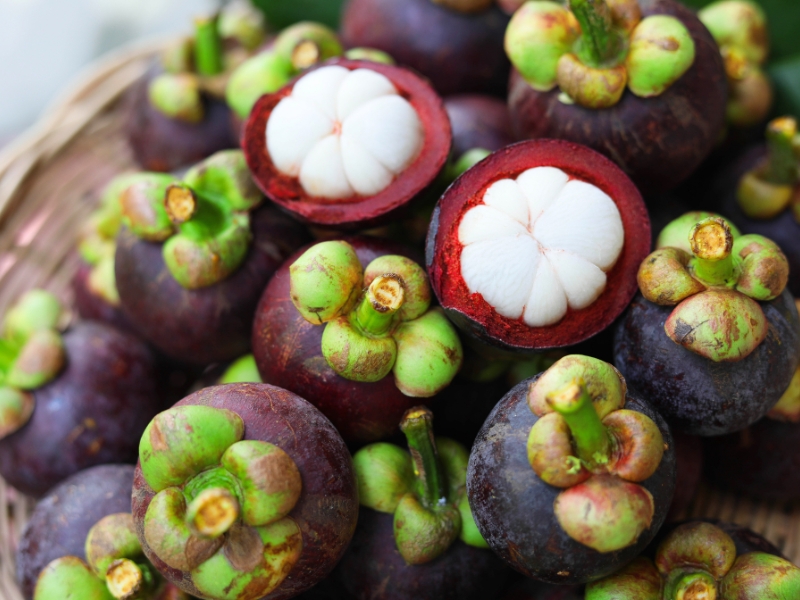
Beneath its purple shell, mang cut reveals white flesh with a delicate and refreshing taste
From a nutritional point of view, mangosteen is rich in antioxidants, fiber and vitamin C, making it not only a delicious but also a beneficial fruit for health. In some local traditions, it is even considered refreshing and ideal for balancing the body during hot periods. For its delicacy and unique fragrance, mang cut is often perceived as the refined counterpart to durian, the “king of fruits.” Together, they symbolize the diversity and richness of Vietnamese exotic fruits.
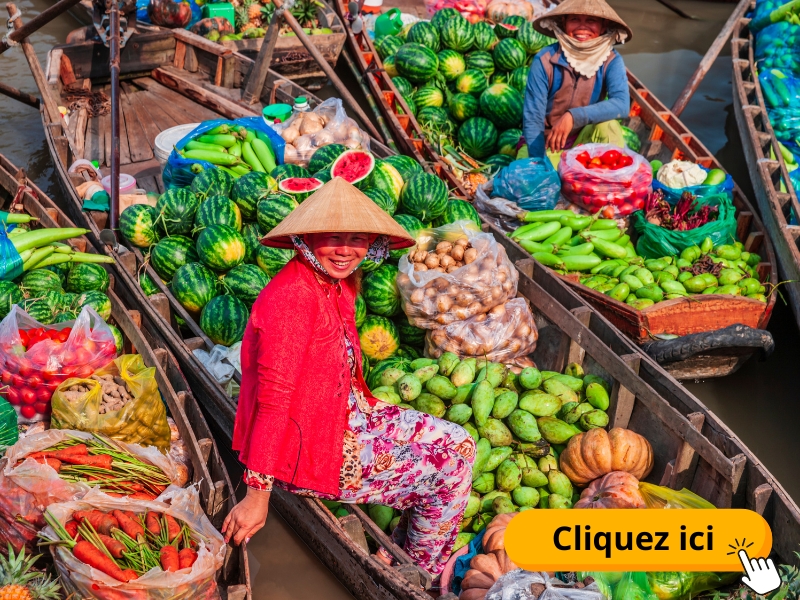
In the heart of Cai Rang floating market, stalls overflow with colorful tropical fruits: mangoes, rambutans, dragon fruits or jackfruits ripened in the sun. Let yourself be seduced by their exotic aromas and their unparalleled freshness, symbols of the Mekong Delta.
5. Chom chom (Rambutan)
Among the exotic fruits of Vietnam, rambutan, or chom chom, is undoubtedly one of the most visually spectacular. Its bright red skin, covered with small green or yellow filaments, immediately catches the eye on market stalls and in southern orchards.
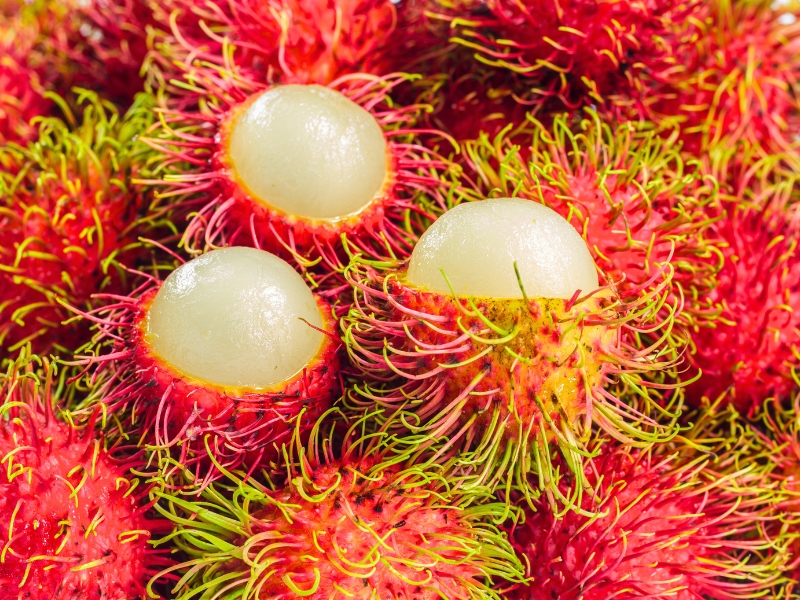
Vietnamese rambutan, with spiky red skin and sweet, juicy, refreshing flesh
Beneath this original skin hides a translucent flesh, similar to lychee but sweeter and more sugary. Juicy and fragrant, chom chom is most often enjoyed fresh, immediately after opening, making it a thirst-quenching snack during hot days. In some regions, it also enters into the preparation of tropical fruit salads or accompanies crushed ice, offering a refreshing and light dessert. From a nutritional point of view, rambutan is rich in vitamin C, fiber and minerals, beneficial for strengthening the immune system and promoting good digestion. A seasonal fruit, chom chom abounds especially in southern Vietnam, particularly in the provinces of Ben Tre and Vinh Long, where orchards are adorned with shimmering red clusters. A symbol of conviviality and freshness, it perfectly embodies the richness and diversity of Vietnamese tropical fruits.
6. Nhan (Longan)
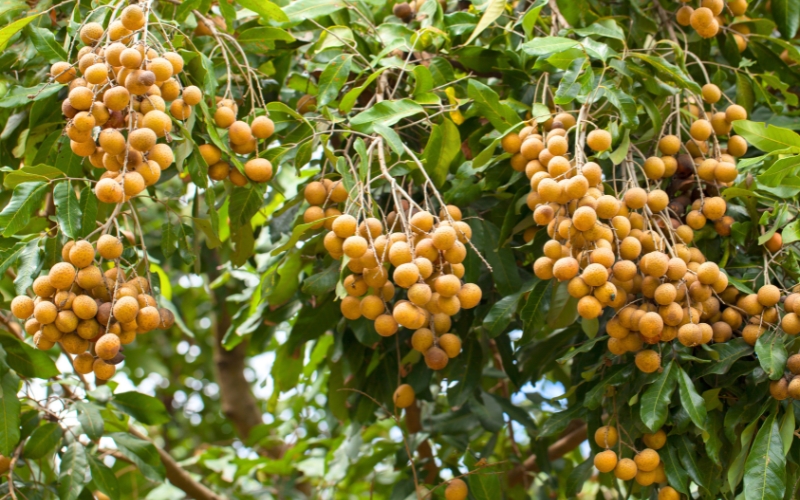
In the sun of northern Vietnam, golden clusters of longan fragrance the orchards: a sweet and aromatic fruit, symbol of Vietnamese summer
Among the exotic fruits of Vietnam, longan, or nhan, is particularly appreciated in the North, where it has been cultivated for centuries. At first glance, it resembles lychee, but its translucent flesh reveals a sweeter and more fragrant taste, with subtle honey notes. The long nhan Hung Yen is the most celebrated variety, considered the best in the country for its meaty, sweet and very aromatic flesh. Harvested in summer, it is a seasonal fruit not to be missed on Vietnamese markets.
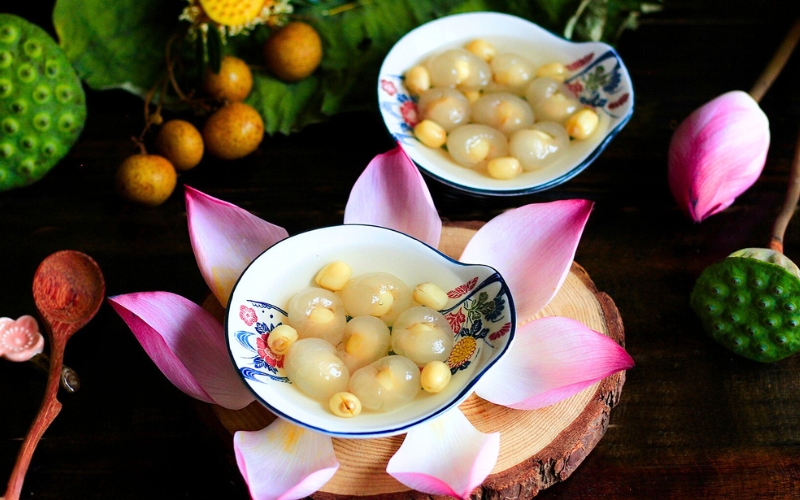
Sweet Vietnamese soup with longan and lotus seeds, a refined dessert symbolic of freshness and summer elegance
Traditionally, nhan is enjoyed fresh, but is also used in a sweet longan and lotus seed soup (che sen nhan), in compotes or dried for infusions. In traditional medicine, longan is renowned for its invigorating, calming effects and benefits for memory. From a nutritional point of view, it is rich in vitamin C, B vitamins, minerals and antioxidants, making it a fruit that is both delicious and revitalizing.
7. Mit (Jackfruit)
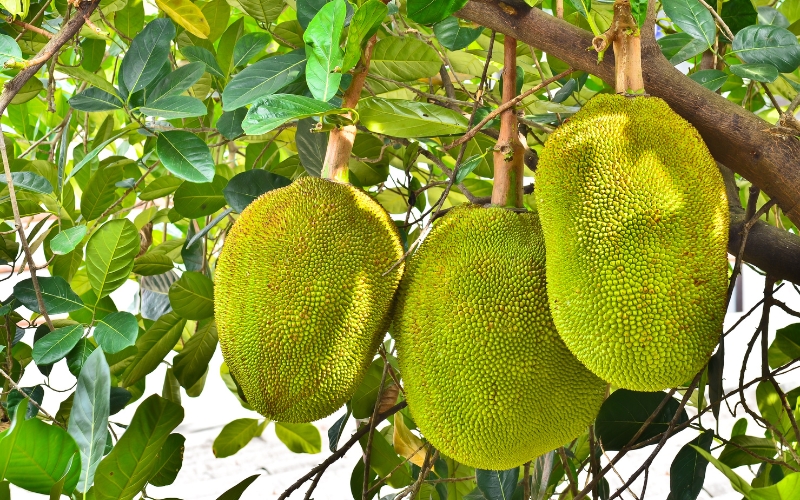
Jackfruit trees in Vietnam offer their giant and fragrant fruits, true tropical treasures
Among the exotic fruits of Vietnam, jackfruit, or mit, is undoubtedly one of the most impressive. This giant tropical fruit, which can weigh from 5 to over 20 kilograms, stands out for its green, bumpy skin, covered with small spikes. Inside, its golden-yellow, fleshy and fragrant flesh, captivates with its intense aroma, both sweet and slightly musky.
Mit can be enjoyed in many ways. Fresh, it offers a firm consistency and powerful flavor, much appreciated by lovers of tropical tastes. It also enters into the composition of traditional Vietnamese desserts, such as che mit — a delicious combination of coconut milk, tapioca pearls and sometimes crushed ice.
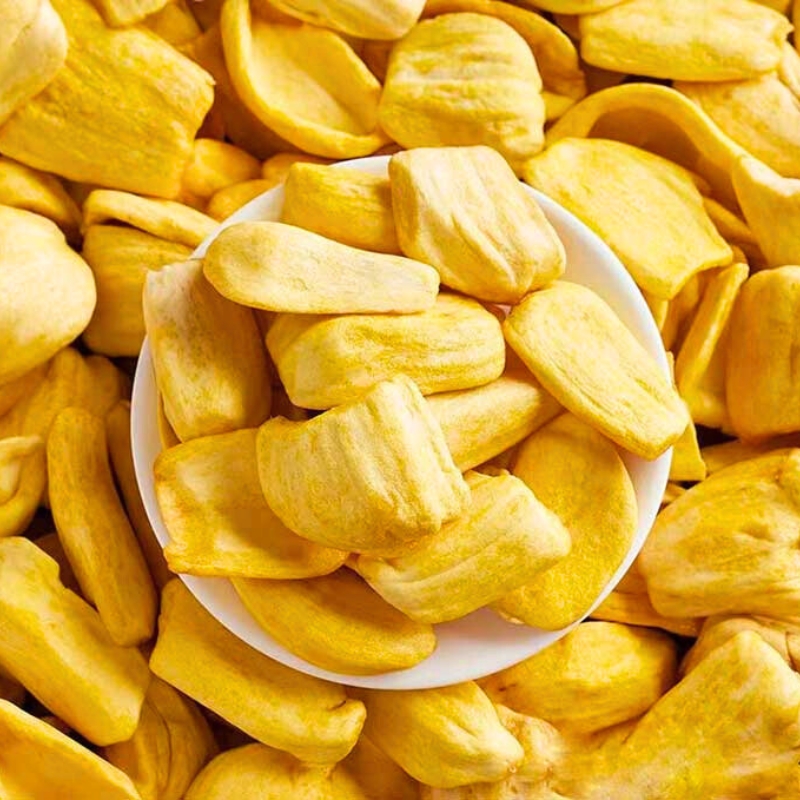
Dried jackfruit, a sweet and crunchy snack, a gourmet souvenir to bring back from Vietnam
It is also found in the form of mit say (dried jackfruit), a popular snack throughout Vietnam, appreciated for its sweet taste and crunchy consistency. This typical snack, often sold in markets or as a travel souvenir, captivates both locals and visitors. In some regions, its seeds, rich in starch and plant protein, are boiled or roasted, then enjoyed as a nutritious snack.
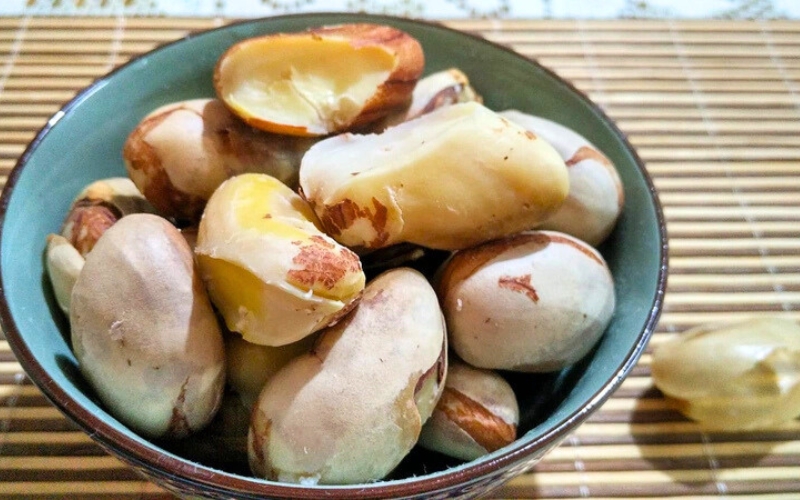
Jackfruit seeds, often discarded, are nevertheless rich in nutrients and plant proteins
Fascinating particularity: young jackfruit is also cooked in savory dishes, particularly in curries or stir-fried, where its consistency resembles that of meat. This tender version of the fruit, called mit non, has become a natural vegetarian alternative, increasingly popular in modern cooking and fusion recipes.
From a nutritional point of view, jackfruit is an excellent source of natural carbohydrates, fiber, potassium, magnesium and vitamin C, as well as a good source of B vitamins and antioxidant carotenoids. Its wealth of energy and essential nutrients makes it a revitalizing and complete fruit, both tasty and beneficial for health.
8. Du du (Papaya)
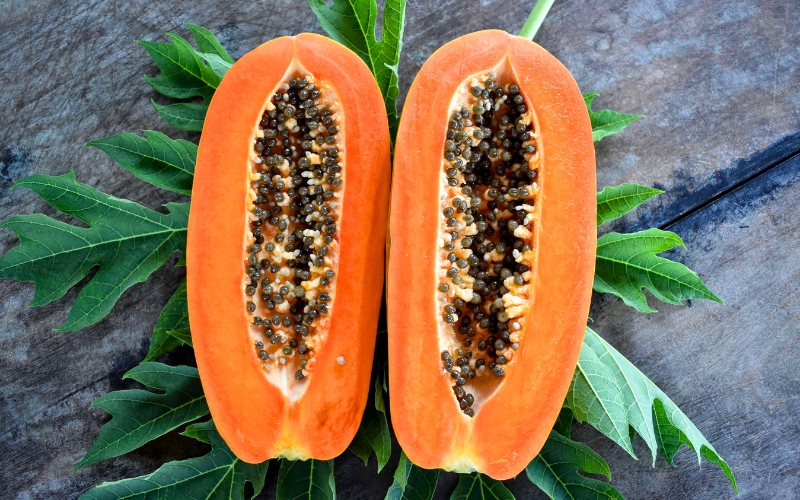
Du du (Papaya), tropical fruit with bright colors and sweet flavor, symbol of freshness in Vietnam
Papaya, or du du in Vietnamese, is one of the most versatile exotic fruits of Vietnam. Easily recognizable by its elongated shape and skin ranging from green to orange-yellow depending on ripeness, it offers two very different faces in cooking.
Green papaya is an essential ingredient in Vietnamese salads, particularly goi du du. Shredded into thin strips, it is mixed with dried beef, fresh herbs, roasted peanuts and a tangy nuoc mam sauce. Crispy and slightly tart, it perfectly embodies the balance of Vietnamese flavors: fresh, salty, sweet and spicy.
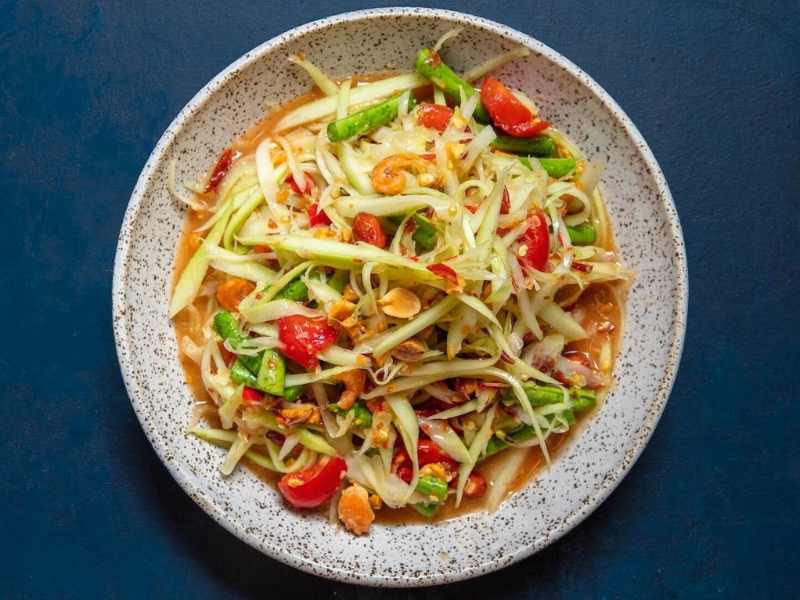
Goi du du – Vietnamese green papaya salad, crispy and savory, mingling freshness and spicy flavors
In contrast, ripe papaya is enjoyed as a fruit on its own. Its bright orange flesh, sweet and melting, is consumed fresh, in juice, in smoothie or incorporated into che (sweet Vietnamese desserts). Refreshing and fragrant, it is also used as a basic ingredient in numerous tropical juices sold on Vietnam’s streets.
9. Mang cau xiem (Soursop)
Among the exotic fruits of Vietnam, soursop, or mang cau xiem, remains still little known to European travelers, but holds a prominent place in Vietnamese tropical orchards. With its green skin covered with small spikes, it hides white and fibrous flesh, tender and juicy. Its taste, sweet and slightly tart, evokes a subtle mix of strawberry, pineapple and citrus.
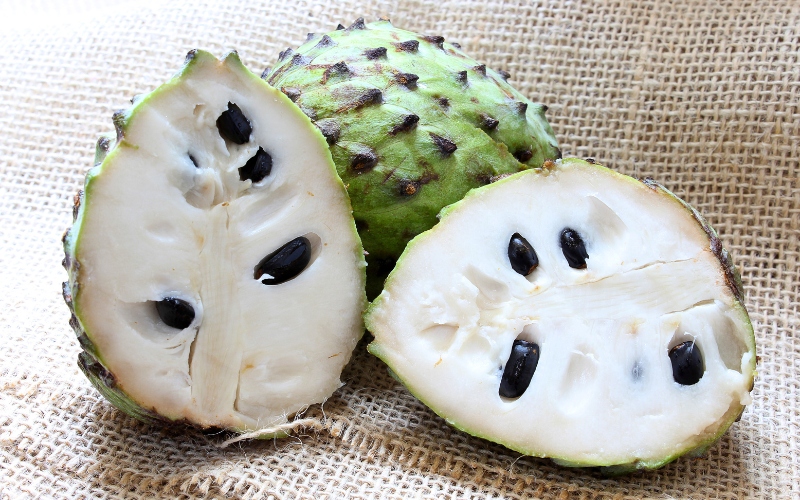
Mang cau xiem (Soursop), tropical fruit with white flesh, sweet and slightly tart, much appreciated in Vietnam for its freshness
In Vietnam, mang cau xiem is enjoyed especially in sinh to (Vietnamese smoothie), creamy and thirst-quenching. It is also found in some traditional che – sweet desserts made with coconut milk and tapioca pearls – or transformed into artisanal ice cream, particularly appreciated on the hottest days.
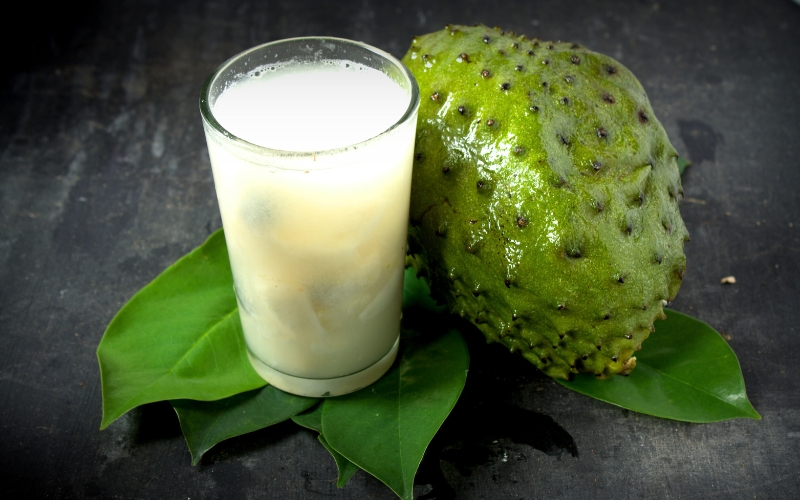
Vietnamese smoothie with soursop, creamy and refreshing, ideal for hot days
From a nutritional point of view, soursop is rich in vitamin C and minerals such as potassium and magnesium, promoting hydration and vitality. Its high fiber content also makes it an ally of digestion. In Vietnamese tradition, it is attributed refreshing virtues, ideal during the hot season, as well as invigorating properties, in particular to restore energy after exertion.
10. Dua (Coconut)
Among the exotic fruits of Vietnam, coconut, or dua, is undoubtedly one of the most emblematic. Omnipresent from North to South, it alone embodies the freshness and generosity of the tropics. Its green shell hides a sweet and thirst-quenching water, ideal for refreshing, as well as tender flesh, used in a multitude of recipes.
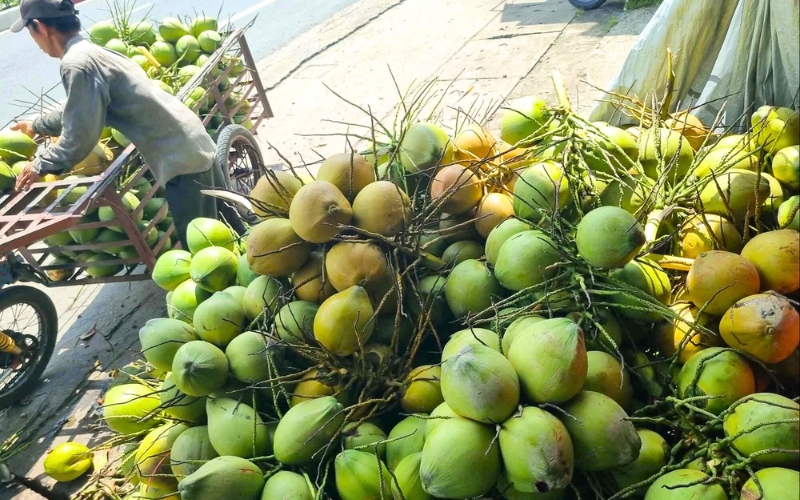
Dua (Coconut), symbol of Vietnamese tropics, source of freshness and natural energy
In Vietnam, dua is enjoyed in countless forms, both in street food and in family cooking. Fresh coconut water, sweet and slightly sweetened, is one of the most popular drinks in the country — served directly in the nut or poured over ice, it embodies Vietnamese tropical freshness.
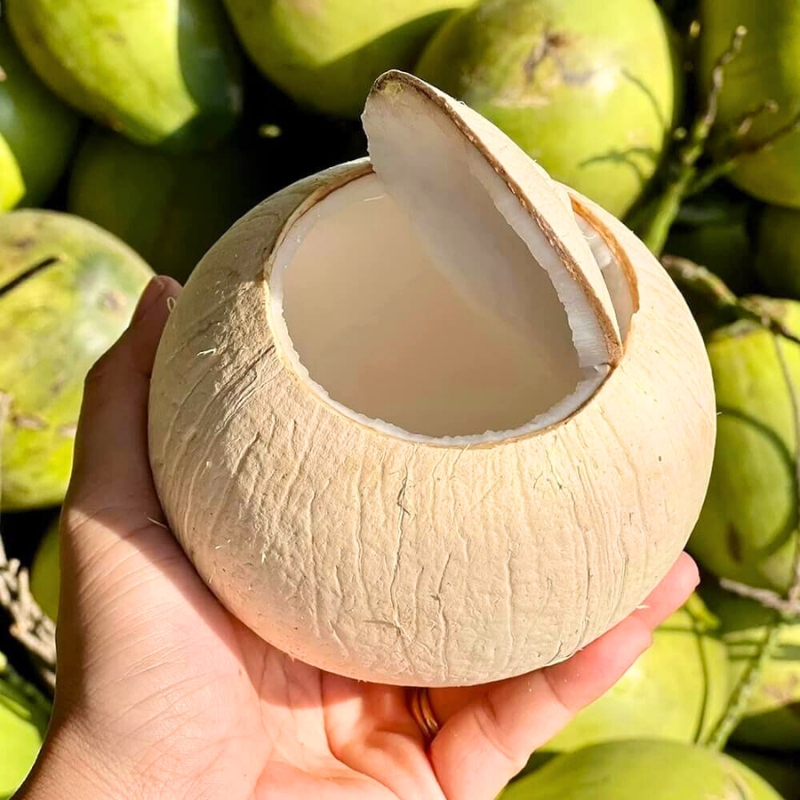
Dua (Coconut), one of the most appreciated and refreshing drinks in Vietnam
Coconut flesh, tender and fragrant, is omnipresent in traditional desserts such as che dua (Vietnamese dessert with coconut milk and tapioca pearls), banh khoai mi nuong (cassava cake with coconut) or banh bo dua (small soft steamed cake with coconut).
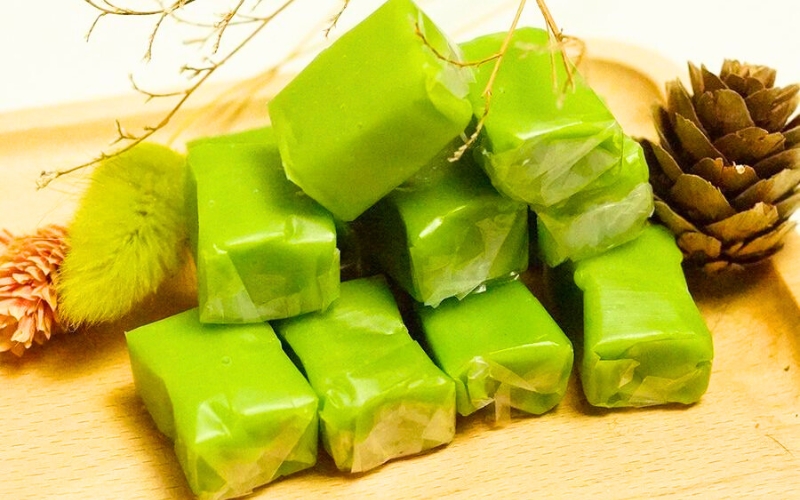
Keo dua (Coconut candy) from Ben Tre, ranked among the 70 best sweets in the world by TasteAtlas
In southern Vietnam, coconut reveals all its richness through its multiple uses. It is transformed into keo dua, the famous Ben Tre candies, with a melting taste and slightly caramelized, but also used in emblematic savory dishes.
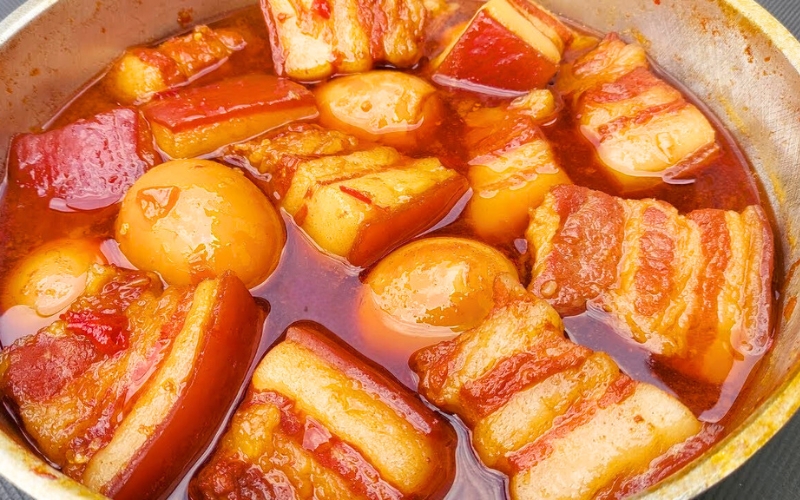
Thit kho nuoc dua – pork braised in coconut milk, where coconut water sweetens the meat and gives it an appetizing amber color
Among these, thit kho nuoc dua – pork braised in coconut milk – holds a particular place in Vietnamese family cooking. Coconut water (nuoc dua) sweetens the meat, gives it a beautiful amber color and emanates an irresistible aroma that unites sweet and salty. This dish, often served with white rice, alone embodies the warmth and generosity of the Vietnamese hearth.
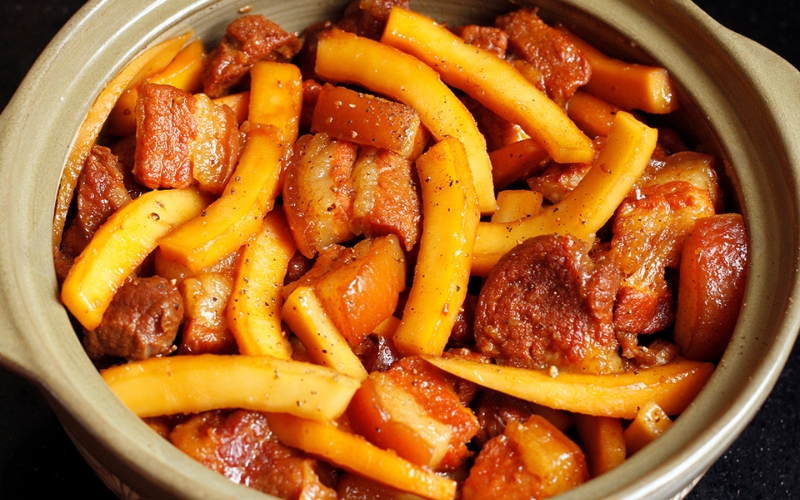
Coconut flesh is also stewed with pork, bringing a melting texture and sweet, creamy flavor
Coconut milk also flavors other popular recipes such as ca ri ga (chicken curry with coconut milk) or xoi dua (sticky rice with coconut). Symbol of sun and conviviality, dua perfectly illustrates the richness of Vietnamese flavors, among sweetness, balance and authenticity.
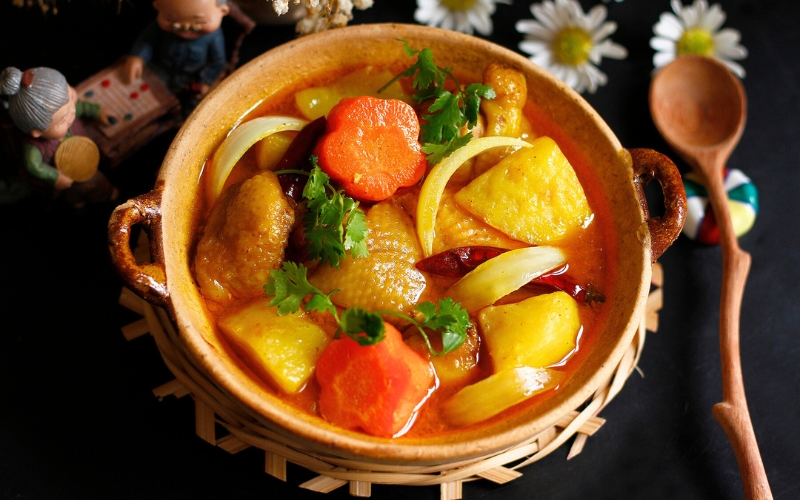
A little concentrated coconut milk is enough to make ca ri ga velvety, delicately sweet and full of tropical aromas.
From a nutritional point of view, coconut provides essential minerals (potassium, magnesium, phosphorus), fiber and natural fatty acids. It is considered both nourishing and energizing, while remaining light and refreshing when consumed in the form of water.
The exotic fruits of Vietnam are a treasure trove of diversity and flavor. From sweet mango to refreshing dragon fruit, from bold durian to delicate mangosteen, each fruit tells a story and reveals the richness of Vietnamese tropical terroirs. Tasting these fruits means discovering an essential part of Vietnamese gastronomy, where freshness, color and fragrance unite to create an unforgettable sensory experience. Whether you taste them at a local market, in street food or during a family meal, these Vietnamese fruits are an integral part of the country’s way of life. Colorful, healthy and authentic, they embody the spirit of Vietnam: generous, natural and deeply connected to the land.