+84 9 75 46 33 10 (Whatsapp)
  info@horizon-vietnamtravel.com
  Français
  Español
  Português
  Deutsch

Top 10 Must-Try Dishes to Eat in Hanoi
Table of contents
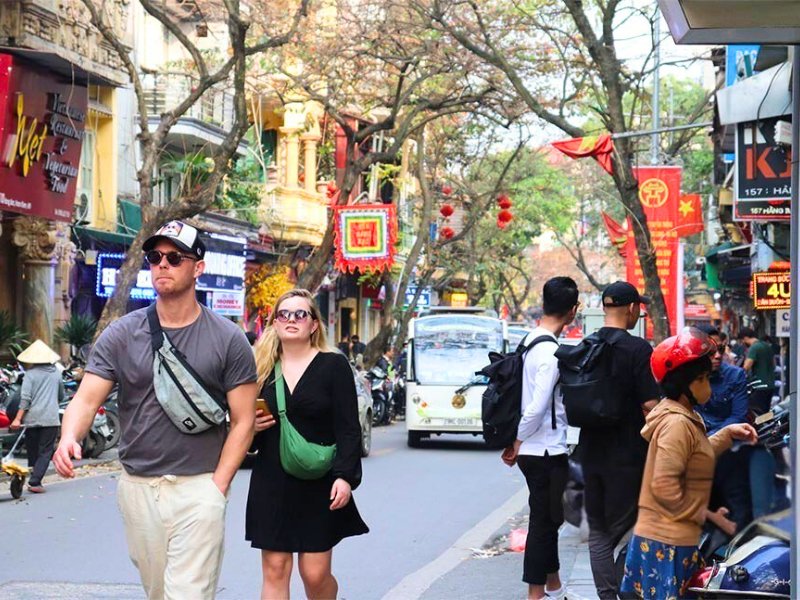
Hanoi, the vibrant capital of Vietnam, embodies a harmonious fusion between tradition and modernity. Renowned for its rich cultural heritage, picturesque lakes, and colonial architecture, the city is also a true paradise for food lovers. If you’re seeking the best dishes in Hanoi, prepare yourself to discover a cuisine that stands out for its diversity, unique flavors, and authentic dishes steeped in history and local culture. Whether you’re a street food enthusiast or a gourmet in search of refinement, Hanoi offers an unforgettable culinary experience. The lively streets are teeming with food stalls where you can taste specialties like Pho, Banh Mi, and Bun Cha, each with its own story and unique preparation. Refined restaurants, in turn, celebrate traditional culinary techniques while bringing a touch of modernity to them. Let yourself be transported on a gustatory journey in the heart of Hanoi, where every bite reveals a bit more of the soul of this fascinating city.
Pho
Pho, this steaming bowl of noodle soup, is undoubtedly one of the best dishes in Hanoi, where it has deep roots. This traditional dish, which has conquered palates around the world, embodies by itself the culinary richness of the Vietnamese capital. Originating from northern Vietnam, Pho appeared in early 20th century Hanoi, where it quickly gained popularity. Its creation is often attributed to French influence, the clear broth reminiscent of European consommés, but enriched with typical Vietnamese ingredients. It is even said that the word “Pho” would derive from “pot-au-feu,” though the recipe has evolved to become a staple of Vietnamese cuisine.

Pho is composed of flat rice noodles, served in a rich and fragrant broth, garnished with thin slices of beef or chicken. The true magic of Pho lies in its broth, which requires hours of cooking to achieve the desired depth of flavor. Beef or chicken bones are simmered with spices such as cinnamon, star anise, ginger, and grilled onions, creating a clear and flavorful broth.
Fresh herbs such as cilantro, Thai basil, and scallions, accompanied by a few slices of chili and a drizzle of lime juice, complete the dish, offering an explosion of flavors and aromas. Hanoi’s Pho is distinguished by its delicate and balanced taste, without the additions of sauces and herbs often found in versions from southern Vietnam.
Where to taste the best Pho in Hanoi?
Pho Gia Truyên Bat Đan:
- Address: 49 Bat Đan Street, Hoan Kiem District, Hanoi
- Description: Located in Hanoi’s old quarter, this restaurant is renowned for serving one of the best phở in the city. Long waiting lines testify to its popularity and the quality of its broth.
- Price: 50,000 – 60,000 VNĐ (1.83 – 2.2€)
Pho Thin:
- Address: 13 Lo Duc Street, Hai Ba Trung District, Hanoi
- Description: Another Hanoi institution, Phở Thìn is famous for its sautéed beef phở. The broth is particularly rich and flavorful, attracting phở lovers for decades.
- Price: 50,000 – 90,000 VNĐ (1.83 – 3.3€)
Pho 10 Ly Quôc Su:
- Address: 10 Ly Quoc Su Street, Hoan Kiem District, Hanoi
- Description: This restaurant offers phở with authentic taste, with a clear broth and perfectly cooked beef slices. It is ideal for those seeking a traditional culinary experience.
- Price: 75,000 – 90,000 VNĐ (2.75 – 3.3€)
Bun Cha (Vermicelli with Grilled Pork)
Bun Cha is another emblematic dish of Hanoi, appreciated for its unique flavors and traditional preparation. This dish is a must for anyone wanting to discover the richness of Hanoian cuisine. Bun Cha originated in Hanoi and was popularized well before Pho became Vietnam’s culinary symbol. This street dish is often associated with convivial and informal meals, where friends and family gather to enjoy a meal together. Bun Cha is famous for being tasted by former U.S. President Barack Obama during his visit to Hanoi in 2016, which increased its international fame.

Bun Cha (Vermicelli with Grilled Pork)
Bun Cha consists of several elements that, together, create a perfect harmony of flavors and textures. The chả, consisting of grilled pork meatballs (chả viên) and slices of marinated pork belly (chả miếng), is marinated with fish sauce, sugar, garlic, and shallots before being grilled over coals, which gives it a characteristic smoky flavor. The bún, composed of thin and slightly firm rice vermicelli, serves as the base of the dish. The sauce, a slightly sweet and sour broth, is made from fish sauce, vinegar, sugar, garlic, and chili, in which pieces of grilled pork are dipped. The accompaniments include a variety of fresh vegetables and herbs, including lettuce, aromatic herbs (such as Thai basil and mint), and sometimes bean sprouts. Slices of marinated green papaya are often added for a crunchy texture and slightly sour taste.
Where to taste the best Bun Cha in Hanoi?
Bun Cha Huong Liên:
- Address: 13 Lo Duc Street, Hai Ba Trung District, Hanoi
- Description: Known for hosting Barack Obama and Anthony Bourdain, this restaurant is often nicknamed “Bún Chả Obama.” It is famous for its generous portions and quality ingredients.
- Price: 50,000 – 70,000 VNĐ (1.83 – 2.56€)
Bun Cha Dac Kim:
- Address: 1 Hang Manh Street, Hoan Kiem District, Hanoi
- Description: Located in Hanoi’s old quarter, this establishment is renowned for its flavorful bún chả and abundant portions of grilled meat.
- Price: 50,000 – 60,000 VNĐ (1.83 – 2.2€)
Bun Cha 34 Hang Than:
- Address: 34 Hang Than Street, Ba Đinh District, Hanoi
- Description: Another local favorite, known for its flavorful broth and perfectly grilled pork meatballs.
- Price: 50,000 – 60,000 VNĐ (1.83 – 2.2€)
Bun Đâu Mam Tôm (Fried Tofu and Rice Vermicelli with Shrimp Sauce)
Bun Đâu Mam Tôm is a popular street dish and typical of Hanoi, known for its bold flavors and varied textures. This dish, often appreciated by locals, offers an authentic and unique culinary experience, highlighting a key ingredient of Vietnamese cuisine: Mam Tôm (fermented shrimp paste). Bun Đâu Mam Tôm consists of several distinct elements, each contributing to the complexity of the dish: thin and white rice vermicelli, slightly firm, which serve as the base of the dish. Crispy fried tofu (đậu rán), golden on the outside and tender on the inside, is cut into pieces and fried until achieving a crispy texture. Fermented shrimp paste (mắm tôm) is the star ingredient that gives the dish its distinctive character. It is often mixed with lime juice, sugar, chili, and sometimes a bit of rice alcohol to sweeten and balance the flavors.

Bún đậu mắm tôm (Rice Noodles with Fried Tofu)
This mixture is whisked until it becomes foamy and airy. The accompaniments include pieces of boiled pork (thịt luộc) and Cha Côm (pork sausage wrapped in young rice grains) for added richness. A variety of aromatic herbs such as mint, perilla, and cilantro add freshness to the dish, while cucumber slices and lettuce leaves provide a crunchy and refreshing texture. Fried spring rolls (Nem Ran) can also be included, adding another dimension of crunchiness and flavor.
Where to taste the best Bun Đâu Mam Tôm in Hanoi?
Bun Đâu Mam Tôm Hang Khay:
- Address: 31 Hang Khay Street, Hoan Kiem District, Hanoi
- Description: A very popular spot in the old quarter, known for its well-balanced shrimp paste and generous portions.
- Price: 50,000 – 60,000 VNĐ (1.83 – 2.2€)
Bun Dâu Mam Tôm Gôc Da:
- Address: 4 Ngo Gach Street, Hoan Kiem District, Hanoi
- Description: Another renowned establishment where bún đậu mắm tôm is prepared traditionally, with particular attention paid to each component.
- Price: 50,000 – 110,000 VNĐ/ per (1.83 – 4.03€)
Bun Đau Mam Tôm Ma Mây:
- Address: 6 Ma Mây Street, Hoan Kiêm District, Hanoi
- Description: This restaurant is famous for the quality of its fried tofu and the freshness of its ingredients.
- Price: 40,000 – 60,000 VNĐ (1.47 – 2.20€)
Bun Riêu (Vietnamese Crab Soup)
Bun Riêu is a traditional Vietnamese soup appreciated for its richness of flavors and diverse ingredients. Originating from northern Vietnam, this dish is particularly popular for its fragrant broths and generous toppings, highlighting crab, a specialty of Vietnamese cuisine. It is a soup that dates back several generations and is often served during family meals or social gatherings. This dish takes its name from river crab (riêu), which is the main ingredient of the soup. Its popularity has spread throughout Vietnam, with regional variations adding their own unique touch to the traditional recipe.

Bun Riêu is a traditional crab-based soup, with a distinctive tangy broth, offering authentic flavor
This dish consists of several key elements, each contributing to the depth and complexity of the dish. The broth is prepared from tomatoes, river crab paste, and often dried shrimp, which gives it a distinct umami flavor. The tomatoes provide a slight acidity that balances the richness of the crab. The broth is also flavored with spices such as garlic and shallots. Thin and white rice vermicelli, similar to those used in other Vietnamese soups, serve as the base of the dish.
The crab topping, mixed with eggs and sometimes ground pork, is cooked in the broth until forming soft and flavorful pieces, which distinguishes bún riêu from other Vietnamese soups. The soup is topped with various aromatic herbs, such as Thai basil, perilla (tiá tô), and cilantro. Water convolvulus stems (rau muống) and bean sprouts are often added for a crunchy texture and fresh taste. Other toppings such as fried tofu, pieces of congealed pork blood, and snails can also be included for greater diversity and flavor. Bun Riêu is often served with lime wedges, fresh chili, and fermented shrimp paste (Mam tôm) to adjust the taste according to individual preferences.
Where to taste the best Bun Riêu in Hanoi?
Bun Riêu – Hang Bac:
- Address: 11 Hang Bac Street, Hoan Kiem Street, Hanoi
- Description: Located in Hanoi’s old quarter, this restaurant is renowned for its rich broth and flavorful crab topping.
- Price: 30,000 – 60,000 VNĐ (1.1 – 2.20€)
Bun Riêu – Hang Luoc:
- Address: 14 Hang Luoc Street, Hoan Kiem Street, Hanoi
- Description: Hidden in the bustling old quarter of Hanoi, Bún Riêu Hàng Lược offers an authentic and warm culinary experience. The restaurant is often crowded with locals and tourists, all attracted by the reputation of its flavorful broth and generous portions.
- Price: 30,000 – 60,000 VNĐ (1.1 – 2.20€)
Bún Riêu Phố Cổ:
- Address: 17 Hang Cot Street, Hoan Kiem Street, Hanoi
- Description: The restaurant is often lively, reflecting the popularity and consistent quality of its dishes. Visitors are greeted by inviting aromas and friendly service, making every meal a memorable experience.
- Price: 30,000 – 60,000 VNĐ (1.1 – 2.20€)
Bun Thang
Bun Thang is a delicate and refined dish, often considered one of the jewels of Hanoian cuisine. This traditional dish is particularly appreciated for its complexity and balanced flavors, perfectly reflecting the art of Vietnamese cuisine. Bun Thang originates in Hanoi and is often prepared on special occasions, such as Têt (Vietnamese New Year). The term “thang” means “decoction” in Vietnamese, referring to the meticulous method of preparing the broth. This dish, which dates back several generations, was once served at the imperial court, which explains its sophisticated character and noble ingredients.

Bun Thang is an emblematic soup of Hanoi, renowned for its sophisticated presentation and complex flavors
Bun Thang stands out for its numerous carefully prepared and assembled ingredients to create perfect harmony. The clear and flavorful broth, prepared from chicken bones, dried shrimp, and sometimes dried squid, is flavored with ginger, grilled onions, and spices, and simmers slowly to extract all its flavors, thus creating a light but aromatic base. Thin and delicate rice vermicelli serve as the base of the dish, cooked just before serving to ensure their perfect texture. The toppings include shredded chicken, a thin omelet cut into julienne, Vietnamese ham (giò lụa) cut finely, dried shrimp ground into a fine powder, and rehydrated shiitake mushrooms. Fresh herbs such as cilantro, chives, and sometimes perilla leaves add freshness and complexity, while seasonings such as fresh chili, lime juice, and a small amount of fermented shrimp paste (mắm tôm) can be added for additional depth of flavor.
Where to taste the best Bun Thang in Hanoi?
Bun Thang Ba Đuc:
- Address: 48 Câu Gô Street, Hoan Kiêm District, Hanoi
- Description: Located in Hanoi’s old quarter, this restaurant is famous for its authentic and delicately prepared bún thang.
- Price: 60,000 VNĐ (2.20€)
Bun Thang Hang Hom:
- Address: 11 Hang Hom Street, Hoan Kiem Street, Hanoi
- Description: It is a small family restaurant located in a lively alley of Hanoi’s old quarter. Known for its warm atmosphere and attentive service, this address is a favorite among locals and tourists seeking an authentic culinary experience.
- Price: 50,000 – 60,000 VNĐ (1.83 – 2.20€)
Bun Thang Ba Âm:
- Address: 37 Cua Nam Street, Hoan Kiem District, Hanoi
- Description: Hidden in the heart of Hanoi’s old quarter, Bún Thang Bà Ẩm offers an authentic culinary experience in an intimate and welcoming environment. The restaurant, run by Bà Ẩm and her family for several generations, is renowned for its carefully prepared dishes made according to traditional methods.
- Price: 50,000 – 60,000 VNĐ (1.83 – 2.20€)
Cha Ca La Vong
Cha Ca La Vong is one of the most emblematic dishes of Hanoi, known for its unique flavor and distinctive preparation method. This dish, based on marinated and grilled fish, is a true delight for lovers of Vietnamese cuisine.
Cha Ca La Vong originates in Hanoi, and its history dates back more than a century. The dish is named after the Doan family, who opened the first restaurant specializing in this dish in Hanoi’s old quarter. “La Vong” refers to a statue of the famous fisherman La Vong (Khuong Tu Nha), often used as a sign by families specializing in the preparation of this dish.

Cha Ca La Vong
Cha Ca La Vong consists of several key elements, each contributing to the richness and complexity of the dish. The fish, generally catfish or tilapia, is prized for its firm texture and ability to absorb the flavors of the marinade. Marinated with turmeric, garlic, galangal, and fermented shrimp paste (mắm tôm), the fish acquires a deep and distinctive flavor. The marinated fish is then grilled to perfection, often over charcoal, which gives it a slightly smoky flavor. It is then served on a cast-iron skillet or small tabletop grill to keep the fish hot and allow the aromas to develop.
The accompaniments include a variety of fresh herbs such as dill, cilantro, mint, and scallions, as well as roasted peanuts and thin rice vermicelli. The dish is accompanied by fish sauce, fermented shrimp paste, and sometimes fresh chili peppers and lime juice, allowing each person to adjust the taste according to their preferences.
Cha Ca La Vong is an interactive culinary experience, where diners can participate in the final cooking of the fish on the tabletop grill. Pieces of grilled fish are then mixed with herbs and vermicelli, with each bite offering an explosion of flavors and textures. The marriage of fragrant fish, fresh herbs, and flavorful seasonings makes this dish a true feast for the senses.
Where to taste the best Cha Ca La Vong in Hanoi?
Cha Ca Thang Long:
- Address: 21 Đuong Thanh Street, Hoan Kiem District, Hanoi
- Description: Located in Hanoi’s old quarter, this restaurant is renowned for its perfectly marinated and grilled fish, as well as the quality of its accompaniments.
- Price: Approximately 150,000 – 200,000 VND per person (5.50 – 7.33€)
Cha Ca La Vong:
- Address: 14 Cha Ca Street, Hoan Kiêm District, Hanoi
- Description: The original restaurant, where the dish was invented, remains a must for those wanting to taste the authenticity.
- Price: Approximately 180,000 – 250,000 VND per person (6.59 – 9.16€)
Cha Ca Anh Vu:
- Address: 120 K1 Giang Vo Street, Ba Đinh District, Hanoi
- Description: Known for its generous portions and friendly service, this restaurant offers an excellent version of this emblematic dish.
- Price: Approximately 120,000 – 180,000 VND per person (4.40 – 6.59€)
Banh Cuôn (Pork and Black Mushroom Dumplings)
Banh Cuôn, often called “pork and black mushroom dumplings,” is a Vietnamese specialty much appreciated for its fineness and delicacy. Originating from northern Vietnam, this dish is a marvel of Vietnamese cuisine, highlighting the light texture and subtle flavors of the ingredients used. Banh Cuôn is a traditional Vietnamese dish that has its origins in the Hanoi region. Consumed mainly at breakfast or as a snack, it is very popular for its lightness and richness of flavors. The name “Banh Cuôn” literally means “rolled crepe,” which refers to the way the dish is prepared and served.

Banh Cuôn (Pork and Black Mushroom Dumplings)
Banh Cuôn stands out for its fineness and the complexity of its preparation. The dough, prepared from rice flour and water, is mixed until obtaining a smooth and homogeneous consistency. It is then poured in a thin layer on a stretched fabric over a pot of boiling water, where it is steamed until becoming translucent and slightly elastic. The crepe thus formed is gently removed from the fabric. The traditional filling includes ground pork, rehydrated and finely chopped black mushrooms (nấm mèo), sautéed shallots, and sometimes dried shrimp. The filling ingredients are sautéed together with spices such as salt, pepper, and fish sauce to create a savory filling, which is then placed in the center of each crepe before being gently rolled. Banh Cuôn is served with a variety of fresh herbs such as cilantro, mint, and Thai basil, adding freshness and aromatic complexity to the dish. A light fish sauce, mixed with water, sugar, lime juice, garlic, and chili, is served as an accompaniment for dipping the crepes. A particularity is the addition of Ca cuông (insect nymph essence) in the sauce, offering a unique flavor. Pieces of Cha lua (Vietnamese pâté) and Cha quê (Vietnamese cinnamon sausage) can also be added to complete the dish.
Where to taste the best Banh Cuôn in Hanoi?
Banh Cuôn Ba Hanh:
- Address: 26B Tho Xuong Street, Hoan Kiêm District, Hanoi
- Description: Known for its delicate crepes and flavorful fillings, this restaurant is a favorite among locals and tourists.
- Price: Approximately 30,000 – 50,000 VND per dish (1.1 – 1.83€)
Banh Cuôn Thanh Vân:
- Address: 12-14 Hang Ga Street, Hoan Kiêm District, Hanoi
- Description: Renowned for its authentic recipe and consistent quality of its dishes.
- Price: Approximately 25,000 – 40,000 VND per dish (1 – 1.47€)
Banh Cuôn Ba Xuân:
- Address: Dôc Hoe Nhai, Ba Đinh District, Hanoi
- Description: Known for its thin and soft crepes, filled with ground pork and black mushrooms, this restaurant is another must for lovers of this delicate dish.
- Price: Approximately 30,000 – 50,000 VND per dish (1.10 – 1.83€)
Xôi Xeo (Sticky Rice with Mung Beans)
Xôi Xeo is a popular traditional Vietnamese dish, particularly appreciated for its rich taste and unique texture. Composed of sticky rice and mung beans, this dish is often consumed at breakfast or as a snack. Originating from northern Vietnam, Xôi Xeo is deeply rooted in Vietnamese food culture. It is often sold by street vendors and in local markets, making it an accessible and beloved street food for all. The name “Xôi Xeo” refers to the method of preparation of the dish, where sticky rice and mung beans are crushed together.

Xôi Xeo (Sticky Rice with Mung Beans)
Xôi Xeo stands out for its simplicity and the quality of its ingredients. Sticky rice, soaked in water for several hours to soften it, is steamed until becoming tender and sticky. Once cooked, the rice is often mixed with a bit of chicken fat or oil to add richness and flavor. Mung beans, also soaked and then steamed or boiled until tender, are crushed into a smooth paste. The mung bean paste is molded into small balls or crushed directly onto the sticky rice. Finely sliced shallots fried until golden and crispy are sprinkled over the dish to add a crunchy texture and sweet-savory flavor. Sometimes, the dish is enriched with chicken fat for an additional touch of richness. According to regional or individual preferences, Xôi Xéo can be served with slices of chả mỡ (fried pork sausage), shredded pork (ruốc), or pieces of braised pork (thịt kho).
Where to taste the best Xôi Xeo in Hanoi?
Xôi Yên:
- Address: 35B Nguyên Hưu Huân Street, Hoan Kiêm District, Hanoi
- Description: Celebrated for its various varieties of xôi, Xôi Yến offers an exceptional version of Xôi Xeo, rich in flavors and textures
- Price: Approximately 20,000 – 40,000 VND per portion (0.73 – 1.46€)
Xôi Mây:
- Address: 31 Ly Thuong Kiêt Street, Hoan Kiêm District, Hanoi
- Description: Recognized for its exquisite Xôi Xéo, Xôi Mây is a must-visit place for lovers of this traditional dish. The sticky rice is cooked to perfection, the mung beans are flavorful, and the accompaniments are varied and of high quality.
- Price: Approximately 10,000 – 40,000 VND per portion (0.37 – 1.46€)
Xôi Bà Thu:
- Address: 57 Tho Nhuôm Street, Hoan Kiem District, Hanoi
- Description: Known for its generous portions and high-quality ingredients, Xôi Bà Thu is a popular choice for lovers of Xôi Xeo.
- Price: Approximately 35,000 – 65,000 VND per portion (1.28 – 2.38€)
Nem Rán (Fried Spring Rolls)
Nem Ran, also known as fried spring rolls, are an emblematic specialty of Vietnamese cuisine. Appreciated for their crispy texture on the outside and flavorful filling on the inside, these rolls are a true delicacy often found on tables during special occasions and daily meals. Nem Rán originates in Vietnam, where they are traditionally prepared for major family celebrations, Lunar New Year (Têt) celebrations, and other festive events. This dish is also popular in other Southeast Asian countries under different names, but it is in Vietnam that it acquired its fame for its specific preparation and unique flavors. The preparation of Nem Ran involves a variety of fresh and local ingredients, in particular rice paper sheets used to wrap the filling, which become crispy when fried, ground pork often mixed with other proteins such as crab or shrimp, black mushrooms that provide a crunchy texture and umami flavor, rice vermicelli that adds texture to the filling, as well as vegetables such as carrots, onions, and sometimes bean sprouts for a balanced filling.

Nem Rán (Fried Spring Rolls)
Fresh herbs such as cilantro, mint, and basil are often served as accompaniments, as well as seasonings such as salt, pepper, fish sauce, and sometimes local spices. The preparation begins with the creation of the filling by mixing all the ingredients. Rice paper sheets are moistened to soften them, then filled with the filling and rolled tightly. The rolls are then fried in hot oil until golden and crispy. Nem Ran are generally served with a variety of accompaniments that enrich the taste experience, such as Nuoc Cham sauce, a sweet and sour fish sauce prepared with lime juice, garlic, sugar, and chili peppers, fresh herbs such as mint leaves, cilantro, and basil, marinated vegetables that add a touch of acidity and crunchiness, and sometimes rice vermicelli for a more substantial dish.
Where to taste the best Nem Ran in Hanoi?
Huyên nem ran Hang Be
- Address: 11 Hang Be Street, Hoan Kiêm District, Hanoi
- Description: Known for its crispy and flavorful Nem Rán, this small street restaurant is an appreciated address by locals and tourists. The fried spring rolls are filled with pork, rice vermicelli, black mushrooms, and fresh vegetables, offering a crispy texture on the outside and soft on the inside.
- Price: 10,000 VND per roll (0.37€)
Banh Mi
Recognized by TasteAtlas as one of the best sandwiches in the world, Bánh Mì is a Vietnamese specialty that perfectly embodies the fusion of French and Vietnamese culinary influences. When traveling to Hanoi, don’t forget to taste this delicious specialty. Being a regional variation of the famous Vietnamese sandwich, Hanoi Banh Mi is distinguished by its bread crispy on the outside and soft inside, filled with fresh and flavorful ingredients. In Hanoi, Banh Mi is particularly appreciated for its balance of flavors and textures.
Bánh Mì originates from the French colonial period in Vietnam, where French baguettes were adapted to Vietnamese tastes. Over time, Vietnamese people integrated their own ingredients, thus creating a unique and flavorful version. In Hanoi, Bánh Mì has become a staple food for many residents, appreciated at any time of day.

Banh Mi Hanoi – A Rich Flavor, Perfect Fusion of French and Vietnamese Cuisine
Hanoi Bánh Mì is often characterized by a layer of savory butter and liver pâté, accompanied by ruốc (dry shredded pork), ham, xá xíu (roasted pork), and a few thin slices of chả (Vietnamese pâté). The accompanying vegetables usually include cilantro and cucumber. The sauce is often a traditional mashed chili sauce, offering a characteristic spiciness.
The preparation begins with cutting the baguette, lightly toasted to achieve perfect texture. A layer of mayonnaise or pâté is then added, followed by the proteins, then the vegetables and herbs. The sandwich is finished with a seasoning of soy sauce or Maggi and fresh chili peppers for those who love spicy flavors.
Where to taste the best Banh Mi in Hanoi?
Bánh mì Trâm – Đình Ngang
- Address: 30 Đinh Ngang Street, Hoan Kiem District, Hanoi
- Description: Known for its unique bánh mì filled with pâté, fatty sausages, roasted pork (xá xíu), egg omelet, and cucumber, drizzled with a special orange sauce that perfectly balances salty, sweet, sour, and rich flavors.
- Price: Approximately 33,000 – 60,000 VND per sandwich (1.21 – 2.20€)
Bánh mì Phố Huế
- Address: 118 Phô Huê Street, Hai Ba Trung District, Hanoi
- Description: Praised by culinary experts and mentioned in the BBC for its perfect balance of flavors and textures. The bánh mì here is simple but every ingredient plays a crucial role, from the cold cuts to the crispy baguette.
- Price: Approximately 30,000 VND per sandwich (1.10€)
Bánh mì 25
- Address: 25 Hang Ca Street, Hoan Kiêm District, Hanoi
- Description: Very popular for its numerous options of fresh and flavorful fillings. Bánh mì 25 is an ideal place to taste a balanced sandwich in a friendly atmosphere.
- Price: Approximately 25,000 – 40,000 VND per sandwich (0.91 – 1.46€)
Hanoi, with its cultural and historical richness, is a choice destination for food lovers. The city offers an impressive variety of dishes that captivate the senses with their diversity of flavors, aromas, and textures, with every street corner and market hiding culinary treasures that tell the story and traditions of Vietnam. Exploring the best dishes of Hanoi means immersing yourself in a harmonious gastronomic journey that blends sweet, salty, sour, and spicy. By discovering these delights, you will understand why Hanoi’s cuisine is celebrated worldwide. The quality of ingredients, mastery of culinary techniques, and love for food are reflected in every dish. Don’t hesitate to venture beyond the beaten path to discover unique and memorable flavors. If you have questions about dishes in Hanoi, please contact us!