+84 9 75 46 33 10 (Whatsapp)
  info@horizon-vietnamtravel.com
  Français
  Español
  Português
  Deutsch

Top 10 Must-Try Tết Dishes in Vietnam
Table of contents
In Vietnam, Tết, or Lunar New Year, embodies a moment of renewal and family reunion deeply rooted in Vietnamese culture. This emblematic celebration, the most important of the year, symbolizes the passage toward a new phase, guided by wishes of prosperity, health, and happiness. Tết is a celebration of family bonds and age-old traditions, where the indispensable dishes of Tết in Vietnam play a central role. In this sacred period, Vietnamese people honor their ancestors by preparing exquisite dishes, carriers of spiritual and cultural meanings. Each meticulously crafted dish conveys a message of harmony, gratitude, and hope for the year to come. Discover below a selection of the emblematic dishes that illuminate Vietnamese tables during this unique occasion.
Banh Chung and Banh Tet (Glutinous Rice Cake)
Banh Chung and Banh Tet are indissociable culinary symbols of Tết. Banh Chung, square in shape, is considered to represent the earth, while Banh Tet, cylindrical in form, is often associated with wishes of prosperity and continuity.
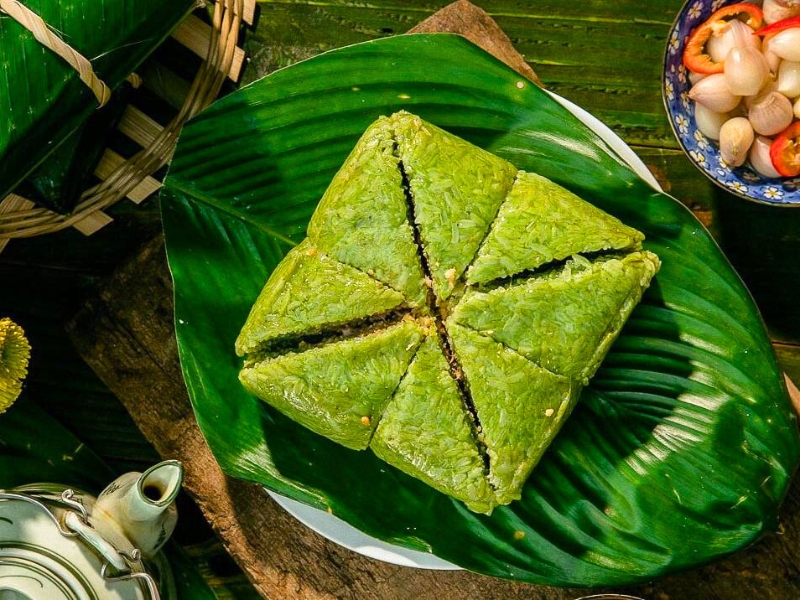
Banh Chung is the symbol of Vietnamese Tết
Prepared from glutinous rice, savory pork, and mung beans, these cakes are wrapped in banana leaves or dong leaves, which give them a beautiful green color. Their slow cooking, which can last up to 12 hours, is a family tradition in which multiple generations gather around the fire, sharing laughter and stories.
These cakes are served in thick slices, often accompanied by pickled vegetables for a perfect balance between richness and freshness. They are not only a delight to the palate, but also a testament to harmony and gratitude toward ancestors.
Boiled Chicken
Boiled chicken is a central dish in the Tết meal, simple yet laden with symbolism. Traditionally, it is prepared whole to symbolize completeness and prosperity. This dish is first offered on the family altar in honor of ancestors before being shared by all family members.
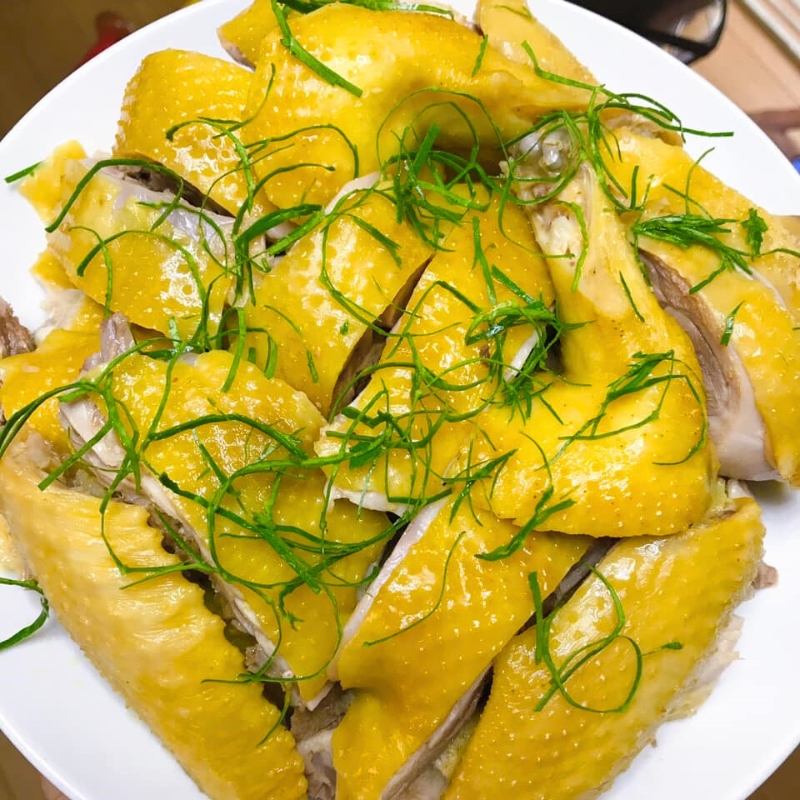
Boiled Chicken
The preparation of boiled chicken relies on slow cooking, which preserves the tenderness of the meat while enhancing its natural flavor. Once cooked, the chicken is cut into harmonious pieces, often arranged elegantly to honor the aesthetics of Vietnamese festive meals.
Accompanied by a simple yet flavorful sauce made of salt, pepper, and lime juice, boiled chicken offers a perfect balance between lightness and refinement. It embodies the fundamental values of Tết: purity, prosperity, and family unity, making this dish essential for celebrating the new year in a spirit of sharing and tradition.
Thit Kho Trung (Caramelized Pork with Eggs)
Thit kho nuoc dua (caramelized pork with eggs), also known as Thịt Kho Trung, is an emblematic dish of Tết in southern Vietnam. This dish is rooted in Vietnamese cuisine, where sweet and savory flavors harmonize perfectly to offer a unique culinary experience. It reflects both the richness of local traditions and the simplicity of the ingredients that compose it. Composed of pork belly cut into generous pieces, whole eggs, and fresh coconut milk, this dish requires slow cooking. This process not only tenderizes the meat, but also infuses it with the rich flavors of the caramelized sauce, resulting in a perfect balance between sweetness and saltiness. The recipe highlights the use of coconut milk, which brings an irresistible creaminess and exotic aroma. This simple yet delicious dish is composed of pieces of pork belly, whole eggs, and coconut milk. Served with white rice and accompaniments such as pickled vegetables, it captivates with its simplicity and depth of flavor. Its pairing with rice creates perfect harmony for a complete meal.

Thit Kho Trung (Caramelized Pork with Eggs)
This emblematic dish is much more than a gastronomic delight: it embodies the profound values of Tết. The tenderness of the pork, which literally melts in your mouth, symbolizes harmony and family union. The whole eggs, with their perfect form, represent wishes for completeness and prosperity. Served during meals that bring together multiple generations, this dish conveys an atmosphere of sharing and warmth. It invites each diner to celebrate the family spirit and perpetuate cherished traditions.
We know that it can be difficult to find coconut milk in some countries. For this reason, we have prepared a video that explains how to make this dish without coconut milk, while preserving its authentic and delicious taste. Watch our step-by-step video guide to enjoy this emblematic dish at home.
Nem Ran (Fried Spring Rolls)
Nem Ran is an essential dish for Tết meals, especially in the regions of northern Vietnam. This comforting and convivial dish is prepared by wrapping a rich and savory filling in thin rice sheets. The filling is composed of ground pork, shrimp, rice vermicelli, black mushrooms, and a variety of finely chopped vegetables.
After being rolled with care, Nem Ran are fried over gentle heat until they achieve a golden color and an irresistible crispy consistency. This process gives them a characteristic flavor, combining the crispiness of the wrapper with the softness of the filling. The nem are usually served with a sauce based on nuoc mam, sugar enriched with lemon juice, garlic, and chili for an explosion of flavors.
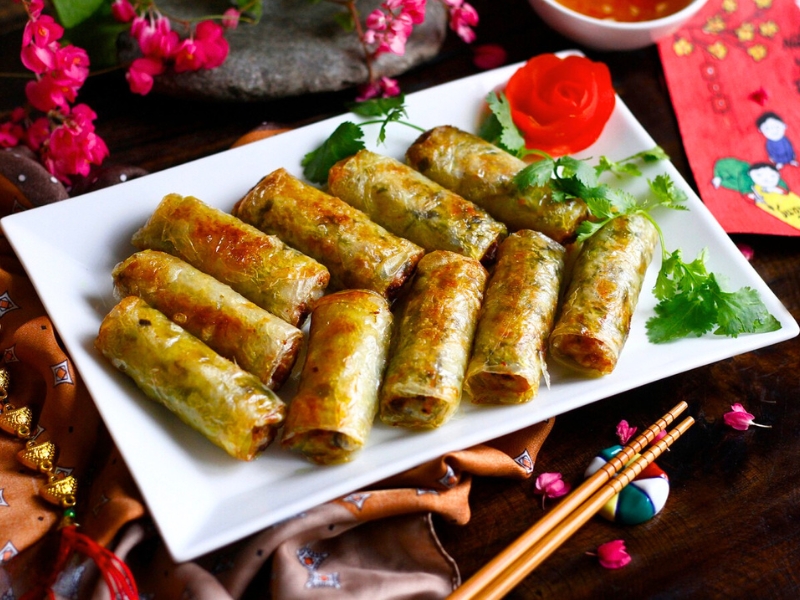
Nem Ran (Fried Spring Rolls)
Nem symbolize wealth and abundance, evoking wishes of prosperity for the new year. Shared around a large family table, they strengthen the spirit of conviviality and joy that characterizes Tết. Their preparation in the family, often accompanied by conversations and laughter, is also a precious moment that celebrates Vietnamese culinary traditions.
Nem, or fried spring rolls, are another indispensable dish of Tết, particularly in northern Vietnam. These crispy delights are prepared by wrapping a filling composed of ground pork, shrimp, rice vermicelli, black mushrooms, and vegetables in rice sheets. Once fried, they become golden and irresistible. Served with fragrant nuoc mam sauce and fresh herbs, nem rán symbolize abundance and wealth. This dish is often shared during festive meals, strengthening the spirit of conviviality.
Canh Khô Qua Nhôi Thit (Bitter Melon Soup with Stuffing)
Bitter melon soup with stuffing, one of the must-try dishes of Tết in Vietnam, combines comfort and symbolic richness. This traditional dish is prepared by hollowing out bitter melons, then filling them with a savory mixture of ground pork, black mushrooms, shallots, and fragrant spices. Slowly stewed in a clear broth, these melons acquire a tender consistency, enhanced by subtle aromas of scallion and cilantro.

Canh Khô Qua Nhôi Thit (Bitter Melon Soup with Stuffing)
An emblematic dish of festive meals, it draws its symbolism from the bitterness of the melon, which represents the trials of the past year. Tasting it means leaving behind difficulties to embrace a new year full of sweetness and prosperity.
Appreciated for its balance between the delicate bitterness of the melon and the softness of the filling, this soup warms hearts and invites conviviality. Served hot, it brings families together and honors Vietnamese culinary traditions, while embodying hope and resilience.
Xôi Gâc (Glutinous Rice with Momordica)
Xôi gâc, or glutinous rice with momordica, ranks among the must-try dishes of Tết in Vietnam. In Vietnamese culture, red symbolizes luck and prosperity, making it an omnipresent color during this celebration, from decorations to traditional dishes.
This dish draws its bright red color from the momordica fruit, rich in antioxidants and used for its natural pigmentation. Prepared with glutinous rice, often mixed with coconut milk for a soft consistency and slightly sweet taste, Xôi gâc is sometimes enriched with mung beans or sesame seeds to add contrasts of flavors and textures.

Xôi Gâc (Glutinous Rice with Momordica)
Beyond its taste, Xôi Gâc embodies wishes of happiness, health, and abundance for the new year. Present on family tables, it is appreciated not only for its visual beauty but also for its profound cultural significance, making it an indispensable symbol of Vietnamese prosperity.
Canh Bong (Soup with Puffed Pork Rind, Cooked with Vegetables)
Canh Bong, an emblematic specialty of Tết, occupies a special place among the must-try dishes of Tết in Vietnam, particularly in traditional northern meals, in Hanoi. This delicate soup reflects the very essence of Hanoian gastronomy, where refinement and symbolism intertwine to create a dish laden with profound cultural significance.
The heart of this dish lies in bóng bì (puffed pork rind) which, after rehydration, regains a soft and slightly elastic consistency, bringing a unique touch to the soup. Associated with a variety of fresh and colorful vegetables – carrots carved in the shape of flowers, daikon, shiitake mushrooms, and sometimes snow peas – this preparation is not only a delight to the palate, but also a culinary work of art. Each ingredient is chosen and worked with care, symbolizing prosperity, purity, and harmony.

Canh Bong (Soup with Puffed Pork Rind, Cooked with Vegetables)
Cooked over low heat in a clear and fragrant broth, prepared from pork or chicken bones, Canh Bong distinguishes itself through its subtle flavor and lightness. The broth, often enriched with delicate spices, serves as the foundation for balancing flavors, highlighting the freshness of the vegetables and the unique consistency of bóng bì.
In the context of Tết, Canh Bong represents wishes of prosperity, happiness, and family unity for the new year. Served during festive banquets, it occupies a central place on Hanoian tables, alongside other regional specialties such as Banh Chung or Gio Lua. This soup embodies the richness of northern culinary culture and the importance attributed to traditions during this celebration period.
Thit Đông (Pork Aspic Jelly)
Thịt đông, or pork aspic jelly, is an emblematic dish of Tết meals in northern Vietnam. Prepared with care, it combines tender pork, black mushrooms, and fragrant mushrooms, sometimes enriched with crunchy parts such as pig ears or snout for varied and savory consistency.

Thit Đông (Pork Aspic Jelly)
This dish is cooked slowly with delicate seasoning, then chilled, allowing the formation of a natural and translucent aspic around the ingredients. The result is a fresh dish, perfect to enjoy with hot rice. The contrast between the melting sweetness of the jelly and the rich flavors of the ingredients makes thịt đông a specialty appreciated during the Lunar New Year. This dish embodies the values of simplicity, harmony, and conviviality that characterize this festive period in Vietnam.
Hanh Cu Muôi and Cu Kiêu Muôi (Marinated Shallots and Chinese Chives Bulbs)
Hanh cu muoi (marinated shallots) and cu kieu muôi (marinated Chinese chives bulbs) are essential accompaniments that bring a touch of freshness and balance to the abundant Tết meals, the Vietnamese Lunar New Year. Being part of the must-try dishes of Tết in Vietnam, these condiments perfectly complete the banquets by balancing rich flavors and adding a crispy and tangy consistency.
- Hanh Cu Muôi : Prepared from young shallots marinated in a solution of vinegar, salt, and sugar, they develop a sweet and tangy flavor, ideal for accompanying traditional dishes such as bánh chưng or thịt đông. Their crispy consistency and subtle taste make them an essential complement to every festive table.
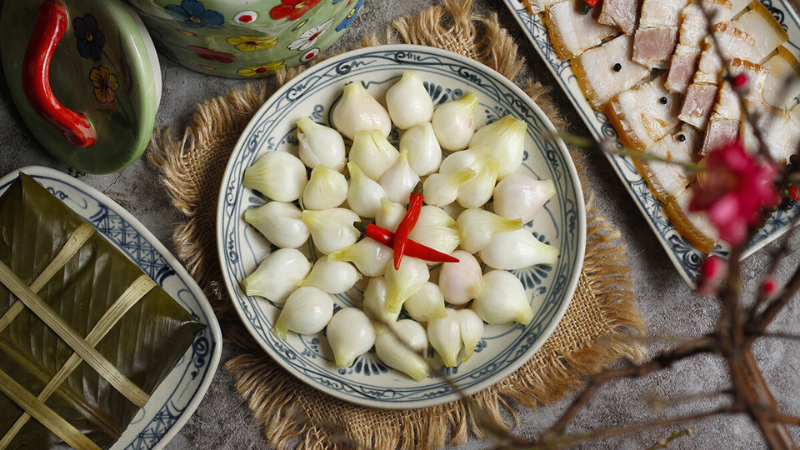
Marinated Shallots
- Cu Kiêu Muôi : Elaborated from the bulbs of Chinese chives, these condiments have a more pronounced flavor, slightly pungent and sweet. After fermentation, the bulbs become crispy and pair perfectly with dishes such as thịt kho or dried shrimp.
These two types of pickled vegetables enrich festive meals in flavor while promoting digestion through their natural fermentation. Their simplicity and freshness balance rich dishes, making them indispensable elements of Tết meals.
Gio Lua (Vietnamese Pork Mortadella)
An emblematic specialty of festive meals in Vietnam, this traditional delicacy is part of the must-try dishes of Tết in Vietnam. It is made from lean pork meat finely pounded, enhanced by seasoning based on high-quality fish sauce. Wrapped in banana leaves, then cooked in water, it reveals a compact and homogeneous consistency, sublimated by a delicate and herbaceous aroma.
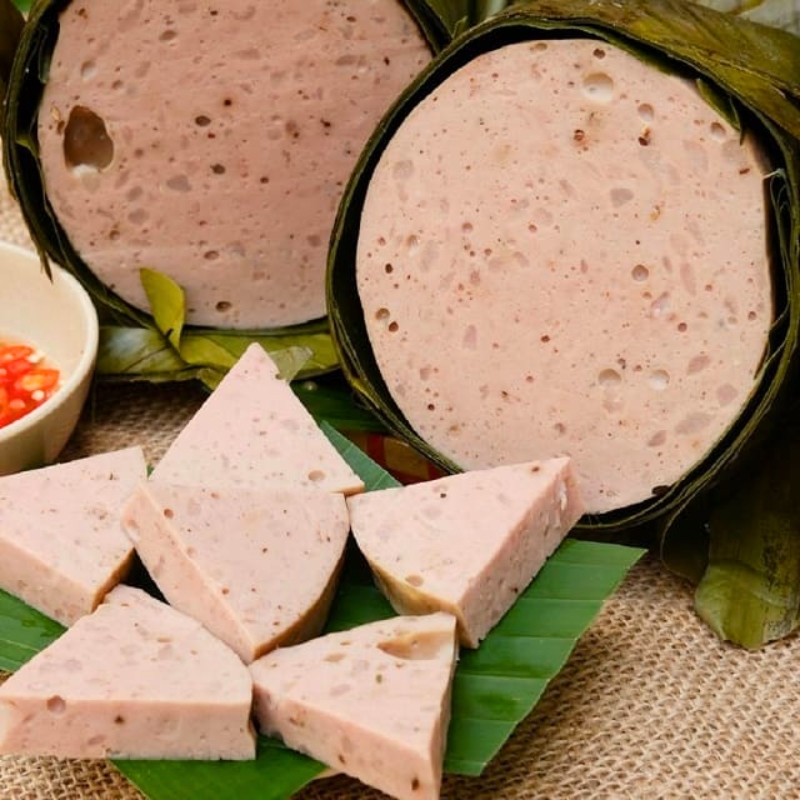
Gio Lua (Vietnamese Pork Mortadella)
Practical and versatile, it keeps easily and is served in thin slices, pairing harmoniously with dishes such as glutinous rice cakes (bánh dầy), white rice, or fragrant glutinous rice. Its balanced taste and simplicity make it an ideal accompaniment to attenuate the richness of Tết dishes. Representing authenticity and conviviality, this dish perfectly illustrates the art of Vietnamese cuisine, where tradition and refinement intertwine to celebrate precious moments with family.
Tết, far more than a simple celebration of the Lunar New Year, is a profound immersion into Vietnamese traditions and culture. Each meal shared with family becomes a true tribute to harmony and conviviality, where cuisine plays a central role. The carefully prepared dishes, in particular the must-try dishes of Tết in Vietnam, reflect not only culinary knowledge, but also values deeply rooted, such as gratitude, respect for ancestors, and hope for the year to come.
These dishes, carriers of symbolic meanings, translate a balance between simplicity and refinement, embodying the very essence of Tết. By savoring them, one does not merely taste unique flavors, but also participates in a vibrant celebration of Vietnamese identity and customs, enriched by generations of transmission and sharing.