+84 9 75 46 33 10 (Whatsapp)
  info@horizon-vietnamtravel.com
  Français
  Español
  Português
  Deutsch

Top 10 Tết Customs of Ethnic Minorities in Northwest Vietnam
Table of contents
Tết, or Lunar New Year, is far more than a simple celebration in Vietnam: it is a period steeped in renewal and spirituality, deeply rooted in the nation’s culture. While this festival marks a moment of family reunion and respect for traditions for all Vietnamese, it also reveals a unique facet through the Tết customs of Vietnam’s ethnic communities. Through singular rituals and ancestral practices, each community delicately expresses its own vision of Tết, revealing a mosaic of rich and authentic traditions. These customs, treasured and passed down through generations, reflect a profound bond with nature, a veneration for ancestors, and a spirituality rooted in centuries-old beliefs. This blog invites you on a journey into the heart of these fascinating traditions. Discover how the Tết customs of the ethnic minorities in Northwest Vietnam, with their unique cultural nuances, preserve a vibrant heritage—a true mirror of the nation’s soul. An immersion into a world of spirituality and humanity, where every detail unveils the richness and depth of Vietnamese identity.
Red Paper Decoration Among the Nung
During Tết, villages of the Nung people adorn themselves in brilliant red—a color imbued with profound meaning. Red paper, a symbol of joy and prosperity, also embodies yang energy, associated with light and the sun’s vitality. This tradition is not merely aesthetic; it is an act of gratitude toward farming tools, considered essential companions in agricultural life. Objects such as plows, hoes, or shovels, carefully cleaned and decorated with red paper, thus receive symbolic recognition for their contribution to harvests. This unique practice marks a pause in their use, offering them a “rest” during the festivities, just as farmers themselves rest.
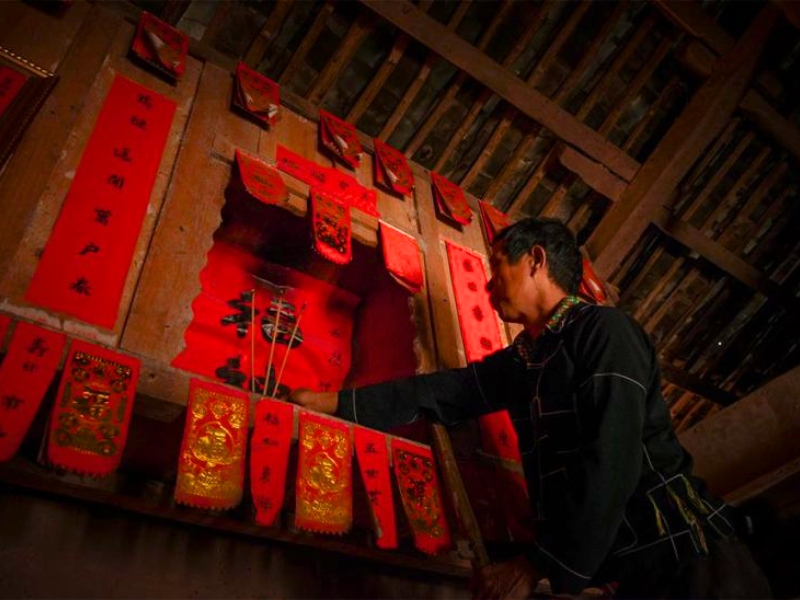
Red paper decoration among the Nung
On the last day of the lunar year, the Nung rise at dawn to adorn their homes and tools with motifs cut from red paper. These motifs often represent flowers, birds in flight, or swimming fish—symbols of prosperity and good fortune. Affixed to altars, doors, and tools, these decorations serve more than a symbolic function; they also reflect the craftsmanship and aesthetic sense of the owners. Through this gesture, families express the wish that the new year be marked by success, happiness, and abundant harvests.
Thus, this custom of the Nung people is part of a broader philosophy, in which every gesture, every symbol, serves to harmonize the energies of home and nature, ensuring a balance conducive to a prosperous year.
Tết of Dance Among the Dao
For the Dao people, Tết is far more than a simple New Year’s celebration. It is a period when spring, a symbol of renewal, invites inhabitants to celebrate life, rekindle bonds with loved ones, and exchange wishes of prosperity and happiness with one another. At the heart of these festivities lies Tết Nhảy, a traditional dance rich in meaning, which reflects the community’s aspirations for the year to come.
Tết Nhảy is a true demonstration of endurance and passion. The dancers, dressed in colorful traditional costumes, move with grace and vigor to the rhythm of drums and bells. They dance without pause, day and night, punctuating their performances with brief rest periods to gather strength before continuing the festivities with renewed enthusiasm. This demanding performance transcends mere artistry; it also physically prepares participants for the agricultural challenges of the year ahead, thus symbolizing harmony between spiritual preparation and physical effort.
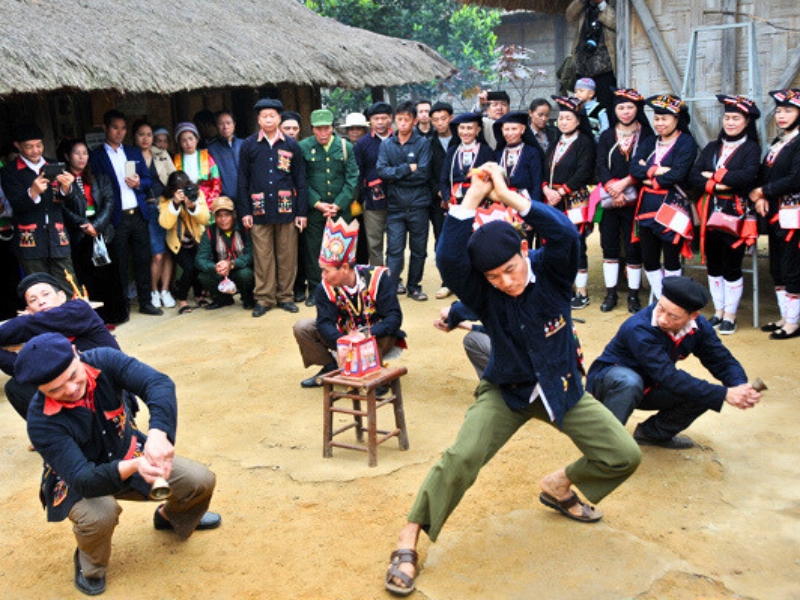
Tết dance among the Dao
Every gesture of the dancers, every resonance of drum or tinkle of bell, expresses profound gratitude toward nature and ancestors. The dances, performed in great numbers, translate the Dao people’s prayers for abundant harvests, fertile lands, and thriving herds. The vibrant rhythm of the instruments, the true heart of the celebrations, guides the dancers’ harmonious movements, illustrating the indissoluble bond between humanity and nature.
Tết Nhảy is a celebration that strengthens community bonds, keeps ancestral traditions alive, and passes on to future generations the values of gratitude, resilience, and harmony. This dance symbolizes for the Dao a way of welcoming the new year with hope and energy, while honoring the past and the richness of their culture.
Calling of Souls Among the Thai
Although Tết is celebrated in numerous cultures, among the Thai people it stands out for an extended festive season, stretching from the 25th day of the last lunar month to the 10th day of the first month of the year. During this period, traditions laden with meaning occupy a central place, particularly the ritual of calling souls, deeply rooted in their spirituality. The evenings of the 29th and 30th days of the last lunar month are marked by a unique ritual in which each family prepares two chickens: one is offered to ancestors as a sign of respect and gratitude, while the other is consecrated to the soul-calling ritual for family members. The shaman, a key figure in this practice, ties together the clothes belonging to each family member, which he carries on his shoulder. With a lit torch, he goes to the village entrance to invoke the souls several times, before returning to the base of the house’s ladder for a final call.

Before proceeding with the soul-calling ceremony, it is necessary to prepare in advance the clothes of each family member.
Once the ritual is complete, the shaman ties a black thread to the wrist of each family member to protect them from malevolent spirits. This thread, which must break naturally, symbolizes a barrier against negative energies. If the thread were to break prematurely, this would be interpreted as a sign of fragility or illness. On the night of the 30th day, families also make offerings composed of meats, sweets, artisanal fabrics, and silver objects, and those who own gongs or bells sound them in front of their homes to greet the arrival of the new year. The custom of “Pông Chay,” practiced on New Year’s Eve, further strengthens family and community bonds. Gathered around the fire, family members spend the night awake, sharing dishes prepared together or simply conversing to mark the importance of this sacred transition. Lamps remain lit and incense, a symbol of continuity and protection, burns without interruption. At regular intervals, the head of the family strikes a gong three times to announce the approach of midnight.
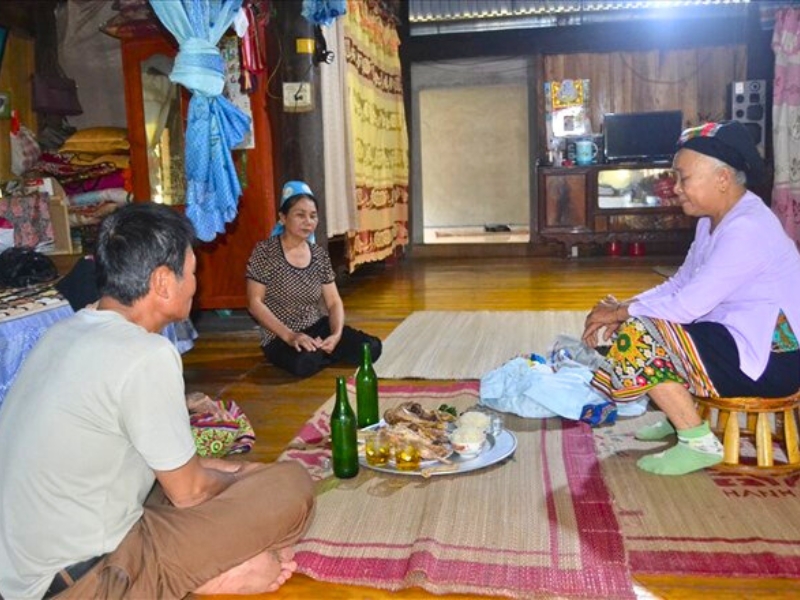
Calling of souls among the Thai
As the new year arrives, traditional dishes such as cakes, sticky rice, dried fish, green tea, trays of betel nuts, and garments of artisanal fabrics are carefully arranged on the family altar. In a posture imbued with respect and dignity, the head of the family recites a prayer to invite ancestors to join in this moment of reunion and renewal.
On the morning of the first day of the year, families make their way to the river to collect fresh water, a symbol of purity and good fortune for the year to come. In the afternoon, all family members, from the youngest to the oldest, wash their hair to purify themselves, symbolically casting off the worries and misfortunes of the past year, and welcoming with hope the blessings of the new year.
This ritual of calling souls, together with the traditions that accompany it, reflects the intimate bond of the Thai people with their ancestors, their community, and nature. These practices, infused with spirituality and gratitude, allow for the preservation and transmission of essential values of harmony, respect, and renewal, paving the way for a year blessed with the finest auspices.
Worship of the Water Bowl and Fire-Jumping Festival of the Pà Thẻn
A unique tradition of the Pà Thẻn people centers on the worship of a bowl of clear water, a central element of their family altar. This bowl, always full and covered, is dedicated to worship throughout the year. If its water level decreases, the head of the family waits until June to open it and refill it anew, following a precise ritual. On New Year’s Eve, all doors of the house are sealed tightly and openings carefully obstructed. The water from the bowl is then used by the head of the family to purify the altar before being replaced with fresh water, symbolizing a renewal for the year to come. These gestures are performed in utmost secrecy: if observed by others, this would be perceived as a bad omen, harbinger of misfortune for the family in the following year.
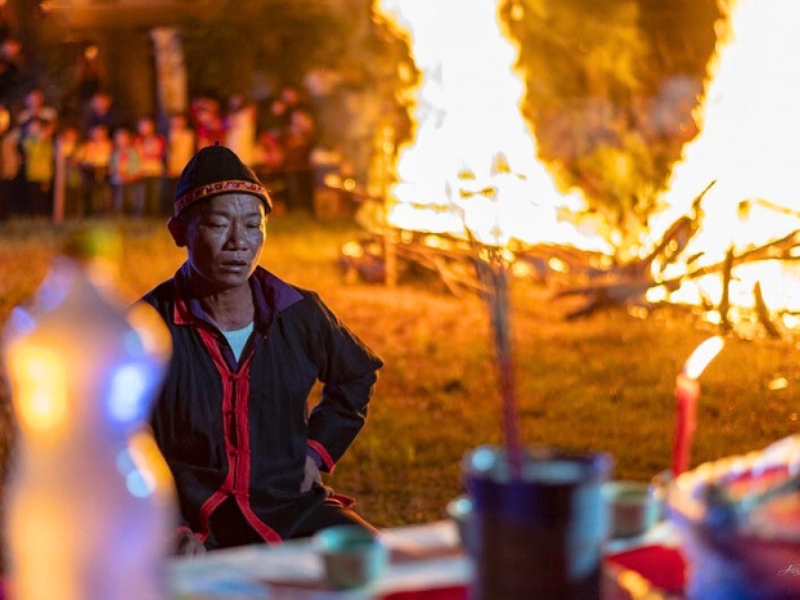
The Pà Thẻn have the custom of worshipping a bowl of clear water
Alongside this practice, the Pà Thẻn celebrate the spectacular fire-jumping festival, organized at the end of the year, when winter reaches its peak. In a large courtyard, a circle forms around an enormous blazing fire at the center. The rhythmic drums, struck by the master shaman, resound ever faster, intensifying the ritual atmosphere.
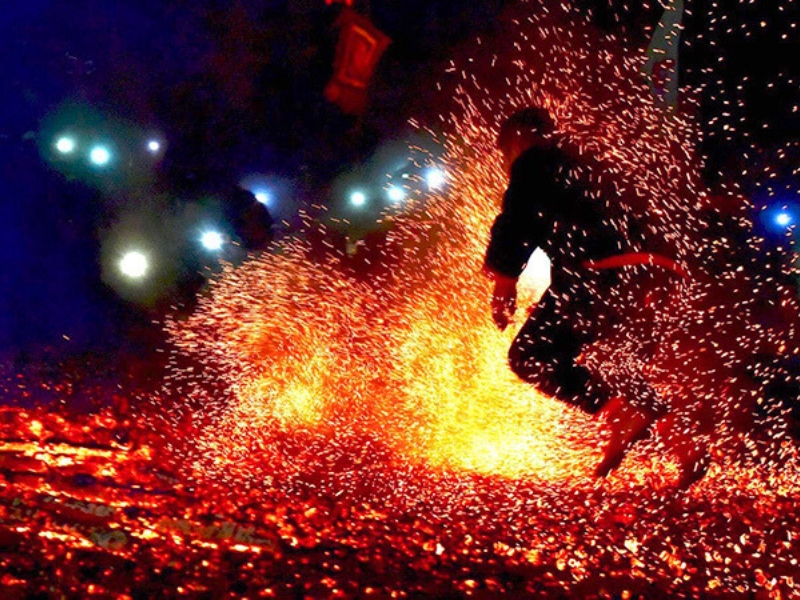
Fire-jumping festival of the Pà Thẻn
At the heart of the Tết customs of Vietnam’s ethnic groups, the fire ceremony of the Pà Thẻn embodies a tradition of rare spiritual intensity. During this awe-inspiring rite, young men, guided by the shaman, take their place on a long bench. Within moments, their bodies enter a trance, tremble and leap with surprising energy, their feet leaving the ground in unison. Another participant then crosses the courtyard, gathers glowing embers and brings them to his mouth, before casting himself into the flames, becoming the living incarnation of the sacred bond between humanity and fire.
The participants, carefully chosen from among the most respected members of the community, appear invulnerable, despite direct contact with the embers. This spectacular rite, emblematic of Tết celebrations among the Pà Thẻn, brings villagers together in an outpouring of faith and communion. It illustrates the spiritual strength, resilience, and profound harmony that this ethnic group maintains with the elements and the invisible world.
“Stealing the Rooster’s Voice” Among the Pu Péo
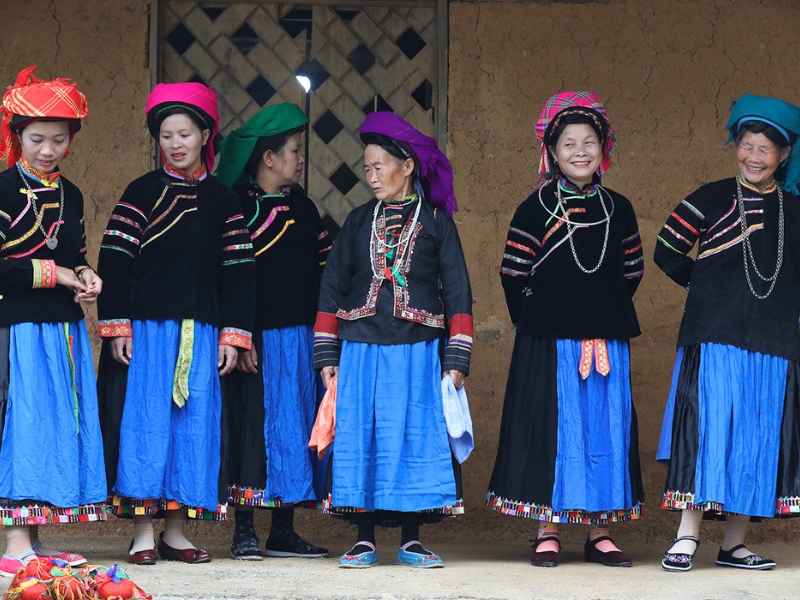
The Pu Péo
Among the Tết customs of Vietnam’s ethnic groups, the “stealing the rooster’s voice” tradition of the Pu Péo stands out for its originality and symbolic significance. This ethnic group, settled in the mountains of Hà Giang, celebrates the New Year by paying particular attention to the rooster’s first crowing. The moment a rooster flaps its wings to announce the dawn, a firecracker is set off in the poultry yard. Startled, the roosters begin to crow loudly—and it is at that precise moment that the villagers, in unison, intone powerful songs to cover and symbolically “steal” their voice. This singular rite aims to seize the energy of renewal, welcoming the new year with strength, harmony, and vitality.
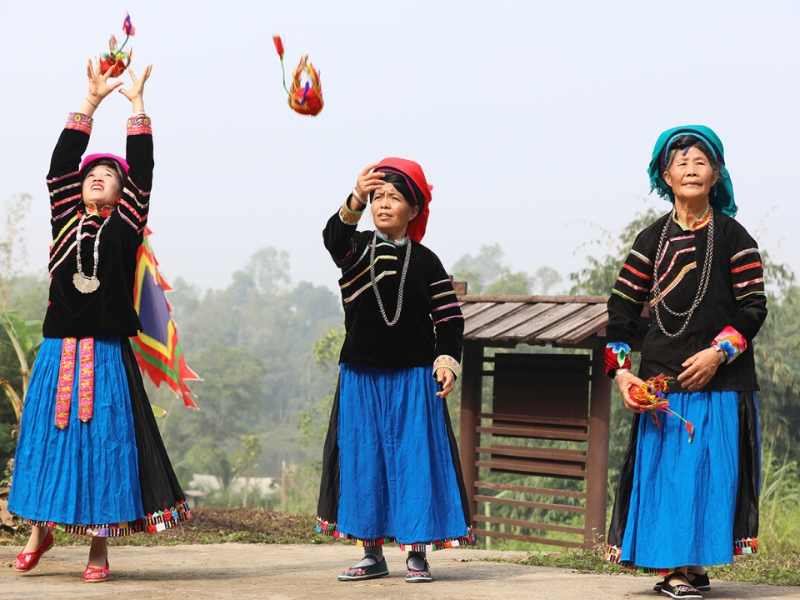
The rooster’s crow holds profoundly symbolic meaning for the Pu Péo, representing a sacred call to awaken the sun. During New Year’s celebrations, overpowering the roosters’ voices with one’s own song is seen as a sign of blessing, revealing an uncommon vocal talent and promising a year filled with happiness and prosperity. This tradition, in which play and spirituality intermingle, delicately illustrates the harmony between faith and joy that characterizes Tết among Vietnam’s ethnic minorities for the Pu Péo.
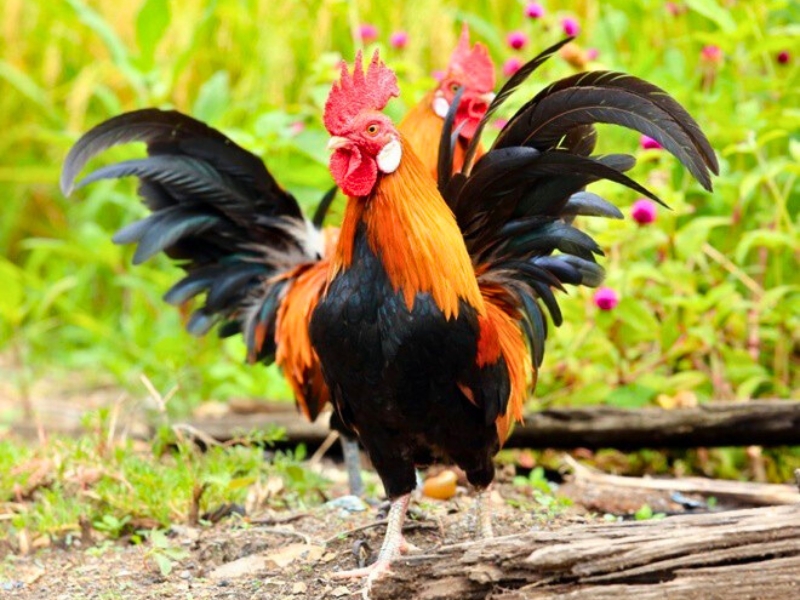
Stealing the rooster’s voice among the Pu Péo
Calling the Buffaloes to Celebrate Tết Among the Muong
Among the numerous ethnic groups of Vietnam, the Muong people celebrate Tết Nguyên Đán with unique traditions that reflect their cultural identity.
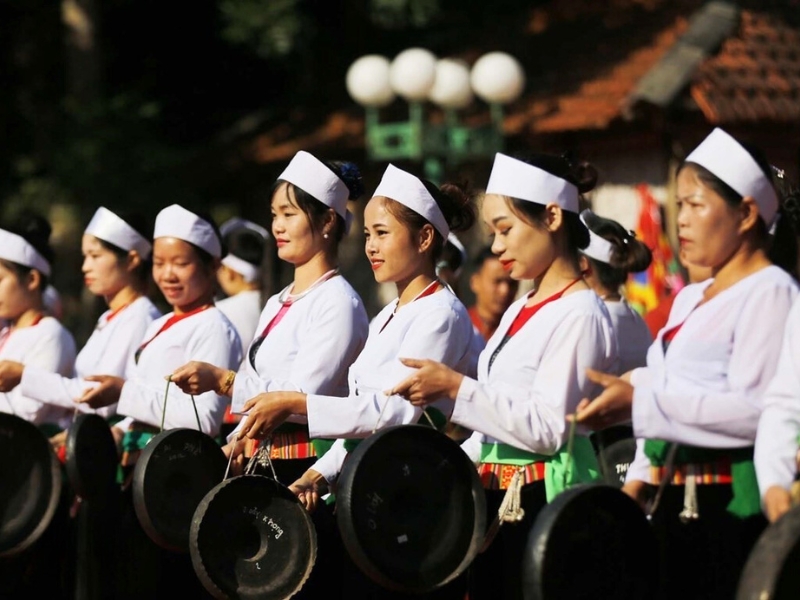
A few days before Tết, the Muong of Hoa Binh craft wooden bells for a singular ritual: calling the spirits of the buffaloes on the eve of the New Year. By torchlight, they perform this symbolic gesture to express their gratitude toward these faithful animals, who have supported their families in agricultural work during the past year.
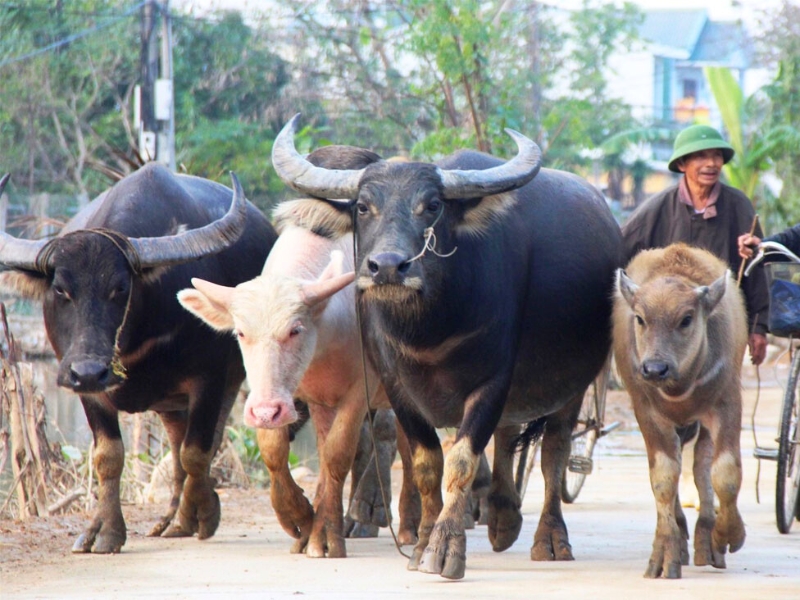
Calling the buffaloes to celebrate Tết among the Muong
They also hang tube-shaped sweets on agricultural tools such as plows, harrows, and carrying poles, as an invitation to their “working companions” to join in the festivities and share Tết’s blessings. According to their belief, buffaloes and tools alike deserve a well-earned rest after a year of hard labor in the fields.
Divination of Pork Liver Among the Hà Nhì
Among the Tết customs of Vietnam’s ethnic minorities, the divination of pork liver among the Hà Nhì illustrates the sacred bond between ancestral rites and spirituality. Settled primarily in the provinces of the Northwest such as Hà Giang, Cao Bang, Lao Cai, or Son La, the Hà Nhì honor their ancestors during Tết by sacrificing a pig—an essential ritual, regardless of the family’s standard of living. Whether prosperous or modest, every household prepares the pig for offerings, a gesture of profound respect and family cohesion, in which the liver, examined carefully, serves to predict the fortune of the year to come.
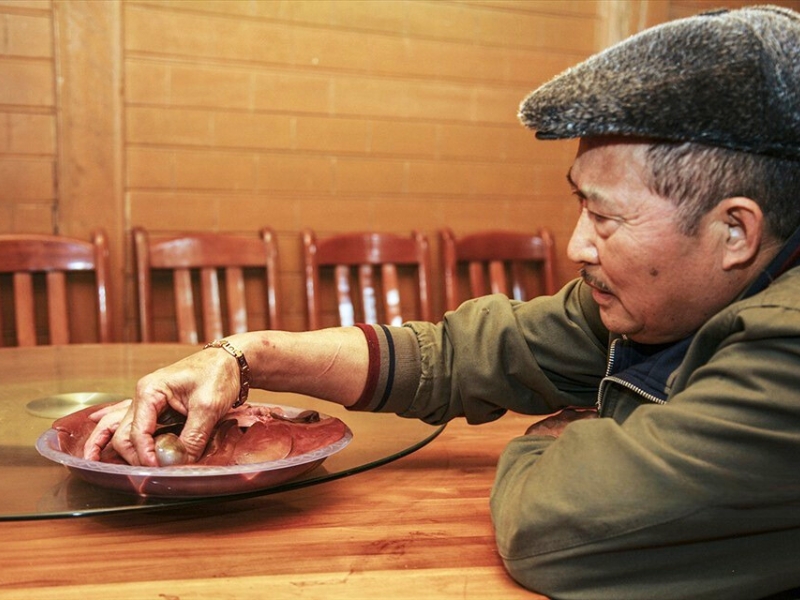
Divination of pork liver among the Hà Nhì
In the context of Tết among Vietnam’s ethnic minorities, the sacrificial pigs occupy a central place in the traditions of the Hà Nhì. These pigs, generally neutered males raised specifically for the occasion, vary in size according to the means of the families: more prosperous ones opt for animals weighing 60 to 150 kg, while modest families settle for pigs weighing 40 to 50 kg. After slaughter, the pig’s liver plays an essential role in divination. The Hà Nhì examine this organ meticulously to predict the fortune of the year to come. A healthy liver, with vivid colors and well-infused with fat, is perceived as a sign of agricultural prosperity, abundant harvests, and family harmony, illustrating the importance of Tết rituals among Vietnam’s ethnic minorities.
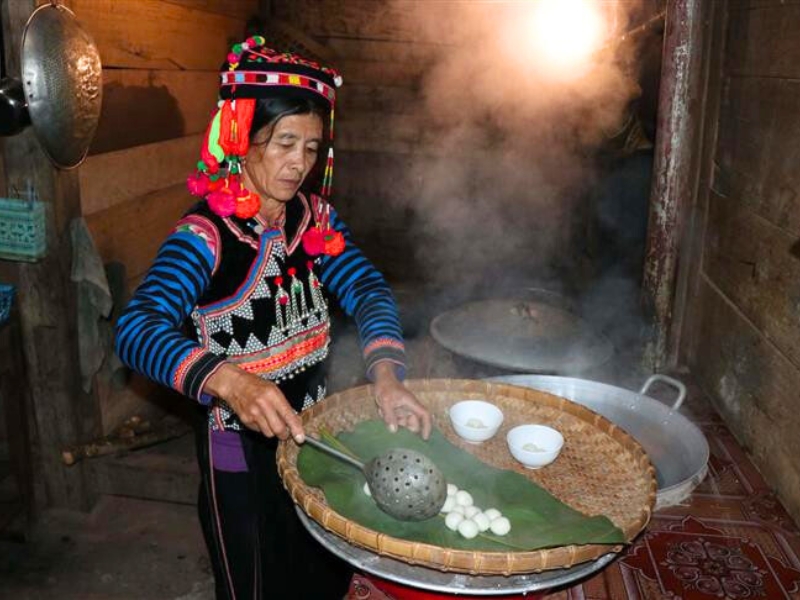
The Hà Nhì honor their ancestors with homemade traditional cakes
Beyond divination, the Hà Nhì prepare traditional sweets specifically for offerings to their ancestors. These sweets symbolize gratitude and respect toward the ancestors, thus strengthening the family and spiritual bonds essential for welcoming the new year with serenity and hope.
Stealing Good Fortune Among the Lô Lô
The Lô Lô, an ethnic minority settled primarily in Hà Giang Province, enrich the Tết customs of Vietnam’s ethnic groups with a tradition as surprising as it is symbolic. They believe that bringing something home as New Year approaches attracts luck and prosperity for the year to come. To make this belief concrete, they practice a singular ritual: “stealing” a portion of good fortune by taking a small object of little value, solely to ward off bad luck and invite good fortune.
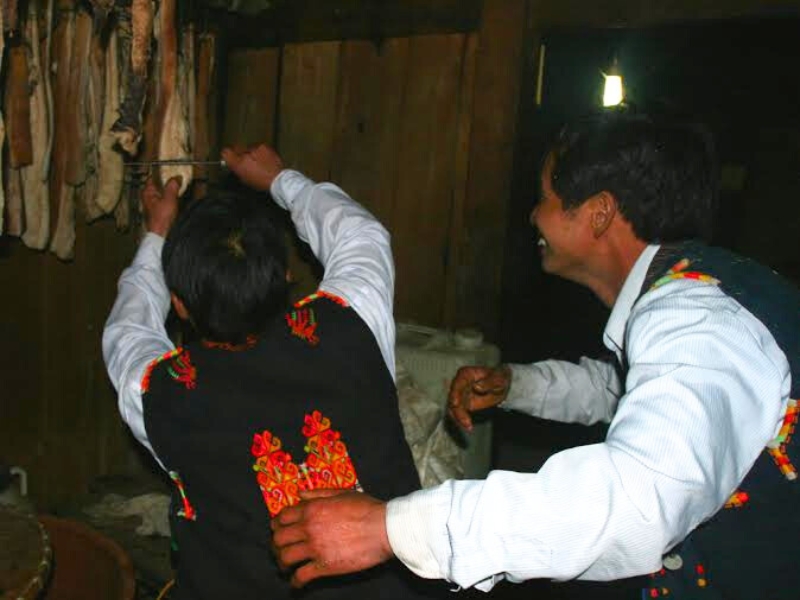
Stealing good fortune among the Lô Lô
In Đong Van district, the Lô Lô have the habit of stealing twelve objects, symbolizing the twelve months of the year. In Meo Vac, another region inhabited by the Lô Lô, the lucky number is three, which leads them to steal three garlic cloves or three vegetable leaves. It is interesting to note that these acts of theft occur silently during New Year’s Eve, to avoid being discovered by the owners. This practice reflects the deep belief of the Lô Lô in luck and prosperity for the year to come, while respecting strict boundaries and preserving harmony within the community.
“Hip Touch” Among the H’Mông
The H’Mông people of the mountains in northern Vietnam celebrate Tết with a wealth of customs and great cultural diversity. During the first days of the year, large festivities are organized in spacious areas, where villagers devote themselves to traditional games such as tug-of-war, stick fighting, dancing to the sound of the khèn (bamboo pan pipes), and duo singing competitions.
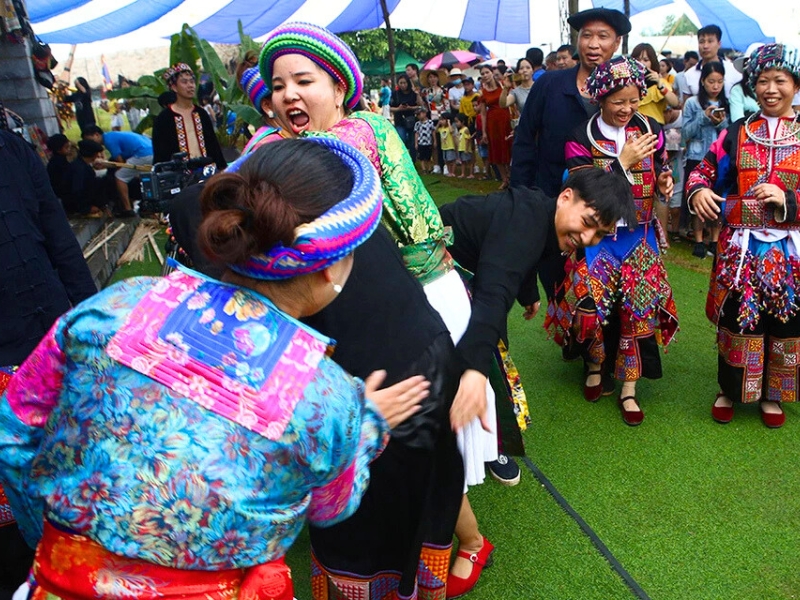
Hip touch among the H’Mông
Among the vibrantly colored traditions of Tết among Vietnam’s ethnic minorities, the “hip touch” stands out as a singular way for young H’Mông to express their romantic feelings. During Tët festivities, young men and young women gather at the foot of the mountains to enjoy the celebrations and spring atmosphere. If a young man feels affection for a girl, he gently touches her hips to signal his interest—a subtle but meaningful gesture, considered a “love signal.”
If the girl reciprocates the feelings, she accepts this gesture with benevolence, and the couple then steps away to exchange confidences in intimacy, often until dawn. This unique custom, at the heart of Tết celebrations among Vietnam’s ethnic minorities, illustrates the simplicity and poetry of romantic relationships in H’Mông culture, where emotions are expressed with delicacy and authenticity.
Hair-Washing Festival Among the White Thai
In northern Vietnam, among the White Thai people, the end of the lunar year does not conclude without a ritual imbued with symbolism and serenity: the hair-washing festival. From noon on the last day of the year, the entire community gathers along the rivers—a sacred place where nature and spirits converge. Village chiefs, elders, adults, and children make their way there together, in an atmosphere both joyous and reverent, to perform a gesture simple in appearance, yet laden with meaning.
With the help of bowls of rice water carefully fermented the evening before to obtain a slight acidity, each person gently washes their hair. This is not merely a hygienic care routine, but an act of purification meant to erase worries, misfortunes, and negative energies accumulated over the months. Allowing the water to flow slowly over their head, the participants silently formulate wishes: that the new year be pure, serene, full of health, prosperity, and harmony.
This ritual, passed down through generations, embodies the soul of the White Thai people: a people deeply connected to nature, respectful of the cycle of seasons and the invisible forces that accompany them. In the silence of the gesture, beneath the murmur of the river, an entire community turns together toward the future, with hope and dignity.
The unique customs of Tết among Vietnam’s ethnic minorities reflect exceptional cultural and spiritual wealth. Each ritual, whether calling the spirits of buffaloes, dancing around flames, or sealing love with a woven scarf, embodies the profound values of gratitude, harmony, and community bond. These traditions, rooted in centuries of heritage, are not merely festive celebrations, but living expressions of the identity and diversity of the peoples that make up Vietnam. Through these practices, these communities preserve their legacy while offering future generations a window into the timeless beauty of their cultures.