+84 9 75 46 33 10 (Whatsapp)
  info@horizon-vietnamtravel.com
  Français
  Español
  Português
  Deutsch

Top 10 Vietnamese Typical and Exotic Vegetables to Discover
Table of contents
Vietnamese cuisine fascinates with its balanced flavors, fragrant herbs, and iconic dishes like Pho or Banh mi Saigon. But behind these great classics lies a rich and surprising plant universe. From soups to salads, the Vietnamese know how to enhance vegetables sometimes little known in Europe, which bring freshness, originality, and authenticity to daily meals. In this article, we invite you to discover the Top 10 Vietnamese typical and exotic vegetables, true treasures of Saigon cuisine and Vietnam. A delicious immersion into the heart of a gastronomy where every leaf, flower, or stem tells a story of land and tradition.
1. Rau muong (Water Spinach)
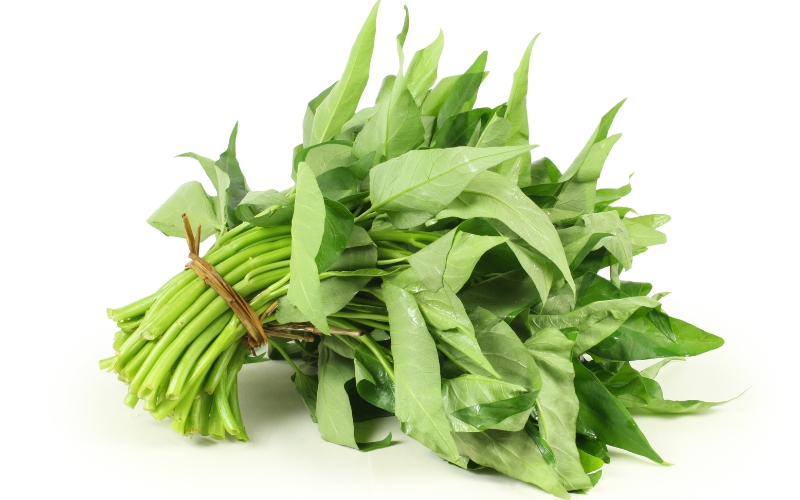
Rau muong (Water Spinach), emblematic vegetable of Vietnamese cuisine.
Rau muong, known as water spinach, is undoubtedly the most popular vegetable in Vietnam and an essential element of Saigon cuisine as well as all regions of the country. Cultivated in fields and sometimes even in canals, this vegetable with a hollow stem and elongated leaves is appreciated for its crispy texture and herbaceous freshness. In Vietnamese families it accompanies almost every meal in different forms: stir-fried with garlic for a savory and fragrant dish, boiled and then dipped in fish sauce for a simple and rustic version, or cooked in a light soup with dried shrimp or crab for a sweet and nourishing broth.
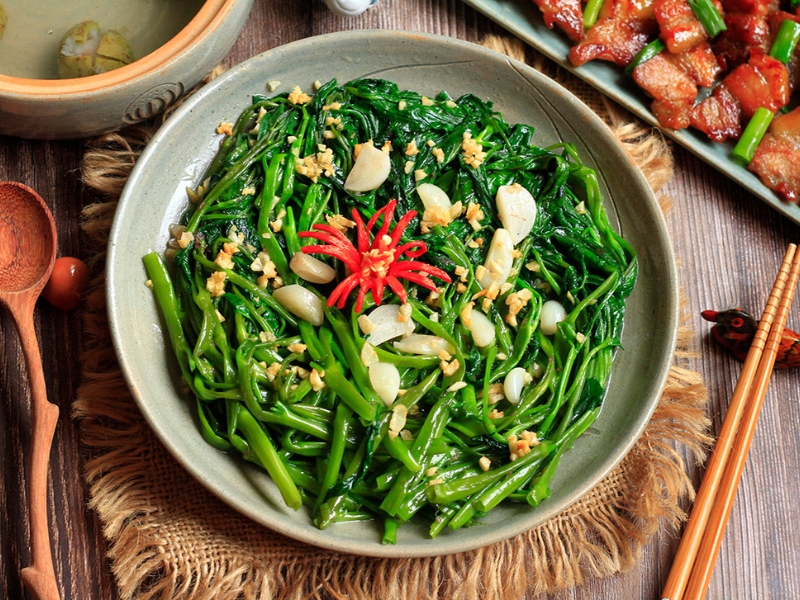
Water spinach stir-fried with garlic, a great classic of Vietnamese cuisine
Among the most emblematic recipes, the dish of razor clams stir-fried with water spinach (óc móng tay xào rau muống) occupies a prominent place in Saigon cuisine. This dish combines the tender briny quality of mollusks with the crispy freshness of rau muong, enhanced by garlic and fish sauce, offering a combination of flavors that is both simple and refined.
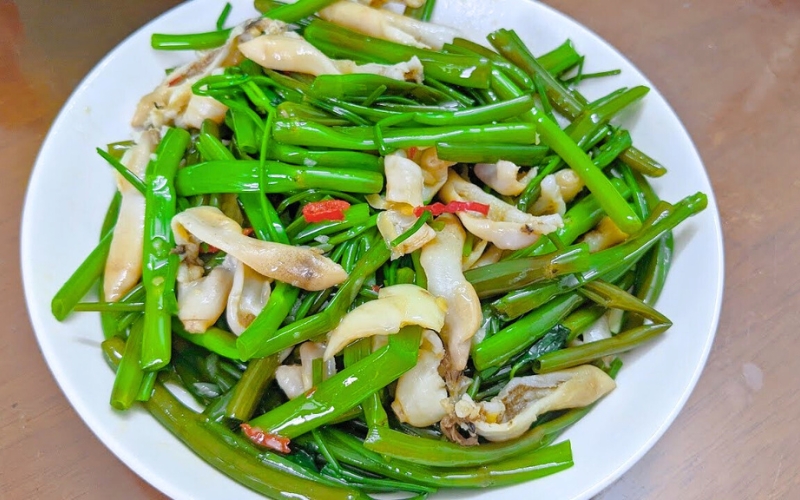
Razor clams stir-fried with water spinach – a delicious classic of Saigon cuisine
Easy to prepare, inexpensive yet particularly rich in vitamins and minerals, rau muong embodies the spirit of Vietnamese gastronomy by itself: a local cuisine, accessible and balanced, where the authenticity of flavors prevails.
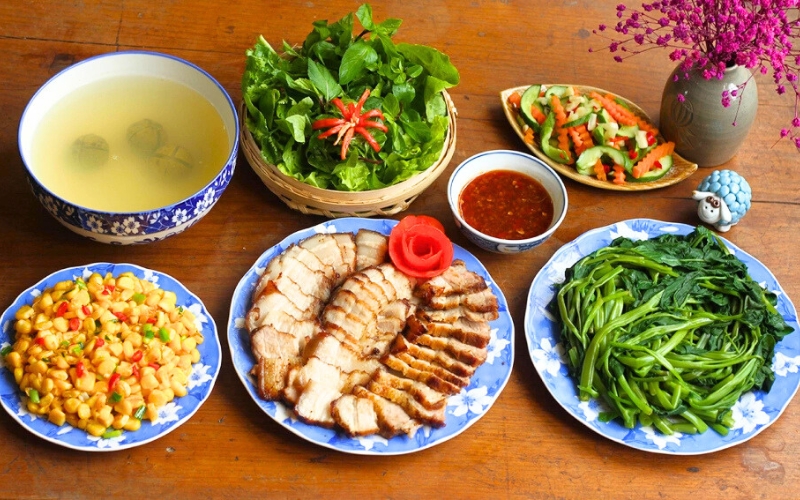
Water spinach boiled and its water perfumed with dracontomelon fruit: a modest dish but full of nostalgia
For many Vietnamese, this vegetable evokes a true memory of childhood and conviviality, recalling family meals shared around simple but full-of-character dishes. For the curious traveler, rau muong remains an essential culinary discovery, an ambassador of the richness and diversity of Vietnamese typical and exotic vegetables.
2. Rau lang (Sweet Potato Leaves)
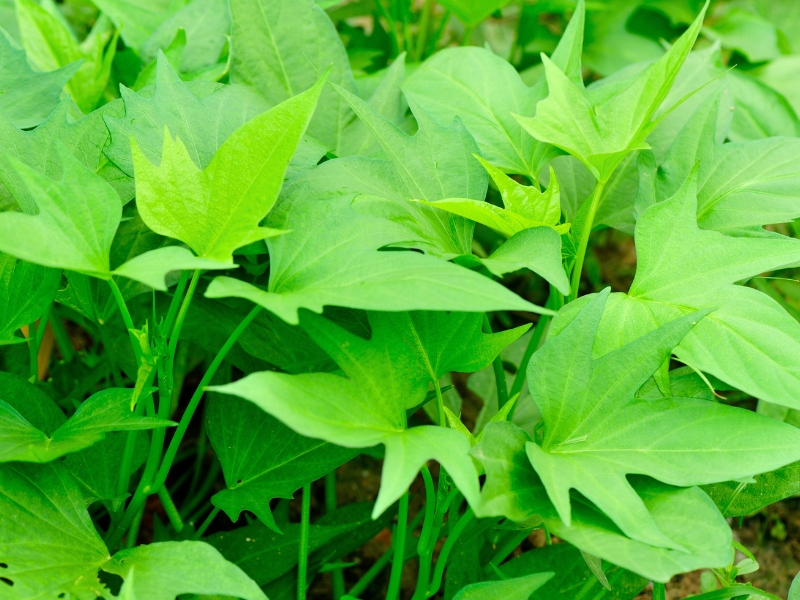
Rau khoai lang (Sweet Potato Leaves), a simple and nutritious vegetable of Vietnamese cuisine
In Vietnam, rau lang, or sweet potato leaves, occupies a special place in family cuisine. While the tuber is widely known and consumed throughout the world, the Vietnamese have long learned to value its leaves as well, which rank among the most nutritious Vietnamese vegetables, rich in fiber, iron, and vitamins A and C, with a sweet and slightly earthy taste.
Very popular in daily meals, sweet potato leaves are prepared in many ways. They are found stir-fried with garlic (rau lang xao toi) as a simple but fragrant side dish, boiled and then served with fish sauce for a rustic version, or cooked in a light soup (canh rau lang), sometimes with dried shrimp or crab. Like other Vietnamese vegetables, they can also be used in salad, enriched with onions and a sweet and sour sauce, bringing freshness and authenticity to meals.
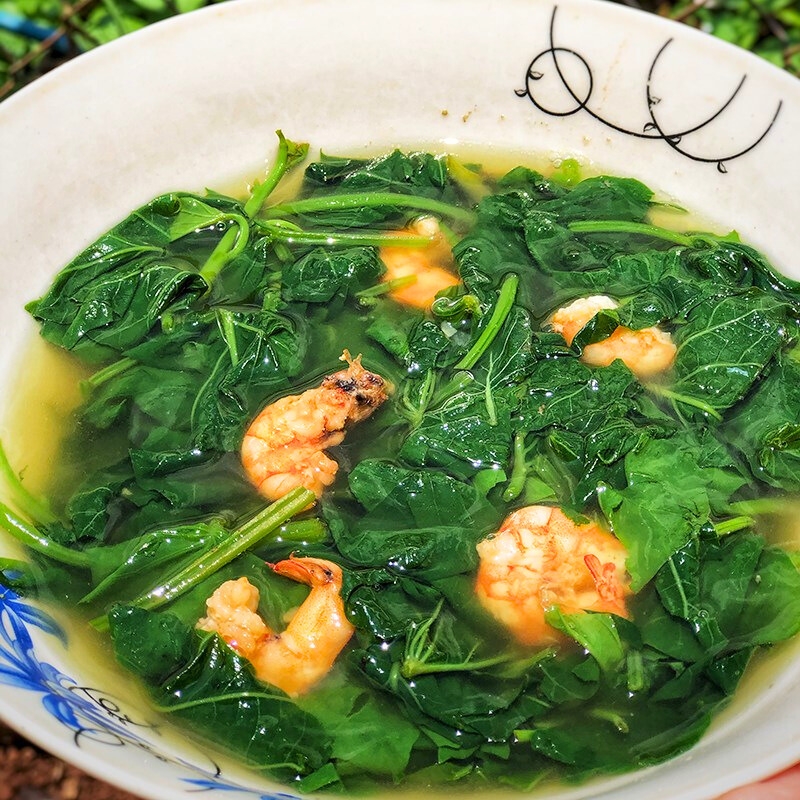
Sweet potato leaf soup, simple and authentic freshness of Vietnamese cuisine
A modest and economical dish, rau lang perfectly illustrates the spirit of Vietnamese cuisine: drawing the best from simple products, respecting their freshness and authenticity. For many Vietnamese, enjoying a dish of sweet potato leaves evokes the nostalgia of family meals, a tender childhood memory marked by conviviality around daily dishes.
3. Muop (Luffa Squash)
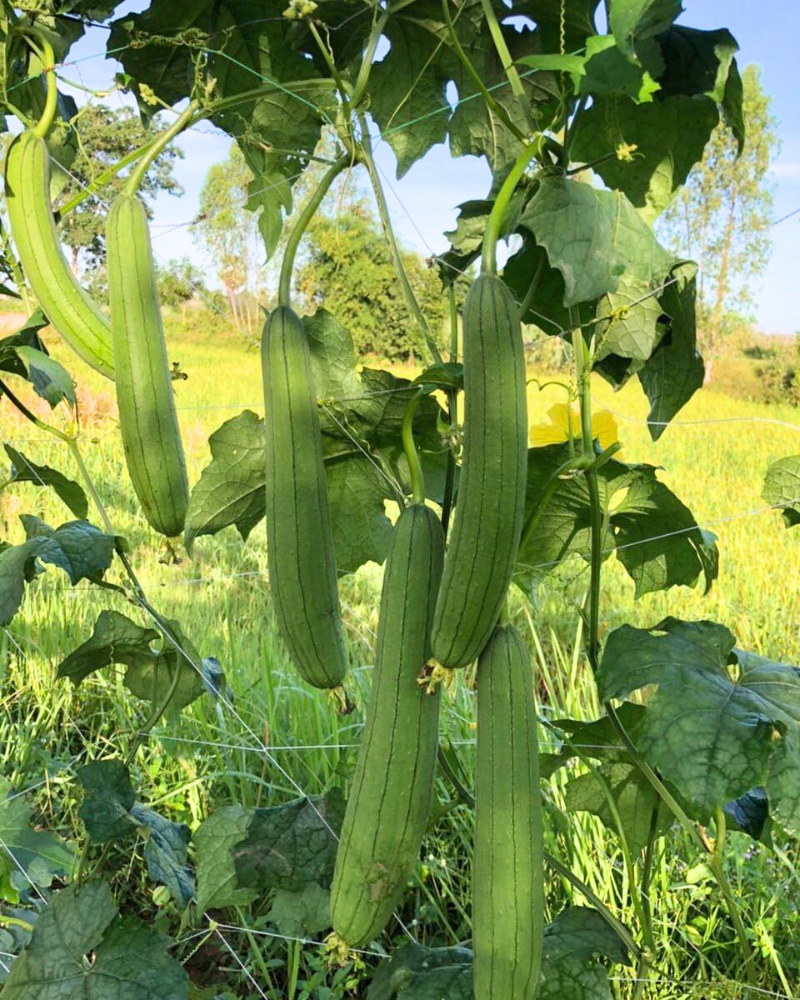
Muop (Luffa Squash)
Muop, known as luffa squash or luffa gourd, is a vegetable highly appreciated in Vietnamese cuisine. Harvested young, it has tender, slightly sweet and spongy flesh that wonderfully absorbs the flavors of garlic, spring onion, or fish sauce, making every dish fragrant and savory.
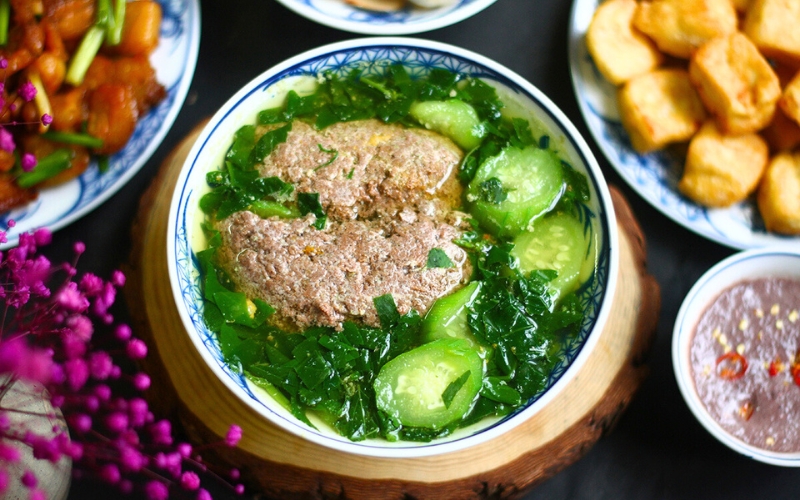
Luffa squash brings a unique sweetness to crab and Malabar spinach soup
In Vietnam, muop is used mainly in light soups (canh muop), often paired with dried shrimp or crab for a rich and delicate broth. It can also be stir-fried with garlic, sometimes accompanied by rice vermicelli, for a simple but nourishing dish. In some families, it is cooked with beaten eggs, creating a sweet and balanced preparation, ideal for a daily meal.
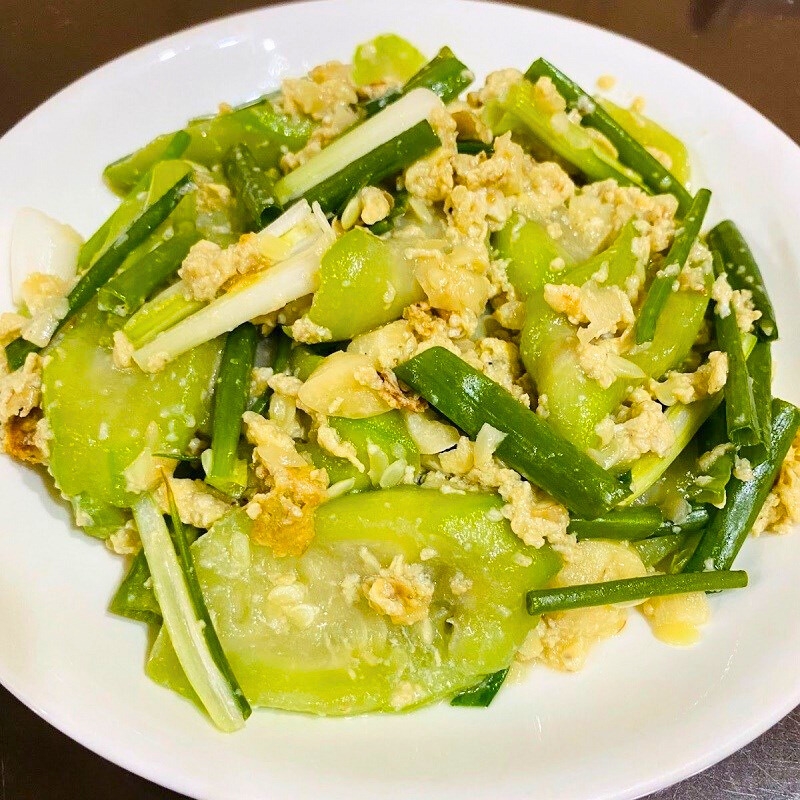
A modest but delicious dish: Vietnamese luffa squash stir-fried with eggs
Inexpensive, rich in fiber and vitamins, luffa squash embodies the philosophy of Vietnamese cuisine: simplicity, balance, and respect for the natural flavor of ingredients. For many, it recalls the conviviality of home meals and the freshness of seasonal vegetables.
4. Muop dang (Bitter Melon)
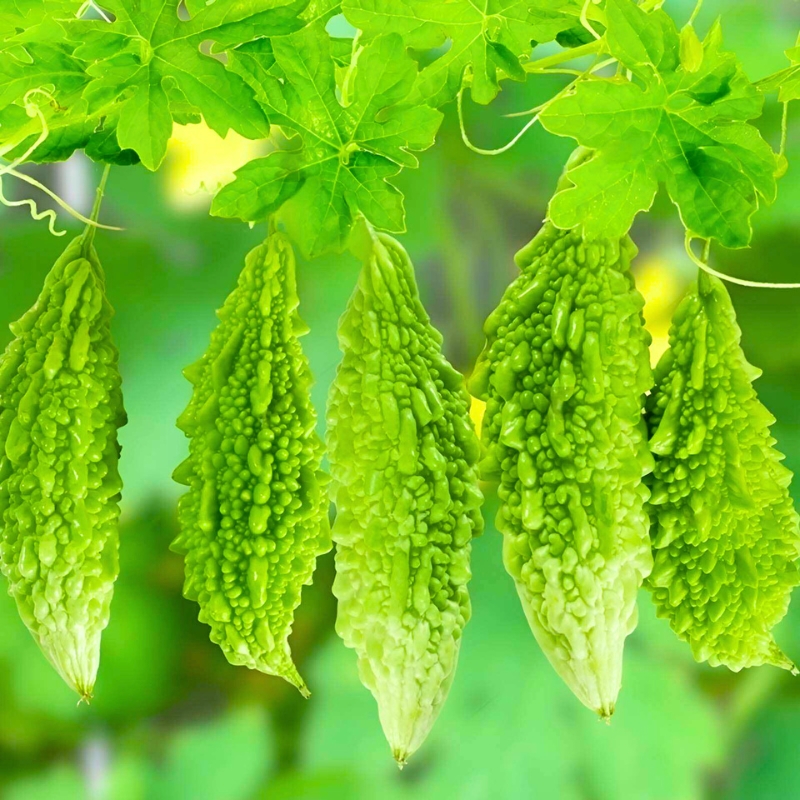
Muop dang – bitter melon, a vegetable with a unique taste of Vietnamese cuisine
Bitter melon, called muop dang or kho qua in Vietnamese, is a vegetable well known for its characteristic flavor: a pronounced bitterness but much appreciated. This peculiarity makes it an essential ingredient in Vietnamese cuisine, valued both for taste and its health benefits.
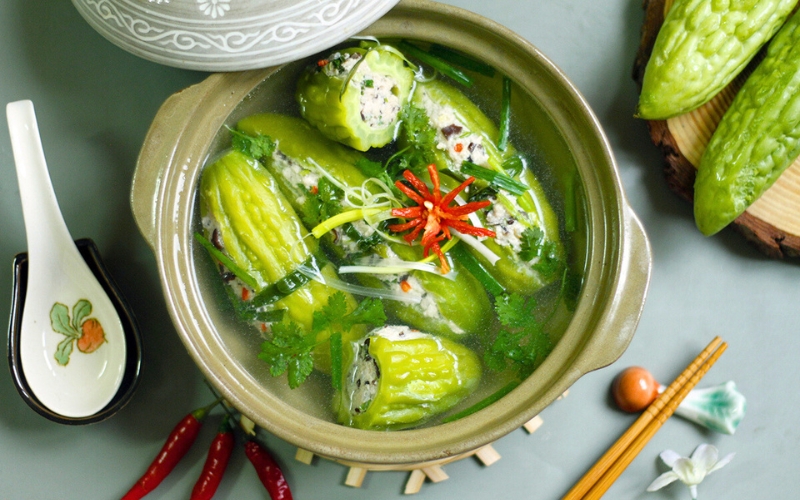
Bitter melon stuffed with meat, a family dish that is both nourishing and symbolic
Among the most popular dishes is kho qua nhoi thit (bitter melon stuffed with minced pork and mushrooms), often consumed during Têt to symbolize resilience and good fortune in the new year. Like many Vietnamese vegetables, bitter melon lends itself to various preparations: it is found in clear soups like canh kho qua, where its refreshing bitterness balances with a light and nourishing broth. In some regions, it is also stir-fried with garlic or cooked with eggs, to sweeten its flavor while maintaining its unique character.
From a nutritional standpoint, bitter melon stands out among Vietnamese vegetables for its richness in fiber, vitamin C, and antioxidants. Traditionally, it is renowned for helping regulate blood sugar and purify the body, reinforcing its status as both a culinary and medicinal food.
5. Bap chuoi (Banana Flower)
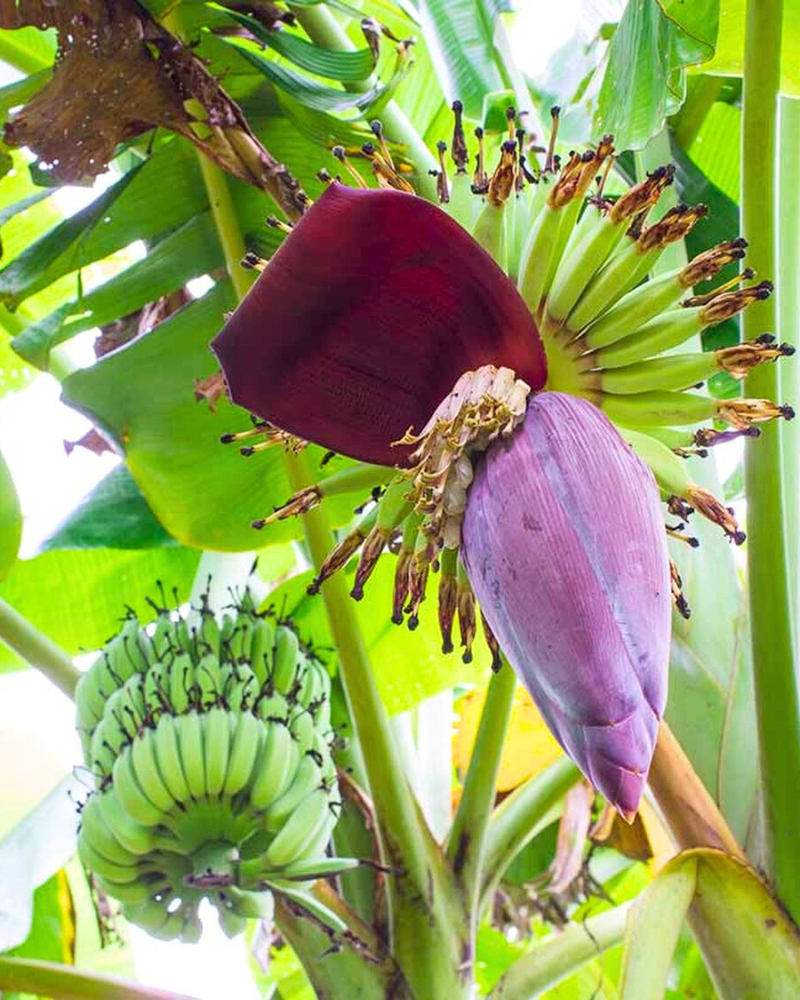
Bap chuoi (Banana Flower)
Banana flower, called bap chuoi in Vietnamese, is a key ingredient in traditional cuisine. Easy to recognize with its large purple bracts and tender hearts, it is sliced into thin strips to offer a crispy texture and a light astringency that perfectly balance Vietnamese dishes.
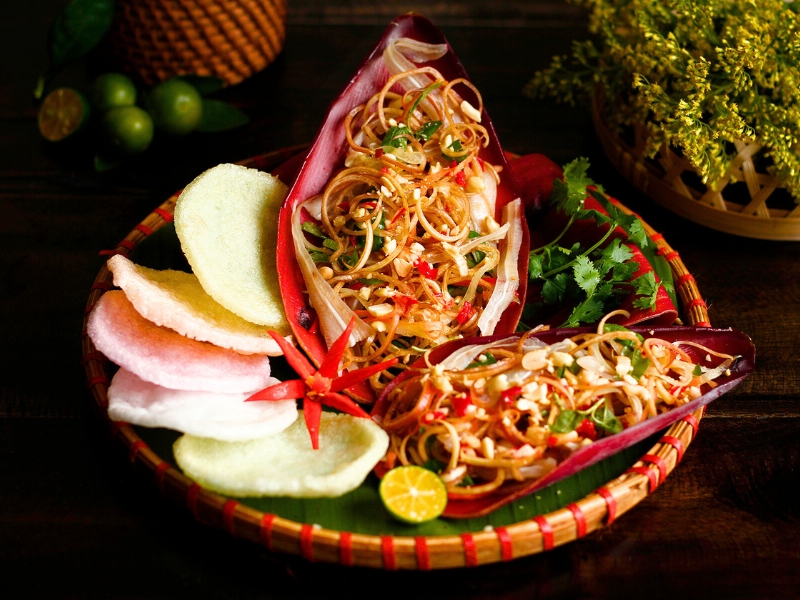
Goi hoa chuoi – Banana flower salad, crispy freshness and typical Vietnamese flavor
It is found mainly in salads (goi bap chuoi), where it is mixed with aromatic herbs, shredded chicken or grilled pork, all enhanced by a sweet and sour fish sauce. Its freshness and crispiness make it a particularly appreciated dish during family or festive meals. Banana flower is also used in emblematic soups like Bun bo Hue, where it adds flavor and texture.
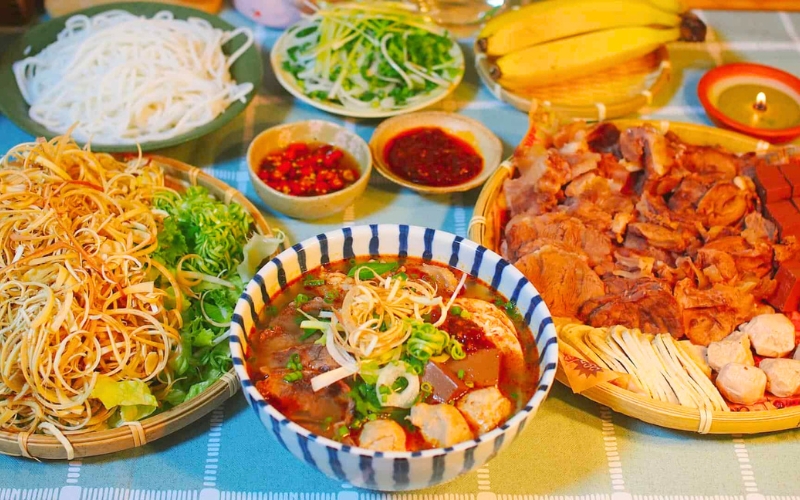
Bun Bo Hue – Spicy soup from central Vietnam, served with crispy banana flowers
Low in calories but rich in fiber, banana flower reflects the balance sought in Vietnamese cuisine: simplicity, harmony, and appreciation of every part of the plant. For travelers, discovering banana flower means enjoying an ingredient that is both typical and exotic, which reveals all the originality and richness of Vietnamese vegetables.
6. Mong toi (Malabar Spinach)
Mong toi, known as Malabar spinach, is a climbing tropical plant widely distributed in Vietnam. Its thick leaves, dark green and slightly mucilaginous, offer a unique texture that can surprise travelers, but which remains much appreciated in Vietnamese family cuisine.
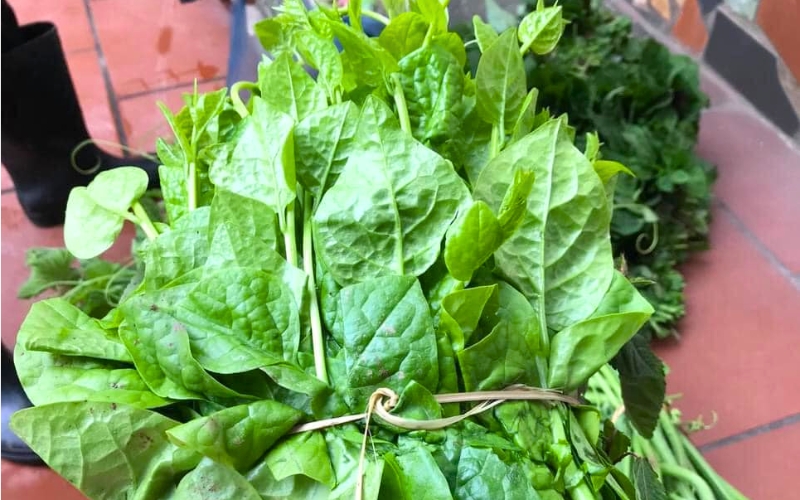
Mong toi, Malabar spinach, a classic of Vietnamese soups and stir-fried dishes
Traditionally, mong toi is cooked in clear and refreshing soups, ideal for hot days. The emblematic dish remains canh cua rau day mong toi muop, a crab soup that combines jute leaves, basella, and luffa squash, particularly popular in North Vietnam. Like other Vietnamese vegetables, basella can also be simply boiled and served with fish sauce (nuoc mam), in the pure tradition of daily meals. In other variants, it is stir-fried with garlic (mong toi xao toi) or incorporated into noodle broths, where it adds a soft and slightly viscous texture, typical of this vegetable.
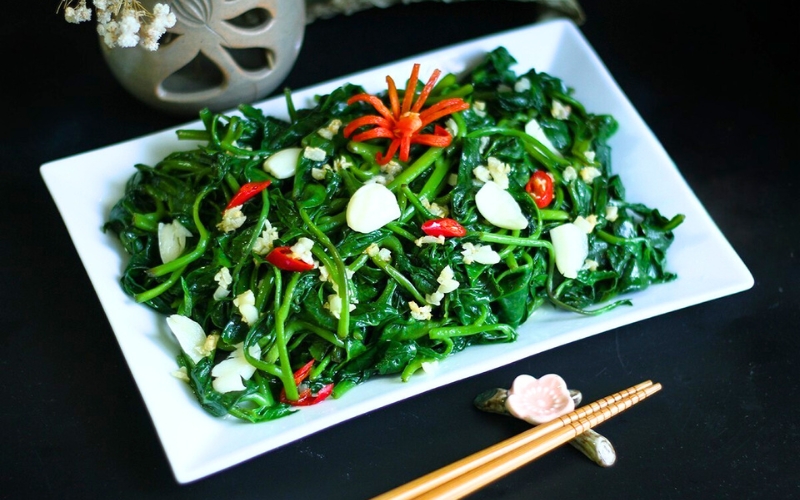
Mong toi leaves stir-fried with garlic, a fragrant and nutritious dish of everyday Vietnam
From a nutritional standpoint, mong toi is an excellent source of fiber, calcium, magnesium, and vitamins A and C. It is also attributed digestive and refreshing properties, which reinforces its status as both a simple and beneficial food for health. This vegetable perfectly illustrates the balance sought in Vietnamese cuisine: simplicity, authenticity, and respect for the natural flavor of ingredients.
7. Rau ngot (Katuk Leaves)
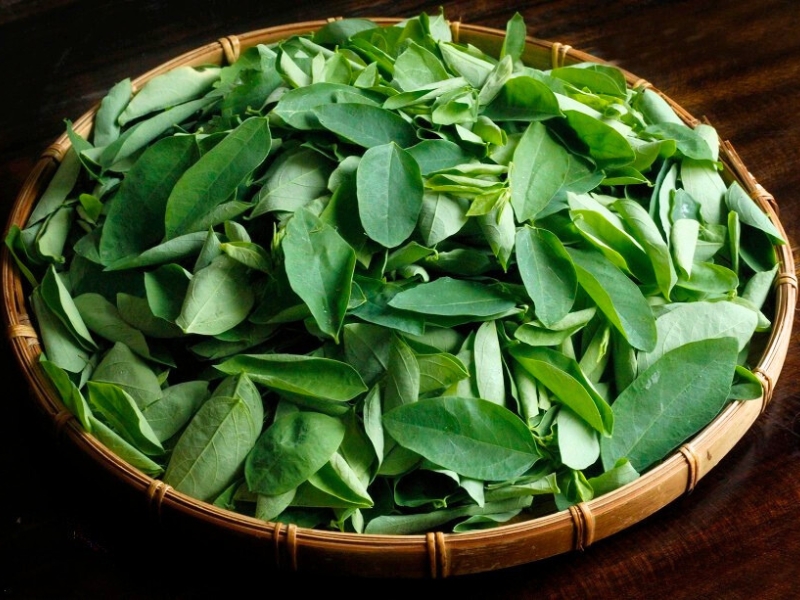
Rau ngot – A modest vegetable but rich in benefits, essential to Vietnamese cuisine
Rau ngot, also called katuk leaves, is a leafy vegetable much appreciated in Vietnam, particularly in daily family meals. Its small dark green leaves are recognized for their sweet and slightly sugary taste, which makes it an ingredient easy to appreciate, even for children.
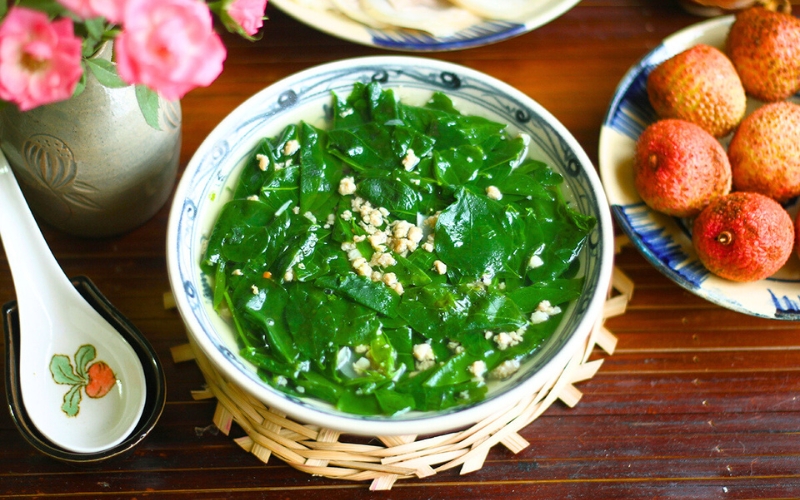
The tender and slightly sweet taste of canh rau ngot, a childhood memory for many Vietnamese
The most common use of rau ngot is in clear soups (canh rau ngot). This simple and nourishing soup can be prepared on its own, for a vegetarian version, or enriched with minced pork, shrimp, or beaten eggs, according to regional traditions. Embodying Vietnamese cuisine in its most authentic form: modest dishes but full of freshness and benefits.
From a nutritional standpoint, rau ngot is particularly rich in vitamins A and C, calcium, and fiber, which makes it a beneficial food for health. It is renowned for promoting digestion, strengthening immunity, and bringing a feeling of lightness.
8. Rau den (Amaranth)
Rau den, called amaranth in English, is a leafy vegetable very widespread in Vietnam and recognizable for its beautiful green and purple hues. This vibrant color not only appeals to the eye, but also announces remarkable nutritional richness.
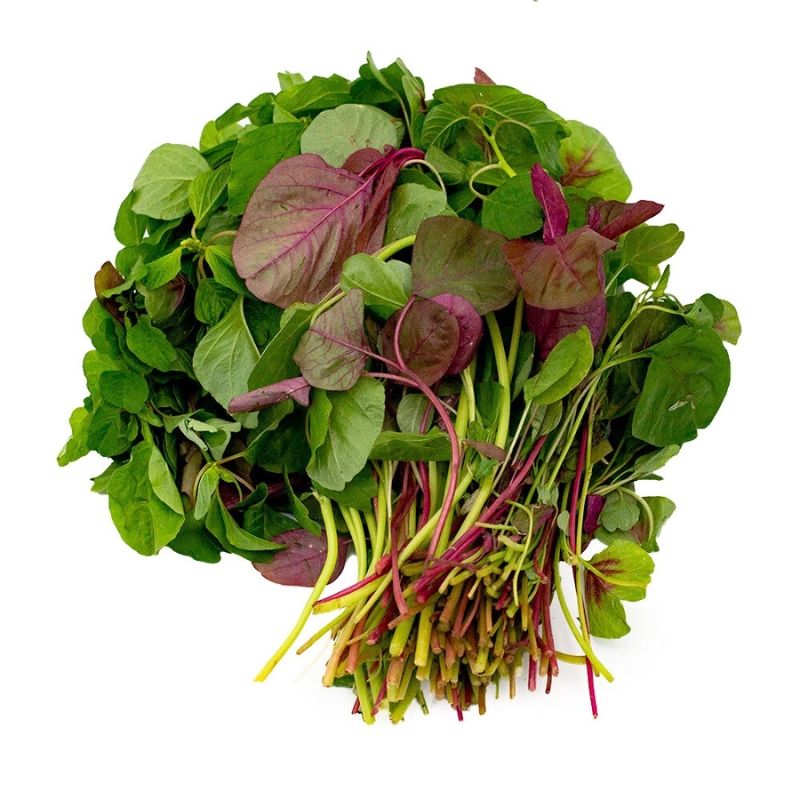
Rau den leaves, tender and purple, rich in iron and flavor
In the kitchen, red amaranth is mainly prepared in clear soups (canh rau den), sometimes paired with dried shrimp, crab, or minced meat. It can also be simply boiled and served with fish sauce (nuoc mam), in the spirit of daily Vietnamese meals. Its tender texture and delicately sweet flavor make it an ingredient appreciated by the whole family.
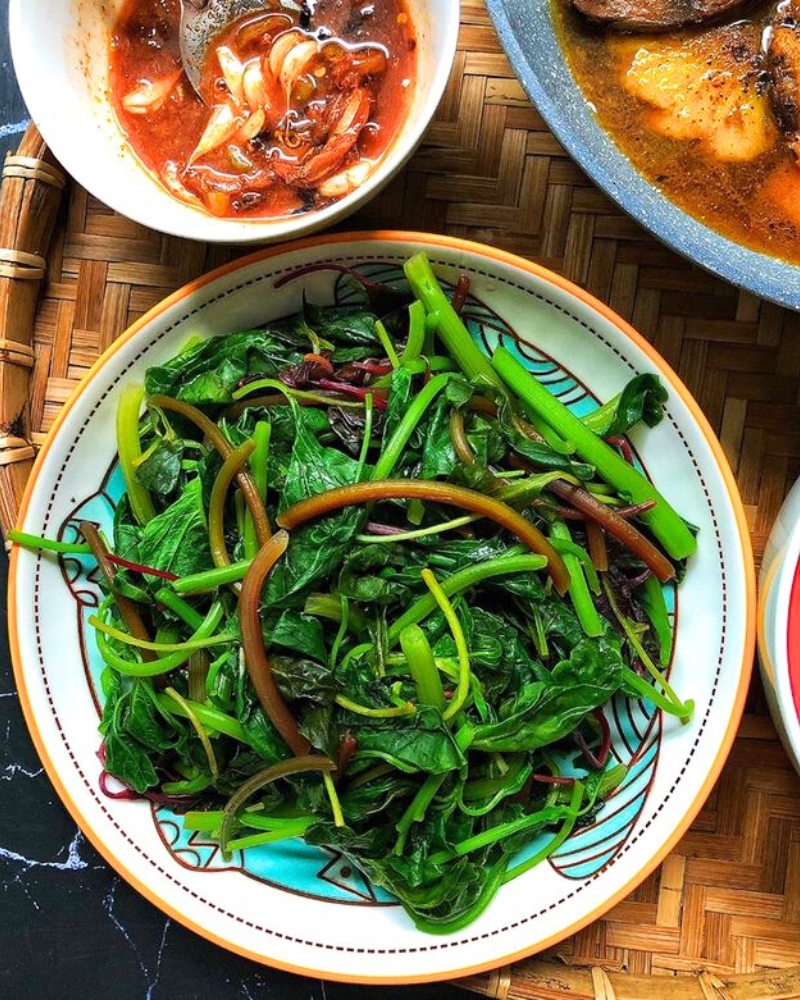
Boiled amaranth served with fish sauce: a nutritious and family classic
From a nutritional standpoint, rau den is renowned for its high iron content, making it a beneficial food for people seeking to boost their energy and prevent anemia. It also contains fiber, calcium, and vitamins A and C, reinforcing its image as a healthy and balanced vegetable.
A modest but essential dish, rau den perfectly illustrates the philosophy of Vietnamese cuisine: valuing simple, seasonal products, favoring well-being and conviviality around the table.
9. Cai thia (Bok Choy)
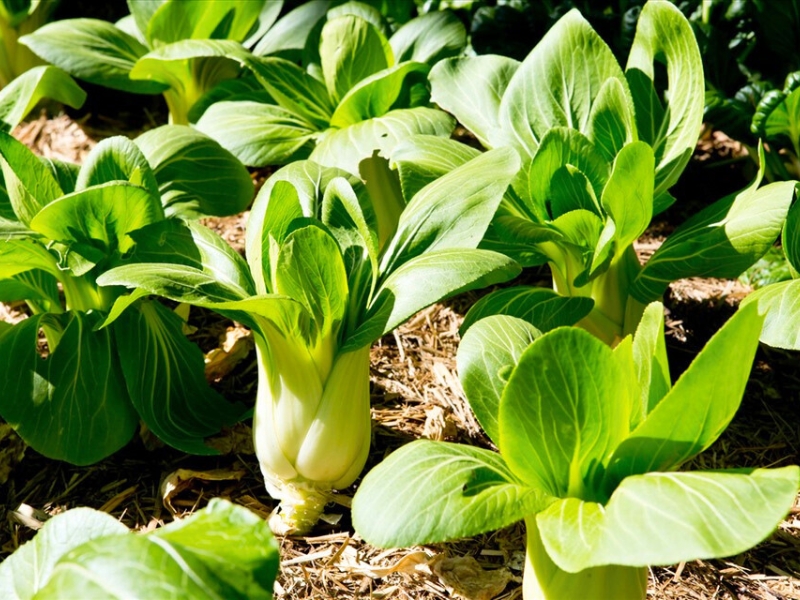
Cai thia, a simple and nutritious vegetable, from field to plate
Cai thia, also called bok choy or Chinese cabbage, is a leafy vegetable very present in Vietnamese and Asian cuisine. Easily recognizable by its crispy white stems and tender green leaves, it is part of the most appreciated Vietnamese vegetables for their fresh texture and delicately sweet taste.
In the kitchen, cai thia lends itself to numerous preparations. It is often enjoyed stir-fried with garlic (cai thia xao toi), a simple recipe that highlights its natural crispiness. It also accompanies noodle soups like pho or hu tieu, bringing a touch of green and lightness. In family meals, it can also be simply boiled and then served with fish sauce (nuoc mam) or soy sauce.
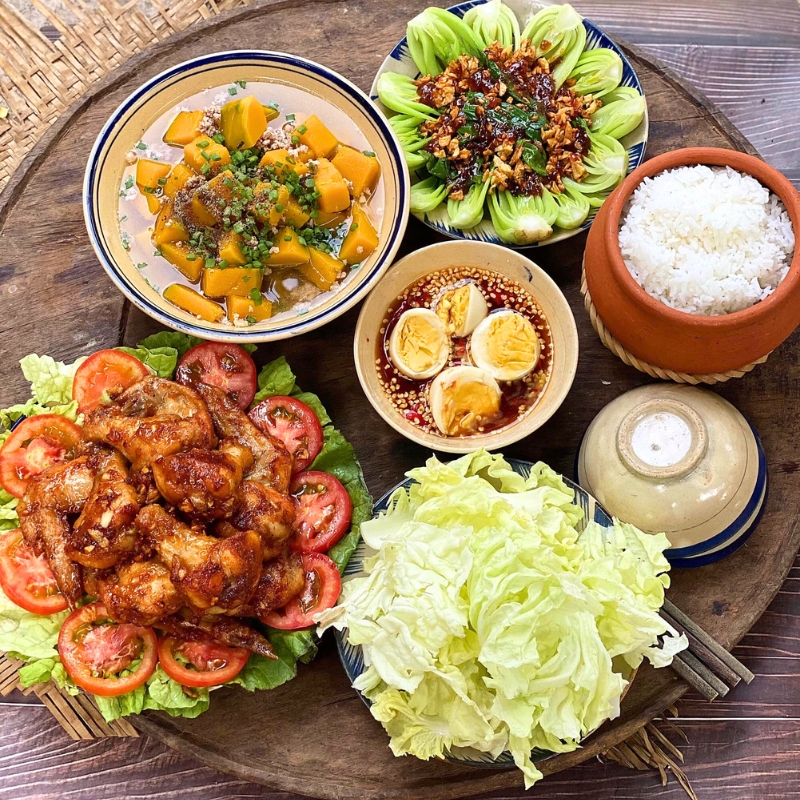
Stir-fried bok choy, a popular recipe that accompanies Vietnamese meals
From a nutritional standpoint, bok choy is rich in vitamin C, vitamin K, fiber, and antioxidants, helping to strengthen immunity and maintain a balanced diet. Low in calories, it is part of the most consumed daily vegetables in Vietnam.
10. Su su (Chayote)
Su su, known in English as chayote, is one of the most emblematic Vietnamese vegetables, especially in mountainous regions like Sa Pa. It is recognizable by its pale green pear-shaped fruit, but also by its young shoots and leaves, all edible and much appreciated in local cuisine.
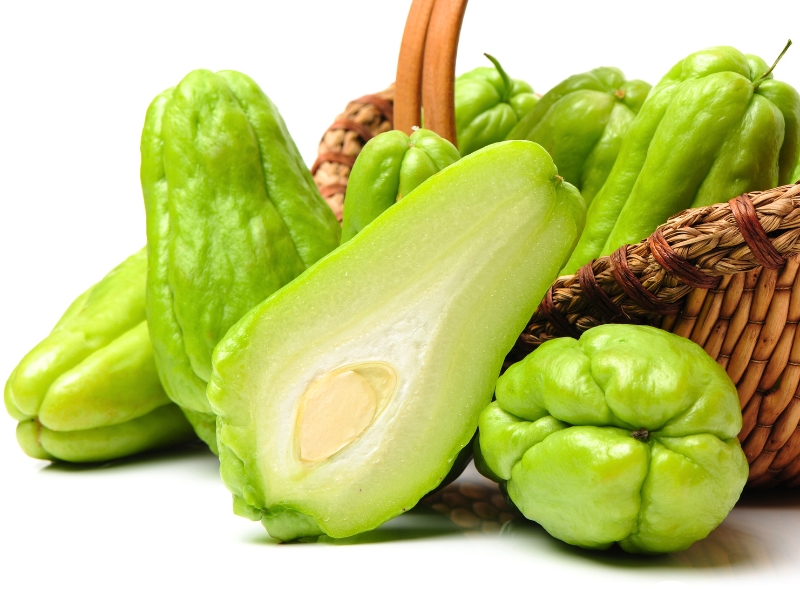
Su su, an authentic vegetable that illustrates the simplicity of Vietnamese gastronomy
In the kitchen, su su is very versatile. The fruit is prepared stir-fried with garlic (su su xao toi), boiled and then served with fish sauce (nuoc mam), or incorporated into clear soups for a simple and nourishing dish. Young shoots, called ngon su su, are particularly appreciated for their tenderness and crispiness; they are often found stir-fried with garlic in restaurants as well as in Vietnamese homes.
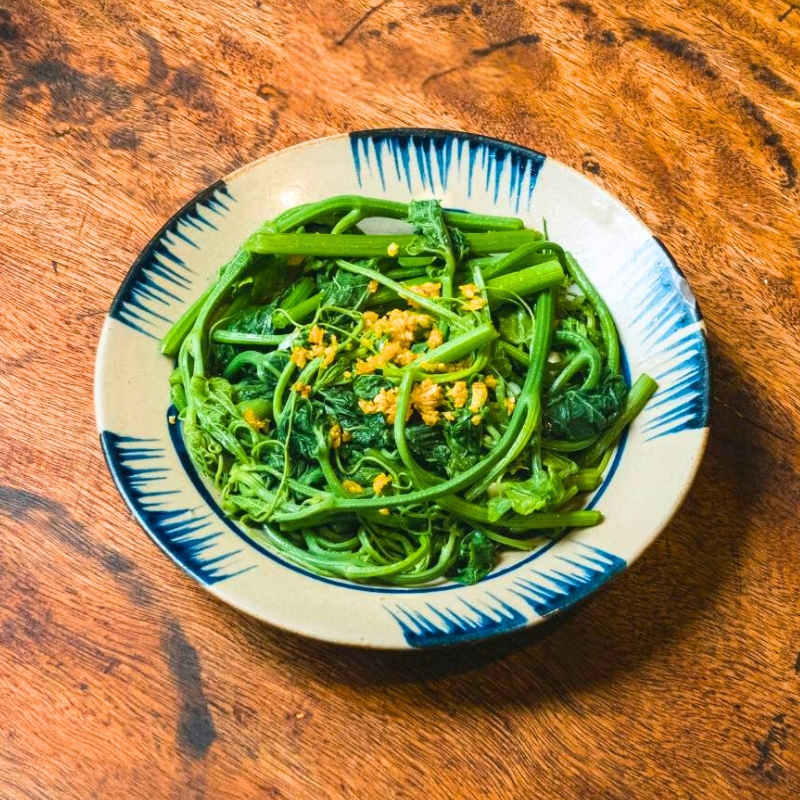
Young chayote shoots stir-fried with garlic, a tender and crispy vegetable much appreciated
From a nutritional standpoint, su su is low in calories but rich in fiber, vitamin C, and potassium, making it a vegetable that is both healthy and satisfying. Modest but nourishing, it well reflects the spirit of Vietnamese cuisine: valuing local, simple, and seasonal products, to make the best of them in terms of taste and benefits.
In general, Vietnamese vegetables occupy an essential place in daily nutrition. Their variety, ranging from crispy rau muong to tender mong toi, from light su su to crispy bap chuoi, illustrates the richness of a gastronomy that knows how to take advantage of every product of nature. Simple to prepare, often economical and very nourishing, these vegetables are cooked in many ways: boiled and accompanied by fish sauce, stir-fried with garlic to preserve their crispiness, or incorporated into clear soups that refresh meals. These modest dishes tell much about Vietnamese cuisine: a local cuisine, linked to seasonality and respect for natural flavors. They also testify to a culinary art where health and taste meet, since most of these vegetables are rich in fiber, vitamins, and minerals. Discovering and tasting these typical and exotic vegetables therefore means better understanding Vietnam: its simple lifestyle, its gastronomic culture founded on balance, and the conviviality that reigns around the family table as in street food.