+84 9 75 46 33 10 (Whatsapp)
  info@horizon-vietnamtravel.com
  Français
  Español
  Português
  Deutsch

Traditional Vietnamese Games and Toys
Table of contents
There are numerous traditional Vietnamese games and toys, invented long ago and passed down from generation to generation. Depending on the regions, these toys and games vary. In this article, discover a selection of the most popular and emblematic toys and games, which represent the wealth of Vietnamese culture.
Traditional Toys of Vietnam
Tò He – Traditional Vietnamese Figurine
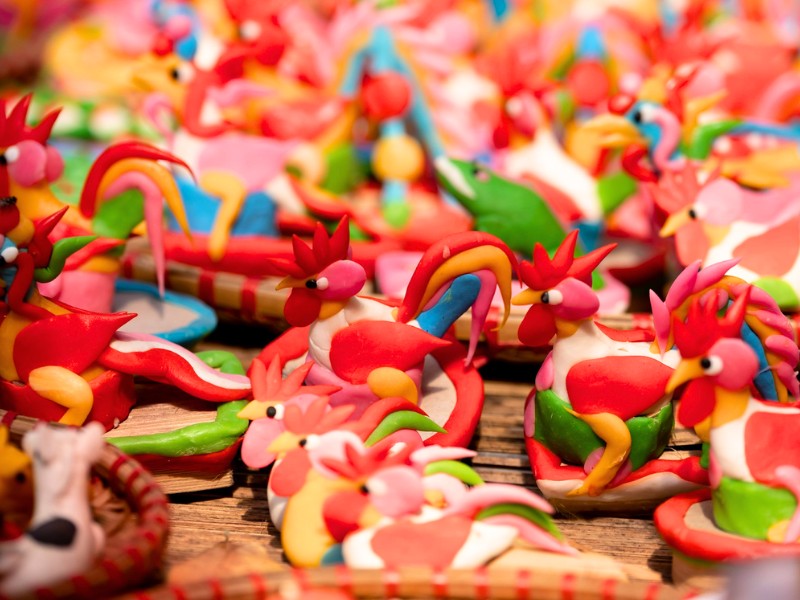
The Tò He is a small handcrafted Vietnamese figurine, made from glutinous rice powder rather than plastic. It is an emblematic traditional toy of Vietnam, especially popular in the villages of the North, though it is also known in the South — no doubt thanks to the migration of artisans. These figurines serve not only as toys: they are also used as offerings during religious ceremonies or traditional festivals. For this reason, Tò He often represent symbolic animals (chickens, cows, pigs, fish) or flowers such as roses.
Creating a colorful Tò He requires skill and creativity. Here are the main stages of its manufacture:
1. Dough Preparation
Glutinous rice flour is mixed with water. This type of flour retains the elasticity of the dough, even in hot and dry weather. The dough is then immersed, flattened, boiled and kneaded until it becomes smooth and soft.
2. Coloring the Dough
The dough is then divided into several portions and colored with natural or food dyes. The four basic colors are:
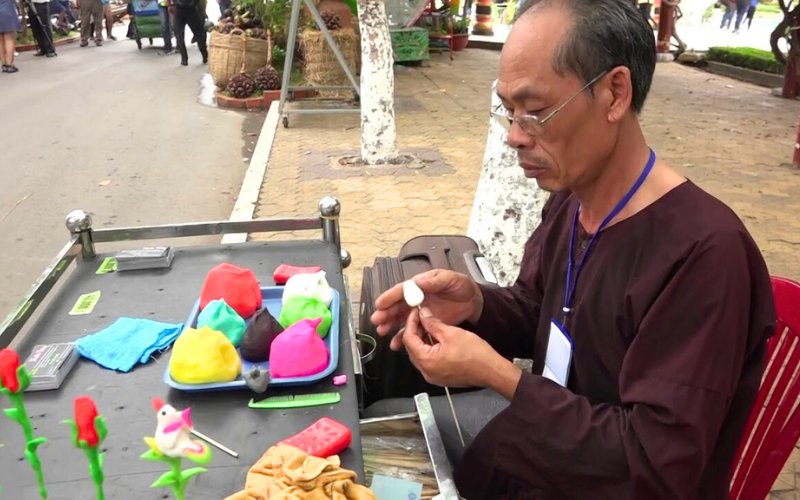
- Yellow: turmeric
- Red: fruit of spiny bitter melon or Cape jasmine
- Black: false daisy
- Green: galangal leaves
- Blue: indigo leaves
Other shades are obtained by mixing these colors.
3. Shaping the Figurine
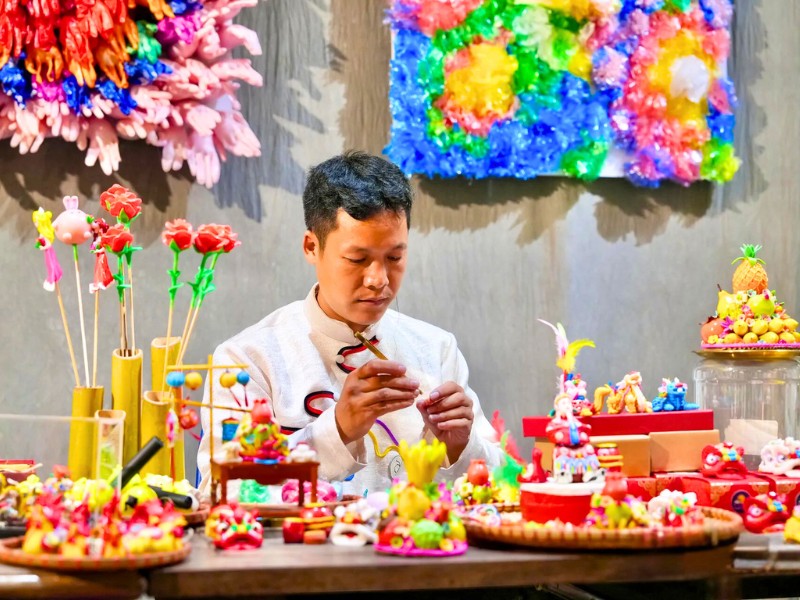
The artisan shapes the figurine by hand with the help of some simple tools: a small knife, a comb, a sponge, some beeswax and bamboo sticks to secure or display the Tò He.
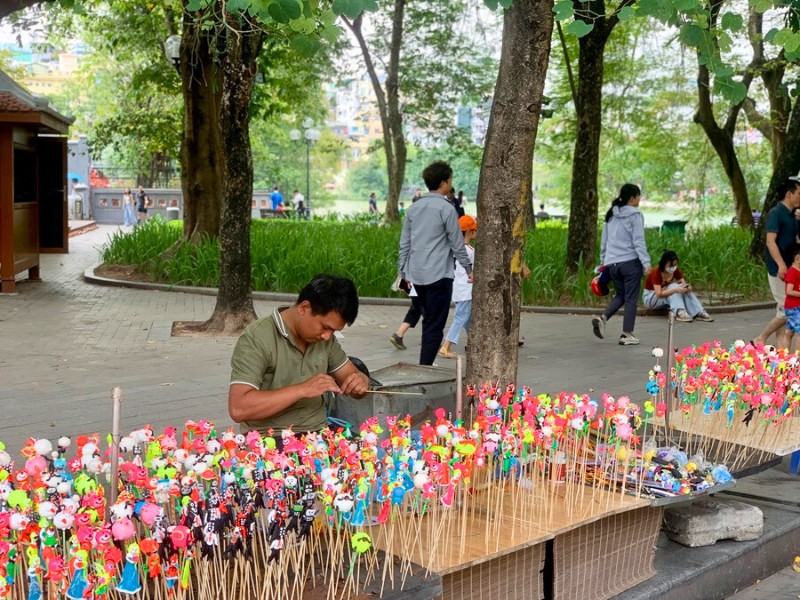
Artisans sell their figurines in markets, villages and busy streets, especially during festivals and celebrations. Around Hoan Kiem Lake in Hanoi, you can often encounter street vendors offering these small colorful works, living symbols of Vietnamese folk culture.
Diều – Paper Kites
The kite (diều) is an ancient symbol of Vietnamese culture, appearing more than a thousand years ago. In the past, Vietnamese people believed that kites could drive away misfortunes and illnesses. They would write the names of plagues on paper before cutting the string, hoping the wind would carry the negative things away from humans. The kite also served as an offering to the gods during full moon nights, a symbol of prayers for peace and prosperity.
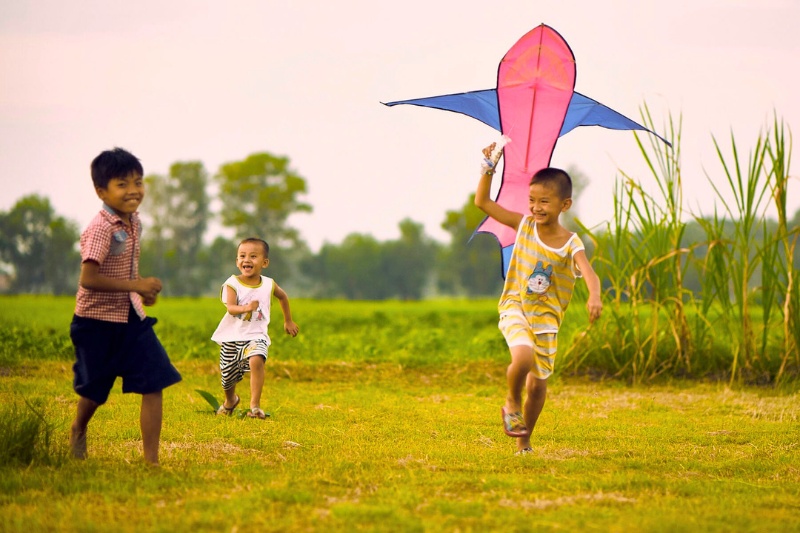
Made from bamboo and paper, the Diều comes in various forms: birds, fish, dragons or butterflies. Some regions, particularly in North Vietnam, attach bamboo flutes to their kites, producing a harmonious sound in the wind.
Having become a childhood game and object of collective memory, the kite represents creativity and freedom. Today, it transcends the traditional framework to become a popular cultural event, particularly during the Vung Tau and Hué festivals, where artisans and enthusiasts from numerous countries celebrate this aerial art together.
Long Den – Paper Lanterns
How is the paper lantern made? The paper lantern is one of the familiar traditional toys of Vietnam. It comes in a variety of shapes and sizes, as well as different designs. The simplest type of lantern is made of paper and is affixed to a candle inside. The more complex ones have a bamboo or metal frame stretched out, with delicate decorative paper wrapped around the outside.
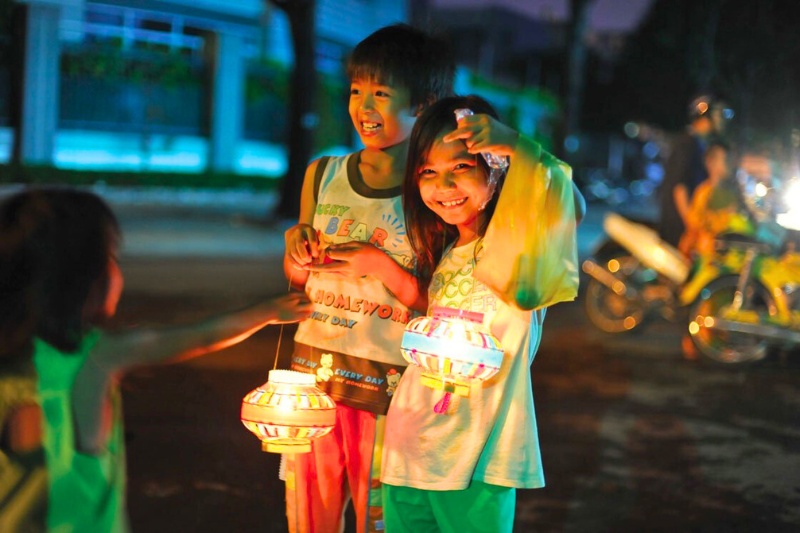
Where to find paper lanterns? In Vietnam, paper lanterns are frequently used for decoration of pagodas or as toys for recreational celebrations, particularly during the Mid-Autumn Festival.
Traditional Games of Vietnam
Traditional Vietnamese games have always played an important role in the country’s culture. They are outdoor activities very attractive to many Vietnamese children. Among the most popular are “Rong Ran Len May” and “Meo Bat Chuot”. These folk games develop observation skills and social competencies, as children must form teams and cooperate effectively to win.
Keo co (Tug of War)
Keo co, or tug of war, is a very popular traditional game in Vietnam. Two teams face each other pulling a long rope, each trying to pull the other across their side.
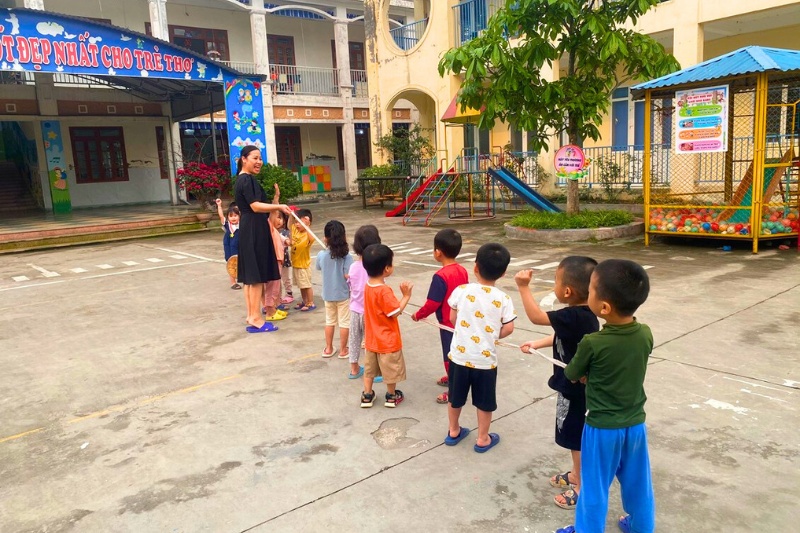
This collective game, a symbol of strength, unity and team spirit, is often played during Lunar New Year celebrations or village festivals. The shouts of encouragement, the joy and the shared energy make it a moment of great conviviality.
Rong Ran Len May
Rong Ran Len May is one of the best-known Vietnamese games among children in the country. It features two characters: the catcher and a dragon. The dragon is formed by a line of more than five people aligned, while only one plays the role of the catcher.
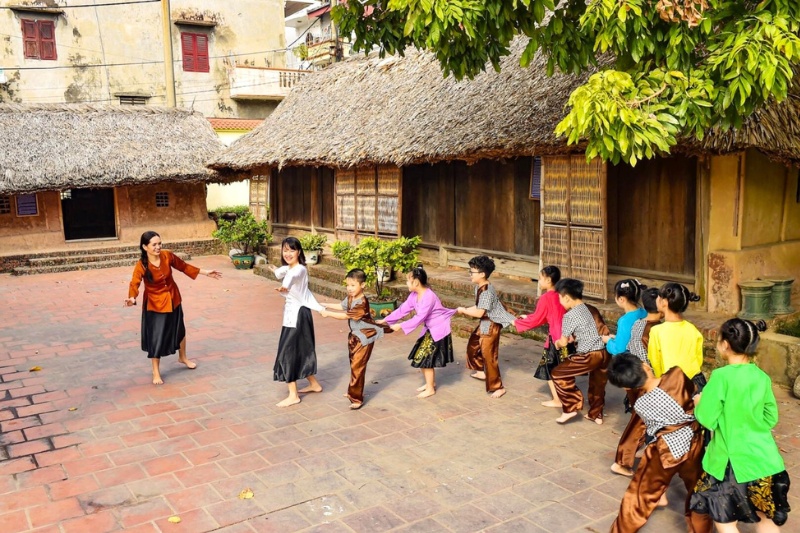
How to play:
When the dragon arrives at the catcher’s house, the children sing a song to call him. At the end of the song, the catcher chases the person at the end of the line — the dragon’s tail. The head of the dragon, positioned in front, must move and extend its arms to protect the line. All members follow the movement to avoid breaking the line, which gives the dragon an undulating shape similar to a dragon flying in the sky — hence the name Rong Ran Len May.
If the catcher catches the tail, the next person becomes the new tail. If the line breaks or if the catcher manages to catch every player, he wins. If the dragon manages to form a circle before being caught, he wins the game.
Meo Bat Chuot – Cat and Mouse
This game is played with at least seven children forming a circle holding hands, with arms raised to create a barrier. A cat and a mouse are then chosen, positioning themselves back to back in the center of the circle.
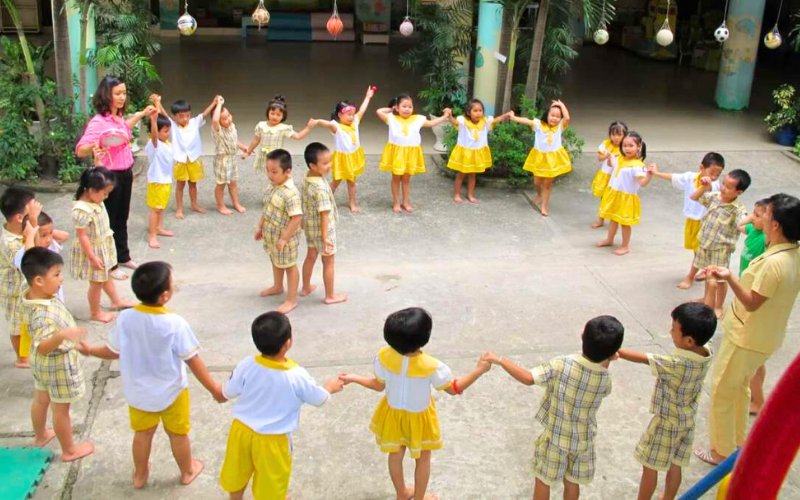
How to play:
At the signal, the mouse runs through the circle and the cat must chase it. The cat wins if he manages to catch the mouse. During the game, the children in the circle sing a folk song, making passage difficult for both protagonists.
Nhay Day – Jump Rope
It is a traditional game still widely played by girls in primary and secondary schools.
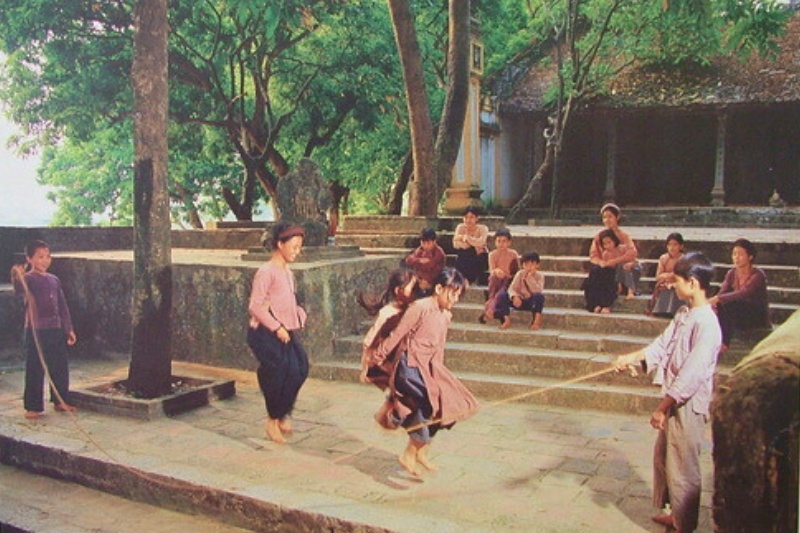
How to play:
The rope is often made of elastic bands tied together. Children jump over a stretched rope whose height increases progressively. Whoever jumps higher without error wins. Another variant consists of forming geometric shapes (triangle, square, parallel lines) with the rope and jumping over the sides. The game develops flexibility, endurance and coordination.
Banh Dua – Catching the Ball
Popular game, especially among girls. Requires only a bouncing ball and ten sticks (five pairs).
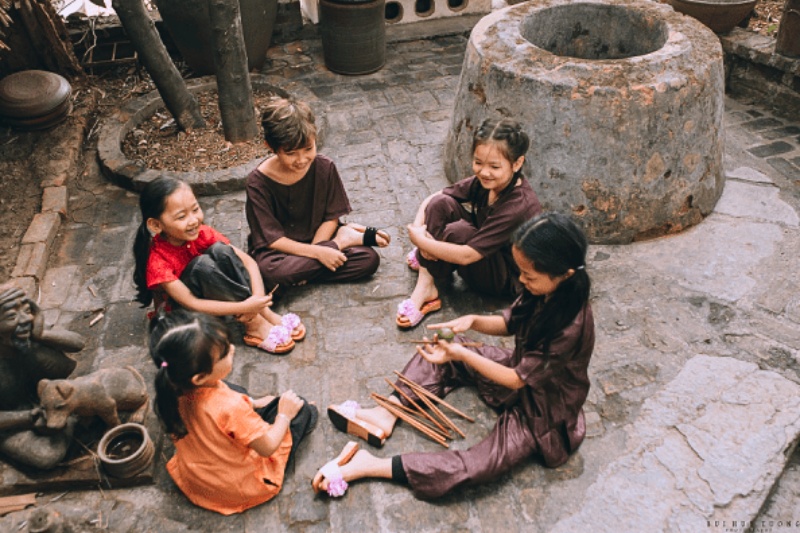
How to play:
The sticks are placed on the ground. The player throws the ball in the air, picks up a stick with one hand, then catches the ball before it touches the ground. The goal is to pick up all the sticks without dropping the ball. This game improves hand-eye coordination and concentration.
Da Cau – Feathered Badminton
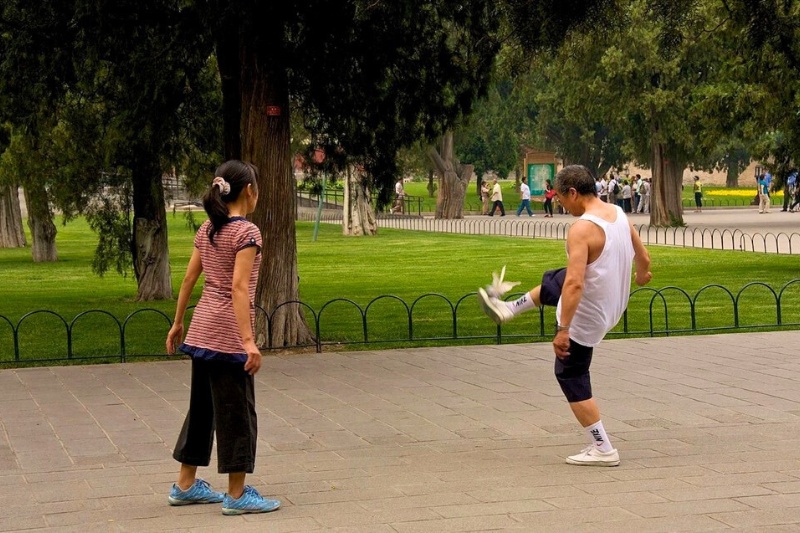
Once played in villages during festivals, today it is practiced everywhere: in schools, parks and streets. It is at the same time a pastime, a sport and an exercise in skill appreciated by all ages, children and adults alike.
How to play:
- Solo: the player who keeps the shuttlecock in the air the longest wins.
- In groups: players pass the shuttlecock back and forth without letting it fall, promoting cooperation and precision.
Other Popular Games
Among the many other traditional Vietnamese games, you will find:
- Lo Co (Bell)
- Ban Bi (Marbles)
- O An Quan (Vietnamese board game, also called “capture the mandarin square”)
And hand games to designate the winner or distribute the roles:
- Rock-Paper-Scissors
- Chi Chi Chanh Chanh (withdraw the finger before being trapped in the palm)
- Nhieu Ra It Bi / It Ra Nhieu Bi (turn the palm upward or downward to decide the teams)
Today, with the popularity of technological devices, traditional Vietnamese games are less played than in the past. However, they offer children great physical and social benefits, while bringing inestimable cultural value. These traditions, inherited from generations, deserve to be preserved. In Vietnamese villages, you can still see children playing these simple, joyful games, deeply rooted in the country’s culture.