+84 9 75 46 33 10 (Whatsapp)
  info@horizon-vietnamtravel.com
  Français
  Español
  Português
  Deutsch

Vietnamese Pho Recipe (Vietnamese Soup)
Table of contents
Phở is undoubtedly the most emblematic dish of Vietnam — a bowl of rice noodles immersed in clear broth, long simmered with fragrant spices and enriched with fresh herbs. A true symbol of Vietnamese cuisine, it embodies the simplicity, balance and finesse of flavors that characterize the gastronomy of the country. Traditionally served at breakfast, nowadays Phở is enjoyed at any time of day, both in the bustling streets of Hanoi and in family restaurants throughout the south of the country. There are mainly two major variants of this iconic dish:
- the Phở bò, prepared with a broth based on beef bones and meat, rich and intense;
- and the Phở gà, a lighter and more delicate version, based on tender chicken and a clear and aromatic broth.
Each of these recipes offers a unique gastronomic experience, but both share the same essence: that of a comforting, nourishing and deeply Vietnamese dish. Let’s discover together how to prepare these two versions of Vietnamese Phở, both authentic and easy to make at home.
A Little History…
Phở was born in northern Vietnam, more precisely in the Hanoi region, at the beginning of the twentieth century. At that time, Vietnamese cuisine was under the influence of Chinese and French culinary traditions. It is said that the word phở would derive from the French feu, referring to the pot-au-feu dish, whose principle — a broth simmered with bones and meat — would have inspired the Vietnamese.
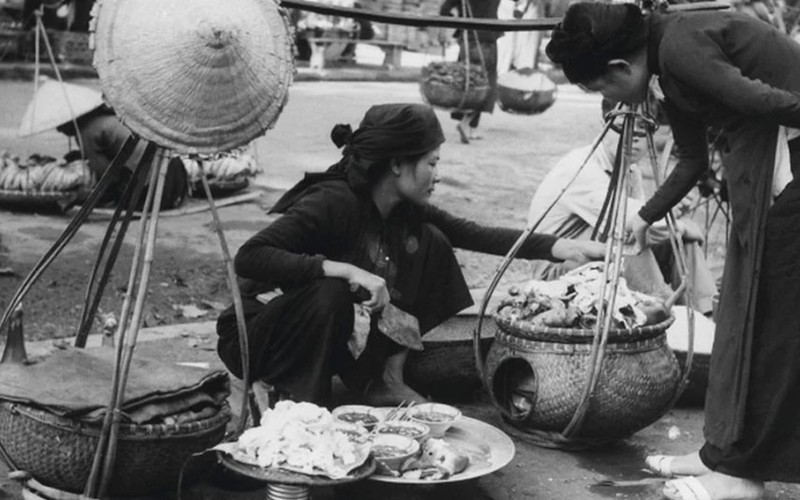
The Phở stand of yesteryear
Rapidly, Phở became a popular dish, sold in the streets by street vendors pushing their steaming carts from the early morning hours. Over time, it spread across the country, giving rise to two main styles:
- Phở Bắc (Northern Phở), with a more sober taste and clear broth;
- Phở Nam (Southern Phở), more fragrant, often accompanied by fresh herbs and sauces.
Today, Phở is much more than a simple dish: it is a cultural symbol of Vietnam, recognized throughout the world. Whether in Hanoi, Saigon or abroad, every bowl of Phở tells a story of tradition, savoir-faire and love for Vietnamese cuisine.
And if you have the opportunity to travel to Vietnam, don’t miss tasting a bowl of Phở on site to discover its most authentic flavor. Each restaurant possesses its own recipe passed down from generation to generation.
In the meantime, we propose here below two emblematic versions of Phở that you can easily prepare at home to rediscover the taste of Vietnam: Phở bò (beef) and Phở gà (chicken).
Phở Bò Recipe (Beef Noodle Soup)
Among the two major variants of Phở, Phở bò is undoubtedly the most popular in Vietnam as well as abroad. Its rich and fragrant broth, simmered for hours with beef bones and spices, captivates for the depth of taste and irresistible aroma.
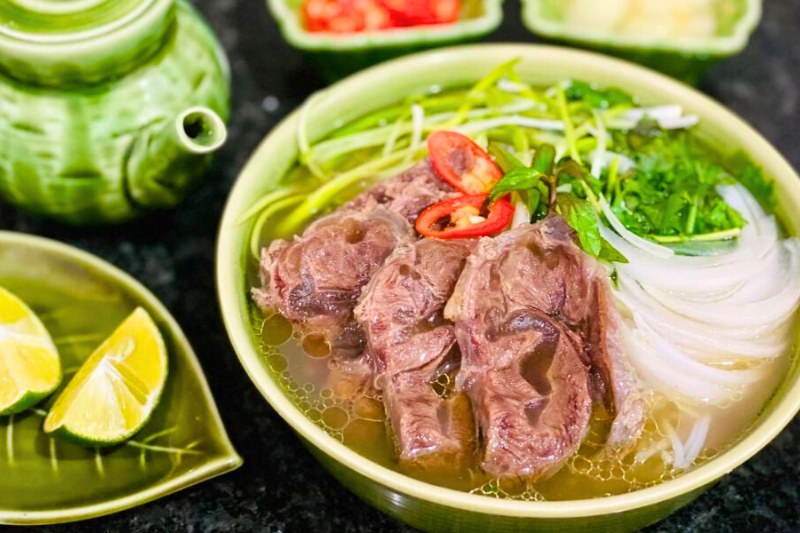
Northern Phở bò
Served with thin slices of beef, soft rice noodles and fresh herbs, Phở bò alone represents the entire art of Vietnamese cuisine: balance, sweetness and authenticity. Let’s discover together how to prepare a traditional Phở bò at home, flavorful and comforting, worthy of the best stalls in Hanoi.
Ingredients
For the broth — the soul of Phở
- 1 kg of beef marrow bones
- 800 g of rib bones
- 500 g of beef (tendon, shank, belly according to taste)
- 2 onions
- 2 small pieces of ginger (grilled whole with skin)
- 2 cinnamon sticks
- 2 cardamom pods
- 3 star anise
- 4 cloves (optional – typical of the south)
- 2 teaspoons of coriander seeds
- 1 tablespoon of sea salt
- 1 tablespoon of rock sugar (or a small piece of sugar cane)
- Fish sauce, seasoning (according to taste, at the end)
- Some coriander roots (optional, added at the end of cooking)
- White peppercorns
For the garnish
- Boiled beef (part cooked with the bones, sliced thinly)
- 250–300 g of raw beef (fillet or sirloin, sliced very thinly)
- Beef meatballs (optional)
For the noodles and herbs
- 1.2–1.5 kg of fresh rice noodles (or dried to rehydrate)
- 1 onion sliced thinly and soaked in iced water
- Fresh herbs: Thai basil, cilantro, mint, green onion, bean sprouts
- Lime, chili pepper, hoisin sauce, sriracha sauce, chili vinegar
Preparation
1. Prepare and clean the bones
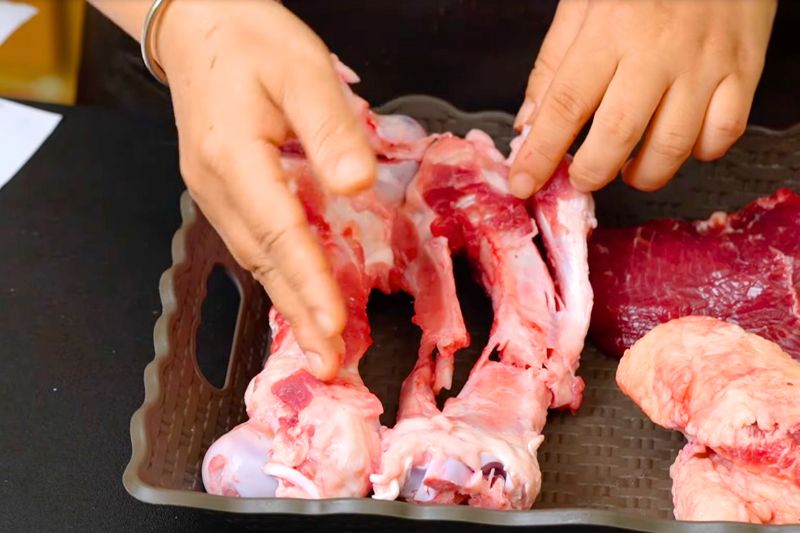
- Rub the bones with coarse salt, some crushed ginger, white alcohol or vinegar to remove blood and impurities. Rinse thoroughly with warm water.
- Then blanch them in boiling water with salt and ginger for 3–5 minutes, then drain and rinse again.
2. Broth Cooking
- Put the cleaned bones and piece of beef in a large pot with about 6–6.5 liters of water. Add salt and rock sugar. Bring to a boil, skim carefully, then lower the heat.
- Let simmer gently for 6–8 hours, uncovered and without stirring. This allows you to obtain a clear broth and naturally sweet.
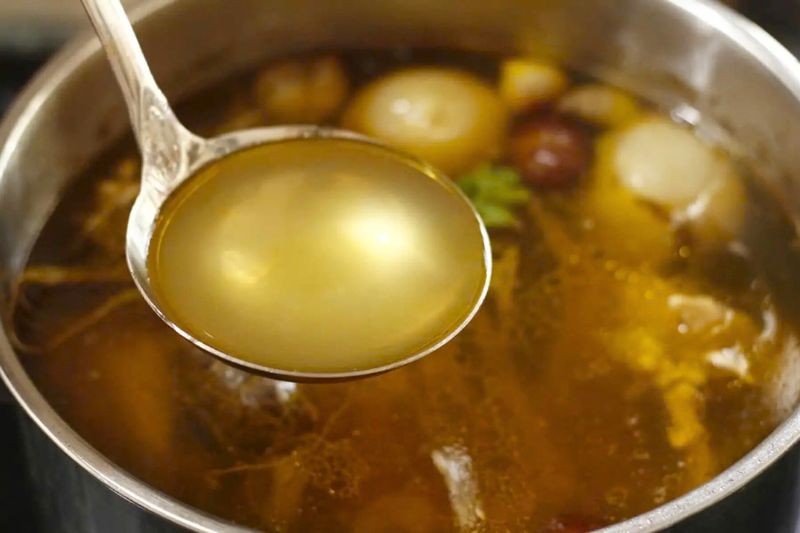
- After about 45 minutes, remove the piece of beef (nạm), dip it in iced water to maintain its tender consistency and nice color, then keep it refrigerated.
3. Addition of spices and aromas
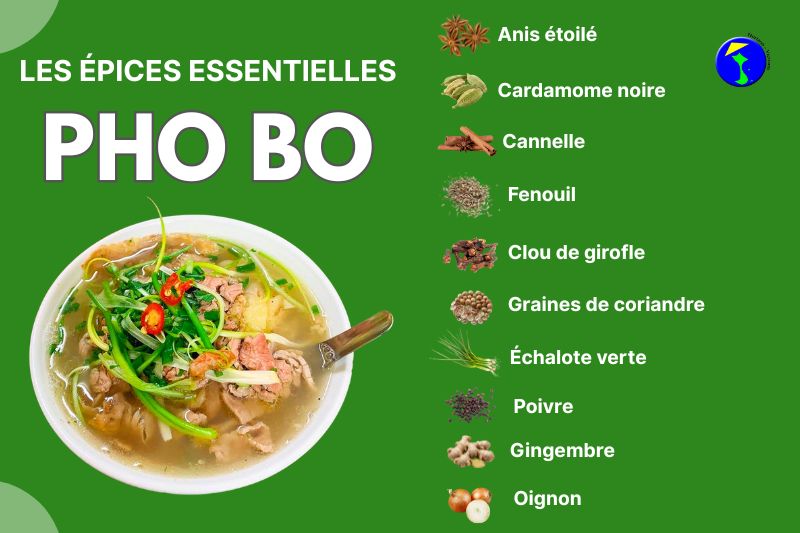
The essential spices of Phở Bò
- Lightly toast all the spices (anise, cinnamon, cardamom, cloves, coriander seeds) dry to release their aromas.
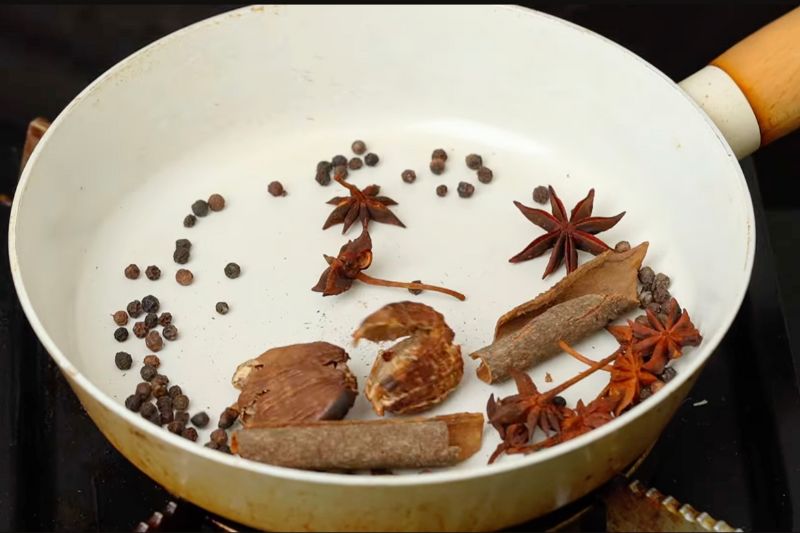
- Put them in a gauze or spice bag, then immerse them in the broth halfway through cooking.
- Grill the onions and ginger until slightly charred, then rinse and add to the broth.
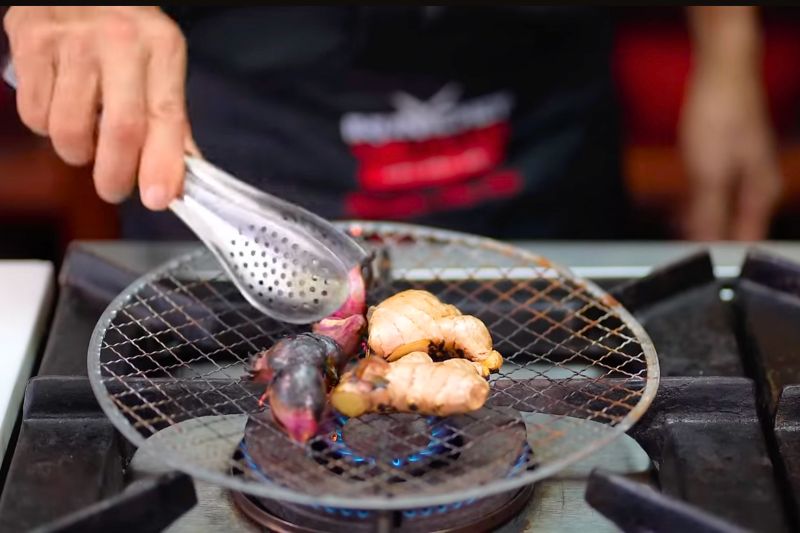
4. Prepare the meat and accompaniments
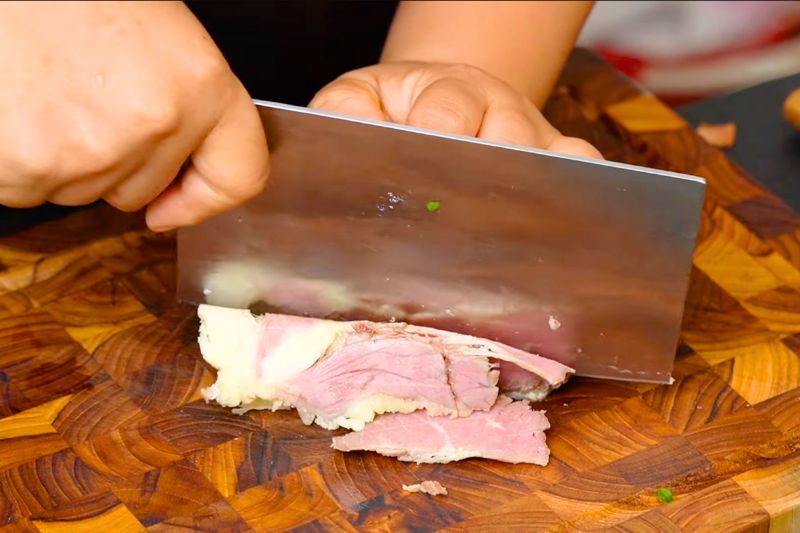
- Boiled beef: sliced thinly before serving.
- Raw beef: cut very thin against the grain, lightly beaten with the knife and seasoned with salt, pepper, grated ginger and a little fish sauce.
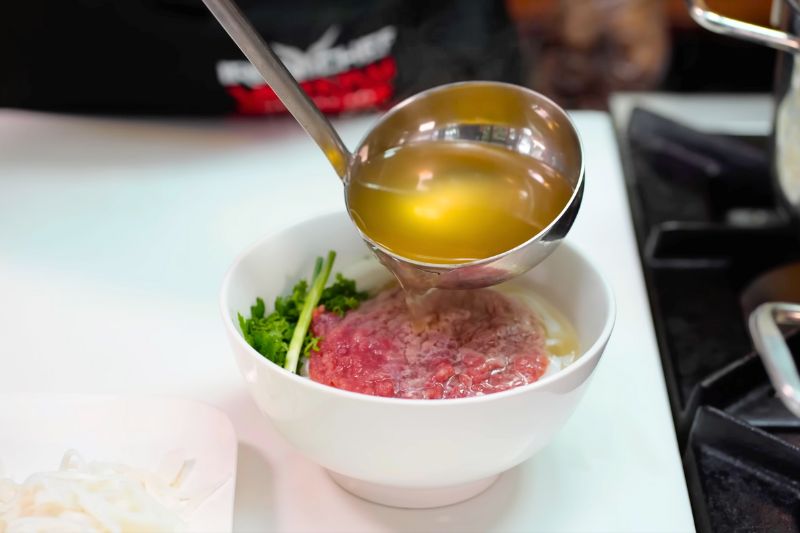
- Also prepare the herbs, lime, chili pepper and sauces for serving.
A good bowl of Phở bò is the perfect harmony between a clear and flavorful broth, melting rice noodles and beef tender at just the right point. Preparing a successful Phở at home requires some time and patience, but the result is incomparable: a deep, balanced and comforting taste, as in the best stalls in Hanoi.
Chicken Phở Recipe (Phở gà)
Phở gà is the more delicate version of the celebrated Vietnamese Phở. In Hanoi, it captivates with its clear broth and naturally sweet, the light scent of ginger and grilled onion, and the soft chicken meat with golden skin. Served hot on autumn mornings, Hanoi’s Phở gà is a symbol of sweetness and elegance in Vietnamese cuisine.
Ingredients
For the broth
- 1 hen or free-range chicken (about 2 kg)
- 2 chicken carcasses
- 6–8 sa sung (dried sea worms, optional but secrets of the natural sweetness of the broth)
- 1 onion and some shallots
- 1 piece of ginger
- Cilantro and green onion roots
- 1 tablespoon of salt
- 1 tablespoon of rock sugar
- Fish sauce (nuoc mam), according to taste
For the garnish
- Boiled chicken meat, cut into thin slices
- Chicken offal (heart, liver, gizzard, unfertilized eggs – optional)
- Fresh rice noodles
- Sliced onion, fresh herbs (cilantro, green onion, basil)
- Kaffir lime leaves sliced thinly
- Lime, chili pepper, garlic vinegar
Preparation
1. Prepare the chicken and aromatic ingredients
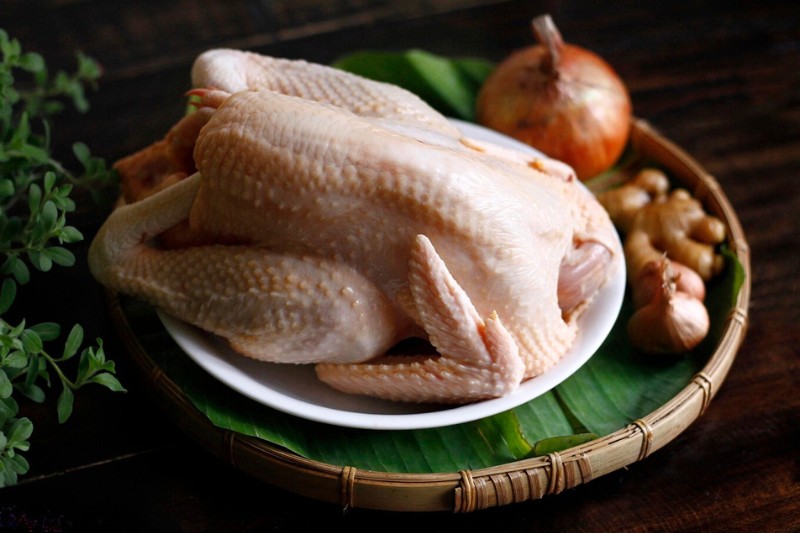
- Choose a hen that has already laid one or two times to obtain firm and flavorful meat. Clean the chicken carefully with salt, lemon or ginger and a little rice alcohol to remove any odor.
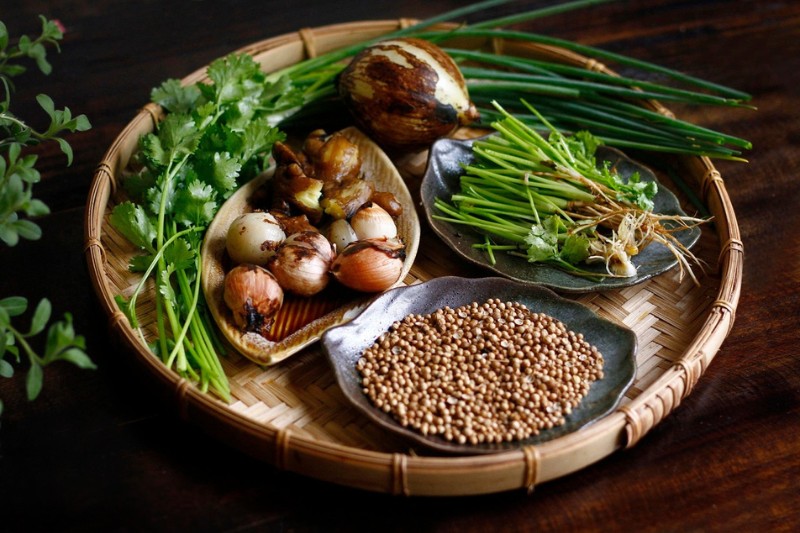
- Grill the onion, ginger and shallots until slightly charred, then rinse them: this will give the broth its typical aroma and golden color.
- Also toast the coriander seeds to release their fragrance.
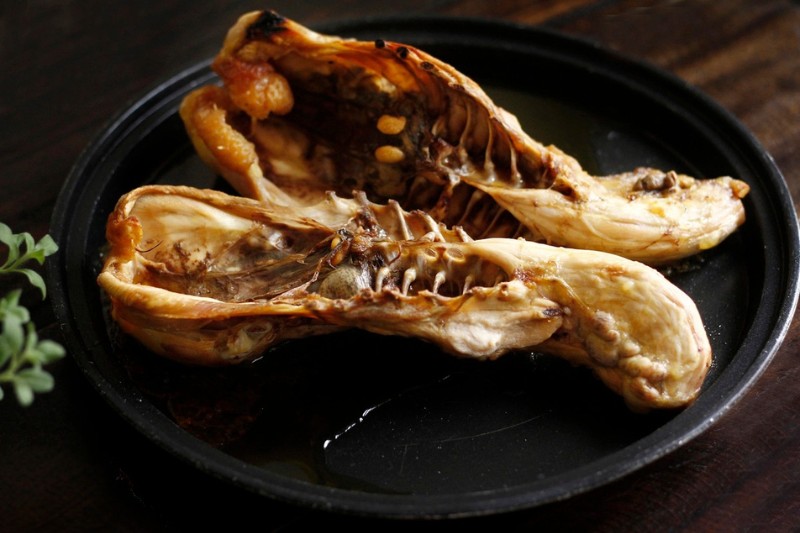
- Chicken bones must be blanched or lightly grilled before use: it is the secret of a clear and pure broth.
2. Cook the chicken
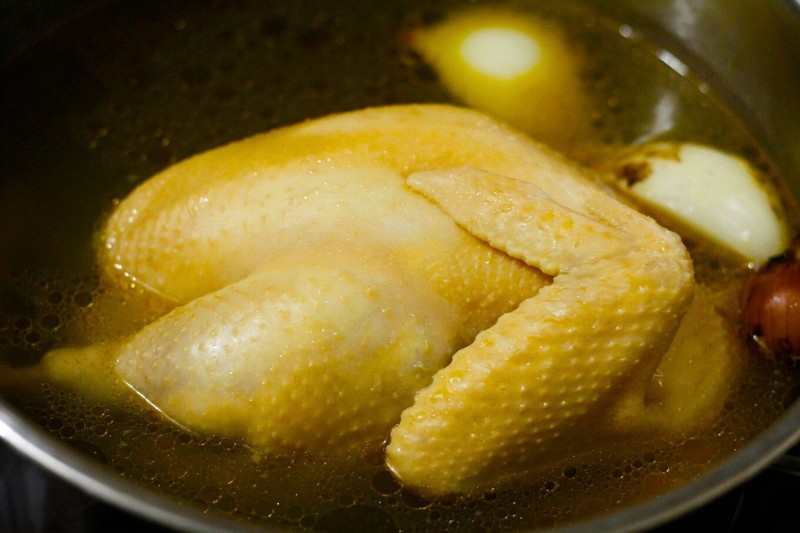
- Immerse the chicken in a large pot of cold water with some salt, ginger and onion.
- Heat gently until boiling, then lower the heat to maintain a gentle boil.
- Let cook for about 25–30 minutes. Turn off the heat and let the chicken rest in the hot broth for another 10 minutes.
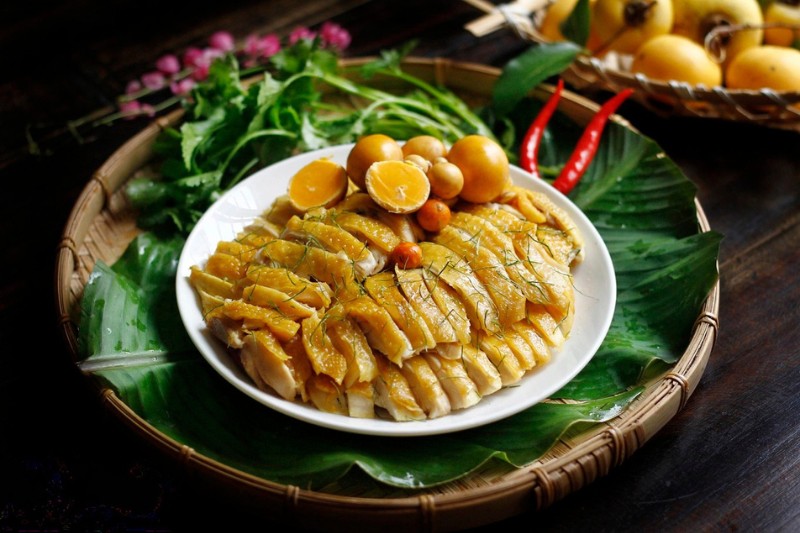
- Then remove it and immerse it immediately in iced water to firm up the skin and make it shiny.
- Once cooled, cut the chicken into thin pieces and lightly brush the skin with some chicken fat colored with turmeric to give it a golden tone.
3. Prepare the broth
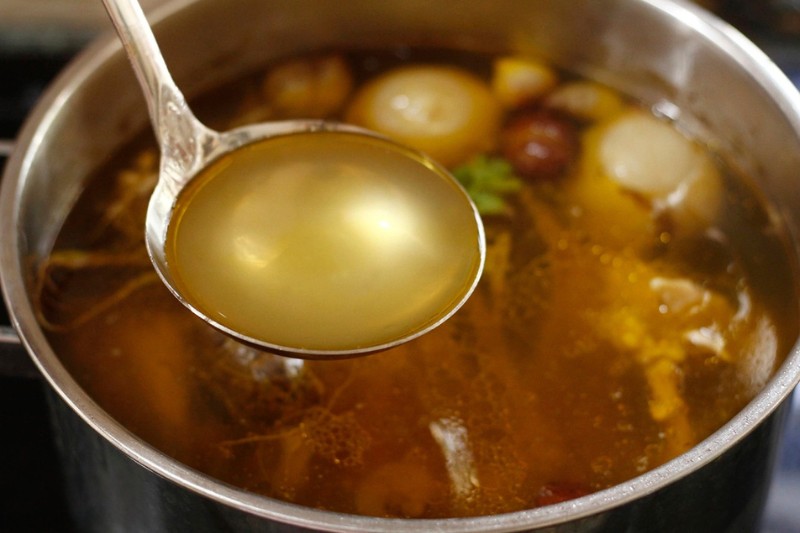
- In a large clean pot, pour the filtered chicken cooking broth.
- Add the chicken bones, carcasses and sa sung previously grilled.
- Insert the spice bag (onion, ginger, coriander seeds) and let simmer gently, uncovered, for about 1 hour and 30 minutes.
- Add the grilled onion at the end to give a sweet fragrance and amber color.
- Season with some salt, fish sauce and rock sugar according to your taste.
>> Tip: Do not add fish sauce too early — it could make the broth taste sour.
4. Prepare the accompaniments
- Slice the onion thinly and soak it in iced water to make it crispy.
- Slice the cilantro, green onion and lime leaves.
- Cut the lime and chili pepper.
- Rinse and prepare the fresh rice noodles.
5. Plating and Tasting
- Immerse the noodles in boiling water for a few seconds, drain them and place them in a large bowl.
- Add the chicken pieces, offal or eggs if desired, then pour the hot broth over them.
- Garnish with green onion, cilantro and some slivers of lime leaf.
- Serve hot, accompanied by garlic vinegar, lime, chili pepper or quay (Vietnamese fritters), according to taste.
Hanoi’s Phở gà stands out for its finesse and lightness. Unlike Phở bò, it contains neither star anise nor cinnamon: its delicate aroma is based solely on grilled onion and ginger, combined with aromatic herb roots. Its broth, clear and golden, derives its natural sweetness from bones long simmered and grilled sa sung, without any addition of monosodium glutamate. Every restaurant in Hanoi jealously guards its own recipe, passed down from generation to generation, a reflection of artisanal savoir-faire and a living tradition.
In his work “The Delights of Hanoi,” writer Vu Bang described Phở gà as “a sweet and graceful young girl,” in contrast to Phở bò, more robust and virile, “like a vigorous young man.”
Still today, Phở gà seduces Vietnamese people as well as travelers from around the world for its elegant simplicity, pure taste and subtle aroma — a timeless symbol of Northern cuisine and Vietnamese culinary art.
>> You can also discover a simplified version of the Phở gà recipe thanks to the video below, made by our team.
In this video, we show you step by step how to prepare a delicious bowl of Phở gà at home, with ingredients easy to find and simple gestures to reproduce.
Even without spending hours in the kitchen, you will get a clear, flavorful and fragrant broth, as well as tender and juicy chicken meat — all the charm of Vietnamese Phở in a version accessible to everyone.
Take your wok, follow the steps and let yourself be guided… the result will transport you directly to the delicious alleyways of Hanoi!