+84 9 75 46 33 10 (Whatsapp)
  info@horizon-vietnamtravel.com
  Français
  Español
  Português
  Deutsch

Vietnamese Traditional Wedding
Table of contents
In Vietnam, the traditional wedding holds a very special place in people’s lives. It is an important moment not only for the couple, but also for their families. The wedding does not simply unite two people: it connects two families, two lineages, sometimes even two villages. Every detail of the ceremony has its meaning. Rituals, passed down from generation to generation, show respect toward parents and ancestors, as well as the desire for a happy and harmonious life together. The Vietnamese wedding, with its beauty and symbols, remains today a living testimony to the country’s culture and family values.
Wedding Preparation
The preparation of a Vietnamese wedding requires much care and attention. The wedding date is chosen well in advance, generally by the groom’s family, in agreement with the bride’s parents. This day is not necessarily a Saturday or Sunday: it is often set according to the lunar calendar and the advice of a master of ceremonies, in order to ensure luck and harmony for the couple.
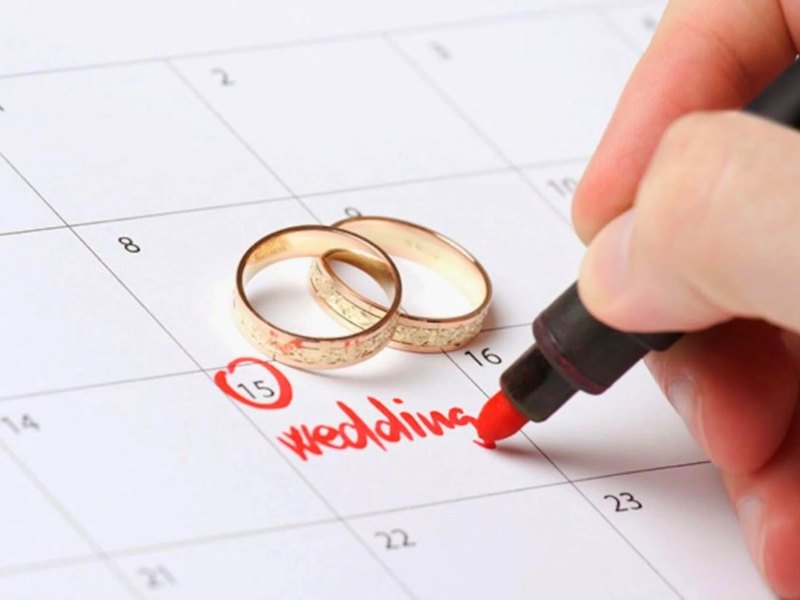
Choosing the wedding date, an important step in Vietnamese tradition
A successful wedding does not have to be grand or expensive. What matters first is the way it is organized, respecting family morality and traditions. A wedding celebrated with seriousness and sincerity is perceived as a sign of a solid and lasting union.
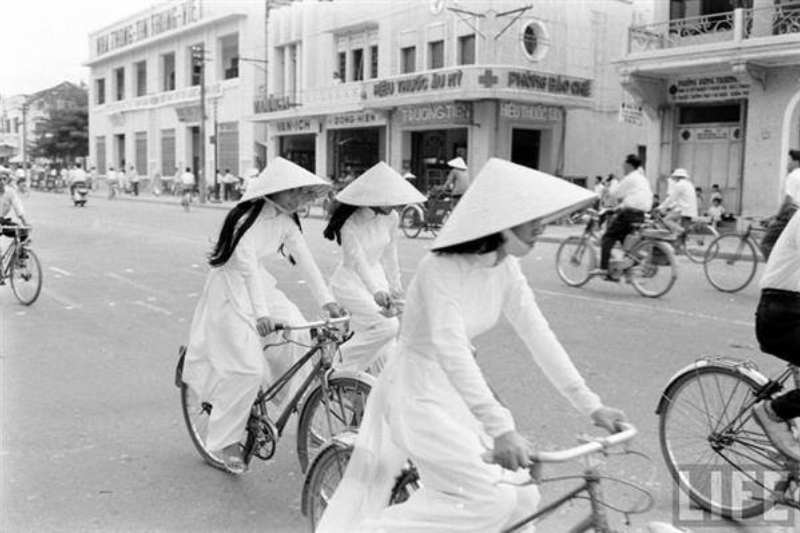
Long ago, the bride and groom wore traditional Vietnamese costume, whose form and colors varied depending on the regions. Today, newlyweds often adopt modern clothing: the groom wears a European suit, while the bride can choose between the white Western dress and the ao dai—the long traditional Vietnamese gown.
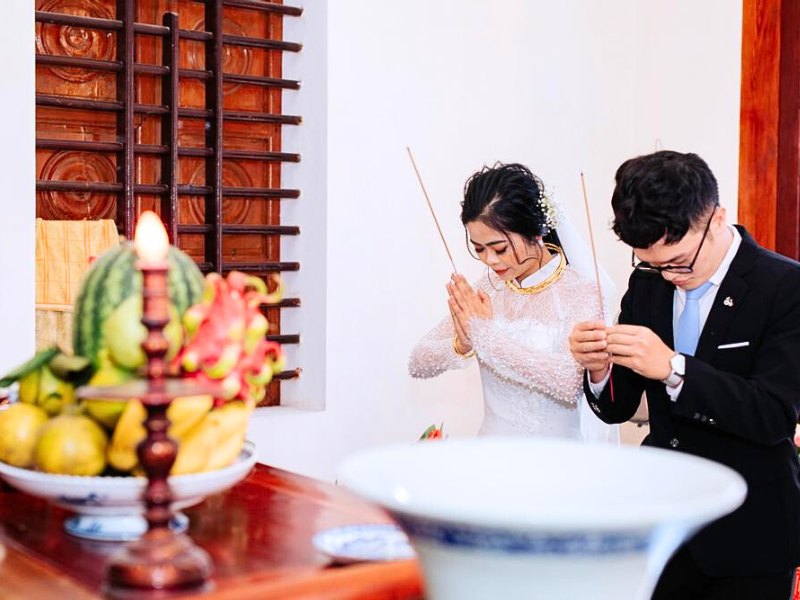
During rituals in front of the ancestor altar, it is common for families to ask the couple to wear the ao dai to mark respect for traditions. This garment highlights the grace and femininity of the bride, while also recalling the elegance and simplicity of Vietnamese culture. During the banquet, European clothing or evening dresses are now more common.
Various Ceremonies of the Traditional Vietnamese Wedding
The traditional Vietnamese wedding consists of several successive ceremonies, each carrying deep meaning. These rituals are not mere formalities: they symbolize respect between families, recognition of ancestors, and the sincere commitment of the couple. Although modern society has simplified some steps, most of these traditions continue to be respected, because they embody the very soul of Vietnamese culture.
Dam Ngo – The Presentation Ceremony
Also called the presentation ceremony or family meeting, this step marks the official beginning of the relationship between the two families. In the past, it was the “first visit” in which the parents of the future groom went to the family of the future bride to express their intentions and discuss the wedding.
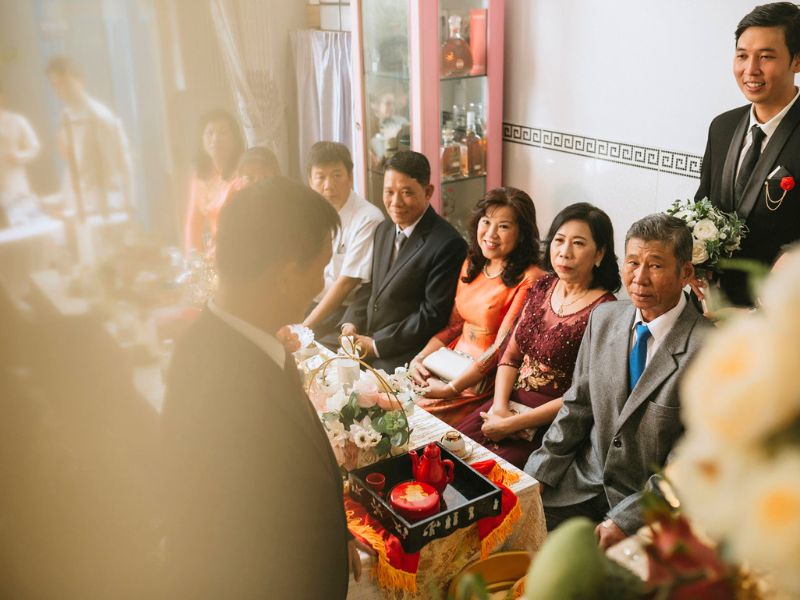
Dam Ngo marks the official beginning of the relationship between the two families, a symbol of respect and sincerity
Today, this ceremony retains the same spirit, but takes place in a more convivial atmosphere. It is a moment of exchange in which the families get to know each other, share their values, and discuss the couple’s future. The offerings remain simple—often a tray of betel and areca—symbols of respect and sincerity. Depending on the regions, customs may vary, but one rule remains: the offerings must be chosen carefully to express consideration toward the bride’s family.
An Hoi – The Engagement Ceremony (or Promise of Marriage)
The Le an hoi is one of the most important steps of the traditional Vietnamese wedding. It is during this ceremony that the groom’s family brings trays of offerings to the bride’s family: sweets, fruits, tea, rice wine, betel, areca nuts… When the bride’s family accepts these gifts, it means that they officially grant their daughter in marriage.
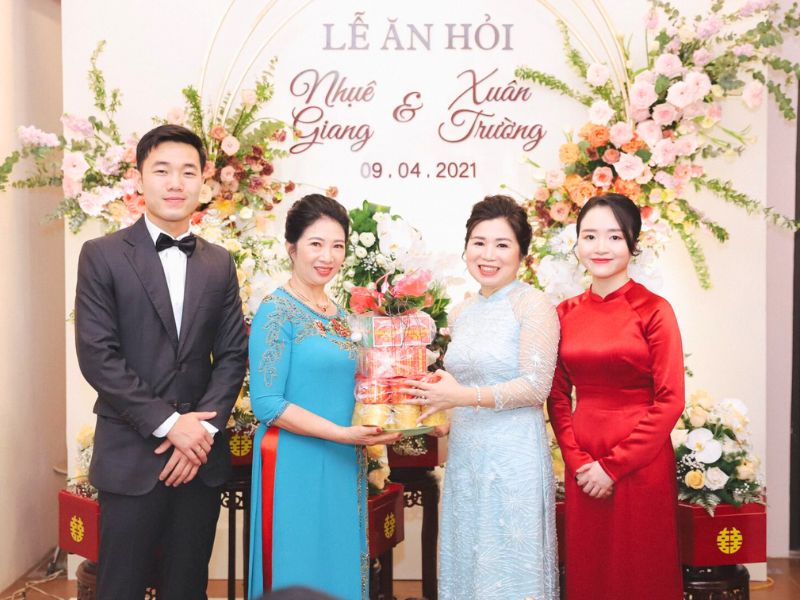
The offering trays of Le an hoi symbolize respect and recognition between the two families
From this moment on, the couple is considered engaged: the young woman becomes the “bride-to-be” of the young man, and the latter is recognized as the future son-in-law. The families then begin to call each other “father-in-law” and “mother-in-law,” a sign of an official bond between them.
Xin Dau – The Bride-Asking Ceremony
This ceremony takes place shortly before the main wedding ceremony. The groom’s mother, accompanied by a close relative, goes to the bride with some symbolic offerings: a tray of betel and a bottle of alcohol. She comes to officially announce the time when the groom’s procession will come to collect the bride.
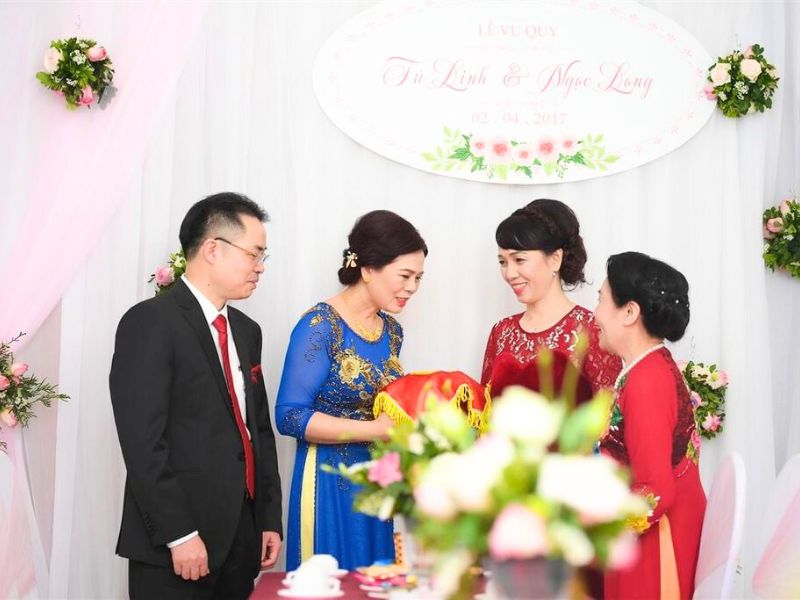
A moment of respect and courtesy: the groom’s mother brings offerings to announce the arrival of the procession
The bride’s family receives the offerings, places them on the ancestor altar, and lights incense in a sign of respect. After this brief ritual, the groom’s delegation takes leave to return to prepare the vu quy ceremony (the bride-bringing ceremony).
Ruoc Dau – The Bride-Bringing Ceremony
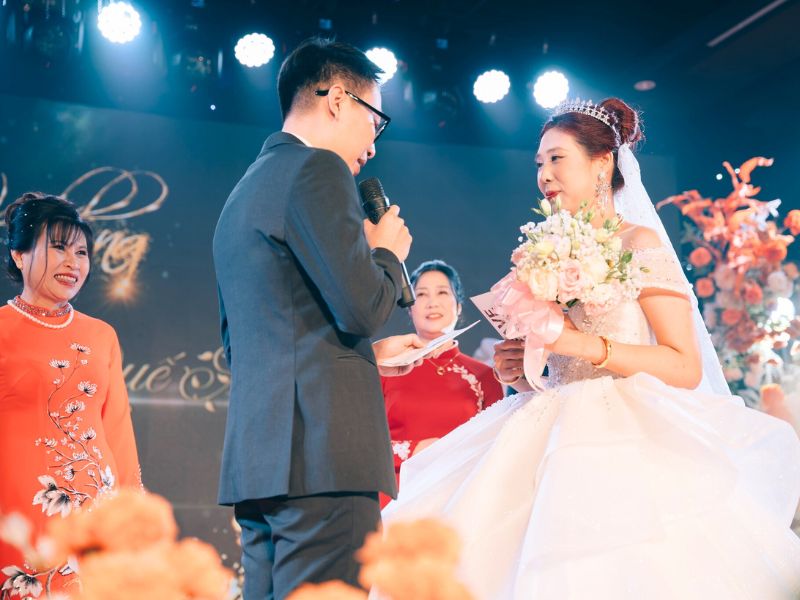
A moment filled with smiles, emotion, and promises for a lifetime
It is the most awaited and most emotional moment of the Vietnamese wedding. The groom’s procession arrives at the bride’s home, accompanied by music, smiles, and offerings. The vu quy ceremony (wedding) then begins with speeches from both families, the presentation of offerings, and the ritual before the ancestor altar. The parents bless the couple and offer them symbolic gifts or a dowry. Finally, the bride leaves her parents’ house to join her husband’s, marking the beginning of their life together.
Lai Mat – The Return Visit After the Wedding
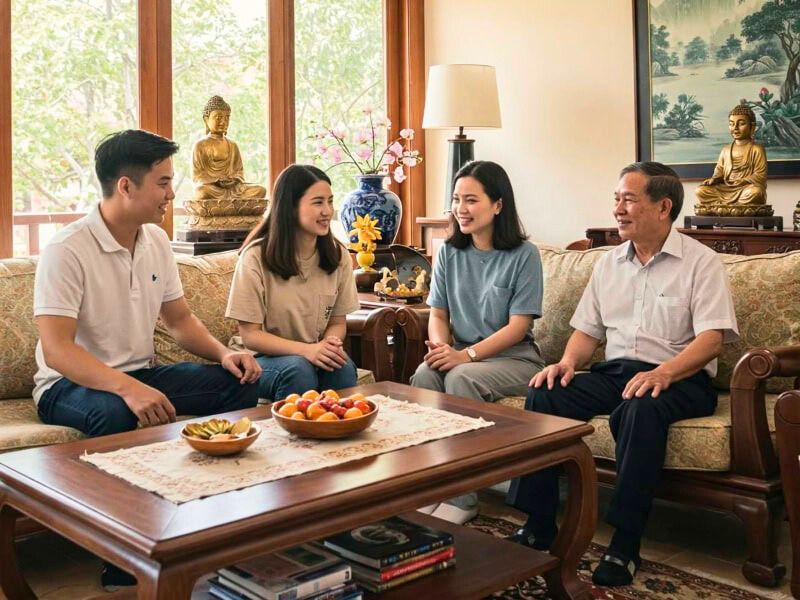
A moment of tenderness and reunion after the emotions of the wedding
A few days after the wedding, the newlyweds visit the bride’s family. This ceremony, called lai mat or phan bai, expresses the son-in-law’s respect toward his parents-in-law and the couple’s gratitude for the love and education they received. It is also an occasion for the bride to see her loved ones again and remember that, though married, she maintains a deep bond with her family of origin.
Traditional Vietnamese Wedding Video
The traditional Vietnamese wedding is one of the most important events in family life. Through every ceremony, gesture, and symbol, it expresses respect for ancestors, gratitude toward parents, and the sincere union of two families. In this video, let us discover together the beauty and deep meaning of the rituals that make the Vietnamese wedding a unique and timeless tradition.
The traditional Vietnamese wedding is a celebration full of meaning. It is a moment of sharing, respect, and transmission. Through every ceremony, families express their attachment to ancient values: sincere love, gratitude toward parents, and fidelity to traditions. Although modern life has changed many things, these rituals continue to move and bring people together. They remind us that marriage unites not just two people, but also two families and two stories. Keeping these customs alive means preserving a part of the Vietnamese soul—simple, warm, and deeply human.